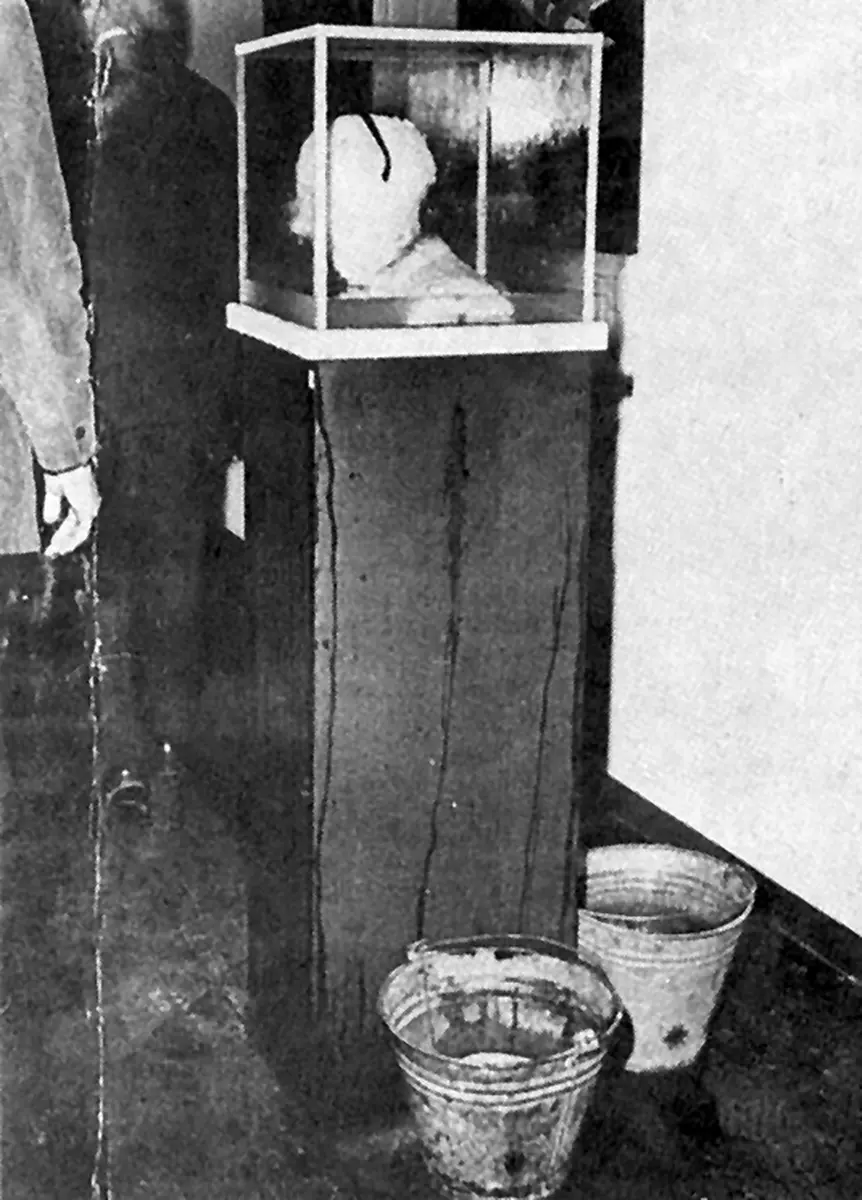
From the second half of the 70s, non-formalist works destined to change the sensitivity and appreciative parameters of art began to multiply in Colombia. Some international exhibitions helped, influenced, and fed these proposals (Dada, Surrealism, and Its History, Richard Smith, Luis Camnitzer, Liliana Porter, Video Art, Mauricio Bueno, Arakawa, and some works presented at the Biennials in Medellín and Cali). It is also vital to mention national artists such as Bernardo Salcedo who, since 1968, involved unusual materials and ideas in his repertoire (The Agrarian Fund and The Family Compensation Fund, with ears of wheat and rags, respectively; The Hectare, 500 polyethylene bags filled with hay; school papers shown as drawings, etc.); Feliza Burzstyn, during the second half of the 1960s, collected oil cans and accumulated them proposing them as sculptures, and, subsequently, presented set scenes such as The Hysterical, The Beds, and The Dance; Beatriz González, and Álvaro Barrios, managed to propose distancing and elaborated languages through environments and ironies, almost always supported by the History of Art. The young leader during the past decade is undoubtedly Antonio Caro (Bogotá, 1950). From his first outing, he intelligently questioned the definition of artisticity. His personality became more interesting, managing to persuade thirty artists who are currently on a conceptual path. He opened the gap to his generation and, with strong ideas, convinced them to focus their attention on his speech. While still a student at the Universidad Nacional, he participated in the XXI Salón Nacional de Artistas with the work Lleras’ Head (1970), which, according to the artist, was a "late tribute to the friends of Zipaquirá, Manaure, and Galerazamba." The work was a bust of the President of the Republic made in salt, wearing real glasses, placed in a glass urn. The night of the opening, water was poured on the piece; its shape was destroyed, and the space was flooded. That entry, without echoes or precedents in national life, constituted the point of support for an uninterrupted activity that has continued until today.
The game-work, its ephemeral condition, and the artist's action inaugurated a new era of national art. An academic figure that melts is the path from the most traditional training to the understanding (or intuition) of the avant-garde fact. The use and exploration, to its last consequence, of the physical properties of the element, tune into an irony that calls into question the definition of a work of art, its integrity, expressiveness, and permanence. When choosing the plot, he pushed his work towards sociological, pedagogical, and political readings, present in his intention. That same year, the Galería Belarca included him in an exhibition entitled Multiple Work, for which he used the Xerox machine and again illustrated a national theme. Primitive Art and Miami Sunset are titles that alluded to pre-Columbian Augustinian art and the tourist version of a supposedly international Colombia. He also attends the Salón Panamericano de Artes Gráficas (Museo de Arte Moderno La Tertulia, Cali), where he hands out at the entrance 2,000 cards drawn with Jorge Posada. Eduardo Serrano, the critic who has been most concerned with speaking and presenting his work, has an obvious comment on the implications and scope of this attitude: ". . . Not only did the team presentation of this work discuss the widespread consideration of art as a ‘great product,’ but their decision to give them away underscored the commercial emphasis of our art systems. Caro was not content to propose a sincere technical inability as a valid vehicle for creativity, but also accused academic art, framed, sold, bought, and hung behind the sofas, of misrepresenting the essence of all creativity. Artists called ‘politicians’ (as if the others were not) had consistently spoken out against the increasing commercialization of painting and sculpture. But somehow, his works remained conceptually within the decorative category (which may be thematically challenging, accusing, inciting, etc.) of the market. Caro's work was born outside this category. And outside of it, however, its quiet evolution and its use (or abuse) of our artistic organization (museums, salons, universities, critics, and galleries) have remained a launching pad for its healthy skepticism.”1
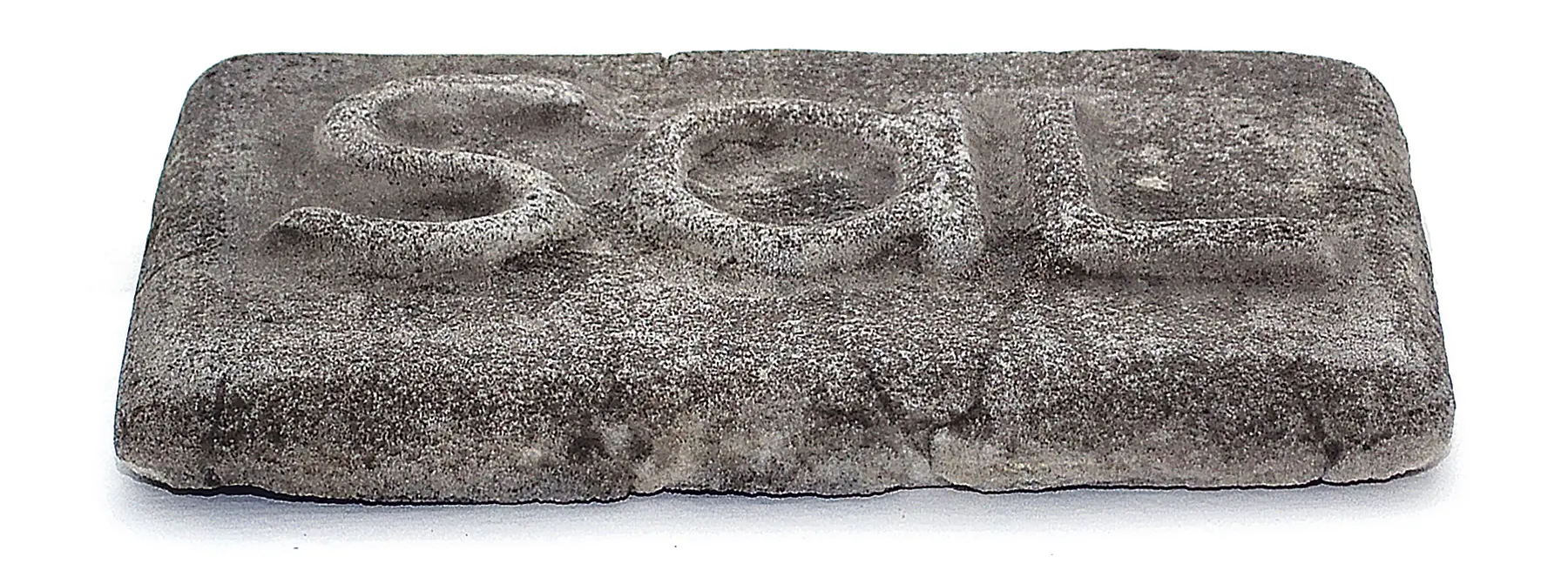
For the Primera Bienal Americana de Artes Gráficas de Cali (1971), he used the element salt again. Physical properties are a vehicle to de-culturalize the image, bringing its proposal closer to elements of art.2 The material became the protagonist of the work. Today, Salt (a plate with a sign naming its organicity) has disappeared because of its constitution. That same year, Caro participated in the Second Art and System Exhibition at the Centro de Arte y Comunicación (CAYC), in Buenos Aires. Jorge Glusberg invited him, and since then, he has been part of the international group.
In 1972, Caro's work defined and invaded different areas with surprising clarity. For the Primer Salón de Artes Plásticas Jorge Tadeo Lozano, he presented his documentation and information for the first time based on Manuel Quintín Lame and his work. This work offers information on the indigenous hero who, inexplicably (or very explainable), has been relegated from the country’s official history, since his fight for the emancipation of oppressed communities earned him persecution and voluntary oblivion. Through documentation (biographical data, fragments of his work En defensa de mi raza [In Defense of My Race], bibliography) and visual considerations (copy of a fragment of Lame's signature and complete signatures), Castro makes art as a document. The idea of presenting a large-scale work (10 cards of 140 x 100 meters) is shown for the first time. This practice will be sharpened and developed over time. For an exhibition that year, the XXIII Salón de Artistas Nacionales, the invading, critical, or ironic elements are accentuated. The same happens with the cheap materials that he uses and with his discarding intention of preciousness. Aquí no cabe el arte (There Is No Room for Art Here) assaulted the Salón Nacional, making a proposal measuring eleven meters long, with the names of students and indigenous people massacred by the executors of official violence, exemplified by law enforcement and government decrees, also read.
In 1976, for issue No. 7 of the magazine Teorema, Caro declared about these works from his first harvest: "I was clumsy, and now I am doubly clumsy manually. I discovered that I had to think to do things, work with ideas. My first work on the vice of politicking was flawed in the same, in politicking (Cabeza de Lleras [Llera’s Head]), there was no clarity. Then I did a pamphlet work, to a certain extent (Aquí no cabe el arte [There Is No Room for Art Here]). Because it is easy to make political art without participating in militant work, I think it is more important to contribute to art than politics. Political art does not contribute to politics.”
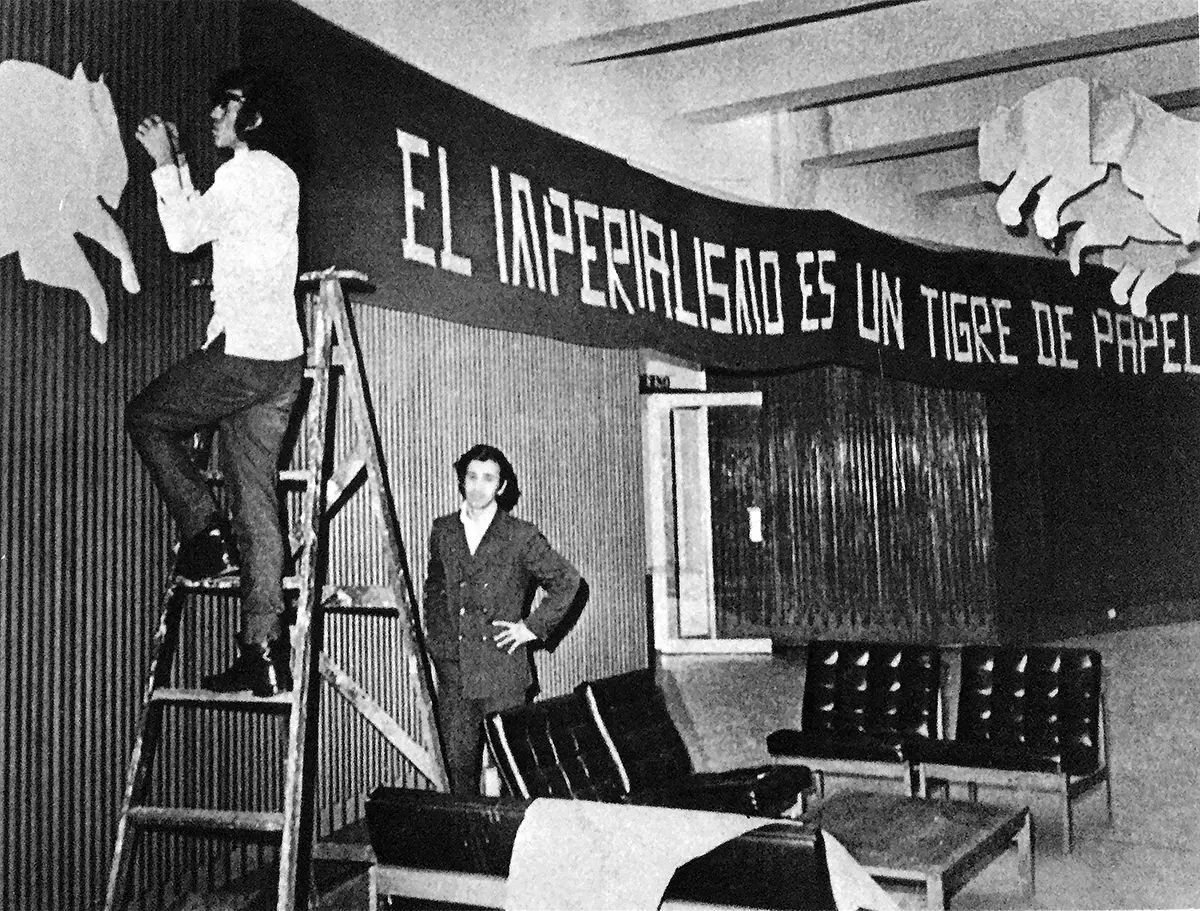
Continuing with the game, criticism, and documentation, the work presented for the III Bienal de Medellín (1972) emphasized formal artistic aspects or nature. Color-azul (Color-Blue) was a graphic report (color degradation) and a text explaining what color is and what blue is.3 For the exhibition Nombres nuevos en el arte de Colombia (Museo de Arte Moderno de Bogotá, 1972), Caro used Mao Zedong’s famous phrase El Imperialismo es un tigre de Papel (Imperialism Is a Paper Tiger), and materialized the sentence with signs, using Russian characters and life-size cut-out paper tiger silhouettes. The banner's Chinese silk and Soviet letters visually confronted ideologies that culminated in their attempt, in the fragile animals hanging at different heights at the Museum's entrance. His work attacked the ancient definition of art and the different dogmatisms that left tendencies jealously questioned. Caro provoked and managed to anger.
In 1973, the Galería San Diego in Bogotá presented the Marlboro theme for the first time. In Barranquilla, the Galería Barrios offered a version of El Imperialismo es un tigre de Papel (Imperialism Is a Paper Tiger). This reiterative aspect is a characteristic of Caro, who enjoys installing his work, reworking it, and insisting on an idea. "As I am stupid, I get one idea a year, and I crush it until people get tired. I still have some of the advertising I did in an agency in Bogotá."4
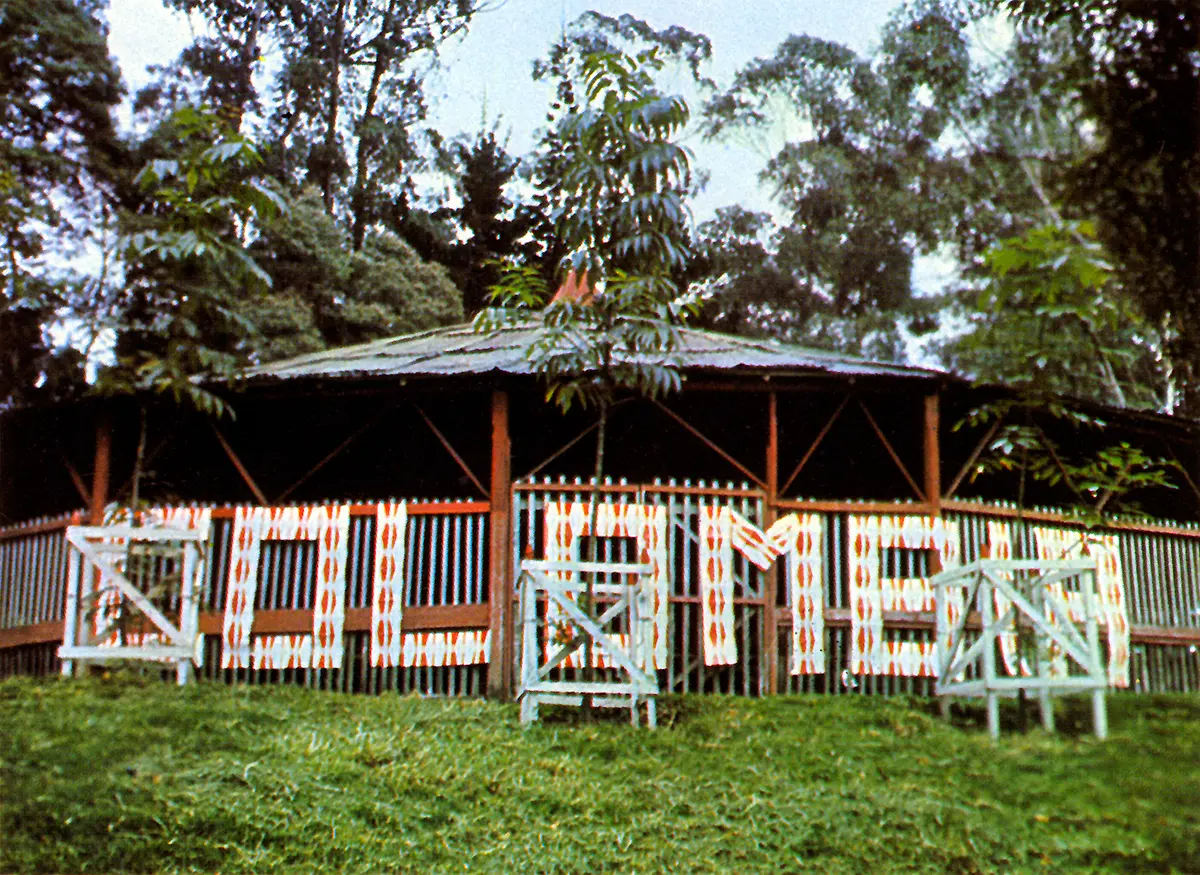
In the XXV Salón de Artistas Nacionales (1974), he presented the collage (2.80 x 1.00 meters) titled Aquí no hay caso (There Is No Case Here). A year later, he presented 500 packages (Marlboro) at the Biblioteca Nacional, and, for the first time, he used the phrase Todo está a muy Caro (Everything Is Very Caro/Expensive).
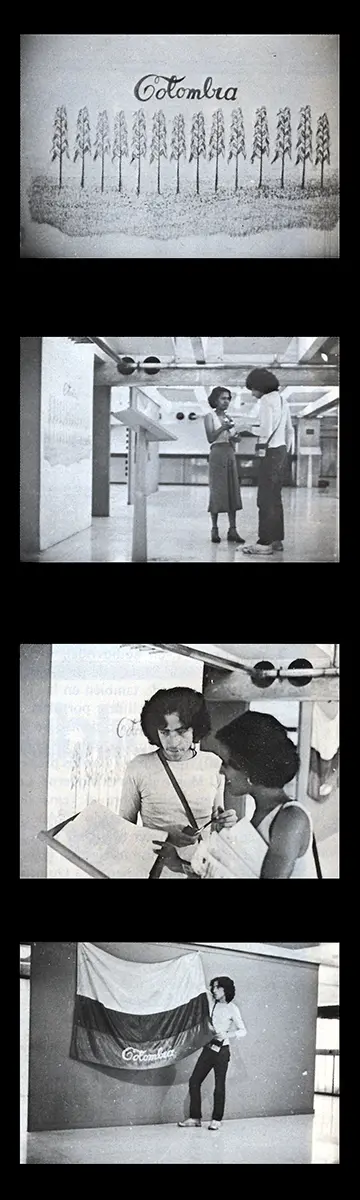
When the exhibition I Salón Atenas opened at the Museo de Arte Moderno de Bogotá, Caro was on the list of exhibitors, but no work was included. The work was to be carried out using the time of the exhibition, a time as space to elaborate, unlike Lleras, where the hours indicated destruction, and the months the end of the work. The national theme was to be underlined, and an audiovisual with slides and music titled Colombia-Marlboro could be seen at the closing of the exhibition. It is essential to remember Caro's kinship with Land Art or earthworks, which should be considered as corollaries of Arte Povera and ecological art. The scenario that Caro had selected was the city of Bogotá, its urban area with its parks and other sites. Photographs captured the theme—the Marlboro emblem—in used or unused places.5
1976 is the departure date for his Colombia-Coca-Cola, drawn and painted on the walls for the exhibition at the Galería Belarca (together with Matas de maíz [Corn Plants]), with the very illusory title Defienda su talento (Defend your talent).6 It was also drawn on paper at Jonier Marín’s exhibition at the Museo de Arte Moderno de Bogotá, Lápiz y Papel (Pencil and Paper) (with a photo of the artist), and painted on a can (like a small fence) at the XXVI Salón de Artistas Nacionales (where he was awarded the gold medal).7
In these six years, Caro managed to produce fundamental ideas and vehicles to communicate the concepts. As Marcel Duchamp would say, art is not so much a matter of appearance as of rational operation; it is not a matter of morphology but function. On that line of values, the total sum of Caro proposes anti-objects and anti-formalisms as an artistic attitude and not as anti-art, as some misunderstood.
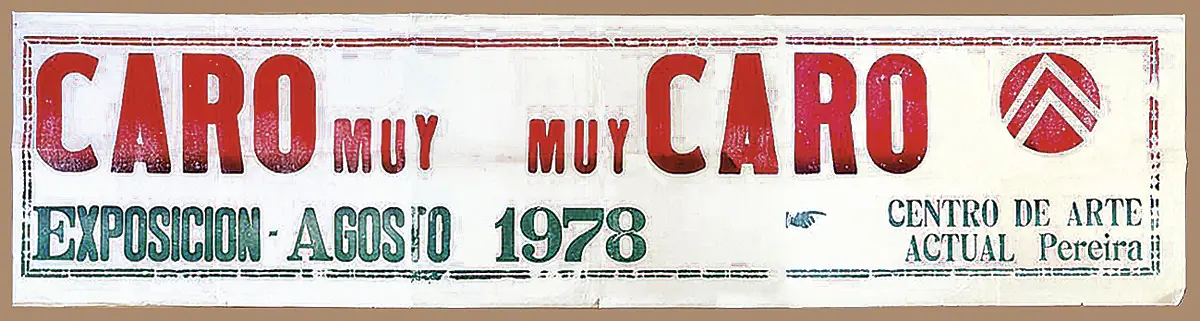
In 1977, he was concerned with conducting surveys on the reality of art in general and its products in particular. On several occasions, he placed a book for people to write comments on it (Novísimos colombianos, Museo de Arte Contemporáneo, Caracas, organized by Marta Traba; Galería El Sindicato, Barranquilla; Ven a firmar (Come to Sign) Galería Finale, Medellín; and Si quieres puedes (If You Want, You Can), Galería San Diego, Bogotá). The following year he exhibited his poster En 1978 todo está muy Caro (In 1978 Everything Is Very Caro/Expensive) (XXVII Salón de Artistas Nacionales). Returning to textuality, various associative properties adhered to it, such as social commentary, popular idiosyncrasy in a “frase de cajón” (common saying), the narcissism that the presence of its name entails, and, finally, the use of purported originality from the non-original. Given his influence in the country's artistic world, "everything is very Caro/expensive." The dire national situation is based on that: "everything is very expensive." The appropriation of reality as a sign of its intelligence.
The Centro de Arte Actual de Pereira edited a serigraph of the Homenaje a Quintín Lame (Homage to Quintín Lame) and presented an exhibition on that subject in 1978. Galería Garcés Velásquez sponsored the printing of a maize bush on a serigraph.
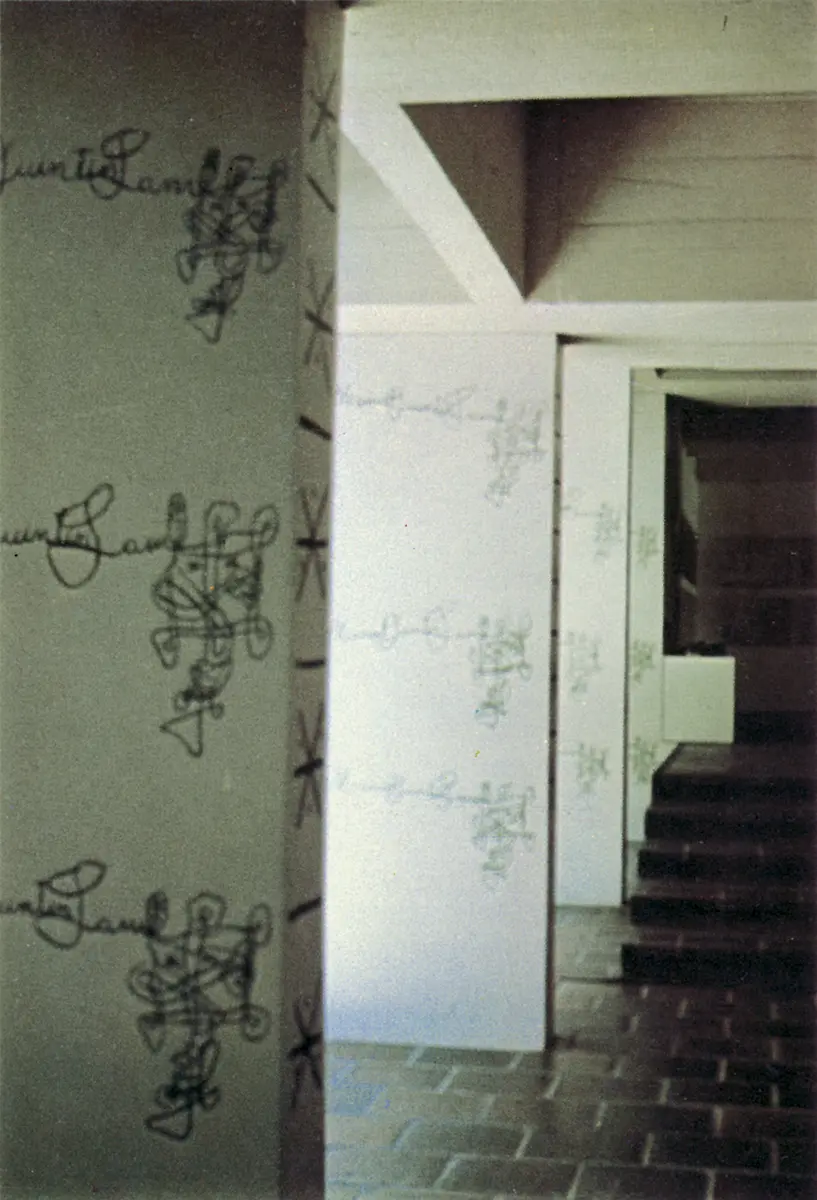
Homenaje a Quintín Lame (Tribute to Quintín Lame) was shown during the I Festival de Vanguardia de Barranquilla (1979) (signature, poster, and audiovisual on the pictography of the Sabana de Bogotá). It was also presented at the Galería Finale y in Medellín. Finally, it could be seen installed in the controversial exhibition Arte de los años 80 (1980), organized by Álvaro Barrios at the Museo de Arte Moderno La Tertulia, in Cali. On the subject of Lame, Caro has declared: "Now I decided to stop making jokes and meddle with indigenismo. I have made an exhibition as a tribute to Quintín Lame, the indigenous leader from Cauca who, with clairvoyance, created a reservation in Chaparral, and fought between 1910 and 1940 in favor of indigenous legislation. He was persecuted by President Valencia and the region’s landowners. From him, I took the signature and added indigenous motifs. This has to do with art, sociology, ethnography, and it fits well with everyone. But really, this is terribly important."8
In this textual endeavor destined to attack collective mythologies (Marlboro, Coca-Cola), to denounce them (everything is very expensive), or to vindicate them (Quintín Lame), we find ideological conceptualism that guided the CAYC group in Latin America. In 1972, it presented the exhibition Arte e Ideología (Art and Ideology), featuring the group of thirteen and other artists. According to Jorge Glusberg, the alternative for the inhabitants of the resistance is to "develop an art of liberation, as opposed to the art of domination.” It is this precept that Antonio Caro has considered in his work and his influential and suggestive attitude. Today he has found a following among the country's new artists (luckily few buyers; the public always prefers to collect quality works 20 years behind; they always play it safe!), and his talent is a sign of courage in an area of unworthy shallow people. As time goes by, I am more convinced about how good an artist is and how difficult it is to practice without betraying principles.
NOTES
1. Un Lustro Visual, ensayos sobre arte contemporáneo, Museo de Arte Moderno y Tercer Mundo, editors, Bogotá, 1976, p. 141.
2. Theater also uses this term and the Nuevo Teatro Colombiano had, by this time, undertaken an investigation in this regard. This practice was led by the Teatro Experimental de Cali, TEC.
3. The following text by Caro appears in the catalog of the III Bienal de Coltejer: A work does not need explanations. A catalog must fulfill the documentation function of an event. An artist can talk about his work as long as he doesn't need it. A critic's critique is generally very distant from the work to which it refers. A sociologist can rightly speak of a work of art. When an artist speaks in non-artistic terms of his work, something is wrong with it.
I would like in this space a criticism from a critic for vanity—but this would be very boring. Instead, I would play with the words like a football game: the words, you work, you open, or I would leave a blank space. Note: I sent a book to this Biennial. Its limited field is that of the visual arts. Its character, critical. I prefer information." (p. 33).
4. “I get one idea per year.” Reportage by Ana María Cano, with Antonio Caro. El Mundo, Friday June 22, 1979, Medellín.
5. Unlike Walter De Maria and Dibbets or D. Oppenheim, his work seems to be closer to Timm Ulrichs' propositions and art in zonal nature; Color of Camouflages (1969) or Surgical Attacks on the Tree (1971): an art-nature in small dimensions, as opposed to monumental Land Art.
6. One of the artists who first consciously proposed drawing on the wall was Sol LeWitt (Drawings on the Wall, 1969), emphasizing the knowledge and verification of the process while visualizing in a context that considers the architectural space.
7. Caro declares in the reportage published in El Mundo: "It was cardboard with kite paper glued on it. Both words, Colombia and Coca-Cola, had precisely eight letters, and they both began with the letter 'c.' The problem was the ‘m' and the ‘b.’ I did not know them because the emblem did not have. The idea was good, so I started to repeat it, and people told me that what followed Coca-Cola was Marlboro. The music was salsa from La Fania.”
8. Cited reportage.
* Translator’s note: The title of the article corresponds to an iconic work in which the artist plays with the double meaning of the word "Caro" in Spanish. On the one hand, it represents his surname, and on the other, it means expensive, alluding to the high cost of living.