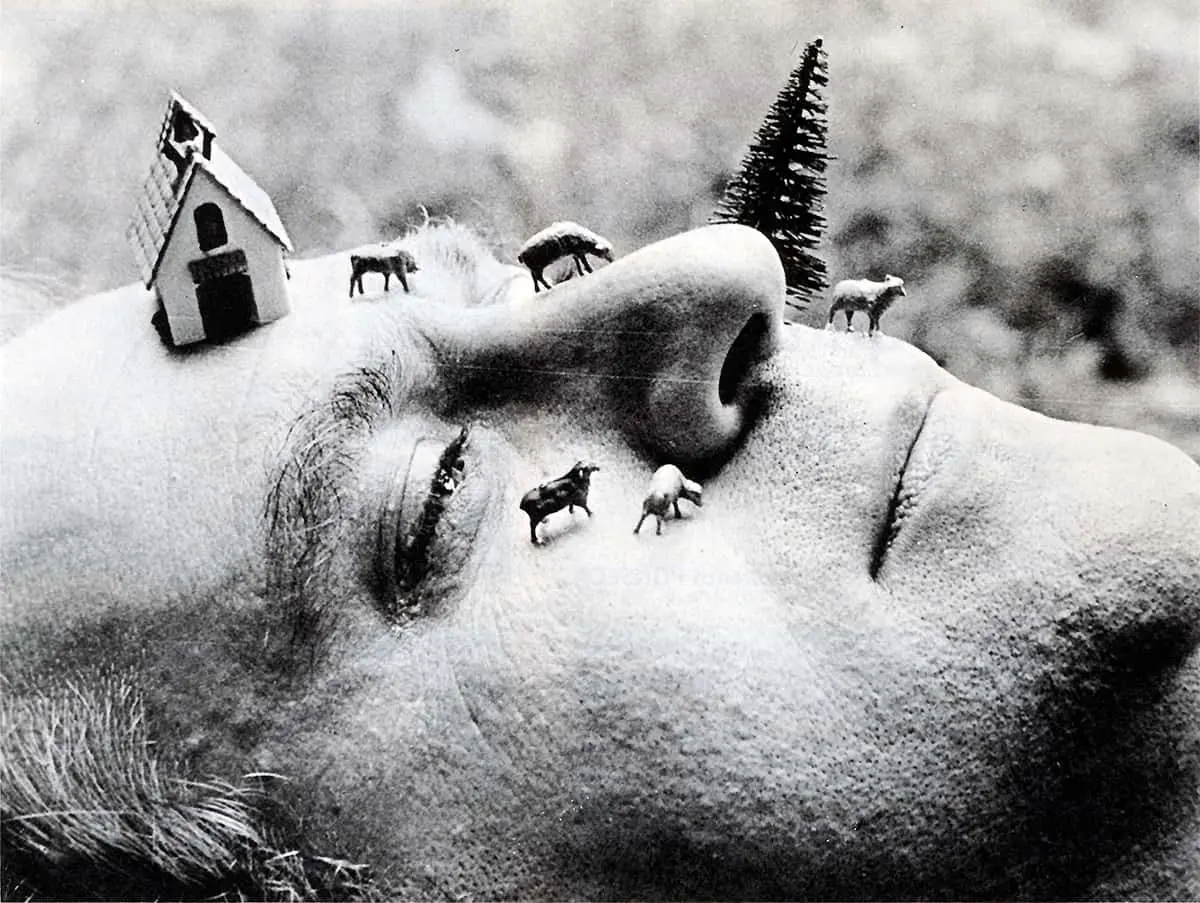
The work of LUIS CAMNITZER, in my mind, has always attempted to fuse art theory with the work of art, the detachment of the first, and the link of the second. The creative process of the mind and the creative process of the body, seemingly separate and normally considered in opposition, seem to predominate when one observes Camnitzer's work.
Traditional notions of art require the physical presence of an object to give body to the emotional projection of ideas. Camnitzer's work seeks a comprehensive visualization of the themes that focus on the debate that assumes that art is inherently tied to strict limitations. There are times when it faces the problem with a solemn and recognizable aspect of traditional philosophy. There are times when he incorporates acid irony into his dialogue with art, taking him toward the formal decisions he chooses. Sometimes he combines the irrational with the rational by using a poetic format.
His exile status appears to be a powerful tool for exchanging logical with illogical premises. For sixteen years, he has maintained an experimental attitude toward the aesthetic freedom of the creative process.
My intention was to explore these initial ideas, as well as to question Luis Camnitzer about his ideas on teaching art. The latter puts him in a controversial situation shared with many artists today. The result of the exploration is the following reportage.
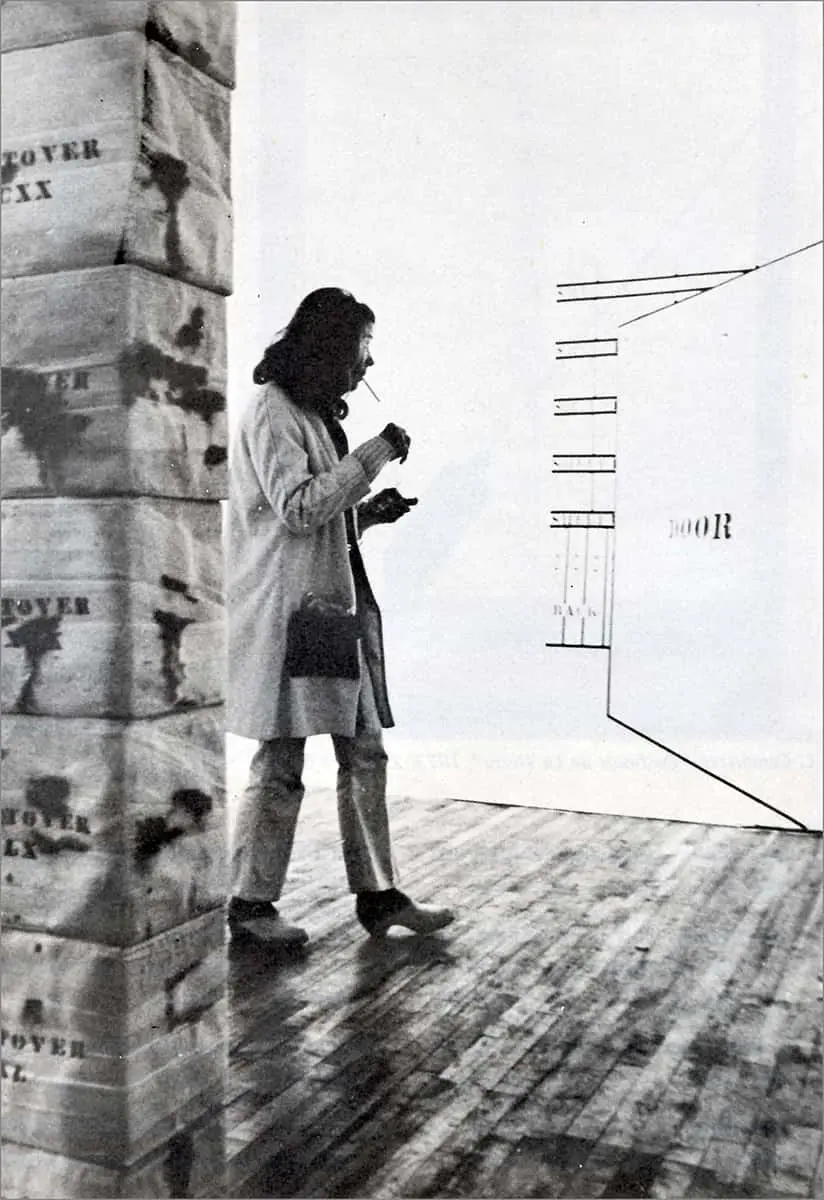
C: Perhaps your intelligence builds a reason to tie you to teaching instead of moving into the art world, its structure is so strict... which could mean that you deny a part of yourself?
L: I don't think I'm denying myself. Actually, three or four years ago, I realized that I had been teaching for about sixteen years. I questioned myself to see if something was wrong with me. It could be that I was afraid to compete in the market as an artist. It could be that I was sublimating sexual fantasies working with my students. It could be that I was suffering from frustrated parenthood and using my students to overcome it. It could be a number of things, and any of them would have made me feel that I was ethically misusing teaching. I went to a psychiatrist, and we worked on my questions. The result was that I ended up as satisfied with the teaching activity as I was before questioning myself.
C: You produced an acceptable frame of reference.
L: At least I questioned the security I had in teaching. And I survived. In part, teaching indeed protects me financially. The commercial side of art is not something I really like. It may be that in this sense, I am an incomplete artist, at least in terms of how artists are today defined, but that does not bother me. It is nice to work on something I immensely like and to get paid on top of it. It is like having absolute freedom. In that sense, I already live in an ideal society. I only do things that I like doing, and they support me financially without having to make concessions. I find it fantastic. The only thing missing is to help the rest of the people so that they are in the same condition.
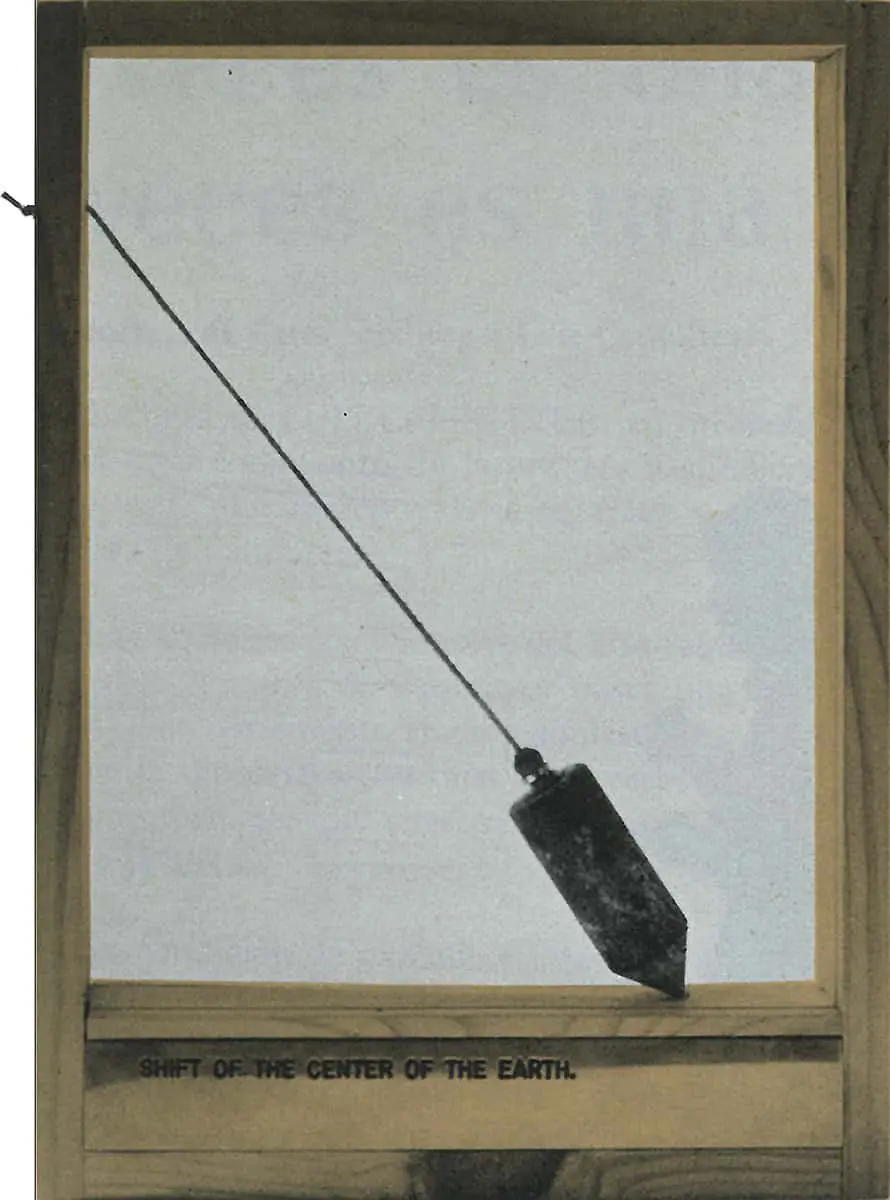
C: Do you think the idea of "truth" applies to an artistic situation?
L: Where there are infinite people, there are infinite truths. Then there are the social truths and the cultural truths they impose on you. That is where the difficulty is in figuring out where you are making a decision for yourself and where they are making it for you.
In art and education, I believe that the main function is to identify which are the decisions made by the individual and to use the other, non-individual decisions, for the development of their own.
C: When you teach, are you not in danger of deciding for the student?
L: Yes. But I try to avoid it. The danger appears when the student's path forks and many decisions could be made. I have to help the student to quickly go through all the alternatives without being influenced by my prejudices. Understand the student's needs without projecting mine. Even forget that as an artist, something may not interest me at all and allow it to come to light just because it is important for the student. A student may want to paint a landscape. As an artist, the landscape doesn't interest me. I may be interested in the landscape itself, but not landscape painting (AS A GENRE!). However, I have to understand the student's need to paint a landscape. Find out if it is an authentic need or if it is a need created by a social and cultural condition that identifies landscape painting with making art. I have to find out if the landscape problem is an investigation consistent with the student's other interests and concerns, even philosophically and religiously. If within the context of the student, the landscape problem is a valid investigation —the student himself decides if it is after shaking the student up— the different possibilities are discussed. The student is not required to paint the landscape, he can photograph it, he can sculpt it, or he can go and change the landscape itself on the spot. They are all alternatives that may not interest me personally, but they are alternatives that clearly correspond to the student's problem.
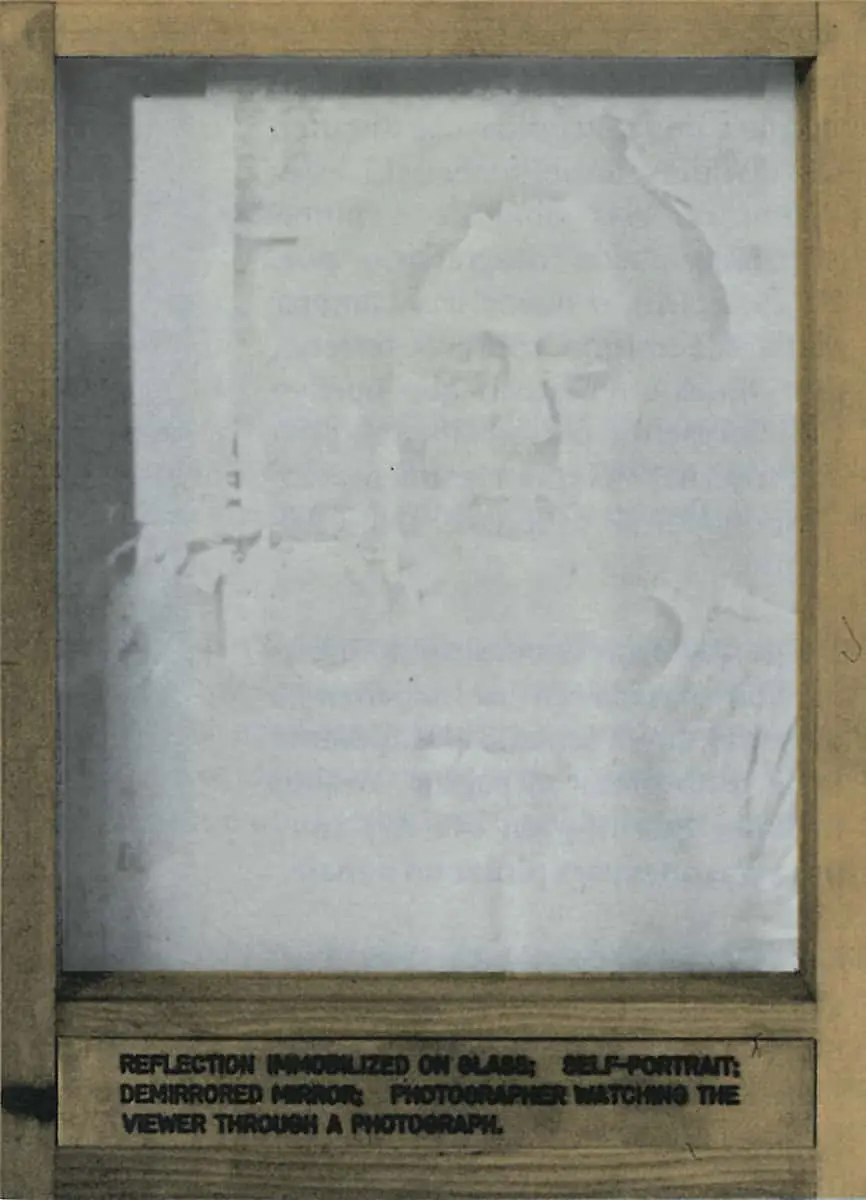
C: Since you are communicating information based on your personal experience, you already know whether or not the student should paint the landscape. We both know that today there is very little reason to paint a landscape.
L: I do not agree with that. There can be many reasons. Perhaps they are not reasons concerning what is being done as art in exhibitions or in terms of what is historically contemporary. But it can be very important in terms of the student's personal development. It is possible that the student needs three or five years of painting nineteenth-century landscapes to jump from there to something we do not know. My prejudices would make me say forget; you are wasting time; the landscape has died at the hands of the brush... However, I cannot instill my information on the student, and interfere with his discovery process.
C: If you offer the student all the options, do you think that in the end, he will paint the landscape? If he does, will you really help him do it?
L: Yes, of course. The student, like a child, may lack empirical knowledge, and he may have conceptualization problems, limits beyond which conceptualization does not work. In that case, it doesn't matter how much explanation is given. The answer may be yes, I hear, and the result will be the memorization of information rather than the discovery of new structures. This is how traditional teaching works, imparting memorizable information.
In what I do, I have to accept the possibility that a result that seems produced by the 19th-century academy may be a living result of an intense process of discovery and creation in the individual case of a student. I have to accept even the possibility that in parallel with working with me, he needs academic training.
C: Do you agree that today everything refers to information or the communication of information?
L: I think there are many things to consider. In many cases, you cannot jump and burn stages, at least not with the excuse of imitating a development of stages of art history. Take, for example, the student whose field of conceptualization leads him to want to investigate the landscape. Academic teaching calls for starting with realistic drawings of the landscape and then perhaps abstracting. Repeat the history of art step by step. That seems to me to be ignoring the process of forming an individual's personality. For a student, who begins by thinking about "landscape," the next logical step may be to undress in public instead of drawing a naturalistic drawing. Every step that is taken has to happen as a necessary experience and not as a consequence of a recipe
C: If you work with an 18-year-old student whose experience comes from the recent availability and formidable rise in technology, but who nonetheless decides to paint a landscape, isn't that an example of someone obviously conditioned by prejudices about the art?
L: The student may reject that technology and painting a landscape may be aggression. But if the idea is to take a revolutionary step, surely there are more efficient revolutionary steps than painting a landscape.
C: Perhaps the only reason to express your thoughts is that you want the other to understand you and receive your ideas. It is a way to control another person's mind to plant an idea in it. Isn't it difficult to avoid that?
L: Of course, I manipulate —I manipulate a lot— I manipulate much more than you manipulate talking to me. But manipulation is only justified if I can do it within the student's conditions and purposes, not my own.
C: If you make a work of art, manipulation produces one objective, tangible thing, while the other is much more subjective.
L: Yes, but it doesn’t matter.
C: It doesn't matter? What remains is important.
L: Ultimately, it doesn't matter if the artwork ends up being produced or not.
C: I agree, but then we come back to my question about manipulation.
L: Luckily, I am a libertarian and not totalitarian. I use my manipulation to free the student from as many things as possible, including myself, rather than to make him dependent. The same applies to material work. I try for the observer to take everything I do as a starting point, not as a final product. They are not objects that need to be possessed. They can be remembered after a glance; they can be possessed in one’s memory. They try to generate freedom. Manipulation is at the political level.
C: What does teaching give you? What profit do you get?
L: It gives me the same as making art. Instead of using wood, paper, pencil, or whatever, I use the conditions that a person gives me. Instead of using my mind, I work with someone else's mind. But it is the same creative process, the same unknown, the same darkness in which you throw yourself and where the light suddenly appears, and you never know exactly where it comes from. There is the same phenomenal feeling, a kind of snap. You closed the circle. You folded it, and the ends touched. That is why I do not get frustrated if I spend more time teaching and cannot make art, or if I spend more time making art and cannot teach.
C: Let's continue and try to define and/or describe ideas. You can do it with words or with images, in your art. Let's start with "a dream."
L: That is difficult. I have problems with words. I can tell you about a dream...
C: If I am not in the dream, I am not interested... To answer as if I were you... Is it a dream about dreams?
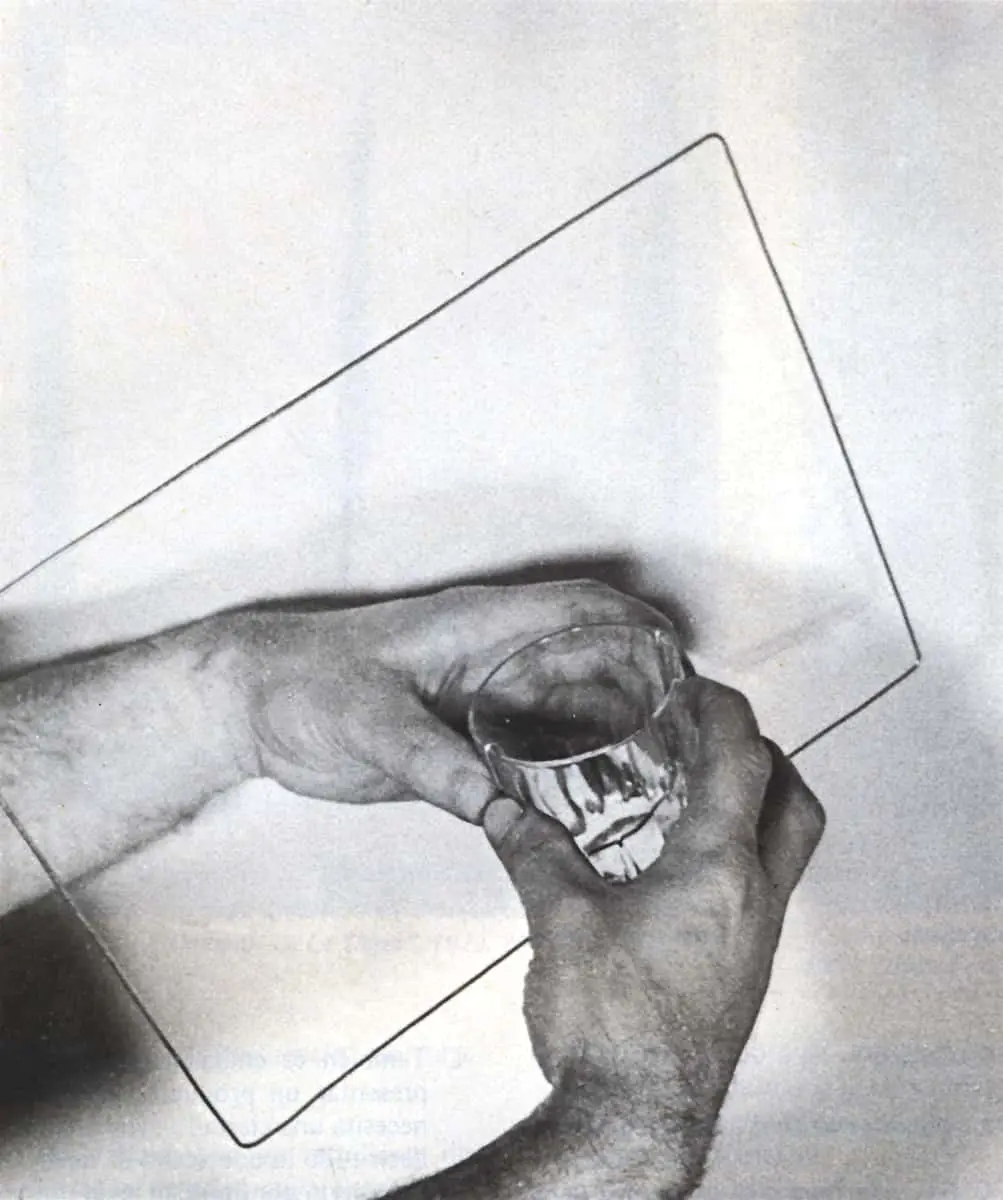
L: No, I was thinking of a dream with Marcel Duchamp. I dreamed that he told me to take a piece of marble and paint it like glass.
C: That is very nice.
L: I don't think I'm going to do it, but it was a nice and strange dream. It is a work that he could have done and didn’t do. But concerning dreams, I do not differentiate between dreams and reality. I don't distinguish between reality and fiction.
C: Maybe dreams are fiction?
L: I'm not interested in precise limits. Reality, dreams, and fiction are part of a larger reality, an extended reality. That is why I have trouble with words.
C: How about "style"?
L: That is again, ambiguous. What precisely?
C: In art.
L: Do you want to know if I have a style?
C: No, rather, what is your idea of style?
L: A guy one day said it's a thing related to neurosis. The style of an artist is formed by those elements that he cannot control, that appear despite himself. As such, style is a symptom of the artist's lack of freedom in the face of his own neurosis. I do not know if it's true. The example he used was Modigliani. "Style," on an individual level, is very close to "routine," except that it is not a rational repetition or a rational recipe, but it arises involuntarily. But it is not much better than routine. It means that you are not solving problems based on the merits of the issue, but rather distorting them with your own limitations. I suppose that the idea can be expanded to cover more general social situations and analyze historical periods with the same reasoning.
C: Why do you think there is so much "style" in art today?
L: It is also packaging, the way of presenting a product. Sometimes it takes a certain... I'm going to contradict everything I just said... a certain continuity in the presentation of things to make it convincing
C: That is not true. Advertisers will tell you that the product does not change, that the packaging changes. The presentation does not change; the content changes.
L: Some things change very slowly or very little, with gradual changes. The change from Esso to Exxon was a huge change, and yet it was a minimal change.
C: The image corresponded to a way of packaging that did not fit the images and concerns of the end of the 70s.
L: Yes, it was actually more an update than a change. The sign itself is not so different. Advertising doesn't dare drastic changes. And in art, some people suppose that if you continually break with your style, you are not a serious artist, or you have no personality. A gallery owner once told me that Duchamp managed to succeed by changing from time to time, without formal continuity, but that another artist was unlikely to succeed. He recommended that I abandon the idea.
C: Duchamp's case was probably the only one where people related to non-form, to formal discontinuity, accepting the continuity of ideas.
L: Take a guy like Philip Guston, who irritated everyone when he changed his painting. I think his work is much better after the change.
C: Some people spend time and energy trying to prove that someone like Stella, for example, has not changed his style. I suppose it is the result of an overwhelming amount of psychologically conscious behavior that focuses on acquiring an identity, such that once the individual achieves that identity, they have to seal it hermetically.
L: That is commercialism. But I don't want to talk about Stella.
C: If you had to say what "art" is, how would you do it?
L: I wouldn't dare.
C: Could you talk about what is "artistic"?
L: No, it would lead me to nebulous descriptions that would necessarily be incomplete.
C: Would it be better to talk about the "creative process
L: Maybe. By calling it "art," you are already alienating some of the activity of living. Society would be much healthier if there were no need to have the word "art" or to have a professional called "artist." Without intermediaries, between the experience of living or the perception of reality and the consumer, we would have a much more natural and healthier situation.
C: If you could conceive time as past, present, and future, could you distinguish, and establish the distinctions?
L: Not really. Especially as an exile, exiled in a broad sense, memory is sometimes more lived than what you are really living. They are interchangeable. Maybe you are operating on your memory and not on present conditions, or you have an experience that instantly turns into history and pushes it into the past, or it speculates on something that never happened in such a real way that it becomes memory before it happens.
C: This generation... It seems that we are all exiles. Your entire conceptualization of time does not seem to be fragmented between past, present, or future. Let's talk about sex, ethics, and morals.
L: All together?
C: If you like it. Let's add one more: conscience.
L: As for sex, I don't know how to incorporate it into the conversation. Perhaps as hedonism. Purely as an act of joy. Communication through sensory joy.
C: Once you introduce communication, it is no longer hedonism
L: In that case, I communicate with hedonism or with hedonistic communication... I don't know what else to say. It is perception. Pure speculation as an idea can be considered both a sexual act and an intelligent act. I again erase the borders of the words until they lose their meaning.
C: Maybe they take on a new meaning.
L: The only acquired meaning is that I try more and more to perceive in a whole way instead of perceiving labels.
C: Is there an intelligent expression in your work that is a consequence of sexual experience?
L: There are certain lyrical aspects.
C: What was your opinion about sex before that lyrical aspect appeared in your work?
L: I don't think it's an "opinion" problem about sex. I think for a long time, I was worried about sentimentality as something negative, something I wanted to leave out of my work. The lyrical alternatives seemed impossible to achieve without falling into sentimentality. Later I found the difference, subtle. Or at least I hope that I found the difference. Before... I think it was stiffer, much more fearful.
C: It is strange to think that, for example, orthodox conceptual art coincided with the appearance of the pornographic "blitzkrieg."
L: The "conceptual" label covers a wide variety of arts. There is as much cheesiness in conceptual art as there is in traditional painting, and there is as much analytical art in conceptual art as there is in traditional painting, etc. Therefore, there is something that does not work with the labels; they do not represent real diversity. The label of "conceptual art" makes you think only of cold, written, and analytical art.
C: The term indeed imposes a category, but while I cannot locate any corny conceptual artist, I can think of stark and strong work within the conceptual field.
L: There are still corny conceptual artists working, and they will go down in art history
C: Like who?
L: I'm not telling you.
C: Do you want to talk about ethics, morals, and conscience?
L: Every aesthetic act is an ethical act, so again, I can't separate things. As soon as I do something in the universe, even if it is just a dot, I am making use of power. When you use power, you are doing something that has ethical implications, and you have to be aware of the fact. It may be that this gives the political aura to my work.
C: Political is a very limiting word.
L: Political in the sense of wanting to change society.
C: In that case, morality is a code. How about "consciousness"?
L: Consciousness is all I just said, from the beginning of this reportage. I don't know what else you expect from that word.
C: Naturally, I was expecting some permanent, in-depth, eternal definition, that you would throw at me like in passing...
L: You are going to have to wait for my epitaph, which I don't have.
**Translation by Francine Birbragher-Rozencwaig Ph.D.
CARLA STELLWEG