MARÍA ELVIRA IRIARTE
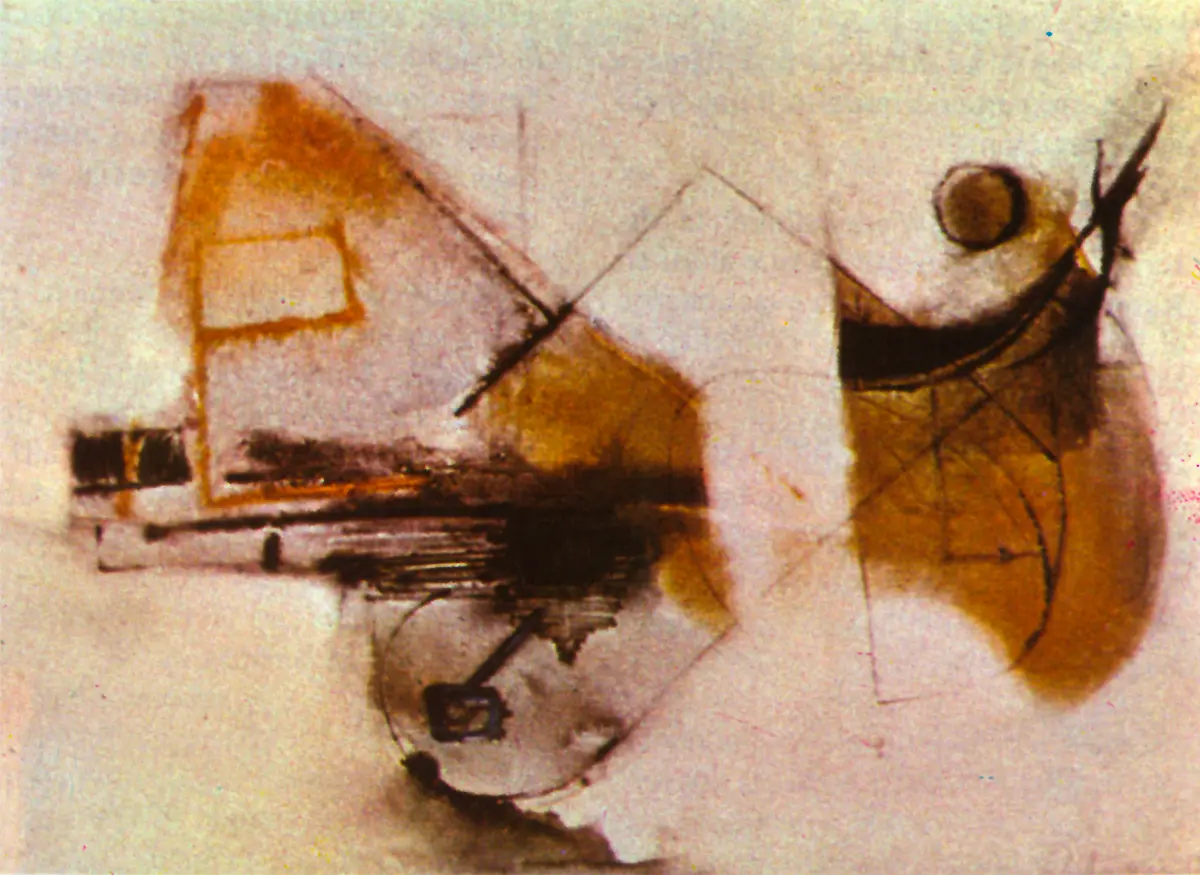
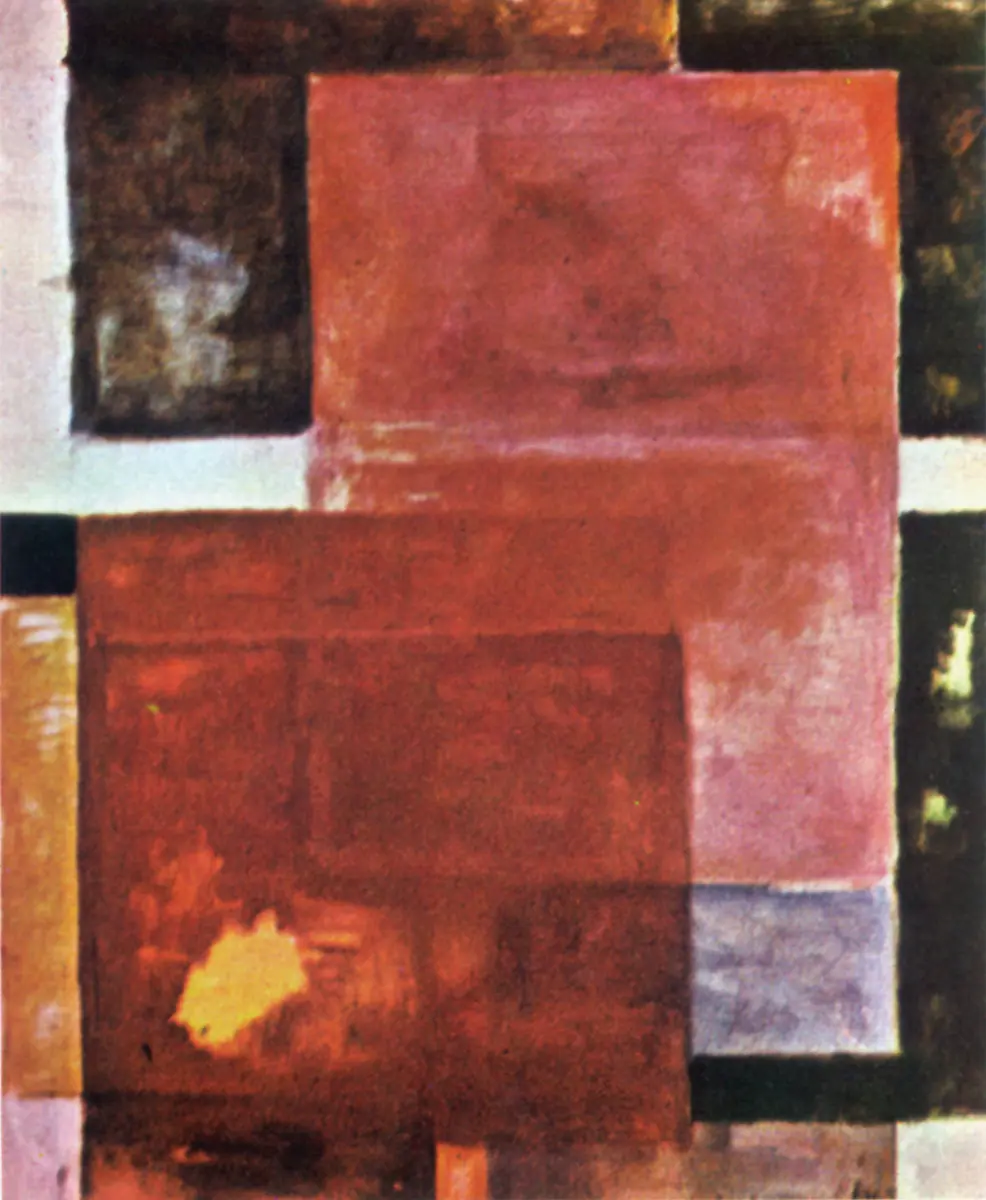
In February, at the beginning of this year, two galleries in Bogotá presented exhibitions featuring works by the master Guillermo Wiedemann (1). Both shows included works from the painter's entire career. These events and the set of abstract works hanging on the first floor of the Museum of Modern Art in 1979 (2), brought attention to the late artist. A name that was not very known in the seventies, despite its undoubted importance. The last individual exhibition of his work had been the posthumous tribute that Beatriz Caycedo organized in 1970, in the Biblioteca Luis Angel Arango galleries.
Wilhem Egon Wiedemann died in Miami, in 1969, after four years of painful illness. Ten years have passed since passing, and fifteen since he interrupted his work. This period already forms a sufficient historical perspective to study his work again. Only a certain distance, in time, help to create the necessary overall vision that allows judging the work of an artist, eliminating tints and nuances that necessarily characterize daily criticism, comment on this or that exhibition, the chronicle on the way journal of a creator. The same chronicle, decanted by time, informs without becoming a determining element, and the plastic work takes up its prerogative to speak without intermediaries.
Between 1939—or perhaps 1940—and 1965, Wiedemann carried out systematic work in the country, always described as exemplary, serious, and systematic. By the way, as an indication of the tone that accompanies Wiedemann, Marta Traba introduces the chapter of the book Six Colombian Artists as follows: "The incorporation of Wiedemann into Colombian painting represents a factor of stability and, specifically, of seriousness in the profession, amidst the general improvisations that characterize the artistic activity of Latin Americans... It is difficult for an artist to understand his profession as an activity that compulsorily submits to normal methods and development, which cannot be avoided or rushed. Against this (Latin American) anarchy, the work carried out by Wiedemann over twenty years sets a pattern that must be revealed and underlined”(3).
(Let's note, in parentheses, that the sharp tone would seem to exclude Latin Americans from the fields of seriousness, logic, and coherence; however, two other names that appear in the cited book are precise exponents of the qualities that are extolled: Negret, and Ramírez Villamizar. As far as Wiedemann is concerned, the comment is absolutely lucid. He was a serious and professional artist par excellence. And we close the parenthesis).
The list of exhibitions that make up Wiedemann's resume can be considered a guarantee of his professionalism. Likewise, the list of public and private collections where his work is located today. In the small book Wiedemann (4), edited as a tribute by his wife Cristina Wiedemann, twenty individual exhibitions and twenty-five national and international group shows are outlined. Even taking as reference only the national exhibitions, the chronology and the list of museums and galleries that housed those exhibitions indicate that the painter's creative process was shown to the public and criticism with methodical regularity, once the barrier of a fierce self-criticism. There are no leaps or gaps that raise an unsolved question or misinterpretation.
Wiedemann, in history, with the perspective I alluded to in opening sentences, is not the same Wiedemann from the early 1960s. The preponderance of his abstract work gives way, without losing its undisputed value. The "overview" immediately leads us to consider all those long years of expressionist figuration before abstraction, as equally essential and significant.
Relatively little is known about this initial period (initial since it has traditionally been considered as a preamble to the abstract stages of the artist's work). There is no written chronicle. Biographical indications are just a few lines (5). History must be recovered with support in the memories of some people who shared Wiedemann's first steps of his nationalization. Not, of course, from the legal process that was formalized in 1946, but from the slow process of assimilation. The world was different from the German city at the beginning of the century from which it came. Among those early friends of Wiedeman, Casimiro Eiger held a special position, and to him, I owe very valuable data.
Wiedemann was born in Munich, in 1905, to a Catholic family of the upper bourgeoisie. We know that by 1920-25 he had been associated with the New Session group. Figurative expressionism predominated there, which should have enriched the State Academy's lessons. In any case, expressionism would be the permanent form of his later work. His biography mentions, without details, trips "to Italy, Paris, Vienna, and the Balkans” (6). He was in Berlin for two years, and when Germany's spiritual climate became unbreathable for an artist like him, he decided to expatriate. He landed in Buenaventura in 1939, with 20 marks in his pocket. In exile, he abandoned everything: his position, relationships, and the initial years of his professional work.
That he chose Colombia as a refuge was due, to a certain extent, to a coincidence: the friendship that he had begun some years before with a Colombian of German descent, Mr. Otto Molí. Born in Cúcuta to a German father and a Venezuelan mother, Mr. Molí completed his engineering studies in Germany. At the same time, he learned art photography, and for that reason, he linked up with the painter. After finishing his studies, Molí returned to Colombia before the war, and it was he who encouraged Wiedemann to undertake his American adventure.
The German painter traveled from Buenaventura to Bogotá. He did not speak Spanish then. He settled modestly, as a guest, in the house of photographer Mandowsky, and gradually surrounded himself with a group of friends, the vast majority of whom were Germans living in the country. That small nucleus, headed by the Molí family, gave him the necessary support for his acclimatization and survival. Upon installing himself, he began to work small landscapes —almost postcards (7), Casimiro Eiger recalls— that he sold or gave as gifts to his friends. The pictorial way he brought from his German training was perfectly suited to his vision of tropical themes. For Wiedemann, "as for any non-Latin European" (8), the tropics' fascination was immediate.
Soon after, he began traveling to warmer places. First, Melgar, not yet contaminated by the avalanche of tourism, and then to Purification, Tolima. He later visited Puerto Tejada, the Choco jungle, to the black towns of Bolívar, and Cartagena. Wiedemann was a tireless traveler. Every year he began his pilgrimage to warm-climate places—he never liked the mountains—and returned loaded with lots of notes and sketched works, which he finished in his study in Bogotá.
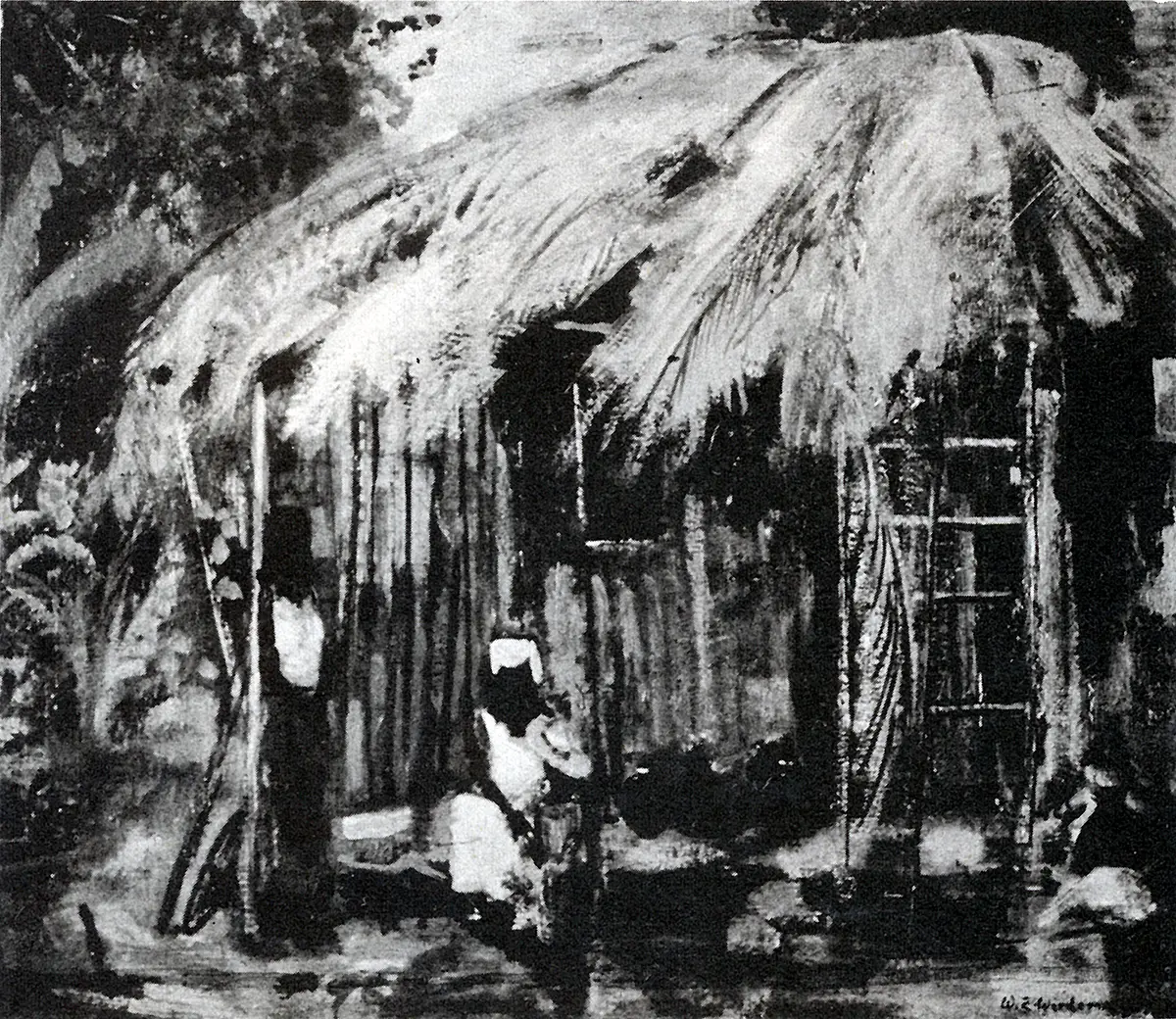
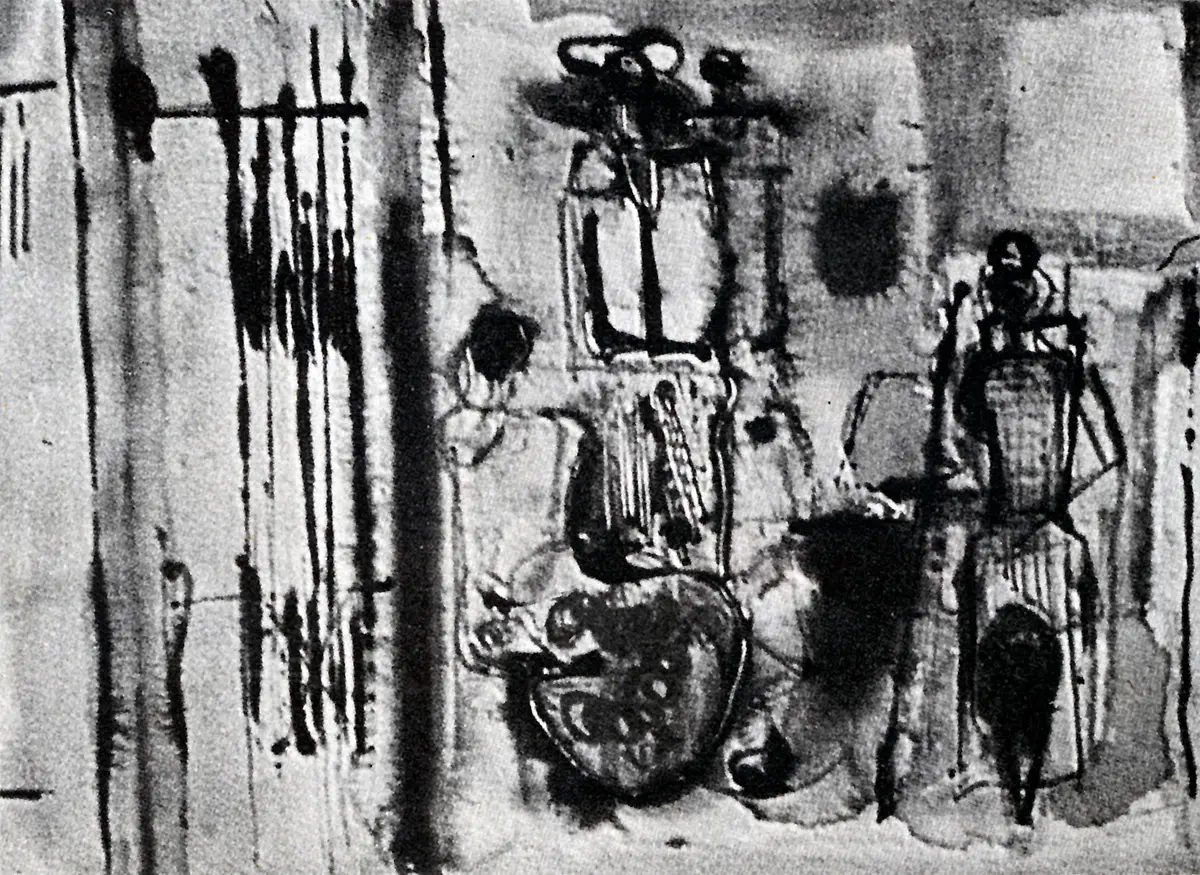
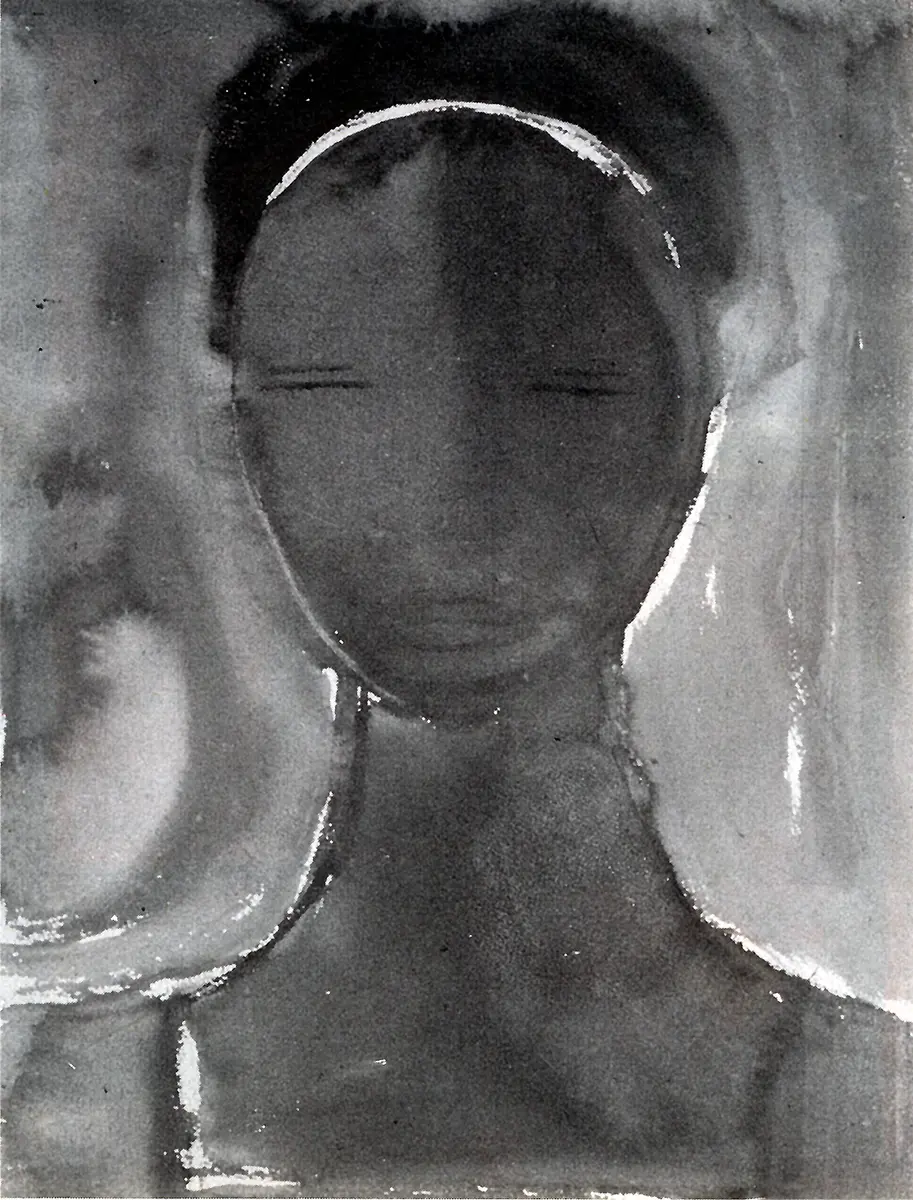
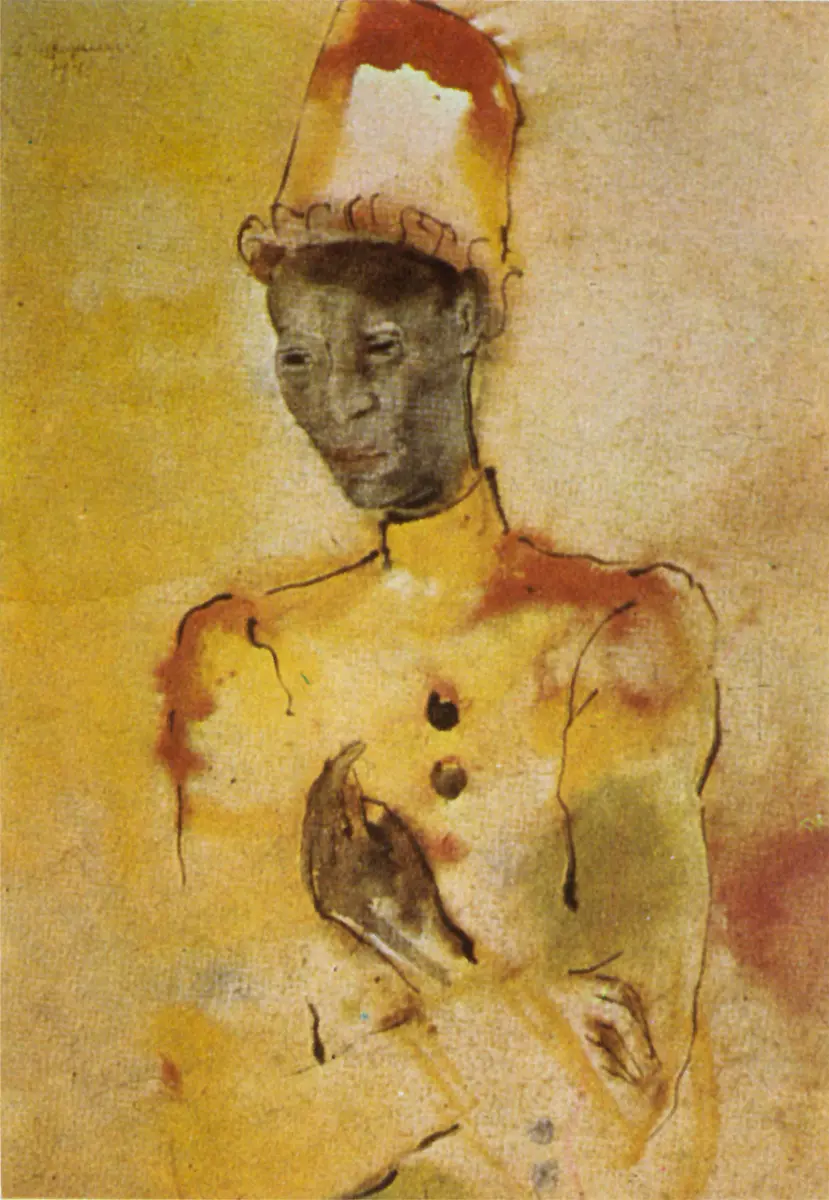
The repeated confrontation with landscapes and tropical people served as a common thread to the evolution in the painter's style. From a descriptive painting like "Landscape of the Magdalena," from 1942 (9), Wiedemann passes smoothly, simplifying the plastic vocabulary, to synthetic approaches within the figuration. Excellent examples of this process are the “Black” watercolor from 1948 (10) and the “Negra” watercolor 1955 (11). The small nervous stain of the initial years that included shapes, colors, and light impressions, is simplified, grows in relation to the formats of the support—fabric or paper—becomes independent of the contour line, is enriched with a graphic element drawn with color or scratched on the stain with the end of the brush. Wiedemann's geography and blacks become essences...
"... painters from the Old World, like Wiedemann, clear the paths of absolute reality to obtain the definitive, permanent, exact, abstract and general essence of the (geographical) circumstance, without diminishing, however, of the only values that qualify as such to the artistic work: the pictorial for the particular case of painting"(12).
Wiedemann’s figuration practically coincided with the years of the artistic heyday of the "Modern" generation. Already in 1940, and at least until 1955, the front page of national painting was occupied by Gómez Jaramillo and Pedro Nel Gómez, Correa, Ariza, Acuña, Martínez Delgado, and Sergio Trujillo, among others. They translated into their work the nationalistic, vernacular, concern that has shaken all of America since the 1920s. The climate of the moment was decidedly oriented towards the search for an “artistic nationalism." So, thematically, the German painter's work until 1957 could very well be included in that chapter of our art history.
Plastically, however, Wiedemann's work cannot be combined with that of his Colombian contemporaries. Their languages are incompatible and distant. The German's loose, agile, and synthetic form was an indisputable advantage compared to the outdated post-impressionism that influences Colombian artists,
Even if his expressionism is compared with that of Correa or Pedro Nel Gómez, the latter are expressionist in theme, not in the plastic vocabulary. It would be necessary to look for one of the deep reasons for this difference in the artistic ancestors. Colombians come from French, Italian, or Spanish sources, Mediterranean, oriented towards the classic, after all, and opposed, consequently, to the tension of the Germanic cultural background that supports Wiedemann. Worringers' thesis on expressionism (13) would adequately justify this approach.
Timid by nature, discreet by character and education, Wiedemann never tried to make Colombian painting in the nationalist sense. It is explainable that his landscapes of warm weather landscapes, totally unrelated to rhetoric and extra-plastic discourse, were not to the liking of his colleagues of the 1930s generation. Although I do not know of any written sources in this regard, those who lived through this period recall the attacks he experienced. However, Wiedemann participated in important group exhibitions for the history of national artistic awakening to the contemporary era: the Salón de los XXVI and the inaugural exhibition of "The Art Galleries," in 1948; the Salón Nacional de Arte Moderno, in 1949; and the Salón de Arte Moderno del Callejón, in 1953. This entire stage is situated before the consecration imposed by the voice of Marta Traba.
Regarding criticism, Wiedemann is a unique case in our environment. I do not know all of the writings on his work. This specifically prevents me from concretizing an informed opinion regarding the reception of the painter's work abroad, especially in the United States and in his native Germany, countries where he exhibited many times both individually and collectively. Nor do I know enough foreign criticism of the artists who represented the country in the Biennials of Central America and the Caribbean (Museum of Fine Arts, Houston, 1956), Venice (1958), Inter-American Mexico (1958), and Sao Paulo (1959). Wiedemann was in all of them.
But with this caveat, I am not mistaken when I affirm that his work never received negative opinions from professional critics. Walter Engel and Marta Traba were undoubtedly those who closely followed the development of the painter's work. Engel presented him locally (14), and, until 1964, his criticism remained faithful to each exhibition, with an affable, measured tone and an essentially descriptive language. Above all, he insisted that Wiedemann's abstraction was primarily abstracted reality. Marta Traba, who dedicated many enthusiastic notes to him, owes the artist's inclusion in the group called “Los Grandes,” with Obregón, Grau, Villegas, Negret, Ramírez Villamizar, and Botero (15).
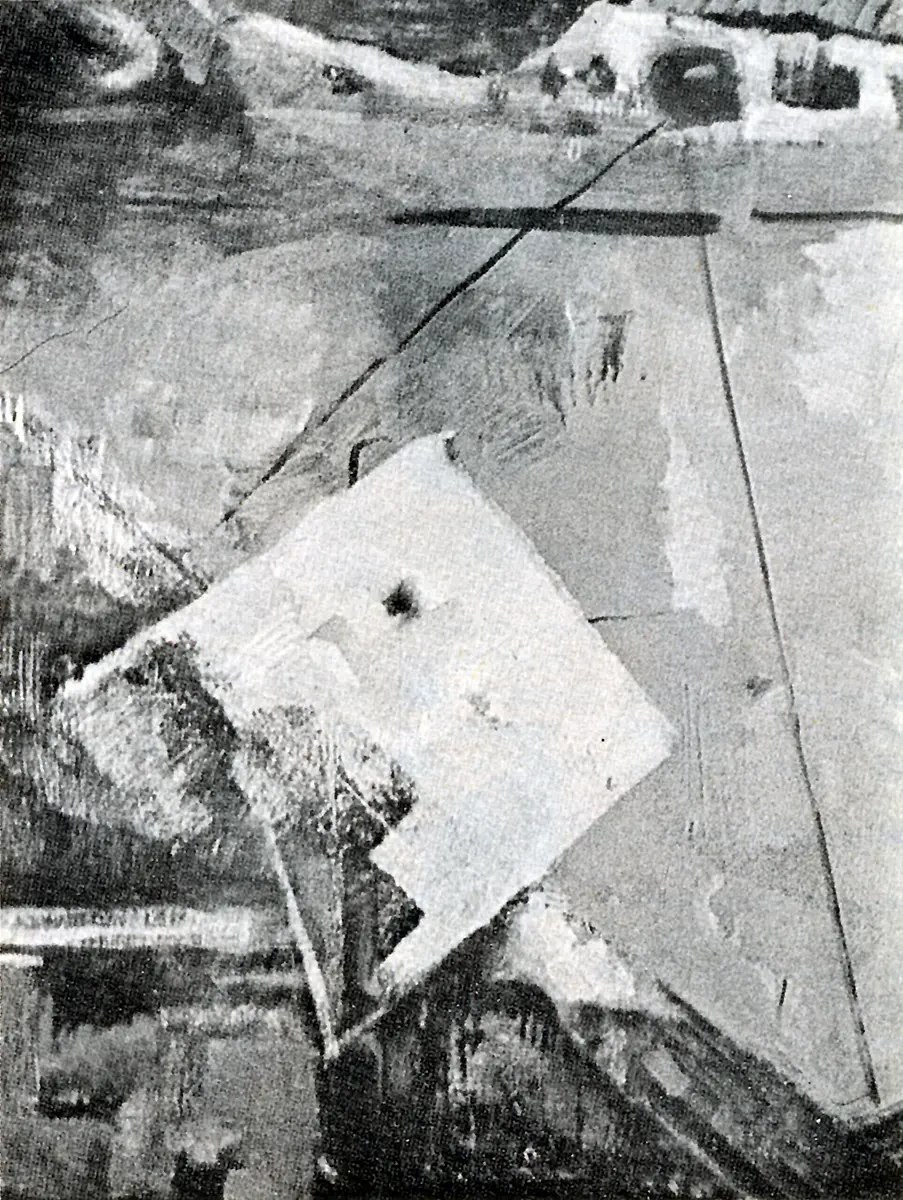
But neither Marta Traba, nor Walter Engel, nor other authors who wrote about the painter highlighted the stage that, seen now, seems so significant. Wiedemann made way for the renewal of figurative languages, consolidated in the sixties and seventies by painters and engravers such as Alcántara, Granada, Loockhartt, and María de la Paz Jaramillo.
In Colombia, Wiedemann is a pioneer as a figurative painter, and not, curiously, as an abstract one.
NOTES
1. Galería Iriarte, February 12 to March 19, 1980 Galería Meindl, February 16 to March 23, 1980
2. Museo de Arte Moderno de Bogotá, July 10 to September 2, 1979
3. Marta Traba, Seis Artistas Colombianos, Bogotá, 1964. Without paging
4. Wiedemann, edited by Cristina Wiedemann, Bogotá, 1970. Photographs by Federico Hecht. Without paging
5. Op. Cit.
6. Biographical data on Wiedemann. Diccionario de artistas en Colombia, p. 436
7. For its treatment, not for its dimensions
8. Interview with Casimiro Eiger, Bogota, July 18 1980
9. Oil on canvas. 80 x 100 cm. Exhibited by Galería Iriarte
10. Watercolor on paper. 75 x 55 cm. Cristina Wiedemann collection, Miami
11. Watercolor on paper. 59 x 42 cm. Exhibited by Galería Iriarte
12. Eugenio Barney Cabrera, Geografía del arte en Colombia, 1960. Min. Educación, Biblioteca de Autores Contemporáneos, Bogota, 1963, p. 257
13. Wilhelm Worringer, Formprobleme der Gotik, Munich, 1912
14. Engel, Walter. Numerous articles in "Revista de las Indias" (1945 a 1949), “Espiral" (1949), "Proa” (1949), Suplemento Literario de El Tiempo (1949 a 1953), Suplemento Literario de El Espectador (1960 a 1963), "Plástica" (1956 a 1960)
15. For the title of a chronicle related to the Colombian participation at the V Biennial of São Paulo, 1959. Revista Semana No. 663, September 8, 1959, p. 21