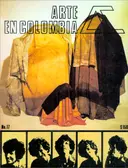
This research, more than attacking the eye as a sense, has been looking for a relationship centered on ideas inherent in the art that must move the viewer. Her work asks in the sense of finding out about the object's artistic nature: its permanence, the materials used, its ability to transform the appearance, and the expression of new formal relationships. She also questions the artist as a producer, distorting the antecedents that recommend an exalted, sacred materialization with redeeming signs, incapable of being included among the appropriate things to add, and settling herself positively in a terrain that attacks intelligence along the road of provocation, through estrangement.
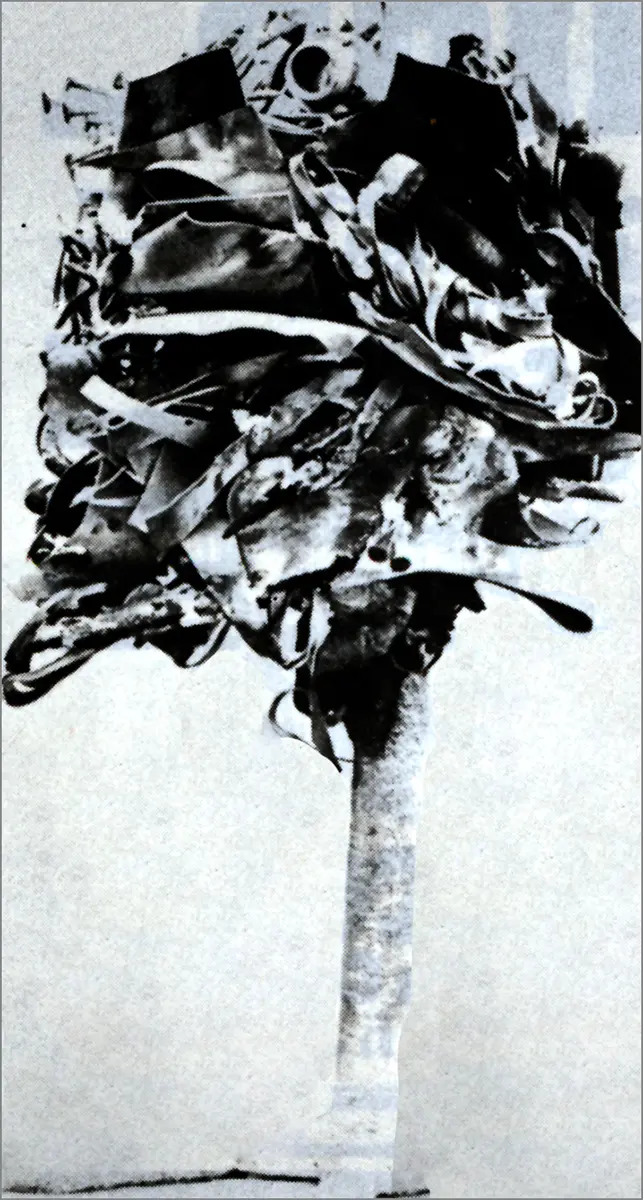
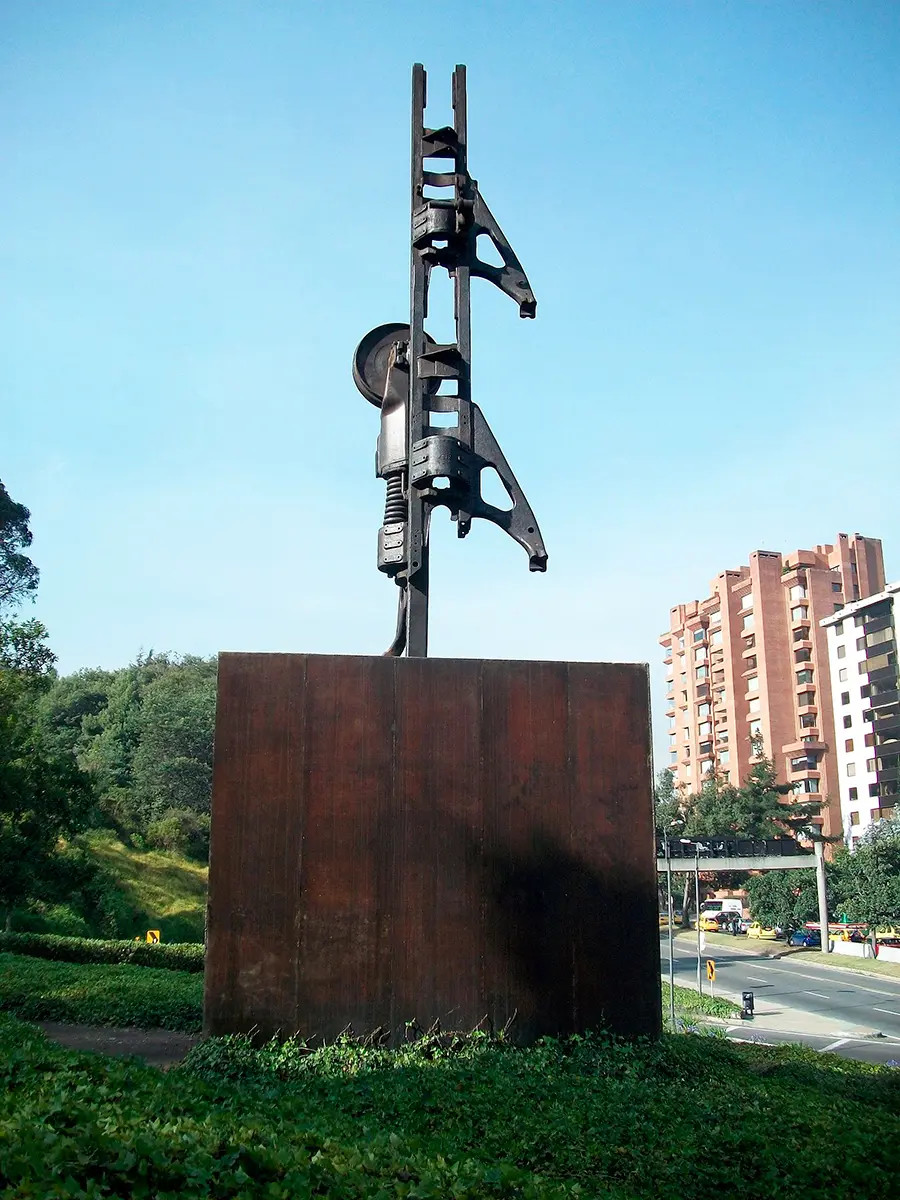
Feliza's earliest training is full of contrasts (1). First, her gaze is directed to establish anti-formalistic relationships with the human being. Some of the first sculptures, “consumed in time” (as Sartre described Giacometti), occupy their first production, using plaster. Not pleased, she returns to Paris to "try other techniques, find new ways, because I have never felt the color. I am only interested in the form. I entered the postgraduate school of Zadkine, who was an extraordinary character.”(2) The result of this experience was the definitive abandonment of traditional materials and, consequently, from modeling, she moved to the first scrap metal in pieces in 1961. (3) Making art with waste was a revolution in Colombia, with the mitigation that the immediately previous sculpture had established a particular way of elaboration, taking care of the form and accounting for rationalism and all its variants of precision. Feliza would be the best rejection of Negret and Ramírez Villamizar’s works, and the only three-dimensional work that would arrogantly and meaningfully use despicable materials during the 1960s.
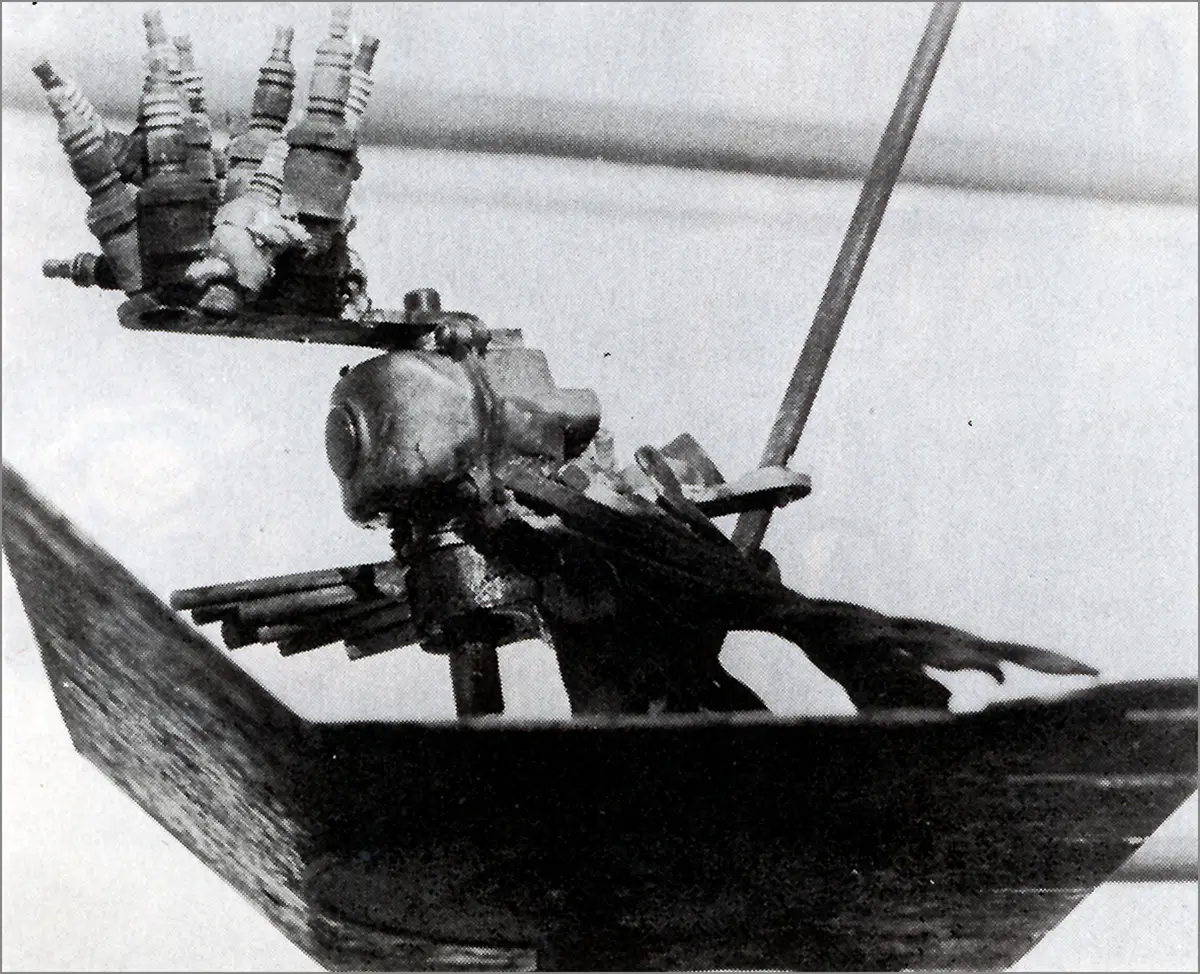
"In the beginning, it was a difficult element, until, over time, I understood all the possibilities I had to make it my real work environment. I found, then, that the scrap metal could be worked on very small or large objects. My biggest passion is welding. I love fire and the medium—basically, the art of destruction. Actually, I worked exactly the opposite way of how sculpture is conceived. A sculptor draws a shape, searches for the materials for that shape, and then executes it. I do the opposite. I go to the junkyards, look at what they have, and then think about what I'm going to do with them. There is nothing prior. I work directly on what I have. It is a totally different procedure from what sculpture is supposed to be. "(4) From her timely and already abundant production, she chooses some works of ambitious and greater scope to send to the National Salon, Homage to Copernicus (1962), Clytemnestra (1963), Flexidra (1964), Looking North (1965), the latter wins the First Prize in sculpture. In a way, it was an official acceptance of the new aesthetic and its due recognition. Since 1962, her works were exhibited at the Museo de Arte Moderno in Bogotá, directed by Marta Traba, who was also a passionate defender of the artist. "The Small sculptures of this period that goes from 1964 to 1967,... they are perfect pieces where the elements used —nuts, screws, spark plugs— lose their identification associated with a density, even serious or significant weight. The sign it transmitted, the sign of freedom, imagination, and strength, was not always noticeable. The complete lack of sculptural tradition and the general confusion between art and evocative statuary determined the resistance and the lack of receptivity of an astonished public before such codification of anarchy."(5) Even though Feliza collects the waste in metal cemeteries, her work continues to be attached to the pedestal. Releasing this is going to be her last stage of challenging idealistic recipes.
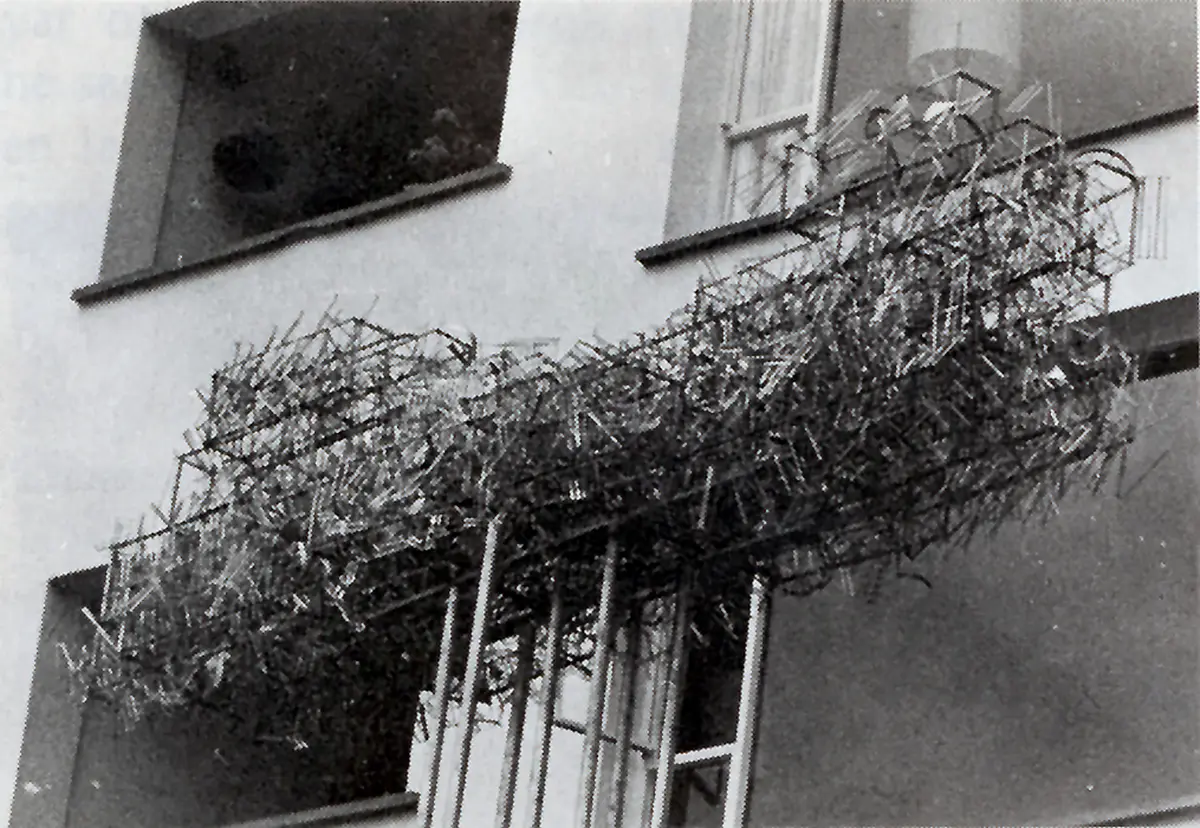
The investigation of the movement, so worrying to the kinetics of that decade, also questions her art. Still, she continues with the brutalist behavior and adapts it to a carefree tone, without the subtleties of the Paris School. A small engine in sight morbidly shakes an incongruous frame of metallic pieces, consequently producing sound. An exhibition is planned at the Museo de Arte Moderno in Bogotá and later in Cali during the Art Festivals: they are Las Histéricas (The Hysterical).
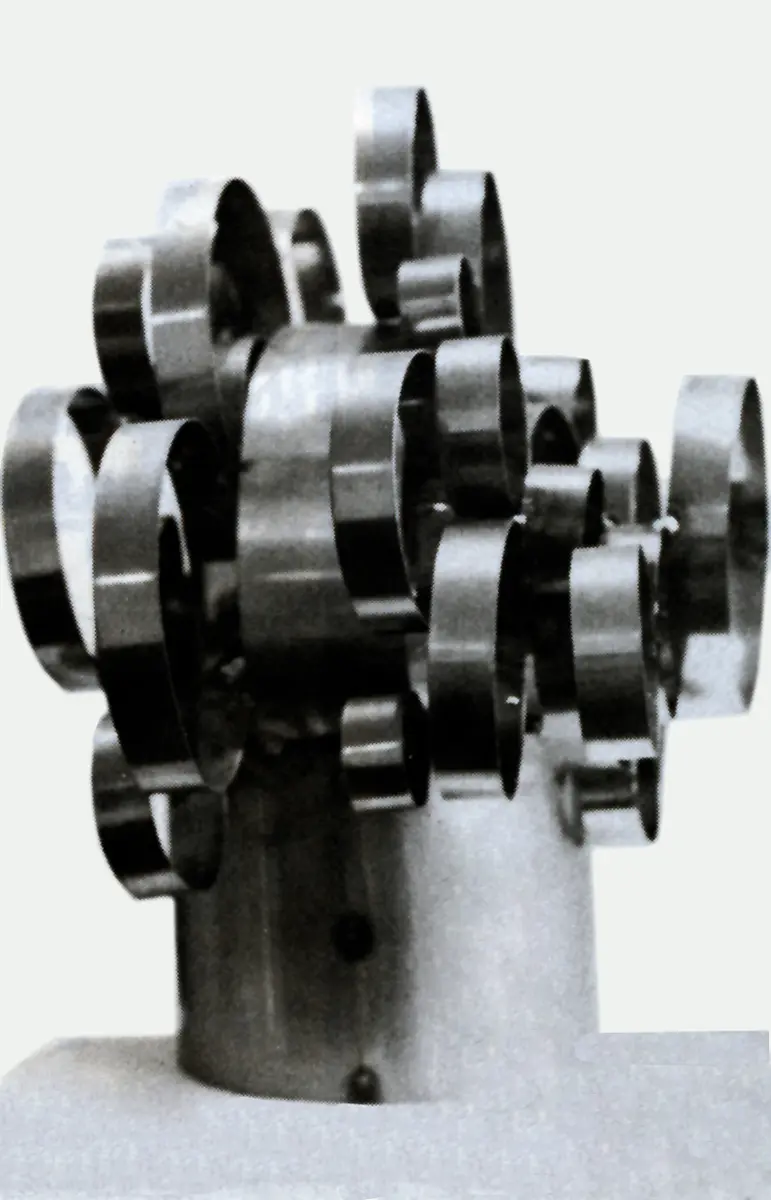
It is not just a set but an environment. It is not merely an arranged show, but the first installation and surrounding space to which the national public is invited—an attack on the eye, the ear, and the mind.
Feliza despises shapes, does not care about finishing and guaranteeing a long life for her apparatus, and offers the possibility of the ephemeral, while delivering the unexpected and prophesying an art based more on concepts than on utility and purpose as competent operatives.
Las Histéricas was exhibited in 1968, the year in which various concerns about the problems of production and reception of art began to be debated in Colombia. Ideas about form and content were stirred, and the role of art and public participation were also discussed. Feliza is not one of the artists who speaks or engages in theories. She prefers to produce, with a disturbing sense of opportunity (for the renewing concept of art) and of the untimely, if we think of the dominant ideology. This vision of conformity, in her work, has given her prestige (or loss of prestige, for others), endowing her work with separatist powers.
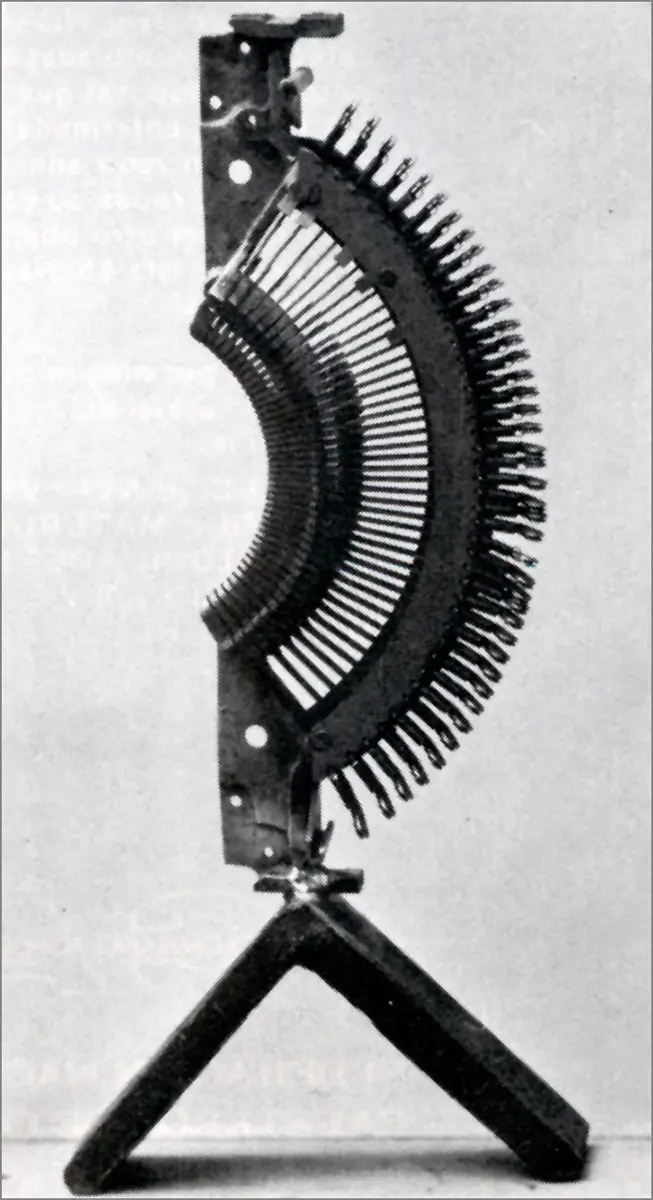
Interspersing her installation works, which, beginning with La Histéricas, constitute the essential aspect of her work as a creative contribution, Feliza has produced multiple graphics, murals, and monuments. All these proofs, with great and mini-experiments, she has sustained with inviolable control, in her principle of not being complacent, guessable, or decorative. Feliza instead prefers to play, laugh, and hold the idea of the casual, to the last consequences. And naturally, the game, the humor, and the search are a dangerous adventure. Feliza has always opted for danger, in exchange for the rude posture of conformity. The latter is her fundamental problem, and consequently, she prefers to be waiting for Godot.
Returning to her most significant production that splendidly illustrates the condition of disturbing artist, I must cite her second installation Las Camas (The Beds) (6), preceded by Construcción en Movimiento (Construction in Movement) (1972), for the II Biennial of Medellín. This suggestive and erotic work showed the action of two characters kneeling and covered with a cloth.
The setting of Las Camas was more elaborate and precise, with beat music prepared by Jacqueline Nova, and a gloomy atmosphere suggested by black cloth rooms. The idea of an enormous brothel where the indistinct noises of the copulants with the national, archiepiscopal, or college boarding school colors, achieve their end without a doubt. Feliza's work was a criticism of the conformity and passivity of art and attacked the sacred strata of that forcibly synchronized choreography that we call homeland.
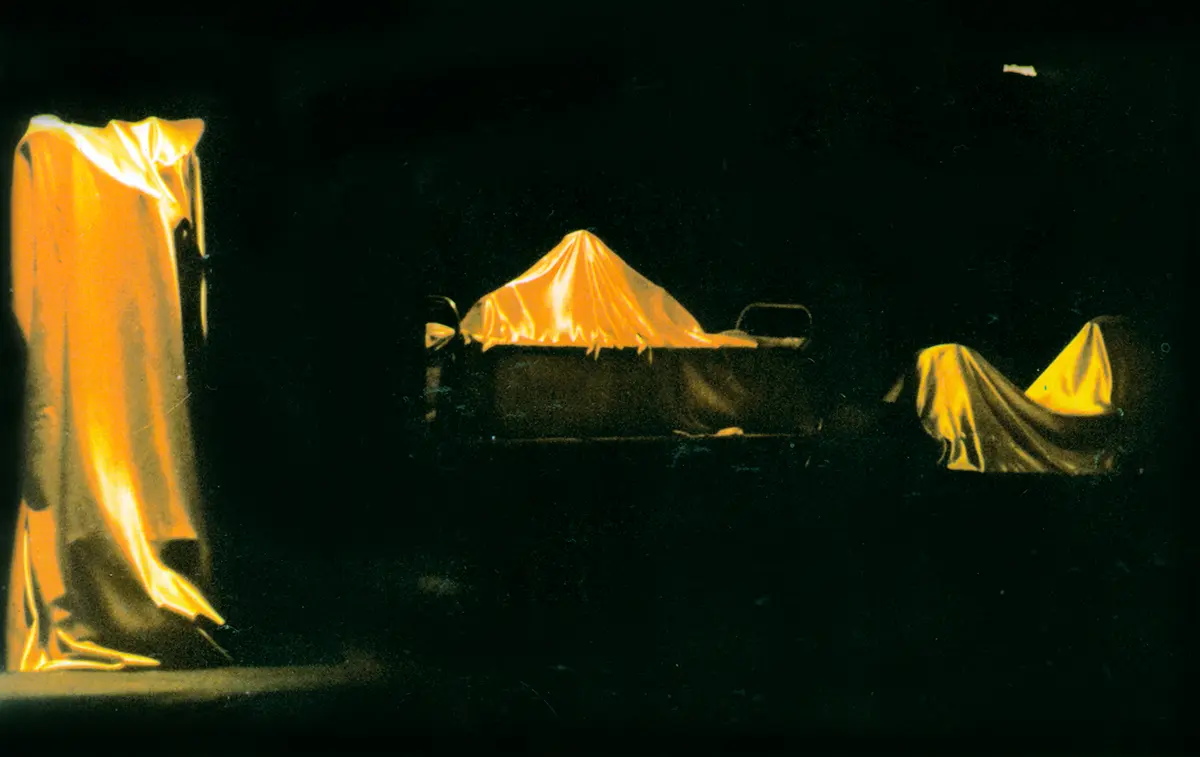
Free from all apathy, Bursztyn's proposal incorporates elements powered by electricity and serial objects such as beds, music, and associating her montage to a theatrical setting. She ceased to be a simple sculptor, to occupy the terrain of the current art worker, unclassifiable by the condition of her ideas and materializations.
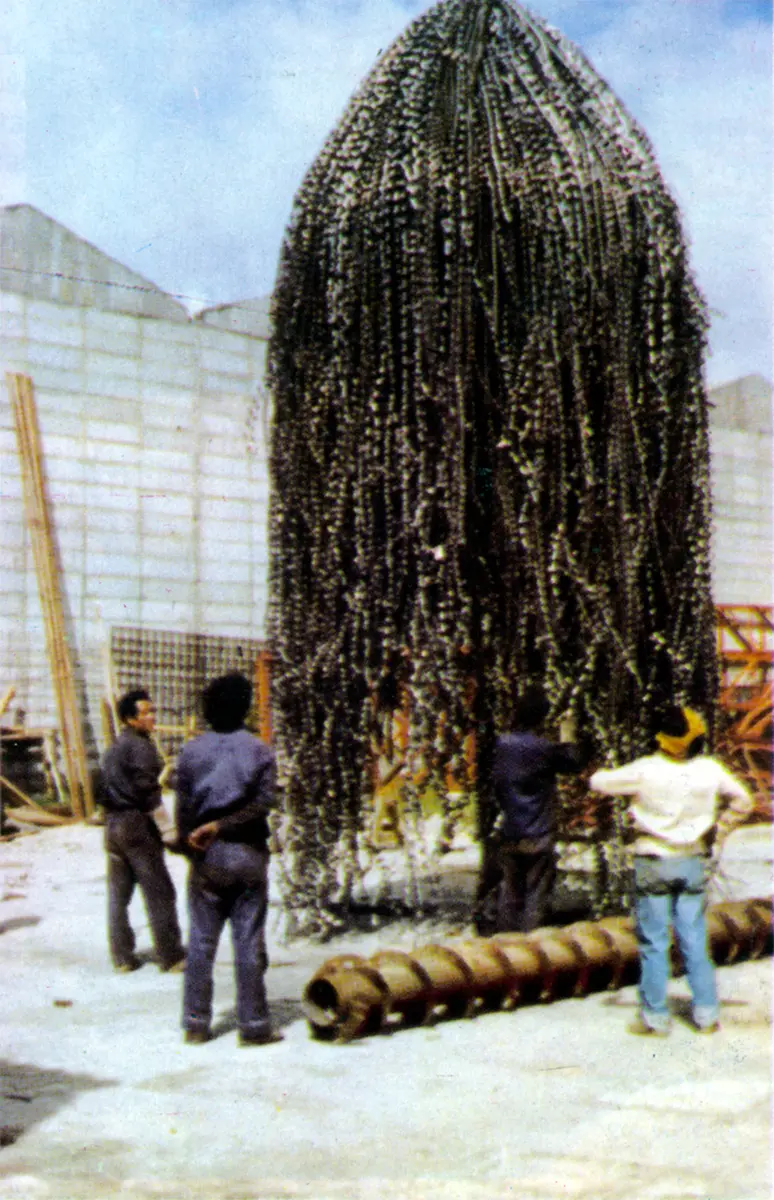
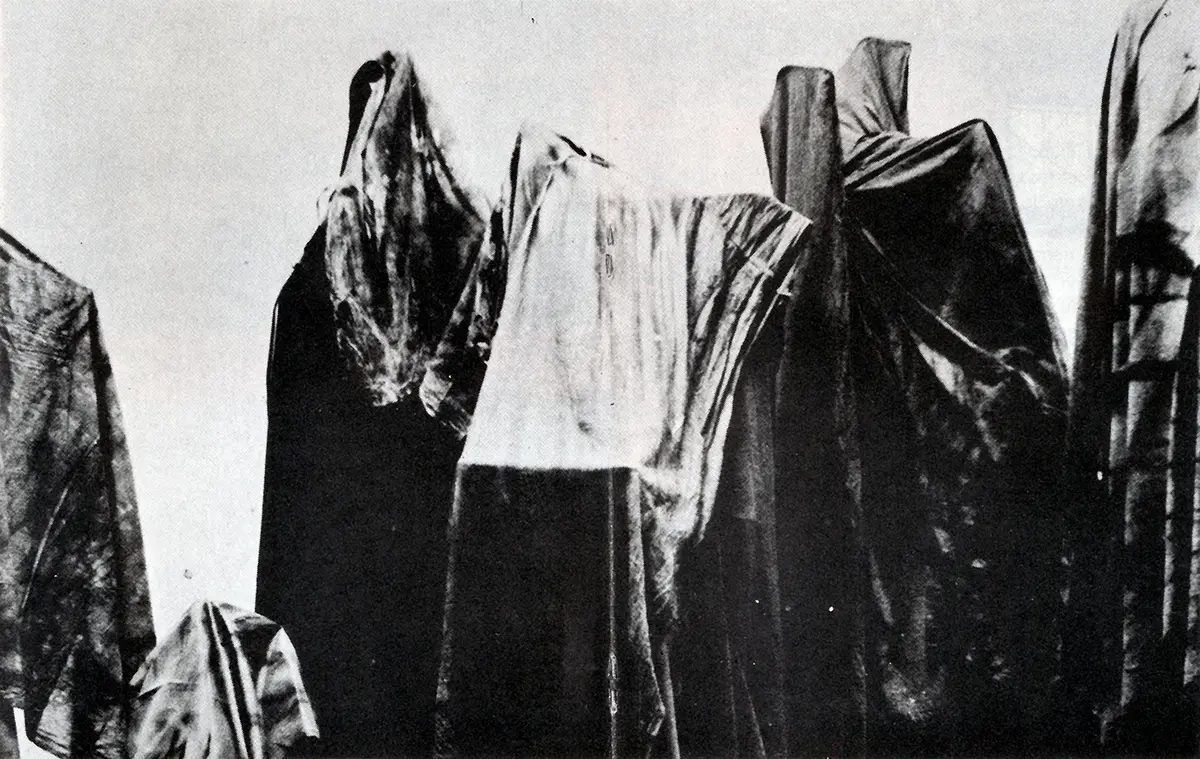
The last installation in Colombia is her work Baila Mecánica (Mechanical Dance) (7), planned on a stage with all its connotations. Now it is rags with rags circulating like automatons on a stage, which is also a boxing ring: seven beings, giants or dwarves, debate nonsense with medieval Gregorian music. "Pechuga,” “Fragata,” “Pipa,” “Enano,” “Polín,” “Gordillo,” and “Bailón,” are the names of the characters. Her show is planned as an announced show and with an audience, who witness a drama whose only outcome is its own orphanhood and the resignation of life without the attribute.
La Baila Mecánica is also her last work before her exile. It has been attended by two of its most fervent prologists. I will let them say the final words: "Strange, the Saturnine dance; strange this —transitional? —detention in the sadness of a work of such firm joy as that of Feliza Bursztyn. As the ancients said, they placed it in the spleen, and as less accurately confirmed by authorities closer in time, in the origin of humor, as well as in its last transformation, a fluid or a mood known with the term, later marred by the lyric, of melancholy"(8).
"I think it is time, also, that this work that has gone through Colombian art attacking and being attacked, laughing at others and pointed out with laughter, makes major statements. Because if we stop having fun even for a moment, we will give in to the temptation to look back and see the endlessly ingenious and witty body of work as a major contribution, even though it is true even despite itself. Any reflection on Feliza Bursztyn seems to contradict the slogan that she launches too scandalously: not to talk about her and have fun with her. In the “Baila,” however, this mistake failed; the show grabs by the throat, and I have not seen anyone laugh; the public always has a formidable instinct”* (9).
NOTES
1. “I started my studies in modern art when Alejandro Obregón was the director of the School of Fine Arts. I was in high school at a nun-run school, and in the afternoon, I skipped classes to study art. They sent me to the United States, and after graduating from high school, I enrolled at the Art Students League in New York. I traveled to Paris, where I stayed for five years, and studied at the "Grande Chaumiere." There I practiced classical sculpture, that is, plasters, molds, clay, and bronzes." Artist's statements for the audiovisual about her work. Museo de Arte Moderno La Tertulia, Cali, 1979.
2. Cited work.
3. She exhibits eleven “Chatarras” (Scraps) at the “El Callejón” gallery, Bogota.
4. Cited work.
5. Marta Traba. Historia Abierta del Arte Colombiano, Ediciones Museo de Arte Moderno La Tertulia, Cali, 1974.
6. Museo de Arte Moderno de Bogotá, Museo de Arte Moderno La Tertulia, Cali, 1974, and later in New York, San Francisco and Mexico.
7. Galería Garcés Velásquez, Bogota, and Museo de Arte Moderno La Tertulia, Cali, 1979.
8. Warsaw, Krakow, and Havana, 1980-1981.
9. Hernando Valencia Goelkel. Bursztyn Baila, catalog Galería Garcés Velásquez, Bogota, 1979.
10. Marta Traba. La Baila, catalog, Museo de Arte Moderno La Tertulia, Cali, 1979.