The Portinari Foundation, a large multidisciplinary cultural center open to all original initiatives
CLAUDE NAMER
The PORTINARI Project constitutes a unique experience in Latin America—and perhaps in the world—in the field of pictorial research and the application of computer science to the visual arts.
It is a pilot project regarding the definition of a methodology for the study of the life and work of an artist and—indirectly—of the historical-cultural period in which he lived.
“The idea of creating the Portinari Project came to me when I visited the Van Gogh Museum in Amsterdam in 1978. I realized that in that museum, the paintings and drawings constituted much more than a simple, harmonious exhibition of the work of the brilliant painter. There was a deep communion between the public—adults and children—and Van Gogh that represented for them a part of Dutch culture, " says Joao Candido Portinari’s 45 years old, son of the painter.
Joao Candido decided to rescue the memory and work of his father, and through these, a whole historical period during which the foundations of contemporary Brazilian culture were established. For him, it is also a "reunion" with his father. He resigned from his position as a mathematics teacher at the Catholic University of Rio de Janeiro, and, with the help of a team of art historians, museologists, documentary filmmakers, sociologists, and photographers, he laid the foundations of the Project.
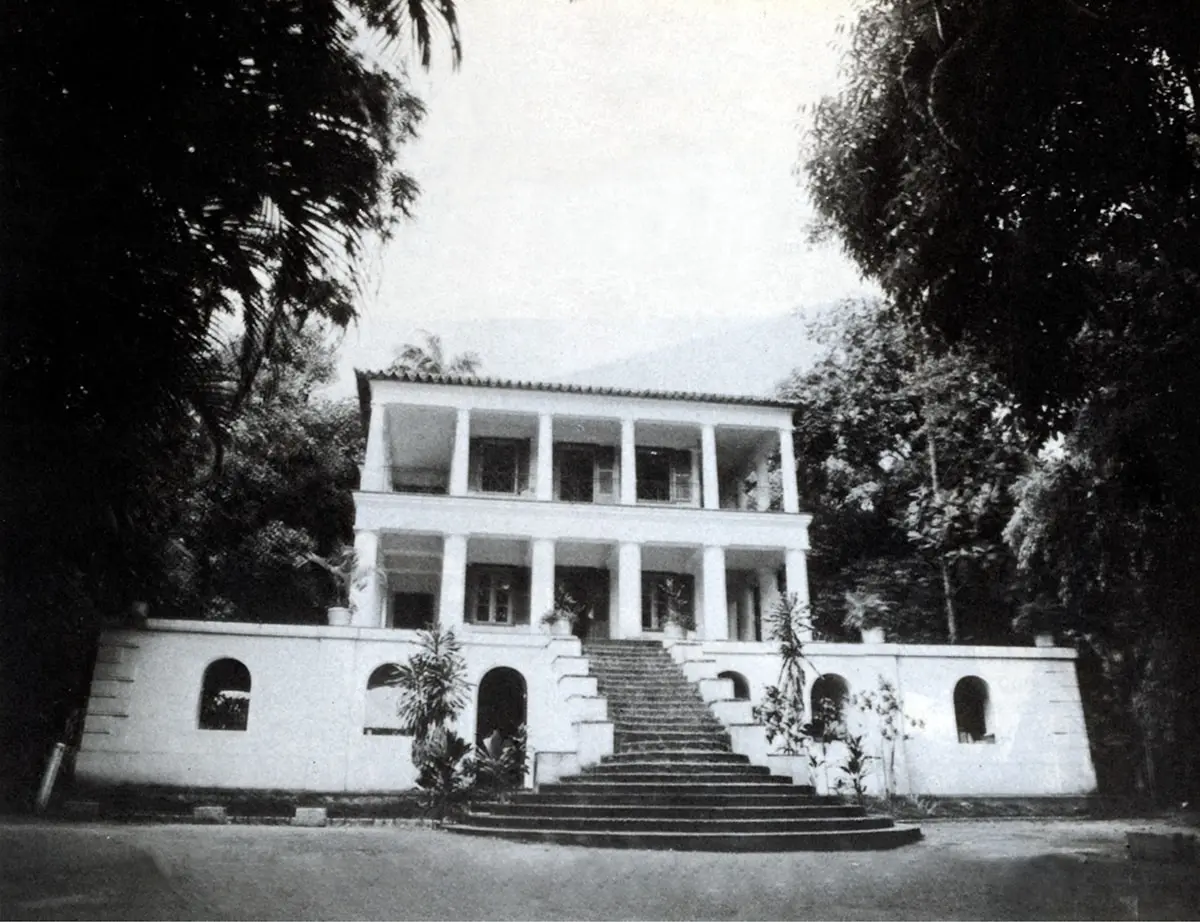
The Portinari Project, which chooses a splendid venue at the University itself, has three objectives.
First, to make a census of all the artist's works—in 1978, 95 percent of Portinairi's work was dispersed in private collections and about twenty countries around the world—and gather all graphic and audiovisual documents on the painter, his time and the relationships he maintained with his contemporaries. After setting up this data bank, the Project intends to make this information available to specialists and the general public. It also looks forward to organizing traveling exhibitions in Brazil and abroad with the collected material and the one that will be gathered by the group. The conclusion of this gigantic task must be, for Joao Candido, the creation of the Portinari Foundation, a great multidisciplinary cultural center opened to all original initiatives and willing to make the most of the experience gathered by artists and specialists.
Joao Candido and his collaborators defined a work methodology. For this, they consulted with experts and international institutions such as the UNESCO International Council of Museums (CIM), the Library of Congress in Washington, and the Museum of Modern Art in New York, among many others.
Then, several members of the team began to travel to numerous countries (France, Spain, Italy, Argentina, the United States, Israel, Uruguay...) where there are works by Portinari to photograph them and interview local cultural authorities. They had the support of numerous public and private organizations in Brazil and abroad, such as FINEP, FUÑARTE, the Ministry of Foreign Affairs of Brazil, the Roberto Martín and Casa de Rui Barbosa Foundations, IBM, Kodak, and Varig.
The project arouses such interest that the television network TV Globo agreed to present messages free of charge to promote the team's initiative.
Testimonies and documents about Portinari and his contemporaries, the Villa Lobos, Osvaldo Niemayer, Graciliano Bandera, Mario de Andrade, who had a real sense of "Brazilianness,” recorded an era forever, and saved much of the indigenous culture, began to arrive massively.
Seven years since the project started and after many incidents, nearly 4,300 works have been inventoried out of a total of about 5,000, including 15,000 newspaper clippings, 215 exhibition catalogs, and 8,000 letters. Sixty books related to Portinari have also been collected, together with fifty recordings by friends and acquaintances of the painter. This enormous mass of information makes up the data bank, and all of it was put into computer language with different possible entries—key words—that allow crossing the collected information (pictorial, technical, sociological, historical, human aspects, etc.). (1)
On the other hand, Joao Candido's experience in the field of mathematics allowed him to work with experts from the Sao Paulo Space Research Center and computer technicians. Thanks to the use of a powerful computer, he managed to digitize the photos (slides) while respecting colors and tones and reproduce some of his father's paintings.
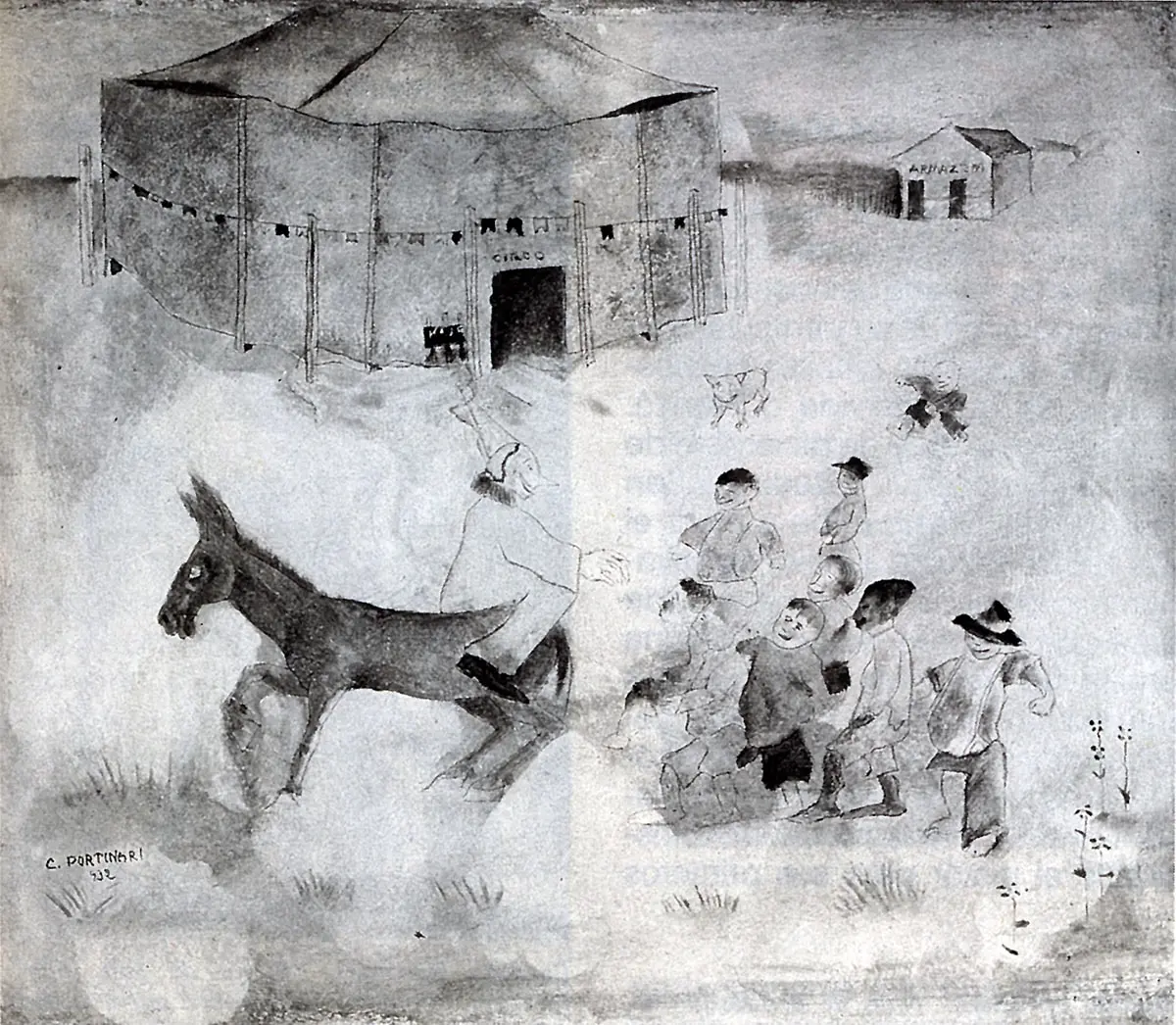
Even though some difficulties arise in oil-painted works, the procedure allows very good results in drawings, watercolors, and gouaches.
This complex and sophisticated method is currently being perfected. Joao Candido has increased his trips abroad to discuss it with scientists and specialists in the visual arts.
The creation of this "electronic museum" enables the second objective of the project to be started in parallel: the dissemination of the accumulated and archived material. Numerous demonstrations in Brazil and abroad have already been held with the use of high-quality audiovisuals and photographic reproductions, and the organization of debates, talks, and conferences on the life and work of the painter.
The creation of the data bank has been more complicated than working in the scientific and commercial field, but the advantages and services that it allows now are considerable. For example, it is possible to get an immediate answer to a complex question: What are the paintings painted in oil where Cangaceiros appear in the 1930s, and to which Portinari refers in his correspondence with Luis de Regó? This is a very big-time gain for researchers. Furthermore, the central data bank can be connected to different cultural and pedagogical centers, so that every organization or museum can have valuable information, without having to access the original documents (pictures and others), that are often not available, in poor condition, or have been destroyed. This way, very diverse problems such as transport, insurance, and conservation are solved, with an evident decrease in financial risks and deterioration of the work.
On the other hand, this technology has allowed—when crossing data of different types— to date, several Portinari works and authenticate some of his paintings.
The experience of the Portinari Project is unique in Latin America and has generated a lot of interest in different countries from the continent and abroad. Bringing together the cultural tradition and the most sophisticated technology is perhaps achieving a perfect balance and a certain truth of the 20th century.
CLAUDE NAMER
Cándido Portinari in Latin American Painting
The themes will almost always remain pathetic and "committed," in the best sense of the term, to the poorest, the most underprivileged.
DAMIAN BAYON
Candido Portinari is a different figure within the panorama of contemporary Latin American art, and his particularity appears from the difficult circumstances in which his life began. Portinari was born on December 29, 1903, in Brodósqui, State of São Paulo, in Brazil, and died in Rio de Janeiro, in 1962. Even though he was relatively young, he had already been covered with fame and honors. The second of a family of twelve children, his parents were Italian immigrants who made their living as agricultural workers in the immense São Paulo coffee plantations. These plantations inspired his first paintings: the brightness of the light, the brown blacks, the tasks of that field of red, and not idyllic land.
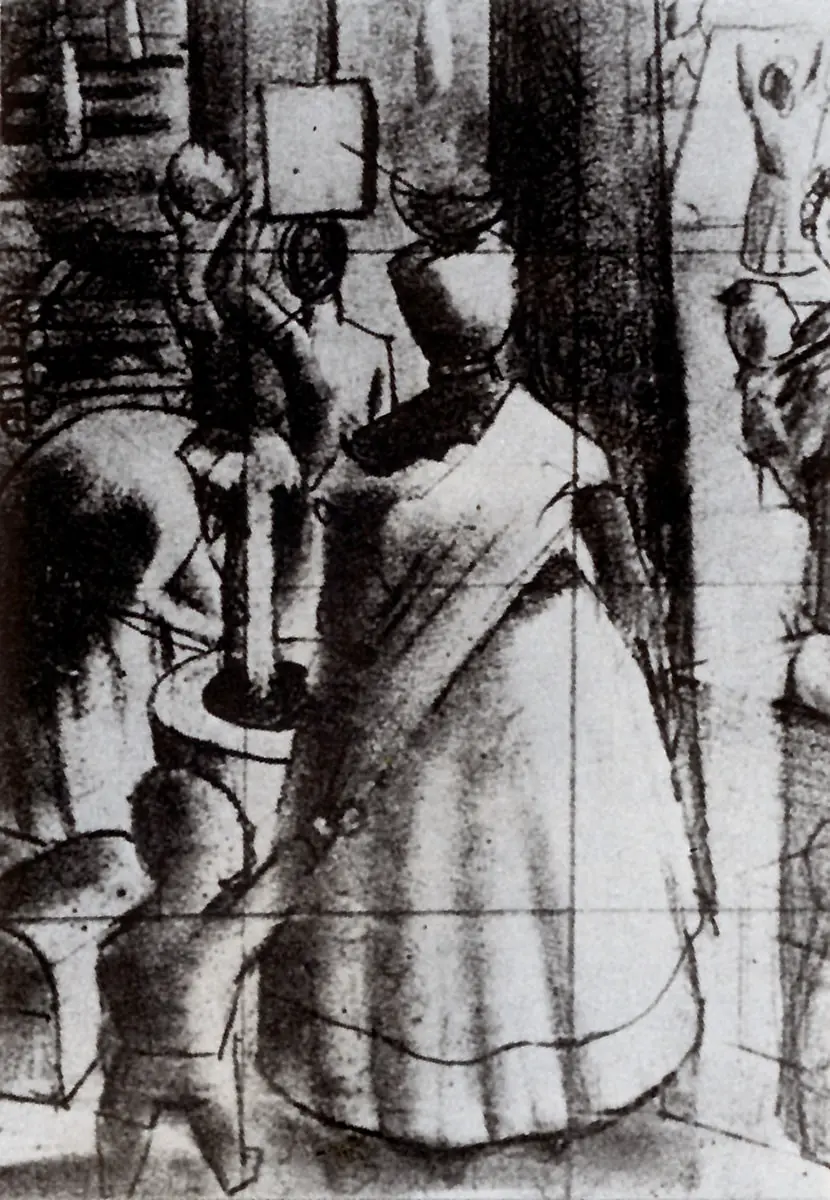
When he was thirteen-years-old, they were able to send him to Rio de Janeiro, where he studied his first letters and pursued classes at the where Escuela de Bellas Artes, where he soon managed to stand out. In 1927 he won a silver medal in the Salón Nacional, and the following year he received a cash prize that allowed him to travel to Europe. He stayed two years in Paris and frequently escapee to Italy and Spain, where he set out to get to know the great masters of yesteryear, especially the fresco painters.
In 1935, the Carnegie Institute in Pittsburgh awarded one of his paintings from the previous year, entitled precisely Coffee, a work that implied a new tone in South American painting at that time. On the contrary, in Mexico, Rivera, Orozco, and Siqueiros had already explored the possibilities of art as a vehicle for political and social struggle. In Portinari, things did not happen in the same manner; they were never so dogmatic, so Manichean. Thus, despite being a member of the Brazilian Communist Party, Portinari often painted Christian religious themes not only with respect but even with love. Suffice it to remember his two Stations of the Cross, one from 1943-45 and the other from 1953); The First Mass in Brazil (1948); and San Francisco (1953), located at the Church in Pampulha, a work by architect Oscar Niemeyer.
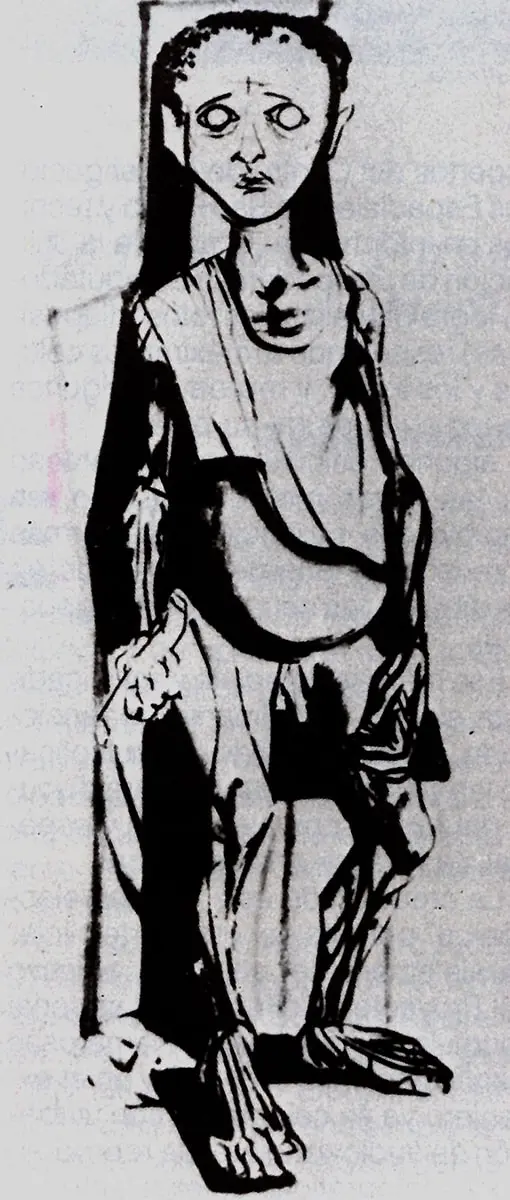
By the time he gets big commissions such as those for the World's Fair in New York (1939), and later the frescoes for the Library of Congress in Washington and the United Nations in New York, Portinari was in his midst. In all these works, as well as in his large Brazilian murals, he unleashed his two passions: drawing deforming, with a deformation that monumentalizes everything he touched and applying a nuanced color that did not correspond to the chromatic dazzle that people expected from art produced in the tropics.
Finally, in his career, a return to the easel painting occurs. Themes are almost always pathetic and "committed"—in the best sense of the term—to the poorest, the most underprivileged. Instead of looking for the large scale of the mural, he now concentrates on the smallest canvases, elevating the color to expressionist violence, and even plastering with a lot of material of which there are traces as visible grooves, oriented following the shape, as seen in Van Gogh’s paintings.
Influenced by Giotto, Masaccio, Piero della Francesca, and Uccello, Portinari was also going to suffer many modern impacts. We have already seen that of the three great Mexicans. Now it would be necessary to add the otherwise evident Picasso (drawing enormous hands and feet that correspond perfectly to what he wanted to convey at the time). Likewise, a kind of sui generis “cubism” appears in his work with which he tries to break—as in the Tíradentes mural (1948)—all possible monotony in those vast areas that he always feared would remain inert.
There is no doubt now, seen from the perspective that the long twenty years after his disappearance provide us, that Portinari occupies with the Uruguayans Torres-García and Figari, and the Argentines Pettoruti and Victorica, a place of exception. Although it must be agreed that those mentioned here were above all “intimate,” it can be said that Portinari, on the contrary, only seemed to feel at ease when he expressed himself on the heroic scale.
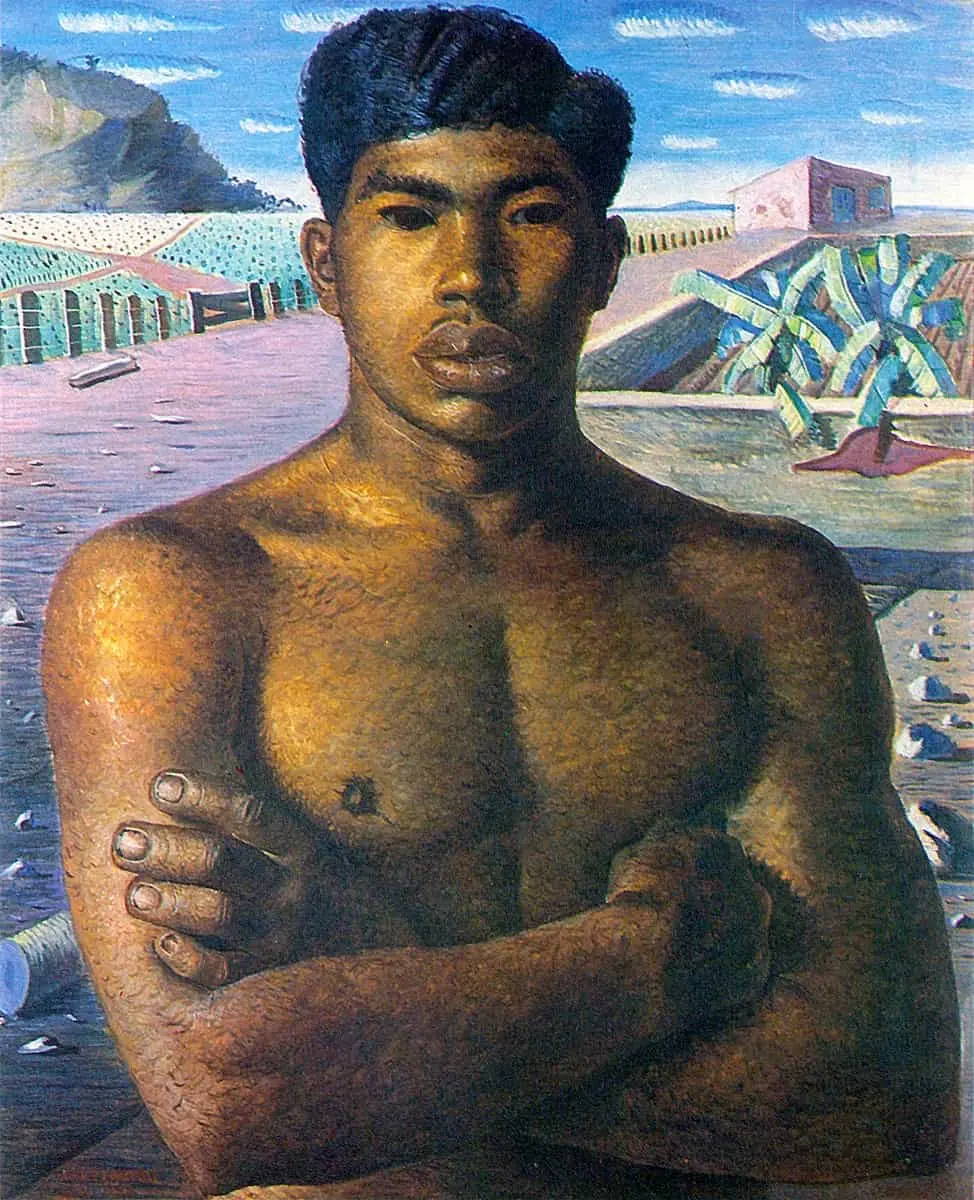
In that sense, no one has gone further than him in the entire field of contemporary South America.
DAMIAN BAYON