A truly critical evaluation, defining Tamayo's historical place in the Mexican and international history of modern art, seems to be still an event of the future.
SHIFRA GOLDMAN
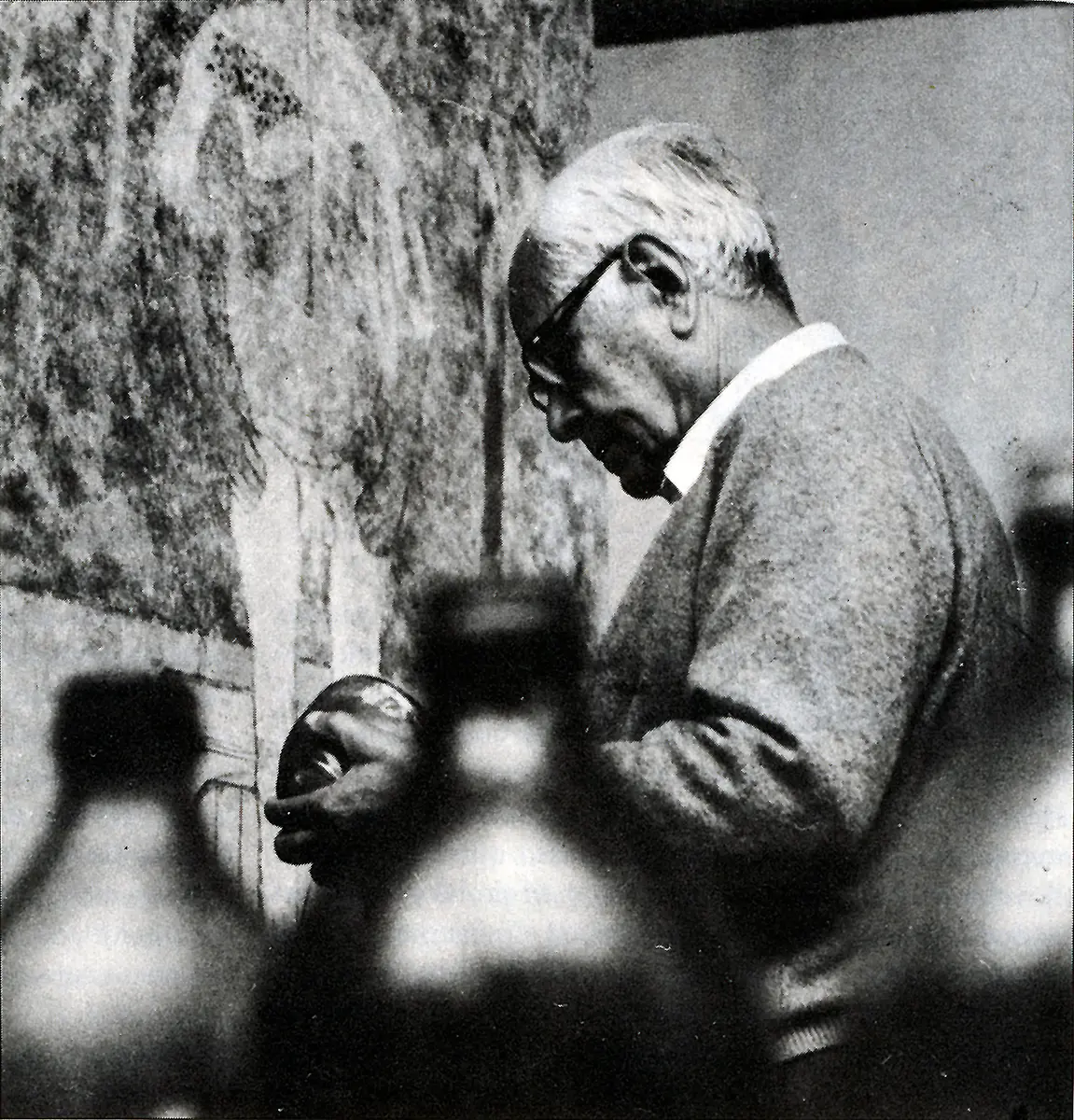
Rufino Tamayo: 70 anos de creacion,” which opened in Mexico City December 9, 1987 and closed March 20, 1988, is doubtless the largest exhibition and most important retrospective of the Mexican master’s work within memory. Filling two large museums -three floors of the Palacio de Arte Internacional Rufino Tamayo (paintings and sculpture)- the two displays, totaling six hundred pieces, were coordinated by the indefatigable Mexican art critic and historian, Raquel Tibol.
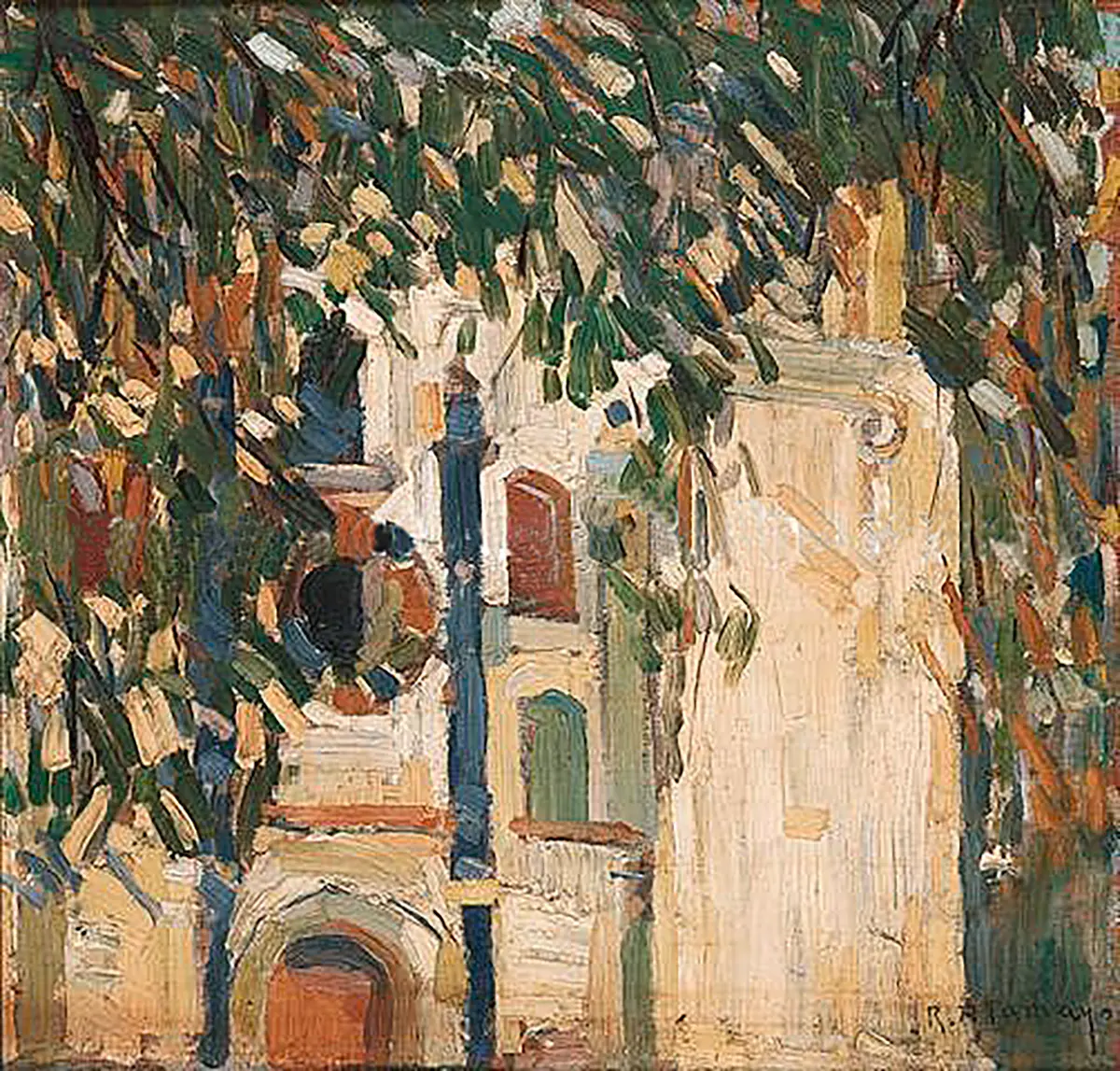
A small oil painting by the twenty-one year old Tamayo hung on the lowest floor of the Tamayo museum and had the same quality of fascination for me as an art historian that a new find which reveals the genesis of an ancient civilization has for an archeologist. A simple scene, Una capilla de Oaxaca, it was painted in 1920 and admired at that time by Diego Rivera who maintained a high opinion about Tamayo’s painting throughout his life. Thick choppy strokes of pale yellow and white over a dark base establish a corner of the chapel wall, penetrated by dulled green, blue and red windows; the whole is seen through the dark richly hued leaves of a shadowing tree. Not yet impressionistic, it opens up a brief development in which Tamayo practiced the full divisionism and use of complementary colors associated with French Impressionism. After three years of unsatisfactory study at the conservative Academia de Arte de San Carlos (from 1917 to 1920), Tamayo already leaves behind any remnants of 19th-century academicism and indicates what was to be a lifelong interest in luminous color, varied textures, and a modernist flatness.
Proceeding through the painting exhibition, the dark thickly - brushed Cezannesque still lifes and portraits of the late 20s and early 30s- complexity structured and layered with densely packed rounded objects held in place by geometric frameworks of tables, chairs, boxes, and wire or iron grille fences -are followed by works in which the paint thins into almost transparent surfaces through which the canvas is visible. Everyday objects form the text of these paintings: fruits of all ^prieties (as a Oaxacan-born orphan, Tamayo worked in Mexico City for his aunt who sold fruit in the marketplace), kitchen cutlery, bowls, clocks, light bulbs, a pack of cigarettes, strands of rope, sea shells, musical instruments (especially sensually -shaped guitars and mandolins), chessboards, icecream cones, telephones- the list reflects a period in which daily life permeated Tamayo’s consciousness and not only became the subject of his paintings, but remained constant motifs in his work. Another major element entered Tamayo’s work in this early period: the influence of folk and popular arts and pre-Columbian clay sculpture (particularly that of West Mexico), from his two-year position (1921 -23) as head of the Departamento de Dibujo Etnografico at the Museo Nacional de Arqueologia. This experience, plus a stay in New York (1926-28) which gave him his first contact with original works of European art (particularly those of Cezanne, Braque and Picasso), completed his initiation into modernist art. He displays a new sense of spatial relations as a result of this visit and a deliberately naive style with strong Mexican characteristics of color and form which define his painting for this period. Always a sensualist, always immersed in the rhythmic patterns between straight and curved lines, flat surfaces and rounded masses, shadows and lights, voids and solids, Tamayo’s fundamental language reveals itself as one forms, colors and sensations.
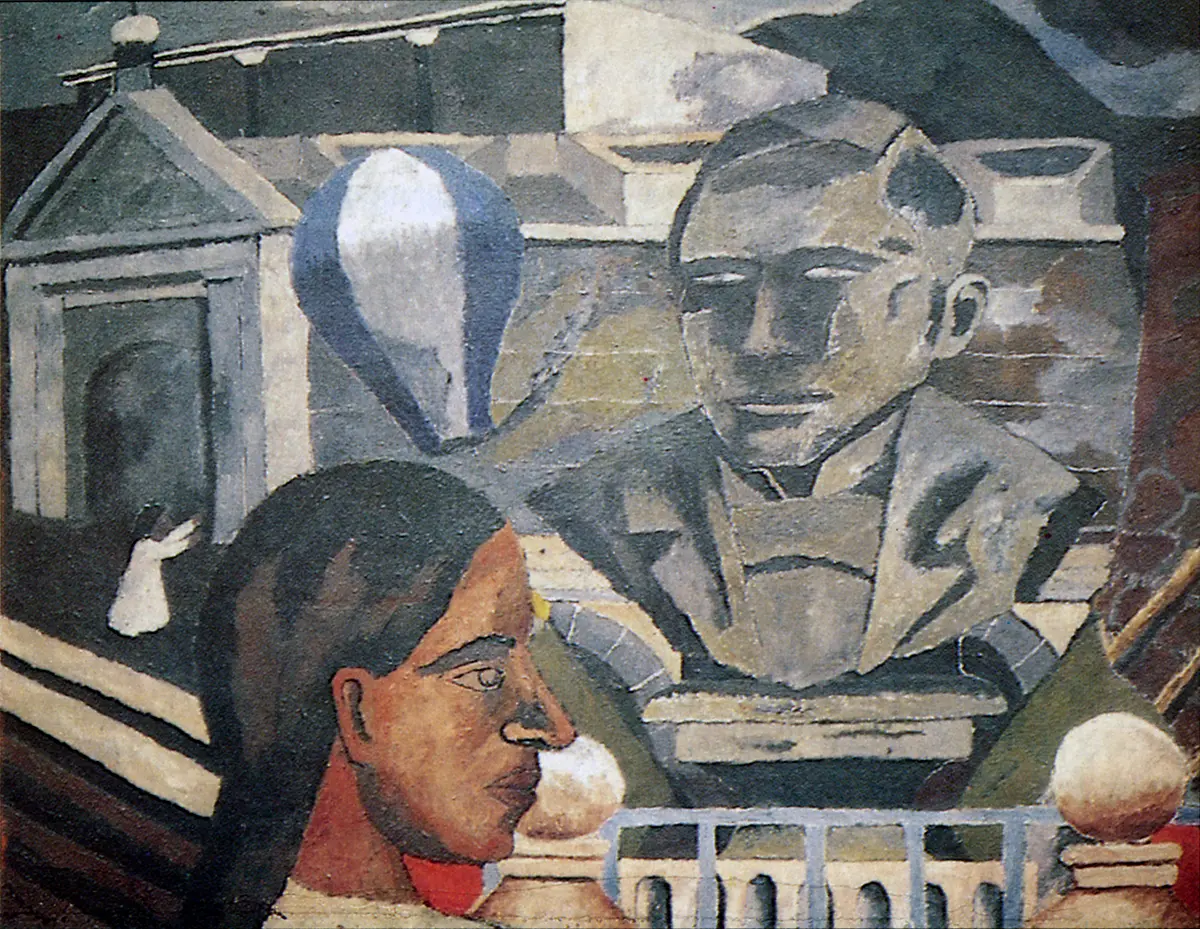
Art historian Bernard Myers has argued that Tamayo’s political paintings of the 1930s -Monumento a Juarez (1932), Homenaje a Zapata (1935), Llamada a la revolucion (1935), Ritmo obrero (1935) show that he possessed revolutionary consciousness. (1) To this, we might add the incomplete mural of 1930 at the Museum of Archeology, which he repainted in 1938, titled Revolucion. My opinion differs from that of Myers. In the paintings, both Juarez and Zapata appear as gray sculptural busts isolated from reality by iron fences and architecture, rather than the living insurrectionary figures of the Mexican School painters. In the Juarez, a woman painted in living browns and white indifferently passes the enclosed sculpture, while the Zapata /mage is restrained behind patriotic flags and surmounted by giotto-esque swooping angels. In Tamayo’s lexicon, they are dead historical personages with no meaning for his time. A rhythmic choreography of figures and tools is the real theme of both Llamada and Ritmo obrero, while the repainted mural is stylistically reminiscent of 1920s’ Orozco works in the patio of the Escuela Nacional Preparatoria, but lacks Orozco’s substance; ratherthan “revolutionary consciousness” it would seem the young Tamayo was attempting to treat social realist themes either with ironic wit, or with noticeable lack of success.
In the 1930s Tamayo became associated with the literary group, “Los Contemporaneos”, formed in 1928 with the idea of combatting Mexicanism and arousing interest in an international rather than a nationalist culture. A magazine (of the same name) published by the Contemporaneos reproduced works by Picasso, Braque, Matisse de Chirico, and others of the European vanguard, as well as Mexican artists working with European influences including Diego Rivera, Orozco, and Tamayo himself. It would seem that Tamayo was not only anti-nationalistic, but antirevolutionary in a period marked by the reversal of revolutionary promises presided over by president Plutarco Calles and succeeding presidents.
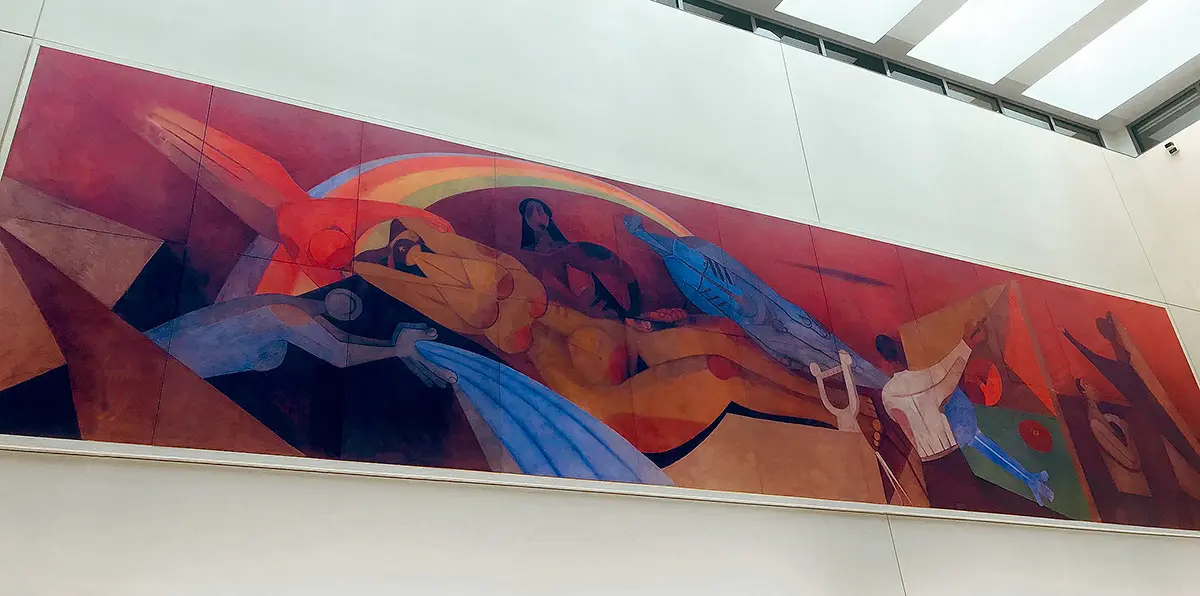
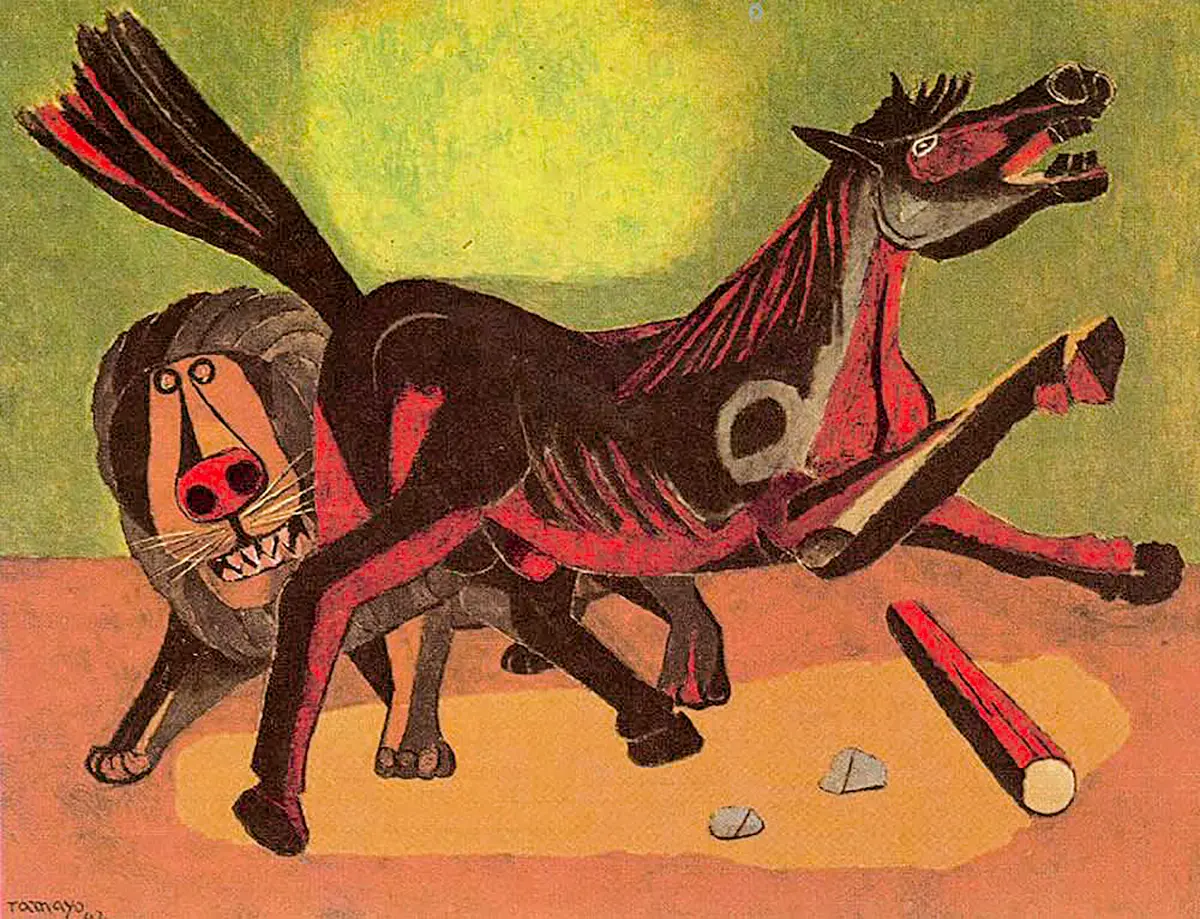
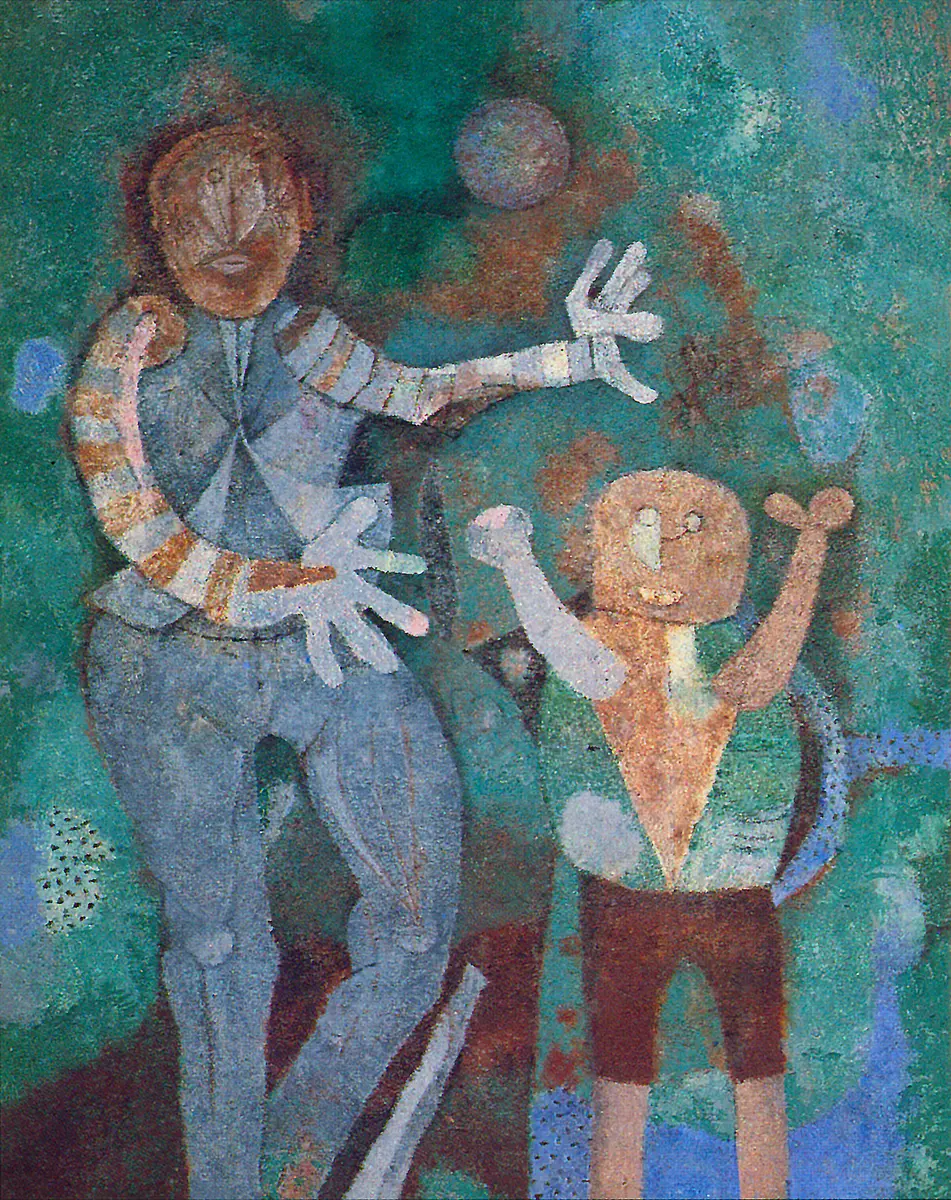
In the 1940s, Tamayo’s work grew in expressiveness and monumentality. Figures of people and animals were more substantial and active; compositions were less patterned and crowded than the earlier work. Line defined masses of colored forms, and color itself reached a new level of rich intensity. Tamayo has always believed in a restricted palette in which every variation of which a color was possible could be extracted. From this period come outstanding works such as Animates (1941) Mujer con pina (1941), and Amantes (1943) (none of which, unfortunately, were in the exhibit for reasons explained below). The West Mexican clay sculptures of dogs and grotesque figures are noticeably important; however, another important influence became dominant in Tamayo’s work that of Picasso. In 1938, unable to receive recognition in Mexico during the presidency of Lazaro Cardenas (1934-40) and the renewed hegemony of the Mexican School, Tamayo moved to New York where, in 1939-40, a large Picasso retrospective was on exhibit at the Museum of Modern Art. Included was the Guernica which Picasso shipped to New York for the exhibition, and allowed to remain there on long term loan until its recent removal to Madrid. The great horse of Guernica became a model for many of Tamayo’s animal paintings, including the horse of the conquistador in his 1952 mural Birth of Our Nationality painted for the Palacio of Bellas Artes, along with a second mural, Mexico Today, These two murals, commissioned by the government for a building previously open only to the “tres grandes”, Rivera, Orozco and Siqueiros, mark a new epoch of official recognition in Tamayo’s life.
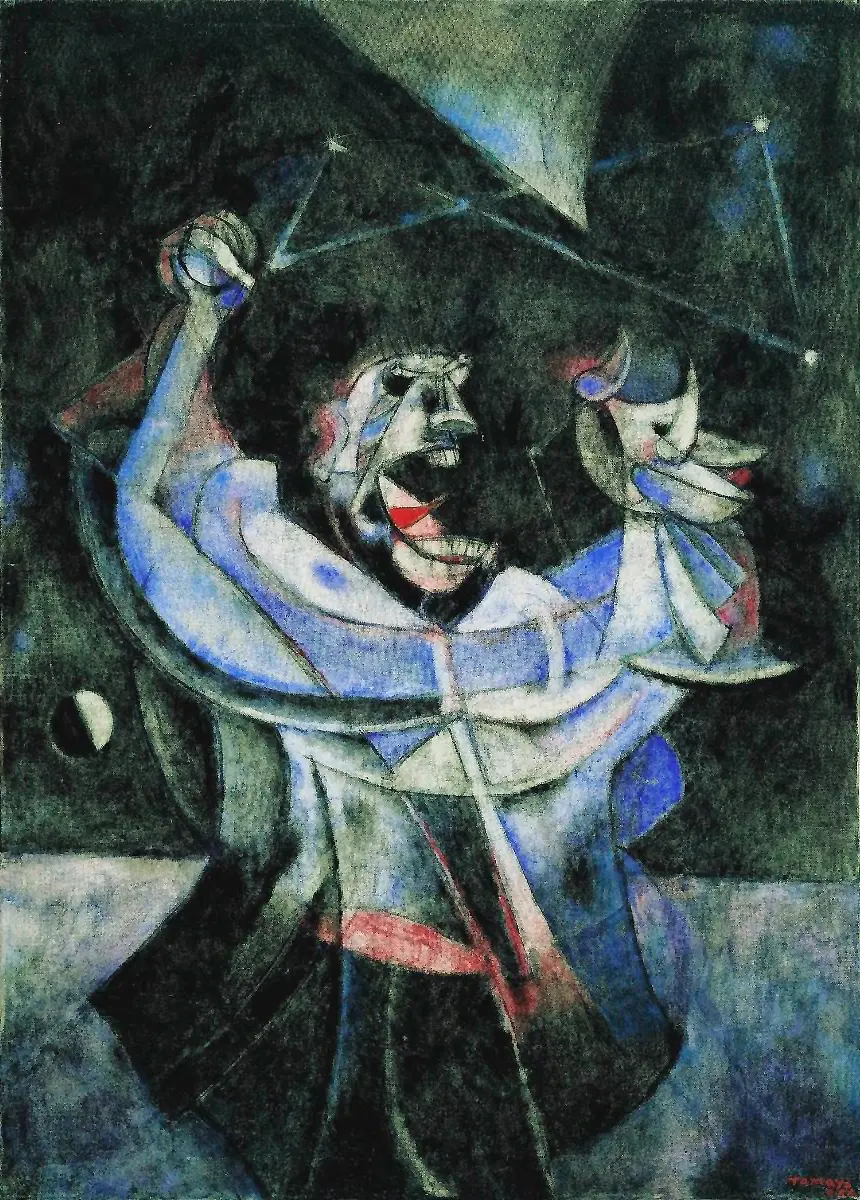
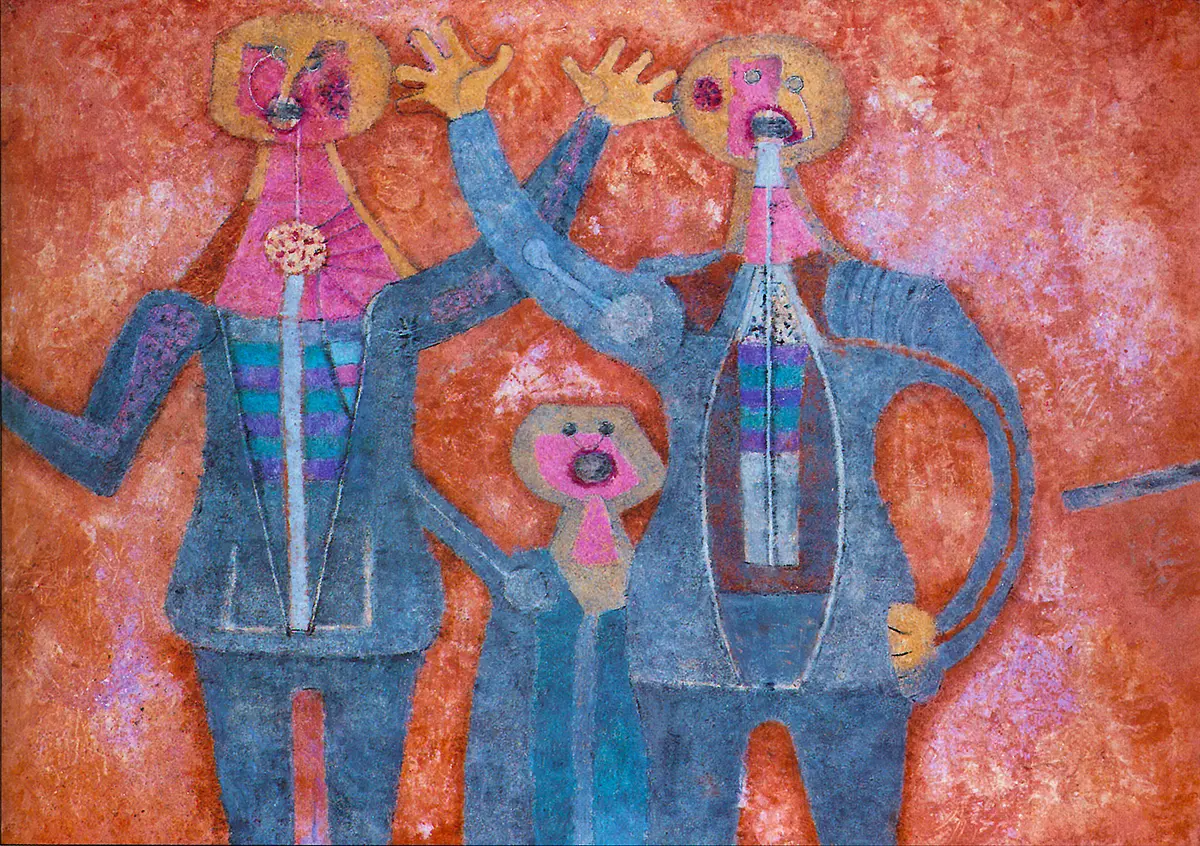
During the mid-forties and the decade of the fifties, an increasingly violent aspect of Tamayo’s painting becomes apparent, indirectly responsive to World War II and the Cold War that followed with its threat of nuclear destruction. Outstanding works filled with trembling and anguished personages, such as Terror cosmico (1954), Hombre abriendose el corazon, and Elquemado (both 1955) mark this period.
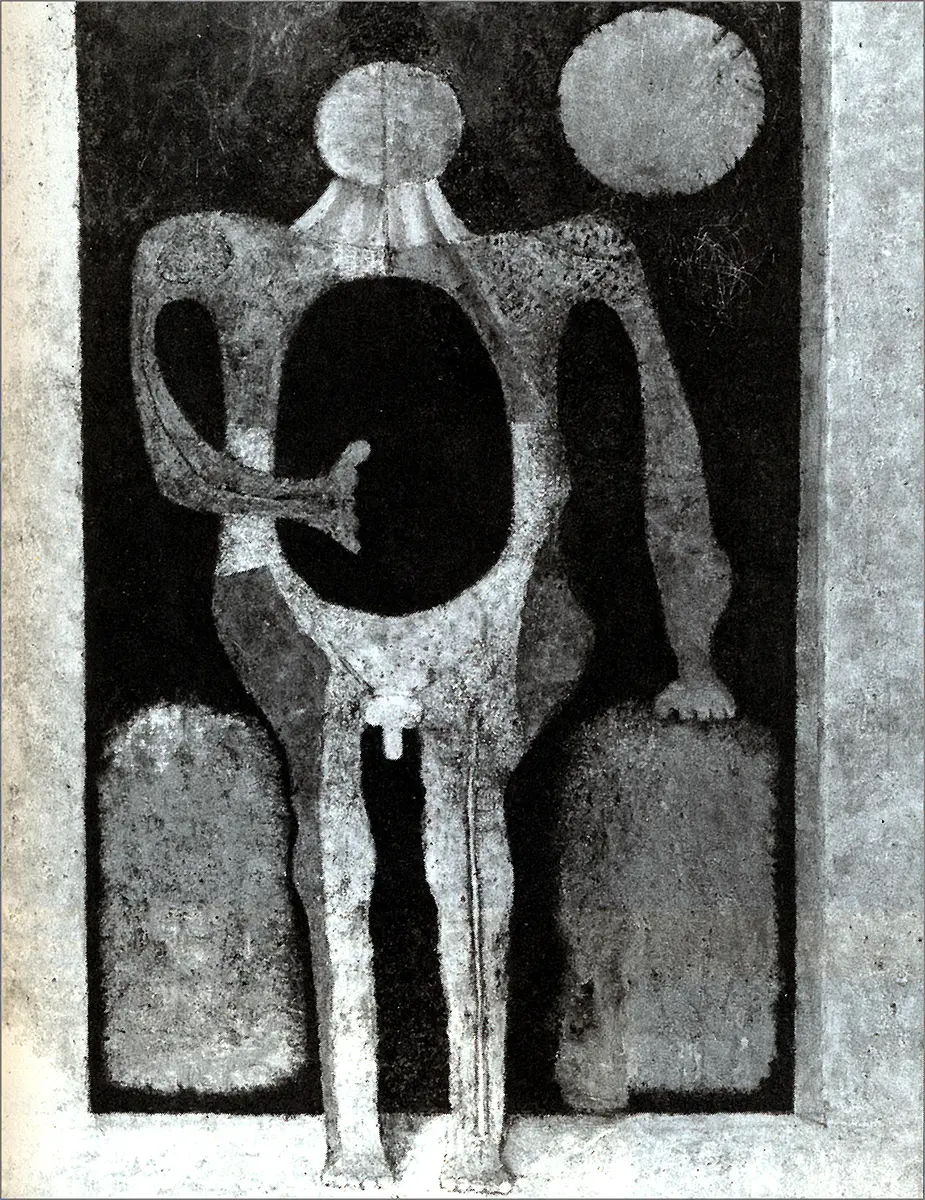
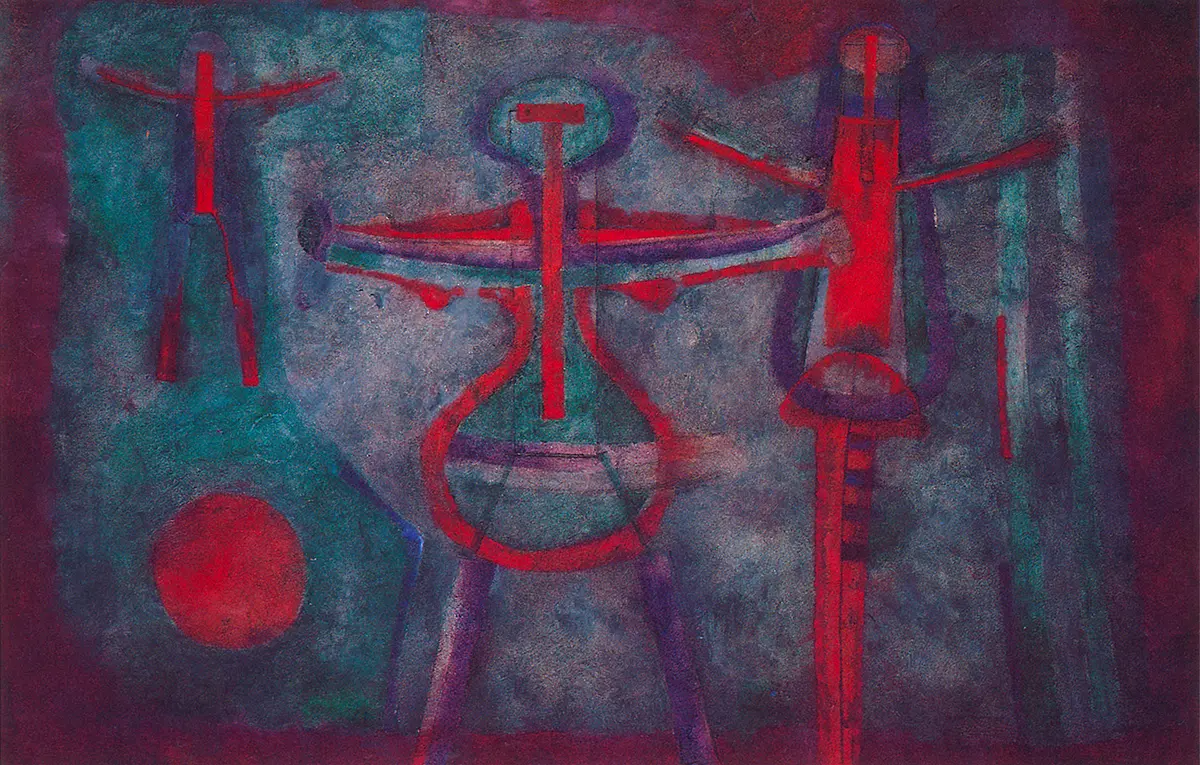
From the sixties to the eighties, folk and pre-Hispanic art, as well as the European masters of former decades played a declining role in Tamayo’s painting. Canvasses are almost abstract; color explodes with chromatic audacities; no area of unmixed color remains -they are fused, of intermingled as figures dissolve into each other or into their backgrounds. Patterns of dots, stripes, stippling, scumbling, scratching, ornament the paintings. Figures become hieratic, static, hieroglyphic in their schematic reduction- ism. Lasgemelas (1975) with its paired red figures on a field of red broken by green and deep violet bars, and shimmering figures exuding light, such as El iluminado (1975) or Amigas de los pajaros(1980), are indicative of this phase. Finally, there is the all- pervasive watermelon, signature fruit of Tamayo’s art, in a variety of forms, colors and tones.
I have focused on the paintings because, to me, they form the central core of Tamayo’s art. Conceiving of a floor of murals, an important part of Tamayo’s painting oeuvre, to be viewed with those installed at the palacio in the early 50s, was a stroke of inspiration on the part of the organizers, Two important works were brought from abroad for this occasion: the 1943 fresco mural La naturaleza y el artista: La obra de arte y el espectador painted for the Hillyer Library of Smith College in Northhampton, Massachusetts, five years after Tamayo’s arrival in New York; and the 1957 vinylite Prometeo for the Biblioteca Jose M. Lazaro of the University of Puerto Rico, Rio Piedras. Though Tamayo has claimed that he prefers easel paintings to murals because the problems of painting are more challenging, he has produced an impressive body of murals over the years, La naturaleza y el artista was the first done entirely on his own terms, and its concept is a crucial one to the artist. The larger of the two sections shows an artist painting before nature and its elements but reworking what he sees so it is a creation and not an imitation. The smaller section pertains to the spectator who, in Tamayo’s view must understand that a work of art should not be judged by its resemblance to nature, but exists as an independent entity, with its own life and problems. This, essentially, is Tamayo’s philosophy. The Prometeo of Puerto Rico, equally symbolic, deals with the demigod of fire bringing his gift to the people below who wagerly stretch out their hands to receive it. In 1957, Tamayo explained his symbolism in the following manner: the light emanating from Prometheus’ of the beautiful island of Puerto Rico, who would see themselves under the liberating sign of Prometheus, the divine rebel. (2) Among the other murals on display (all from Mexico) were El mexicano y su mundo (1967), Eclipse total (1972), and Naturaleza muerta (1954).
All the salons of the Palacio’s top floor were dedicated to a great graphics retrospective. From the early woodcuts of the mid-twenties, Tamayo has explored lithography, etching, mixografia (a new technique which permits three-dimensional surfaces and a great variety of textures on handmade papers), and mixed media prints. While many interesting works were on display, it seemed to me that lithography was the most congenial technique for Tamayo, allowing the production of such works as Cazador de Pajaros (1957), and Perro ladrando a la luna (c. 1957), as well as many excellent portfolios. One recent mixografia print, Hombre en la ventana (1980), is notable for its luminosity (generally lost with this technique when combined with Tamayo’s subtle chromaticism) in which a brilliant yellow window gridded in black reveals an orange moon, and a textured orange wall offers a contrast to a simple black figure which is placed on a dark orange bar. In my opinion, this print can be compared favorably with any of the artist’s paintings from the same period. Almost 200 graphic items are listed in the catalog, some of which are the portfolios of more than one work. Surely this is the largest retrospective of Tamayo graphics ever seen.
Tamayo’s drawings are of much less interest except as footnotes to his finished works. James Lynch, Jr. who has written about Tamayo for many years, has pointed out that the paucity of Tamayo drawings in due to the fact that the artist often does not make preliminary sketches before painting (certainly not true for his murals, as the exhibition revealed); nor does he value drawings greatly as independent art forms. His attitude, says Lynch, is that of a colorist, not a draftsman.
The Exhibit
The celebration of “Rufino Tamayo: 70 años de creacion” has a curious history that illuminates the politics of the Mexican art world. This history begins in 1981 during the presidency of Jose Lopez Portillo with the opening of the Museo Rufino Tamayo, built and maintained through private corporate funds to house the international art collection Tamayo wished to donate to the nation. A lot of scandal surrounded that opening as it was the only private museum permitted in Mexico City’s Chapultepec Park, a national historical zone. The promotion and dissemination of culture has traditionally been in the hands of the government, based on the European model. In the postrevolutionary period the government, through its education minister Jose Vasconcelos, took the initiative for the visual arts, particularly public muralism, as part of its mass educational policies. The Instituto Nacional de Bellas Artes, which controls most of the museums and art institutions in the country (as well as other cultural expressions), is still subsumed under the Secretaria de Education Publica. For many artists and observers in 1981, not the least caustic of whom was Raquel Tibol herself, (3) the insertion of private initiative into internal cultural life was viewed disfavorably or with suspicion. There was a distrust of motives, of whose interests would be served, and whether such insertion would signify an increasing and undesirable “north- americanization” of culture, since many Mexican corporations and banking firms were allied with U.S. capital. At the same time, however, some artists did approve of government-private collaboration in culture, which in their view reflected Mexico’s mixed economy.
The Board of the Museo Rufino Tamayo represented such a mixed collaboration. The three-story Museo itself, constructed by architects Abraham Zabladovsky and Teodoro Gonzalez de Leon, was financed by the Fundacion Cultural Televisa, A.C., largest mass media conglomerate in the country, and part of the Grupo Monterrey, the most powerful industrial complex with open ties to foreign capital and financial institutions. In 1985, however, Emilio Azcarraga Milmo, head of Televisa, acting unilaterally, appointed as director of the Museo Robert Littman, a North American recommended by William S. Lieberman of New York's Metropolitan Museum. The Tamayo collection was placed into storage so that the Museo, presumably, could present itself as a world-class institution with imported temporary exhibitions. Understandably, Tamayo, who had never been consulted, was enraged, and after six months of governmental inaction, threatened a hunger strike. Throughout the country attitudes toward the artist changed; he was given support from all quarters, including compatriots of his natal state Oaxaca, who had viewed his association with Televisa to be “a pact with the devil” but now felt he needed to be defended. By April 1986, the government of President Miguel de la Madrid finally responded to Tamayo’s protests, and the Museo passed into the national patrimony.
The new director of the Museo, Cristina Galvez, considered the organization of a major Tamayo exhibition as a priority project, and by March of the following year the director of the Institute Nacional de Bellas Artes, Manuel de la Cera, invited Raquel Tibol -who in July 1985 had written an extensive and supportive article on Tamayo’s struggle with Televisa- to be General Coordinator of a cultural activity that would celebrate seven decades of uninterrupted artistic labor by Tamayo. The present massive retrospective was organized by Tibol, with a team of researchers, in the incredibly short period of eight months. Tibol’s support of Tamayo apparently reversed a twenty-year history of antagonisms between the two that was a legacy of the political and aesthetic opposition between Tamayo and the Mexican School. While Tamayo had openly opposed what he considered the ideological art of the Mexican School on behalf of his own search for “pure form,” Argentina-born Tibol, from her 1953 arrival in Mexico as Diego Rivera’s secretary, had been a major chronicler and defender of the Mexican School whose politics she shared, and about whom she has written voluminously. Her rapprochement with Tamayo was most strikingly illustrated in connection with the VII Bienal de San Juan de Grabado Latinoamericano y del Caribe scheduled to open November 1986. When the Bienal’s organizing committee sent an emissary to Mexico to arrange Tamayo’s participation as an honored foreign artist -a customary procedure for the event- Tamayo declined to participate and would neither loan his graphics nor attend. I happened to be in Puerto Rico at this fateful juncture and offered my help in locating Tamayo prints in Los Angeles, and also suggested that the committee contact Raquel Tibol for assistance. Shortly thereafter, the government of Mexico announced its decision to “nationalize” the Museo Rufino Tamayo and to Raquel Tibol as curator. As a result, ninety-seven Tamayo prints graced an excellent homage in San Juan, accompanied by a splendid catalog written by Tibol, and the Tamayos attended the inauguration. Without a doubt, these various events set the stage for the present exhibition with which the Tamayos are very well pleased. In this light, the appointment of Tibol as coordinator for the “70 años” was not as surprising as it appeared to many Mexicans cognizant of the earlier hostilities.
The most influential and (politely) vehement critic of Tibol’s participation was Octavio Paz who declined to reprint any of his many articles on Tamayo in the publications of the exhibition, after Tibol had excerpted short selections from four of his works (from 1950 to 1968) which appear in the current catalog- book as “Definiciones de Tamayo”. The final catalog, nevertheless, contains one lengthy Paz essay, “Tamayo en la pintura mexicana” (1950), and a briefer piece, “Ser natural” (1951). Between the organization of the catalog-book and its final publication, a polemical interchange of letters between Paz and Tibol offers and insight into the by-no-means healed rupture between the Mexican School and the “internationalists,” as represented here by Paz.
La obra de Rufino Tamayo nace y se despliega frente a los muralistas y su estetica. El pintor oaxaqueno no solo se nego a seguira Rivera, Orozco y Siqueiros sino que critico vivamentesus ideas y su pintura. Denuncio lo que a el le parecia una confusion entre pintura e ideologfa polftica, se nego a pintar en los muros oficiales de la historia de Mexico, como Rivera y Siqueiros (o heterodoxas como Orozco) y se opuso a ver en la pintura un vehiculo de ideas revolucionarias, fuesen las del realismo socialista o las de alguna de sus variaciones y sucedaneos. Pero la pintura de Tamayo no fue solamente negacion y ruptura; tambien nos reveld en muchas telas admirables, una vision de la realidad en la que el rigor plastico se alia a un poderoso sentimiento, alternativa solar y nocturno, de la existencia.
In another section of the letter, he wrote to Tibol “Todos sus escritos estan regidos por una idea que ...el arte es una expresion de la sociedad y refleja sus vicisitudes y sus luchas. La comprension historica para mf, solo es un peldano de la contemplacion estetica". For this reason he felt that Tibol might eliminate from his texts references to the long struggle Tamayo made against the muralists or fail to mention that Tamayo’s work opened the doors for contemporary painters of Mexico, which would be a mutilation of history, according to Paz. To this Tibol responded, “La idea de extraer de sus sobresalientes textos una serie de definiciones no fue para limpiar de historia, enfrenta- mientos y combates esteticos del arte y el pensamiento de Tamayo. No he practicado jamas tal tipo de circuncisiones y siempre he considerado una infamia intelectual hacerlo”. As Tibol comments, “la antigua discusion no ha terminado”. (4)
As an exhibition, “Rufino Tamayo: 70 años de creacion” also had problems. The most obvious, and the most unfairly criticized, was the absence of many stellar works from Tamayo’s painting production. Some of these omissions are signalized in the catalog by the reproduction of crucial works that were not available to the organizers because of Mexico’s critical economic crisis which has resulted in funding cuts for all cultural and educational institutions. Transportation for a number of works was underwritten by Mexico’s Casa de Bolsa Inverlat and by a private firm in Paris. The mural Prometeo was sent by the Puerto Rico government in exchange for its restoration by Mexico’s excellent technicians. The cultural price Mexico is paying for its enormous foreign debt, a large part of which is owed to U.S. banks, is evident, and will doubtless continue in the foreseeable future.
Another difficulty was the installation of the painting exhibition in the Tamayo Museum, which seemed at war with itself. Since this was obviously a retrospective, visitors (including this one) were puzzled by the fact that the works were organized neither chronologically nor thematically - although to its credit, the massive and beautifully illustrated catalog-book is strictly chronological and provides the best and most extensive guide presently available to Tamayo’s production. (5) Instead of chronology or themes, a formalist dictum seemed to prevail which stipulated that dates and subjects were less important than the formal values of the paintings. This is so obviously a major tenet of Tamayo’s thinking (and possibly the Tamayo “myth” of timelessness and universality), and it seems so different from previous retrospectives organized by Raquel Tibol, that one cannot help but speculate about the possible pressures exercised by the Tamayos themselves without whose participation the exhibit could never have taken place.
Retrospective exhibitions that provide crucial aesthetic and intellectual insights into the development of an- artist are very necessary and desirable. Hopefully, the kind of economic and “political” pressures exerted on this one can be avoided; even though in the real world the wish itself is utopian. A truly critical evaluation and historical placement of Rufino Tamayo in the history of Mexican and international modern art seems still to be in the future.
NOTES
1. Bernard S. Myers, Mexican Painting in Our Time, New York: Oxford University Press, 1956, p. 130.
2. The full text of these explanations are reprinted in the newly published Textos de Rufino Tamayo, edited by Raquel Tibol, Mexico City: Coordinacion de Difusion Cultural, Universidad Autonoma de Mexico, 1987.
3. “Se inauguro el museo: Con Tamayo, la iniciativa privada al poder cultural”, Proceso, #239, June 1, 1981, pp. 44-47.
4. This polemical exchange was reprinted in Raquel Tibol’s “La antigua discusion no ha terminado: El polémico Tamayo segun Paz, Proceso, #585, Jan. 18, 1988, pp. 50-51.
5. Publications issued in connection with the Tamayo exhibition include Rufino T amayo: 70 anos de creacion, 1987-88; Rufino T amayo: Antologla critica, 1987; Judith Alanls and Sofia Urrutia, Rufino Tamayo: Una cronologla, 1899-1987. 1987; and Tibol’s Textos (see note 2).