The first educational exhibition of Fernando Botero's work in the United States will take place at the prestigious Hirshhorn Museum and Sculpture Garden in Washington, D.C., between December 20, 1979, and February 10, 1980. This great retrospective exhibition will include works made when Botero was in Medellín, Tolú, Bogotá, Madrid, Florence, Mexico, New York, East Hampton, Paris, where he now lives, and Cali, where he returns every summer. The paintings, engravings, and sculptures come from more than forty museums, galleries, and private collections (including some from Colombia) and the artist's own. Cynthia Jaffe MeCabe, the curator of exhibitions at the Hirshhorn Museum, organized this exhibition. Its excellent catalog classifies the works into six categories that reflect some of Botero's recurring interests: the religious, the old masters, inanimate objects, the nudes, and the sexual customs, politics, and real and imaginary people. Ms. MeCabe had the support of the Instituto Colombiano de Cultura and other sources to organize Botero's exhibition.
The odyssey of this twentieth-century Latin American artist has been long and arduous. To understand the scope of his art, it is necessary to go back to the origins of Colombia. The distinguished Colombian writer Germán Arciniegas has pointed out in his fascinating book about the artist, “Botero's formulas could not be clearer. Never lose your soul. Staying as a pilgrim fragment of Colombia, no matter where you are.”1
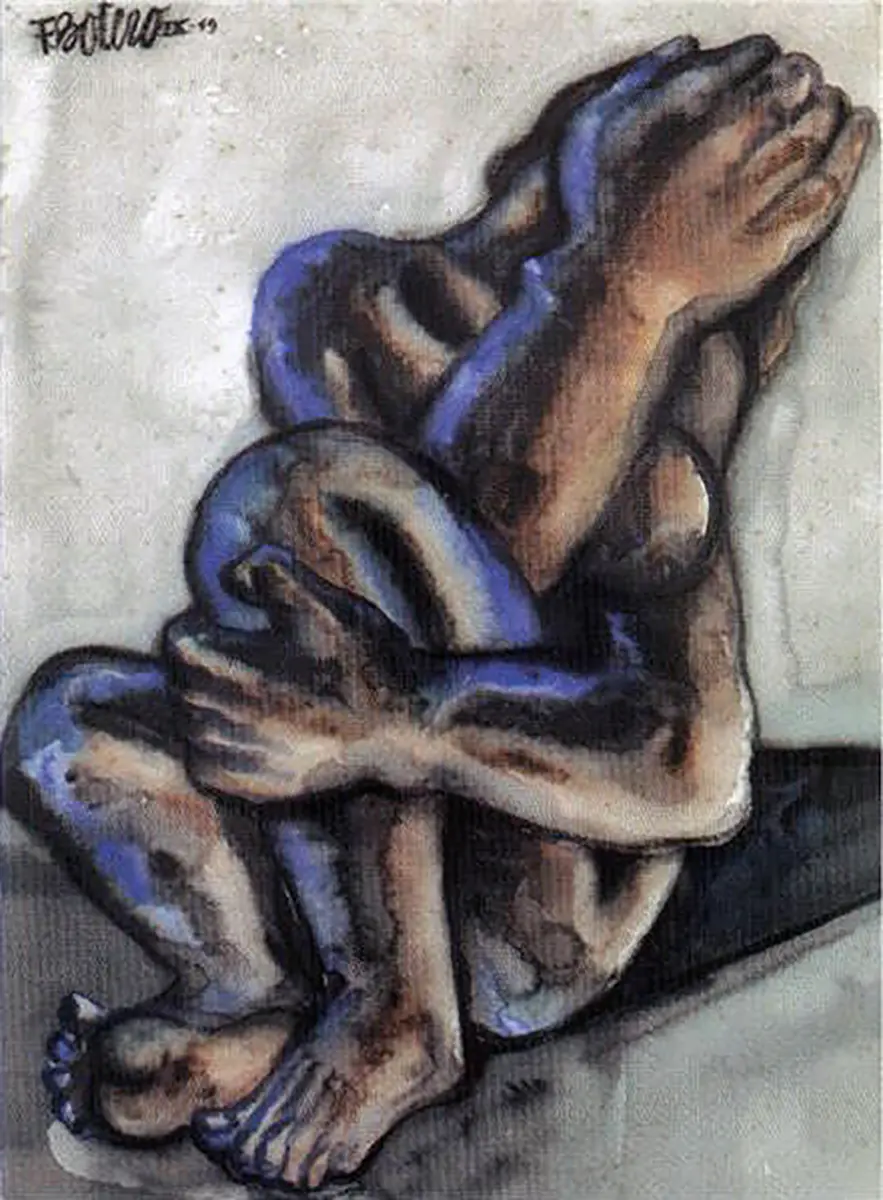
Botero's career began at the age of sixteen. While still in school in Medellín, he became a draftsman for the literary Sunday supplement of El Colombiano, the most influential newspaper in that city. At that time, Botero and a group of young intellectual friends were deeply influenced by the writings of César Vallejo, Federico García Lorca, Pablo Neruda, Miguel Ángel Asturias, and Carlos Castro Saavedra. Influenced by the Mexican muralists of the 20th century and particularly by Orozco, Botero painted the watercolor Crying Woman. (The illustration reproduced comes from the cover of the catalog of his first solo exhibition at the Galerías de Arte Foto-Estudio Leo Matiz, in 1951 ). Looking again at the watercolor, the artist sees in it "the tremendous sentimentality characteristic of the young man's art."2
"An artist is a collector of all the art of the past," says Botero, paraphrasing Picasso. And in truth, Botero has learned a lot from the past: from his own art. Although many famous artists have copied the old masters, few contemporaries have copied it in the disciplined form of Botero, who has devoted entire years of his life to studying the great art of the past. Fewer artists today have been able to "chew and digest" and not merely "swallow" (according to the descriptive image of Francis Bacon) the teachings of the past. Botero has consumed them voraciously and has paid tribute to them by appropriating them completely. He has copied the teachers because he feels that when painting a painting "that has the same theme that a famous painter used, I am part of the same tradition." The list of artists who have inspired Botero is a catalog of some of the noblest contributors to Western art, including Masaccio, Mantegna, Leonardo, Van Eyck, Rubens, Dürer, Velázquez, Ingres, Orozco, and Picasso.3 In his paintings, Botero has transformed not only individual figures but also traditional compositions such as state portraits, the collector's painting with his collection, and dramatizations of the lives of saints —including some that the artist has playfully created in his imagination. Botero has given new life to all this and has incorporated it into the living legend of our time.
In 1949, the year Botero painted the Crying Woman, he was expelled from the Jesuit school for an article he wrote for the newspaper titled Picasso and Non-conformity in Art, two themes that continued to be of fundamental importance to Botero. Picasso's lifelong search for ways to express his talent, his rapport with the lessons of the old masters, and his bold creation of new images and new styles in many different media, are all reflected in the approach he makes to his art.
Like Picasso, Botero has imposed his own pace and his own rules. He has not been reluctant to go only forward when he has tried (as he wrote in his article on Picasso) "Through images... to unite everything, the world, the most subtle, the darkest... "
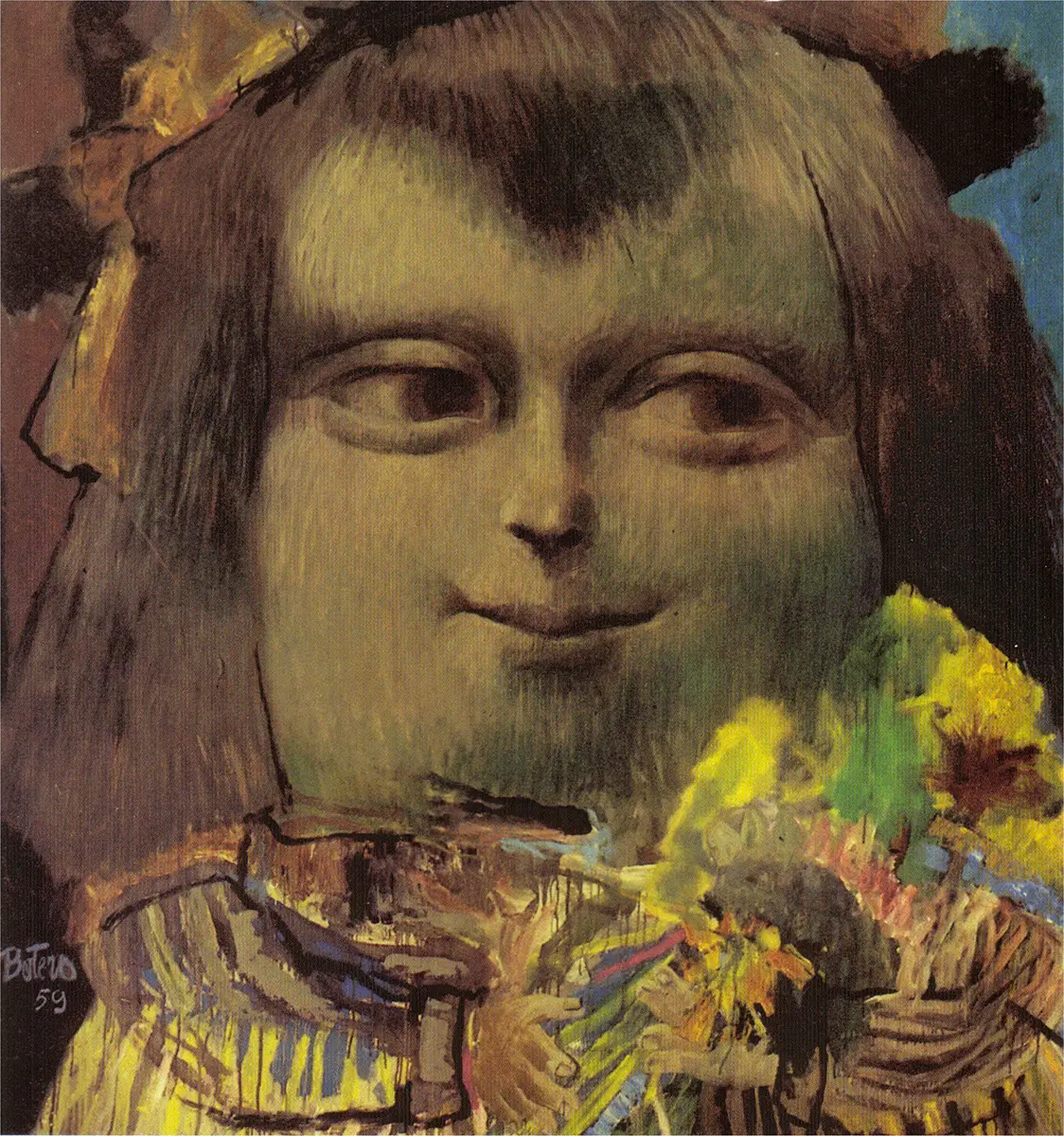
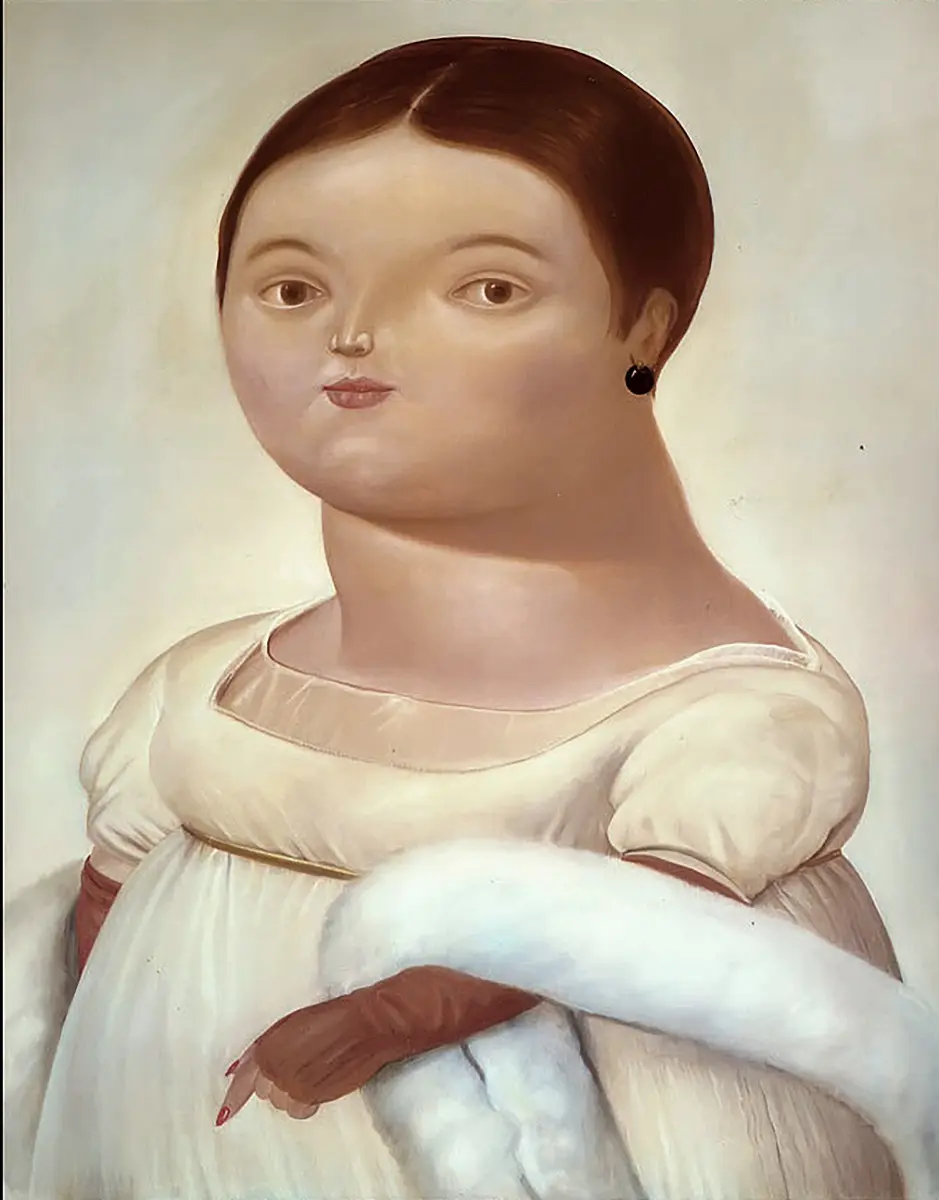
One of the artist's best-known creations and one that typifies much of the satire that characterizes his work is Mona Lisa, at 12 Years Old, one of the themes that Botero has explored in various versions. That painting, as peculiar as many of his early works, was not liked at first. It was painted in Bogotá. When Botero sent it to an exhibition in the United States, he was excluded by a reputed director who stated that he knew that Botero could paint something better than that. However, Beatrice Perry, director of a Gallery in Washington, did appreciate his work and urged Dorothy Miller of the Museum of Modern Art in New York to see it. The Museum bought the Mona Lisa —the only acquisition in a figurative style made by the Institution in 1961—when Abstract Expressionism still dominated the art scene in New York. Later, in 1963, the Museum exhibited Botero's "Mona Lisa" in its entrance hall while the Metropolitan Museum displayed Da Vinci's Mona Lisa which had been shipped by the Louvre.
The young Mona Lisa, like Leonardo's, smiles enigmatically at the public. The classic canons of proportions have little to do with the imaginary dimensions Botero has devised for his Mona Lisa, which, as Betsy Jones has pointed out, "is alarmingly bloated, perhaps with the knowledge of his future fame.”4
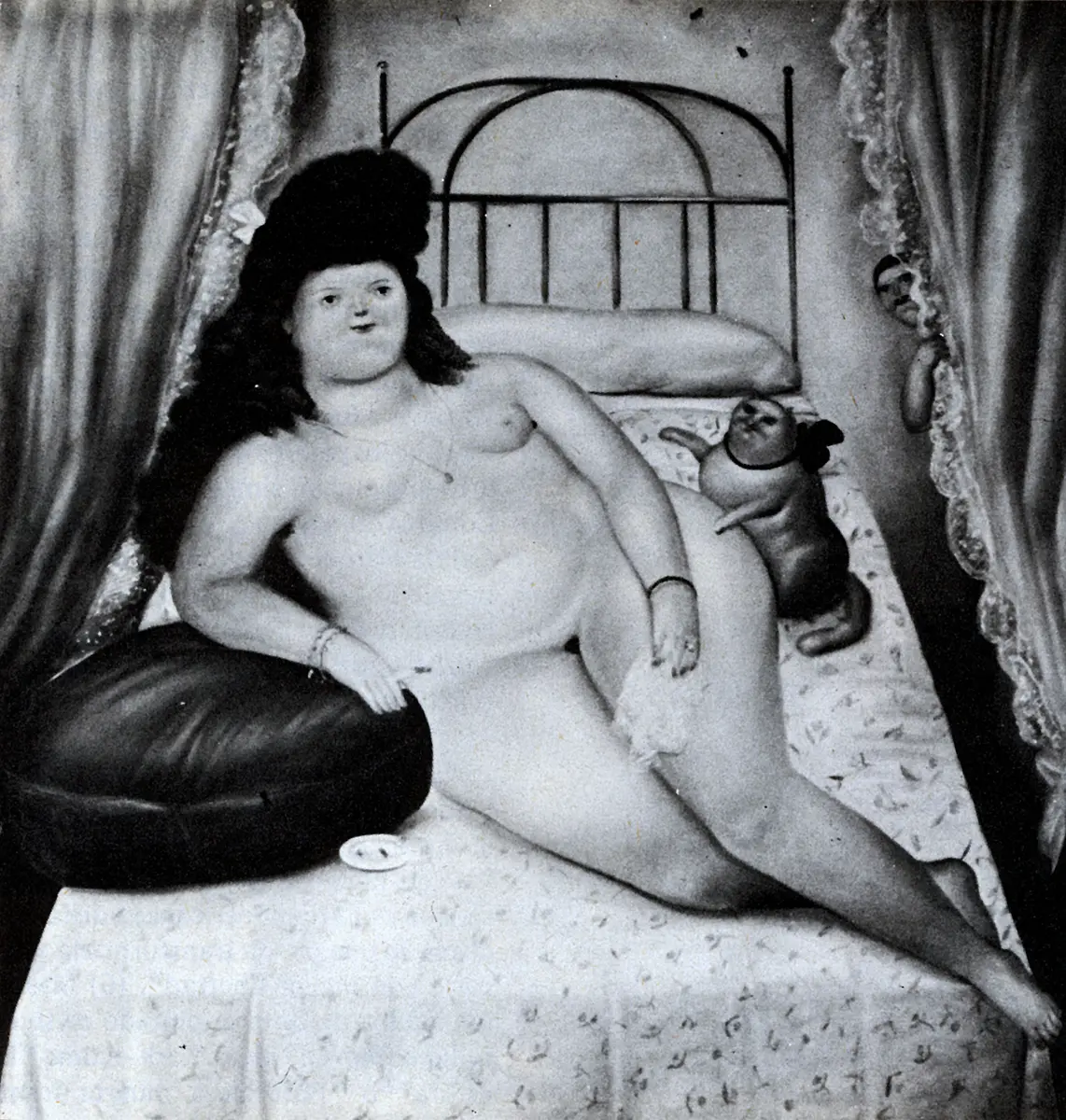
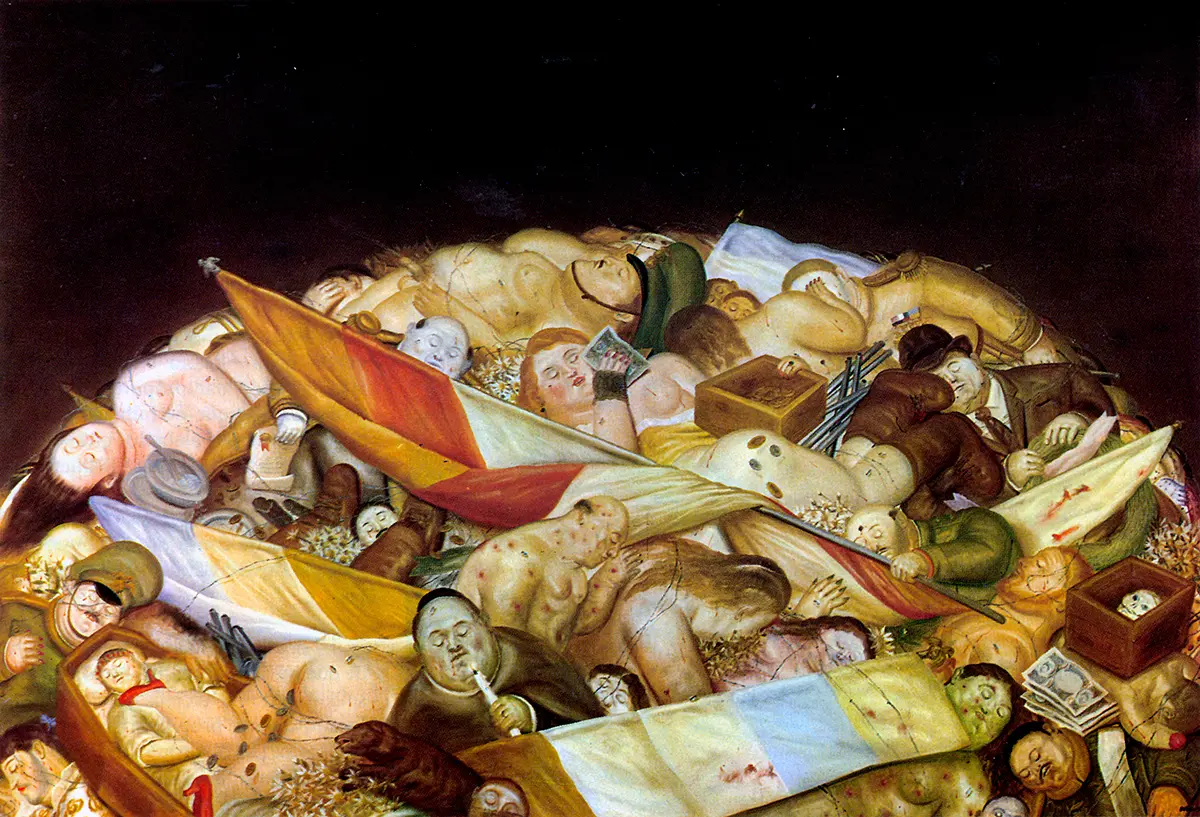
Probably, the characteristic of Botero's painting that first surprises the viewer is the disproportionate and enormous enlargement of its forms. Although Botero has handled it very individually, that stylistic approach has a long history. In many cultures and for several centuries, the artist has used monumental forms to convey the importance of a revered god or a man of impressive feats. It is natural to conclude that the artist indicated the power —spiritual or temporal— of the characters concerning a scale of sizes. This can be seen, for example, in Romanesque and Gothic sculpture, as well as paintings of the XV and XVI centuries that show imposing religious figures erected as towers above those of the humble donors of the painting. In our time, stripped of saints and heroes, some artists have enlarged a common theme as if it were a photographic enlargement or a cinematographic close-up. They have decided to give gigantic proportions to things that we would not have taken into account, for example, a single flower by Georgia O'Keefe or Omar Rayo's Little Machine —a safety hook— to say the least of consumer products that obsessed Pop artists in the sixties.
Botero must be credited with the fact that he did not imitate other painters but, using his technique and with it, he has created his original and extraordinary art. The disproportions of the figures in his world are the result of a complex combination of elements. Like Picasso, he understood that "art is not the truth, but a lie that leads us to realize the truth, at least that which is given to us to understand."5
Future art historians will delight in interpreting Botero's paintings' iconography, the meaning of the mysterious hand that often appears as an intruder in the composition, the cigarettes that lie around like slow-burning mini-volcanoes, the snakes, flies, and birds that add to the paintings more than just a touch of color. I moan the work of his compatriot Gabriel García Márquez, with whom he has often been compared. Botero's canvases are full of unforgettable images that show us the absurd and the beauty of life, myth, and reality.
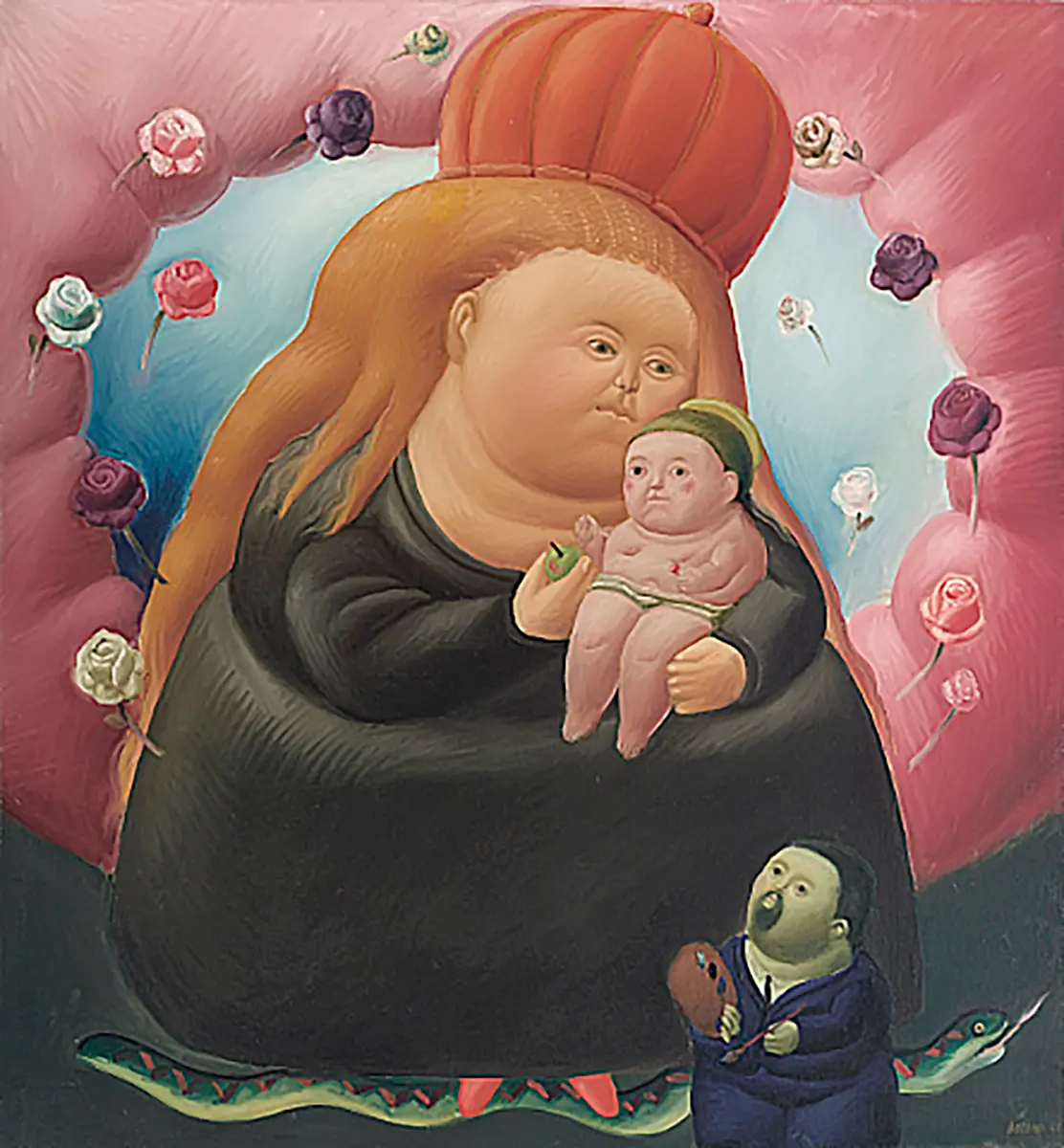
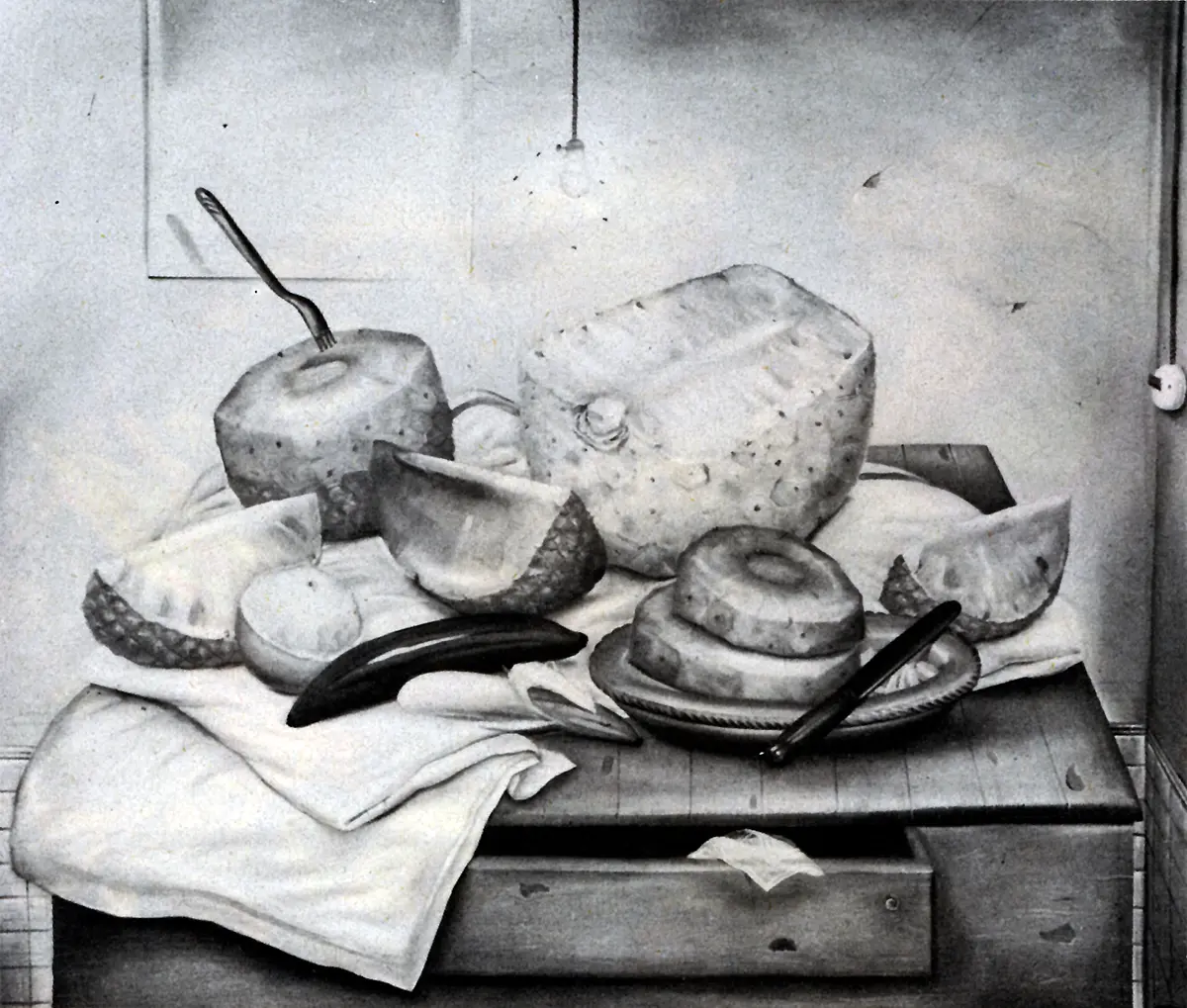
This internationally acclaimed artist has better perceived his country from a distance. As has been said: "I like to keep my subject matter, which is Latin American, at a distance, so that I can transform it and dream it with greater freedom."6 More than one painting by Botero, painted in his Paris studio or New York —like The Stove or Still Life in Front of a Window— is, in reality, a typically Colombian scene. Some paintings show places in Colombia, such as The House of the Arias Twins, or a Colombian character like in The Apotheosis of Ramón Hoyos, the famous cycling champion. In other canvases, it is the details that reveal the Colombian background. The ripe fruits of the still lifes painted in Paris are often pineapples, bananas, and watermelons from his land. Rising protectively over the artist's Lilliputian figure, Our Lady of New York does not wear the traditional golden crown but rather a beautifully shaped melon surrounded by a halo of roses reminds us of Colombia.
If, for most, the subject is the most memorable aspect of Botero's paintings, it is only one of the three essential elements: subject, composition, and color, and it is the latter that for him “imposes many characteristics on the canvas.” Its colossal shapes —it doesn't matter if they are curvy ladies or succulent melons— provide large areas that increase the effect of their voluptuous color, which is often enhanced by the contrasting color of an exquisite miniature object placed nearby.
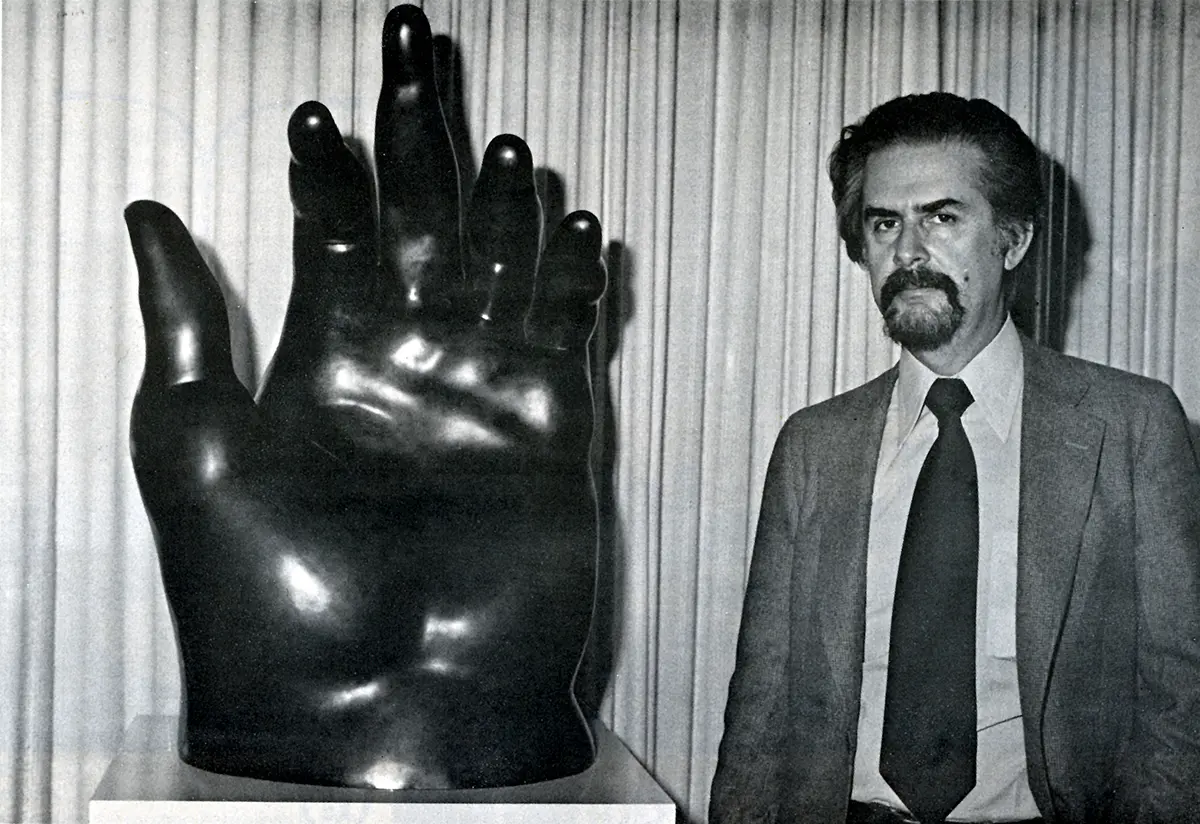
Not surprisingly, when Botero started making sculptures in the mid-1970s, most of them were polychrome. Did he remember Greek art Colombian folk art, or both? The Big Hand is made of bronze and, according to the author, "comes from a finger of the Victory of Samothrace exhibited at the Louvre." It is the only sculpture that Botero cast in two different sizes. The height of the original version is less than half of the other.
In the three decades that have elapsed since he painted the Crying Woman, Botero has created an impressive body of work including more than a thousand paintings, thirty-two registered sculptures, a large fresco in Medellín, and at least five to six thousand drawings in pencil, ink, charcoal, sanguine, pastel, or watercolor. Sixteen of his paintings and drawings were donated by Botero in 1977, to be permanently exhibited in the Pedro Botero Room of the Museo de Arte de Medellín to honor the memory of his beloved son who tragically perished in a car accident at the age of six.
Influenced by the great masters of art from the past and drawn from his memories of Colombia, distilled by time and distance, Botero's work reveals a deeper meaning. As Abram Lerner, Director of the Hirshhorn Museum, has written with great insight, "Under humor and eroticism, we can discern a disturbing insight into the extravagance, vanity, and greed of contemporary life."
NOTES
1. Arciniegas, Germán. “Fernando Botero," Harry N. Abrams., Inc. Publishers, New York (Edilerner, S.A Madrid, Paris, Bogotá), 1977, p. 27.
2. All citations that do not appear in the footnote come from a typewritten copy of the exhibition catalog, written by Cynthia MeCabe.
3. In the catalog mentioned above, MeCabe has often included a photograph of the painting that inspired Botero's painting.
4. Betsy Jones, Inflated Images. A traveling exhibition of the Museum of Modern Art, New York, 1969, p. 1.
5. A.E. Gallation, Editor, “Of Art-Plato to Picasso," New York, 1944, p. 17.
6. Arciniegas, op. cit., p. 52.
*This text was originally published in Spanish, the translation was done as part of the digitization process of ArtNexus magazine.