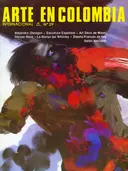
Her diverse solutions to figuration, to the three-dimensional pictorial, to the sculptural space, and her autobiography easily decipherable through the arguments, make this work something truly attractive, seductive, and, why not, memorable.
MIGUEL GONZÁLEZ
It is common to find the production of Marisol Escobar (Paris, 1930) labeled, within the Popad, that stylistic event that was hatched between approximately 1956 and 1966, whose setting was England and the United States—London and New York—although it is well known that similar parallel demonstrations took place in different countries and different continents. Undoubtedly, Marisol's work coincides with the postulates of this movement: figuration, realism, humor, registration of the urban and social environment. Hers is an option that, without being indispensable, is still necessary. Marisol is objective like Rauschenberg, Kienhold, or Jasper Johns, but she is also a sculptor in the manner of Nevelson or Segal. Her diverse solutions to figuration, to the three-dimensional pictorial, to the sculptural space, and her autobiography easily decipherable through the arguments, make this work something truly attractive, seductive, and, why not, memorable.
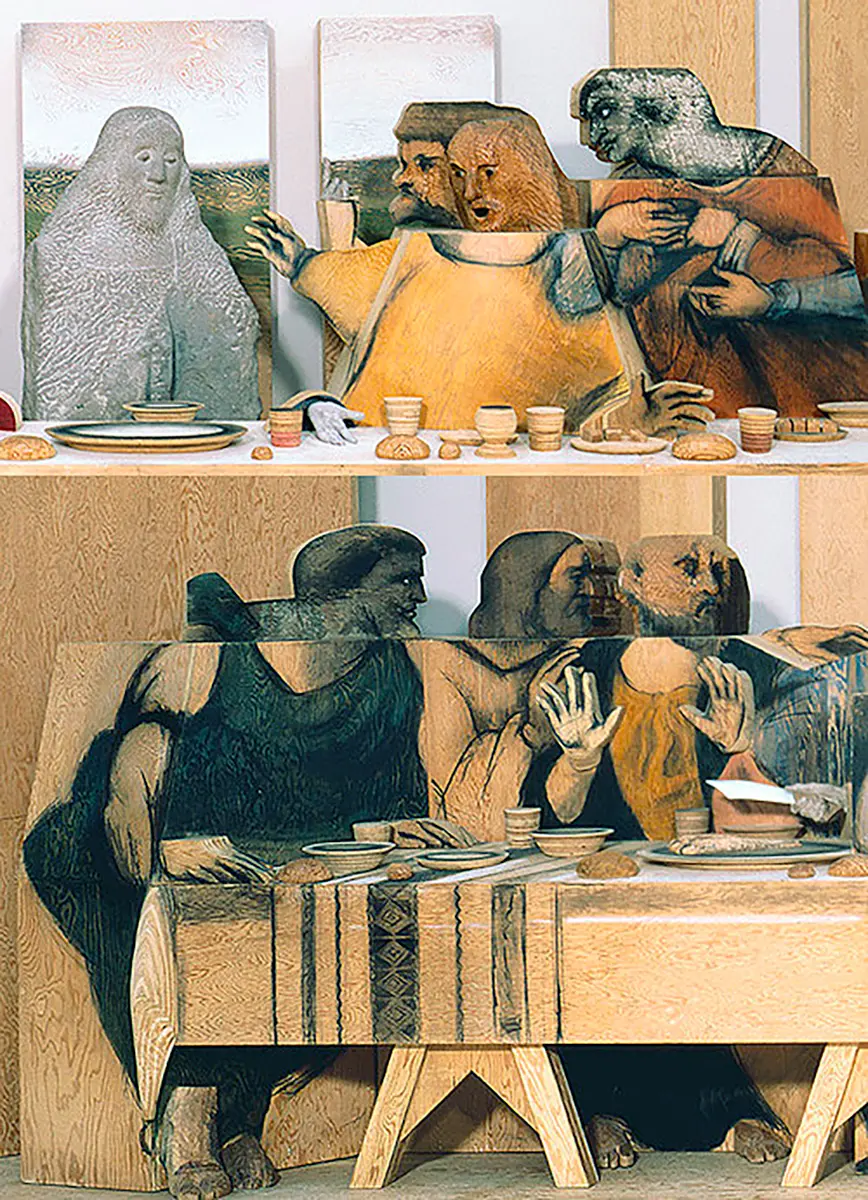
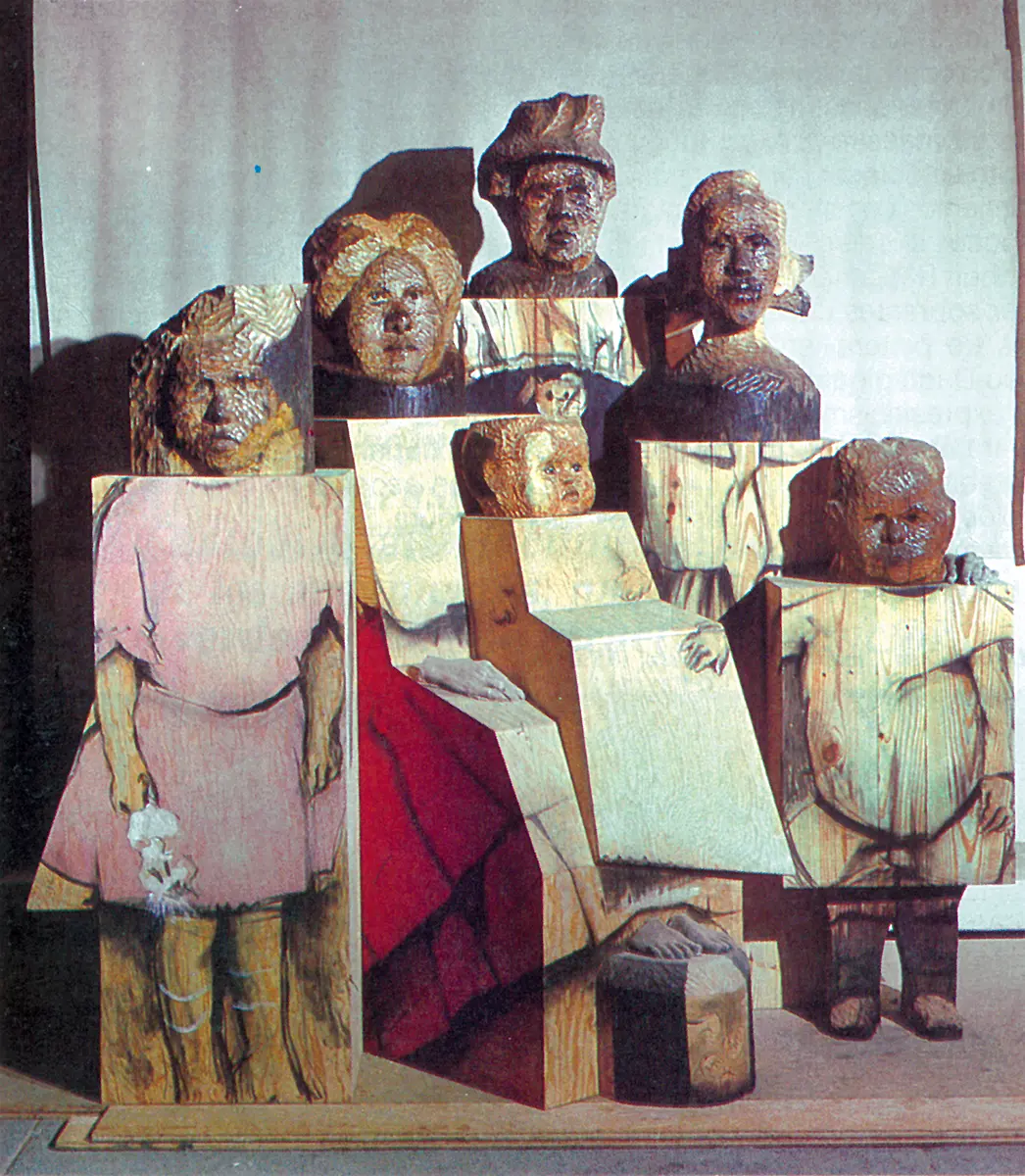
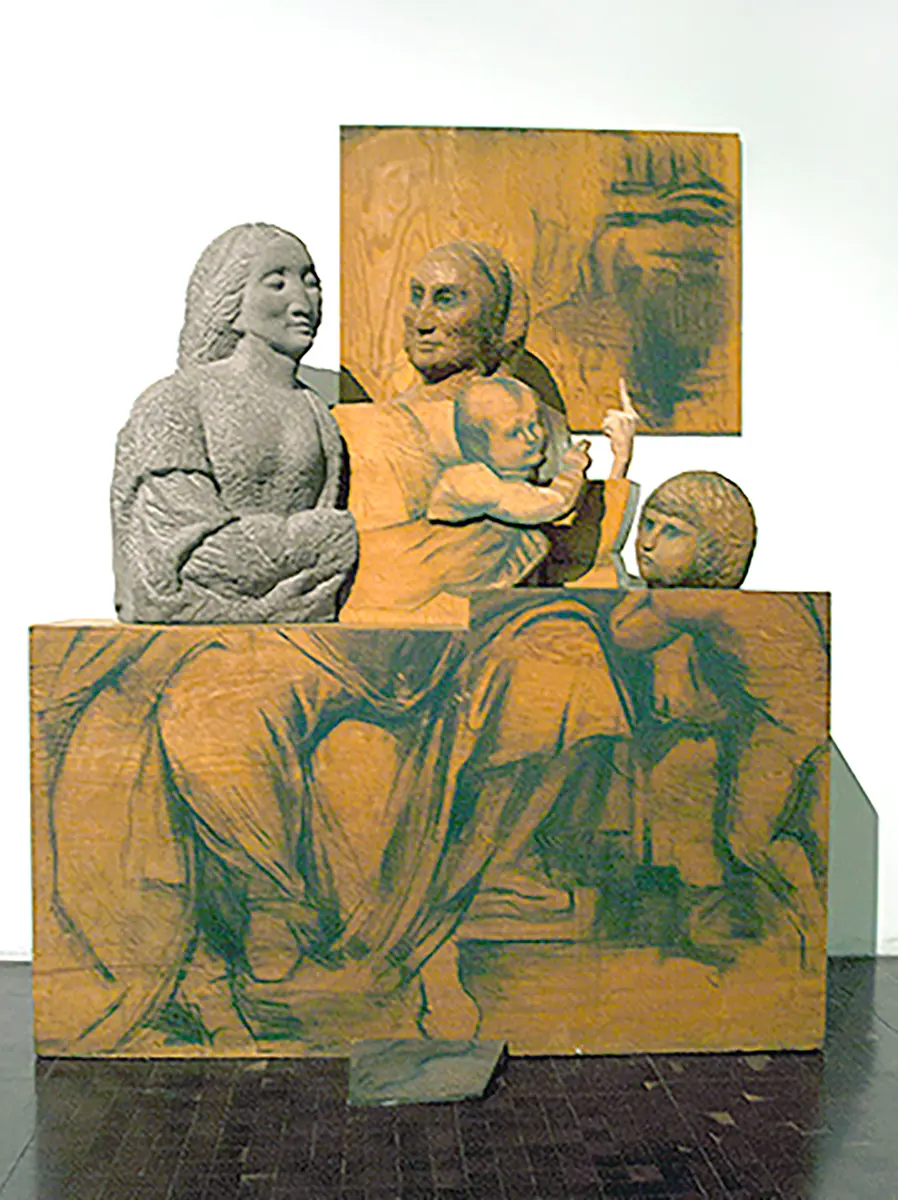
Although Marisol was born in France, this country has never claimed her, (it would be as far-fetched as if she were asking for Gardel's parental right of whom Marisol made an ill-fated bronze for the station of the new Caracas metro). Her nationality is North American, which is why, for example, the Whitney Museum acquired her work La Familia (The Family) several years ago. Happy association of volumes, materials, and fine humor, as it has been included in exhibitions as forceful as indubitable: The Art of Assemblage (Museum of Modern Art, New York, 1961), Americans (Museum of Modern Art, New York, and Art Institute, Chicago, 1963), or Art of USA (Whitney Museum, 1966). However, Venezuela claims to be, because her parents established themselves there, the artist's homeland, who was officially recognized by the last Prime Minister with an order, in addition to being collected in museums as a national art and her works being in various public places. In 1968, Marisol's works were presented in the Venice Biennale's Venezuelan pavilion as the only shipment. Today, Marisol is instead a provincial in the most cosmopolitan of cities and the reincarnation of one of her objects: she does not speak and prefers to whisper, she has forgotten everything, and her movements are cheap, not to say clumsy and distant. She resembles a teenage girl who lives from her memories when the fall arrives. New Baby Jane from Manhattan, protected by Sidney Janis’ emporium (where she first exhibited in 1966), and surprisingly lucid, attentive, and intelligent, as her last show demonstrated when she presented Leonardo da Vinci's The Cenacle as a coherent, projected environment in a real passable space.
Marisol’s theatricality is inseparable from her production. Women running with their purses, John Wayne, La Mesa (The Table), Andy Warhol, the Kennedy family, Picasso, De Kooning, self-portraits hundreds of times embedded in the scene, everything is managed with artificial gestures. The superficiality that the false props give them, and the accessories that always seek to modify the vision, ultimately distract the continuity of materials and visual planes. Marisol bases her aesthetics and parodies on the human condition and the avalanche of the consumer society in that reality-fiction game. At the same time, she demands that her character has independence based on a duality in which a broad reflective and suspicious intellectual baggage and a childish, tender, and lonely mind, stunningly observes and aims to achieve the final result.
Marisol studied at the École des Beaux-Arts in Paris (1949); the Art Students League, in New York (1950); at the New School for Social Research, in New York (1951-54); and at the same period at the school of Hans Hofmann. In 1958 she had her first individual exhibition at Leo Castelli Gallery in New York. In 1965, she presented a one-person show at the Arts Club in Chicago. Thus, begins a meteoric career in the 1960s that led her to the Festival of the Two Worlds in Spoleto, the significant exhibition Humor in Art at the Dallas Museum (1968), and Painting of a Decade, at the Tate Gallery in London (1964). Later she has continued to participate in relevant exhibitions of objects, assemblages, and anthological shows of Pop art. Her volumetric works are as famous as her multiple, graphic, and design works, and, in both fields, she has been considered and cataloged in such a way that it is easy to find a copious bibliography.
It has been usual to find parallels between the work of Marisol and Leo Jensen (1) for their obvious coincidences in assembling the figures based on found objects, transformations of existing devices, and festive imaginative and ingenious solutions. Also, the logical influence of her teacher William King (2). It is lawful to establish how these procedures constituted symptoms of times since the "enfant terrible" Robert Rauschenberg decided to collect street leftovers and drip them with paint, in a kind of neo-Dada “gigantism,” fertilized by abstract expressionism, from which he was trying to free himself. Almost all Pop artists from New York, where Marisol was definitively formed, also used objects relating them to paint. It is illuminating to bring to mind the works of Louise Nevelson, Eduard Keinhold, and George Segal, for the understanding of the contribution and reflection of that of Marisol, naturally to establish differences and illustrate the symptoms of the 60s, a decade where not only did these names appear but that strengthened the ultimate personality of his achievements. Nevelson collected pieces of drawers, wood, toilets, chairs, rails, and countless other items, easily identifiable in her assemblages all black or all white—and later gold—and arranged to fulfill a uniform, almost abstract function, and therefore mythical and even mystical, in her sort of great altars or iconostasis. Marisol also used real objects and accessories that reiterated a figurative function and aspect as a narrative and necessary confirmation, which she associated with humor, never cruelly or devastated and terrible as Keinhold in his rapacious, decaying, and ruined characters. Keinhold's dramatic, rotten, and foul aspects become kind and fun at our artist's will. Likewise, there is a radical conceptual distance between Segal's anonymous ghosts, discolored and intact in their emptying conformation, and Marisol’s potentiated caricatures. Although both use scenarios, create easily identifiable situations, and also worry about partially delivering an everyday aspect, by submitting the figure, Segal prefers the totality, and Marisol decides on the fractional. It is there that, in her effectiveness in altering order and coherence, her particular virtuosity is born, unparalleled in this section of Art History. Roberto Guevara gathers in his book Ver todos los días (3), articles about Marisol. In one of them, I find this explanatory paragraph: "The ‘sculptural’ is fulfilled and exceeded. The work is one and multiple. It is in the details of a fragmentary face, in a round hole where a face appears, or in a long cloth sleeve like an immense trunk which expels a refreshing air. Everything can be in some corner and everywhere. The work opens and transforms itself according to the viewer’s degree of awareness and approach. This is what we could consider a discontinuity tolerated and caused by the artist. Because for Marisol, the sculpture is no longer a harmonious composition of volumes and forms, but an entirely new reality, invented, "lets itself be." In this new reality, there is the absurd, the poetic, the biting, the subconscious, and even the abruptly realistic, like a breath of air that suddenly stumbles over the viewer and the viewer does not know what to do with it.” Naturally, all that great power to alter representation, create free associations, cut areas, amputate others, and overlap images or show them from different points of view, was inspired by Cubism, like Nevelson. It is there where that the freedom with which these two women move to promote distortions in their poetic inventions must genuinely be found. In the same way, Pop's nonsense, humor, or irreverence is only explainable if we refer to Dada to unhinge responsible parenthood.
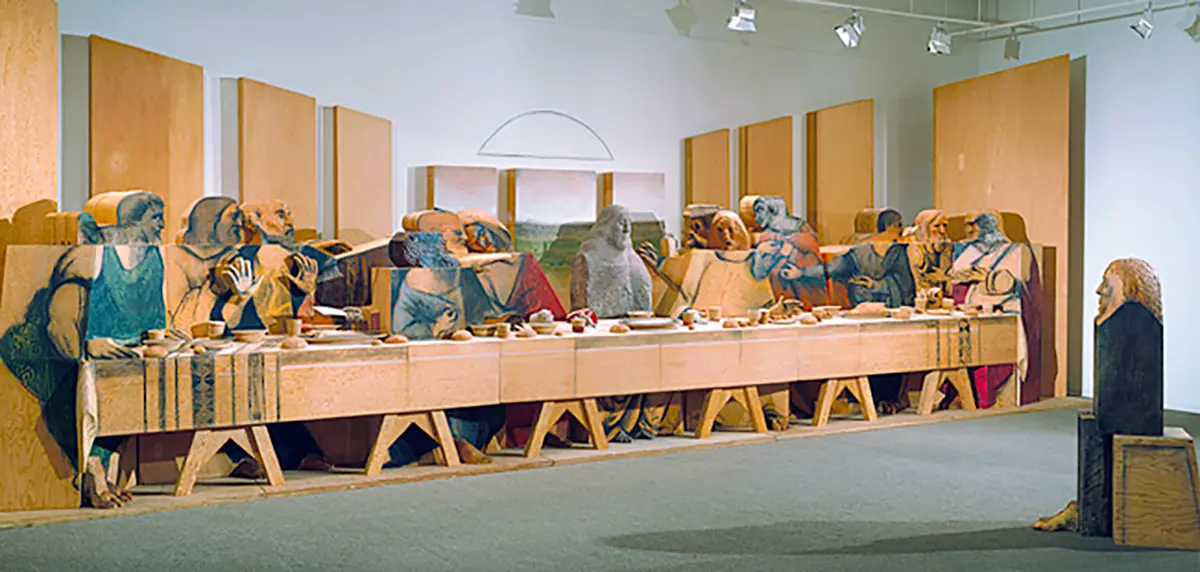
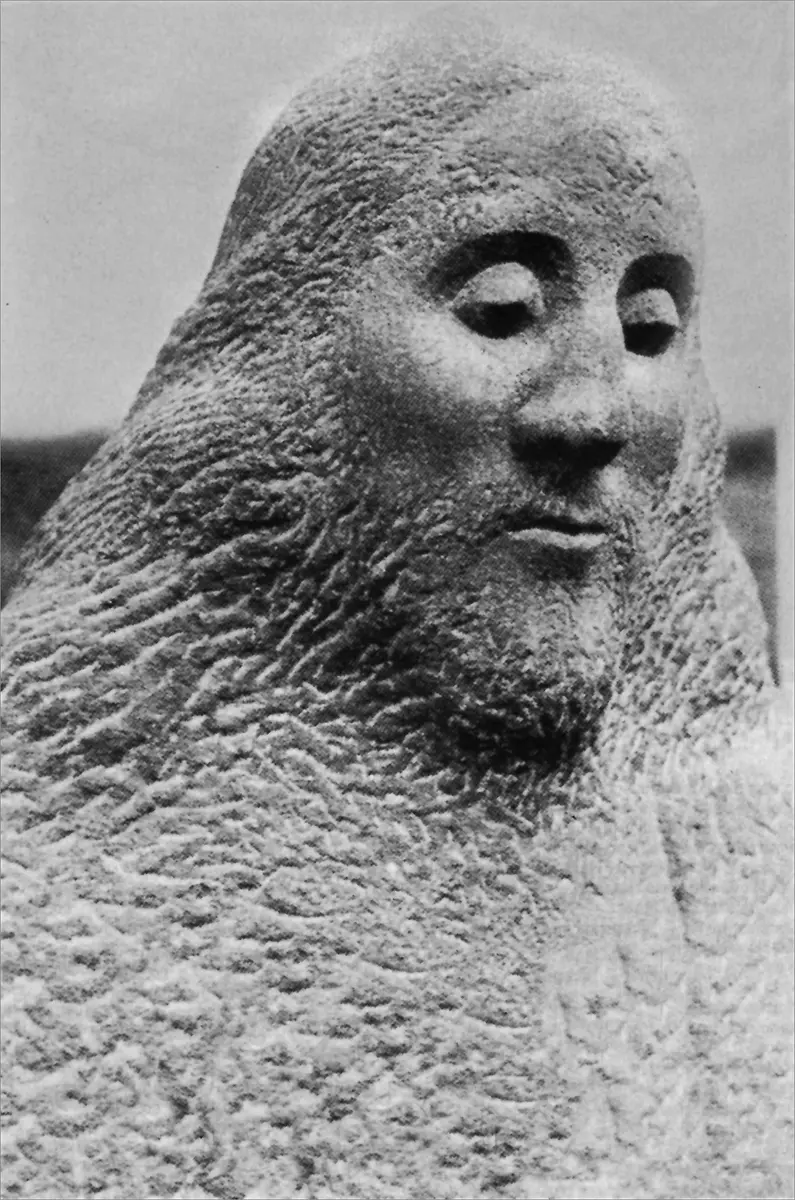
Marisol is also one of those artists who turn to Art History as an indistinct source of evocation. Not only through its concepts and openings as in Cubism, but also taking up plot-related bases such as eternal portraits and self-portraits, passing through episodic chromatic games and customs diagrams. In her last phase, she uses two masterpieces of painting, Santa Ana and The Supper, both by Leonardo. She transforms various characters into three-dimensional beings in a nostalgic, cultured, iconoclastic exercise, which is still Kitch and somehow Camp, although it can be said that Pop also contravenes. It is true that in one of the works that represent Simón Rodríguez and Bolívar she has manifested her interest for Saint Gregorio Hernández, and she celebrated Christmas in her New York flat eating “hallacas” (4), this is not a guarantee that she is entirely Venezuelan. Marisol roams between Greenwich Village and Soho. She has become enigmatic and solitary, divided by uprooting, tyrannized by history, and amnesic of the details of her past, nevertheless willing to develop, with patience and talent, a work that today continues to be important and moving, surviving of more than two decades.
NOTAS
1. Le Pop Art, Lucy R. Lippard. With Lawrence Alloway. Nancy Marmer. Nicolás Calas. Fernand Hayan, ed, p. 101 y 102. Paris, 1969
2. Contemporary Artists, Colín Naylor and Genesis P. Orridge, ed. New York, 1977
3. Los Grabados de Marisol, entre nosotros, Crónica de una No-entrevista. Monte Avila Editores. Galería de Arte Nacional, p. 69, Caracas, 1981
4. Venezuelan tamales.