His artistic career is characterized by a creative outpouring, the product of his successive migrations between two continents. Figurative or abstract, formal or uncontainable, his works have enriched the cultural heritage of mankind. The incomplete and erroneous texts have made us forget one essential fact: he was born in Rosario, Argentina, in 1899 and without doubt his work would not have been the same if he had not lived the experience of the "new” and "old”, ancient traditions and the contemporary world, blending the two in a constant process of returning to the sources and stretching out anew towards infinity.
SUSANA SULIC
While artists of importance such as Duchamp, Mondrian and Gorki escaped the penuries of Nazism by settling in the United States, the immigrants who arrived in Argentina were of working-class origin in search of work.
Very few intellectuals crossed the equator. The surrealists, for example, had found a source of inspiration in the pre-colonial and popular culture of Mexico. Argentina would not offer the same attractions: only the rich agricultural land, its limitless space, blue white horizon and emptiness were there to mark the sensibility of several generations of immigrants, especially those of Italian origin.
Lucio Fontana was born in Rosario, in the province of Santa Fe, Argentina; in 1899. His father, Luis, of Lombardic origin, had settled in the region at the beginning of the century. His mother, Lucia Bottini, was Argentinian, but of Italian origin. Although his grandfather was a painter, his father, a trained sculptor, had set up an artisanal workshop where he practiced his trade for practical purposes. The marble imported from Carrara, as well as the excellent Italian taste for decoration and technique, had proved particularly interesting to the bourgeoisie and oligarchy of Rosario, the second major part of the republic.
When Lucio reached the age of six his family moved to Milan, where he attended school like any other child. Wounded and decorated in the First World War, in 1920 he matriculated in the Brera Academy of Milan, although he completed only one year of study. In 1921, he returned once again to Argentina.
He worked in his father's establishment, promoting its commercial activities throughout the region of the pampas.
In 1924 the young Fontana found the incentive to set up on his own and the following year he won a competition to execute a figurative relief work to commemorate Pasteur and dedicated to the Faculty of Medicine of the National University of the Coast, the second most important university in the country after that of the capital.
He began to exhibit from 1925, his work first being shown in the 7th Salon of Fine Arts of Rosario; two years later he won an important commission to design a monument in honor of Juana Blanco.
Provincial taste and in particular, that of the cattle-raising oligarchy, was tending toward academic technique and style, and in particular, was influenced by the art of Europe and the use of noble materials. At the age of thirty, Fontana had acquired a certain local importance, although this was not enough to satisfy him fully. His dual nationality allowed him to settle in Milan in 1927 and he once again entered the famed Academy, where Adolfo Wildt was his modeling teacher.
Fontana was to return to Europe three times during the course of his life. Constantly torn between two continents, he was to benefit from the best social conditions which his epoch allowed. His successive round trip journeys did not imply any break but rather a sort of cultural continuum.
He was to form part of the long list of artists whose work served to enrich the country’s plastic heritage, reflecting the continuity of the Italian cultural tradition: Alfredo Bigatti, Fioravanti, Marino DiTeana, Delfino, amongst the most recent. A country of enormous permeability, the nation had always welcomed the arrival of foreign artists (who have included Kosice, Sobrino, Arden Quin, Rod Rothfuss, and Kazuya Sakai, amongst others).
Moreover, like any open-minded country, it considers as its own any child born on its territory. However, Fontana is the only example, amongst artists, of someone being considered Italian who was actually born in Argentina.
During the three periods in which he lived in his native country, Fontana was to experience the structural changes and upheavals occurring in a nation as it moved away from agriculture and cattle raising towards the threshold of industrialization and high-density urbanization. What was to be his reaction to the significant change in mental and cultural attitudes?
At the end of the century in Santa Fe, his native province, out of a total population of some three hundred thousand inhabitants, the Italians outnumbered the Argentinians by two to one. Most of them worked in agricultural production and small scale industry. The latter was the case of Fontana’s family, most of whom sought to accelerate the accumulation of wealth by settling in the richest region of the territory.
"Lucio was emotionally very tied to Argentina, the country in which he was born and where he spent some years of his life. Those experiences were to determine an aspect of his personality: his enormous freedom" (letter from Teresita Fontana to Federico Brook).
What social and esthetic principles could explain the break-in creation which Fontana was to experience after a long process of work?
Throughout his career, Fontana lived between two worlds, two contexts through which to interpret the same culture. Buenos Aires was a cosmopolitan center where diverse influences were producing a tremendous impact. As a product of its times, it was to suffer the devastation of the war in Europe and the subsequent exodus.
While the old continent saw its values of civilization crumble, Argentina was preparing itself for the import substitution which was to give rise to a socially important middle class and the birth of its national industry.
In the cultural sphere, there was a constant striving to identify national values and an "identity" which would consolidate the wide range of divergencies. At the time of the world crisis, when Europe was plunged in war, many of the intellectuals began to look “inwards” in their search for solutions.
The artists who spent some time in Europe usually established contacts with the avant-garde circles; however, on their return home they generally adopted a "national” way of looking at things. Distance was an important factor in this respect. The lack of information and the strong traditionalism in vogue naturally led to a predominance of classical forms.
Emilio Pettoruti, for example, who introduced cubism and initiated a constructive current, scandalized the public and the most enlightened critics. Only a handful of intellectuals of the Martin Fierro group, founded in 1924, defended the avant-garde artistic movements and published manifestos: the young Ricardo Guiraldes, Oliverio Girondo, and Jorge Luis Borges. Alfredo Guttero, Alfredo Bigatti, Guillermo Buttler, all of whom maintained contacts with the group, went to Paris or Rome to complete their training.
In Europe Fontana presented his first exhibition and began, at the age of thirty-one, to free himself from the doctrines of his teachers. Using cement plaquettes, some of them colored, he turned to an almost informal kind of investigation, a discourse of an automatic kind which would liberate gesture. The search for a personal language could also be found in his drawings dating from 1930-31 on the subject of the “Black Man". The early experiments with cement plaquettes subsequently led him to an interest in ceramic work.
In 1935, following the presentation of several exhibitions of his work, Fontana was already one of the major Italian abstract artists. One year later he arrived in Paris, invited by the Sevres company, and his friends included Juan Miro, Tristan Tzara, and Brancusi. Under the influence of his age, he began to find a satisfactory path towards experimentation. Familiar with an enormous variety of techniques, Fontana has by then experienced all the lessons of the history of art.
With the introduction of ceramics, light emerged as the new plastic component; the concepts became sharper with the research carried out on the materials. The results were shown at the Jean Boucher gallery.
Now dominated by a “material expressionism”, the artist came closer to the total liberation which he was to achieve in the following decade. A pragmatic personality, colored by a certain eclecticism, he was to find his justification in subjective expression.
More romantic than methodic, Fontana adapted —up to the age of fifty— to the trends and demands of his artistic environment. Nevertheless, he never abandoned the use of figuration in sculpture. At the beginning of the 1930s, there is the Black Man mentioned above. In 1933 he exhibited the Bagnante at the Milan Triennial. And from 1936 he systematically returned for a time to a certain kind of personal naturalism.
A curious event was the exhibition held in Buenos Aires in 1937 in the Moody gallery, of Italian abstract artists including Curatella Manes and Lucio Fontana, with absolutely non-figurative works.
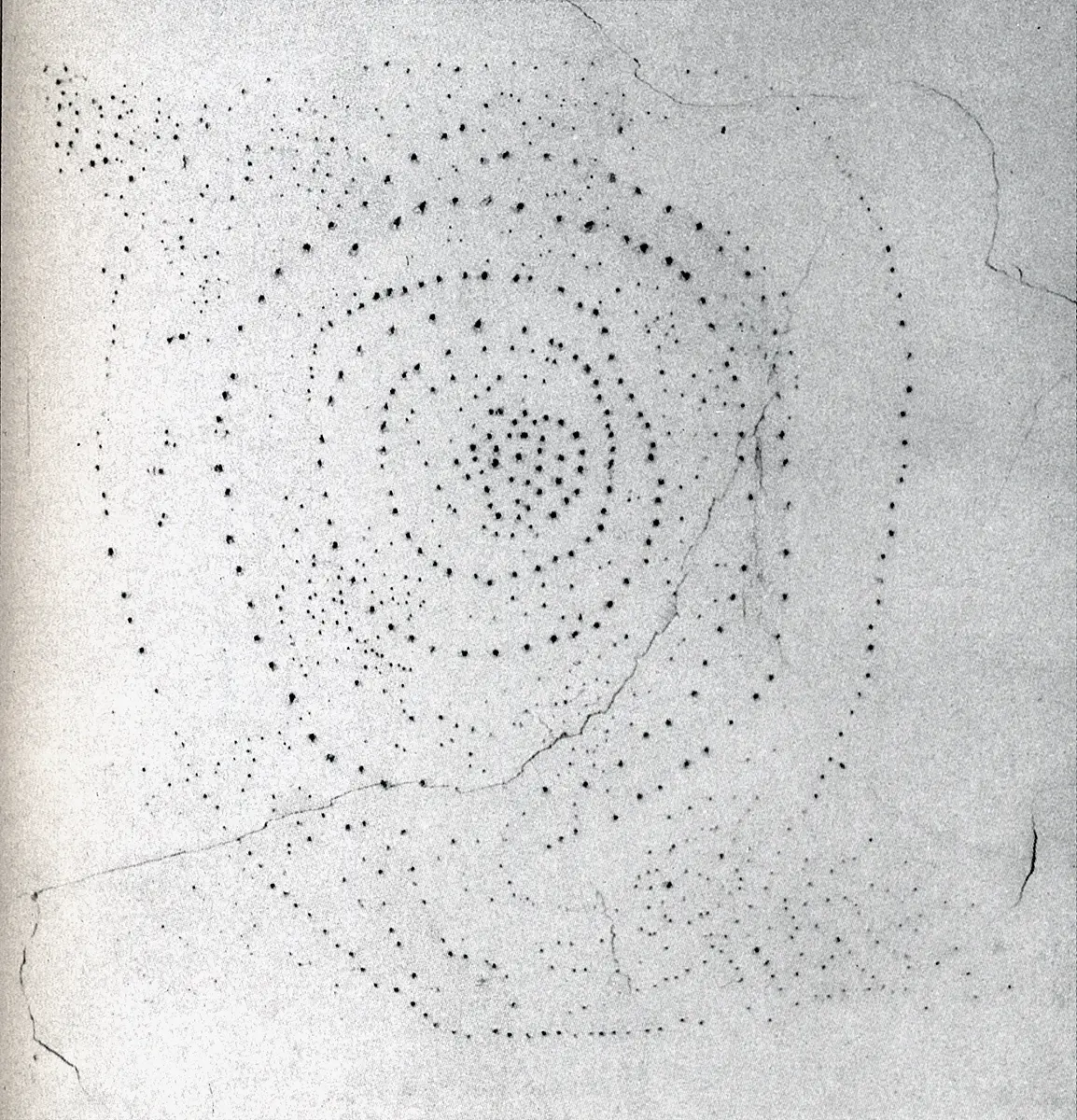
Fontana once again escaped the ravages of war —this time the Second World War—with his return in 1939 to Argentina. Continuing with the commercial activities of his father, he visited various cities in the pampa and coastal regions: La Plata, Buenos Aires, Mar del Plata, Pergamino and Cordoba. During this time he painted figurative landscapes of the region and did sculptures in bronze and silver; however, in the sculptures he gradually accorded greater importance to the expression of the material.
In 1940 he received a commission from the Municipality of Buenos Aires to execute a monument in honor of the national flag. He also presented an exhibition in the same city along with Julio Vanzo.
In the 7th Milan Biennial, he was awarded a diploma of honor for a mosaic work titled Medusa. The following year he exhibited in the Muler gallery, in the National Salon of Painting, Sculpture and Engraving of Santa Fe and in the 31st National Salon of Fine Arts of Buenos Aires, where he was awarded second prize for a sculpture titled The Acolyte. From that year he began to participate regularly in the Salon until 1946, when he returned to Italy, this time for good.
All these events of an official nature were characterized by a taste for European traditions and fine execution which did not call into question the dominant values and naturalistic representation.
From this time Fontanadecided to settle in the capital, fixing his abode in Rioja Street. He struck up a friendship with Jorge Romero Brest, an art critic who was very interested in the latest movements in Europe and with the intellectual elite of the moment, including some members of the Martin Fierro group and Pettoruti.
Pettoruti not only maintained links with the Paris avant-garde but more particularly with the futurists during his stay in Italy. The work carried out during this period (1920-24) was characterized by its “peninsular” character and well chiseled forms. The static light is more reminiscent of the truncated perspectives of Giorgio de Chirico than in the dynamic and forceful lines of futurism. Neither is there any subjective interpretation of states of mind or the sort of multidimensionalism found in the French masters. Although his planimetry was to cause consternation in the southern country, Pettoruti shared with Fontana the resources of actual experience and the taste for good form and elegance.
At the beginning of the 1940s there was a significant struggle in the local art world in favor of a break with tradition and to some extent “provincial” tastes. Buenos Aires was at that time the point of gravitation of the ideas which were arriving from all over Europe. The battlefield of abstraction had been left unfinished in Europe and despite the lack of information, it proved possible to make positive contributions. There were artists from various countries available in this extraordinary geopolitical region of the River Plate Basin: in Rosario, on the banks of the River Parana and which was the second port of the country, in Buenos Aires, that “monster of a city", and in Montevideo.
In 1943 Fontana won first prize in the National Salon of Buenos Aires with a work titled Man of the Delta. It is interesting to note once again the importance attached to social commitment to the coastal group. During this period the artist also did landscapes of the pampa region. We should not forget the enormous psychological effect of this vision and of the region in which the artist was born and where he lived his first experiences. All these memories as well as the fruits of his travels were to influence his work. An example of this can be seen in some of his later work, such as the pure automatism of certain drawings dated 1946 and based on his memory of the journey from Italy to Buenos Aires, in which the form of the sky acquires an almost bacchanalian character. What would have been the destiny of this sculptor if he had not been born in Argentina?
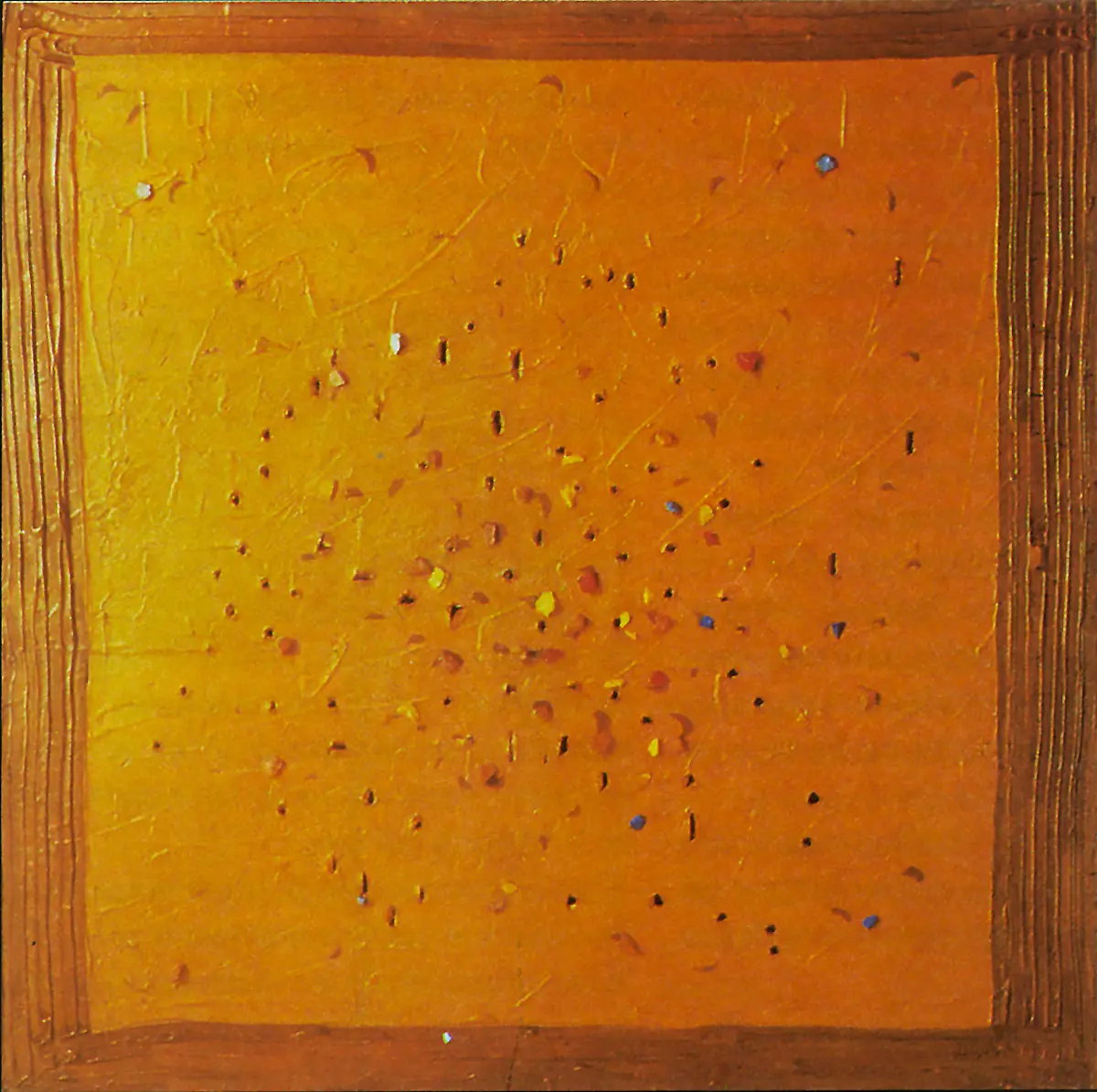
The geographical presence of the plains. The almost unimaginable emptiness, difficult to conceive, virtually infinite. The brilliant light, penetrable, dense... The suffocating heat of midday, almost palpable. The special color of the coastal region, between reddish and earth-colored, with hints of black, grey, and dark yellow. The smell of the rain and the extraordinary dryness. The brilliant stones to be found on the country paths. The cracks in the alkaline soil caused by the drought. The gash of the river. The gap between two continents. The ambivalent gaze from two or more points of view. The Rome-Buenos Aires-Paris circuit over which the artist traveled throughout his life. The successive upheavals. The contrast between the "virgin land" yet to be conquered and the beauties of an ancient civilization. The “construction” of a young country and the destruction of an entire culture at the hand of an irrational force... Disappointment and the wounds inflicted on the soul.
“I already had the idea of ‘spatialism’ in mind in 1941, although I did not do anything new. At that time a small group had been formed and there had been discussions. However nothing came of it because I could not unite the 'spatial idea' to sculpture and escape from traditional space”. Far from being a time of withdrawal, the time spent in South America allowed Fontana to reflect more deeply on the contemporary lessons relating to plastic elements.
Futurism had posed the problem of energy. Space was confronted in a fundamental manner, which was not the case with cubism. However both did deal with the relative aspects of vision, subjectivity, states of mind and the phenomenal world. The two most important movements of the beginning of the century led to an historical skepticism, in the sense that objective reality could no longer be subject to laws which were empirically verifiable. Thus the idea of past and future was made relative, with value being given to the instant. This value also appeared in Cezanne who wanted to make the air an element as solid as a rock.
The Realist Manifesto of Gabo transformed volume into forceful lines, something which, to some extent, was implicit in the texts of Marinetti. On the other hand, however, it freed sculpture from weight and mass and emphasized the value of space-time.
In a sense Fontana was the person in whom all these influences coalesced, subsequently enriched by the concepts of the Bauhaus which complemented the discussions in Buenos Aires on the “concrete” artists.
In this country of predominantly Italian influence, the phenomenon of “cultural continuity” could also be experienced. In Argentina there existed the Renaissance ideal of man as an integrated being, both scientist and artist at the same time.
Throughout his entire career Fontana developed his ideas both as regards the concept of matter and the nature of time. He moved from the idea of naturalistic representation and matter as conceived in the nineteenth century towards the idea of matter-energy, above all with the use of neon. He experienced all the influences of his time and even transcended them. And he concluded the circle of his Italian culture which began with perspective representation until he destroyed it.
Yet he established the bases of a new art-science and gave his support to this same ideal.
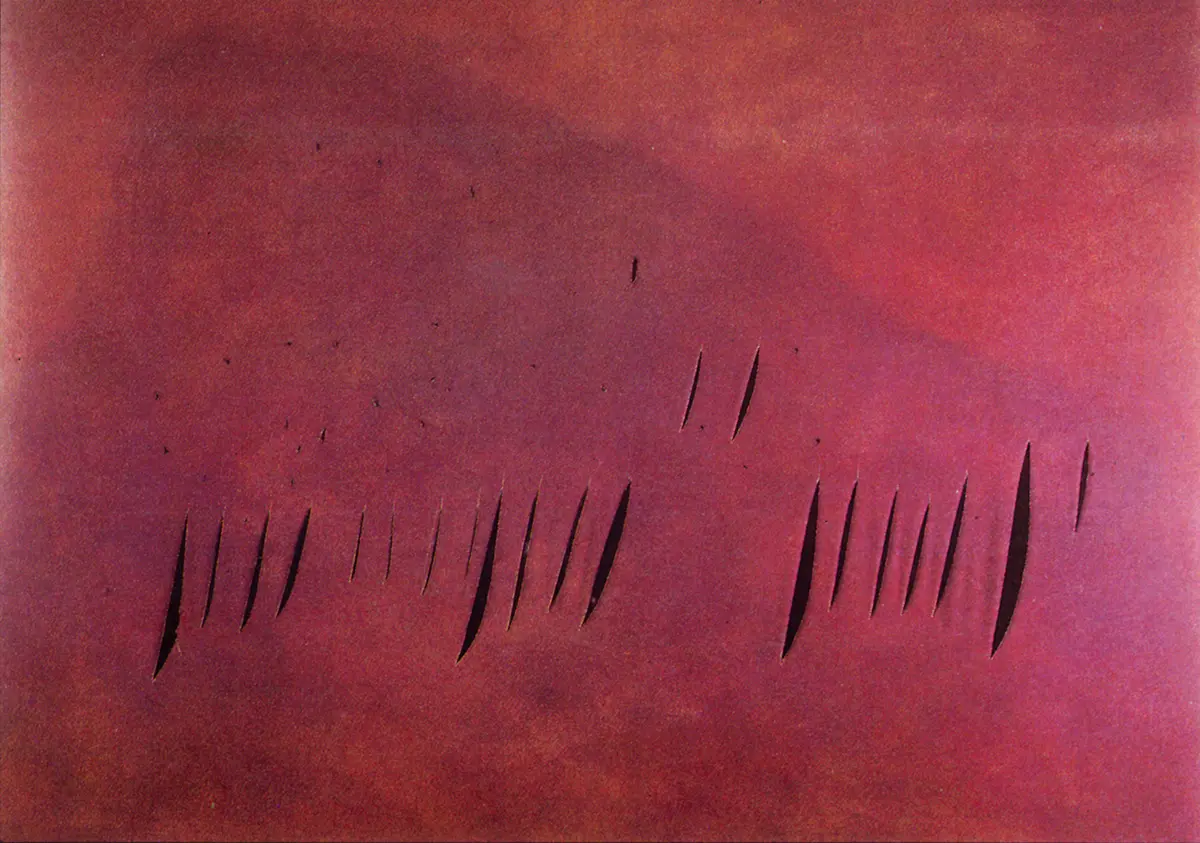
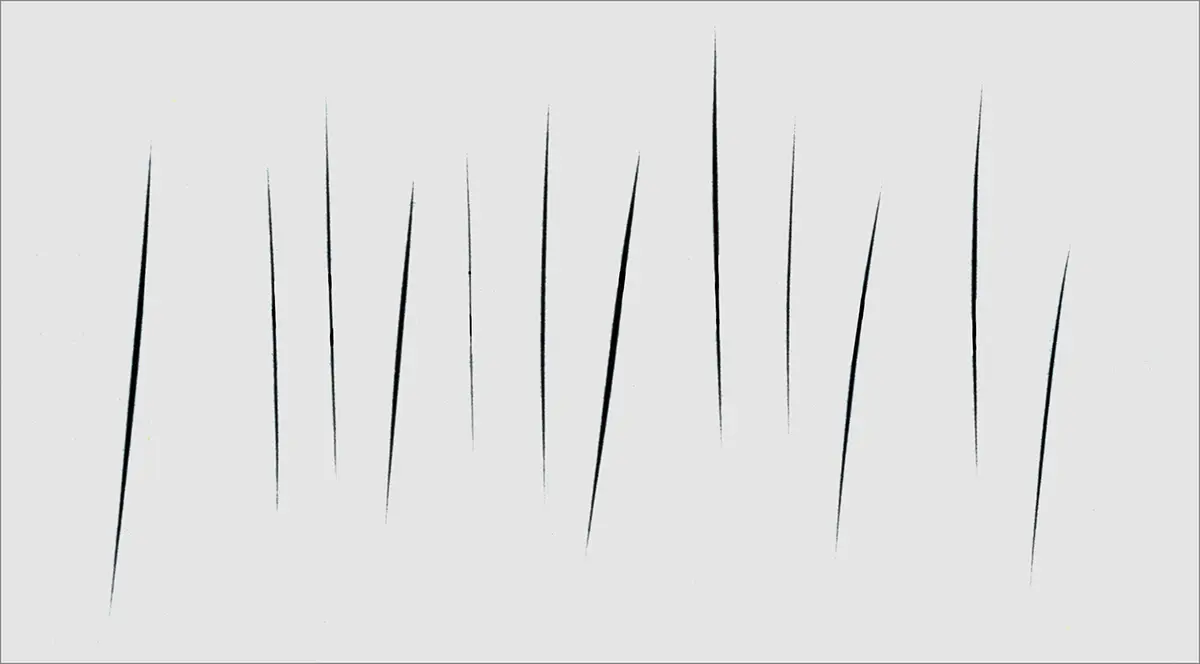
Fontana, who was essentially a sculptor, transformed the canvas into a sculpture by drawing space upon it. Or rather, he transformed it into the ready-made of the same lucubrations which had created it.
But he acted with a full awareness of the historical sense of his discovery.
Essentially a sculptor, he examined in great detail the principles governing matter, even in his figurative work. Or rather, he segmented it into contrasting zones of light and shadow.
He also captured the essence itself of the sculptural act and thus destroyed the two-dimensional nature of painting. By a simple gesture he discovered the development of four-dimensional art. But above all, by liberating his subconscious, Fontana was the representative of the times in which he lived. All this was dreamed and conceived in embryonic form in the distant lands of Latin America, where the infinite and luminous plains extend into a spatial continuum. Only the “cut” of the horizon sometimes appears, especially at sundown. But at midday, the reverberations of this fertile desert transform everything into a psycho-physical unity and the atmosphere seems to be “a luminous and malleable substance”.
The Fontana exhibition which was presented at the Georges Pompidou Center in Paris between 15 October 1987 and II January 1988 included an important selection of works, beginning with the Nude of 1924, considered to be the earliest existing piece by the artist. The show reviews all the periods of development from his modernist figurative work to his atmospheric black light pieces and the great neon shown at the 9th Milan Triennial, which was also shown in Paris in 1983 at the Electra exhibition organized by the Museum of Modern Art of Paris.
From the beginning the show also set out to interpret the development of the artist during his Argentinian period and the trends of the epoch in that country.
Although there are many scholars of Latin American art in Paris, it is regrettable that the catalog does not include texts by any of them, not even Damian Bayon, who was not only a close friend of the artist but also at the beginning followed the courses of Romero Brest.
In the same way, although the catalog discusses the events which were occurring in Argentina at this time, one has the impression that the analysis is a second-hand one, culled from outside the country by someone who was not really familiar with the reality of the country, except as it appeared in selected monographs.
The text quotes an interpretation to the effect that “the Argentinian people acquired its definitive character after the war as a result of a cosmopolitan crossbreeding through two poles of identification, the Spanish language and the Catholic religion...”. And, of course, it was thanks to this identity —according to this analysis— that the first Argentinian avant-garde came into being.
Unfortunately, it is not possible within the limits of the present article to examine fully the whys and wherefores of the country’s cultural evolution. But it is worth noting that according to this hypothesis, Fontana was influenced by his local environment in abandoning “modernist" figuration —a term which I believe is more appropriate than "academic”— thanks to the weight of these same renewals.
It should not be forgotten that he himself had lived the futurist avant-garde movements and furthermore had participated in the French Abstraction-Creation movement; yet if we look carefully, we can see that he always kept himself on the margin of their influence. Indeed, his first abstract reliefs not only anticipate informalist art but show an ease of design which was never determined rigidly by any of the doctrines of the moment.
Thus Fontana had an enormous amount of experience to share in achieving the fertile principles of the White Manifesto, which was drafted by his students at the School of Fine Arts. What is certain, however, is that the text was not signed by Fontana, although it bears his influence.
All the information provided for the Pompidou show—and published in such journals as Beaux Arts— contains the same error committed by the research team, namely that the Manifesto was drafted by the students at the Altamira Academy. And that none Of its students pursued the line of research thus initiated. This is not true since the Arias and Fridman brothers —the main persons responsible for the drafting of the Manifesto— were even friends of Le Parc at the time. Furthermore, Paris has been the home since 1951 of Carlos Cairoli who even founded a group to continue the development of the spirit which had been acquired in student meetings in the cafes of Buenos Aires.
Continuing this posture of intentional “mis-information”, the same organizers requested data and unpublished work from various specialists. The catalog also includes almost textual reproductions of the book Aventura Plastica Hispanoamerica, some of which appear without any note. In order to find some explanation for this apparently “outward-looking” but in point of fact protectionist attitude, I should like to limit myself to the catalog of the earlier major exhibition which marked the tenth anniversary of the Center, titled Fashion, Morals and Passion, an aestheticist phrase of Baudelaire. To justify a showing of the final avant-garde movements of the decade the catalog begins by selecting a theorist somewhat complacently and to defend not the selection of a principle but rather a market which in its turn churns out out the information which has thus been cataloged in bulky publications. The practice of reducing art to explanations determined by the trends of fashion or frivolous passions seems to me to be a poor one. The text included in this catalog includes the following explanation: “Our selection is not exhaustive... indeed, what can we do if we do not have sufficient information available, since we are not familiar with the importance and specific characteristics of the plastic arts in South America, India, and the Arab countries and have no means of assessing them? What can we do as regards the plastic arts without lapsing into paternalism or neo-colonialism?... There are areas to which we have no access and others with which we are unfamiliar. The reasons for our lack of knowlege are, in any case, too numerous to be listed here...”.
I do not believe that I need add that, against my will, my position became a personal one; having worked on numerous occasions with institutions in France, I had never seen such a flagrant manipulation of “discourse" until I read these sentences.
What else but neo-colonialism is this attitude of accepting the ignorance of those who at the same time are distributing “culture” and, moreover, interpreting our artists?

Furthermore, Lucio Fontana, even though he was born in Argentina—a country where, moreover, his family was able to increase its fortune and where the artist thus managed to acquire the means to pursue his international career— is considered by the Latin American theorists themselves as Italian.
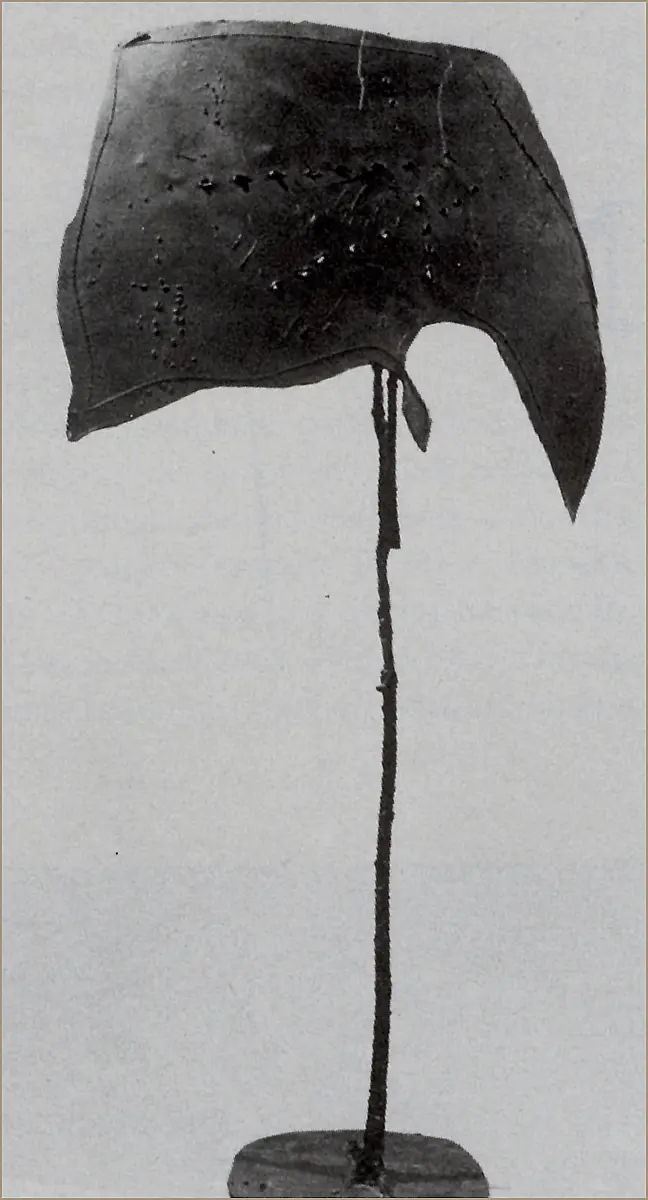
At all events they do not justify his extreme freedom of style, his unclassifiable kind of liberty, and creative madness. Some of his sketches also call into question the validity itself of the criteria of what is "finished". And if we look at his sculptures, they are figurative, but also synthetic, with a predominance of “abstract” disproportionate mass. He is compared with constructivist artists of his time because of simple similarities, although in reality such works as Vantongerloo and Escultura abstracts (1934) have in reality no equal.
A large amount of the main text which introduces the exhibition tries, although it actually says the opposite, to find a "rationalistic" or rather “purist” explanation for something which was nothing more than a creative “elan" and profoundly anti-conventional.
What is the point of producing reams of erudite discourse to explain something which is better expressed by the work itself?
The exhibition is not a heavy one. It is agreeable to visit the blacklight spaces of 1967 and 49, for example, which appear to be the work of some young artist of today. But there is no work or visual reference belonging to his Latin American period. We understand his metaphor of science and the search for one’s own metaphysics, of a cosmic nature, as he said, paraphrasing the truncated perspectives of De Chirico, where the “peninsular” is almost a form of petulance in his portraits, typical of the artist of the old continent.
His “cuts” are, in my view, the “insubordination" of all plastic ideas viewed as a system.
His successive migrations and schisms allowed him to observe from a distance what was happening in France, Italy, and Argentina itself, without being tied and thus able to free himself from the suffocating burden of history.
He was able to take advantage of all that was best in his circumstances and times, receiving commissions and obtaining official prizes. He was a theorist and producer of innovations and was able to present honorary exhibitions such as that offered by the Di Telia Institute in Buenos Aires in 1966, which was directed at that time by his old friend Jorge Romero Brest, and to become, in his turn, the spearhead for the innovations of the 1970s.
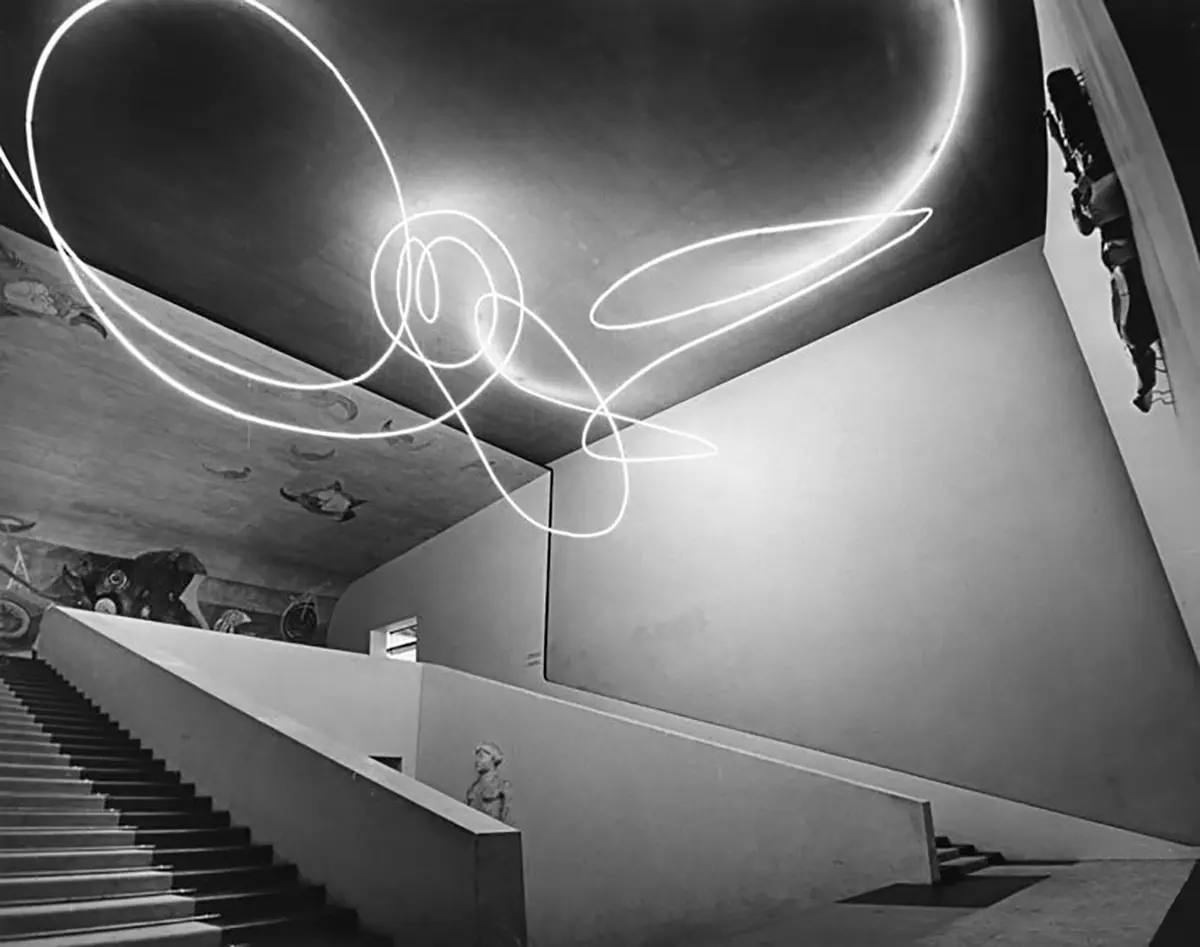
He understood the principles of creation and chaos, even in philosophical terms. Although I find the text published by Severo Sarduy to be extremely beautiful, I must, unfortunately, disagree with his conclusion that “thirty years later Rothko would say the same thing”. In a paragraph that is too literary to quote in full here, Sarduy compares the two artists by saying that the works of Fontana are loaded with noise while those of Rothko are imbued with silence. "There is only the space invested with color which Rothko leaves as a place for God”. Simply —according to Sarduy— Fontana was to make way for Rothko and, moreover, used a language that was “less eclipsing”. It should be pointed out that color is not the main concern of Fontana, but space. An element which could thus discover its autonomy vis-a-vis representation and the control of form.
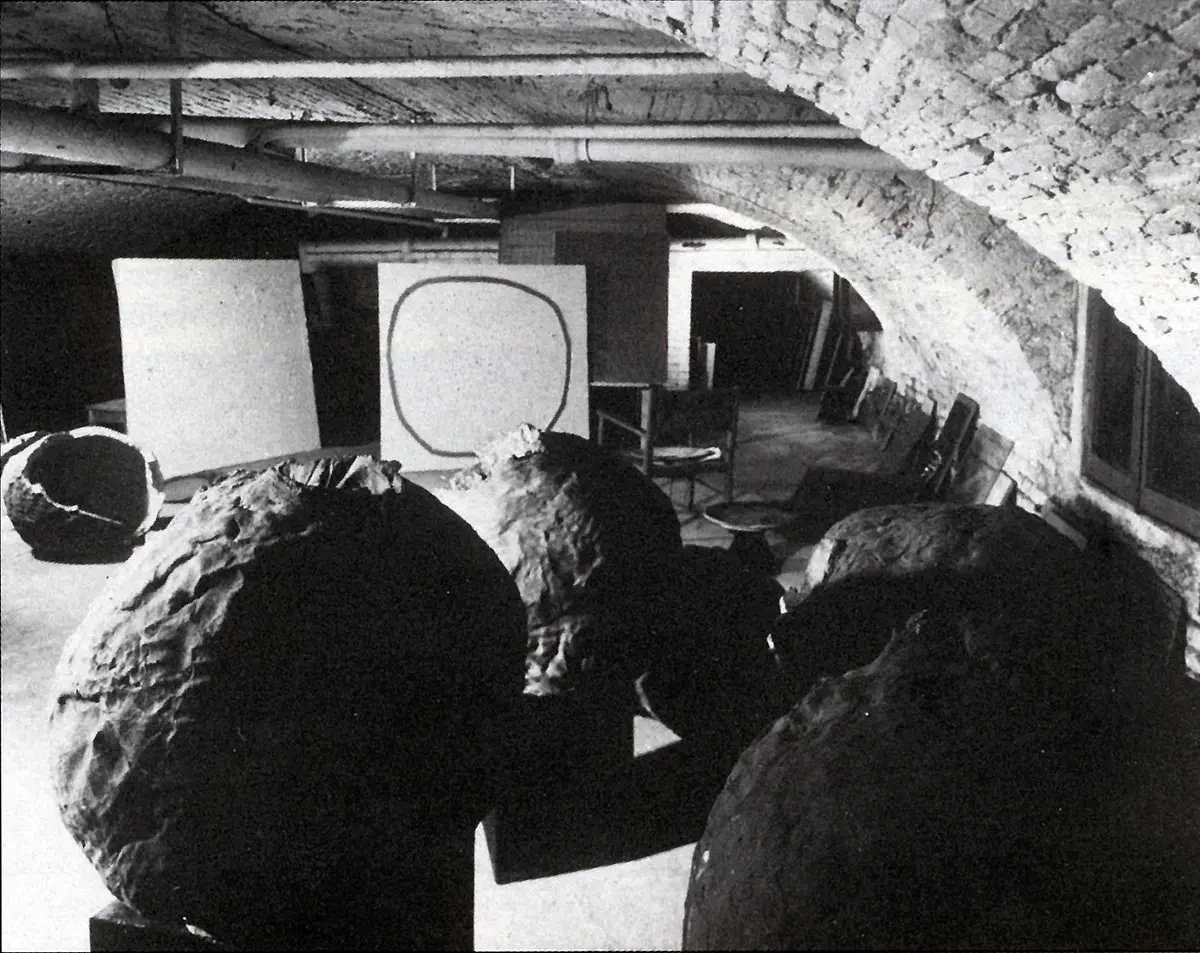
Fontana was able, at a single stroke, to eliminate the difference between painting, sculpture, and environment.
SUSANA SULIC