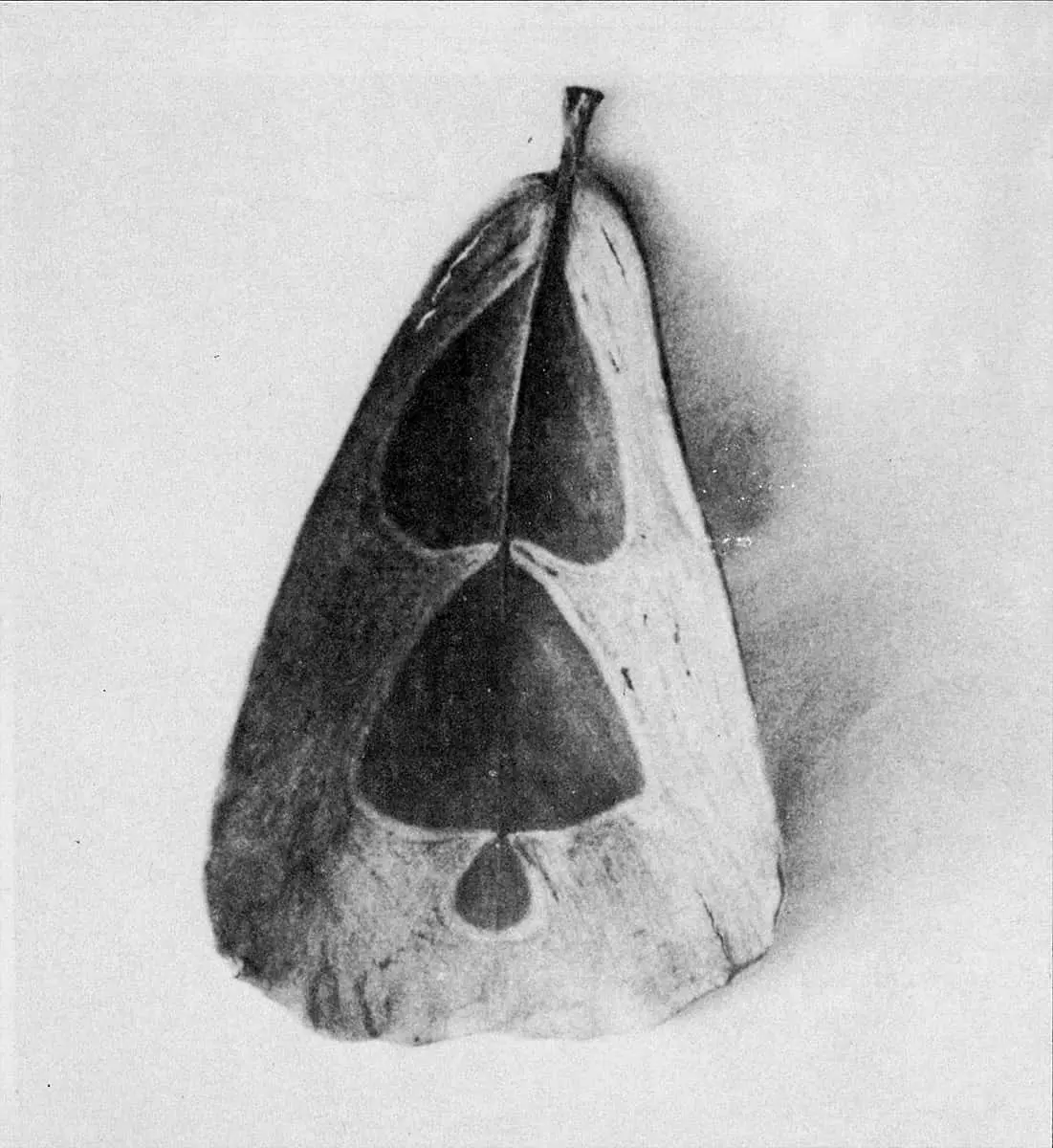
A total of 159 works by Ana Mendieta, complemented by a selection of films showing some of her performances, provide a coherent vision of her twelve years of work. Even for those of us who were close to her, the show made a bigger impact than expected. Before her death, Mendieta pursued isolated activities or presented small exhibitions concentrated on specific projects. Her studio consisted of a room in a tiny apartment and there was never any opportunity to see how her ideas connected up with one another. Work was discussed for its specific merits: a tree covered with mildew seemed to be good, whereas a vegetable leaf with a schematic drawing seemed poor. This retrospective forces us to make a re-evaluation within a total context, and practically justifies everything that she did in a dimension of which she was always aware, and of which we, until now, were ignorant. The great-great-grandfather of Ana Mendieta was Carlos Mendieta, President of Cuba in 1934. The chief of the armed forces at that time was Fulgencio Batista who declared, following the outbreak of a strike amongst the island's sugarcane workers: “If there is no sugar harvest, then there will be a harvest of blood instead”, setting the tone of Mendieta’s government and of those which were to follow. Ana, who was born in 1948 and sent to the United States at the age of 14, lived only a few years of the Cuban revolution which was directed against this tradition. She was then at an age when most adolescents began to make political commitments. Her father had had problems with Fidel Castro and ended up in prison (Ana suspected that he had worked or collaborated with the CIA). After a few years spent in an orphanage, she was reunited with her mother and brother in 1966. Recalling the years spent in the orphanage, she commented that her alternatives were either to become a criminal or an artist. She opted for the latter and studied at the University of Iowa, from which she graduated. Up until the end of the 1970s, except for her interest in feminism, Ana Mendieta showed no political commitment. She spent a lot of time filling the void left by the circumstances of her emigration. In 1980 she returned to Cuba for the first time and re-established contact with her past much more easily than she had expected and feared.
The work of Ana Mendieta was the direct product of her education in the United States. Her decision to become an artist had been taken within the framework of the hegemonic culture of the United States and to a certain extent her initial intention was to try and integrate herself into that culture. Given her personal history, such an intention was perfectly logical. But it was equally logical, in the context of that personal history, that the integration would be only partial. Her growth as an artist was based on the development of an acute awareness of this dilemma.
The term “Hispanic” has been used in the United States as a facile label for grouping together various forms of artistic activity that have a common ethnic origin. Thus the work of Mendieta was also labelled in this way. However, because of the variety of origins and problems involved, the label lacked subtlety. There is, for example, a term used in the United States, “Spanglish”, which enables us to focus more exactly on many Hispanic products. Used, as it usually is, in relation to language, their term has negative connotations. It implies the absence of a functional instrument, which has been replaced by an inept hybrid of two languages. However, the negative interpretation disguises the origin of the and the needs that the new language satisfies. If the word were used in relation to art, “Spanglish” would represent the fusing of memory, the process of deterioration, and the acquisition of a new reality made distant by its foreignness. It is in this sense that “Spanglish” is a good metaphor for the art of Mendieta. Spanglish art is probably the most authentic option open to the Latin artist whose roots have been cut. It is a natural form of expression, without affectation; it clearly represents the fact that one has come from one place and gone to another; it is a bridge that spans the abysm formed by the journey itself.
Spanglish art is individualistic, an immediate solution that helps alleviate the tension resulting from the clash between two cultures. It allows the integration of two experiences and the richness of two sets of imagery within a single iconography. It is not an art that reflects a programmatic attitude or political awareness. Its cultural significance lies in the testimony of a shared destiny rather than in the sharing of any aesthetic investigation. Its quality depends on individual effort and not on the support of a group or a community of interests. “Hispanic” art or “feminist" art both presume the existence of a group or community of interests.
Mendieta was a member of AIR, a feminist cooperative art gallery in New York. This resulted in her work being catalogued within two communities of interest, feminist art and Hispanic art. But in point of fact, her work was Spanglish and expressed individuality. Given the dual perception of her work, Mendieta was separated in two ways from the hegemonic current. Simultaneously, this same dual perception meant that she was seen as satisfying two minority quotas within the hegemonic system that governs culture in the United States. This explains the large number of honorific awards and mentions that she accumulated over a period of five years (including the Guggenheim scholarship and the Prize of the American Academy in Rome).
The two-fold separation and artificiality of the quota system interfered with the direct relationship of others with her work. In this connection, the commentaries of two New York critics, published in the New York Times on her death, are particularly interesting. One is by Kay Larson, art critic of the above-mentioned newspaper: “What surprises me is that Ana should have received the scholarship from the American Academy when the quality of her work was not extraordinary.” Barbara Rose, critic of Vogue magazine, wrote: “Later I went to see her show, simply because she was the wife of Carl, and it was very bad. I asked a friend why someone would present a show of her work and he replied: “Because she is Carl Andre's wife." The rumor had circulated that she had married Carl to gain access to the art world.” The cover of the magazine asked the question: “Did Carl Andre, the famous minimalist sculptor, push his wife, a fellow artist, out the window towards her death?” Mendieta is thus placed in the anonymous category of “wife."
Ana Mendieta died on 8 September 1985 as a result of a fall from the 34th floor of the apartment building in which he lived with her husband. The circumstances of her death have still not been clarified and criminal proceedings are still pending. After her death, Mendieta became a symbol for those artists who felt a sense of separation from the hegemonic culture. Indeed, because of the fame of her husband in artistic circles, the world of art became divided into two camps: pro-Ana supporters and pro-Carl advocates. This was not a polarization around individuals or feminism versus machismo. It was polarization around hegemonic forms of thought against non-hegemonic forms. In this context, it was not by accident that the retrospective of Mendieta's work was organized in the New Museum rather than one of the other New York museums.
Around 1980 the political attitude of Mendieta had undergone radical development, with a passion which compensated for her earlier apathy. Her sense of unfulfilled assimilation was symbolized in her use of Tropic-Ana as a signature for her letters. Tropicana is the trademark of a brand of orange juice and the word allowed the artist to play word games with her name, her tropical origin, and the squeezing of the economy. But her politics never penetrated her work in any literal sense, but remained reduced to a vague atmosphere which gave rise to heated discussions with her friends and helped her in her introspective art. Her work was frequently seen as a programmatic expression of feminism and emphasized by the North American perception of the mystery of exoticism. Thus it was also seen in the context of a superficial anthropologism which was then in fashion in the world of art. Part of her success within this context was therefore the result of a misunderstanding. Her work is, in fact, limited to being a series of self-portraits.
Mendieta played an important role in the thoughts of her friends, particularly after her death. The show at the New Museum helps us to organize this role. It confirms certain sentiments but also obliges us to reconsider earlier value judgments. Works that when seen in isolation and out of context appeared to be weak can now be seen as the bridges necessary for an incredibly solid form of discourse. In her work about herself. Mendieta depicts in sequential form the process of being wounded, dying, the destruction of the image, the integration of the mortal remains into nature, and reincarnation in objects. Without any predetermined plan, she achieved a kind of implacable order in her various periods, offering a chilling metaphor for her life. At the same time, the works reflect an ideology in a systematic and coherent form. When she was offered the opportunity to express this ideology in words, she appeared confused and obscurantist. She spoke of her attraction for the earth as a result of her lack of a motherland, that she had been “ripped from the womb." She expressed her mystic belief in a force that flows through everything and in the curative power of objects possessed of spiritual force.
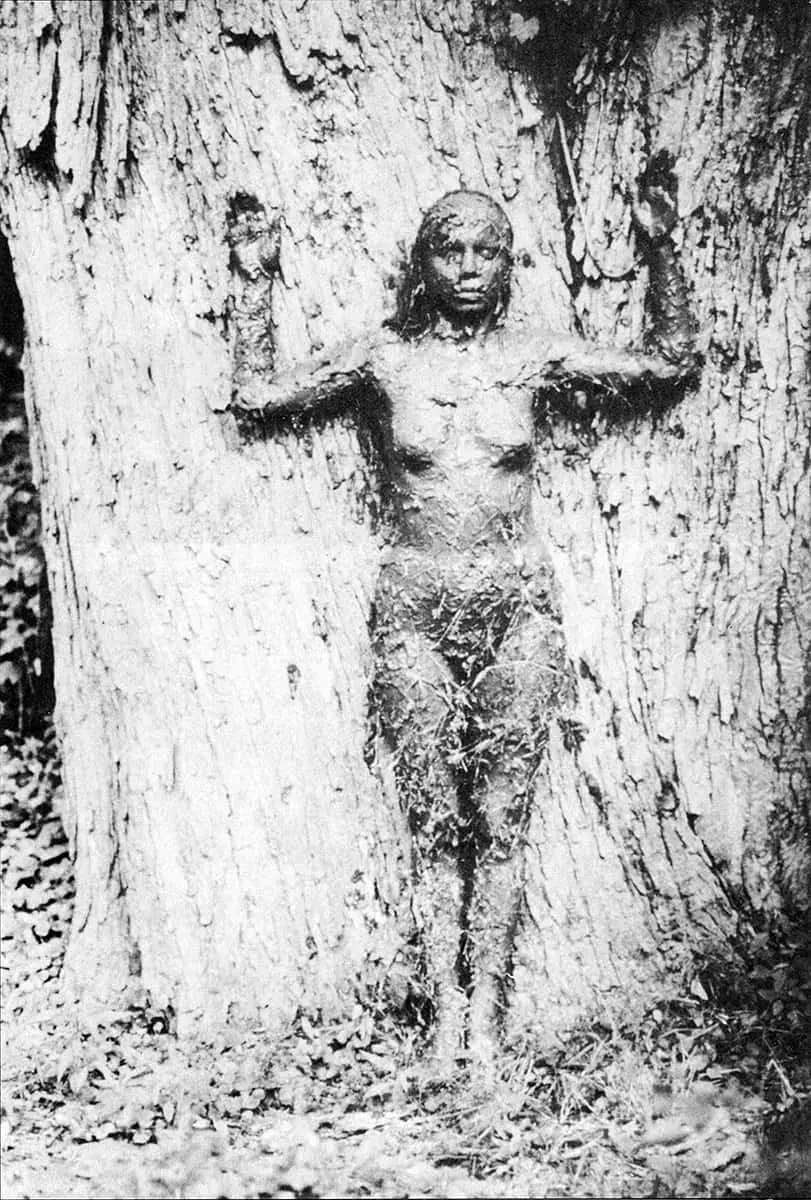
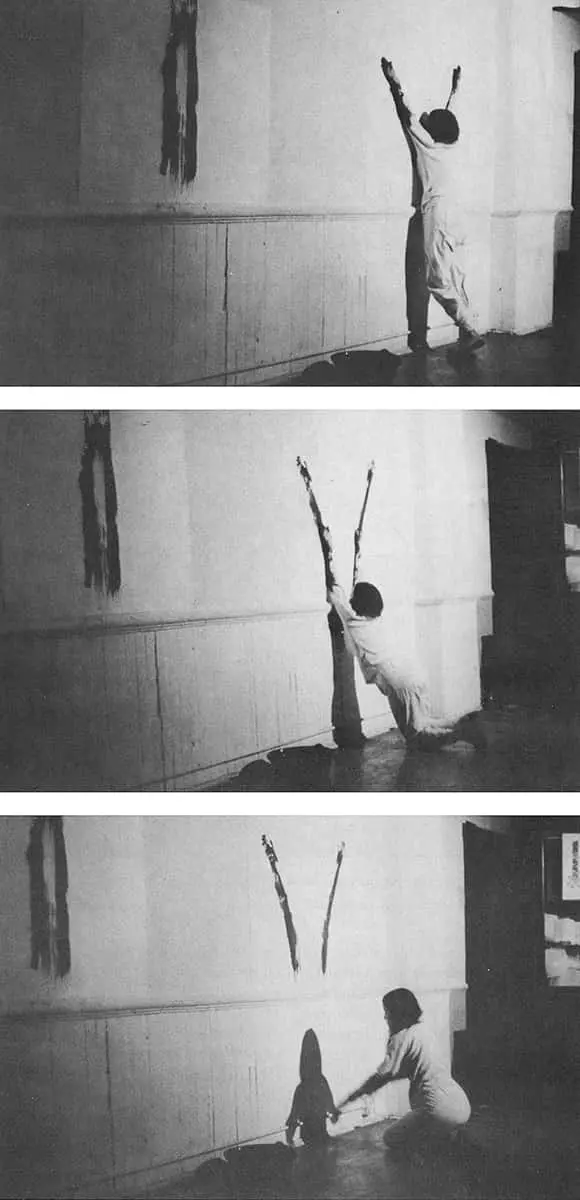
She began her first work in 1973 with a performance dealing with the rape of a fellow student. The unsuspecting public entered her apartment to find the girl half-naked and covered with blood. In subsequent activities, she wrote or made marks on walls using her arms dripping in a mixture of tempera and blood or covered her body with the blood of a white hen and then rolled in a bed of feathers that stuck to her body. The works were a representation of the search for herself through injury.
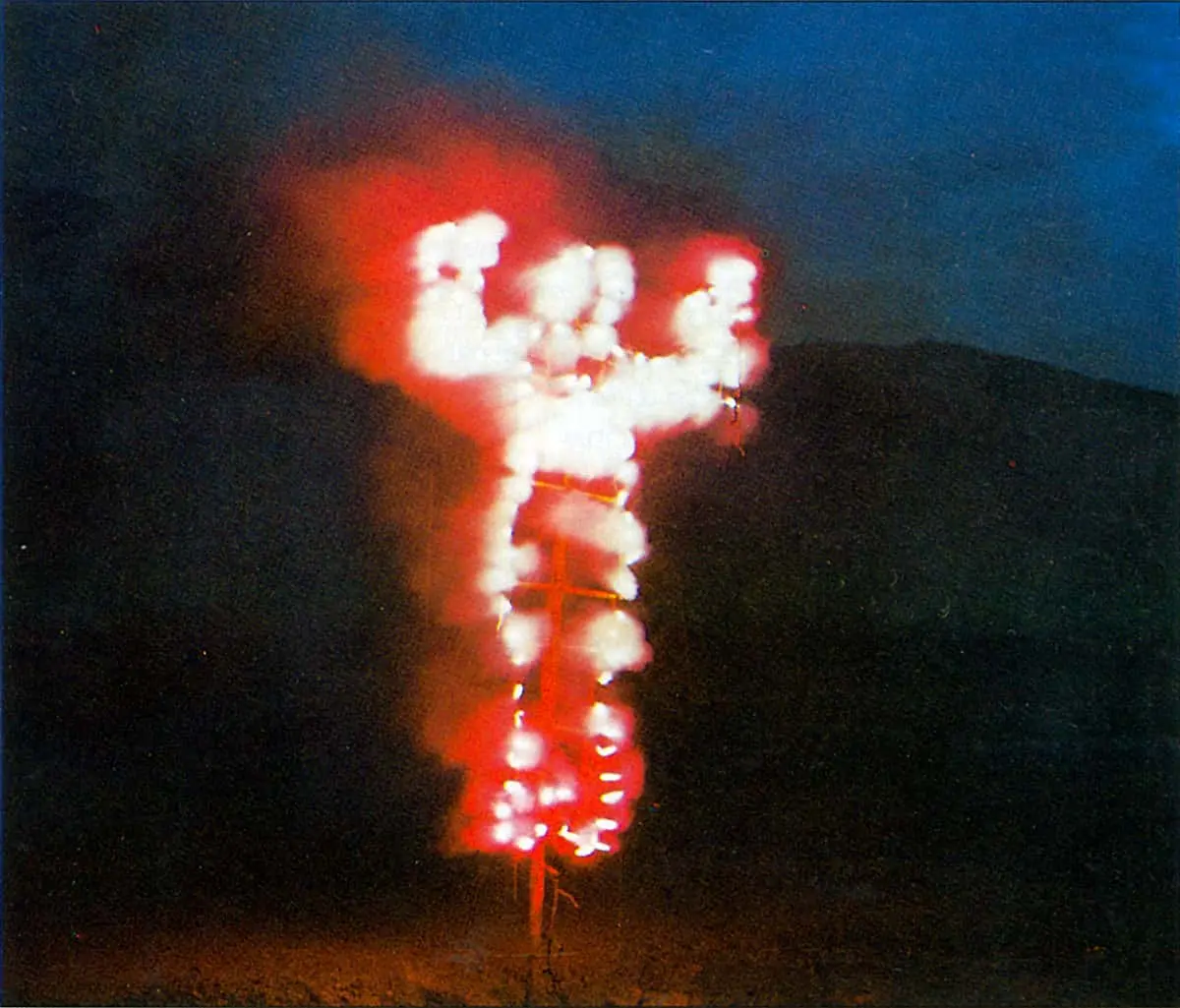
In 1974 and 1975 she undertook work related to the theme of death. She filmed her immobile face, in the form of a mask, and let drops of blood run down her face from her hair. In other work, her body floated without life, a prey to the pressures of the tide, until it ran aground on the sand. It then became buried beneath a heap of stones, which were rolled slowly by the vibrations of her body. In these works her body symbolized or in fact was a corpse. In her following works her body is absent. There remains only her silhouette, like some forensic sketch in the process of disintegration. A silhouette made of flowers emerges on the surface of a lake, made of sand and washed by the waves. Drawn with support for fireworks, it goes up in a mass of sinister and anti-festive flames.
At a later stage, the image is integrated with nature and becomes virtually invisible. Silhouettes appear like objets trouvés in the landscape and there are minimal changes that emphasize cavities and shadows, only visible if the spectator knows what to look for. The artist is trying to convert herself into nature. Several trips which she made to Mexico reinforce this sensation of disassociation from the United States. The nature with which she seeks integration is Latin American, and in particular Cuban.
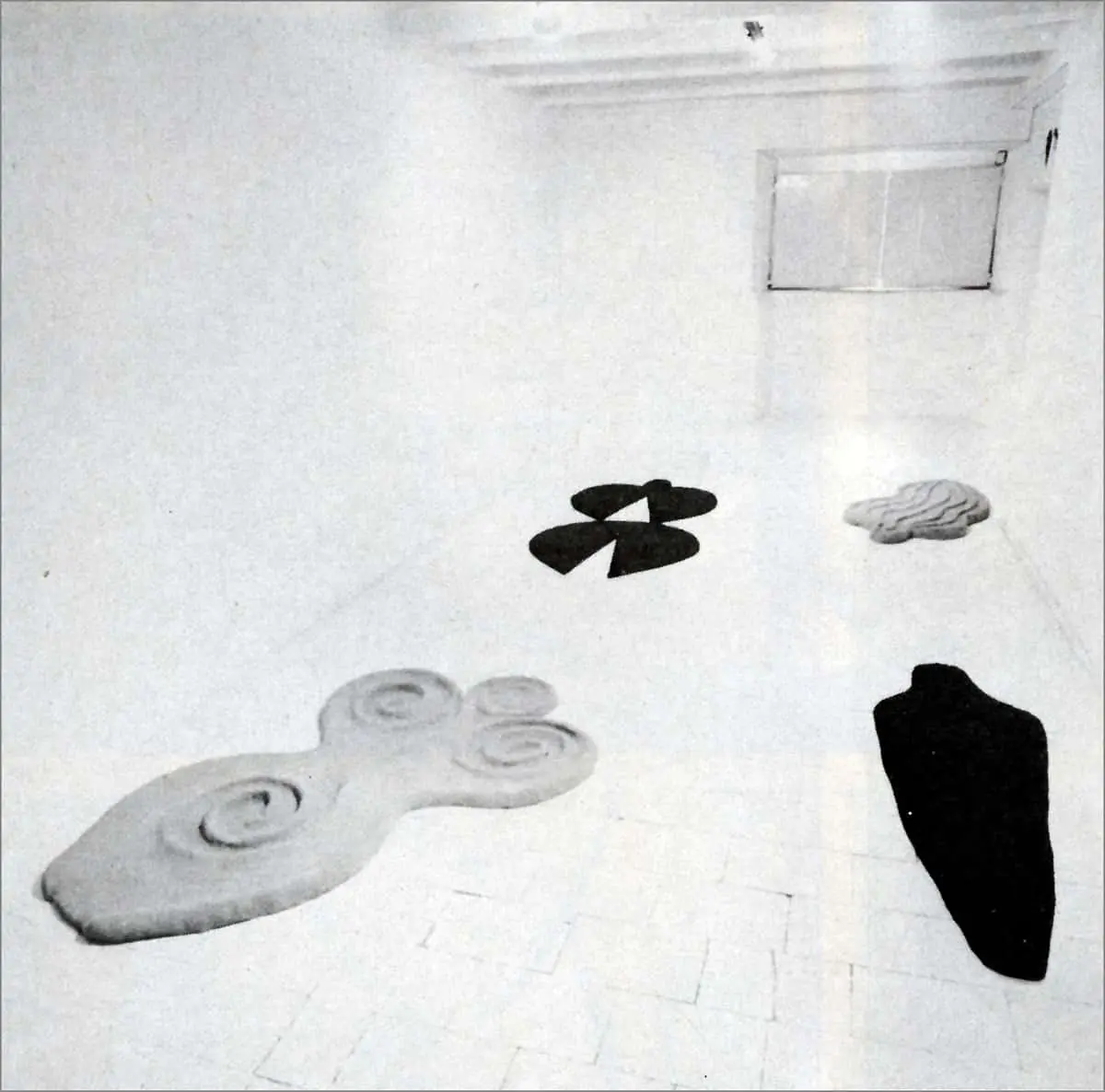
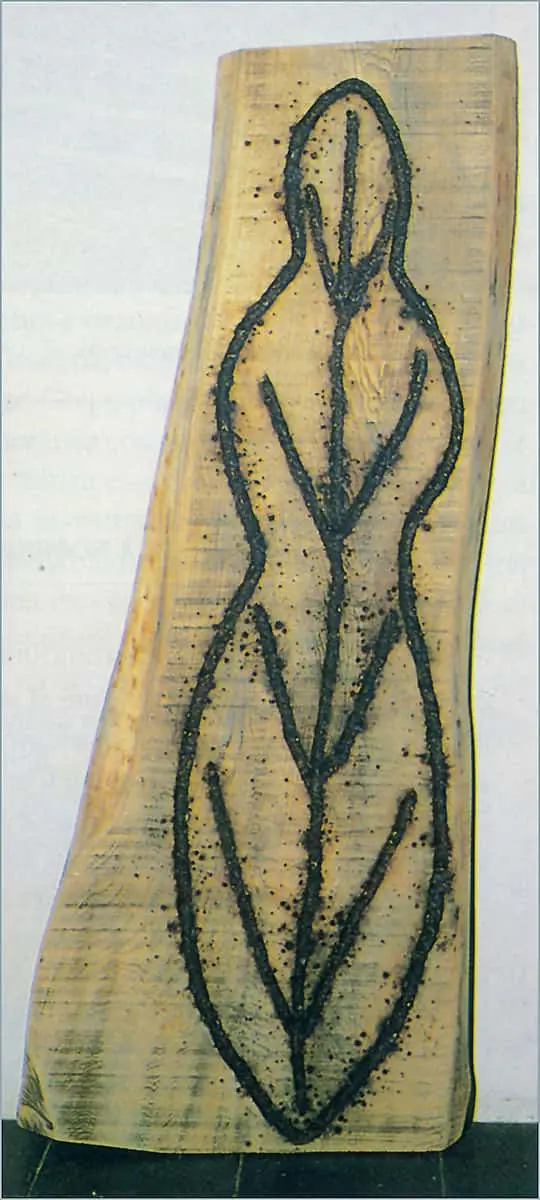
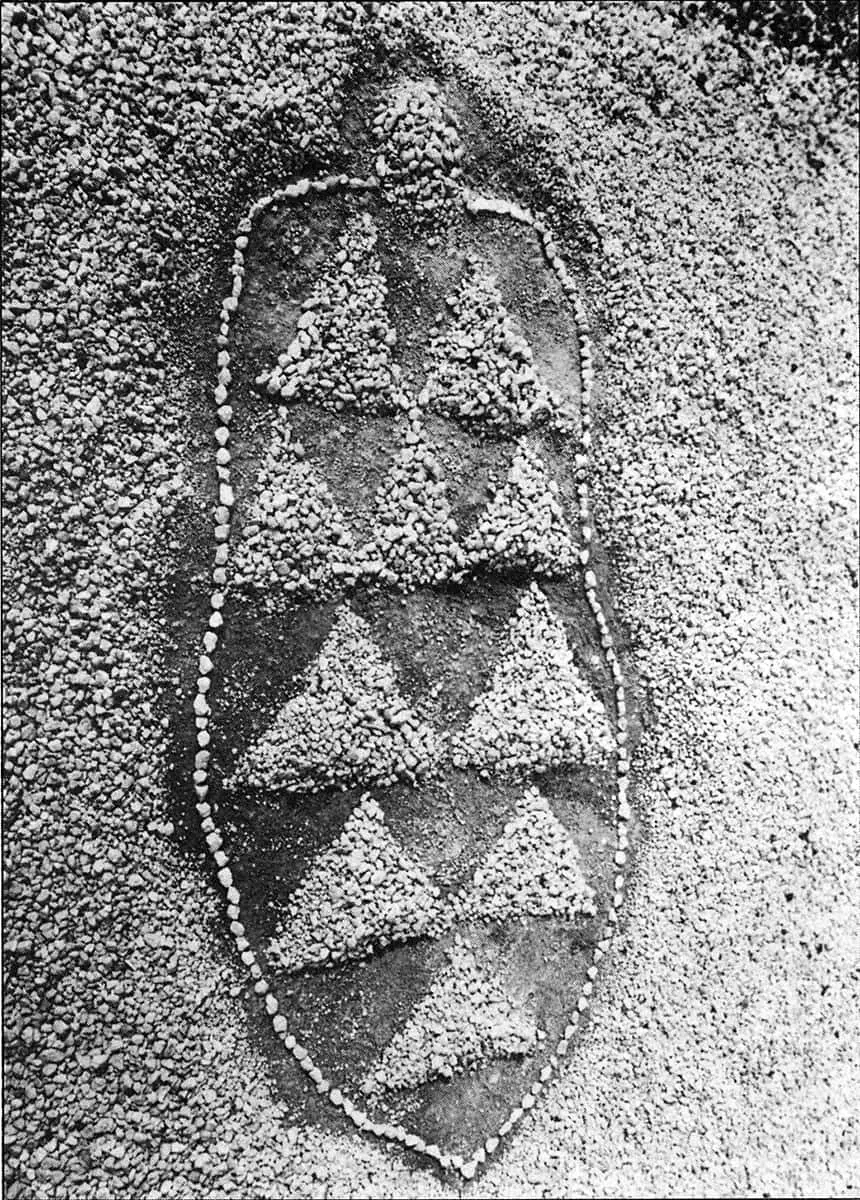
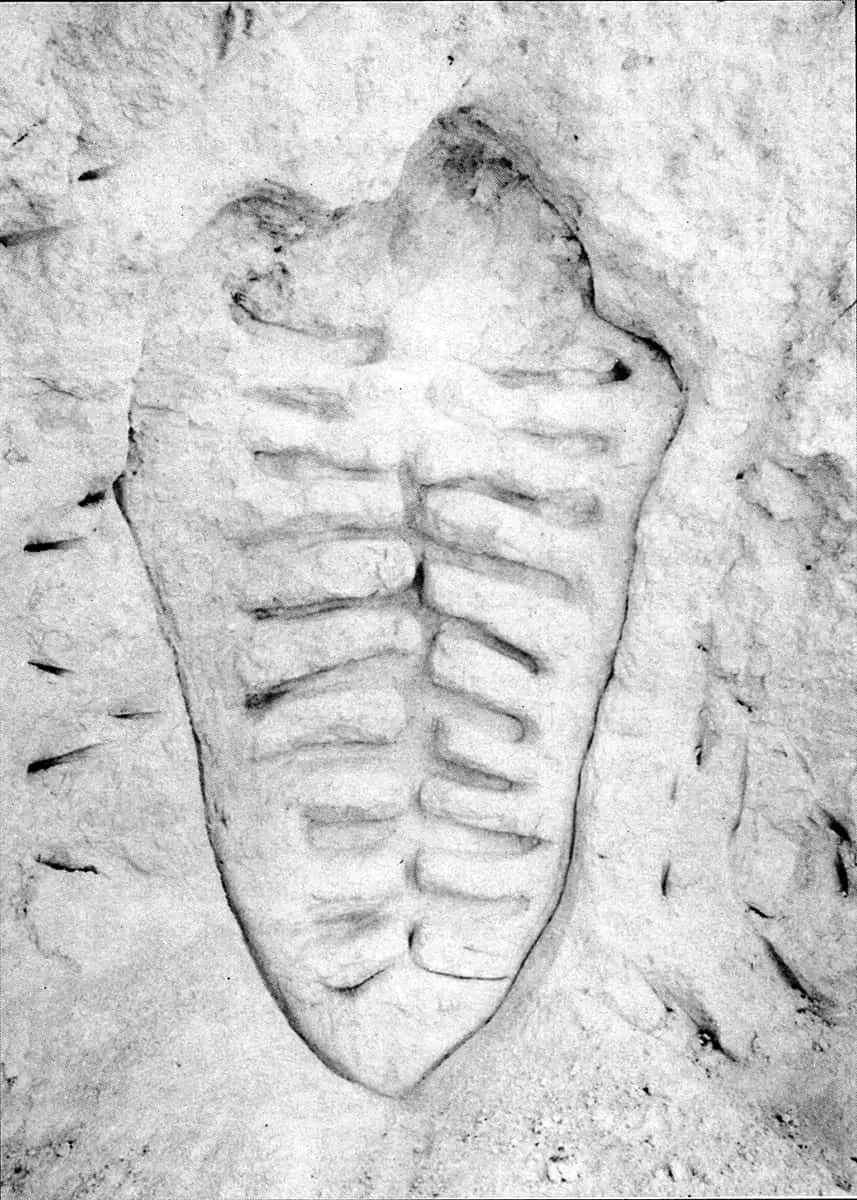
In 1980 she made her first trip to Cuba and prepared for her forthcoming visit to the forests of Jaruco, where she made some rupestrian sculptures the following year. She was taken to Jaruco by Cuban artists, including Ricardo Rodríguez Brey, who taught at the Casa de la Cultura. and used the calcareous stone of the walls of the caves, concentrating on forms that she modified according to her interests. Her silhouettes suggested variations on the Venus of Willendorf and the caves, with virtually no human interference, offered an ideal space. Probably the encounter with a sense of belonging led her to return to a more definite image. She abandoned the self-silhouette, which was already disappearing in her work, and established her own direct connection with a tradition. But her work, in terms of art, does not exist in itself: it will be the document of a memory. Large photographs of the work done in the cave, once again emphasize the distance. The tension created by this awareness of distance was to be resolved by the choice of materials. The photographs were framed and the photographic texture, sand, or stone surface in the background was continued with the same materials in the frame, creating a trompe I'oeil effect that sought to restore reality. She used amate paper, leaves, roots, clay, and trees to draw or form her figures. This time the works were independent of the natural environment and became nature themselves.
It was in this final period of her work that intimations of reincarnation began to appear. Since Jaruco, her work had become more detained sexually and the silhouettes were no longer empty. They became sexual symbols or ornaments in their stead. The veins of a leaf were converted into abdominal lines, once again creating a sense of ambiguous and conceptual illusion instead of the descriptive and explicit visual mechanism that was mentioned above in connection with the frames.
There appears to be critical agreement that Mendieta's work in the final period was the weakest. But when it is viewed within the context of her twelve years of work, this period appears to be one of extension and logical complementation. The evocation of the fertility gods frequently made in her work really succeeds only in this final period. The earlier empty silhouettes, if they are goddesses. are vacant, amputated, and sterile. In the final works, it is nature itself that is converted into the maximum fertile divinity.
To say that Mendieta created a new language would be to idealize her work in terms of the hegemonic culture. She was sensitive to the contemporary art that surrounded her and appropriate and used it intelligently. She adopted aesthetics specifically directed to her needs for expression and personal objectives. In this respect, her attitude was very similar to that of contemporary Cuban artists. Instead of fighting against the all-enveloping wave of information, they prefer to select those elements that have meaning for their work.
Because of her past, her self-evaluation with respect to the hegemonic art of the United States, and her need to re-establish contact with Cuba, Mendieta became the ideal mediator between the generation of Cuban artists of the eighties and the “outside."
She was able to see her work from within and at the same time had a sense of distance from which she could contribute to that work. She arrived in Cuba with the same prejudices that all foreigners have towards the art of socialist countries. The exhibition Volume I, the show in which the generation of the eighties began the Cuban Renaissance, radically changed her vision and led to an immediate friendship with most of those who were exhibiting. She came face to face with a path that led in two directions. Her work with tree roots can be related to that of Juan Francisco Elso Padillo and her interest in religious images and objects to José Bedia and Rodríguez Brey. For her part Mendieta contributed with her experience in the discussions, offering new critical points of view and providing moral support at a time in which the Cuban artists were experimenting with forms that disconcerted their public. She shared with them the belief that political opinion can condition art without there being any need for the content associated with pamphlets and broadsheets. Like her Cuban friends, Mendieta escaped the derivative fate that was endemic within the colonial artistic context, and like them, she managed to break the bonds of aesthetic subservience, deliberating appropriating anything that she considered pertinent to the creation of a syncretic culture. Although she never had the opportunity to show her work collectively with theirs, it would have been perfectly natural if she had.
At the time of her death, Mendieta was thinking more and more of Cuba and Italy as places of residence and now felt increasingly separated from the United States. The invasion of Granada had occurred just before her stay in Rome at the American Academy. She complained of her frustration at not finding anyone in the Academy with whom she could discuss what was going on and her sense of isolation in an environment that she found completely reactionary. She resented the oppressive atmosphere created by the proliferation of police agents around one of the villas in the Academy, which was rented to the US envoy to the Vatican. She commented on the shock that the invasion produced in Europe, something which to some extent made her feel better.
This Mendieta retrospective is a memorable show. But in saying this, I recognize that since the context of her work is that small rift which is to be found between the hegemonic and peripheral cultures of the world of art, in a profound sense it cannot be properly evaluated at the present time. We still lack the necessary scales of values to assess it correctly. It is too much in advance for the values of the peripheral cultures and too far distant from hegemonic tradition because of the problems that it confronts. All that can be said is that it constitutes a link in the chain. It successfully initiated a cultural break, the formalization of which will be completely understood once her work can be inserted into a genuine cultural context.
LUIS CAMNITZER
Uruguayan artist. Emeritus professor at the SUNY College. Old Westbury.
This text was originally published in Spanish, the translation was done as part of the digitization process of ArtNexus magazine.