Interview with Alejandro Otero by Rachel Adler
Version by Celia Sredni de Birgragher
Translated from Spanish by Charles Conkrigth. English version edited by Francine Birbragher Ph.D.
Renowned Venezuelan gallerist Rachel Adler throws out names and brings up circumstances, stimulating Otero’s memory to informally reconstruct his cultural antecedents and the most intricate part of the evolutionary process of his painting. Truth be told, and to those in the know, it is this listing of criteria that permitted the eventual appearance of the great wind sculptures, executed on an urban scale and now located in some of the worlds’ most important cities.
In Upata:
We lived far from the town, but we had relatives living there—an aunt, sister of my grandmother.
Once upon a time, the town must have been significant, I don't know what keep it alive. I have never known, but the house, as well as the rest of the town, had lights. In my time, the lighting no longer worked, and we could not even illuminate the house.
The rubber boom happened in 1920-21. My father died during that enterprise. But surely there must have been a previous bonanza.
The town must have had a cultural life. It was sophisticated. My mother, a widow, would take me to visit an older man named Gonzalez, who owned a rolling top desk he used for writing. I enquired about him, and I was told he wrote plays for the theatre. Imagine! In those days! In that town! I wonder where his works are now. I don't know. His daughters were ladies capable of answering any question, very educated.
Where we in touch with life in Caracas? I don't think so. Neither with Ciudad Bolivar's, but we had a connection with San Felix, which we accessed by horse. The townspeople were in charge of their education and helped one another. In that way, a cultured minority persisted.
Cinema
The new theatre had a covered stage where, besides movies, other functions organized by the boys and girls from the town took place. They sang, danced, and performed other activities. It was there that I saw the most beautiful scenes of my childhood, spectacles filled with colored lights.
There was a lady in town who sang. She was illuminated from behind with what I suppose was colored glass so intense that I have not seen that effect again, not even in a theatre. I remember they lit the stage in red, all red, red, red, red, absolute red, a very strong red.
It was most extraordinary since it was true saturation. The result was a blue box, made from a marvelous blue, that was like blue dust or as if they had dropped blue dust that covered everything. And when it was yellow, it was an absolute yellow; and when it was violet, it was violet. For me, it was a fundamental lesson; it was blue, blue, and the emotions produced by blue cannot be confused with any other.
Other things that must be mentioned where the professors who gave tango lessons to the girls in town and a time when it was fashionable to illuminate the inside of the rooms with red lights. I don't recall if it was the bulbs or the shades that were red, but I would look through the window, and I would see those red rooms, bathed in red. It may sound silly, but to me, it was significant. I remember the sensations left by those lights. I loved them! Even today, I would love to place a red light in my bedroom to remember it.
Color
I looked, and from the beginning, I saw color, I noticed it, and I was fortunate that it was very pure. I have an inevitable association with objects and their colors. My memories of that time, their essence, the people I met, and their surroundings are all linked to those reds or those blues. I feel that when I place red or blue in one of my works, it is not only red or blue but all of those other associations.
I am always talking about one of my experiences with blue. One of my relatives had a house in town, which, although not in the Colonial style, was very pleasant. It had wooden balconies, sheet metal roofs, and very well built. The house's columns, beams, and doors were all painted in blue and everything else in white. Anyway, what I was attracted to was blue. Do you know Indigo? A little like the blue used in detergent used for washing clothing. But that color was more beautiful than Indigo. I was very young, but to me, that house “was” the blues, and I spent all the time looking at the blue columns. Fortunately, nobody noticed!
Do you understand? It wasn't only that you used to paint a piece of wood. It was merely blue. I don't know how to explain it; it went further than just being the way of painting an object. It was very important! Whenever I think of color, I think of blue.
Look, look at that painting! Do you see that second blue? It's a little like that. All my life, I have searched for that blue to put in my paintings, and I have never found it. It is impossible that the blue that I imagine exists because, in reality, it belongs to my childhood. Anyway, I can't explain it because I have never seen it again, not even in what I have painted, even though there is a lot of blue in everything I have done.
And you know, it wasn't a question of spending too little time! My obsession with blue lasted a long time. I returned to look for that house, but It had already been painted in another color. I was more interested in something painted blue than in a blue flower. I could perceive a woman dressed in red or yellow but not a yellow flower.
You see, I knew what I was looking at, but I could not realize its importance. Besides, I could not convey it.
I absorbed that blue very quickly. I felt like I was eating it and feeding on it, but I couldn't just stare at it like an idiot. Someone was bound to notice.
And then, I was sent a box of colored pencils from Caracas. Can you imagine what that meant to me? What I remember were bars of colors, red bars, yellow bars, etc. And I also was crazy about kites, not to fly them but to make them, putting them together using papers of all colors.
The First Art
My uncle, the postman, would save stamps for me. I remember Raphael's Madonna del Baldacchino. I thought then as I believe now that it was horrible! What I liked best, where the Murillo's. Of course, I had no idea who either of them was.
Color
I saved confetti and streamers after the Carnival celebrations. When children threw them, it was as if color traveled through the air. I always had a vision of bands of color, large areas of color.
The Caracas School, 1939—Eighteen Years Old
I was attending agriculture school in Maracay when I went to Caracas to see my brother for Christmas. I was invited to see an exhibition of works by art school students. I got lost and had to take several trams, so I didn’t arrive until eight. Fortunately, it was open until midnight.
At the time, the director was Antonio Edmundo Monsanto, but there was a very influential sculptor by the name of Juan José Sicre.
Each student had six or eight sculptures, and the walls were all covered by paintings up to the second floor. There was much influence from the Mexicans and by Picasso's Women Running. Professors where beginning to arrive from Chile.
It was odd that I was not interested in the paintings. Instead, I was fascinated by the sculptures, by stone carving.
When I left, it was as if I had been seduced, and that was the end of agriculture school.
I went back home and was unable to work. My mother called a family meeting, and I was told: "We have decided you are going to Caracas to study painting at the Art School!" Who would have thought. The decision was not even mine, but my family's. It was incredible since, in those days, painting, art, and things of that nature were considered irresponsible. To dedicate oneself to these pursuits was to fail in one's responsibility to the family since they did not provide for a future or had any practical applications.
Landscape in Guayana
One sees things immediately, without adornment. Over there, there is nothing secondary or subordinate. Over there, color is color. There are structure and rhythm. Nothing is picturesque, nothing is European, and neither is my work. From time to time, my work shows the influence of the masters I have been interested in. This helps civilize my work, but basically, my rules are different.
School of Visual Arts
I will attempt to explain myself from a historical and not an emotional point of view.
Antonio Edmundo Monsanto was one of the most extraordinary characters I met in my life, and he left his mark. I feel that when it came to art, he knew it all.
As far as he was concerned, there were two painters of great importance: El Greco and Cézanne. When it came to contemporary art, he was quieter. He was knowledgeable but could not speak on the subject except for Matisse. I am talking about the war years between 1939 and 1945. To us, then, the great avant-garde painters were Mondrian and maybe Paul Klee. His work paralleled the first works by Kandinsky and Klee. His paintings, somewhat impressionistic, had a lot of pigment, blues, and oranges.
It was the time of the Círculo de Bellas Artes. Monsanto was a contemporary to Manuel Cabré, Marcos Castillo, Federico Brandt, and Monasterios. López Méndez was very young when he joined the group.
Monsanto received a lot of information about what was going on in Europe through magazines, press, and other documents, which included Cézanne's reproductions.
It was hard for a boy from Upata who had worked at a bank in Ciudad Bolivar to arrive in a School where they had reproductions of an artist as difficult as Cézanne. One of the paintings reproduced was "The Judgement of Paris." It was challenging yet beautiful. I had a romance with this work, which I saw every day as I passed it by on the stairway.
Being a Painter in Venezuela
You had to get along the best way you can. Things were somewhat chaotic and disorganized, but somehow in one way or another, we completed our tasks and became painters or musicians.
The Picasso Book in the School’s Library
I saw it printed in black and white, and I thought that the miracle took place in a wide array of grays. I was never interested in the subject matter but on how to paint it.
Was there any interest in modern art among the professional painters?
None. Picasso's "Blue Period" was the avant-garde. In other words, any intellectual content in the art escaped them. To them, to be modern meant filling a painting with dots, using colors somewhat pure, not using black and painting with yellow, blue, red, green, and violet. They knew that Impressionism involved mostly the treatment of light, and that was what they had assimilated.
Being a Venezuelan Artist
Venezuelans or Latin Americans, if you may, have all kinds of problems and a distinct need for contemporaneity, to feel that they belong distinctly to their time. Their main issue with their time is not only with the physical context but with their sense of culture as well, finding that they have to try to examine many things previously unseen and events from even before the nineteenth century to the present.
For instance, let's say by example, an artist arrives from the countryside and he has to confront and understand the time he is living in and he is not even aware of that. It could be that he is merely sensitive towards art, and he is interested in it, although he has not experienced anything yet. Suddenly, the man faces all of art history, and he is forced to see it all or as much as he can. He can't let anything escape him, and he cannot be selective.
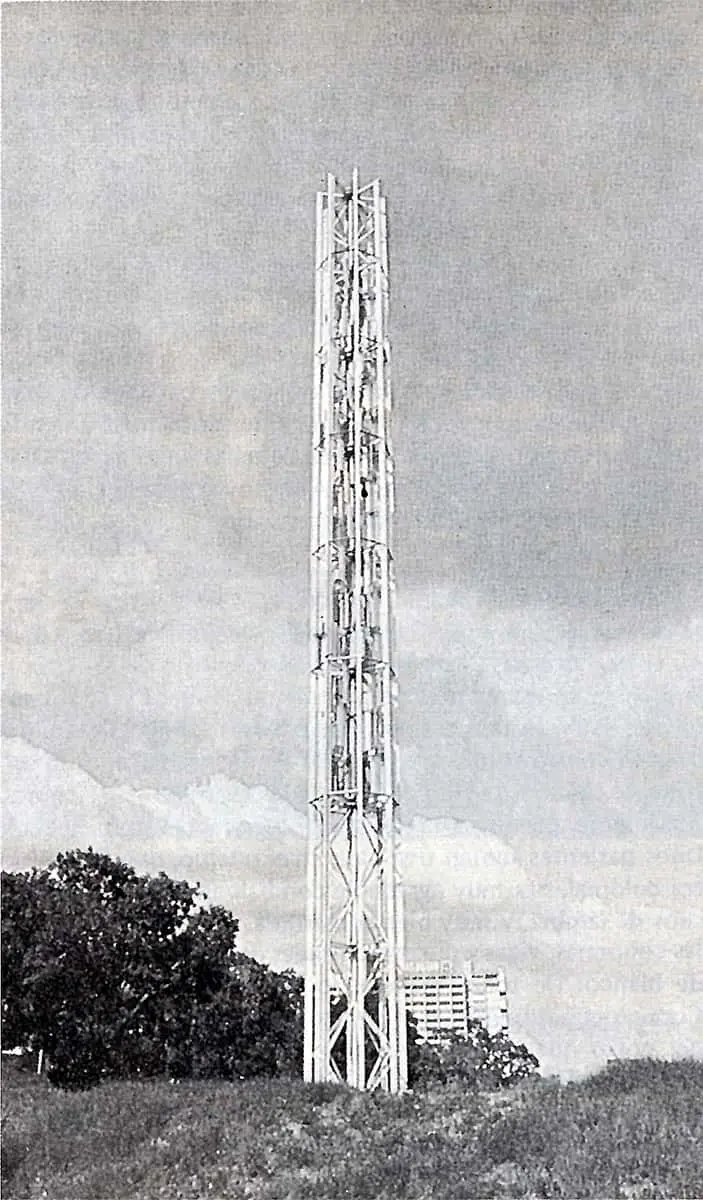
Architecture
I was always interested in architecture, and I don't know why. I had never seen any good examples. That does not mean Venezuela doesn't have any; it's just that I came from Guayana, and there aren't any there.
It was very fundamental to me. I wanted to see Romanesque architecture, churches, and monasteries. That was one of the main reasons I went to Europe.
I left school in 1945 when I was 24 years old. I had taken all the courses: painting, drawing, stained glass, ceramic, and art pedagogy.
Departure to Europe
At the end of the war, there were French scholarships available for university graduates. The French cultural attaché, my friend Mr. Anderson, arranged for me to travel. I told people I had to be in Paris by March 7th, but I arrived three months earlier.
First, I went to New York for thirteen days. I was overwhelmed by the size of the city. The impact I felt arriving by sea was such that I was unable to absorb anything else afterward.
To me, New York provided me the opportunity to see museums. I saw all of them. I had to see all of them! It was imperative because, in Paris, the museums were still closed.
In France
At first, I was unable to work. I arrived at the end of 1945. I don’t believe I did anything until the summer of 1946. The problem was deciding what to do. How was I going to paint?
My passion for Picasso kept growing so much I considered him a god, but it never occurred to me to do anything that resembled his work. There was no relationship between what I had to do and my admiration for his work. There were two very different things.
You spoke earlier about a book on Picasso you always carried with you? You told me you never stopped reading and looking at it until you reached the most abstract stages of the artist's work. Was it perhaps, your New York visit and the knowledge you gained on Kandinsky, Mondrian, and the latest Picasso, that helped to change your thinking?
In reality, it wasn't like that. Those books were written in a language that I did not master, and my interaction with them was visual, through the reproductions. I once had a revelation from a cubist painting, and I started crying. It revealed itself to me as something surprising and alive; when I saw the paintings again, I understood everything.
There I was in Paris, looking at recent Picassos from 1942 to 1946, and being confronted with the problem of how to paint.
Then, one day, I decided how I was going to paint. I took some canvases, and I went to the "Sacré-Coeur." I produced such disasters you would be unable to imagine. I bought some Picasso prints and threw myself to paint thought that possibility. I drew, but none of the drawings had any relation to the prints. In reality, they were somewhat expressionistic. I decided my career as a painter was ruined!
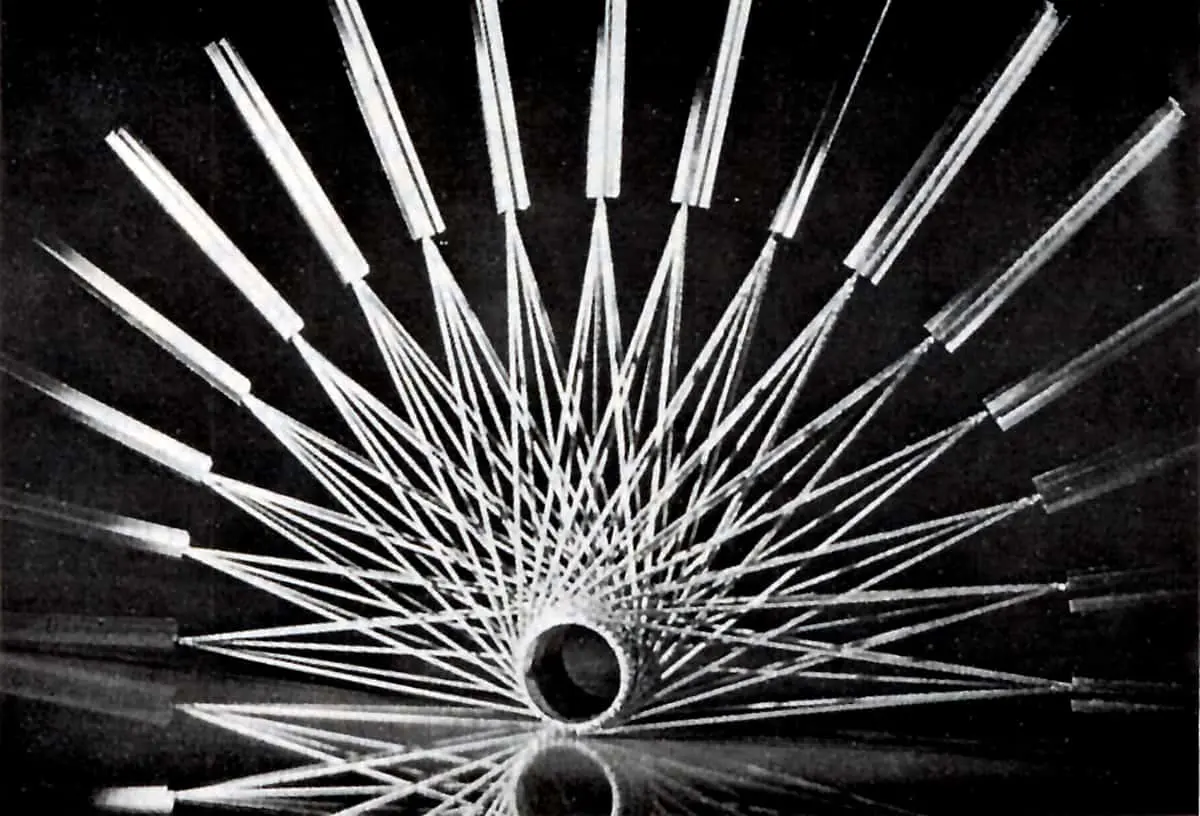
When did you begin to paint your “Coffee Pots” (Cafeteras)?
With some pots I had. I painted lamps as well, but these days they are all referred to as "Cafeteras." The problem lay in looking at those pots in such an incisive fashion that you were able to penetrate their character and discover their fundamental essence—all of this in a language derived from Picasso with a very thick line and using its shadow and lights.
I would place a finished painting on the ground to see what it was suggestive of and immediately would begin a new one from a different angle. Series began to appear, each one derived from the other, always in sequences of four, five, six, or seven canvases. However, there was no order to the progression as I always returned to the beginning and started again.
I wasn't trying to make paintings. I was trying to solve a problem. The second series, for instance, consisted of seven paintings and none of them is similar to the seven from the previous series. Between 1946 and 1948, I executed six or seven themes. I was able to do forty paintings for an exhibition in Venezuela.
Alejandro, were you familiar with Mondrian’s works or the work of the Russians?
Look, I knew them all, but my problem then was similar to feeding information into a computer. All the information was taken in, registered in my awareness, and archived for the future.
About One of the “Cafeteras”
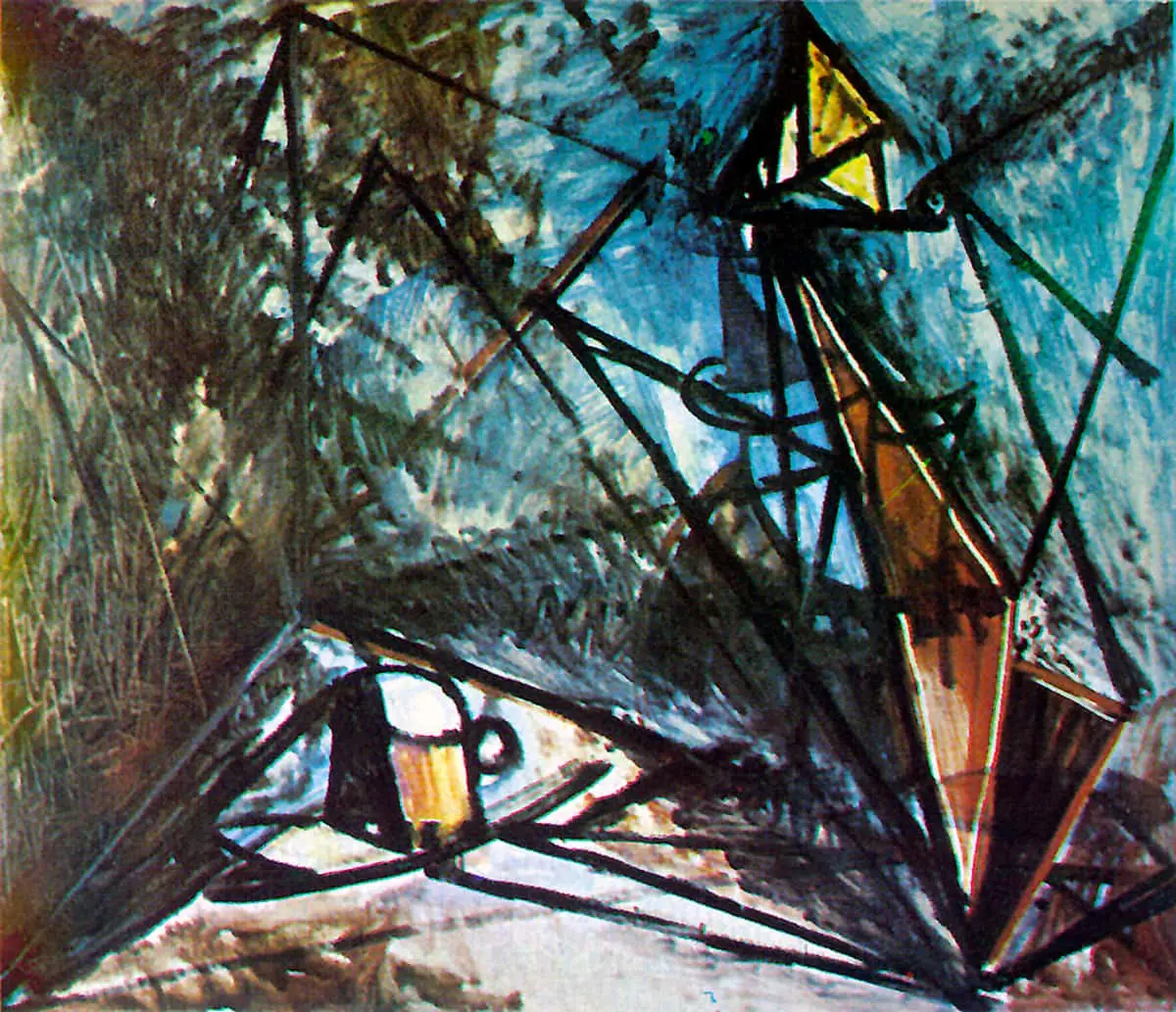
A moment ago, I was wondering about those oblique lines that are always present in my work. I can see them, and they don't bother me; they are there because they came out that way. I never gave it a thought to whether I should place them there at the time. Now, here yes! The lines stuck there are not placed randomly. That red line is drawn entirely inside of the other. Placing that red line there was like walking to Patagonia. Afterward, to put that other line, the blue one, the only preparation I needed to make was to place it there. At times, to be able to make a yellow line, I had to lie down for a while. Otherwise, I would have made millions of paintings, one red line, one green line here and there; but it wasn’t that way. Look at all those diagonal lines. There is a conception of space that is unrelated to Picasso. That line is used by him in the majority of his work, but not the concept. There seems to be a shape in a space; it is not so much a shape but rather a dynamic object that evidences the dynamism of space. It is a space with no up or down, left, or right. Certainly, it has no horizon line.
The reason I dwell on this is that what we have here is a vision of space at the moment of its birth!
Impressionism
As a creator with a total contemporary vision and through Cézanne and the Pointillists, I consider myself an heir of the impressionists.
Sculpture
I was able to get a notion of space in sculpture much quicker than in painting, but once I felt that painting responded more intensely, I stayed with it.
Sculpture is one of the most difficult things in existence, even in the hands of someone talented. How many sculptors are there? What happened between the Renaissance and Rodin? Nothing! And even Rodin. Imagine all the walls and figures he ruined until he finally crowned himself with his Balzac. Nothing compares to his Balzac.
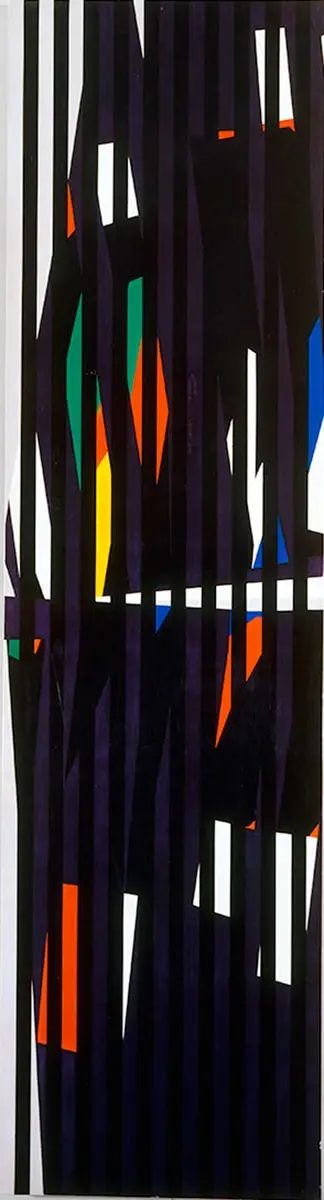
But seriously, sculpture is a difficult problem. Looking at how far we have come in painting, how many things have happened and are happening every day. Everything is possible in painting, and the same should be true in sculpture. That is the problem.
I never think that I am creating a painting or a sculpture. Of course, this is a painting, but it is not made like a painting. In the end, I think they are one and the same.
About the Monochrome Paintings from 1950-1951
I sent some of those paintings to the “Salon des Réalités Nouvelles." Do you know what one of the members of the jury said to me? “I like your work, I admire you, I have seen good things by you, but I am not interested in them, they don’t seem to be enough.
I worked very hard on the “Coloritmos.” I told myself: "I am going to make fantastic work, I am going to do the best I can, and I am going to include anything that comes to mind in those paintings." It was the only time I honestly sat down to produce something according to a plan with complete determination.
To Be Venezuelan (Again)
I need this country, I need roots, and I feel that they are here at least in a geographical sense. I need the climate; I need the language, the character of its people, the smell of things such as rain, for instance. And curiously, at the same time, I feel a responsibility and the obligation to give back to Venezuela.
I think this country needs all of us and it specially needs artists. It is a country with tremendous potential for producing people of great sensibility, but they get frustrated. I have set a goal for myself, a challenge, to prove that this country can generate and nurture a true artist who, in turn, can develop and make a genuine contribution to his artistic age.
That is why I have spent most of my time here. I always bring my works back with me and feel bad when they are sold outside the country.
Cafeteras Exhibition
I don't think there has been a more significant artistic change in Venezuela than that brought about by the “Cafeteras” exhibition. It was a bomb. Nearly fifty articles were written in favor of and against the exhibition.
Of course, immediately, other artists started making small "cafeteras," and they started “geometrizing” over in Maracaibo.
Yes, I did sell some. Alfredo Boulton bought the brown one, which is one of the most beautiful ones. You do know that Alfredo Boulton has been one of my best friends all my life.
The paintings had been shown at Galerie Maeght in Paris before my departure. The critics there really came to me.
After that show, I returned to France in 1949. I remember that the most important thing for me was to discover Mondrian. My life has been a series of revelations, and this was one of them. It was in the exhibition called "Abstract Art and Its First Masters."
As Far as Holland to See His work
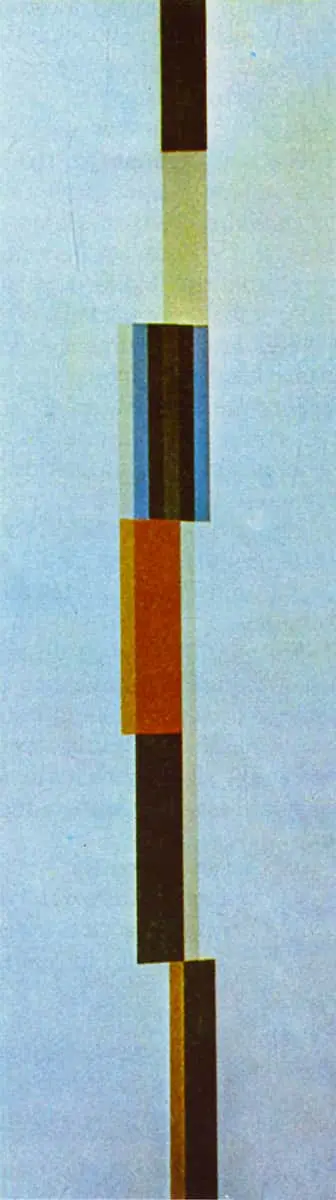
As soon as I returned, I started doing exercises with color, cutting paper in rectangles, and seeing how they worked one next to another. These were only exercises, you understand, but the "Horizontal-Vertical" works began to develop from them. Mondrian was their influence from the beginning.
I did not have any significant contact with anybody. Rubén Nuñez was there, Soto was working a lot. Luis Guevara Moreno. Youngerman was also around, but the person who had a more significant impact on us was Ellsworth Kelly. He was the most mature at that time.
We were not in touch with any other Americans; they were unknown to us.
I thought Vasarely was interesting, profound, but not a great painter. He made large canvases with red shapes. Agam used to come by as well. He was making beautiful things; they were all attached to Galerie Denise René. I stayed on the side. I could not see what I could do there with them.
Do know that I felt more pride in being influenced by Mondrian than by Picasso because I went through Picasso's domains but not Mondrian's. Clearly, the inspiration for the "Horizontal-Verticals" was his but not how I made use of them.
Until then, I used a lot of paint. Not anymore.
I think, and perhaps I am wrong, that then I was looking at the problem of the structure of space as linked with the vibration of color. Those paintings are there as work announcing a new form of space.
The issue was that the intent was there, but how to produce it formally? The possibilities were in the basic structure and the definition of space through color, but there was also an element of anti-painting. Since material and texture were no longer needed, the sense of how they had been made and with what also became unnecessary. The idea was based on the concept of the surface. There lies its connection with architecture.
Architecture and the “Horizontal-Verticals”
Architecture is one of the most critical influences in Mondrian's work, and it is in its interior where his work comes to life. The modular architecture is a result of that combination. I tried to understand the strength that can be achieved by a module.
When I speak of "Horizontal-Verticals," I am following an idea. The composition is very simple. We can almost call it "centered." You saturate the surface with the module, and you saturate space with the same element so that there is greater value to space, and it has higher global or integral animation. One of the reasons to use the module is to avoid having a composition fall on its side, with a module, there is no main or subordinate side. The secret lies in being able to use the module's strength in a way that suddenly builds small spaces, empty areas inside of the grid, and in doing so, formulate a tension that finally allows the understanding of space because you are already inside of it.
There are no focus points only rhythms: rhythms parallel to abstract color placements that establish a sense of animation where color begins to have sound. In this fashion, little by little, the rules themselves begin to develop even if the work process changes them.
Space
I am always working with "space." It is a constant, a theme. Sometimes understood one way, at other times another, but always with "space."
Architecture
I proposed the idea of the "Polychromes" for the Ciudad Universitaria since that was the way to work with space and architecture. I was given the task to make the façades, and of course, I unmade them, but they never noticed. They gave me a façade to paint, and I smashed it and put it back together in my own way. Those spaces are mine as much as the architects are his.
The Dissidents
I came back for my exhibition in Caracas and Washington in 1948 and 1949, and I received a letter from my friend Aimeé Battistini in which she told me that a revolution was in motion. A group had formed to publish a magazine in Paris for Venezuela. They members were waiting for me to participate in the magazine to be named "The Man with the Bow."
We had just gone through a terrible scandal due to my exhibiting in the Salon. López-Méndez, who was a member of the jury, said we had become abstract artists, and the National Prize would never again be awarded to a young artist. Many were kicked off the Art School.
When I returned to Paris, they were ready. Pierre Boulez as a representative of music and Guillén Pérez, of philosophy.
Later, an exhibition of French painting was sent to Venezuela with artists like Raoul Dufy and dammit, where we furious. Gaston Diehl called us "The Dissidents." Afterward, Mateo Manaure wrote an article titled "The Art School from the front and in profile." It was horrible!
We were ready to change the magazine and make it into a publication for struggle, something different to protest what was taking place in Venezuela. We decided to do it ourselves. I used the money I received for a scholarship given to me as replacement for the national prize. The magazine was called "The Dissidents," after the nickname we had been given by Gaston Diehl.
Then I wrote an article against Gaston Diehl, and Guillén Pérez wrote something about Latin Americans and universality. There were five or six articles in total. Someone wrote something against López-Méndez. We wrote against everything, against vices and other things taking place in Venezuela, and we defended young people and their right to intellectual development.
All five editions were published in France and sent free of charge to Venezuela. I was the director first, and then Guevara Moreno. When the magazine reached Venezuela, the reaction was incredible. They called us scoundrels because we denounced our teachers, and we did not respect our tradition. We replied that tradition had no value, that we were going to liberate ourselves from everything, and start from the beginning and bring ourselves up to date with our own time.
The End of the “Coloritmos” (1960-64)
I was so irritated that I returned to Paris for the second or third time. I don't remember if it was 1958 or 1959 that I was in New York. I had taken some "Coloritmos" and showed them to Martha Jackson. She was enthusiastic, asked me not to show them to anyone else, and said she would give me an exhibition. We exchanged close to a dozen letters, how to send the works, until one day I received a laconic note in which she informed me the show was postponed indefinitely because the time was not right. It was the era of Gestural painting.
Around that same time, in Venezuela, there was a "gestural epidemic," especially among my old colleagues. What bothered me the most, was feeling that both my work and I, where being attacked by a mode of painting. I was in no position to fight. I had nothing against that or any other movement. On the contrary. I thought it was a healthy form of violence, and I painted one of my best "Coloritmos” after seeing an extraordinary Motherwell titled “Je t’Aime.”
Later, at the end of the summer of 1960, I went to Paris. I had the full intention of taking with me all the equipment needed to make the "Coloritmos," but I was unable to do so. The shipping was too expensive, and too much space was required inside my studio. I thought to myself that the “Coloritmos" series was something I had already done and that the need to “do” was more important than the object being made. It was that need that would travel with me. It wasn’t so easy because at that time I wasn’t sure of what I needed, so for a time, I tried to find out what was happening in Paris.
Of everything I saw, the most important work was that of the artists associated with Galerie J. Work. They were called "New Realism" or "Neo-Dada." One of the artists peeled those enormous posters from the street and showed them as if they were gigantic and dramatic skins of fantastic animals. Most exciting of all was Tinguely's work: absurd machinery that danced, talked, moved feathers in front of us. To this day, I have yet to see better drama incorporated directly into the form.
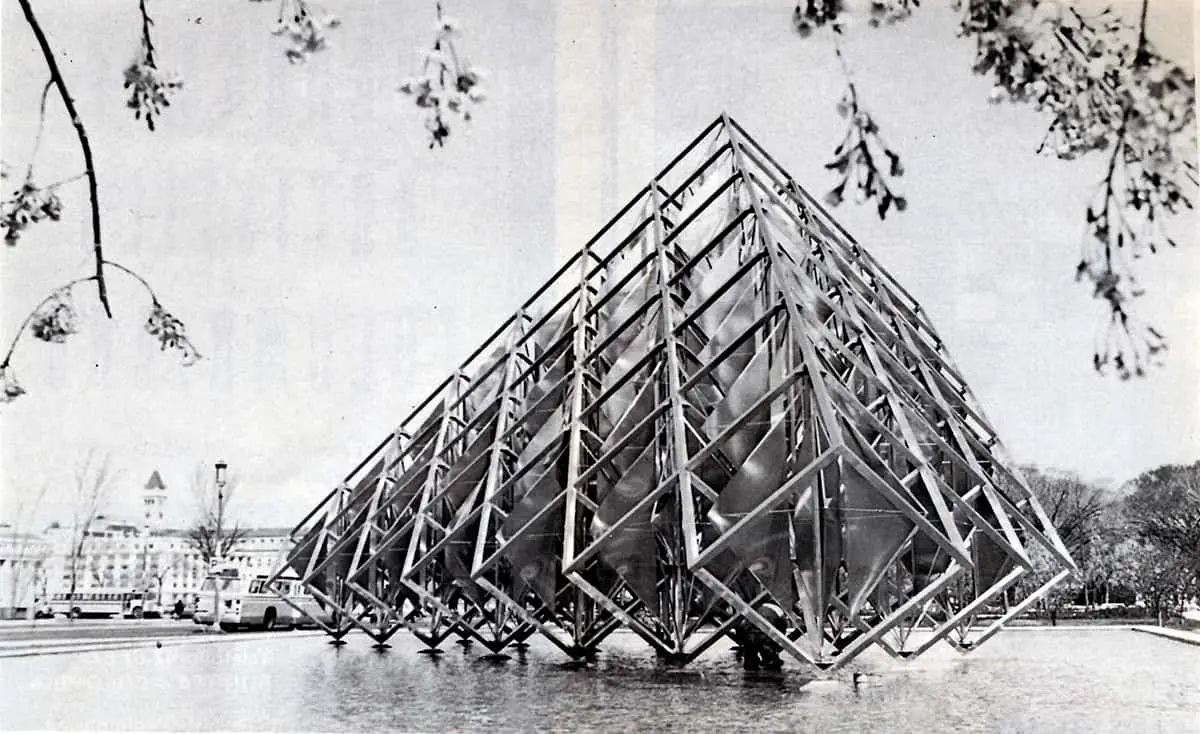
In comparison to all of this, my “Coloritmos” felt harsh and too elaborate. And so, began the process without which, in my opinion, there is no art. I went back to my search for "form."
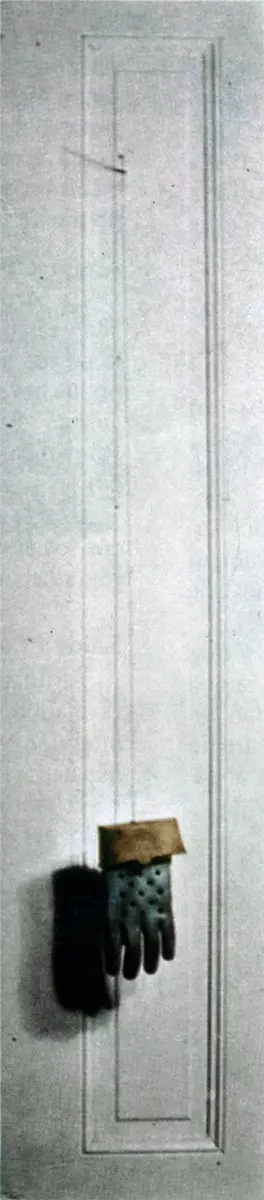
It wasn’t easy since, at first. The "Coloritmos" kept appearing. I would cover them and erase them using calligraphic painting, resulting in paintings with a lot of tacks, screws, and anything within my reach. Then came reliefs painted in white. This continued until I arrived at the quiet reliefs occupied by a single object: doors and shutters with hanging objects and collages made from old letters, pieces of cloth, and
brightly colored stamps.
The Second Color
The truth is there is no difference between the "Coloritmos" from 1955-60 and those of 1960-61. They all belong to a series of 75 works. What happened was that I never finished some of them. Their maquette's traveled from drawer to drawer, and every time that Mercedes found them, she would insist that I finish them, but I paid no attention. However, one day I did; it was before I left for MIT on the occasion of my Guggenheim Fellowship. These paintings are a color parenthesis between the technical drawings I made for the great civic sculptures. These paintings are more beautiful than the first ones; their color is "more" color.
"Tablones"
These works were done at the same time as the civic sculptures. Actually, they correspond to the same notion of space, or at the very least, they refer to that notion but with deeper meaning. I am still not done yet; there are 60 in the series.