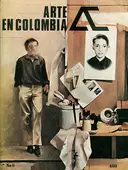
One can detect a deep awareness of art history in the work of several contemporary Colombian artists, as is clearly the case with Enrique Grau and Fernando Botero given their references to the likes of Piero della Francesca and Andrea Mantegna.
Beyond Colombia, young Latin American creators are significantly advancing this manner of painting. To write about this movement would exceed the space available here and would also precipitate an analysis that is still in progress. Better to discuss the paintings of those mentioned in the title of these lines. Their references cover the time frame with which most of the creators that make up this trend are operating. Prototypically, Cárdenas and Cuartas belong to this group, which has irrevocably assumed figuration by relying on models of European art spanning from the Renaissance up to the nineteenth century; that is, the time frame when the great naturalistic figuration of the modern era occurred. Before that, movements were nourished by history itself and reconsidered for didactic, ethical, moralistic, or simply evocative purposes. To cite just two cases, in the sixteenth century the eclectic current led by the Carracci brothers tried to revitalize art by bringing together the best styles of the great masters—Leonardo, Raphael, and Michelangelo—whose deaths had left an immense void. Also in the nineteenth century, the Neoclassical and Romantic schools resorted to the revivalism of arcane cultures in order to give greater validity to their arguments. In addition to a firm commitment to historical research and figuration, the group to which Juan Cárdenas and Gregorio Cuartas belong shows a strong dependence on drawing techniques and the consequent placement of color on a freer and secondary plane.
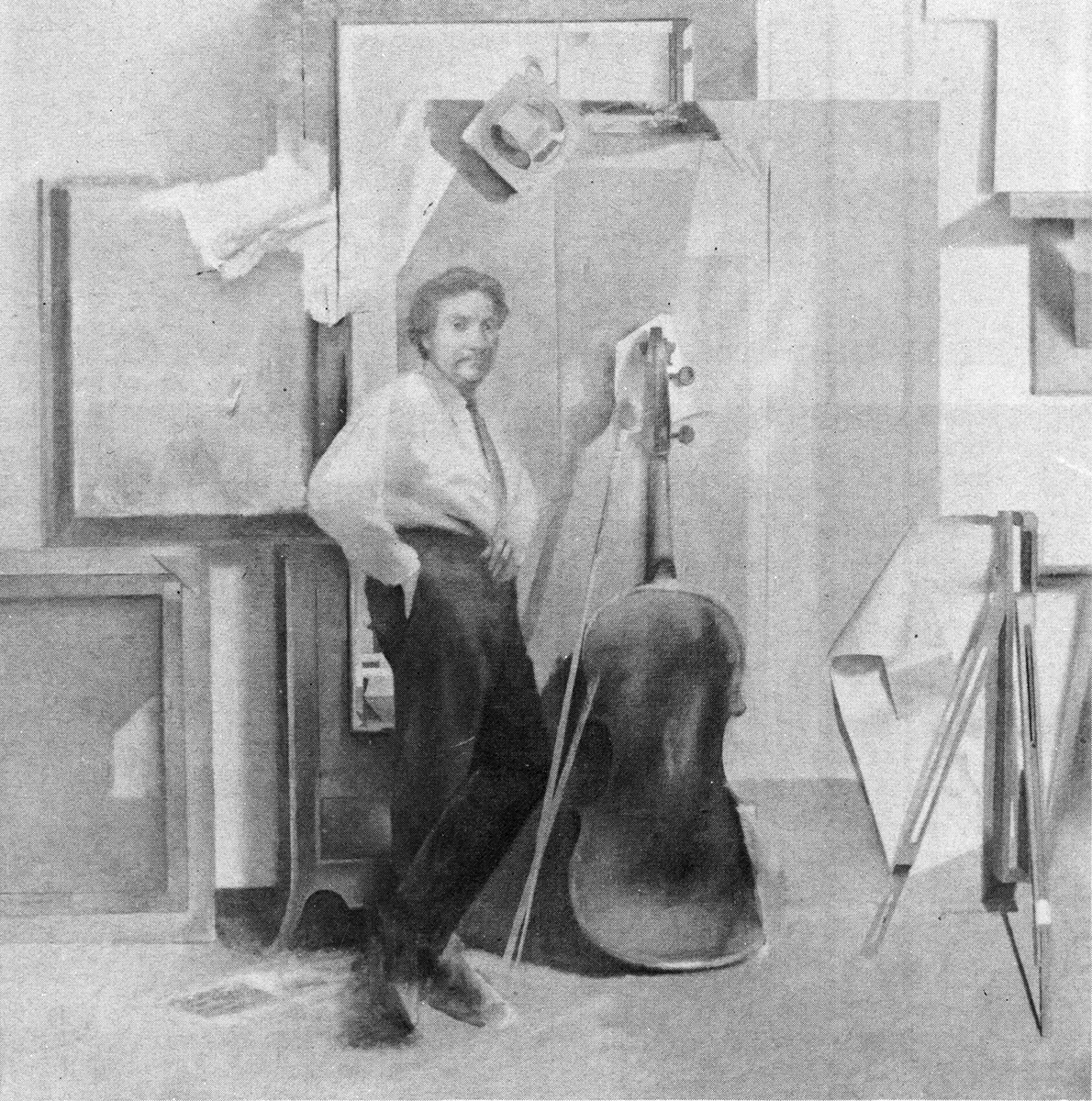
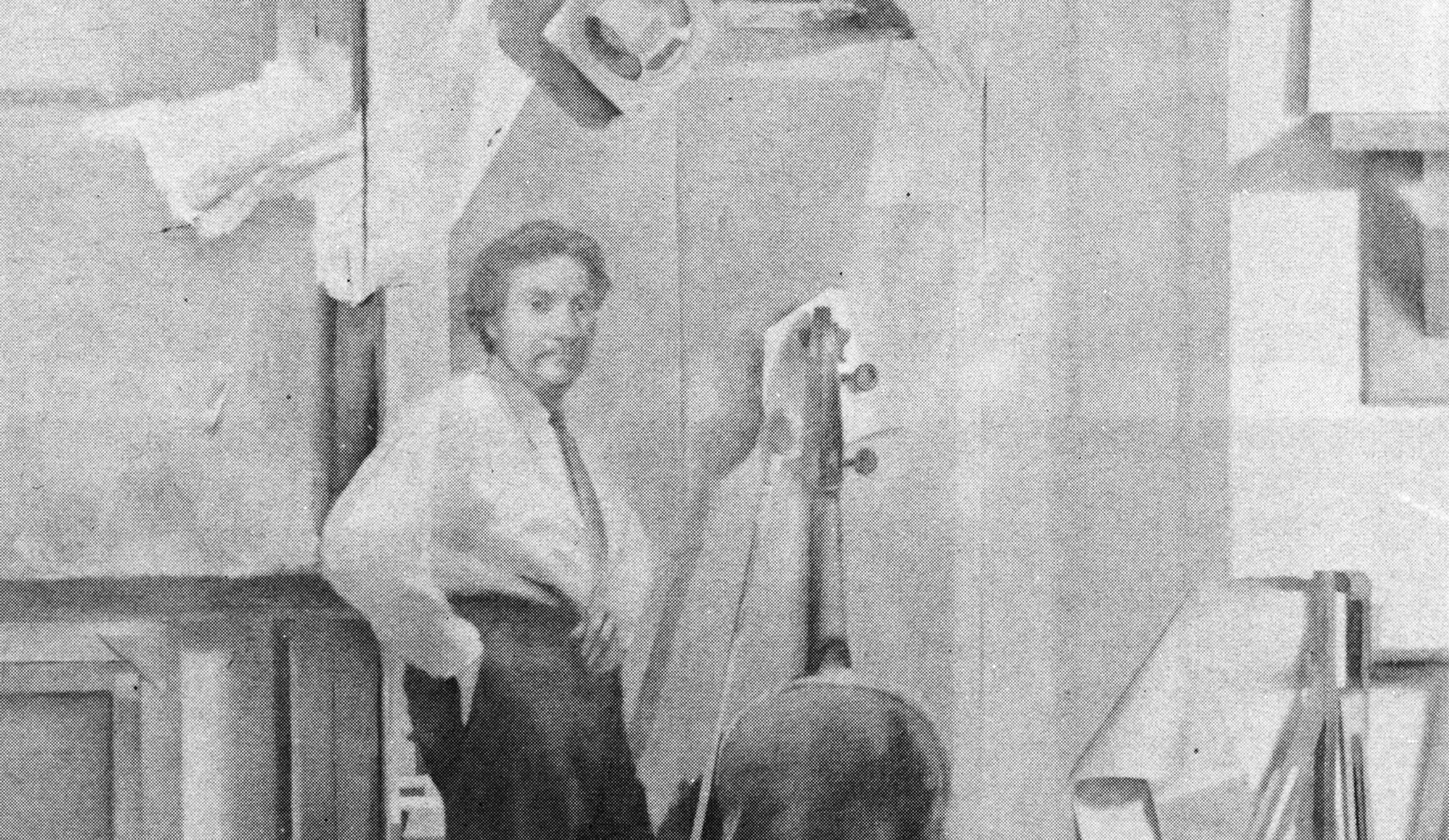
As for Juan Cárdenas, his historical gaze is fixed mostly on the nineteenth century. Although he has a deep understanding of the entire development of Western art and some of his works demonstrate that he is captivated by Velázquez, Rembrandt, and Michelangelo, the root source for his allusions and models is Eugène Delacroix and his embodiment of romantic ideals. From this master he has borrowed poses and attires (although the latter are more suggested than literal) for his own characters, the “museum-like” range of browns, and the way Delacroix blurs details to suggest spontaneity and quickness. From the nineteenth century he has rescued the drawing aspects that most excite him from the works of Ingres and Degas, a painter in whom he found a mixture of skill, fast pace, and classicism that generates a kind of confidence that Cárdenas admires so much. In fact, even his paintings are substantiated by draftsmanship. In this way, he assigns subordinate functions to color, so that line and tonal contrasts become the descriptive elements that activate the surface on which his images appear.
Juan Cárdenas draws, paints, and employs diverse technical sources of expression. With pencils and charcoals, he resorts to a whole range of tones and textures, strokes and shadings. In addition, undertones and scratches considerably expand and take advantage of the tonal limitations of these monochromatic mediums. Although he also works with watercolors, his preferred medium is oil, employing basic technical resources in order to simplify the process. The color range is kept within strict limits, further enhancing the dramatic grays and whites with which he punctuates the undeniable presence of light. His attempt to tame the process so as to prevent it from becoming too complex creates the appearance of work produced spontaneously, safely, directly, and quickly. However, this is not usually true since his paintings tend to remain months and even years in his studio. They receive multiple layers of paint and are incessantly altered in his search for the absolute rapport, balance, and harmony of forms in accordance with the emotional charge generated by his literary musings. However, it must be emphasized that although his aesthetic practice allows him to work on a single painting for a considerable amount of time, his aesthetic goals demand a spontaneous effect in its final appearance.
To tackle the possible meanings of his images, we must return to this painter’s historical references. With resources and memories of nineteenth century art, and in the ways his characters are dressed and positioned within specific situations, Juan Cárdenas elaborates a special atmosphere that places them outside of the contemporary world. Instead, his paintings are qualified with a prestige that seems to emanate from a bygone era. This prestige is not sought to add elegance or brilliance. It is the attempt to give credibility to the situations they narrate and to their implications. Here too we must remark on his insistence on working with allusions to a time that is simultaneously modern and already past: the time of our grandparents and those ancestors remembered by the viewers of these paintings. Ancestors encountered in worn-out photographs and vague but poignant family stories. The artist harnesses the multiple values of the time factor to allude to characters who, in the end, are responsible for carrying out the grand gesture that imbues his work with their significance. Thus, for example, in one of his paintings the figure leaning on the stretchers possesses a strange familiarity that, only after much pondering, we recognize as Rembrandt’s features. He appears as an ordinary man, merely standing there; a neighbor or acquaintance who happens to visit the artist’s studio by chance. Like all of Juan Cárdenas’s characters, his outfit does not point to any specific fashion style or time. In other cases, the characters emerge from subtle modifications to the physiognomy of the artist himself, going beyond a simple self-portrait to evoke the presence of new characters, romantic by nature, tremendously evocative, and with dreamy attitudes, but contemporary in terms of the sensations they awaken in us. They are solitary, isolated, alienated, forgotten, accosted characters. Sheltered in the light of an unspeakable solitude. Castaways of time. All this eventually communicates that the true protagonist of Juan Cárdenas’s work is time itself, which however has been irretrievably lost. It does not allow for an easy identification because it has long ceased to belong to us.
The artist’s allusions to the nineteenth century are just a resource to construct a kind of “time machine” that purges both present and past, making his references, figures, and situations float in a space that cannot be identified beyond its simple adjective elements. The artist ruptures the strict limits of the spaces he moves in and expands their territorial possibilities, signaling to that which exists or has existed, and also encouraging the appearance of new characters or meanings through his figurative resources. In no other artist do we find situations similar to the essence of his oeuvre. As for art history, we will not find, for example, Rembrandts as raw, prosaic, direct, realistic, and as cruelly devoid of the dense atmospheres of light with which they protected themselves for centuries. The appearance of these new characters and situations is supported by the verisimilitude he gives to his stories in an articulate and convincing language.
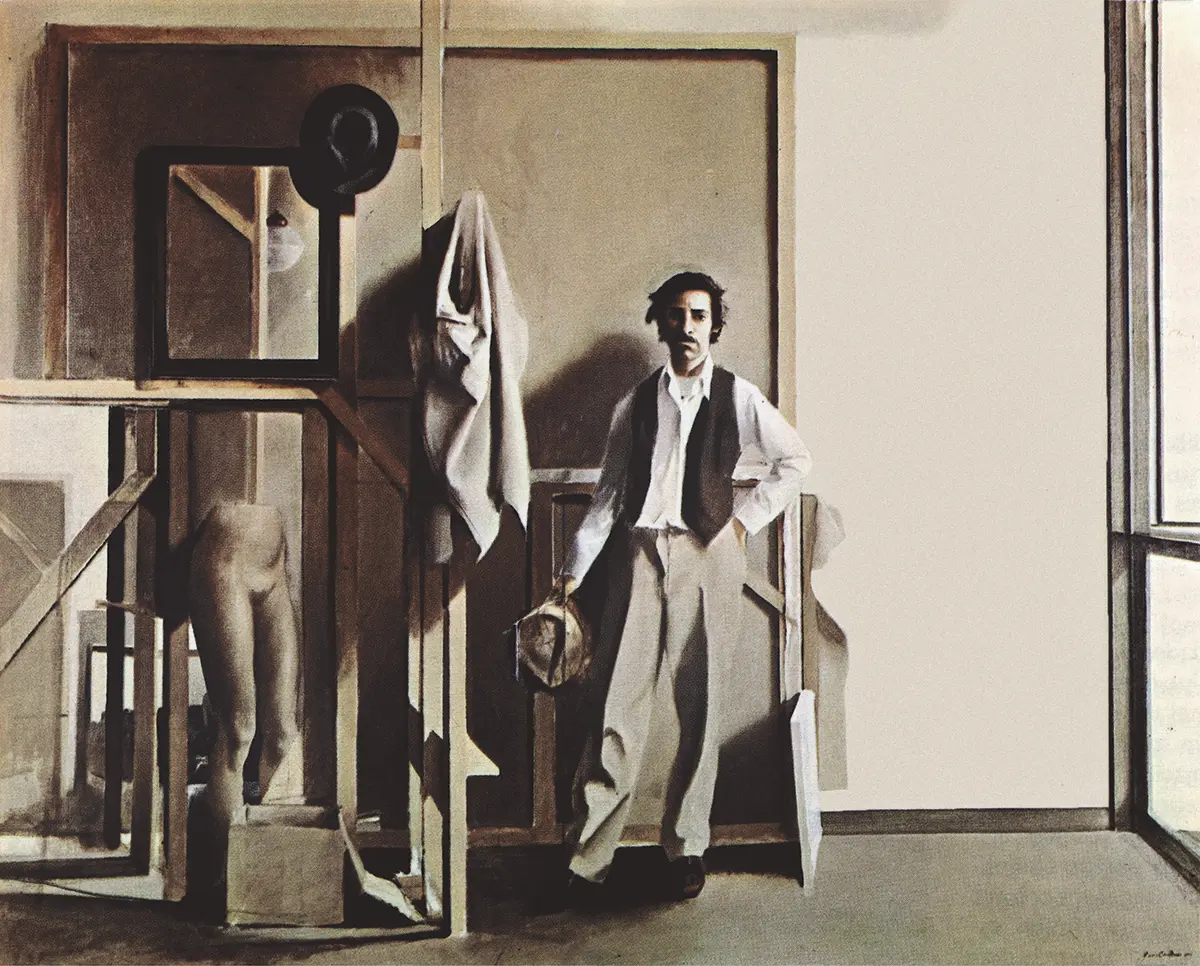
Time in Juan Cárdenas’s paintings also stems from his concern for the fruits of science, such as Einstein’s theory of relativity. Time, therefore, is conceived as a dialectical dimension of energy and movement affecting the representation of space and its use by the characters who inhabit it. Along with the contents accumulated by contemporary scientific research, his interest in philosophy is also evident. Cárdenas’s time is strangely ours. Time lost and only recoverable by the artistic image’s summoning.
As for Gregorio Cuartas, the painter from Antioquia who has been living in Paris for the past fifteen years, we also find references to art history with which he constructs his discourse. The buildings in his paintings almost always possess a purity of form related to the Italian cascine, the stately homes of the Spanish or Latin American haciendas, the pristine buildings that compose the settings of De Chirico’s metaphysical paintings, and the imposing Nazi rally grounds. A more specific reference would be the courtly architecture of certain regions of Colombia, identified by the artist himself as part of the regional typology of Antioquia, Caldas, and the Cauca Valley. With its windows shut and its immovable mass facing empty squares or immeasurable pastures, each structure serves as a backdrop for the figure in the foreground: the main vehicle of his work. Between character and edifice, an atmosphere of solitude and expectation arises.
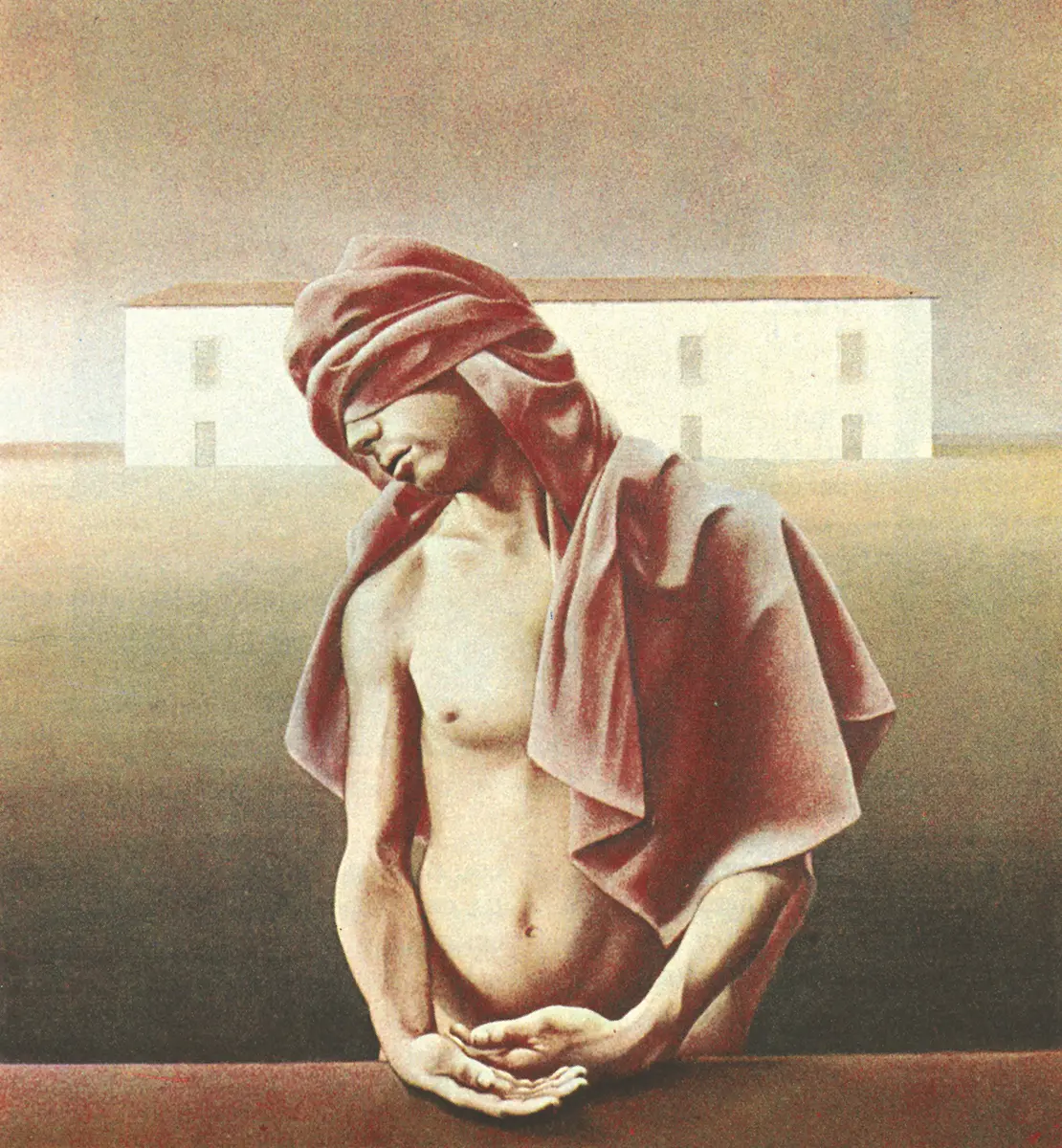
Gregorio Cuartas has clearly assimilated fifteenth-century Italian painting. Just as Grau and Botero did during their training stage, Cuartas also spent a season in Florence. There, in Tuscany, he studied the work of painters that were key to the development of his vocabulary and operational syntax. Ever since, his admiration for the works of classics such as Piero and Andrea del Castagno was made manifest. But even more important than his close observation of the modus operandi of certain masters, he came to fully understand the Italian classical style: that rebirth of clarity to convey mysteries. He identified the detailed and conscious method by which drawing can control and dispel everything, as well as the volumetric conviction of forms. He draws his figures, buildings, and landscapes in careful and meticulous modelling execution. With these Renaissance tools, Gregorio Cuartas strives to pierce the layers of history in order to return to the vision of his native Colombia. Although his country is distant spatially and temporally, it has never ceased to have a great impression in his memory, ideas, and creative activity. This interest in going back to his origins has also opened the way for his religious concerns to burst in and articulate the deepest arguments in his paintings.
In terms of technique, Cuartas works with water materials such as inks and watercolors, or painting on canvas. He often applies an acrylic base over which, by means of diluted and transparent oils, he constructs the image. Structurally, this process resembles the fourteenth and fifteenth century Flemish technique of superimposing oil varnishes over an egg tempera base. That is why, in his paintings any notion of spontaneity is totally excluded in favor of an absolute premeditation.
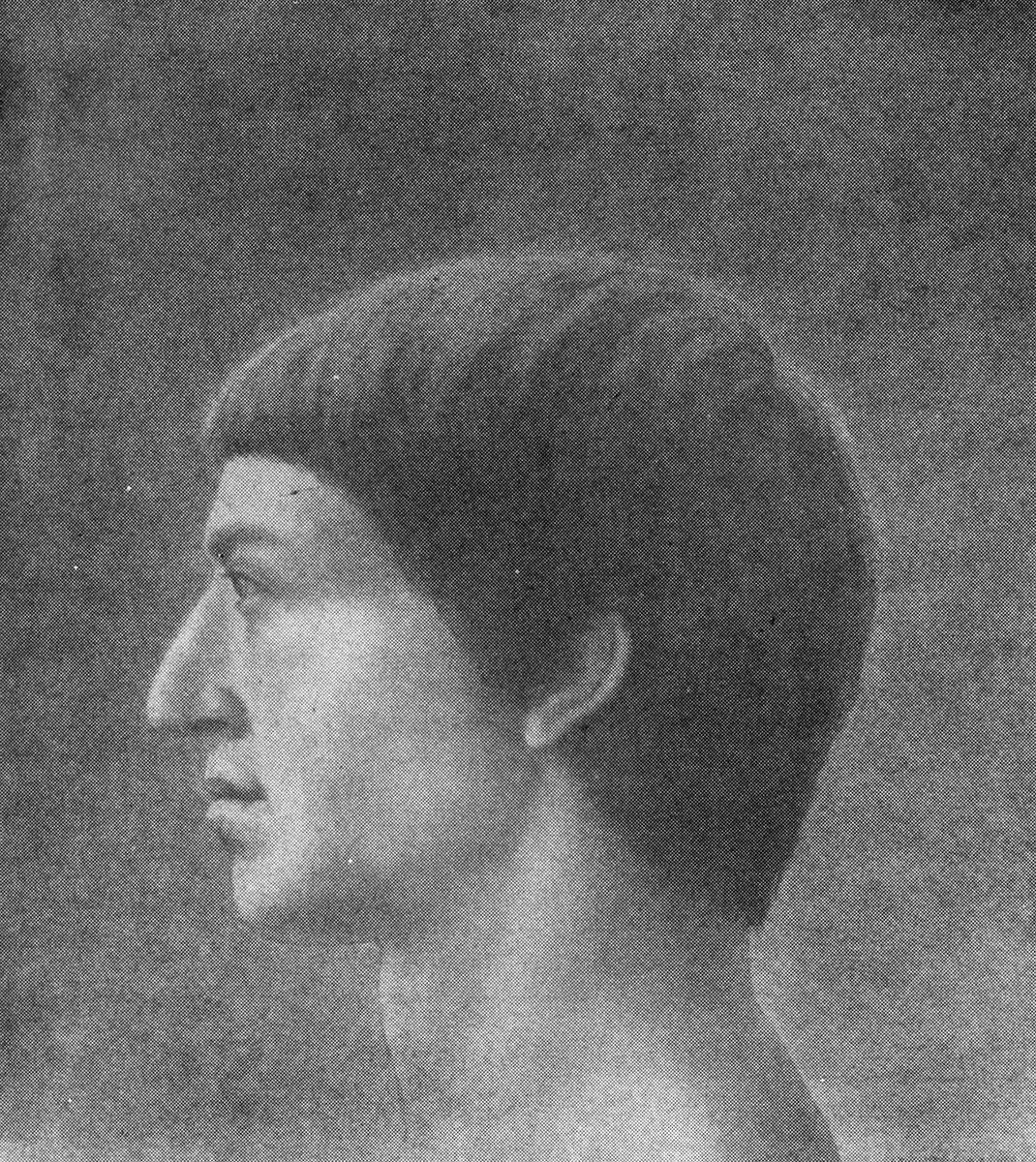
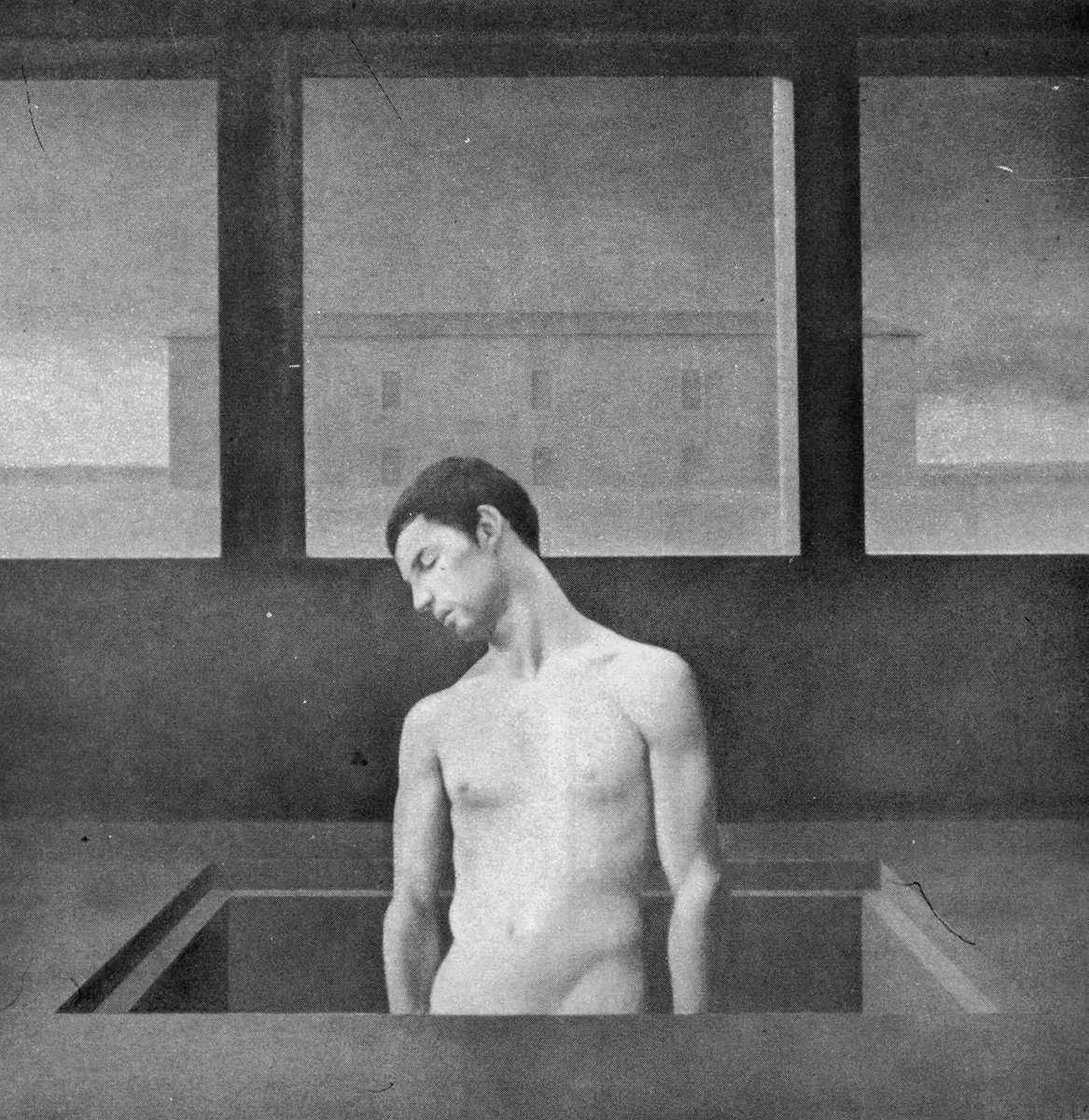
As for Gregorio Cuartas’s religious concern, it constitutes a constant theme for those who declare themselves to be true believers because they are true Antioqueños. His religious experience has been often mentioned, as well as the years he spent in a Benedictine monastery. Indeed, the figures and situations he depicts make clear allusions to a very special type of spirituality. Naked males who seem to seek martyrdom make it almost impossible to overlook their erotic dimension, despite the situations they are involved in, and against their own volition as well as the painter’s. His characters are based on life models, although he tries to transcend the mere portrait. And despite the fact that the same model has posed for his latest paintings, his features are not reiterated in its various manifestations. At least one may dare to affirm that his figures do not resemble each other so much because of their appearance, but rather because they are infused with the same temperament that shapes the same atmosphere, constructs the same world, and shares particular intentions.
Although he tries to express his religious views, Cuartas refuses at all costs to allow his images to become religious and to be used for prayer, or for rites and ceremonies to be held around them. Their function is to help reveal man’s destiny. For Cuartas, that destiny is always transcendent and an inheritor to mystical thought. Perhaps his figuration opens the door to sensuality and eroticism because of this mystical approach.
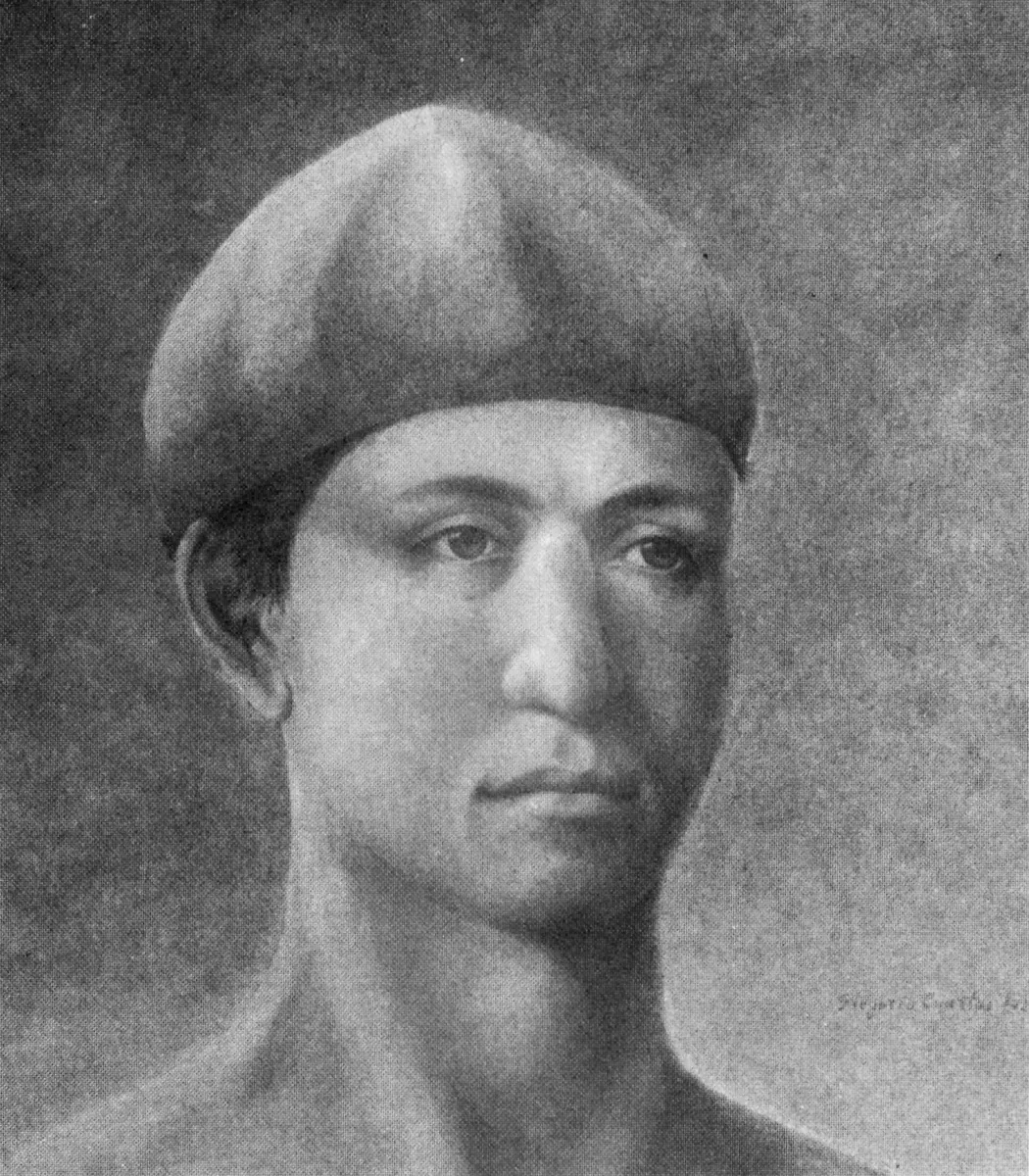
Although Cuartas is mindful of the idealizing work of fifteenth-century Italian artists and insists on accumulating transcendent and religious contents, his images are given very specific and circumstantial characteristics, and they exist in his paintings so precisely and undeniably that they become contemporary. If the figures of Piero and Castagno exist in the absolute continuity of time and space, frozen in unchanging gestures that communicate balance and permanence, those of Gregorio Cuartas, on the contrary, are captured performing some gesture—a turn of the head, a slant of the body—that prevents them from being seen as perfect entities. In other words, they are never truly idealized. Their poses presuppose their inability to remain that way for long. This helps to establish the strict temporality that afflicts them, placing them in today’s world by sharing our anguish for time reckoned, ephemeral, and dear.
Standing before us, frontal and naked in their relative insolence, they bar the way to idealism. Their atmosphere remains outside time. We cannot possibly determine to which moment or place in history they belong. Somewhat like in the work of Juan Cárdenas, a fabricated “time machine” eliminates the vulgar limits of a given epoch and invites us to penetrate a great continuity that binds epoch and history, but also surprisingly helps to establish the transcendental limits of the age in which we live.
Always attempting to make their discourses believable and to intensely and profoundly convince us of their truth, both Juan Cárdenas and Gregorio Cuartas—each one in his own world and with his particular intentions—offer new options to contemporary painting. They also help us to delineate new territories for the visual practices and to restructure discourses in order to cultivate and enrich the depths of our expressions.
GALAOR CARBONELL