The Cuban painter Tomás Sánchez (1948) is internationally known for his landscapes. Few people, however, know that he began his career in the ranks of the new Figuration movement which had such an impact in Latin America during the 1960s and 1970s as a vehicle for expressionism. This first stage in Sánchez’s work was influenced by his teacher Antonia Eiriz, the most important Cuban figurative artist of the time. The “figuration of grotesque expression” attracted such artists as Raúl Millán, Umberto Peña, and Servando Cabrera Moreno, provided the basis for the work of the young artists graduating in the early years from the National School of Art and became the main tendency in Cuban art during the first half of the 1960s and the early 1970s.
It was Sánchez who remained the longest in the movement, from 1966 to 1975. Following the cultural closing off of Cuba and the forced ideologization that occurred at the beginning of the 1970s, neo-expressionism was frowned upon because of its sense of rage, its subjective approach, and its critical stance. As a result of this situation, both Eiriz and Peña have subsequently abandoned painting, in a gesture of both protest and artist seriousness. But something very curious occurred with the young artists: the expressionist “monsters” were often transformed into the peasants, negroes, and militiamen who were so common in the affected Cuban art in the 1970s.
However, the future landscape artist continued to pursue his Ensor-like visions, with their gentle irony, notwithstanding their grotesque elements, within what Aldo Pellegrini would have described as “surrealizing neo-figuration”. There was a lot of religious satire and, above all, scenes that were both regional and fantastic about little towns whose atmosphere was very well captured. This period comprises his essential work as a print-maker a technique in which Sánchez became a master, although which he subsequently abandoned.
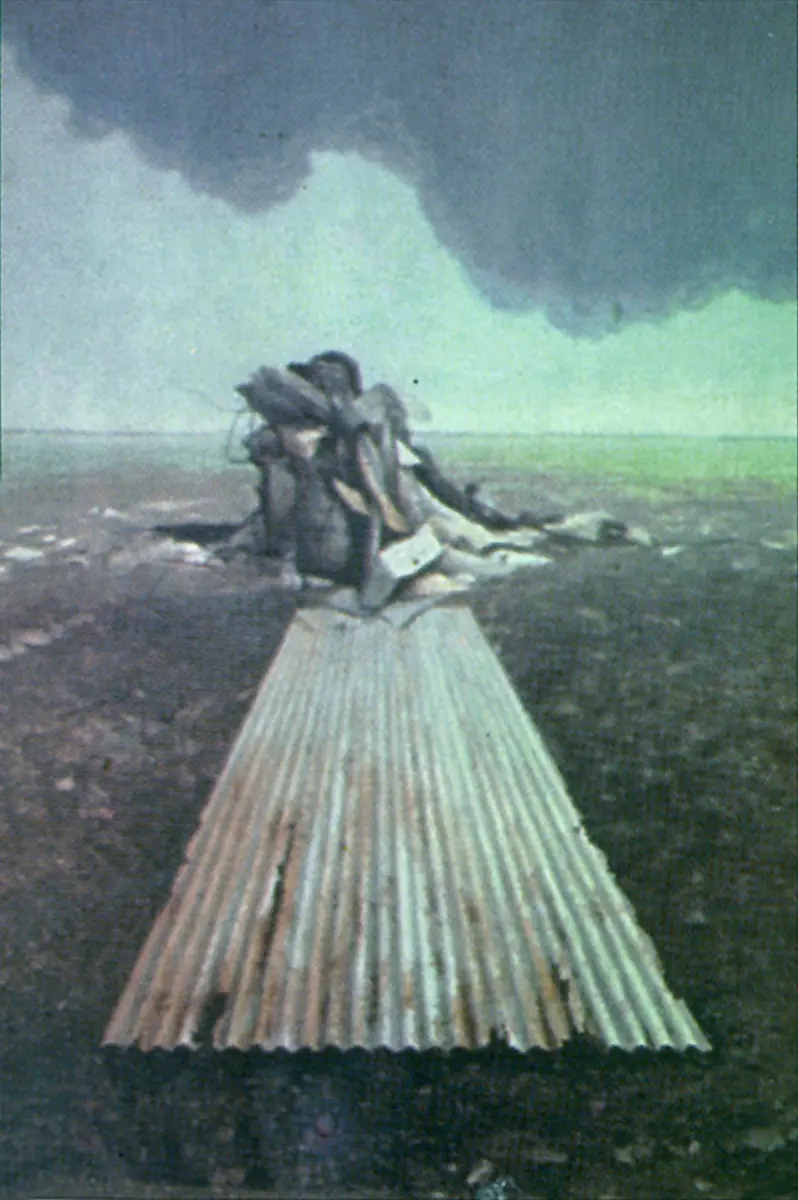
Sánchez gradually moved out of the new figuration movement: the “monsters” disappeared and greater emphasis was put on the landscape, which had always been present in his pictures. The process also saw a weakening of the expressionist features and the emergence of surrealist elements. His work can be looked at as an almost exact sequence, beginning with the oil titled First Excursion Natural (c.1975), where, by almost symbolic chance, the “monsters” penetrate into a boat in a mysterious landscape. A subsequent oil. The Circus (1975) is both a summary of his entire neo-expressionist period and the initiation of landscape art which was to characterize his work.
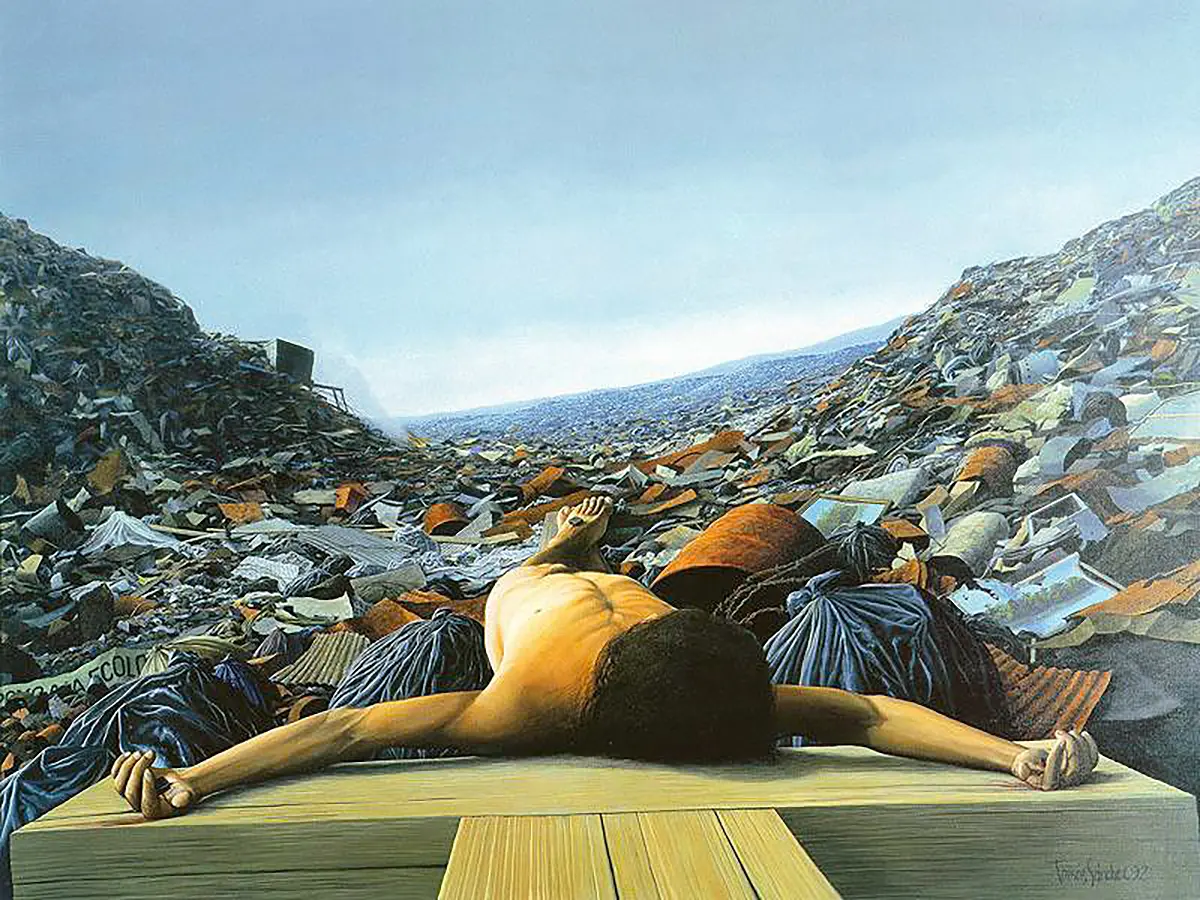
A knowledge of the neo-figurative period of Sánchez's art and of its evolution is necessary for an understanding of the expressive strength of his landscapes, over and above their photo-realistic objectivity. At first sight, they appear to be descriptive panoramas, with no recourse to other techniques than those of photography. However, we sense that there is something else behind all this. It is not a landscape that is looked at and seen, but rather one which is felt. It is the emotion and the “mystery” which count, and which to a large extent derive from the “surrealizing neofiguration” paradoxically clothed in hyper-realism. Furthermore, expressionism returns in his work during the 1980s, with painted and collage crucifixes, under the influence of Amulf Rainer, and more indirectly within the landscapes in the series on garbage dumps.
It is not by chance that his landscapes should have been inspired by the Andrew Wyeth of Christine’s World. In his series on the sick girl, the North American painter —who is considered to be the forerunner of hyper-realism through his use as early as the late 1940s of photographic finish and cinematographic techniques— manages to communicate, without abandoning his habitual style, an enigmatic atmosphere which is very different from his usual literalness.
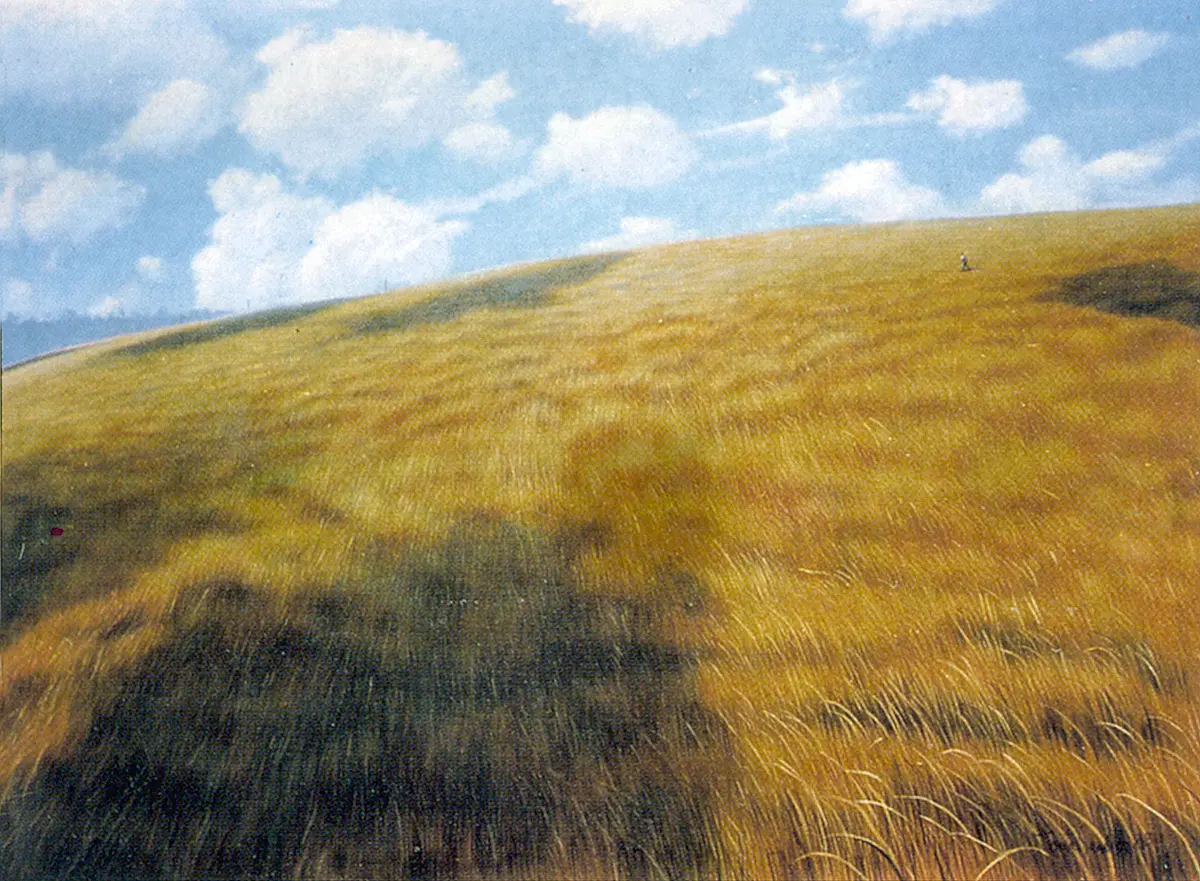
The Cuban artist, like Wyeth, does not work from a photograph, as the hyper-realists did. On the contrary, his manner of painting is more related to the gestures, blots, and other techniques of informalist abstraction. There is in addition an abstract sense of space, texture, and color which sometimes suggests some of the effects of contemplative painting, spatialism, and —as in the gouache that won him the Joan Mir6 Prize in 1980— all over painting, which seems to extend out into the infinite. However, both framing and composition are taken from the cinema, and the images, which seem to be photographs, have a documentary and almost technological clarity.
This unusual eclecticism has enabled him to combine photography with considerable freedom in the subjective expression of his ideas. In fact, his landscapes do not exist in reality: they are the creations of imagination in alliance with memory. But neither are they fantasies: they are personal recompositions of real landscapes, signs of what the painter felt in the presence of such a landscape. “Landscape”, Lezama Lima once wrote, “is always dialogue, a reduction of nature to the scale of man”. The subjective emphasis sometimes endows these very “naturalist” visions with an oniric quality, despite the absence of references to such a dimension.
In his best work, there is a spirituality that is comparable only to Chinese and Japanese landscape art, where what counts is not the description, but the experience of the communion of spirit with nature, within a contemplative and inward-looking philosophy. Hence Sánchez’s interest in oriental thought and his systematic practice of Yoga. Both these, coupled with his expressionism, cost him his teaching position in 1976 and led to his marginalization as an artist —all of which must have influenced his gradual move to landscape art.
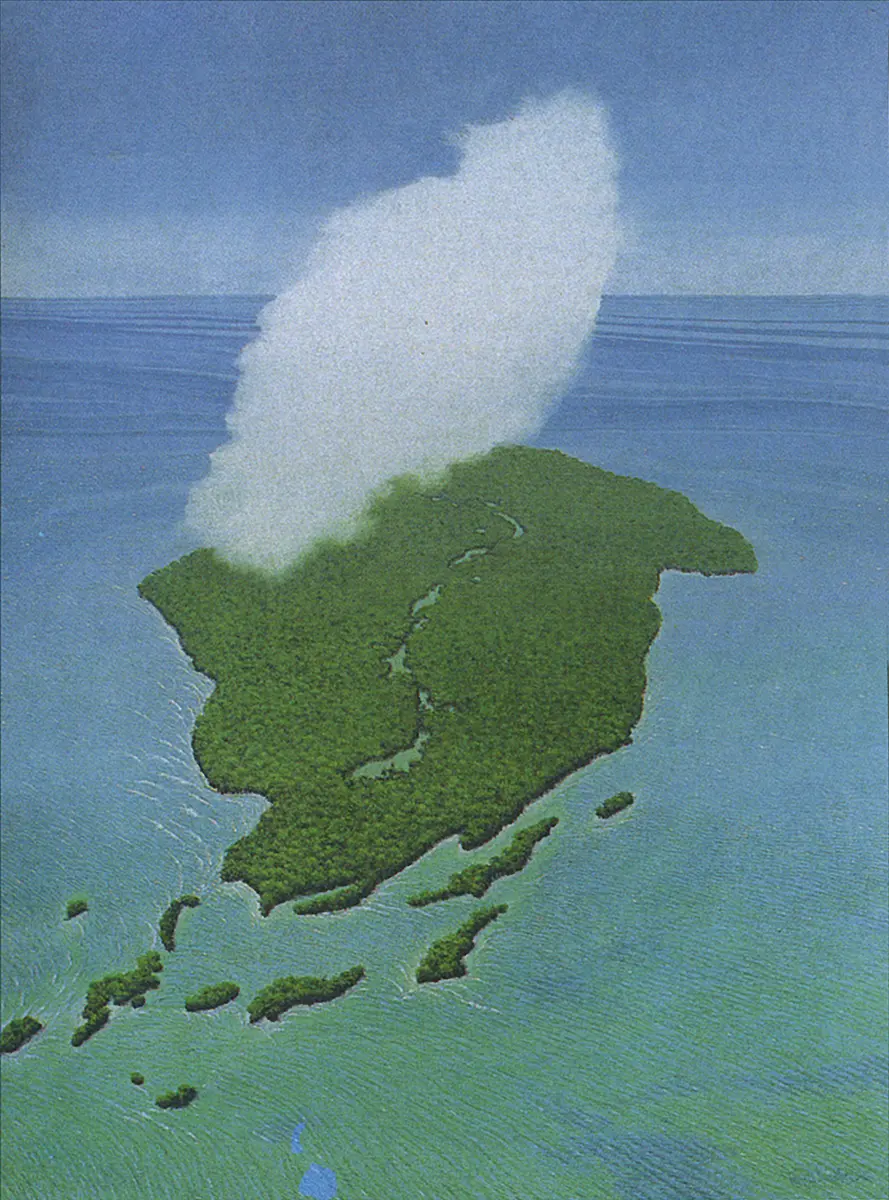
On the other hand, there is no similarity with the language of the East and only a structural relationship with informalism, which gave such importance to the concepts of gesture, space, and void which we find in oriental art and philosophy. Neither is there a clear relationship with the Einfiihlung of Romantic landscape, the emotive nature of which was based on the passionate freeing of the pictorial code and the “emotiveness” of the nature depicted: sunsets, storms, grandiose vistas, mists... And yet the spiritual dimension of his landscape works of photographic structure —a technique apparently more suited to a documentary style— is indeed surprising.
The poetics of fusing opposites are also evident in the influence exerted in his early work by two Russian painters of the Nineteenth Century, Ivan Shishkin and Isaac Levitan. They offered two opposing views of landscape art: the epic and lyrical, reason and emotion, objectivity and subjectivity, distance and identification. Furthermore, an unusual feature in the work of the Cuban is its synthesis of the mystical emotion of nature depicted in the images and the “technological” feel that the pictures have.
This integrated duality, or to be more precise, the break with dualism in the sense of opposition (which is typical of Western thought) both at the level of meaning and signifiers, is based on a formal structure of simple composition and minute detail. The general synthetic aspect (as in oriental painting and spatialism –one thinks of Rothko) is complemented with a prolixity of detail. Such an approach leads to the synthesis of opposities which is the very essence of his landscapes.
And lastly, Sánchez also appears to set the mystical vision of the Cuban rural landscape alongside everyday life. It is, as Manuel Vidal has said, the landscape of the mundane Mondays and Wednesdays, not that of Sundays. It is an interiorized landscape, painted by an artist of rural origin. But as Vidal has pointed out, “what is small, tiny, humble, is shown in all the splendor of its greatness”. This spiritualization is clear in his works from the 1970s —his best— and is even present in the marks left by tractors in the mud in the paths of his pictures, the paths of those who are in the picture, not those who look at the landscape from the highway.
This integrative art also reflects the changes that have occurred on the island, in particular, the proliferation of water dams and the uniform spaces of the centralized agricultural plans. The artist shuns the traditional, romantic kind of landscape, the picturesque comers so beloved to the stereotyped essentialists of “authenticity”, cultivating instead a sensitivity to the dynamics of change. It is not that Sánchez deliberately wants to enhance the value of change for its own sake. We are, more simply, penetrating deeper into the landscape as it is, an expression of harmony between man and his environment, between what is objective and what is subjective, so that we feel the mysticism of an ideal balance between elements that fuse without losing their identity. The raw matter is the land that we see every day, not the “cultivated” landscape whose meaning is defined in advance.
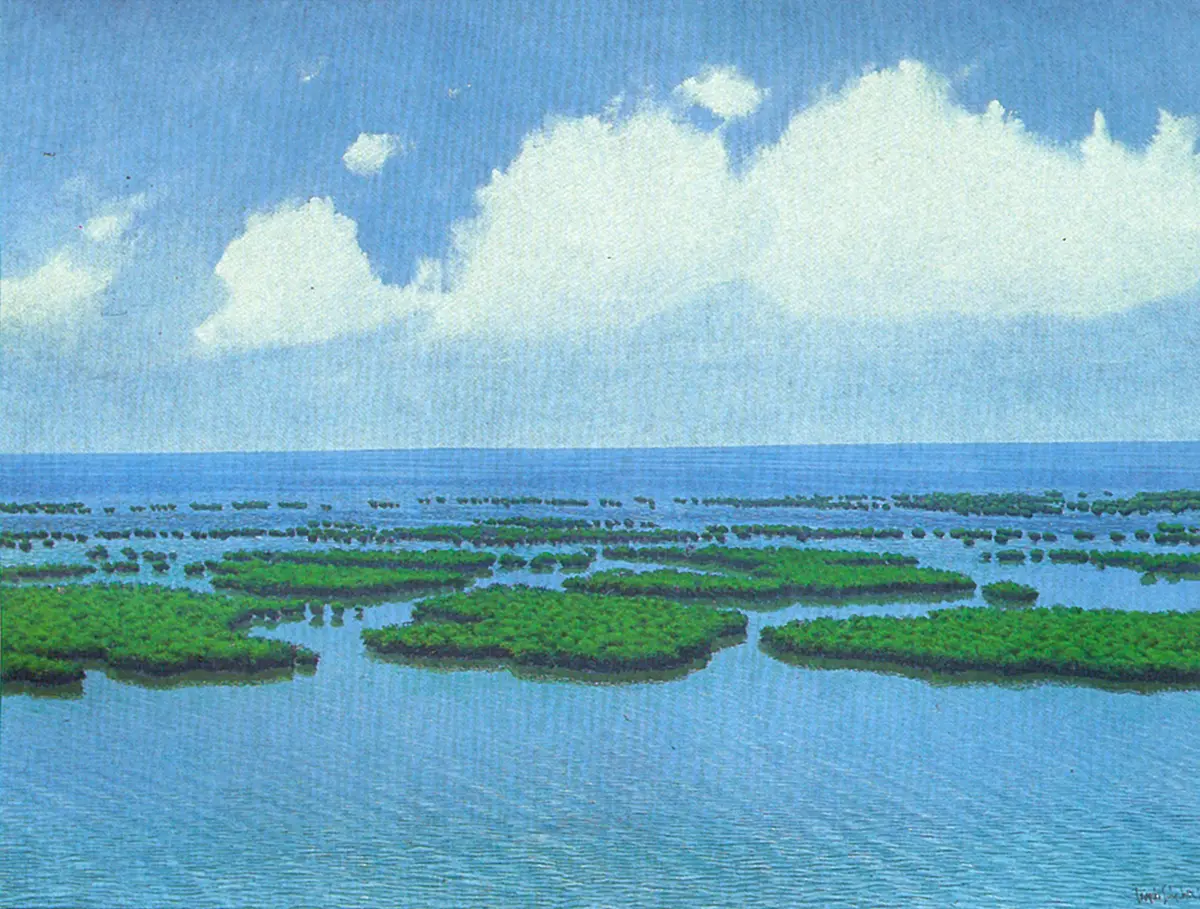
Commercial repetition and success have brought in their wake only the depletion and flattening of the subtle spirituality of images. Sánchez for his part has interested himself in works in which the landscapes form a relationship of basic geometrical forms —for example, oval clouds, islands, and ponds. This unusual “neo-geo” recalls the suprematist tensions with geometrical elements. In addition to making explicit the very meaningful abstractionist structuring of his imagery, such a process also signals the opening up of the “philosophical” and “surrealizing” components.
Sánchez’s painting has become more conceptual and the landscape, although perfectly probable, appears as an intellectual construction. The works take on a “linguistic” air as well as a dream-like feel which immediately recalls the world of Magritte, although there is no deliberate inter-textuality, but rather a curious degree of coincidence between very different directions and objectives. Such a line could take Sánchez’s painting towards experiences with landscape of a conceptual kind, an area which has been little explored and which is well suited to his integrated vision of nature and the spirit.
GERARDO MOSQUERA
Cuban critic and writer. Winner of a Guggenheim Foundation Scholarship.
Tomás Sánchez: Recent Work
O Cuba! O curve of sighs and clay! - Federico Garcia Lorca
Educated at the San Alejandro Academy and at the National School of Art, Sánchez formed part of the outstanding generation of Cuban artists that came to the fore in the late 1970s. They included such figures as Flavio Garciandía. Rubén Torres Llorca, José Bedia and Carlos Alfonzo. Initially encountering resistance from official circles, they presented their first group show in 1979 at the home of José Manuel Fors, one of the artists of the group, under the guise of a private party. The support of certain influential Cuban critics together with Tomás Sánchez’ winning of the prestigious Joan Miro drawing competition in Barcelona and his rapid international success helped legitimize what became known as the Volumen Uno group.
Although Sánchez is best known for his lush tropical landscapes, he insists that he is really a “repressed expressionist” and it is this aspect of his work that has recently become more important. Sánchez was a student of Antonia Eiriz, an artist whose vision of grotesque humanoid figures placed her in the first rank of Latin American expressionists. The influence of Eiriz is something that Sánchez readily acknowledges. Already in the mid 1970’s he was creating dark, tormented Christ-like figures. His spiritual commitment —Sánchez’s involvement with Yoga dates back to those years— survived official disapproval and hostility and deepened over time. Sánchez the expressionist and Sánchez the hyperrealist is one and the same. A profoundly humanistic, religious individual in the broadest sense of these terms, Sánchez can be set in the context of Caspar David Friedrich and German romanticism, with its quest for the sublime in nature, or the North American artist Andrew Wyeth. There has always been a strong interest in landscape painting in Cuba, beginning with the nineteenth-century artist Esteban Chartrand and continuing in the twentieth-century with Leopoldo Romañach and Domingo Ramos. However, unlike those of some of his Cuban predecessors, Sánchez’s landscapes are not simply “pretty” pictures. Much closer to Sánchez’s ideas are some of his Latin American contemporaries, for example, Ernesto Barreda, José Gamarra, and Milton Becerra. Like these artists, Sánchez uses landscape to convey a statement about man and culture in the natural environment.
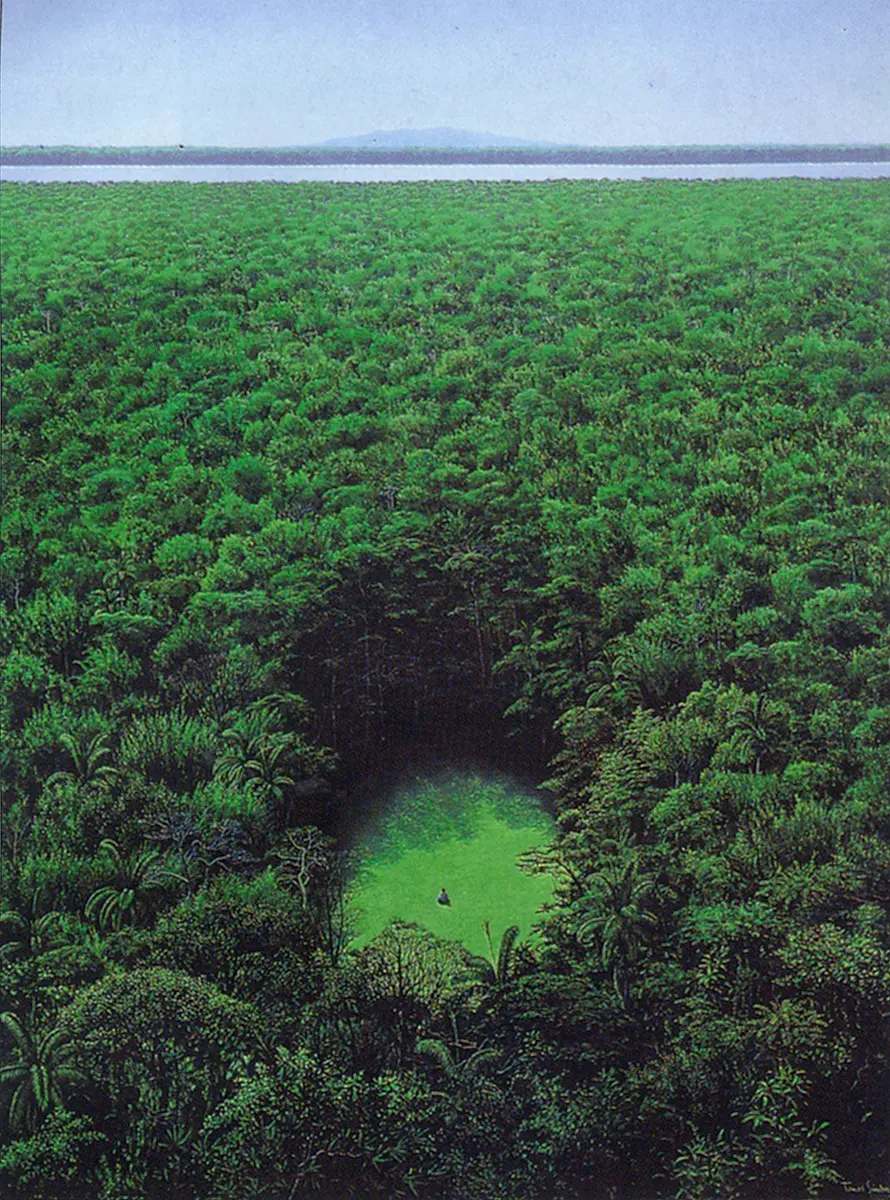
Often composed of horizontal bands of water, land, sky, and clouds, Sánchez’s landscapes are about spiritual oneness with nature. Contemplating such scenes many people are captivated in almost hypnotic fashion by the mood of peace and serenity that is conveyed. Sometimes, Sánchez makes his point by including a small white bird flying through the landscape. His 1987 Meditation is a self-portrait in which the tiny figure of the artist sits in a Yoga position, his back turned to the viewer, in a clearing surrounded by endless green. Sánchez is not concerned with the picturesque. His spiritual quest stems from a deep appreciation of the Cuban landscape, with its royal palms and Ceiba trees. As in so many places, centuries of encroachment and pollution by man have sadly diminished the landscapes imagined by Sánchez, but this Cuba remains as a primal memory, an Eden-like state of innocence that is beyond history and all the troubles the island has endured since 1492. But the artist looks beyond the island; his Cuba is a metaphor for the entire planet.
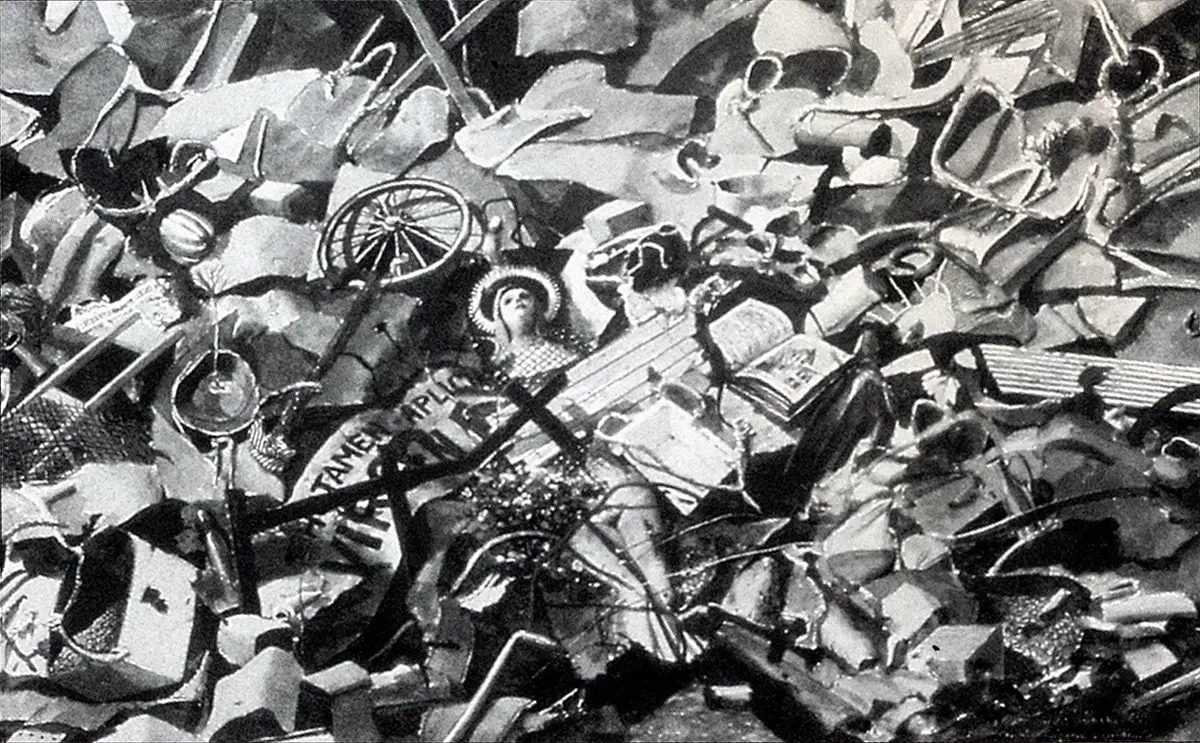
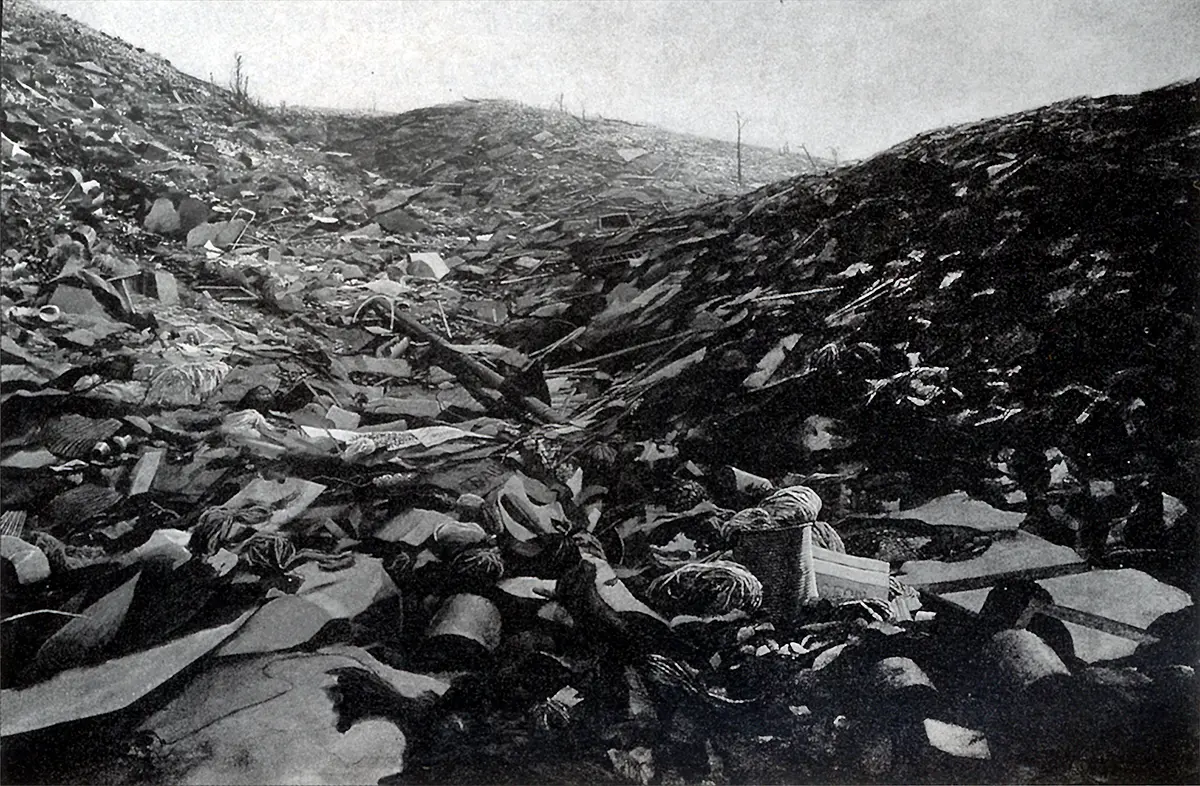
For Sánchez, all things are connected and interdependent: spirituality, the environment, and the human condition. The artist’s garbage dumps are landscapes that have been abused and polluted by gross materialism and selfishness, as can be seen in Crucified Man, a powerful 1993 work shown in Miami this summer in a group exhibition at Weiss Sori Fine Arts. The viewer zooms in on a crucified figure that, like others by Sánchez, is a self-portrait, if a hidden one, (the figure faces into the picture). In Mantegna’s Dead Christ, the artist creates a disconcerting perspective: one has the impression of suddenly descending on the scene. The crucified figure, blood flowing from the wounds in his hands, surmounts an endless garbage dump piled high with wastes of late twentieth-century life: cardboard boxes, tires, plastic bags filled with paper, and used appliances. A tom sign reads: “Support Ecology”. As an ironic twist, the artist has included two of his paintings ripped and reduced to insignificance in the pile of detritus. The implications are obvious: the artist and by extension all of humanity is sacrificed on a Golgotha of mindless consumerism. Sánchez did not have to go far to find scenes like this: in Mexico City, he has seen how scavengers live in vast dumps very much like the one in this and other paintings. Many large cities in Latin America and in the United States present such depressing spectacles. Paintings from the early nineties such as Green Landscape for False Ecologists, and Burning Garbage Dump at Night, with their polluted skies, are hellish visions of environmental suicide. Especially poignant is Mirror Image in which a small green island is surrounded by garbage. Again, the ecological message is emphasized with the word “Ecolo” visible on a scrap of paper.
Now living on Miami Beach and working on several unfinished paintings brought from Mexico, Tomás Sánchez plans to stay in South Florida. An artist with a deep commitment to issues of the times, Sánchez refuses to be categorized as a painter of seductive magical realist scenes. His main concerns are Man’s place in his environment and the universe and his destructive and self-destructive attributes.
GIULIO V. BLANC