
The Luis Caballero Prize is a competition-based exhibition organized in Colombia with the intention of taking the pulse of the production of artists 35 or older and is presented at different sites in Bogotá. The Prize’s latest version afforded me the satisfaction of reconnecting with the work of three Colombian artists who since the 1990s have proposed new ways of conceptualizing art itself: Juan Mejía, who expanded it into emotional territories and reclaimed the commonplace for its material; Alberto Baraya, who alerted us to the looming end of nature; and Juan Fernando Herrán, who incorporated history and social dynamics as “materials” in the configuration of the contexts in which we exist. The presence of these artists in the latest edition of the Prize seemed to me to reveal a forceful commitment both to experimentation and to the search for narrative, dramatic, and even melodramatic resources, all of which gave their interventions a decidedly more public character.
I believe it is important to pay attention to the narrative possibilities inherent to the visual arts. Above all, because artists accept the fact that they share perceptual habits with their audience, and hash out those habits in public view: they can single out certain elements in the flow of events, or shift our interpretation of them; they can use memory, they can feign and bluff, they can make the frameworks of our thinking more flexible (or even more dramatic) in order to reveal the contradictions they contain. By deliberately working with the same perceptual habits as the viewer, the work of art becomes more inclusive: the viewer connects with it via anecdotes or ways of speaking, recognizing gestures and costumes or materials that are close to his or her experiences and interests.
When will we finally grasp the importance of understanding “the world as anecdote”? In that way, art is inscribed into collective networks of meaning rather than solely on the network of “art”—which often cogitates beyond the boundaries of a specific circumstance— establishing itself instead of in the midst of experience and finite space. Art thus distances itself from design, which so dazzled us in the Avant-Garde but now finds its place in public discourse, and interrogates it in that very terrain in order to rewrite, alongside the audience, a confusing, paradoxical history that is both individual and collective.
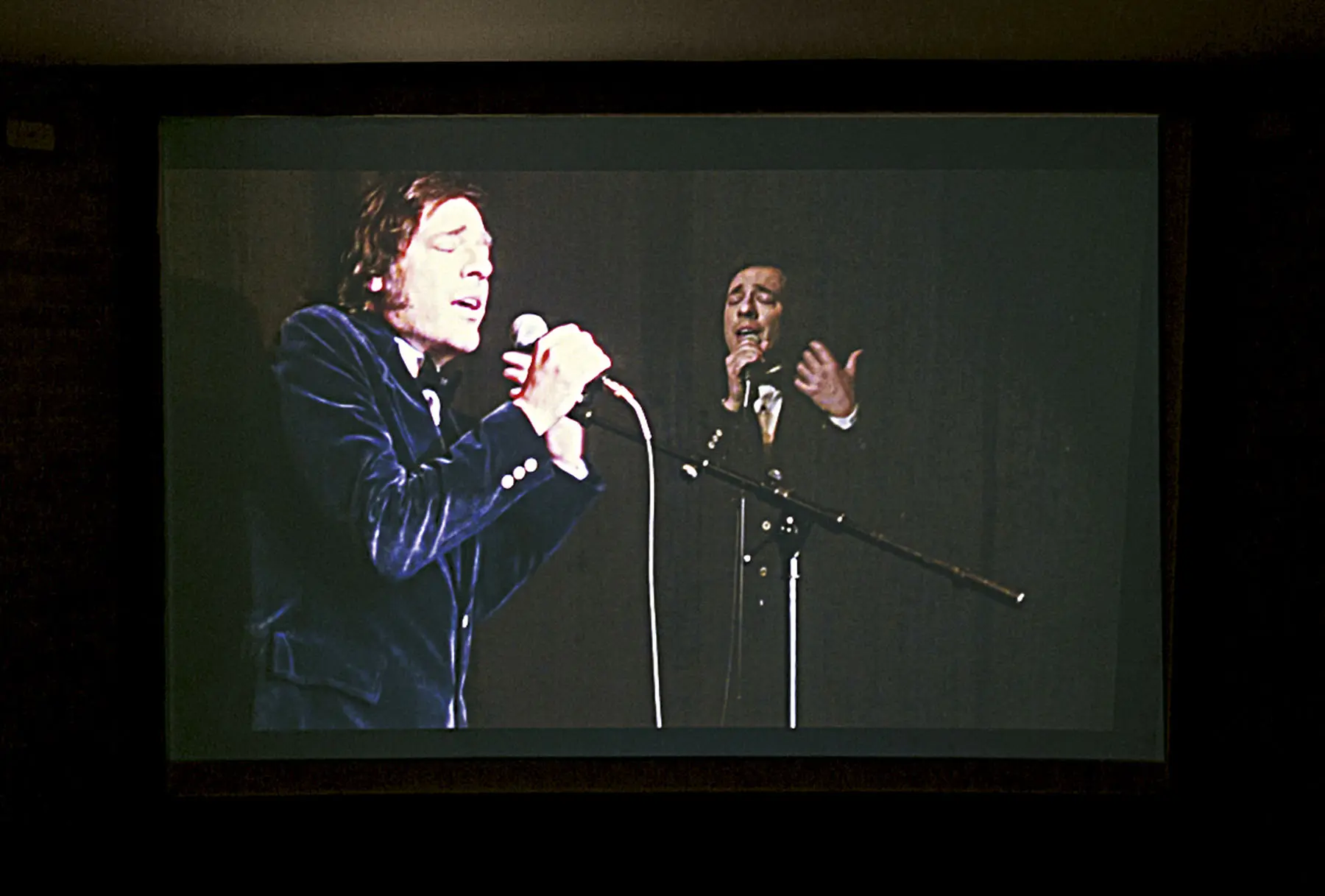
Let’s begin with Hacia un lugar común (Towards a Common Place), by Juan Mejía, the undisputed winner. I want to highlight in this work the idea of a subject aware of its own construction on the basis of specific cultural representations, but capable nevertheless of camouflaging itself in them, presenting them anew, and giving them its own meaning. And what can be better than karaoke, which is “to mount my voice and my attitude” on those of another, to speak for me.
Facing the camera, a tuxedo-clad Mejía sings radio hits from the 1950s “with his idols” for three hours, at times with a piano accompanist and backup vocals. He sings with great feeling, intermittently separating the voice of the original singer and his own voice. The use of the song’s oral narrative is important here, as a common flow that teaches us how to tell our own, hidden life stories, assembled through the intimacy and the demands of the other. Along with the video, Mejía’s work also explored painting, with wrecked ships and a large still-life of an accumulative culture one had to traverse, perhaps a stand-in for an institution like the Museo de Arte de Bogotá, stranded for a long time now and neighboring one of Bogotá’s largest flea markets, where an unsuspecting walker-by is liable to find the most surprising and refreshing thoughts.
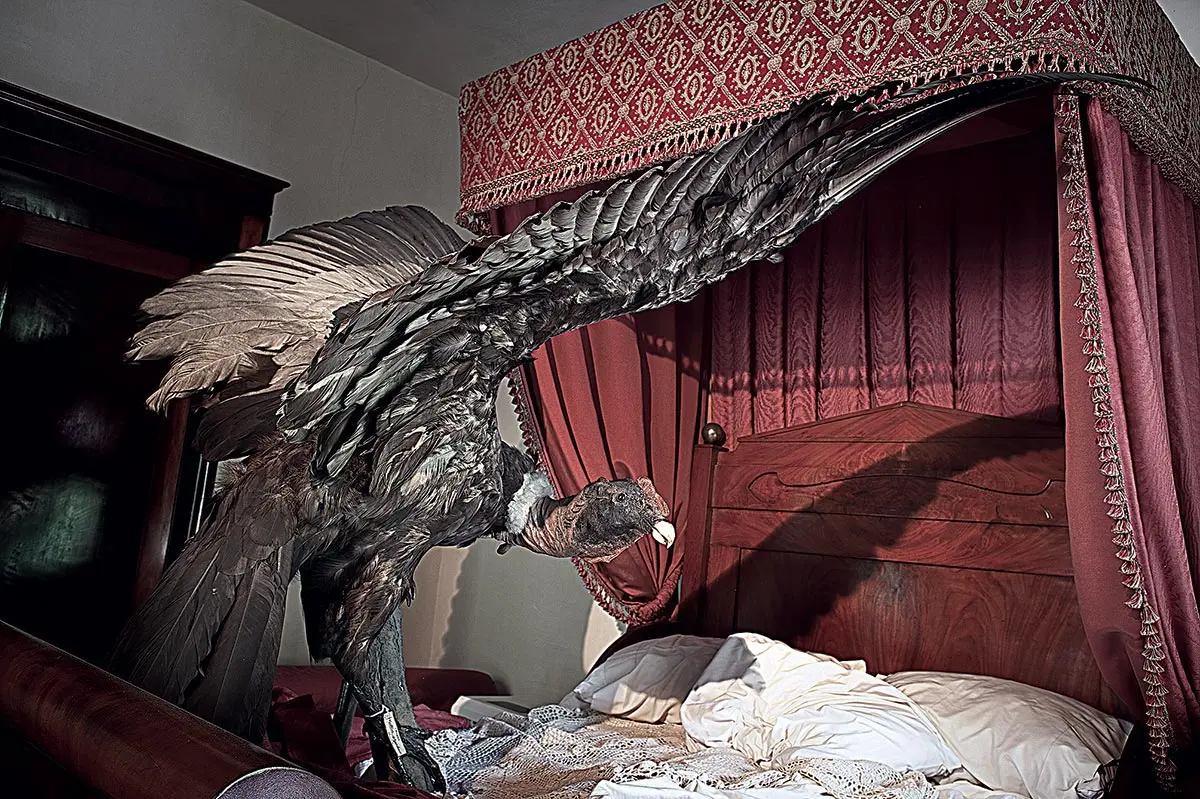
Faced with the wreckage of modernity, Alberto Baraya became an explorer and a collector of cultural oddities like fabric flowers and stuffed birds, which he displayed, one next to the other, with their corresponding classificatory card. In truth, any one of these birds—a blue, yellow, and violet one comes to mind—would already be a forceful manifesto against predation. For this exhibition, however, Baraya decided for a more dramatic gesture: a stuffed condor, its wings extended, on Simón Bolívar’s bed. This dramatic resource signaled a variety of contradictions. For instance, those of museums, one devoted to preserve and display furniture, another devoted to taxidermy. Or the drama of the congealment of history into cliché, against a history of nature of the kind that is indispensable for all cultures. My interest was sparked by this excess dramatics because excess means giving more than has been asked for in order to say something more forcefully; to overcome the formal control expected from the visual arts in an agonic act, risking overexposure because the subject matter demands it.
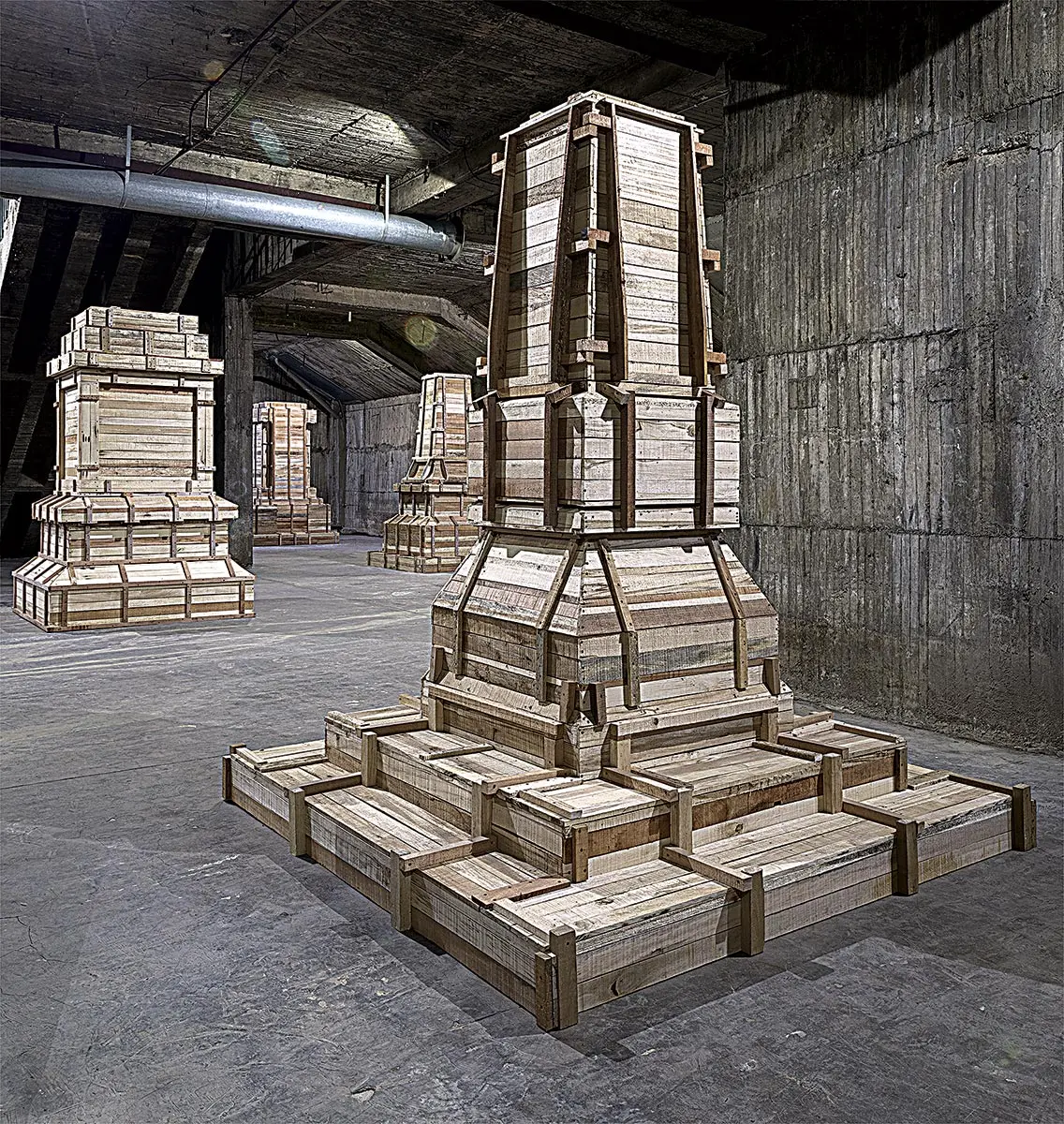
Already with his earliest works, Juan Fernando Herrán was able to produce expanded images, with many points of entry for viewers: there was an object, but also natural forces such as wind and tides, and alongside the history and the news—in sum, a flow he transformed into artistic material and rendered visible. Héroes mil (Heroes by the Thousands) was an intervention in the basement of Bogotá’s Heroes Memorial. The installation returned to the idea of a basement or underground level, in this case, used to warehouse unused pedestals made in rough crate-like pieces of wood, the commonplace made pedestal. Herrán was able to construct an object-document, pointing out the impossibility of giving support to the notion of the hero. And his exploration continues with a combinatory image, open to offer its viewers not only his own interpretations but also a consideration of the Colombian national idea through the history of this specific site, a monument built-in 1963 in Bogotá whose concept of the nation is traversed with internal contradictions.
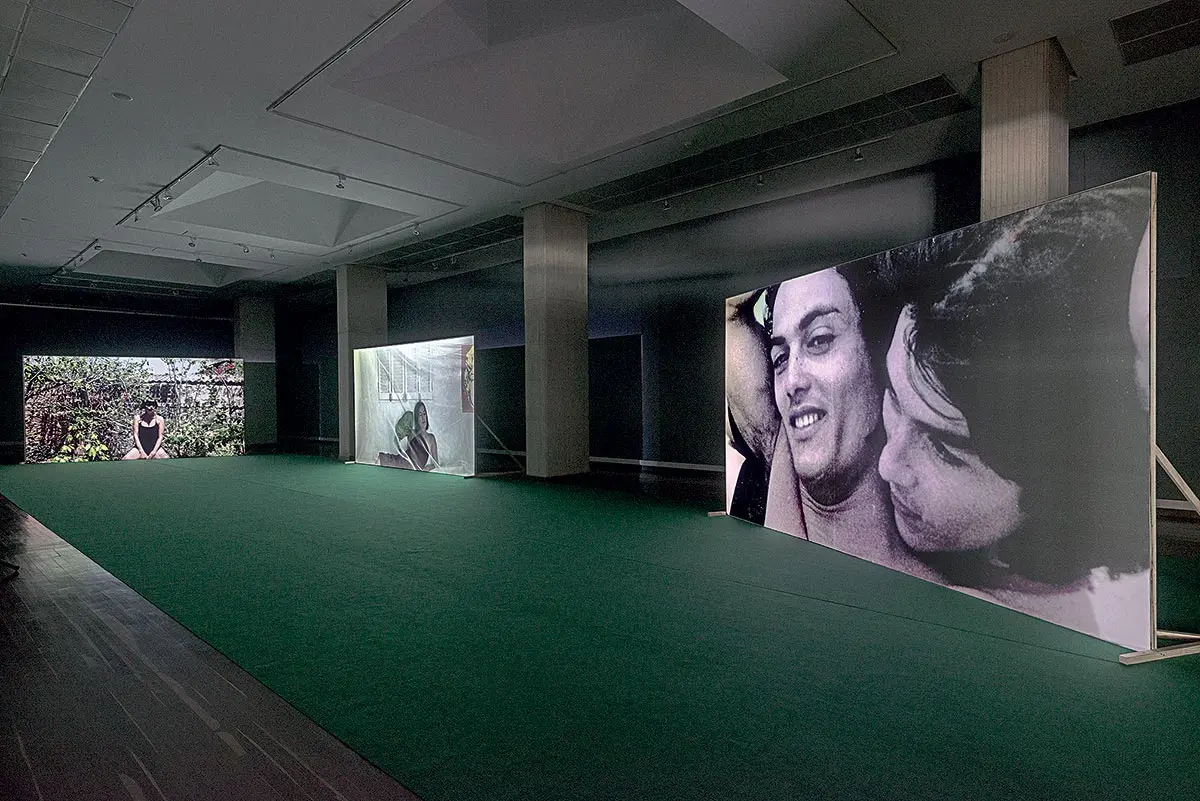
Ana María Millán’s presentation was particularly refreshing. As she has explained in interviews, Millán invented an alter ego for herself ad named Helena producciones, a kind of Helen of Troy for a male universe that would allow her to both sneaks into the spaces of history—in order to, precisely, “tell the story” from the standpoint of the local—and to make films. In this exhibition, she presented a fragmented film: the technical card tells us that it is based on Kalt in Kolumbien (Cold in Colombia), a 1985 film by Dieter Schidor (Germany) that records celebrations in Cartagena. The film tells also a series of events that waver between forgetting and censorship. But it seems to me that, under that pretense, viewers were faced with scenes that promised a climax yet never reached it, and this prevented us to “enter” the environment of the film, which has to do with the coldness or heat evoked by its scenes but also with the entire staging of gestures of farewell or approach, costumes, and objects. As I said, it was a sequence of scenes without resolution, revealing the life that hides behind the images (to use Juan Arias’ expression) and reminding me of Wim Wenders in Paris, Texas and some scenes by Carlos Mayolo of David Lynch, but à la Helena, of course.
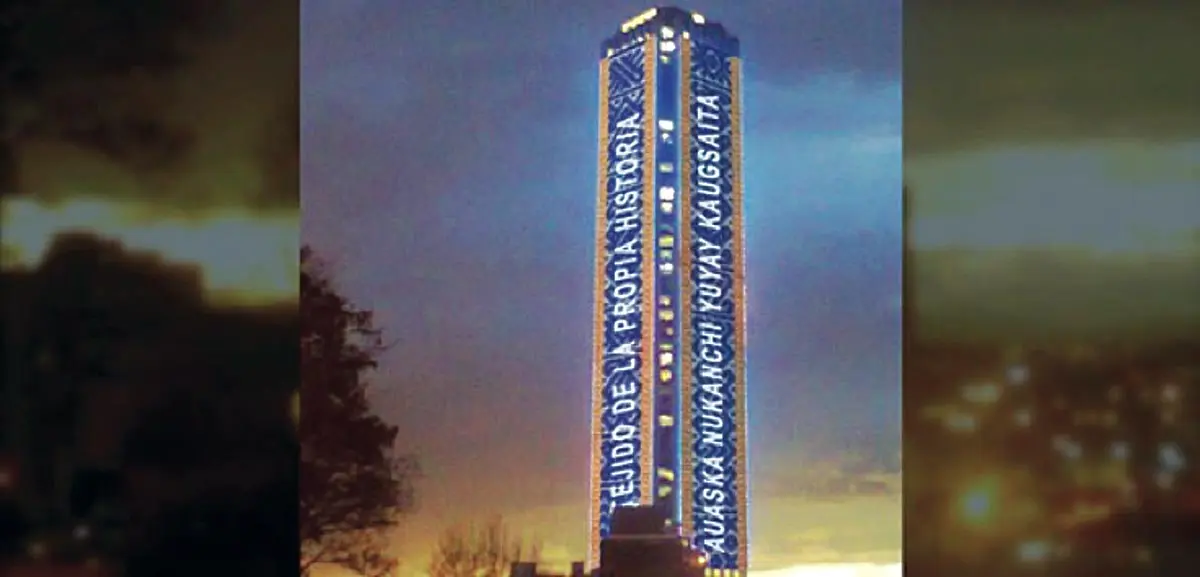
Benjamín Jacanamijoy presented Auaska Nukanchi Yuyay Kaugsaita (The Weaving of Our Own History), where he uses the lights of Colpatria Tower (a building in central Bogotá) to insert images of chumbes, fabric sashes with embroidered symbols that are used around the waist or as child carriers in the Inga community of Putumayo. In this case, the indigenous people are present and make the decision of intervening a public space. The inclusion of these sensible indigenous graphics, as well as their language, must be celebrated; incredible as it may sound, indigenous peoples are only now beginning to express themselves in their own terms in the space of what is known as “Colombian art”, which at times may actually function as a protecting wall.
Artists also need to invent their own terms in an order to inaugurate an era in Colombia where they can talk about victims, restitution, reconciliation, and even war, terms that, historically, are seldom heard in the nation’s public discourse. To me, “inventing their own terms” means that they would need to devote themselves to render the victims visible or to carry forward the idea that the object suffices to represent them; in my view, it doesn’t: the actions and conversations of people are more important, and what is taken into account needs to be profoundly redefined.
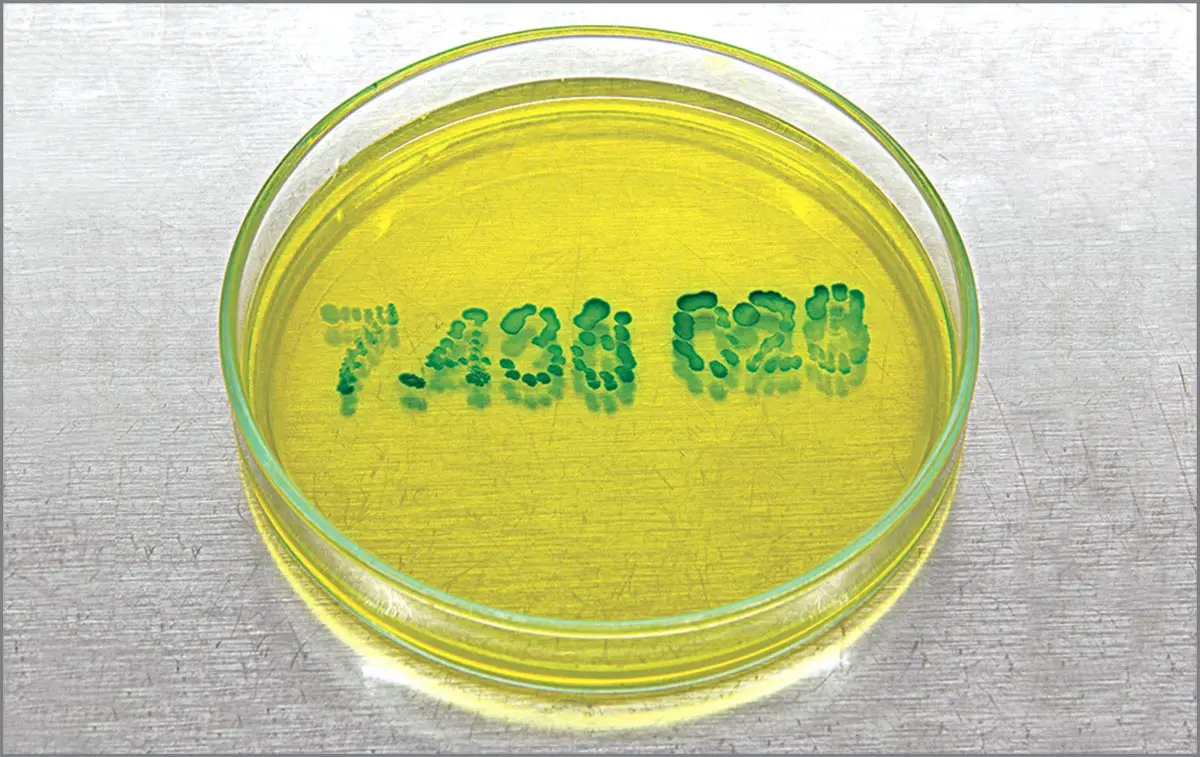
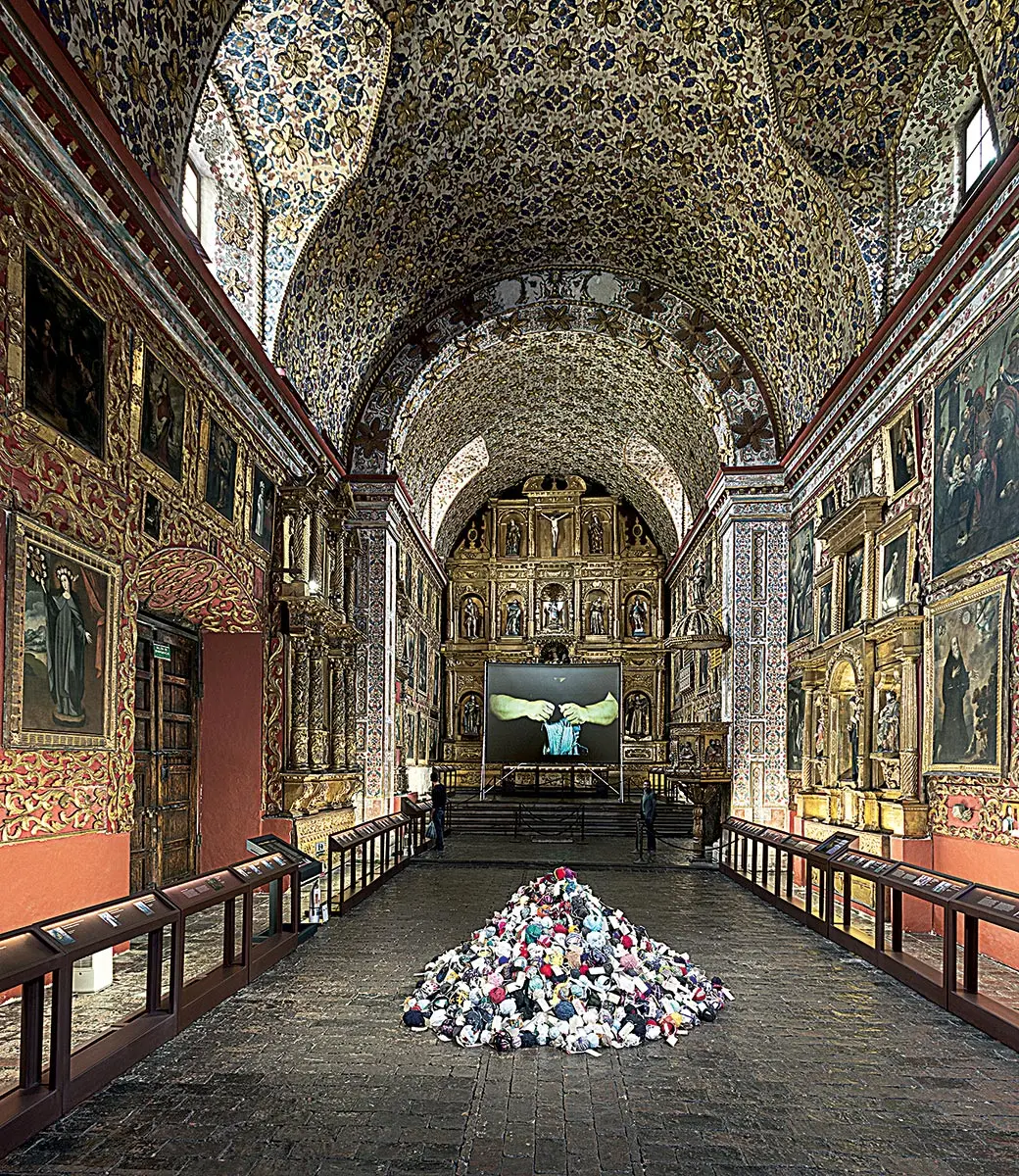
Two examples of different operations along those lines were included in this exhibition. Ana Isabel Díez’s En-bola-atados presented, in the video, the results of a number of workshops with abused women in different Antioquia municipalities. In the midst of their conversations, they tore clothes apart as a cathartic act, balled up the pieces, and wrote in them texts alluding to their problem. At Santa Clara Church in Bogotá, Díez presented the videos and the fabric balls. The protagonists of this work are the women themselves, yet there was a more systemic meaning since tearing fabric up implies a desire to break with the abuse, which is not easy to experience or to denounce. Díez’s work also involved the opinions of psychologists and community workers, and it gave viewers the tools to discern its intention and how it had been created. Much in this work is spot-on, but I have a minor objection: the participants could have created different shapes with the pieces of fabric, instead of leaving us with a ball that repeats and repeats. Here we must refer to other works in recent Colombian art, such as Marta Combariza’s Hilos (Threads, 2000), where, in a process of personal grieving, torn clothes went from fabric to threads, and finally to shapeless tangles. If there is something important in art, it is to protect experimentation.
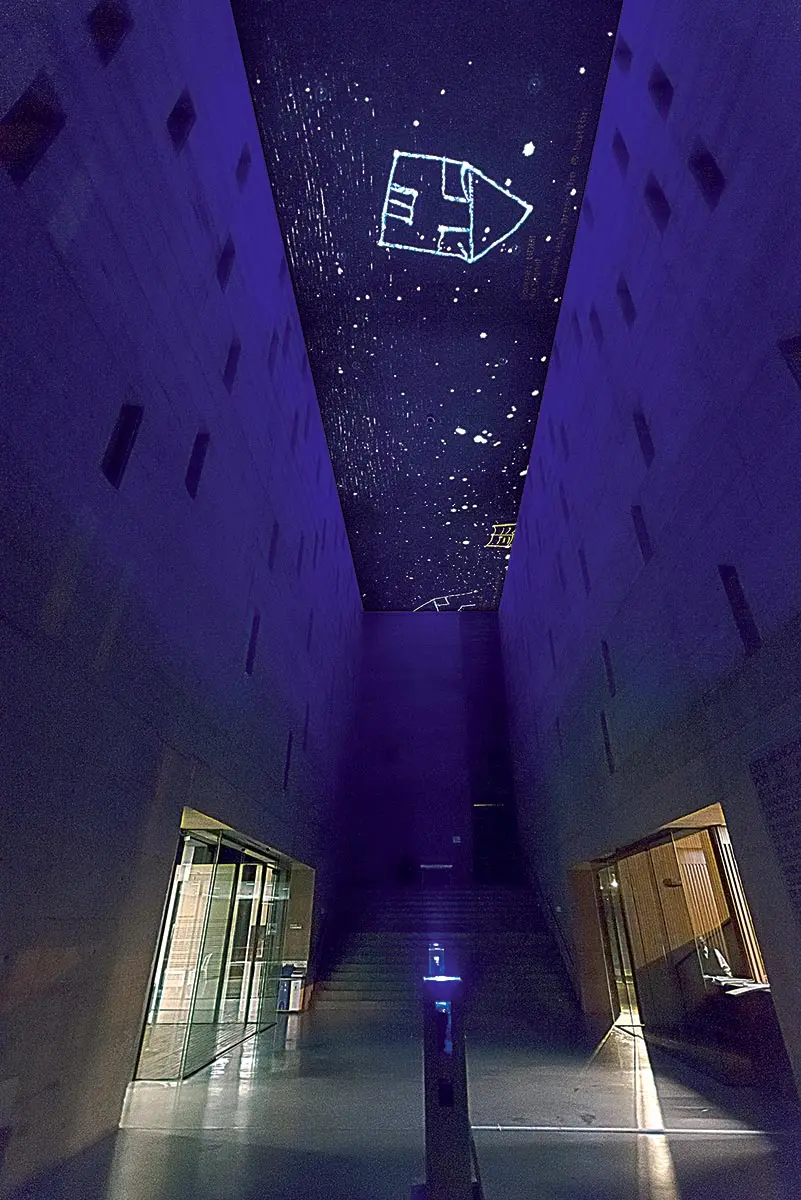
The second example was Phoenix, by Ana María Rueda, based on a workshop with displaced families who were incited to draw their dreams and desires as constellations, which were then projected, in full brightness, on the roof of the Memory, Peace, and Reconciliation Center, accompanied by audio recordings of the participants’ voices. Here, the object retains its central role, and people are kept in the background. Something similar happened in de Lina Espinosa’s Dibujo habitable (Inhabitable Drawing), a reflection about a living organism that mutated in the gallery and would have sufficed by itself, but was instead suffocated by the large number of photographs that made it impossible for observers to focus on it. I shall risk a conclusion: in this edition of the Luis Caballero Prize, art asserted itself as an interlocutor between a culture’s various networks of meaning, and new possibilities opened for its self-definition in connection with human groups that history has rendered invisible.
NATALIA GUTIÉRREZ
Anthropologist, Professor of Art at Universidad Nacional en Bogotá.