
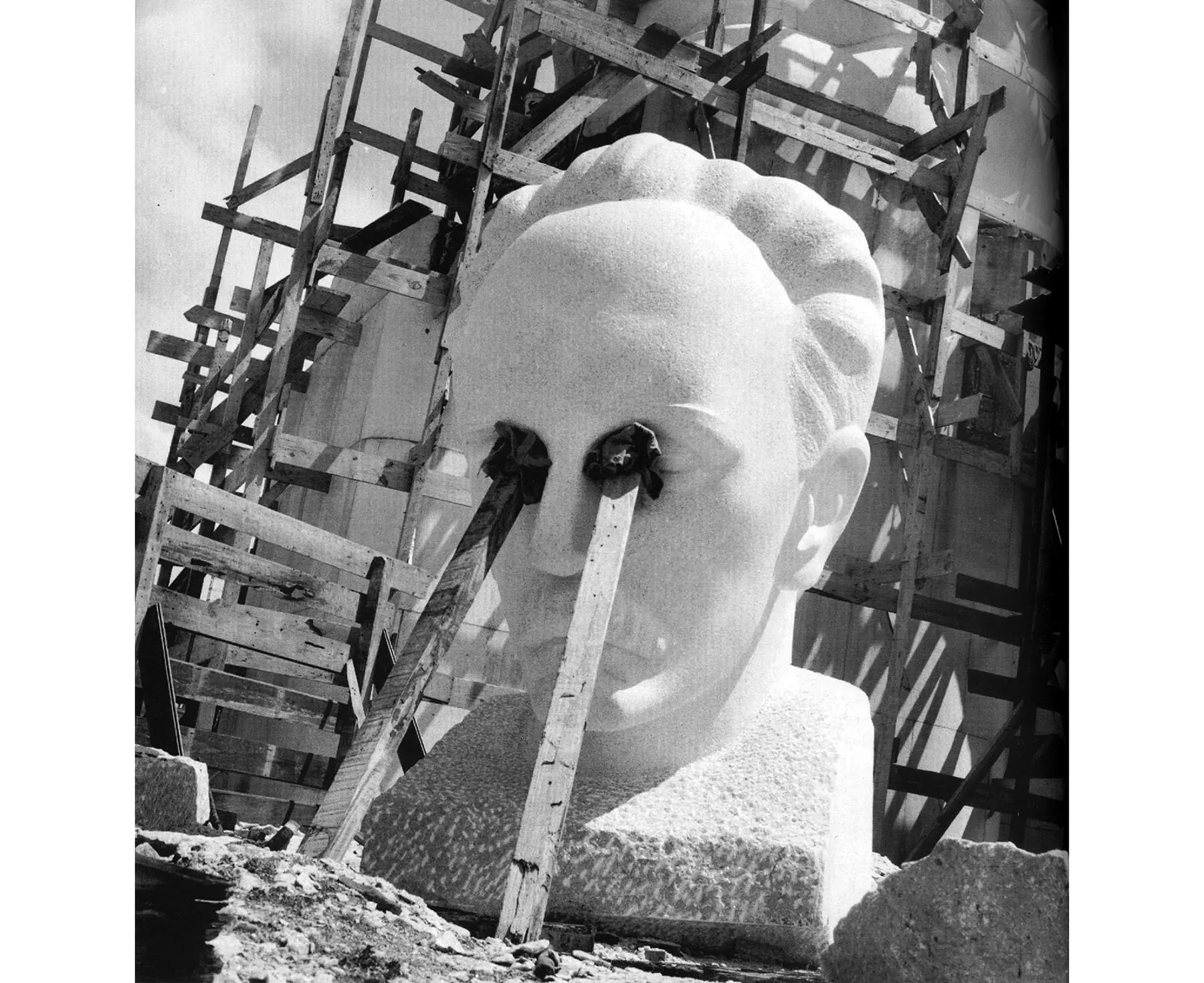
This we can say about photographer Ernesto Javier Fernández (Havana, 1963): The apple doesn’t fall far from the tree. His father, Ernesto Fernández, was a dominant presence in Cuban photography between the 1950s and the 1980s and received the National Visual Arts Award in 2011 for his lifetime achievements. The circumstances of Ernesto Javier Fernández’s birth and childhood opened a rich veneer for the appreciation of photographic art. He was raised in the midst of critical local events (a kind of low-intensity civil war in the mountains of the island’s central-southern region, where for five years groups of peasants rose in arms against the nascent Cuban revolution; the tense confrontations between various ideological factions around the country’s political future; the persecution of homosexual and individuals are seen as dissatisfied with the Socialist path proclaimed in 1961; restrictions and prohibitions in the social, economic, and cultural realms, with special emphasis on music; the failed Bay of Pigs invasion and the constant growth of American hostility, exemplified by the establishment of an economic embargo that continues to this day; the nuclear missile crisis of 1962; and others), some of the extremely dramatic worldwide reach, known by almost everyone in many parts of the globe.
Cuban photography recorded what was happening on the island but also went beyond the usual parameters of photojournalism—the legacy of an agile, intelligent, and aggressive journalistic tradition in important magazines and newspapers—in order to outline a style of its own on the basis of photo-essays, given the enormous amount of events taking place day after day in a country that insisted on calling attention to itself and left very few people indifferent anywhere in the world. In particular, the new magazines launched in the 1960s (INRA, which later became Cuba Internacional, with 70% of its space devoted to images, in the manner of Life) competed for the publication of thorough reports and for adding to their staff known figures such as Alberto Díaz (Korda), Osvaldo Salas, Pepe Tabío, Constantino Arias, Raúl Corrales, Mario García Joya, and others whose persistence deserves greater credit: Tirso Canales, Perfecto Romero, Panchito Cano, Pepe Agraz. Joining them were the Italian-Venezuelan photographer Paolo Gasparini and the Swiss-born Luc Chessex, mesmerized by events in Cuba and ready to bear witness—alongside their Cuban colleagues, with whom they did not hesitate to share experiences and ways of conceiving and setting up their new essays—to the initial effervescence and craziness of the Revolution. And the roster would be incomplete if we did not mention the sporadic visits by Henri Cartier-Bresson, René Burri, Lee Locwood, Bob Tavern, José Medeiros, Graciela Iturbide, and Pedro Meyer, all in search of flashes and surprises in the streets and fields of Cuba.
Cuba’s social processes of the second half of the Twentieth Century, specifically the first two decades, was partially recorded by photographers in a direct language of limited formal elaboration or manipulation, so as to leave no doubts concerning its veracity and realness. In its effort to assert, above all, the country’s political process, this photographic verism precluded any other perspective, just like conversationalism did for poetry and the Cuban documentary school did for the film. Painter and designer Raúl Martínez’s mid-1960s audacious formal explorations in search of a new language were received guardedly, even when he allied himself with Mario García Joya and Luc Chessex as counterpoints for his recording of reality, as happened in the memorable exhibition Foto-mentira at Havana Gallery, in 1966, still remembered as a significant break with the dominant documentary trend.
The critical paradigm that arrived in Cuba’s visual universe in the 1980s (although it needs to be said that some painters and printmakers of the 1960s prefigured this tendency with rigor and professionalism) did not correspond to Cuban photography of the first two decades of the Revolution. The reaffirmation of recently proclaimed and applied social and moral values (“within the Revolution, everything—outside of the Revolution, nothing”; “Fatherland or Death”; the New Man; the dictatorship of the proletariat; proletarian internationalism; socialist emulation; “Eternal glory to our heroes and martyrs”) was the essential, almost foundational narrative of artistic practices at the time. To paraphrase a slogan often heard in those days: photography was “a weapon of the Revolution”. No other period displays such homogeneity of supports, techniques, formats, styles, and points of view.
Around the same time, in the early 1970s, a younger generation was being trained by those great Cuban photographers, rather in the manner of Medieval apprentices: Ramón Grandal, Rigoberto Romero, María Eugenia Haya, Mayra Martínez, Rogelio López Marín, Iván Cañas, Gilda Pérez, José A. Figueroa, Luis M. (Pirole), J.J. Vidal, all searching for a photographic style that integrated testimony, veracity, and aesthetic assumptions in ways very seldom seen in the art’s brief history in Cuba and influenced by the prestige of the Magnum agency, the Casasola Archive, masters like Kudelka, Frank Capra, Álvarez Bravo, and important graphic magazines such as O Cruzeiro, Paris Match, National Geographic (among these photographers, a more European-influenced predilection for the use of 24 mm lenses, instead of the American preference for 35 mm lens, was beginning to be widespread).
The few art galleries that existed in Havana were not inclined to exhibit photographs, given the rise of other visual arts and their legitimization in the cultural sphere; this was even more pronounced in other cities and provinces. For the general public, Cuban photography was more than visible in periodical publications, and at the time this seemed to suffice since many photographers acquired in that way a certain reputation despite not being seen as “artists”. The images captured by their cameras situated Cuba, from the modest domain of the visual, on the international political map, once the trail was blazed by hundreds of images of bearded, long-haired guerrillas in their olive-green fatigues (symbolized years later by the classic photo of Che Guevara in 1960, which became an icon of Cuban photography). In a way, these images acted as the cultural emissaries of an explosive, shifting reality, surpassed only by Cuba’s movie and propaganda poster art, which traveled around the world in much longer than 80 days and is now, despite the many years passed, undergoing an unusual revival thanks to new generations of designers, among other reasons.
While all of this was vertiginously taking place, Ernesto Javier Fernández devoted his enthusiasm and passion to his father’s home darkroom, listening there to conversations between many of the key figures mentioned before. He also visited the newsrooms and photography and design departments of many periodicals, studying and maneuvering their arsenal of Leicas and Nikons, their development kits, the surprise of the first contact sheets, the anxiety of printing proofs. There, he came to have many now-forgotten brand names imprinted in his memory: Ilford, Orwo, Agfa, Kodak, Fuji. This self-education was enriched, also, by film, drama, literature, and music, thanks to sessions at home in which not only photographers participated. There he always encountered a broad range of voices and points of view connected to popular culture in the democratic and pluralistic sense of the term. Thus armed, Fernández began to collaborate with local publications such as Somos jóvenes magazine, where he later became a reporter and photographer, as well as Alma mater and Nosotros. In 1990 he set himself up as a freelancer and traveled to Germany, where until 2000 he worked for several agencies and cultural centers. Fernández was not a member of any generation, since those had practically vanished from the cultural scene, especially in the visual arts: he was a kind of lone wolf for whom the temptation to emigrate in search of new horizons was particularly attractive.
From those formative years in Cuba and Europe, Fernández retained an interest in carrying specific themes and subjects to their ultimate consequences, rather than the isolated, stand-alone individual shot devoid of networks and connectivity. This implied a very personal notion of the photo-essay as a logical, late derivation of what had historically been known as reportage. Fernández also internalized a distaste for the manipulation of shots, the trimming of those small 25 X 36 mm pieces of developed film (as forcefully confessed by Cartier-Bresson whenever he was asked about it); he refused to alter what he had seen and felt from behind the viewfinder, and later on a digital screen, as he moved around the subject and the scene. Three principles that perhaps do not rise to the category of a triad, a holy trinity in photography, but nevertheless guide Fernández through a complex, maze-like universe that today recognizes no boundaries—the “dark forest” posited by Dante Alighieri.
With all these elements in play, Fernández created series about street scenes, groups of students working in the fields, families preparing for weddings (part of a series on kitsch), which caught the attention of other Cuban photographers, heavily indebted to social anthropology, who was similarly intent on documenting new attitudes and behaviors in the country. Thanks to their reiteration, these testimonies retain a presence in the collective imagination of the last 30 years of life on the island and are always able to offer new points of view, be it from the standpoint of comedy, drama, or tragedy. Ernesto Javier Fernández observed them in sporadic moments before finally returning to Cuba with the intention of integrating himself fully into the local reality and recording everything that was taking place in the country. Events in Cuba were not trivial or inconsequential, but the opposite: the country was in the midst of yet another “historic” moment, as repeated by official discourses. Remembered now, more than two decades later, the 1990s were years of “horror and mystery”, when in order to eat, Cubans invented a large variety of concoctions that hardly anyone in full use of their mental capacities would actually believe existed, even if we owned up to them in front of a jury or swore to their truth by all the gods of the world, in the Vatican itself. The simple and oft-repeated argument of the fall of the Berlin Wall—and, with it, the entire “socialist field”, perhaps be better described as a “socialist badland”—was never a sufficient explanation for that decade that took Cuba to the edge of delirium, unreason, and national agony.
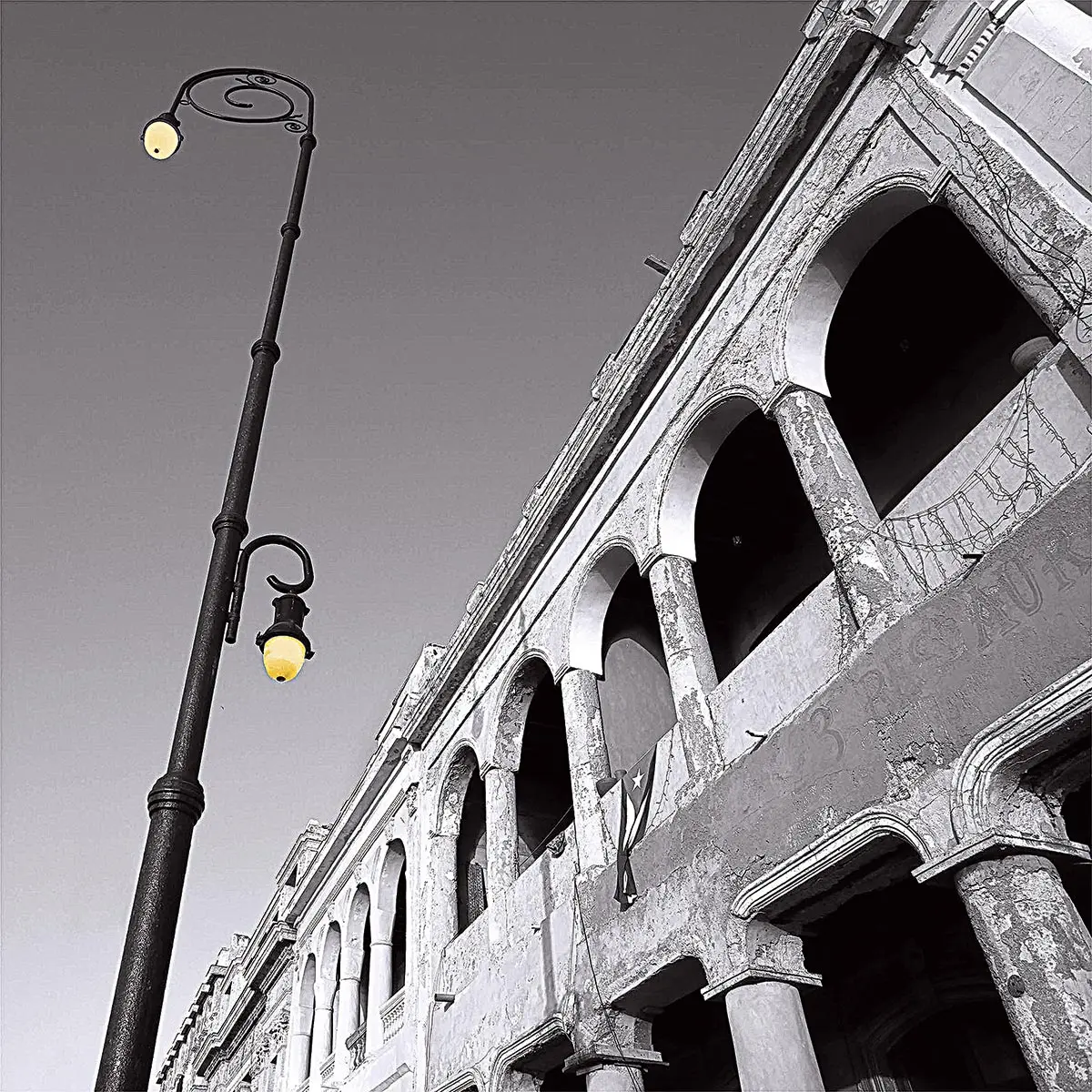
This makes it difficult to explain Cuban photography’s current disaffection for the wide-ranging social issues, dramas, problems that have shaken its small corner of the world, and its preference for the construction of personal universes, a seemingly poetic, metaphorical, elliptical language in some cases, resulting in immediate recognition and identification in the complicated landscape of contemporary art. Fernández himself is at pains to explain why so many social and political issues that are central to Cuban reality nevertheless remain untouched by the country’s photographers, with the exception of the accumulated architectural ruins, desolate streets, old automobiles, poverty, flags, and time-bitten monuments that adorn the geography of towns and cities across the island, favored perhaps by a kind of cultural tourism and on-the-cheap collecting in fashion since the 1990s.
After his intense training in Germany in the 1990s, when he made practical studies in digital photography and worked for the Zeitenspiegel agency and other media, Fernández returned to Cuba, and in one of his many attempts at reinsertion was surprised by the most dramatic “boat people” crisis in history, that of August 1994, another desperate attempt by massive numbers of people (many individuals, isolated experiences happen year after year) to reach new horizons beyond what the ocean around the island was, and is, able to offer. Rushing from place to place in Havana (with his father, also acutely aware of the events of those days) during those tormented days, unique perhaps in the history of the last 50 years, he witnessed the deep human drama of events that cannot be understood or explained without direct contact. Those were nearly 10 days that shook Cuba and once again cleaved life in this small country in two (some say in many more parts), as had happened in 1980 with the massive exodus of Cubans to the United States from the port of El Mariel.
Ernesto Javier Fernández’s immense archive of images from those days may very well be one of the most valuable documents of Cuba’s recent history, alongside those produced by a handful of local photographers that felt similar emotions. Without needing to emphasize the phenomenon of the fragile structures used as rafters (car tires, doors, window panes, packing filler, ropes, bed sheets, blankets, metal barrels), or the supposed boats so abused as metaphors for that tragedy, he recorded the human drama with profound sensitivity, in close-ups and medium shots of so many faces frayed by despair and disillusionment, broken dreams, anxiety, frustration, and suffering, and so many bodies defeated by stress, malnourishment, and months or even years of accumulated sleeplessness.
Except in a handful of cases, contemporary Cuban art preferred to turn its back to such a thorny issue: it entertained itself with the search for aesthetic paradigms and with the legitimization of craft and skill, after a decade dominated by bad form, bad art, performativity, ideas (the epitome of late-arriving conceptualism that pervades the scene to this day, despite its repetitiveness and fatigue), a reappropriation of vernacular culture, a boom in installations and object-art, and a critical perspective on social, political, and cultural reality that satisfied many with its ironic, sarcastic tone (indistinctly dubbed “new Cuban art” or “Cuban renaissance”, and promoted especially by US galleries, museums, and collections). Even though the memories of the images and events of the dramatic events of April-May, 1980—Cuba’s deepest moral crisis just twenty years after the triumph of the Revolution, with an immediate sequel of fears and rejections, maskings, hatreds, repudiations, and social and political divisions of a depth never before seen in Cuban society—remained fresh, art in the 1990s opted to privilege and celebrate “new” formal articulations, a long-awaited revival of skill, craft, and long-forgotten themes that, on the whole, never reached the 15 minutes of fame that we did see in the 1980s. The crisis of 1994 had been preceded by a similar situation 14 years before, and this in itself spoke volumes about the durability of a tense spiritual and ideological climate, rooted in the deepest reaches of the individual and collective imagination, impossible to ignore in any of the nation’s social strata.
None of that seeped into the many expressions of contemporary Cuban art, except for a handful of works—perhaps intended to assuage consciences unsettled by events that surpassed us, like so many before them—that barely surfaced in galleries, museums, art centers, or alternative exhibition spaces in the country. Not only artists but critics, curators, and historian as well, turned our backs to the phenomenon, under the pressure of an already overwhelming need for everyday survival (all the more so in the 1990s, immediately labeled with the perverse euphemism of “special period”), which left a very narrow margin for reflection and analysis. We were complicit in a generalized silence, involved in tangential strategies for the benefit of, and from inside, the institutions where we worked in the promotion of contemporary Cuban art. We were afraid to confront first ourselves (and the ghosts that continue to populate our vexed reality), and then the structures of power; we were cowed into never touching the still-open wounds of the socio-political body.
Although there had been some ultimately fruitless attempts to have them published in German magazines (Der Spiegel, Stern), it wasn’t until 2006 that Ernesto Javier Fernández brought his images of the boat people out from the shadows where they had been secreted and preserved from intrusion, and exhibited a selection in Daños colaterales, at Villa Manuela gallery in Havana, alongside photographer René Rodríguez. Masked in compositions indebted to graphic design, Fernández lets fragments of that obliterated world peer through along with images of blight and poverty so generalized as to have become Havana’s real urban landscape. They are situated within the frame of recognizable signs and symbols, or informal structures created by the artist, and we approach them as veritable voyeurs (mirahuecos, in the local slang), as if something—that unnamable, indubitable, ineffable something that hangs above our heads—impeded their true and free contemplation.
There are the images of men and women ready to engage in another terrible adventure, accompanied to the very edge of the ocean by family members and friends who come to bid them farewell, wish them good luck, and pray to their mostly African gods for safe passage and protection from sharks, disturbing winds, high tides, thirst, and hunger. There are their saddened countenance and their meager bodies, days after that bitter day of August 5, when desperate people determined to flee at any cost clashed for the first time with the police, intent on containing the spread of violence and vandalism through the streets of Havana. We owe all this to Fernández’s long-standing habit of carrying a suitcase with several cameras wherever he goes, in the best style of Cuba’s “old-timey” photo reporters or of those who, today, sneak around the world’s active battlegrounds under gun and mortar fire, especially in the Middle East.
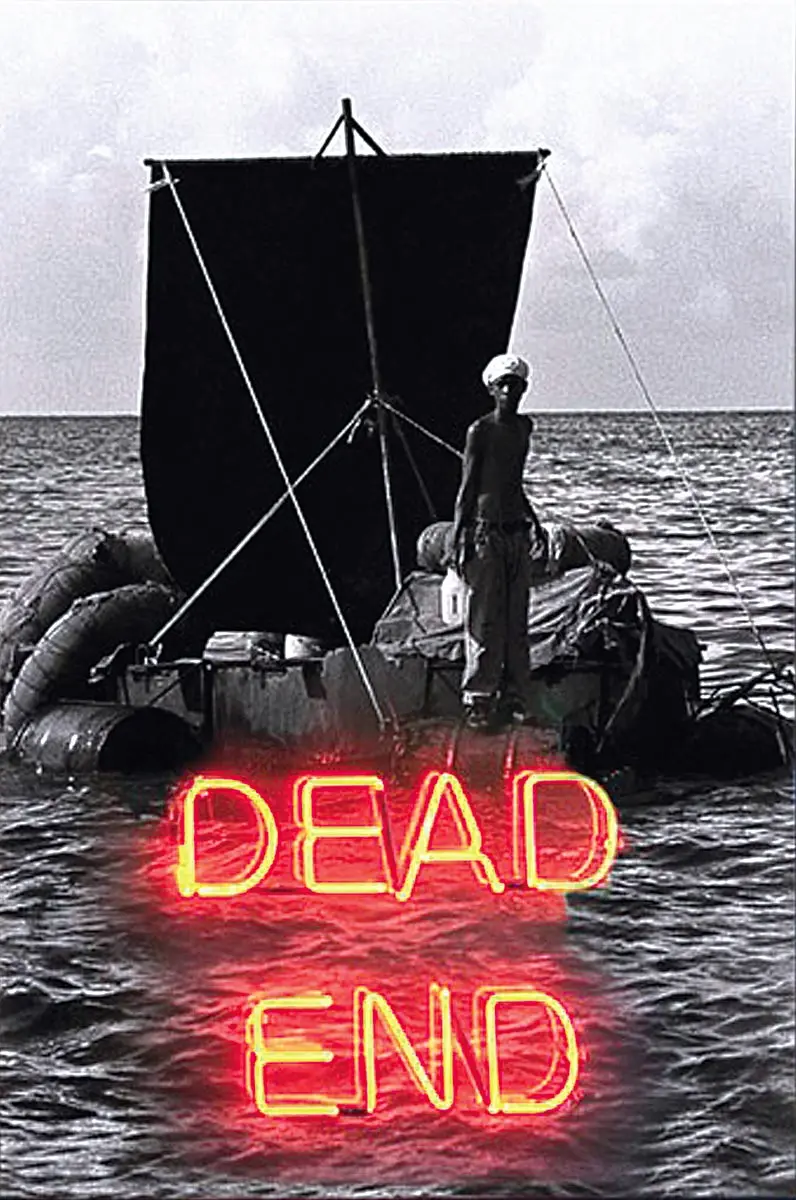
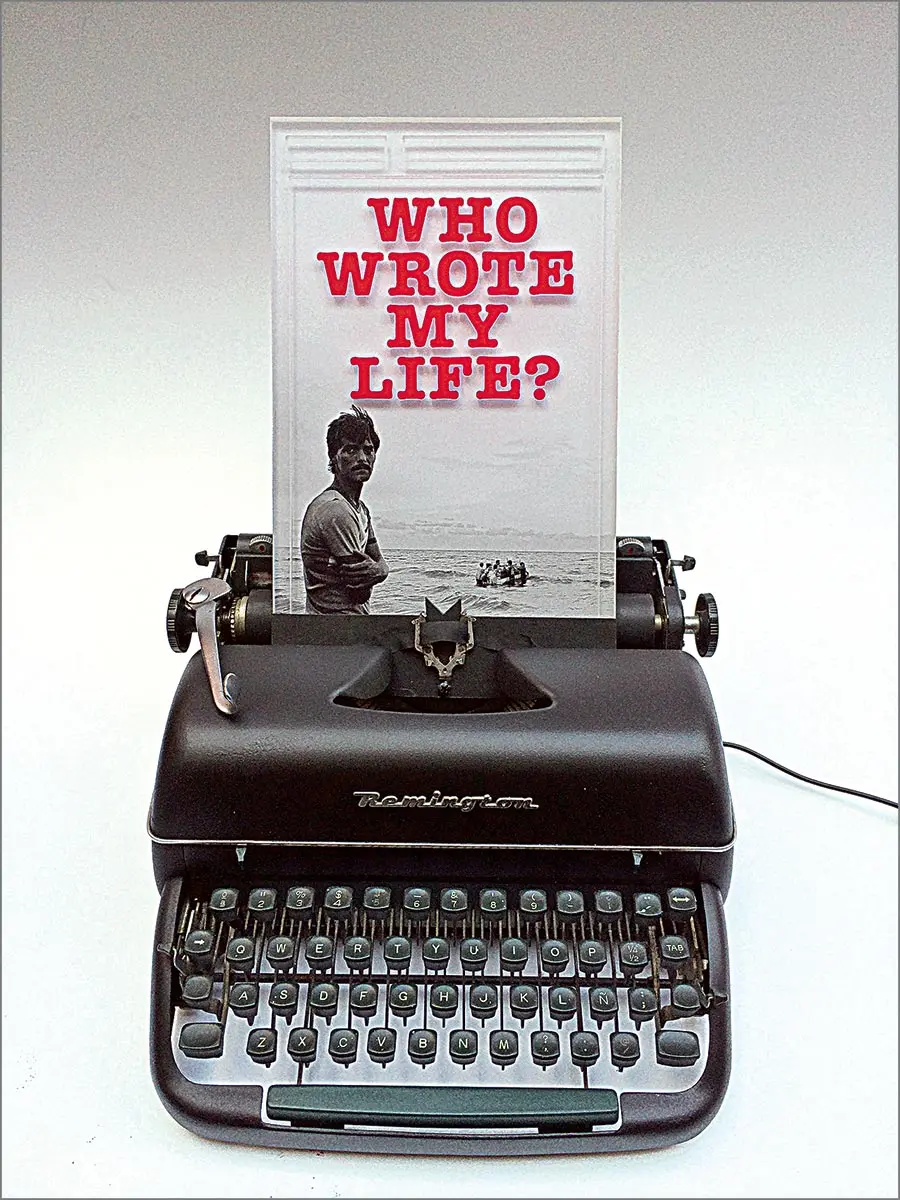
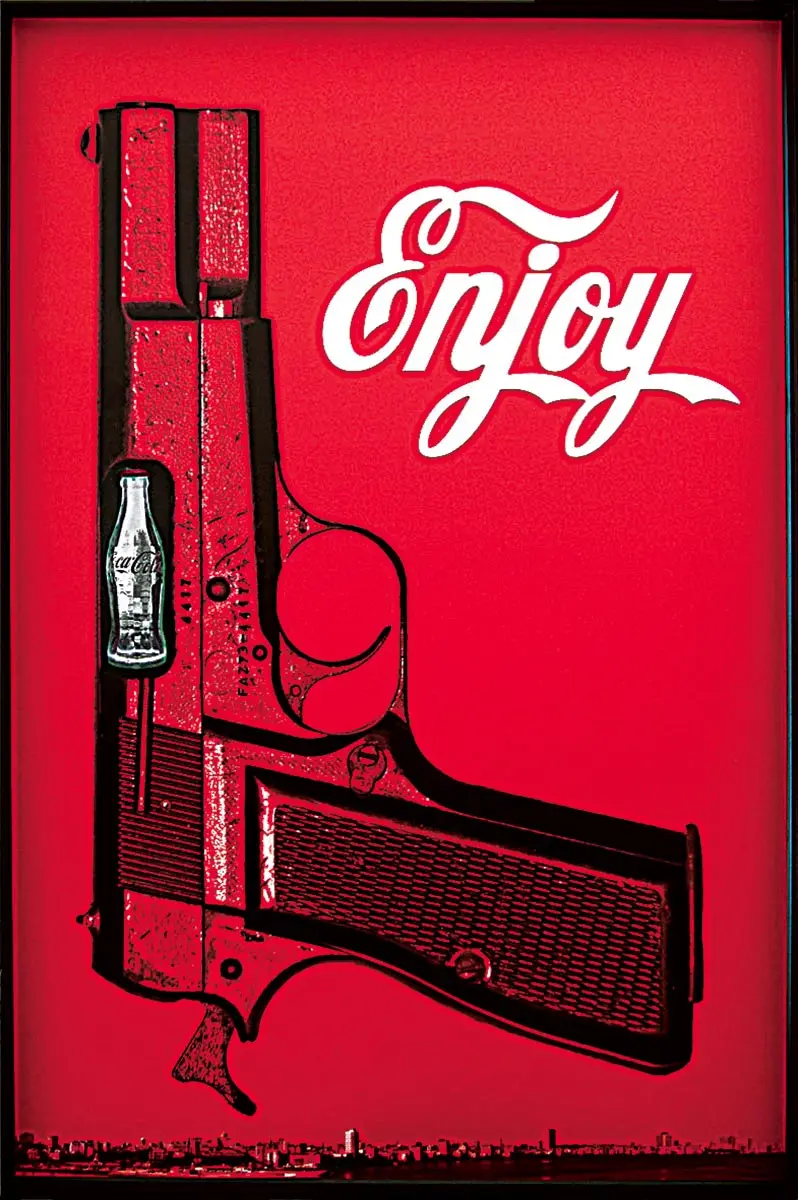
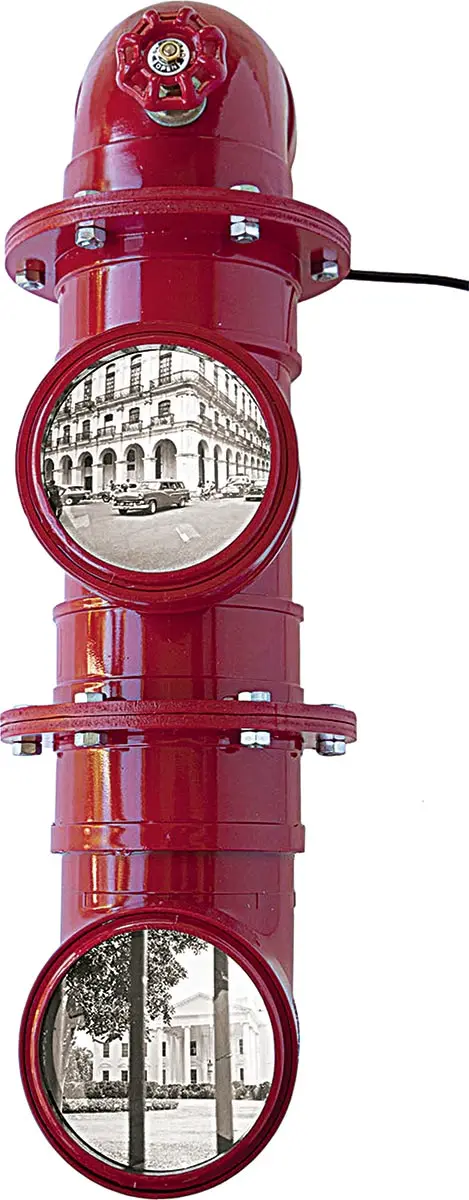
Fernández gives full respect to his black and white photographs, refusing to crop or add, rejecting any secondary effects that would place the images in a new symbolic dimension. Yet they are now part of an object, a kind of artifact projecting Fernández’s images beyond their planimetry and evoking other realms, other contexts. The photographs appear at the end of a red PVC tube, on screens to be observed over the external face of a lightbox, or are intervened with neon texts (always words or phrases in English) that are ambiguous in their meaning and open to infinite interpretation. The force of the images in themselves does not suffice for Fernández; he establishes new, altered relationships with them, in a context at once technological and impoverished. In this way, the images not only evoke and prod memories of the subject matter that identifies them for any viewer but also operate as emissaries of a recent era, a past that systematically erodes the present. These photographs are now objects that illuminate and kill, like José Martí’s star. Having done away with the traditional wooden or metallic frame that contributes to highlighting the image in its fullness, the photograph conquers a new domain, halfway between the private and the public space, a “no man's land” where the theatrical, the constructive, the sculptural, and the installative are articulated as pieces of a puzzle of unknown resolution. The images are part of a much broader visual discourse that uses them for a variety of ends, not only for aesthetics or reflection.
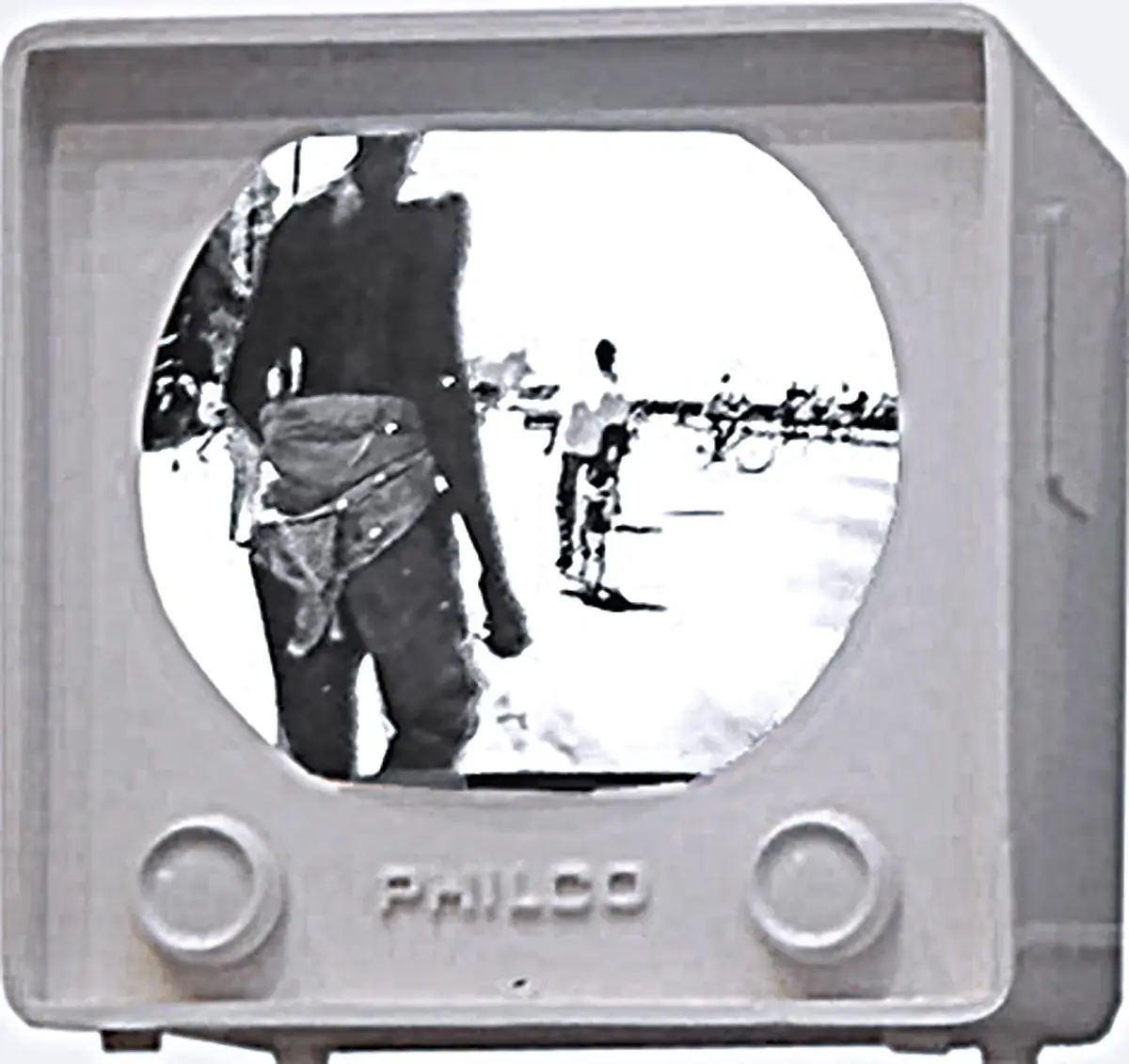
Fernández operates here a complex reappropriation of his own photographic work in order to set up new aesthetic devices, more indebted to sculpture and to contemporary object-art than to any other Duchampian point of reference. He is now exploring the possibility of integrating those images to domestic devices such as TV sets (manufactured by the artist in an artisanal way, as if channeling the earliest 1950s models) in the sophisticated vintage operation that is so familiar in other design fields. That technological past is enjoined to recent history, as though we were attending the projection of an old documentary, newsreels arranged to unsettle our becalmed lives, where nothing important happens other than memory.
Ernesto Javier Fernández is a builder of memories, a designer ready to enthuse us with evocations and reminiscences who never forgives us a moment of forgetfulness in these times when everything is fleeting and magically vanishes in the realness and the virtualness of existence. Although formally his images mix with neon, lights, plastic, wood, metal, they remain unshakable in our perception, but especially in our memory, even if the viewer never shared the photographer’s experience. Exhibiting them through the vehicle of his constructed objects, Fernández reasserts both his distance from traditional modes of reporting and his discovery of a new kind of photo-essay, connected to today’s multidisciplinarity, without needing to loudly advertise it as some artists do these days, desperate to call attention to this aspect of their work and clinging to such an old attitude and idea.
The 2007 exhibition That’s me in the corner, presented at Fototeca de Cuba in conjunction with René Rodríguez, confirmed Fernández’s fidelity to these postulates. A synthetic deployment of images intervened with English texts (Bad end, Fuck, Dead end, That’s me in the corner, Once upon a time, Wash your hands, That was a dream) gave continuity to the line of work started years ago, which gained him greater local renown; Fernández achieves maturity with Let the memory begin, presented in 2012 alongside his father, Ernesto Fernández Nogueras, in a reassertion of kinship and a mutual encounter of concerns, aspirations, and purposes. It was part of the 12th Havana Biennial’s program of Cuban art exhibitions at the La Cabaña fortress. There, Fernández took advantage of the narrowness and semi-darkness of the colonial-era building to emphasize a sense of journey-to-the-depths in the domain of memory, in the twisting passages of the labyrinth of the mind, whose bifurcations touch our hearts and give rise to violently clashing emotions. Viewers were confronted with seemingly bewildering objects, unconnected to photography-as-usual, with images appearing at the end of PVC tubes, on the screens of old TVs, and on lightboxes, complemented by words or phrases in neon of various colors.
Fernández had already ventured into forceful and complex issues in 2009 with Done, presented at La Casona Gallery in Havana’s Plaza Vieja, a rather controversial show that unsettled more than one visitor (and more than one expert) with starkly presented metaphors and symbols devoid of the structural complexity that had characterized his ideo-aesthetic discourse up to that point. This situated him fully at the center of contemporary critical art, Cuban in its essence and not its epidermis (as usually happens with the anecdotal, costumbrista artworks that bamboozle so many critics and historians).
In all probability, these works are outliers in the landscape of contemporary Cuban art, since many see their subject matter as already in the past, ignoring or underestimating their persistence and their import at a time when Cuban society undergoes economic and social changes as had not been seen in almost four decades, with their inevitable impact in the moral and spiritual realms. Contributing to this situation with an apparent demand for a new turn of the page is the art market, which slowly and surreptitiously entered the local scene more than 20 years ago to enrapture skeptics and non-conformists with the purpose, not programmed, of opening up promising pathways and operating, with a sleight of hand, the miracle of a new beginning. Nothing happened here, though, ladies and gents.
Yet there are those who resist, like Ernesto Javier Fernández and a small number of other Cuban artists, and present us—better late than never—art-based vindications and reflections in difficult times, helping us arrive at a better understanding of the world we inhabit.
NELSON HERRERA YSLA
Art critic, curator, and poet.