
Every four years since 2007, the Museo de Antioquia has organized an ambitious event focused on contemporary artistic practices and their social context: the International Art Encounter of Medellin, MDE. The curatorial team for MDE15—the event’s third edition, featuring the work of 59 artists from a variety of countries—is composed of Edi Muka (Albania), Sharon Lerner (Peru), Fernando Escobar (Colombia), Tony Evanko (Colombia-USA), and Nydia Gutiérrez (Venezuela); Gutiérrez is also the museum’s Chief Curator and MDE’s artistic director.
Titled Local Histories / Global Practices, MDE15 features a large exhibition at the Museo de Antioquia, extended to Casa del Encuentro and Casa de la Música, as well as a number of external projects held around the city in collaboration with independent spaces and intended to generate a dialog between local social reality and some of contemporary art’s international narratives. In particular, those narratives enunciated by works that articulate post-colonial stories and begin to make visible the “voice of the subaltern”, thus definitely conversing with the work of some of the Colombian artists invited to participate. The presentation of artworks displaying what we could call “minor stories” (if I may borrow the expression used by Gilles Deleuze and Felix Guatarri to describe Czech writer Franz Kafka’s literature) is constant throughout the exhibition, and must be highlighted as one of its virtues.
Nevertheless, given the event’s general outline and the selection of three curatorial foci—imbued with significant semantic power in themselves and coherent with the majority of the works on exhibit— articulating the exhibition’s spatial arrangement around five additional thematic lines was unnecessary. This is made particularly clear by the discursive ambiguity that accompanies the art, a large majority of which would fit perfectly well in any one of the five themes. These are Violence, Conflict, and Memory; Local Histories in the Global Context; Power Dynamics on the Body; The Hesitant Institution; and Resilient City: Dreams, Desires, and Possibilities.
The same collaborative logic, intended to result in a pluralistic curatorship, was present in earlier editions of MDE—with debatable results, perhaps due to the absence of true collaboration, perhaps due to the fragility of an argument that gets easily lost in the midst of too many institutional demands, in a context where such demands tend to be scarce. It must be noted, however, that the current edition displays a degree of maturity with regards to its two predecessors, with a thematic proposal that is more than pertinent for a city constantly attempting to deal, via processes of urban transformation, with the marks left by the violence it suffered in the last two decades of the Twentieth Century. In that sense, the exhibition comes at a time of reflection, with Medellin reevaluating the impact of social investment executed through intervention projects of varied scale. It must be noted that, while it is true that Medellin has grown considerably over the last decade thanks to projects implemented by local administrations—among them, the library parks, the Articulated Life Units, and the controversial River Parks project—it is also a fact that such efforts have been insufficient to counteract problems long entrenched in many Latin American cities.
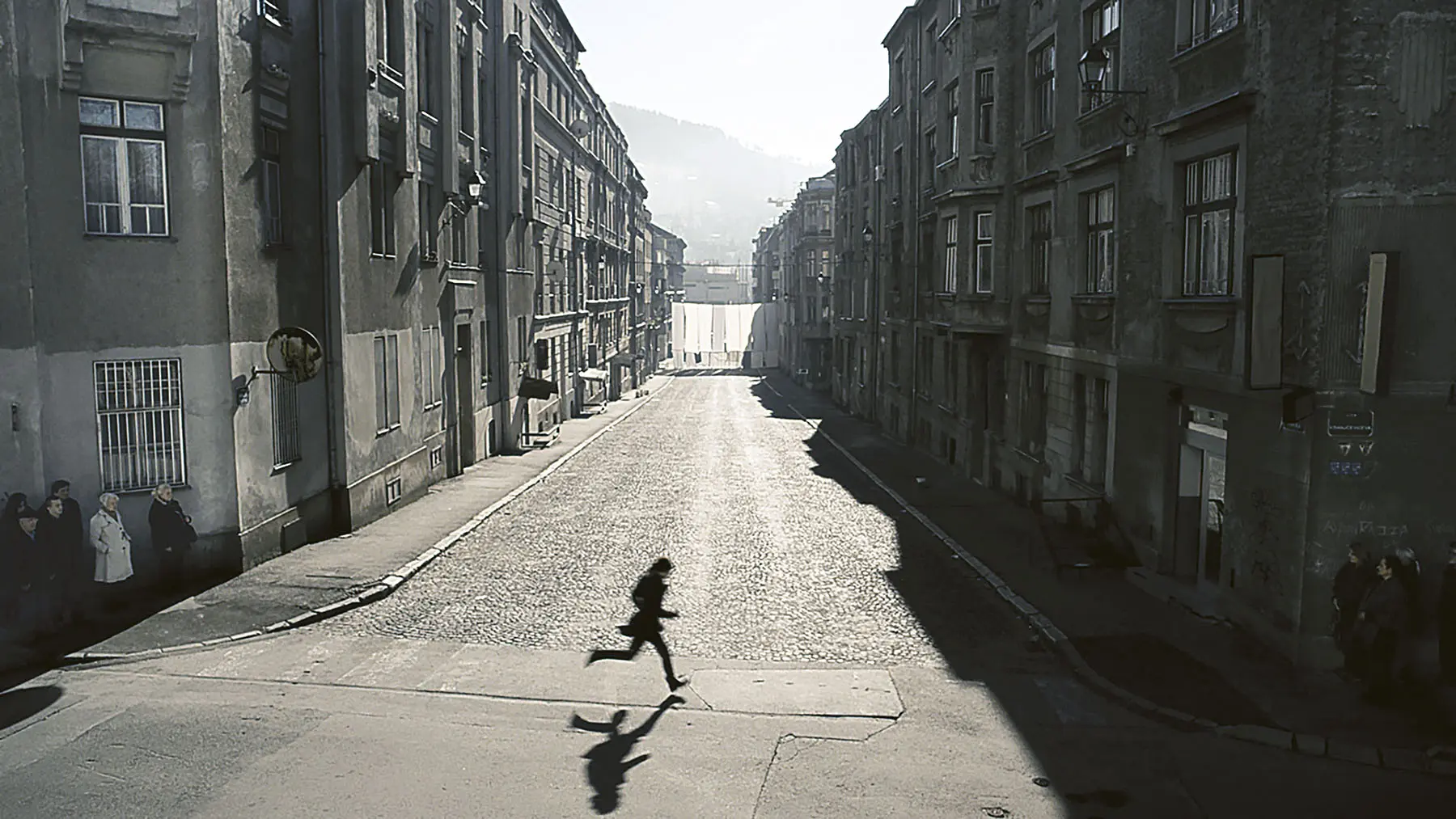
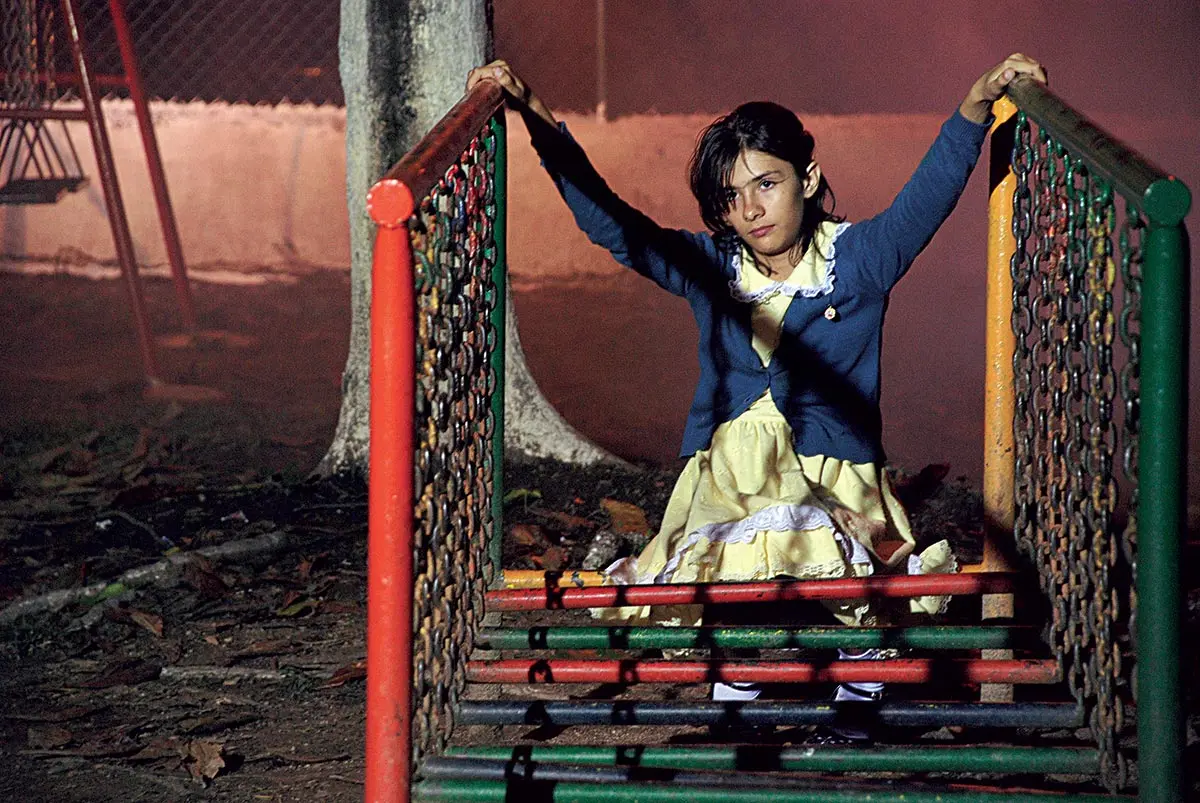
In the current curatorial gambit, which explicitly promotes a dialog between the local and the global through those “minor narratives” mentioned before, the presence of international artists—mostly working in underdeveloped societies—helps extrapolate some of those “global histories” into the local social context. A case in point is Stairway (2001), by Gülsün Karamustafa (Turkey), focused on the situation of Romanian children who eke out a living by singing on the stairs of Galata Tower in Istanbul. The topic of social conditions derived from migration processes can very well be situated in the local reality, given the displacements caused by armed violence in Colombia. Albanian artist Anri Sala, in turn, exhibited 1395 Days Without Red (2011), a masterful video work based on a collaborative project with Šejla Kameri. Using a simple narrative and impeccable art direction, it explores, poetically, the tensions experienced by the people of Sarajevo between 1992 and 1996, with their city under siege during the Balkan War. In the video, a woman—interpreted by the Spanish actress Maribel Verdú—intermittently walks and runs along what was known at the time as “Sniper Alley”, while the Sarajevo Symphonic Orchestra plays the first movement of Tchaikovsky’s Symphony N° 6, known as the Pathetique. The connection with the uses and perceptions of the territory on the part of some local communities, subjected to the daily realities of armed conflict, is clear.
An event like MDE brings the city into contact with the work of a significant number of foreign artists, which is salutary given the dearth of museums and cultural institutions capable of managing the sustained circulation of works of art coming from abroad, in a context where international shows are limited to the programs of two museums that must cover a broad spectrum of exhibition types. Although in recent years there has been some growth in the circulation of international artists in Medellin, in general, their presence in the city has been through solo shows that rarely engage local social realities.
It is worth remembering that MDE was established in 2007 with the purpose of influencing the local scene, as had been the case historically with such foundational events in Antioquia as the Coltejer Biennials (1968, 1970, 1972) or the 1st Latin American Colloquium on Non-Objectual Art and Urban Art (1981). Although the pertinence of this purpose can be debated if we take into account the different historical moments, it is true that the MDE came to fill a vacuum in the presentation and circulation of contemporary art in Colombia.
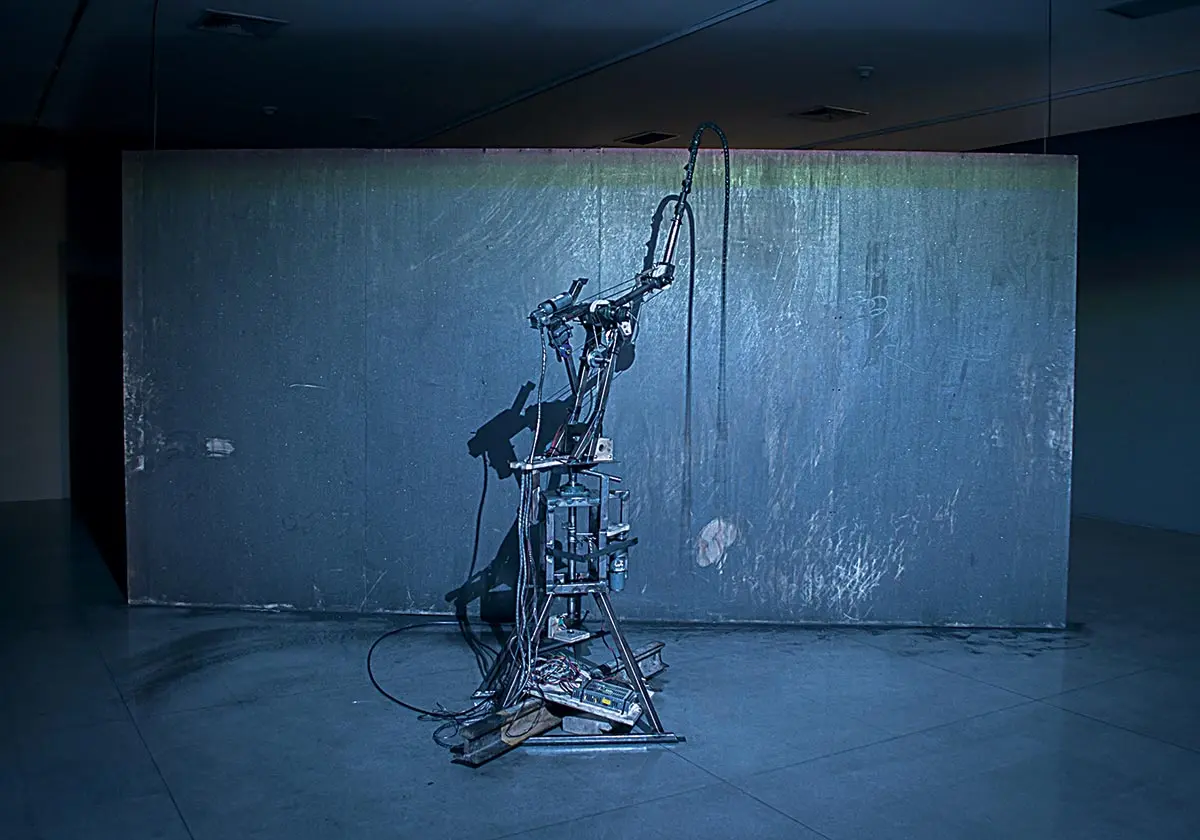
Concerning the presence of Colombian artists, a number of works that generate interesting counterpoints with the international narratives present in the exhibition can be highlighted. For example, Variación sobre Los santos inocentes (Variation on The Holy Innocents, 2015) by the Mapa Teatro Collective, which welcomes visitors and launches them into their course through the section headed Violence, Conflict, and Memory. There, a graphite wall is placed diagonally in relation to the gallery’s entrance. On one side, a mechanical device periodically lashes out with a whip, knocking off pieces of graphite and scarring the wall; on the other side, each impact of the whip activates the projection of brief scenes of alterity inscribed in the public space, reminding us of Colombia’s sociopolitical reality. Equally noteworthy is Transacciones (Transactions, 2012), by Adriana Escobar, which presents, in five videos, stories of life in Medellin’s periphery, where the inefficiency of the state converges with the invisibilization of the everyday experience of entire communities and their vulnerability in the face of urban renewal processes.
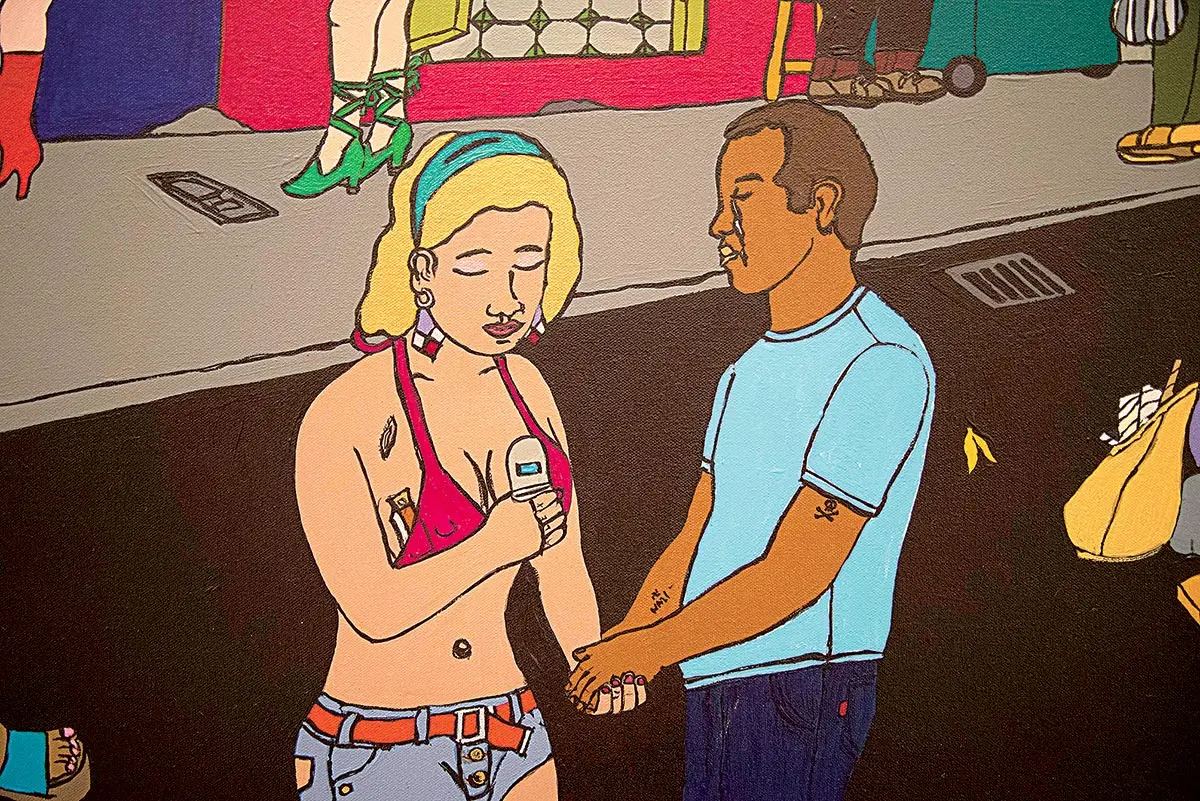
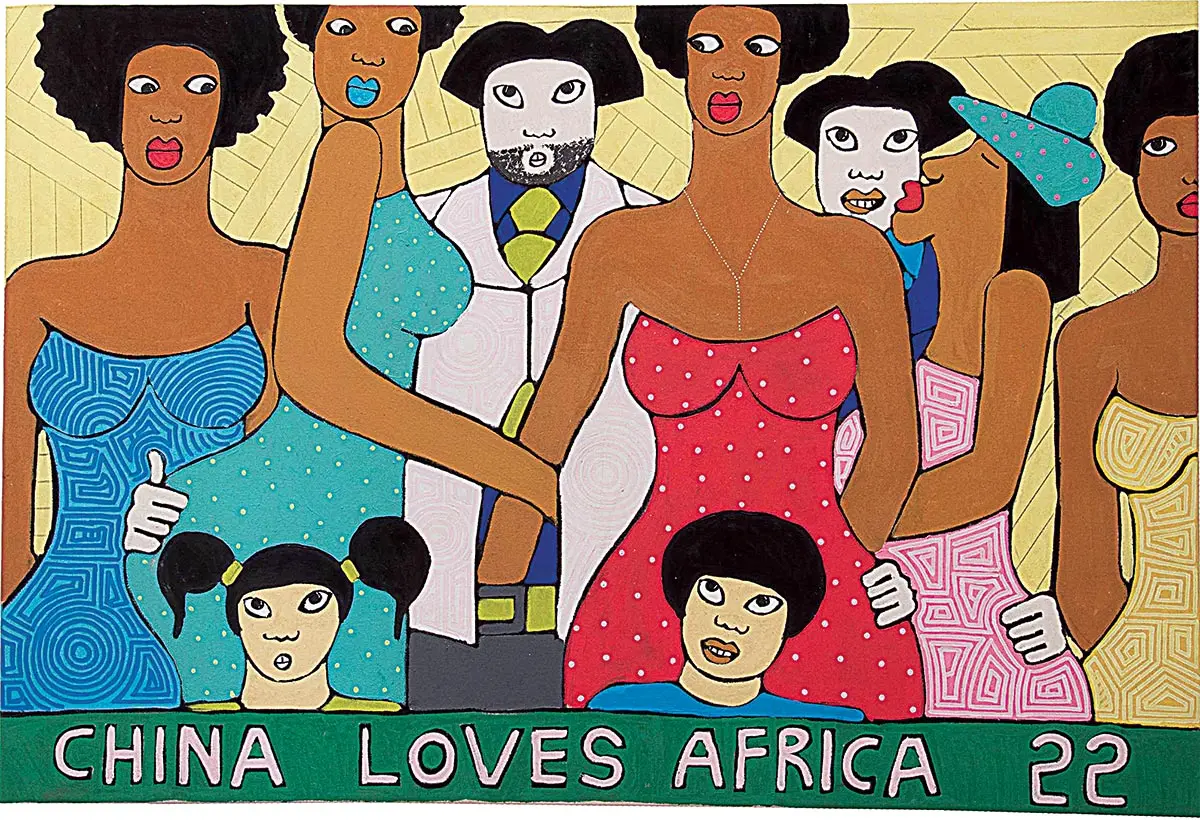
The similarities between the work of Michael Soi and Jorge Alonso Zapata were particularly illuminating, not only for the graphic qualities of their painting but also for the issues both artists engage. While Soi explores the subject of sexuality in Asian countries, Zapata documents situations that take place in the Barbacoas sector of Medellin, where prostitution and drug consumption are endemic.
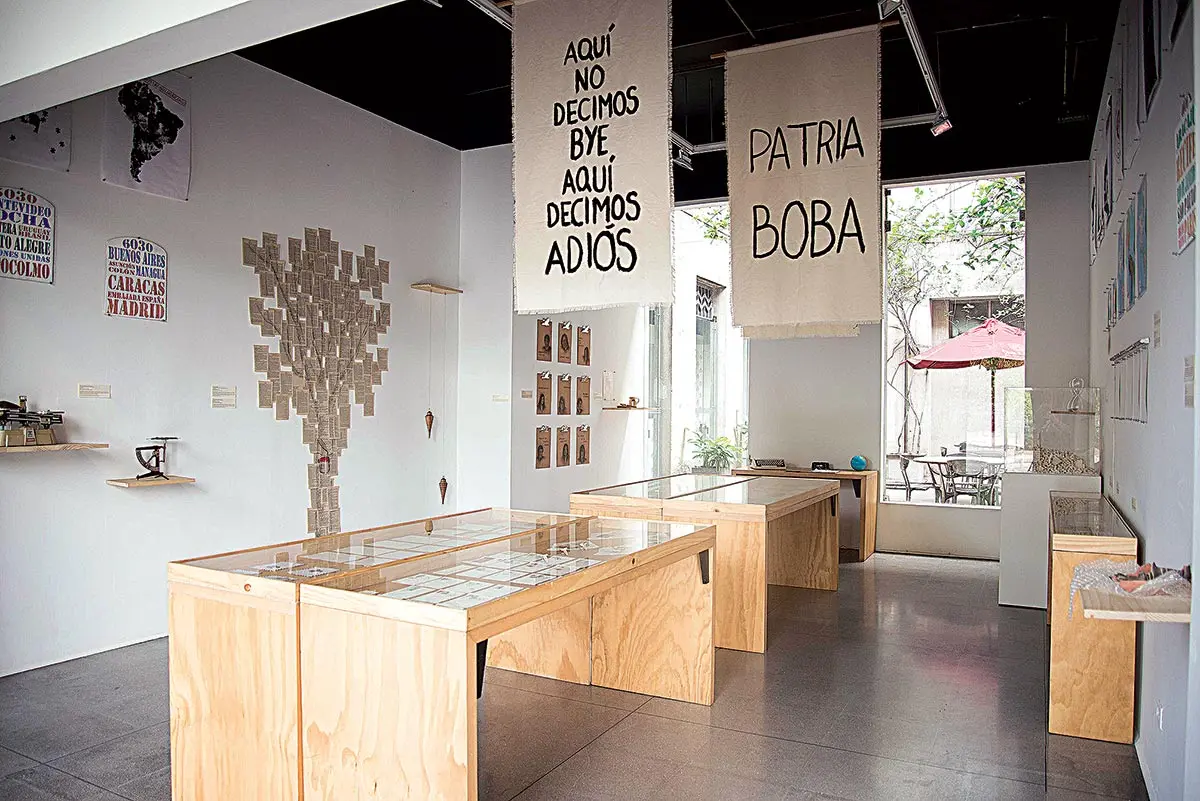
Finally, the installation Grupo Centro (2014-2015), by Jorge Andrés Marín, is one of the exhibition’s most relevant works, thanks to its contribution to our knowledge of the history of contemporary art in Colombia. Marín presents here the initial findings of his investigation of the titular collective, active between 1981 and 1995. The group, which can be seen as part of the conceptual art movement and has not been properly explored by Colombian art historiography, created actions based on political situations, and it is a rich object of study for a better understanding of conceptualism in the country.
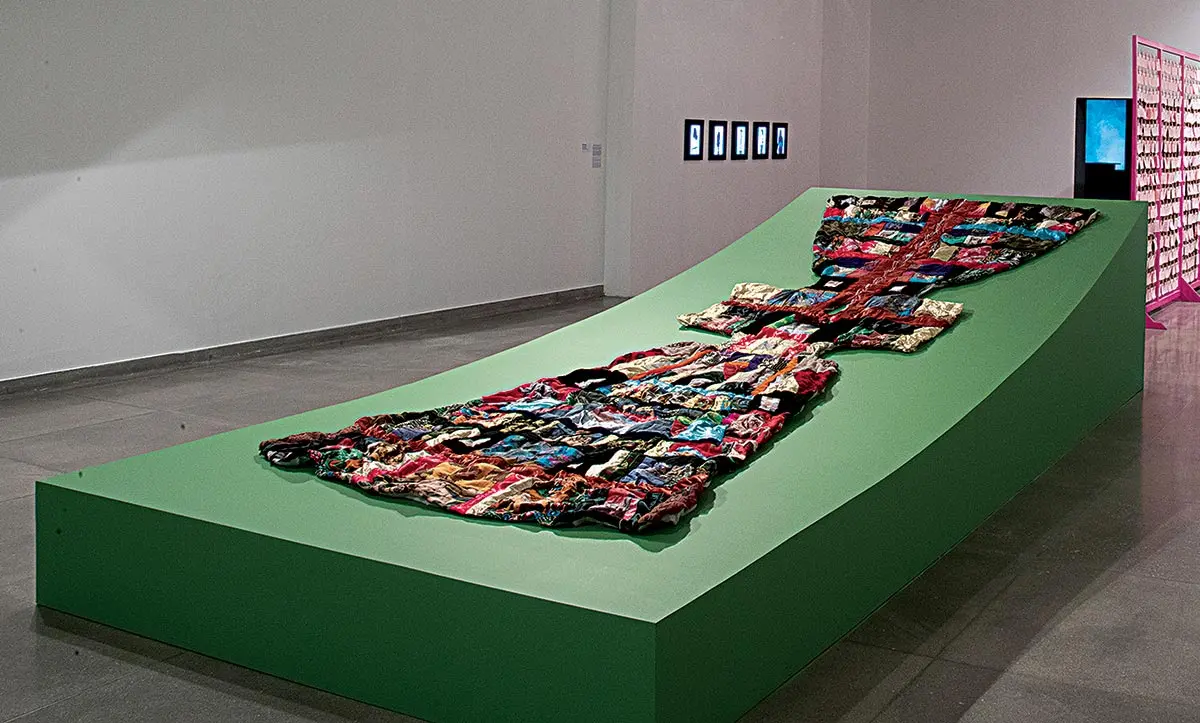
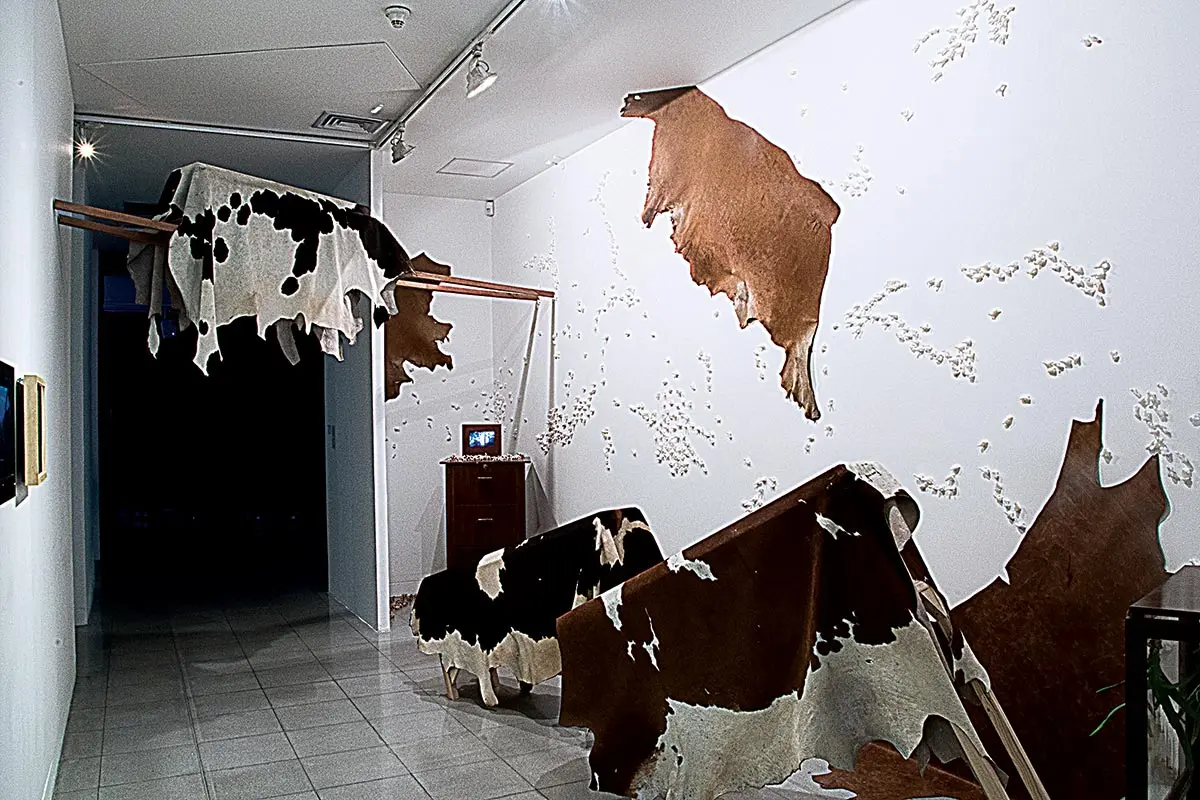
Some works included in MDE15 escape the curatorial script; rather than elaborating narratives of urban transformation in the local and global contexts, they are inscribed in the abstract or geometric tradition, or explore the process of Spanish colonization, as is the case of the work of Magdalena Fernández or María Buenaventura. Regardless of their merit, it must be said that their presence in the context of this exhibition was disconcerting.
It must also be noted that the majority of the curatorial texts evinced a certain indeterminacy, ambiguity, and weakness—an unfortunately common occurrence these days. In an attempt to poeticize the reading of an exhibition, curatorial texts are all too often mired in an undecipherable limbo that only confuses any visitor who takes the trouble of reading them conscientiously. There is much that curatorial practice could learn from literature, particularly essay writing, in order to make its mediations clearer and more accessible.
As for the activities held outside the museum in such alternative sites as Proyecto NN, Campos de Gutiérrez, Taller 7, Rizoma Ultravioleta, PorEstosDías, puente_lab, and others, it needs to be said that MDE15 offers these spaces a platform from which to contribute to the circulation of contemporary artistic practices and that a wider course of exploration is thusly set for visitors. Similarly, actions presented in public spaces bring forth an interest that is frequently found in the arts throughout the world: to build community bonds via projects that take place beyond a museum’s walls. The idea of interacting with the community often makes use of collective mappings and the projection of imaginaries through drawings or narratives made by the local population. Such Situationist-inflected methodologies and the influence of the Chicago Sociology school were clearly visible in some of the projects included in MDE15, which prompts the question of whether it is possible to find modes of community-engaged artistic work other than those in a tradition that first emerged all the way back in the 1960s.
Expanding artistic practice beyond cultural institutions as such has been a recurrent strategy in the international scene for several decades, all the more so under the guidance of Nicolas Bourriaud and his relational aesthetics or Hal Foster’s famous text The Artist as Ethnographer? Yet in the case of MDE15 whether the purposes established by the organizing committee are fulfilled, in terms of their impact on local communities, remains to be ascertained. Placing the responsibility of transforming specific social situations on the shoulders of art denotes a degree of certainty that may be unwarranted when it comes to aesthetic expression, which cannot force a shift in the human condition; it also obviates the role played in such processes by politics, institutional arrangements, and, in general, the structures of power.
JORGE LOPERA
Researcher and independent curator. Space and Stage designer with postgraduate studies in Cultural Management.