
Impressionism and the Caribbean: Francisco Oller and His Transatlantic World, an exhibition at the Brooklyn Museum, broaden our interpretation of French Impressionism and Latin American art in the Nineteenth Century, while also exploring current trends in the exhibition of global art. Curated by Edward Sullivan, the Helen Gould Sheppard Professor in the History of Art at New York University’s Institute of Fine Arts, and Richard Aste, Brooklyn Museum Curator, features forty paintings by Puerto Rican artist Francisco Oller, contextualized with forty-five works by some of his predecessors in the Americas and his contemporaries in Europe and the Caribbean. Sullivan’s published study of Oller’s oeuvre, From San Juan to Paris and Back: Francisco Oller and Caribbean Art in the Era of Impressionism (Yale University Press, 2014), provides a frame of reference for many of the paintings included in the exhibition. The book is an important contribution to the critical analysis of Nineteenth-Century Latin American art, among a slew of recent entries by such authors as Katherine Manthorne, Carmen Ramos, and Natalia Majluf.
Oller was born in Puerto Rico in 1833, but his prolific career took him to Spain and France, where he spent more than twenty years between 1850 and 1880. Returning to Puerto Rico at the end of the 1880s, and until his death in 1917, Oller developed a personal style that expressed the island’s socio-political transformations. Impressionism and the Caribbean examine the effects of transnational exchange, and also late-Nineteenth Century nationalism and racial discourse in Puerto Rico, a country besieged by the twin legacies of colonialism and racism. In establishing formal comparisons and contextual analyses, the exhibition takes on the difficult task of articulating a monographic view of a multifaceted artist, while at the same time rethinking Impressionism as a global phenomenon.
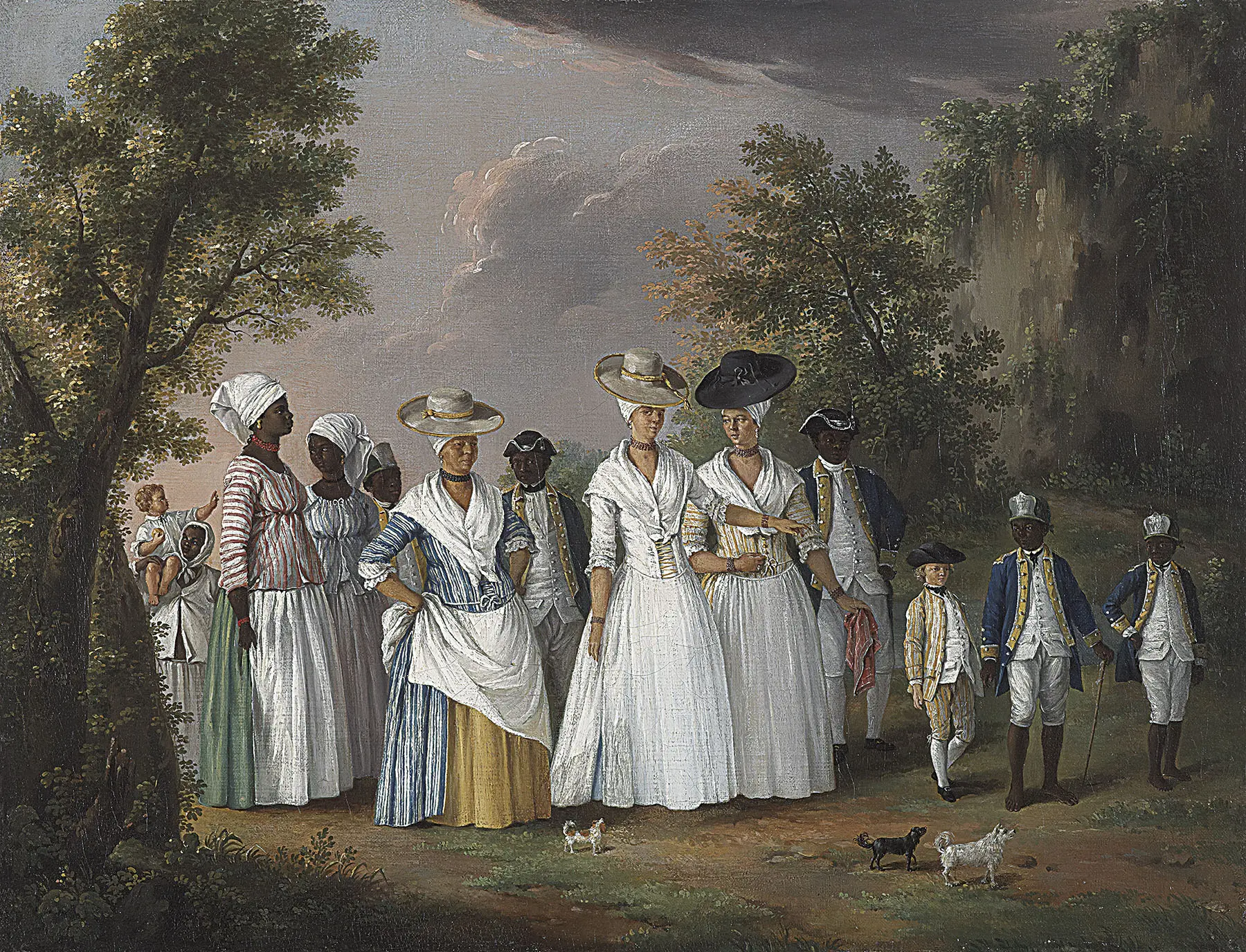
Impressionism and the Caribbean is divided into five chronological sections. The exhibition begins with Oller’s Caribbean, with Latin American artworks from the Eighteenth and Early Nineteenth Centuries, along with a mixture of works by Oller and important foreign artists who traveled in the Caribbean such as Fritz Melbye, Winslow Homer, and Frederic Edwin Church. In a general way, these works herald Oller’s focus on Impressionist landscapes during his stay in France and his incorporation, since the 1880s, of Caribbean elements, like palm trees, that became a key characteristic of landscape painting in the region. This section also begins to deal with subjects that are central to Oller’s oeuvre, including the issue of race in the Latin American context. Agostino Brunias’ Free Women of Color with their Children and Servants in a Landscape (1770-96) depicts mulatto women clad in intricate dresses and accompanied by their black servants in a sugarcane plantation. This painting, in its ambivalent nature, empowers a subaltern group and also exoticizes black bodies for a foreign, male gaze. Brunias’ painting functions as a precedent for some of Oller’s more oblique works, like his idealized cane field landscapes.
Oller’s Spain, the second section, briefly reviews the artist’s travels, first to Madrid in the 1850s as a student in the Royal Academy of Fine Arts of San Fernando, then as a painter in the court of King Amadeo I between the 1870s and 1880s. This section includes La batalla de Treviño (The Battle of Treviño, 1879), a large-format horizontal painting with fuzzy figures and a chaotic composition devoid of contrasts representing Spain’s devastating mid-century Carlist Wars. It could be said that the next section, Oller’s France is the exhibition’s narrative peak; it establishes direct comparisons between the Puerto Rican artist’s work and the work of his realistic and Impressionist French contemporaries, including Claude Monet, Paul Cézanne, Jean-François Millet, and others whom Oller met during his travels in France in the 1859s, the 60s, and 70s. Highlighting the time spent in France as key for Oller’s oeuvre, the exhibition suggests that, indeed, Impressionism both impacted and received contributions from an international art community, rather than being the development of a single group of French artists.
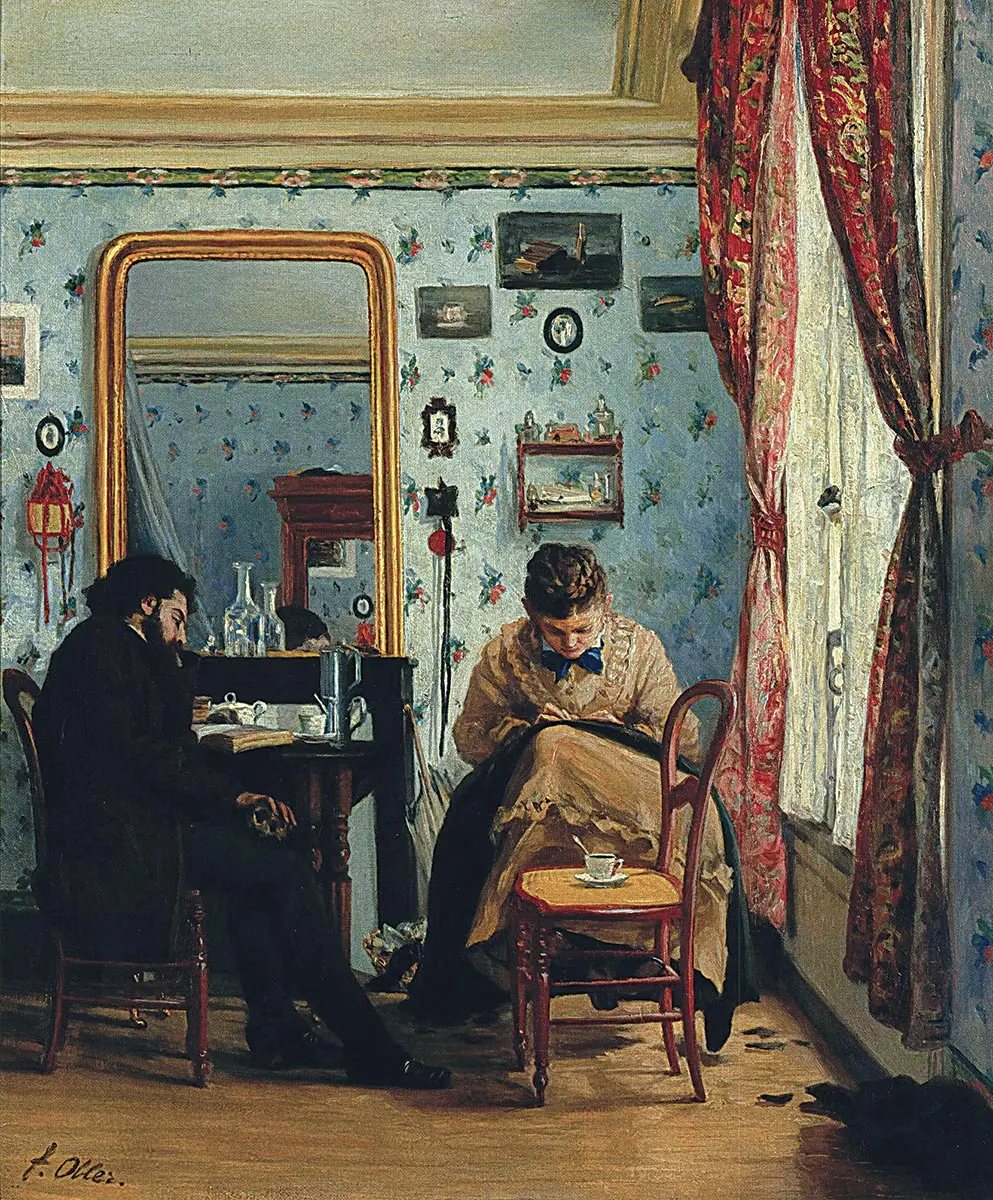
While some comparisons are strictly formal and reveal the more highly developed technical skill of such artists as Monet, others unveil biographical information about Oller. Spot-on parallelism examines Pierre Édouard Frère La Réprimande (The Reprimand, 1863)—which depicts a student being punished in school—and Oller’s El Estudiante (The Student, 1864), an interior view of a humble Parisian apartment where a bearded student reads at his desk while a seamstress works beside him. The comparison demonstrates that both artists share an attachment to realism and an interest in the description of everyday scenes that emphasize the importance of education. Oller, it is worth mentioning, was a dedicated art teacher; Impressionism and the Caribbean documents his roles as a student and as an instructor with works by his Madrid professor Federico de Madrazo and his disciple Pío Casimiro Bacener, a former slave who studied at one of the several art schools established by Oller in Puerto Rico.
Closing the exhibition, the last two and perhaps most solid sections, titled Oller’s Puerto Rico and Puerto Rico from Oller’s Time to Today, examine his work from the 1880s through his death, in 1917. Oller focused on the island’s local culture and customs and produced some of his most important works, in a personal style that combined realism, Impressionism, and Romanticism. The artist witnessed significant historical events, including the abolition of slavery, in 1873, and the Spanish-American War, in 1898, which brought down Spain’s colonial rule over the island and transferred to the United States. Oller’s complex career explains the abrupt passage from Oller’s France to the final sections, more interested in the sociopolitical climate than on style and form.
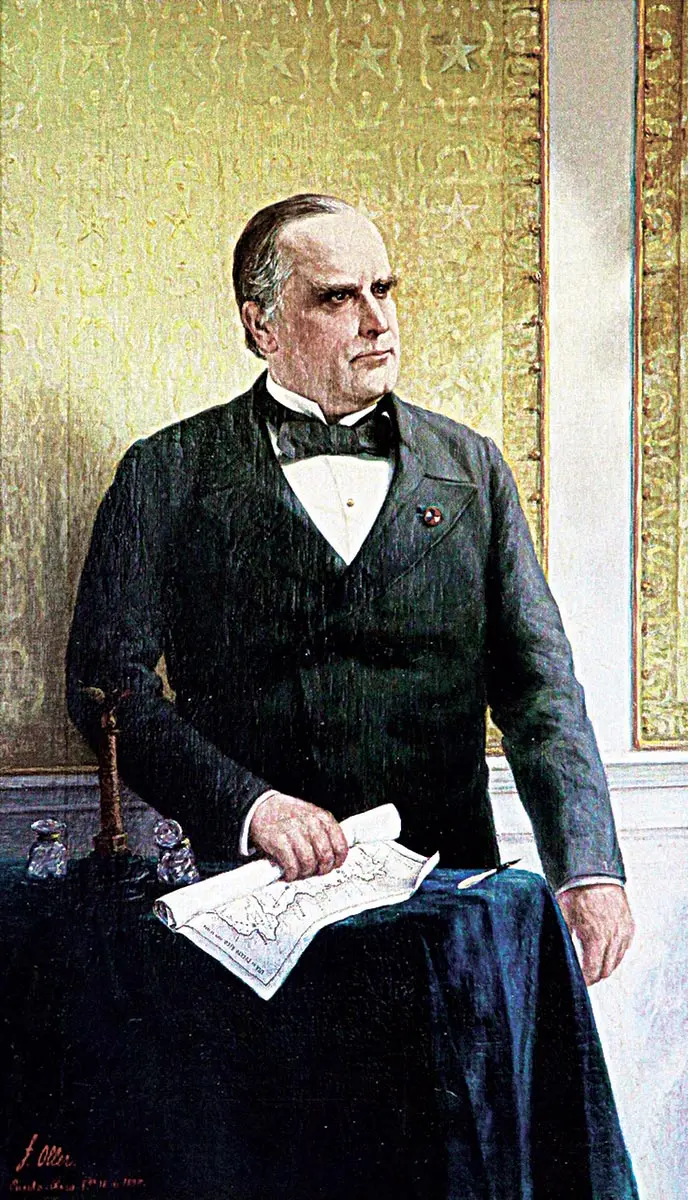
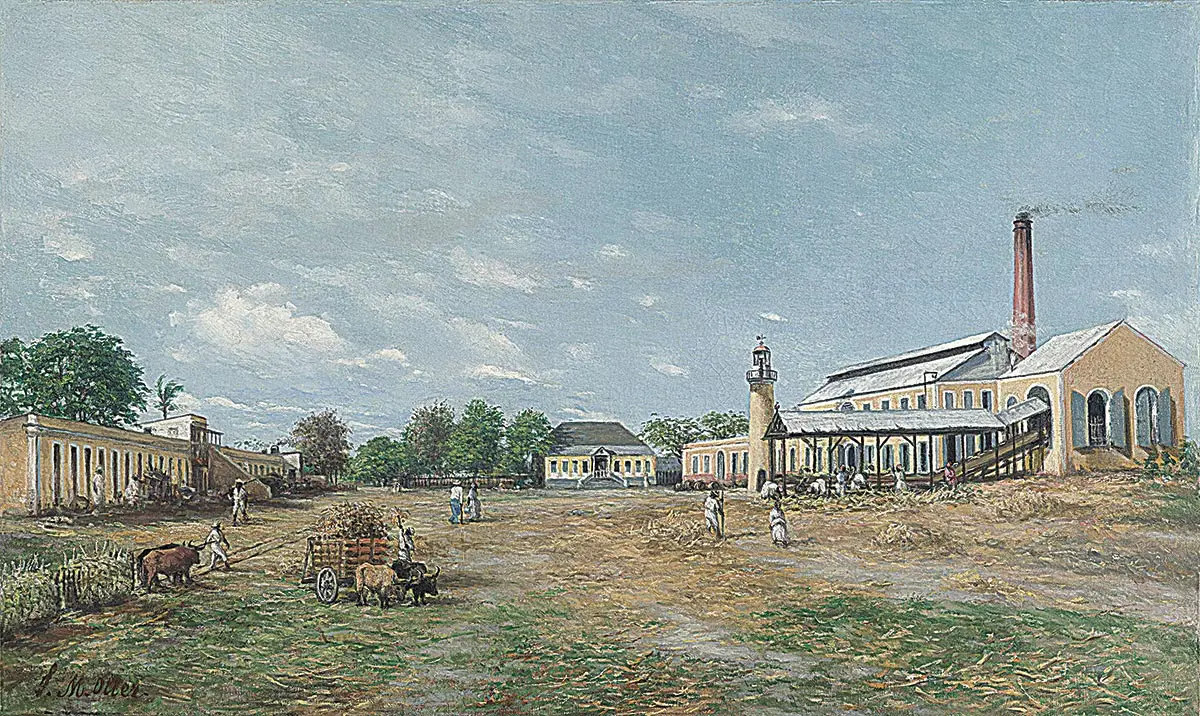
In Oller’s Puerto Rico, a series of five academic portraits culminate in Portrait of President William McKinley (1898), where the President of the United States is represented as a powerful visionary forcefully grasping a map of Puerto Rico on which the date of the US invasion is printed. Oller’s aspirations explain such positivist imagery: he expected, in vain, to become the official artists of the US administration of Puerto Rico, as he had been at the court of Amadeo I in Spain. In the exhibition, McKinley’s portrait is placed across from idealized sugarcane plantations made in the 1880s, some of which were part of a commission from the Spanish planter José Gallart. Hacienda La Fortuna (1885) features just a handful of workers scattered on a field, choosing not to highlight the hard physical demands and oppressive memories of slave labor. Although Oller was an abolitionist, the exhibition reflects his lack of specific interest in the social condition of afro descendants before and after their emancipation. Oller depicts sugar plantations as vanishing pastoral landscapes at a time when the sugar industry was shrinking rapidly, in particular after the end of slavery in 1873. However, after the Spanish-American War orchestrated by McKinley, the sugar industry grew again thanks to its new tariff-free status (since Puerto Rico was now, as a territory, part of the United States), and the main sugar barons were now American.
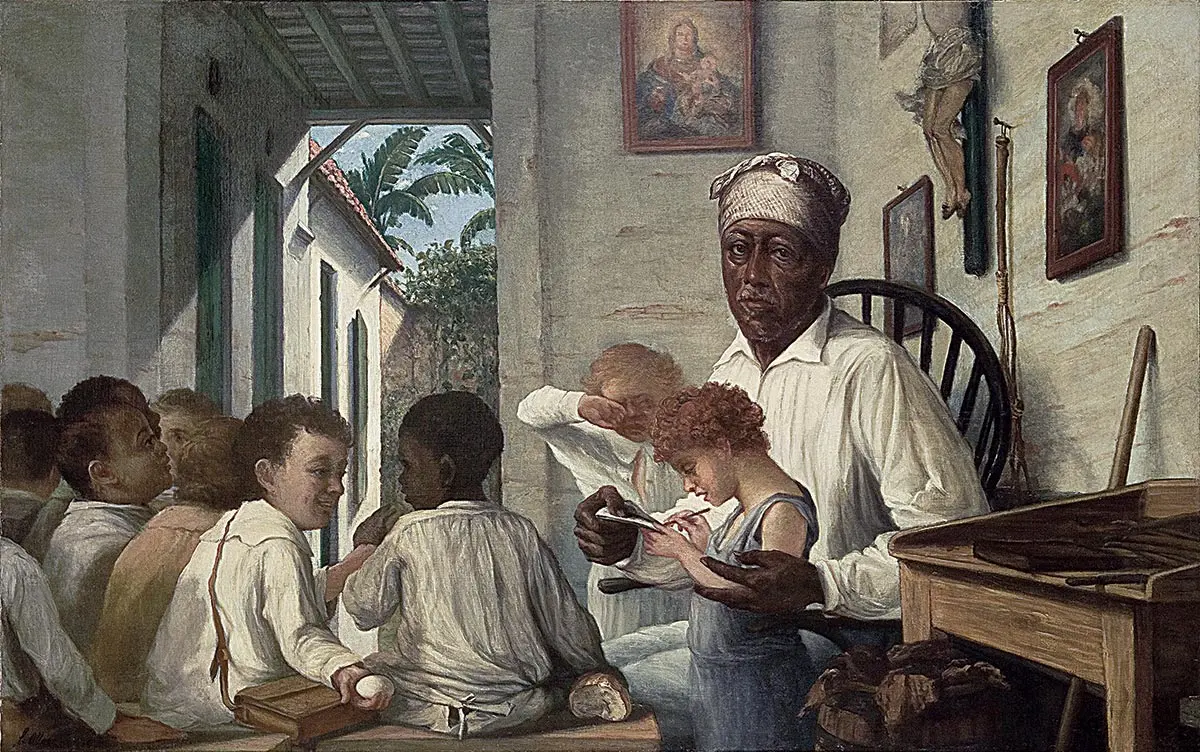
While documenting the narrative of US imperialism in Puerto Rico, the relationship established between the portrait of McKinley and the sugar filed landscapes also demonstrates the complex position occupied by the artist. Oller worked both for colonial government officials and for the local elite to which he belonged, but, at the same time, promoting progressive ideas, as can be seen in La escuela del maestro Cordero (Maestro Cordero’s School, 1890), a posthumous portrait of the teacher who established one of the island’s first schools for black men. As Sullivan notes in his book, in this painting, white pupils gather around with attentive gazes, while a distracted group of black children plays around them. In this painting, as in his sugarcane landscapes, Oller retained the structured racial hierarchies and stereotypes established by colonialism and perpetuated by the elites in the Americas after Independence. Unlike Brunias’ women, Cordero is not idealized in Oller’s portrait. In fact, as Cordero looks straight at the viewer, the deep grooves marking his face belie all notion of serenity.
Oller’s interest in Puerto Rican customs is behind some of his most successful works, including El velorio (The Wake, 1893), presented at the Paris Salon in 1895. Being one of Oller’s most famous paintings, it is reproduced in its original format, 2,43 by 3,96 meters (despite several attempts by the curators, the original remains at the University of Puerto Rico’s Museo de Historia, Antropología y Arte, in Río Piedras, as a centerpiece of its permanent exhibition). This painting describes the rural custom of having a rowdy, chaotic gathering for a child’s wake, and criticizes the church representative and lower-class workers who participate in such events. It reminds us of the fluid brushstrokes and the luminous surface in his Impressionist landscapes.
The final section, Puerto Rico from Oller’s Time to Today, includes eight of his still lifes produced in the 1890s and early-Twentieth Century, representing typical fruits of the island, such as bananas, pineapples, mangoes, and coconuts. Unlike the traditional still lifes of modern artists like Cézanne, Oller’s disconcerting, dynamic paintings are rather whimsical; roots and branches expand through the composition, which sometimes reveals the inside of the fruit and at other times comes accompanied by knives and machetes. While Oller’s Puerto Rico reveals the artist’s desire to work for the US government, his still lifes express resistance and disillusionment with the new colonial regime, which made it possible for US entrepreneurs to control, to a large degree, the island’s basic food supply. His fruits are portraits of nationality—the objects are opposed to the well-ordered traditional arrangements—in the same way as Puerto Rican nationality metaphorically rejects US imperialism. Oller’s still lifes and sugarcane plantation landscapes are contextualized in the exhibition by works by late-nineteenth Century Cuban artists like José Joaquín Tejada Revilla and Pastor Argudín y Pedroso, but it seems unnecessary: these paintings, which follow traditional composition ideas, lack the vitality and sensuality of their Puerto Rican counterpart’s oeuvre.
Impressionism and the Caribbean prove that Oller’s oeuvre transcends Impressionist landscape as a genre; it moves from academic portraiture and historical painting to everyday costumbrista scenes (a genre that prevailed in Latin America in the late Nineteenth Century, intent on describing popular culture), and advocates for the global presence of Impressionism while recognizing the diverse, shifting character of Oller’s practice. This dichotomic subject matter exemplifies one problem with organizing a global exhibition: an international group moment may differ from long-term individual practice, and presenting two simultaneous histories may raise questions by creating a traditional, linear, and consecutive historical narrative. Indeed, the transitions between some of the sections in this exhibition are rather abrupt. These intricately intertwined narratives represent the complexities and inconsistencies in an artist’s practice in a more precise way, especially in the case of Oller and his transitional trajectory. This exhibition puts on display the contradictions that exist in his life and in his work. Interrogating the traditional understanding of Impressionism as part of a sequence of turn-of-the-century modern movements with clearly established beginning and end dates, Impressionism and the Caribbean demonstrates that the style evolved and transformed in accordance with its different contexts and over a longer period. The exhibition is a step in the right direction to break the geographic boundaries that separate artists, styles, and movements.
ABIGAIL LAPIN DARDASHTI
Ph.D. Candidate, CUNY Graduate Center.