
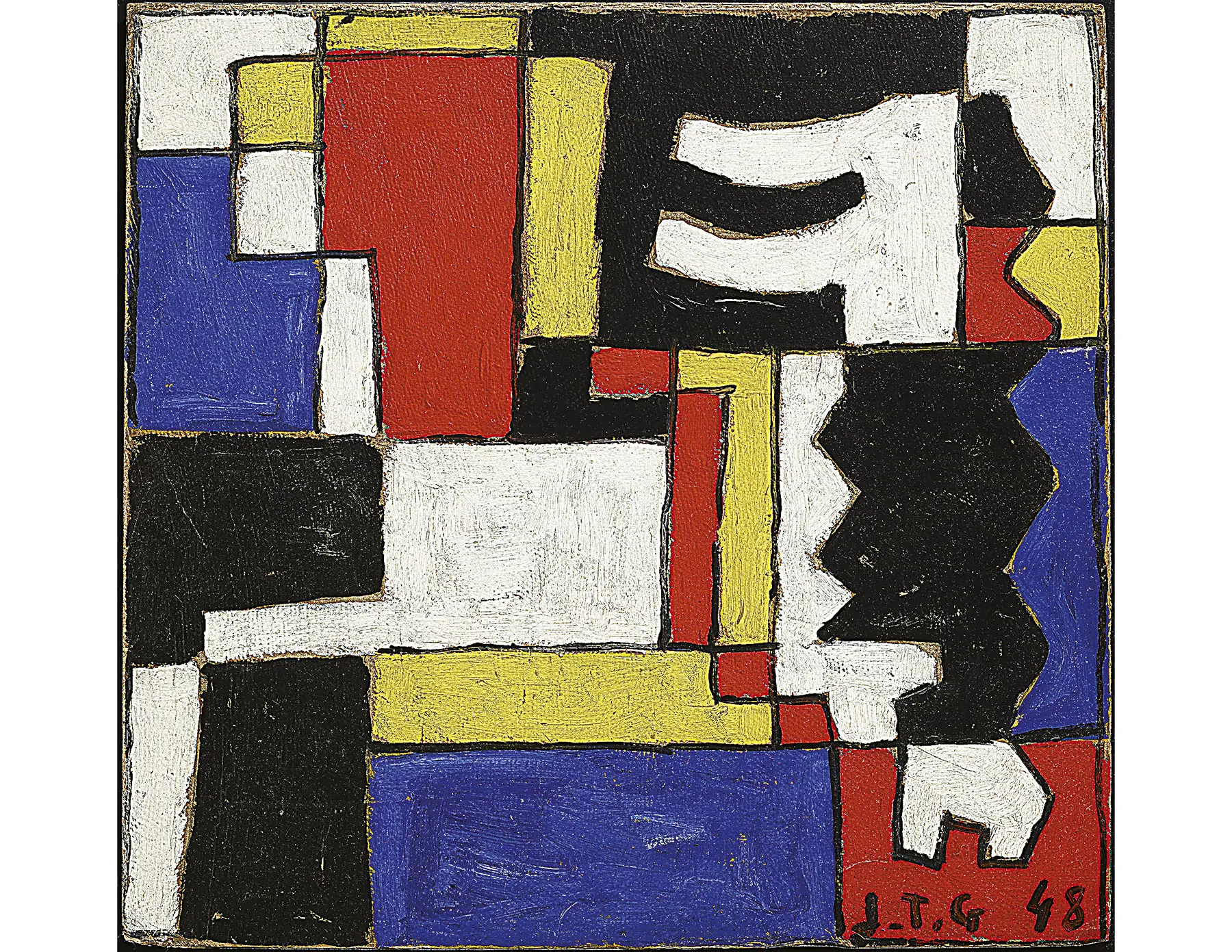
I am at a point of my life in which I made my complete peace with Torres-García. It took a long time. Growing up in an environment ruled by him was not easy, sometimes even painful. I never knew exactly if the grey and earth colors of the Montevideo in which I was raised were due to his paintings, or if his palette was a consequence of the city. It didn’t really matter which was first. In a country of immigrants, maybe it was only a sign of shared melancholy. A reference building in my neighborhood to give directions was the “green building,” which in its oddity expanded the limits of our imagination.
During the 1950s I was studying art and architecture at the same time. When I tried to design a colorful building, I was told that I had to respect the urban color context, keep its harmony, and that it wouldn’t tolerate shrillness. We all knew that Torres also used Mondrian Neo-plasticist colors--somewhat muddied--and yet, during my student time his palette was always referred to as “earth colors,” which tolerantly also included black, white, and grey. When a teacher advised me to use the golden rule for architecture, my reaction was to declare: “I’m an artist and I don’t need prosthetic devices.” Though Le Corbusier’s Modulor echoed Torres’s much earlier pictograph symbol for the universal abstract man, nobody made the connection. Interestingly, Justino Serralta, an Uruguayan architect and my best teacher ever, had assisted Le Corbusier in the development of the Modulor. He was who drew the man for Modulor 2. In any case, at the time I distrusted both Torres-García and Le Corbusier.
In art school, I belonged to the rebellious student generation. The school was a bad copy of the French Academy of the nineteenth century and we wanted to be contemporary. We worked on a curriculum that included ideas of Montessori, John Dewey, and Herbert Read. We leaned toward the Bauhaus, particularly as represented by Itten and Klee. With dogmatic passion, we hated anything dogmatic and academic. Looking inside the school we had our academic teachers, who we eventually managed to kick out. Looking outside the school, we had the “Taller Torres-García.” Everybody in the Taller followed the dogma. It consisted in drawing little symbols and using the earth colors. We saw this as a cult producing an empty style. Meanwhile, in our resentment, we continued to ignore not only the Mondrian colors, but also Torres’ odd series of portraits of the late 30s and early 40s. These were weird; they were dangerous since they broke the dogma by escaping his own “anonymous rule.” The portraits might imply some of the freedom we refused to acknowledge. Because of its focus on the “anonymous rule,” this exhibit in MoMA doesn’t include them either. Ignoring them, however, evades the question of how one could have abstraction and figuration coexist in the same person. It took hegemonic permission and Gerhard Richter to allow for that. But permission was granted to Richter. Worse for me, I actually liked these portraits Torres did. In my eyes, they looked like Daumier meeting El Greco. So, going back to Torres and pedagogy, the Taller was our enemy no matter what, and I kept my little liking to myself. The Taller was the French Academy dressed in a universal constructivist costume.
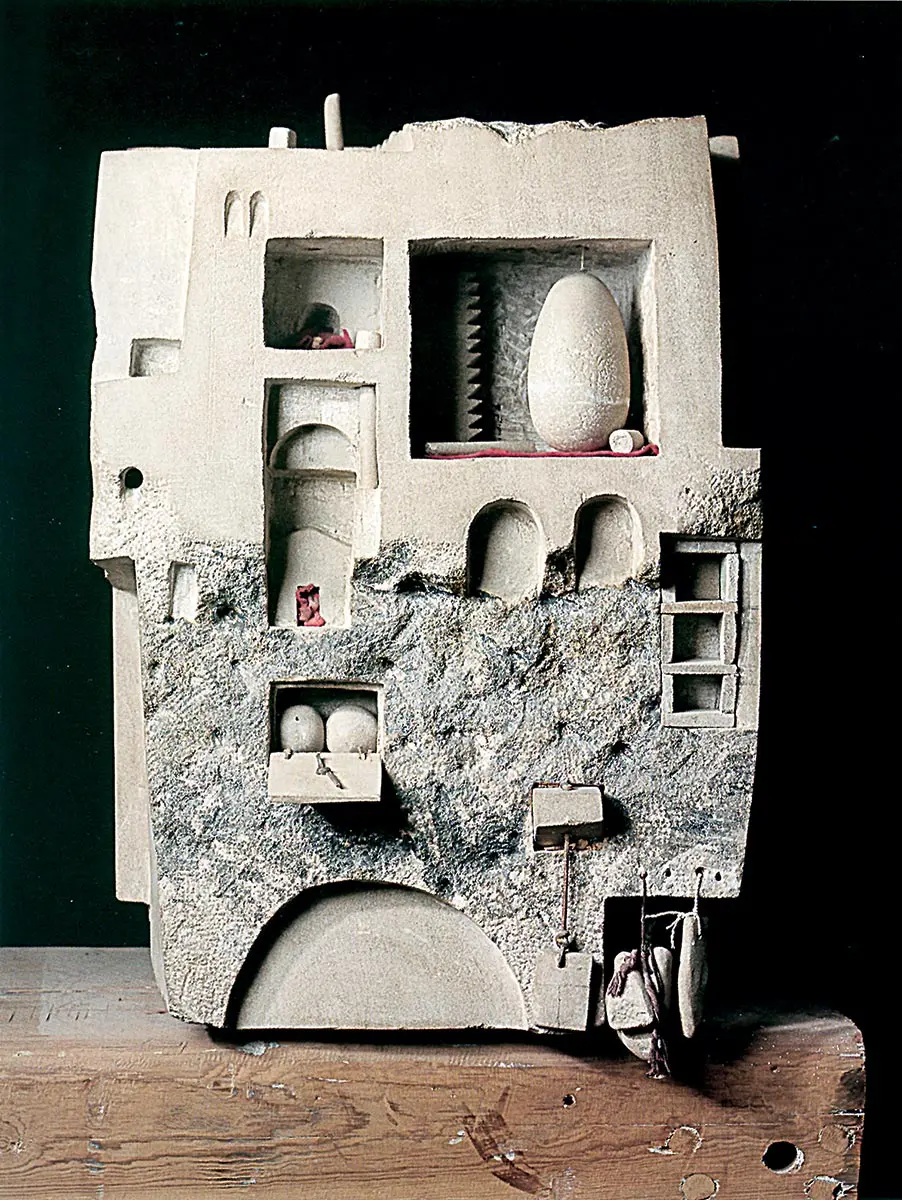
When I came to New York in 1964 I had the privilege of painting the walls of Louise Nevelson’s house on the corner of Spring and Mott street. The colors were purple and gold. More importantly, we ended talking about Torres-García and how he influenced her work. In a typical colonial attitude on my part, Torres grew some in my estimation. A year later I befriended one of Torres’ former students, Gonzalo Fonseca. Some years after, in 1970, Gonzalo had a major exhibition in the Jewish Museum. I went to see it because of friendship. The show blew my mind. I decided that either he had a special gift, or that he had been deprogrammed. I told him that and he got upset because I was criticizing the master. The same year, a little later, there was a small retrospective of Torres at the Guggenheim Museum. This time I went to see it because of chauvinism. And because of chauvinism, I was upset that he was given only four circles in the spiral. I left with a sense of respect. It took me till 1992, with the exhibition of the Escuela del Sur in the Bronx Museum, organized by Maricarmen Ramírez, to realize that the whole cult, not just Torres, had some power to reckon with. By now I was far enough from my own dogma and the fog had cleared. I accepted them all, the whole group, even if not equally. Torres was still the master. Fonseca was still the one able to take off without having to kill his father to do so. He became, in my view, the most important sculptor in Latin America of the second half of the twentieth century.
All this doesn’t mean that I’m willing to leave everybody scot-free. The Taller was definitely a cult, students had to conform, and their work was recognizable from a mile away. The appeal to be part of that school might have been what I take as the negative aspect. The recognition of a style ensured a certain level of results and precluded most of its members from finding their own way. And if they did, they found it nearly impossible to transcend the master. In that sense, they were living proof of a bad pedagogy. The teacher never became dispensable. The students never were able to fly on their own. Few people outside the Torres’ circle read his sometimes difficult and baroque writings. I wasn’t one of them either. However, the theory gave some meat to his work, while its absence often left nothing more than painted surfaces.
There were other consequences for which nobody is to blame directly. However, they are interesting from an anthropological point of view. The simplicity of the symbology employed by both Torres and his acolytes helped their formal success in Uruguay. The style trickled both sideways and downward. Sideways, to other artists outside the circle, it did not exactly create external copycats. Yet it validated a simplification of Torres’ graph system. For many, ornament took over language. Colors remained muted in Uruguayan art for a long time, no matter what ism artists were working in. Furthermore, the already debatable mission to construct a continuous tradition with so-called pre-Columbian cultures became a license for superficiality. It produced lite-art. The lightness was particularly useful for survival during the state of siege and dictatorship period that spanned from 1969 to 1985. There were no waves allowed to be made and no waves were made.
The downward trickle, on the other hand, created a crafts industry that defined a recognizable Uruguayan brand for souvenirs. This is still reflected today in ashtrays, mate gourds, and textiles. If pictography was communicating something in the paintings, here it became only a skin. Somehow one might classify the Torres-García art stream into several levels. One is exemplified by Torres himself. He knew what he was talking or writing about, and he fully integrated his beliefs and his doubts in his work. Meanwhile, his close circle only half-knew and half-guessed. Members of the Taller only succeeded in as much as they were able to find some personal space to explore other things. Then there were the many that did not succeed. And yet, they served as emissaries for the looks developed by the Taller. It’s their work that ultimately landed in the ashtray aesthetic mentioned.
It took the end of the dictatorship to allow for the discovery of color, the use of dissonance, and the exploration of down to earth issues beyond the superficial palette. To say this is not, by any means, a judgment. What Torres and the artists around him did was mostly apolitical and espousing the autonomy and purity of art. This was so, even though the beliefs of the members were mostly placed on the left of the political spectrum. Uruguayan historian Gabriel Peluffo points out that Torres was more politicized than he would confess to, and that he would use the word “ethics” in place of the word “politics” when he passionately defended the Spanish Republic. He liked the hammer and the sickle as a heartfelt plastic contraption.
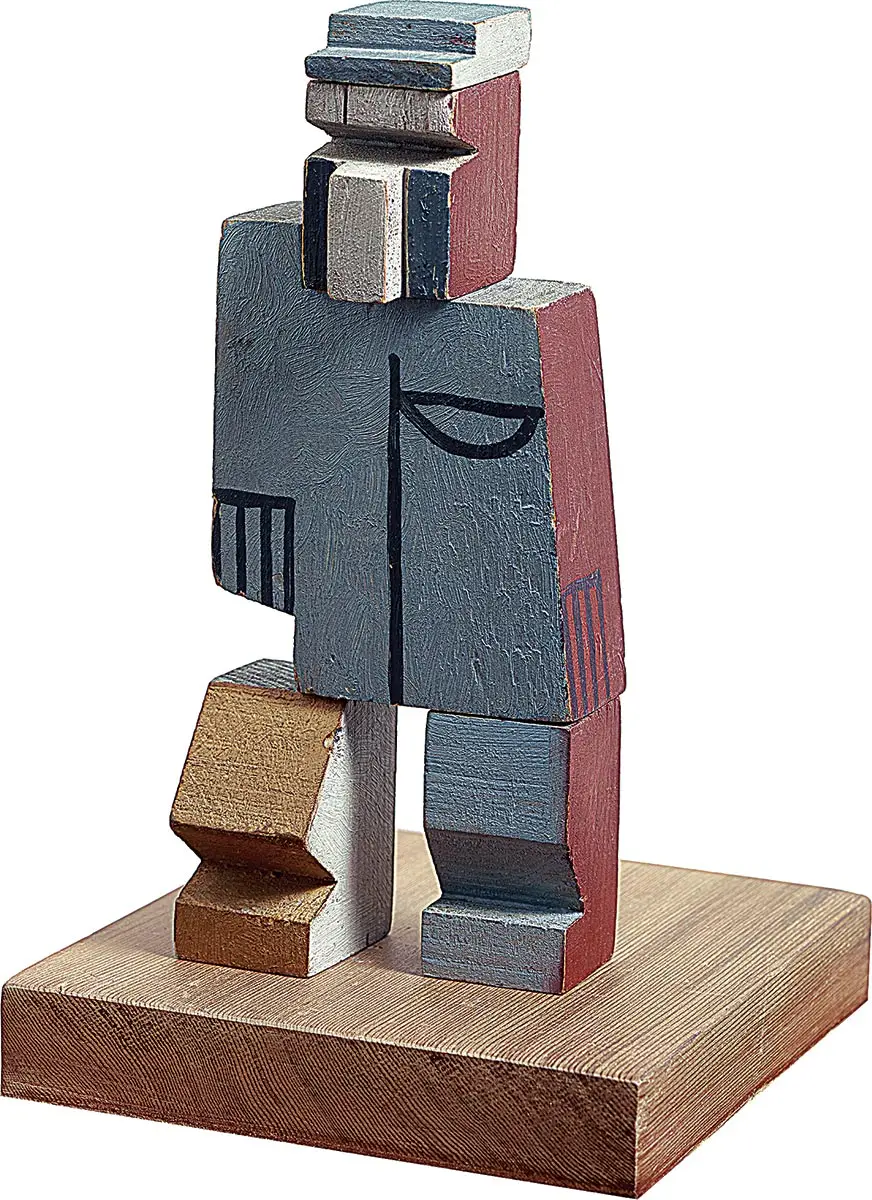
With all of this in mind, one could say that Torres and his circle had managed the strange and heroic feat of becoming a cultural achievement rather than an artistic one. Torres was, after all, interested in a collective, transnational and impersonal form of art. In spite of his wishes, the style remained national. Typically, the show at MoMA narrows this national cultural achievement back to individually made high art. In certain ways, one could say that it’s about time that Torres-García receives his personal and long-postponed international recognition. He has finally been knighted beyond national borders for his individual achievement. With this show, I now reached the level of loving his work. Particularly his small wooden assemblages have the touch of a hand I would like to shake. However, in other ways, a review of all these phenomena by and about him provide unending food for thought beyond art. Served on a platter, there are morsels that haven’t yet been touched and merit another reviewing.
LUIS CAMNITZER
Uruguayan artist. Emeritus Professor at the SUNY College. Old Westbury.