
After more than a decade without a solo exhibition in New York, Juan Sánchez came to the BRIC, in Brooklyn, to present his wonderful What is the meaning of this? from November 6 to December 27, 2015. Born in Brooklyn in 1954 to afrodescendant Puerto Rican parents, Sánchez rose to the art scene in the 1980s with a formally striking language, loaded with both a politics and a spirituality that clearly stood out for their authenticity, relevance, and universality. What is the meaning of this? was attentively organized by Elizabeth Ferrer, who selected nine mixed-media paintings on wood from the series Cries and Wounded Whispers; fourteen mixed-media collages that both complemented the paintings and marked a distance from them; and two videos: Unknown Boricua Streaming: A Newyorican State of Mind (2011), and Madre Selva (Mother Jungle, 2009), Sánchez tribute/meditation to his late friend Ana Mendieta.
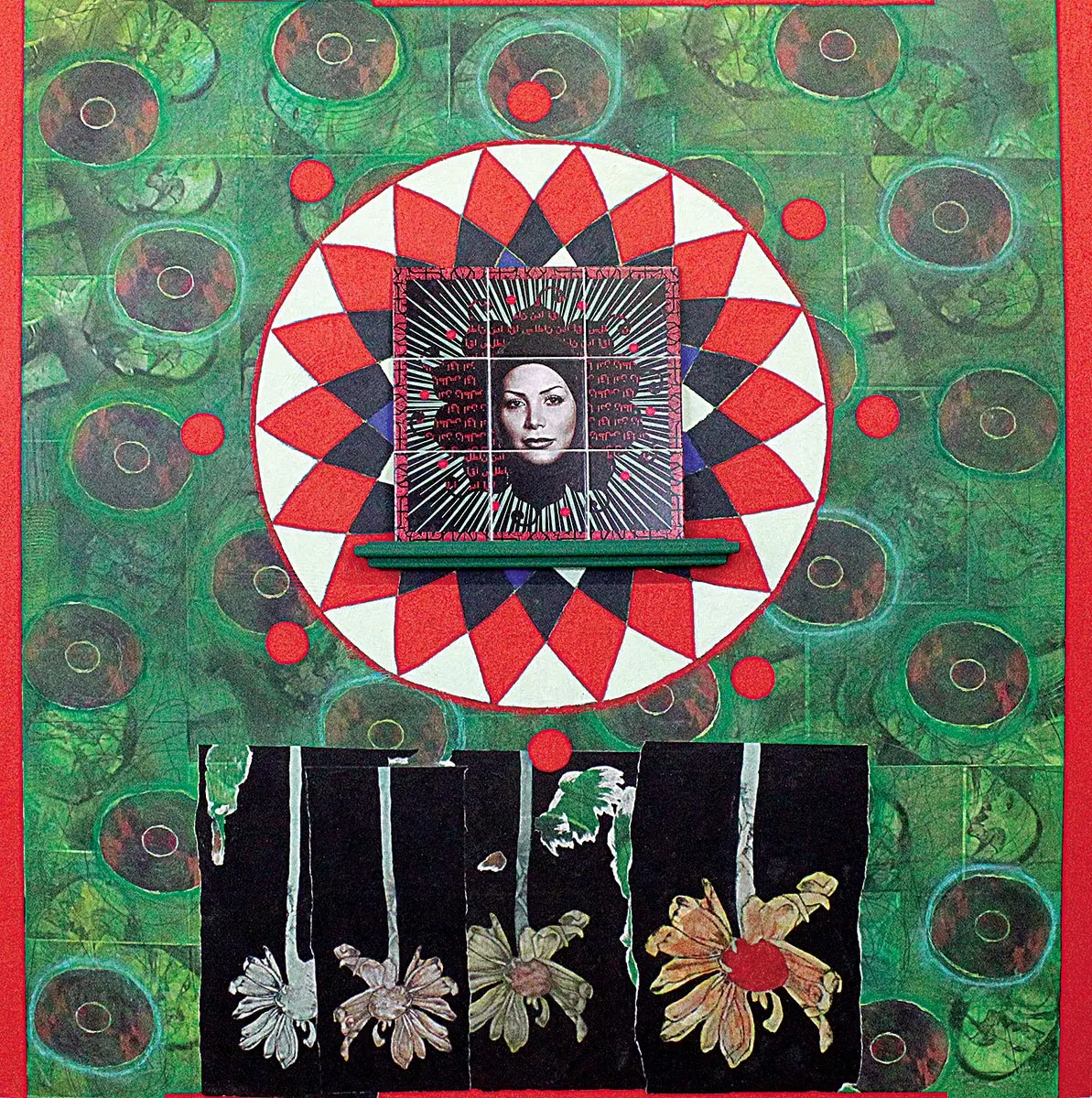
This deliberate selection of works presented us with Sánchez’s production over the past fifteen years. What we encountered was the work of a master artist at the peak of his creative faculties, what Pablo Neruda called Plenos Poderes (Full Powers). The paintings were a visual litany of martyrs to justice and freedom, from the Dominican Republic’s Mirabal sisters, murdered by the Trujillo dictatorship, to Iran’s Neda Agha-Soltan; between them, we find Puerto Rican nationalists, Ernesto Guevara, a pained reflection about lynching in the United States, and a tribute to Rosa Luxemburg, the most critical and independent-minded Marxist thinker of the early Twentieth Century. In these paintings, Sánchez produced a magnificent visualization; the square field was at once scattered and rearticulated into a field of shadows and colors in a delicate balance, between Baroque sensuality and minimalist austerity. For me, Resurreción (Resurrection) and Para Rosa Luxemburg (For Rosa Luxemburg) were the standouts in a globally convincing selection. Sánchez’s works on paper were more diffuse, in part due to the flexibility and fragility of the medium; in them, the artist recharged his usual iconography of Taíno, African, and Catholic symbols with a degree of freshness—facilitated by the intensity and clarity of his gesture, his imprint, his color—that communicated the meaning of form beyond the merely formal. Sánchez’s works on paper retained some of the subject matter engaged in the paintings, although introducing personal elements—the death of the artist’s mother, his family, himself—in ways that are both universal and political. Sánchez began working with video formats already in 1998, and in 2009 presented an entire exhibition devoted to the genre. Video, which can be mechanical and cold as a visual experience, became in his hand a pictorial poetics that took us on a frightening and illuminating, staggering, and redemptive voyage. Madre Selva brought Mendieta back center stage with her shamanic drive in full display. Unknown Boricua Streaming is a complex exploration of the most essential questions: Who are we? Where do we come from? Where are we going?
The exhibition was accompanied by a catalog featuring lucid and eloquent essays by Elizabeth Ferrer and Susana T. Leval. The installation of the show allowed each work to “breathe” for the viewer. The answer to the question posed by the exhibition’s title, What is the meaning of this? is simple: Sánchez is a conjurer who “writes”—in his paintings, works on paper, and videos—the stories that have been buried, erased, and denied by the powerful, and who do so in a language of great formal beauty.
ALEJANDRO ANREUS