
Curated by Miguel González, an important aspect of the exhibition/tribute to Omar Rayo at the Museo Nacional de Colombia is that it underscores the dialogues and exchanges between the artist from Valle del Cauca and several other prominent creators—already part of the history of art—and the influence that such encounters had in his artistic explorations and inquiries.
Popular among the public but rejected by the critics, sometimes in virulent fashion, Rayo is undoubtedly a part of the development of geometric languages in Colombia and his contributions in the field are undeniable. Among these, of course, his advocacy of opening borders in search of information and innovation, at a time when the development of the so-called second vanguards was in their early stage.
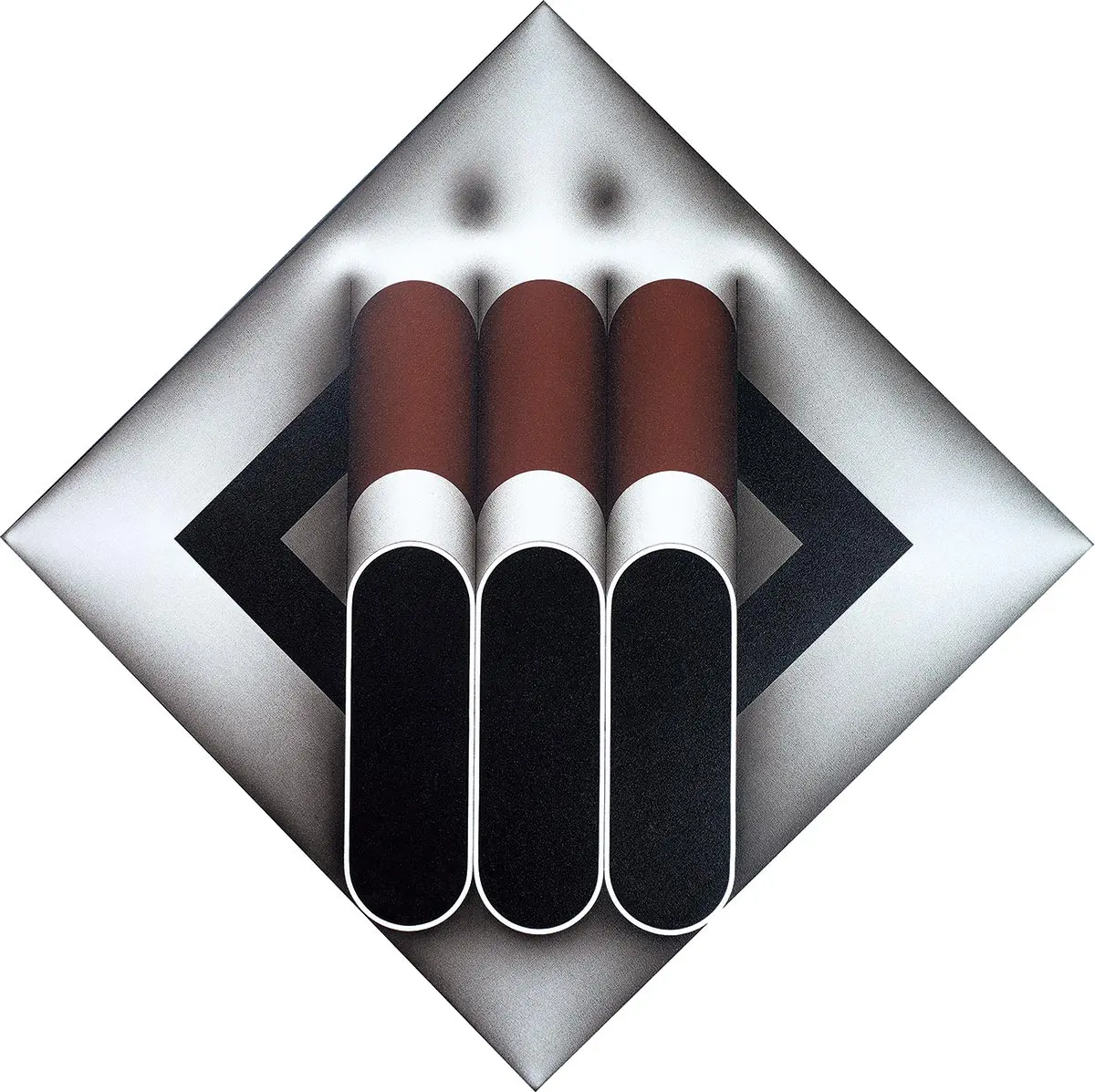
Passionate about the issues of his time, Omar Rayo traveled the American continent in search of ancient and modern images to use in the construction of his own language. The curator of the exhibition included works from this period that were unknown to many and truly worthwhile, not solely as historic records but also as exercises in visual synthesis.
Under the title of Vibrant Geometry, Miguel González reveals a man of surprising strength and passion who, rightfully so, developed meaningful empathies with figures like Marcel Duchamp and the first US pop artists, all of whom reacted very positively to Rayo’s work.
Along with the growth that came from those conversations with prominent international artists, during a vibrant time in the history of both the art of Latin America and North America, the curator also showcases the compositional talent of Omar Rayo, his mastery of the space, as well as his enormous productivity and generosity. On the other hand, the curatorship also points to the progressively solitary path—and, thus, without counterpoints—that the artist took after choosing a visual line of expression (Op Art) that was, to some extent, isolated from other artistic manifestations of the second half of the twentieth century.
The influences in his optical proposals quickly explored other territories and his enthusiasm for the implicit movement of the image lead him to a variety of inquiries that moved him away from the pictorial precepts of academicism.
On the other hand, the art in Colombia and in the rest of Latin America radicalized his political views for decades—until as recently as just a few years ago. Amid aggravated social conflicts and the popularity that the struggles of the left generated in the intellectual sectors, cultural expressions, particularly in Colombia, relied heavily on documentary sources. Thus, abstract proposals never quite took root in Colombia as widely as in other countries. But the few abstract expression that did, were strong and long-lasting, which explains the several and original integrations made by the different figurative currents and by those creators aligned with conceptual and experimental works. It is also possible to perceive, mainly in the last decade and among younger artists, the assimilation of several explorations that seek to renew the creative languages.
The legacy that has led to the so-called flourishing of the arts in Colombia in the new century was shaped by many contexts, stories, and perspectives. To know them, like this tribute to Omar Rayo allows us to do, represents a very important first step towards the just construction of the stories.
MARÍA IOVINO