
The Fourth San Juan Poly/Graphic Triennial: Latin America and the Caribbean, sponsored by the Government of Puerto Rico and organized by the Fine Arts Program of the Instituto de Cultura de Puerto Rico (ICP), opened in the midst of a global migration crisis and a record number of Puerto Ricans leaving the island due to a chronic economic recession. In a place characterized by diffraction, its people here and somewhere else, rooted and open at the same time, the fourth Triennial, titled Displaced Images/Images in Space, delved deeply into the dislocation and the formal, methodological, and conceptual transformation of the graphic image in contemporary art, in particular in connection with digital technologies.
Chief Curator Gerardo Mosquera, along with co-curators Vanessa Hernández Gracia and Alexia Tala, selected fifty-five artists and art collectives “(…) who have contributed to the evolution of post-print (…)”. In other words, the “common denominator” of the works selected “where the multiple displacements of the graphic image and of technological reproduction” (both quotations come from Mosquera’s essay for the exhibition catalog). Three solo exhibitions—Myrna Báez, Fernando Bryce, and Carlos Garaicoa—accompanied the main show, along with a web exhibition, #elmemestaenlatrienal, curated by Diana Cuéllar Ledesma.
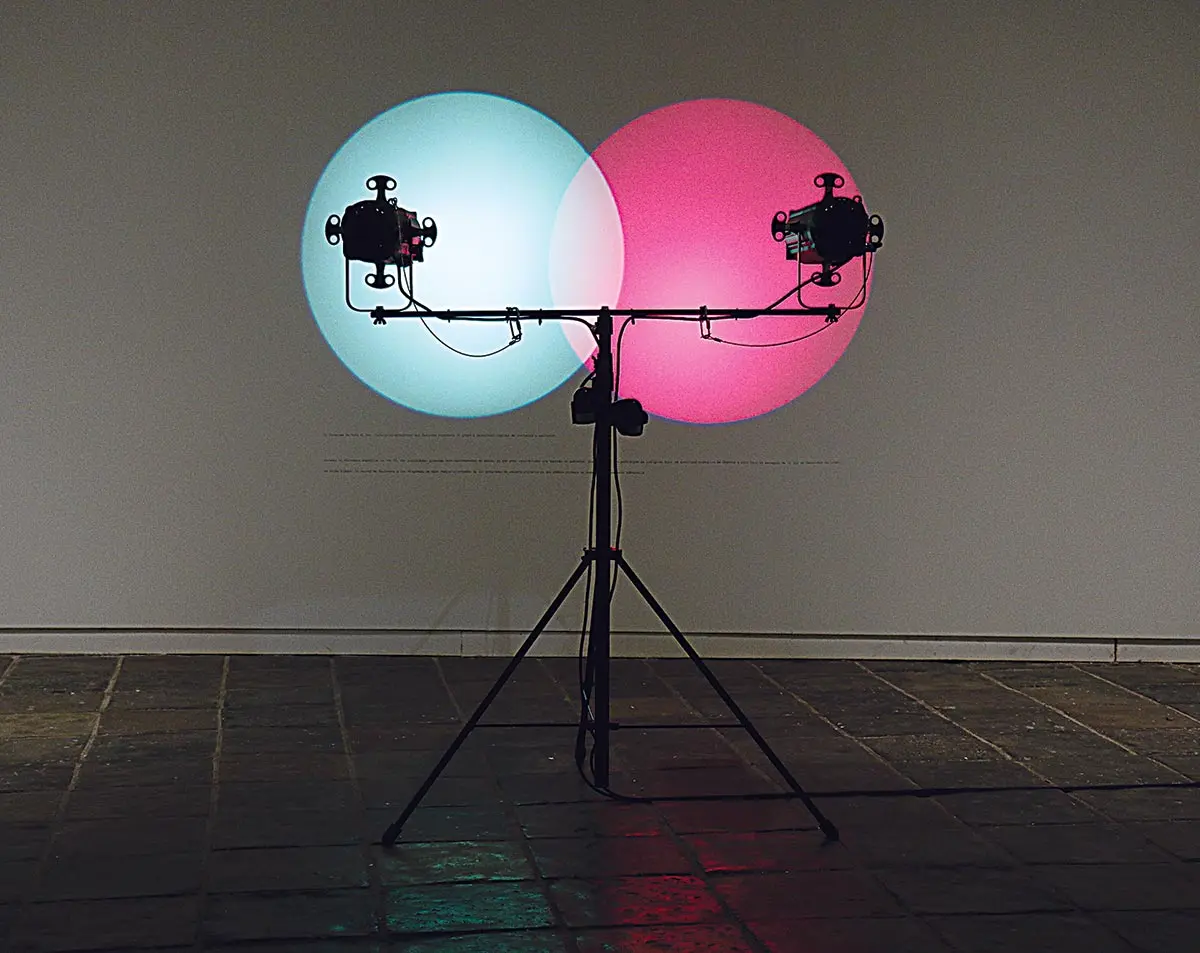
The rebel children of contemporary visual art came rigorously together at the 2015-2016 Triennial. The majority of the works on exhibit embodied the curatorial premise in an evident way. It was a contemplative, carefully put together an exhibition, presented through a series of elegant and minimalistic installations. For example, the first gallery in the historic Arsenal Español, the triennial’s largest site, featured a sublime pair of light-activated works: Cómo imprimir sombras (How to Print Shadows, 2012) an engraved and molded acrylic object by Waltércio Caldas, and Diagramas de Venn (bajo el reflector) (Venn Diagrams (Under the Spotlight), 2011), by Amalia Pica. In the latter, the text under the intersection of two circles of light in different colors revealed that the Argentine military junta barred the teaching of Venn diagrams in the country’s schools in the 1970s because it thought that showing the relationships between different sets could lead to subversive thoughts.
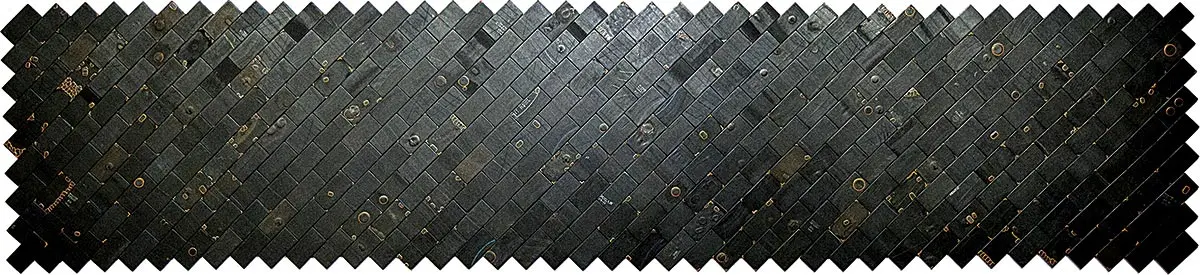
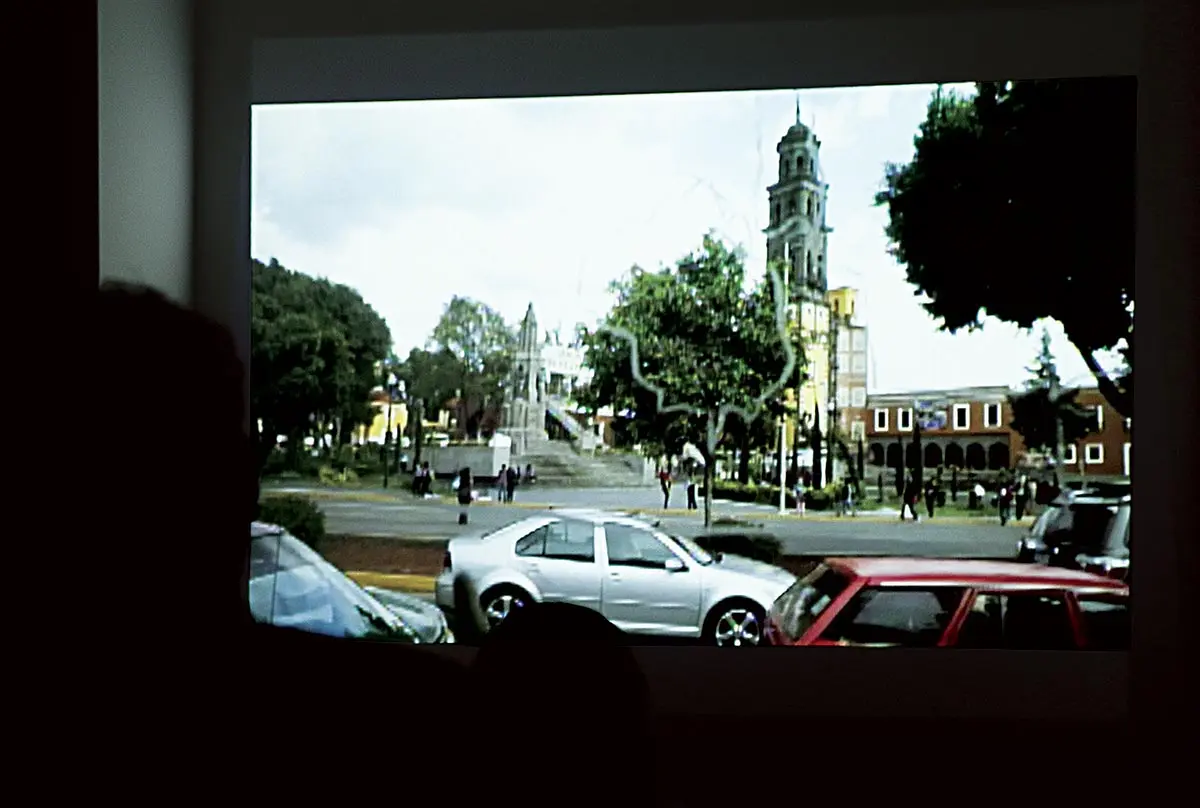
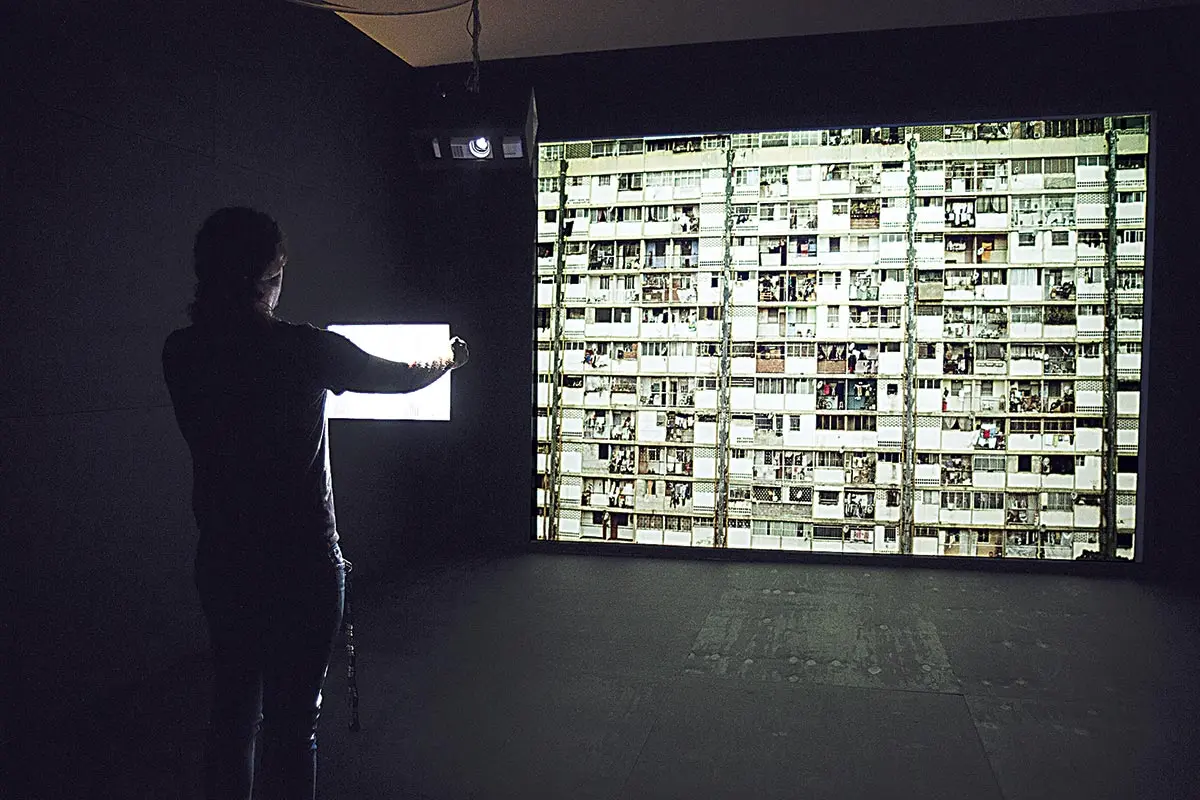
In general, Displaced Images/Images in Space explored the slippery character of reality, history, memory, and the passage of time, and also complex social, psychological, cultural, and aesthetic issues. The wounds of violence and war have unsettled the Triennial, as did the symbolism of maps, flags, and passports. Urban traces and clues of presence and absence captured my attention Topografía transversal (Transversal Topography, 2013), by Adán Vallecillo, a large work on a wall, suggested cobblestones and were composed of well-polished rectangular units cut from discarded car tires and their perfectly shaped patches. Hernán Bravo’s 2014 video performance Nueva cartografía (New Cartography) was a constant and fast-paced covering and erasure of schematic drawings on the interior side of a bus window, made as the vehicle moved around a city. In Mariana Rendón’s interactive installation Superbloque (Superblock, 2012), viewers could make their own voyeuristic tracings of the residents of an apartment building. Equally absorbent, albeit more discordant, was Mugre (Dirt, 1999-2000), a video performance by Rosemberg Sandoval, where the artist left behind traces of dirt and suffering by pressing against and dragging over the white walls of the Museo de Arte Moderno de Bogotá a tattered, raggedy human being.
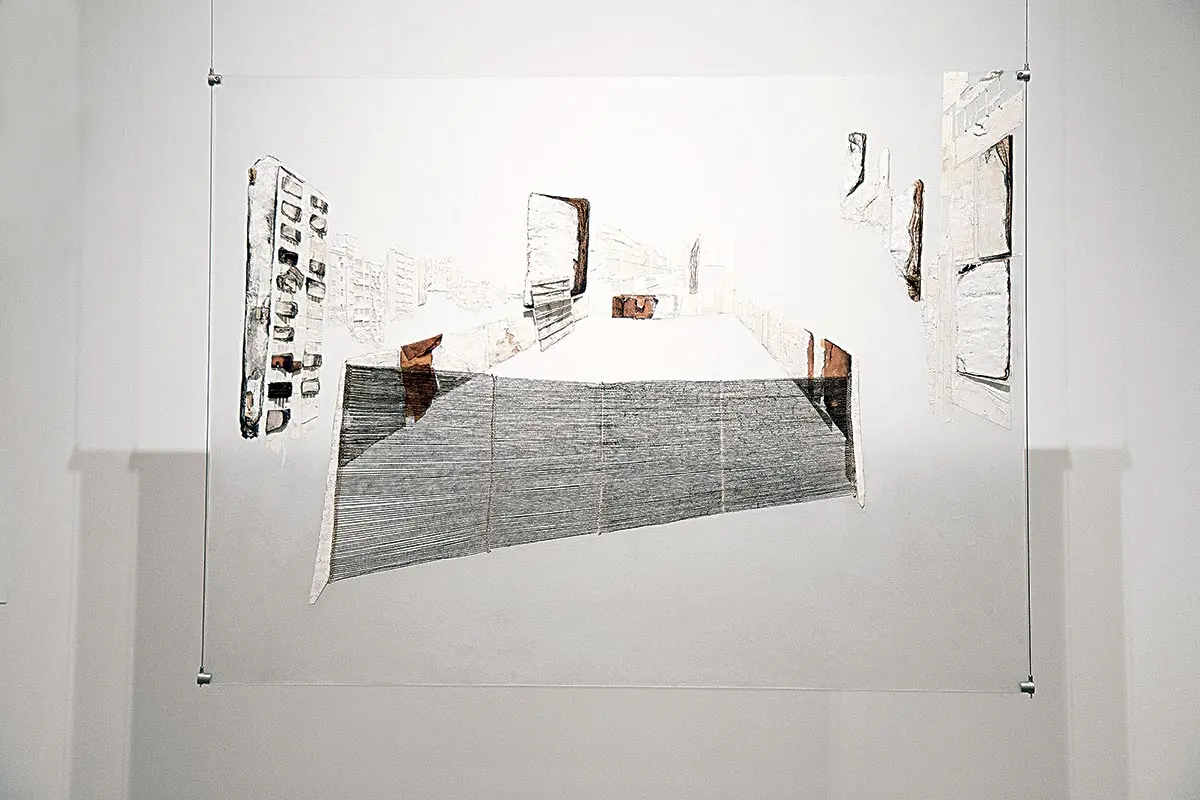
Among the works that penetrated and exposed incongruences were the fragile, poetic expressions of three Puerto Rican artists who are gaining new transcendence in the island’s artistic landscape. Frances Gallardo’s Unicornio en la isla (Unicorn in the Island, 2014) transformed a mythical past paradise into a long and tempestuous horizon made with black paper cutouts. Isabel Ramírez built images of urban blight using layers of rice paper, burnt books, and encaustic on acrylic, like a poultice on a wound. Verónica Rivera’s recent photographs of her symmetrical drawings of shapes resembling leaves in abandoned concrete structures magnified the viewer’s act of gazing.
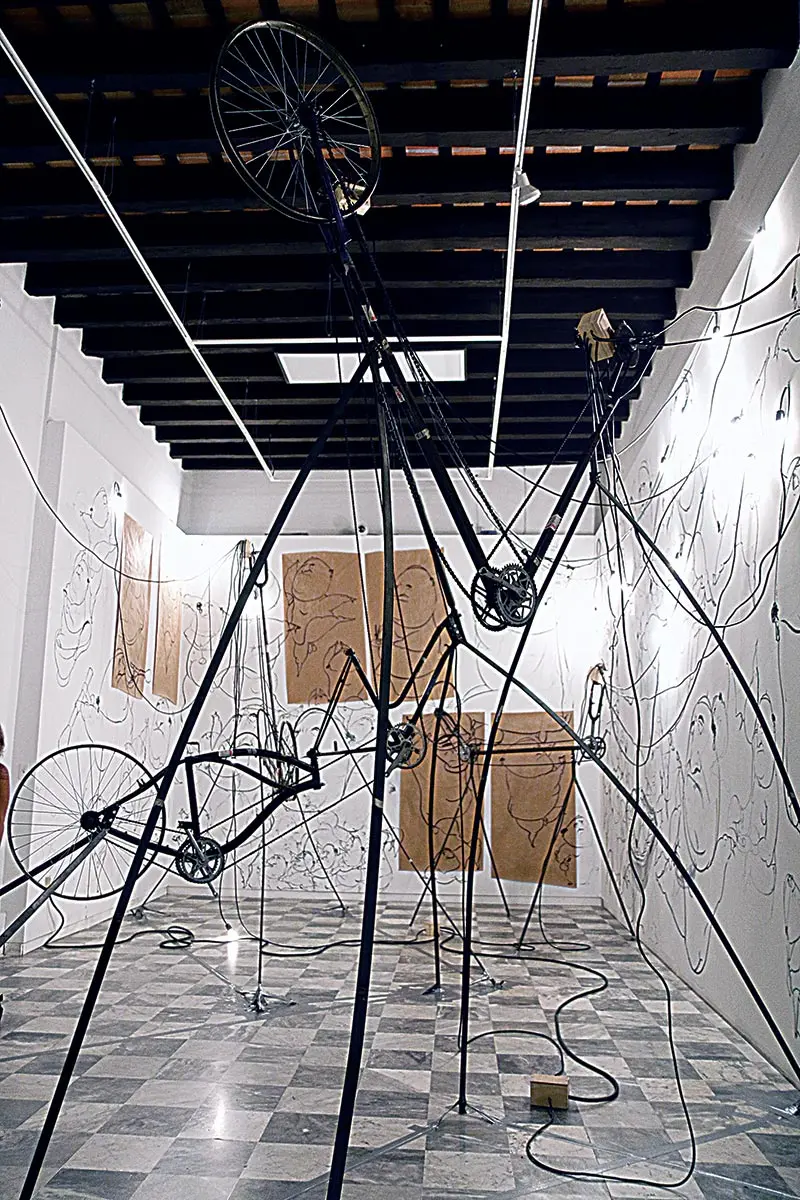
In the tranquil and sober environment of the Triennial, showy and chaotic expressions were as scarce as a bankruptcy plan for Puerto Rico. Ricardo Lanzarini’s site-specific installation Luz de obra (Worksite Light, 2015) was an exception. Crudely drawn caricatures of a naked, potato-shaped Pope, making pirouettes and posing in private, covered two large walls. The artist juxtaposed these drawings with strange-looking metal sculptures made up of light bulbs attached to long electrical cables and pieces of deconstructed bicycles scattered around the space. Lanzarini’s installation was an absurdist dance of death between divine enlightenment and earthbound mechanisms of confusion and disorder.
Those who came to the event in search of the newest of the new will have to wait three years. For many, the Fourth Triennial was an opportunity to reacquaint themselves with works that were already etched in their memory, such as Luis Camnitzer’s 1969 graphic installation Living Room or Graciela Sacco’s fragmented light-and-shadow interventions in photoserigraphy. Students and the general public were able to experience installation and iconic objects by influential contemporary art figures, such as—to name but a few—Vik Muniz’s 1989 series of Memory renderings, based on famous photographs from Life magazine; Semefo’s Dermis (1996), made with bedsheets from Mexican morgues imprinted by the corpses of murder victims; and Epilogue (1998), from Alfredo Jaar’s Rwanda project.
For me, the most inspiring project at the Triennial was Rescate del Infanzón, Memes Estandartes (The Rescue of the Low-ranking Nobleman, Banner Memes, 2015), which resulted from a collaboration between a youth collective called The Land Port Brigade (PDT in its Spanish initials) and their neighbor, artist Jesús “Bubu” Negrón. Together, with the help of parents, Negrón’s colleagues, and ICP funds, they reclaimed and transformed an abandoned building in their area, used by heroin addicts as a shooting gallery, and documented their activism in murals and banners. The PDT group and Negrón are working towards the establishment of a self-managed community center at the site, built-in 1916. A few months after the launch of this community/artist initiative, the San Sebastián Street Festival in Old San Juan, with an audience in the hundreds of thousands, was devoted to the PDT.
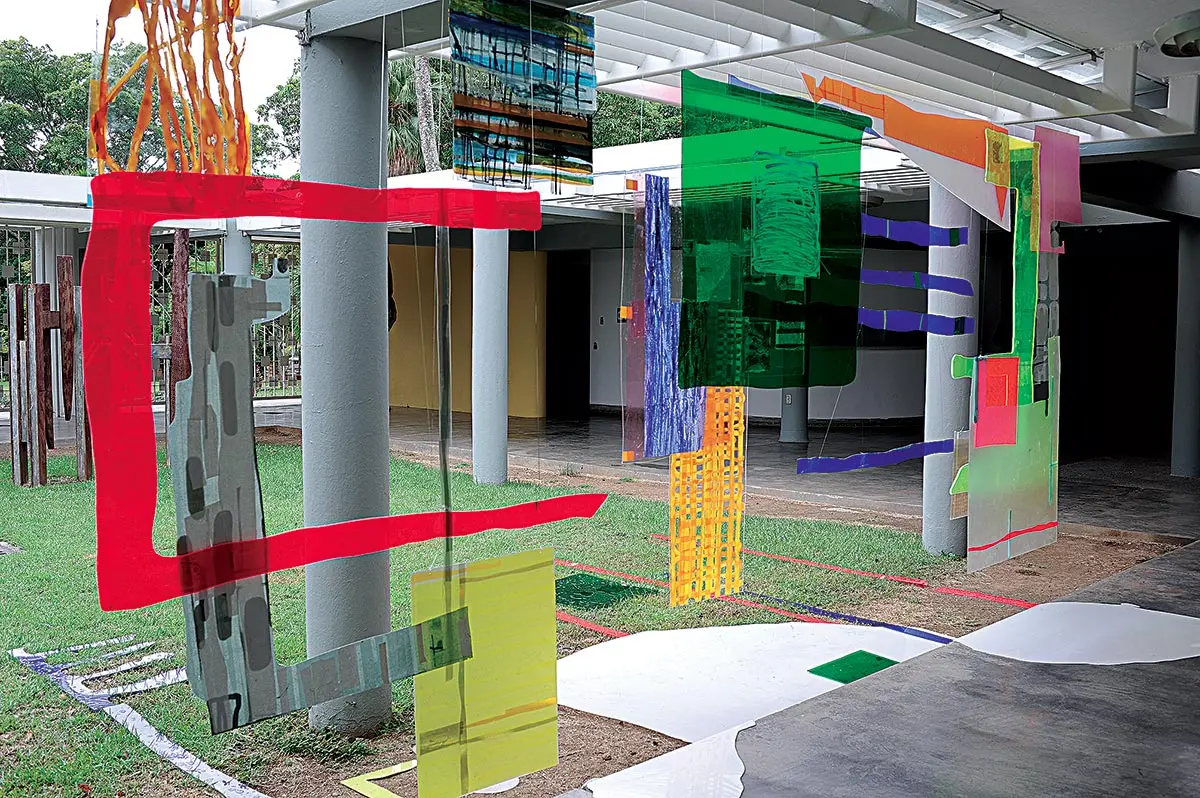
Also among the Triennial’s most gratifying experiences, both in visual and conceptual terms was No trates de regresar (Do Not Attempt to Return), from 2015, an open-air intervention by Ivelisse Jiménez in the patio of the University of Puerto Rico’s Museo de Historia, Antropología y Arte (Río Piedras Campus). Jiménez’s abstract language, represented in irregular shapes and lines, vivid phosphorescent colors, and materials arranged in layers—acrylic, paint, paper, plastic, and polystyrene—formed penetrable opacities that converged on the viewer. Jiménez’s installation found its original inspiration in the artisanal, informal, photocopy-like design of La casa de la forma (The House of Form), a book of sonnets by Puerto Rican artist and writer Joserramón Meléndez. No trates de regresar comprised three “registers”: a transparent painting/drawing suspended over the patio, which fell towards the lawn and suggested a small reflecting pool; a painting/drawing on a wall that continued through an open window; and reproductions of Meléndez’s poems and printed images from one of Félix Gonzáles-Torres’ piles of paper that covered a wall in a nearby electrical installation building. The form was as contingent and shifting as the climate, the weather, and the position of the viewer. A patient interlude between Jiménez’s registers paid off with colorful shadows and waves of enjoyment. At first sight, the artist’s intuitive hodgepodge may have seemed deficient, trivial, and anti-aesthetic, but it was nevertheless stimulating and gratifying. The artist offered a convincing demonstration of how to observe and live in uncertainty.
As chief curator of Displaced Images/Images in Space, Gerardo Mosquera pointed out in his catalog essay that the essence of printmaking is displacement. Puerto Rico’s solid printmaking tradition, which continues to prosper, was exalted in two projects at the Triennial. An exhibition featuring twenty-two collagraph, serigraphs, aquatints, and etchings by Myrna Báez at the Museo de Arte Ponce presented the fascinating results of the artist’s sustained technical experimentation from 1970 through 1988. Her still lifes—figures, objects, and nature—were erected or in repose, in silent meditation. One of the works was titled Danaë (Homage to Titian) and, like the golden rain that streamed into the princess’ bronze underground chambers, a soft light, dim tones, and dark shadows filtered through the garbled cracks on Báez’s subjects. The way in which the artist manipulates raw vulnerability and veiled presences is enticing, but Báez kept viewers at a remove with a palpably tense atmosphere.
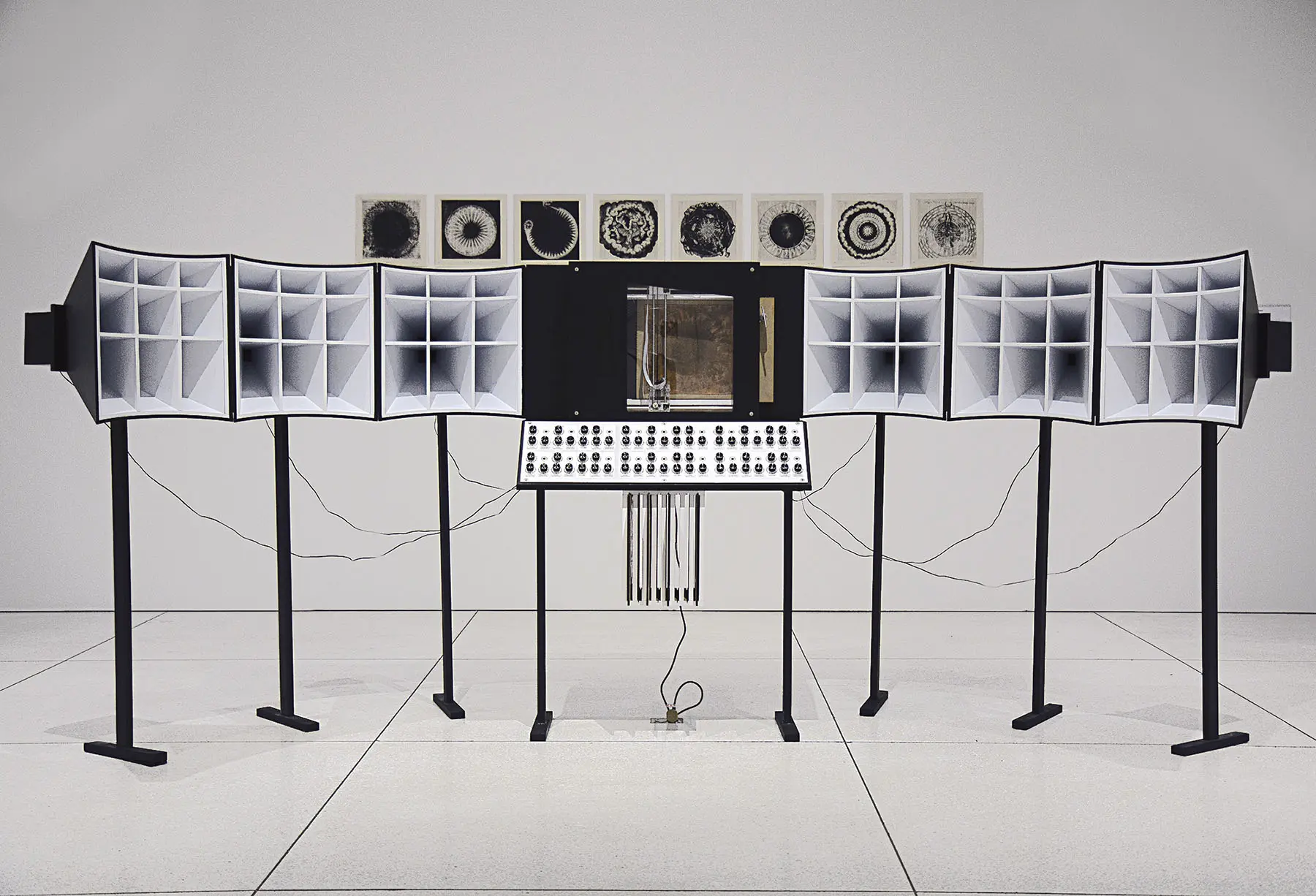
The curators took a risk and generated inside the gallery an opportunity for an encounter between Báez’s work and an interactive sound installation by Tania Candiani. Engraving Sounds, commissioned by the Triennial, was among the twenty-nine works of art receiving financial support from the ICP. Eight engravings on copper laminate were inserted, one at a time, into a machine that moved methodically up and down on a set of grooves, translating various incisions into sounds that visitors were able to manipulate by turning one or more of the sixty-six control knobs on a console. The connection between Báez and Candiani derived from their long-standing investigation of engraving and reproduction, and the scientific and technical focus of their respective practices. But it was a distant connection. Candiani’s animated installation, with its blinking lights and intermittent sound, precluded any close association with Báez’s elusive enigmas.
Grabadores por grabadores (“Printmakers for Printmakers”), a project in progress started in 2013 by Rosenda Álvarez Faro, paid homage to past and present masters of the genre in Puerto Rico and the Americas. To date, twenty-two artists have each produced a life-size xylographic portrait of a master engraver; the portraits are placed in sets on walls around Old San Juan, Santurce, and Ponce to bring the history of art to public awareness and the collective imagination. Premios de la Bienal de San Juan del Grabado Latinoamericano y del Caribe 1970-2001 (Award-winners from the San Juan Biennial of Latin American and Caribbean Print, 1970-2001), at the University of Puerto Rico’s Museo de Historia, Antropología y Arte presented a painstaking historical account of the Triennial predecessor, the San Juan Print Biennial. Each of the biennial’s thirteen editions was described in detail, with a selection of award winners from each year. With the exception of specific artist retrospectives, we do not often encounter retellings of the history of Puerto Rican art via exhibitions. This timely, valuable, and thorough show, curated by the Museo de Historia, Antropología y Arte’s director, Flavia Marichal, was one of the more than thirty presentations paying homage to the Triennial.
Although the Triennial suffered from delays and interruptions, there were many more exhibitions to satisfy the most demanding audience. To begin with, local artist Antonio Martorell was able to celebrate fifty years of uninterrupted work with an admirable, colossal achievement: nine exhibitions of his works on paper, each at a different institution across the island and most in coincidence with the Triennial. Other exhibitions validating the Triennial deserve detailed examination, including El museo del Palo (The Stick Museum), by Michael Linares, at Beta-Local. The artist’s pop-up museum presented an impressive collection of hundreds of sticks and clubs from different periods and cultures. A fascinating film of sticks in action, produced by the artist, was another component of his extensive investigation into the continuous mutations of this object, from a mere thing to a tool, and from a technological to a cultural system. While Linares’ work set our minds abuzz, Arnaldo Morales’ Manta-raya No. 14, at Liga de Artes, made our hearts race. The artist built two fascinating and dangerous machines inspired by the manta ray’s powerful defense mechanisms. Operated by means of compressed air and pedals, they attracted and intimidated their users.
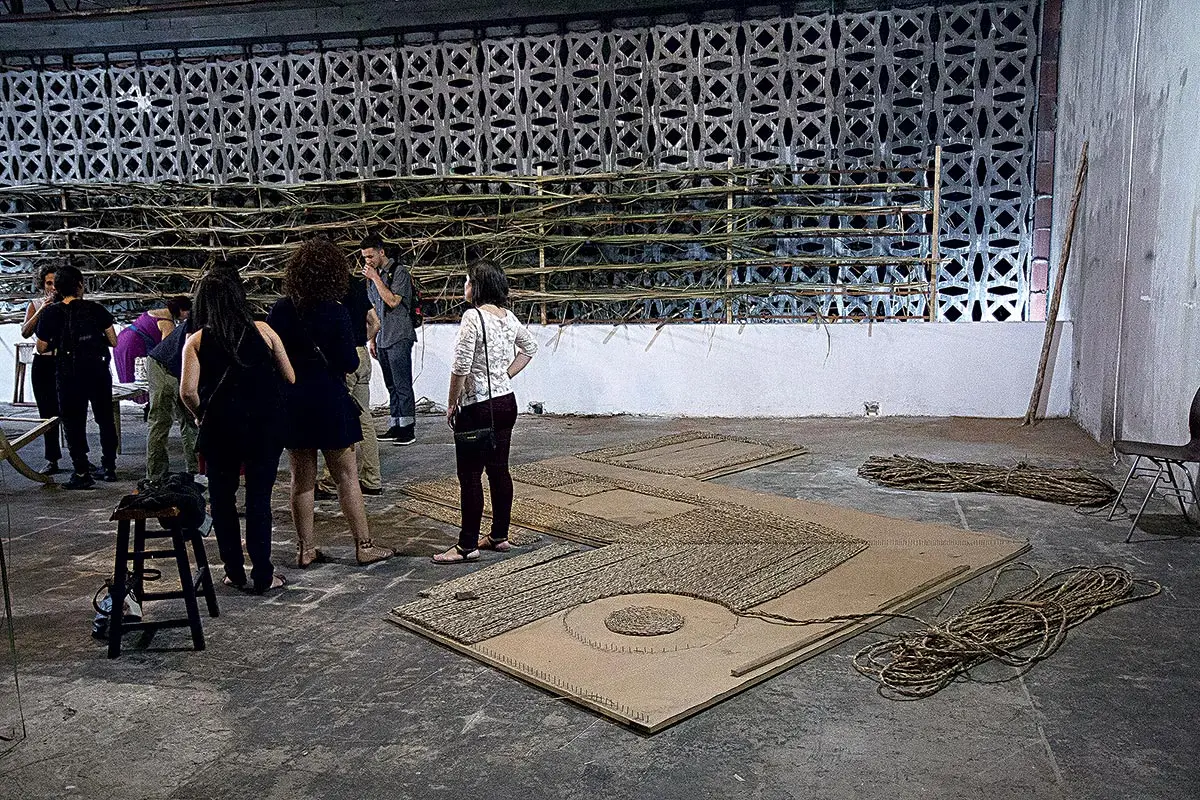
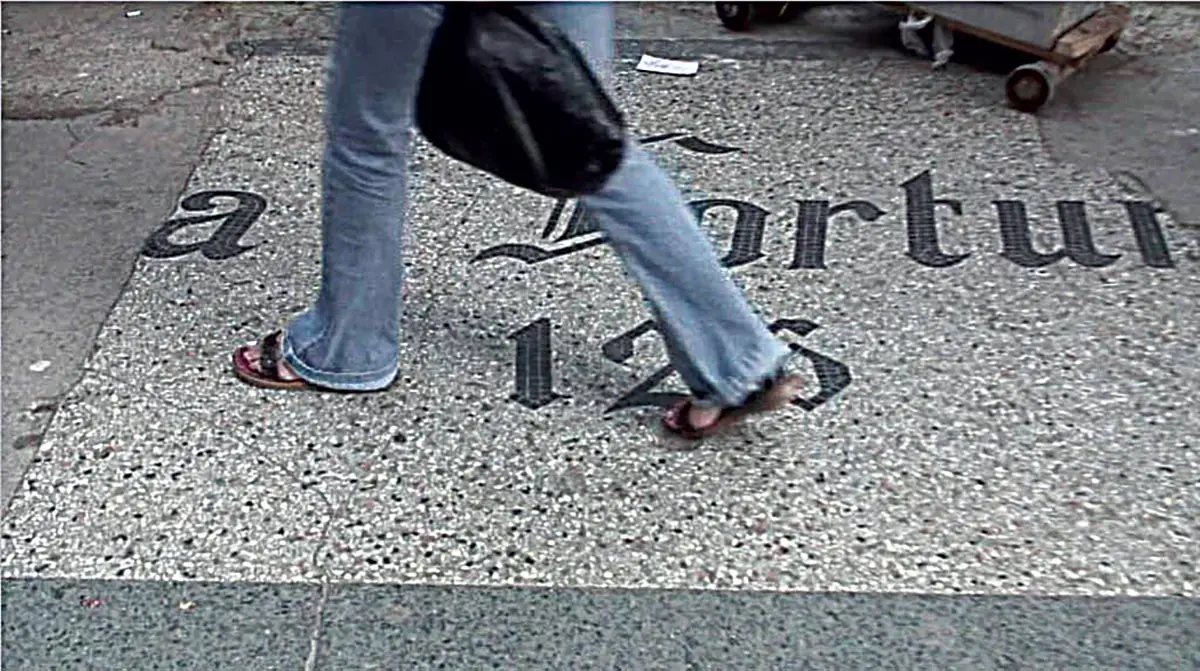
Crónica(o) (Chronic[le]), curated by Carla Acevedo-Yates at the Casa Cortés Foundation, offered an in-depth, erudite look at the impetuous uniqueness of artist Carlos Garaicoa and writer/artist Eduardo Lalo. Their photographs, notes, and logos revealed a longstanding relationship with the textuality of their urban environments, real or imagined. Other works engaging the same subject could be seen at experimental sites, such as Taller vivo (Living Studio), by Elizabeth Robles, at the Museo de Arte Contemporáneo de Puerto Rico, in San Juan, and Manifiesto composta (Compost Manifesto), by Jorge González, Ricardo Morales, and Chemi Rosado-Seijo, in their Laboratorio de Artes Binarios. En tránsito (In Transit), curated by Dianne Brás Feliciano at the Arana Foundation’s space was the only local socio-political response to the concept of displacement in the Triennial. There, the work of twelve Puerto Rican artists approached, from a critical standpoint, the recent mass exodus of Puerto Rican citizens away from the Island.
Each Poly/Graphic Triennial in San Juan has launched its own set of original initiatives in order to accomplish the event’s goals. This year, to harmonize with the decentralized nature of “post-graphic art”, and with the idea that peripheries can become centers, and with the intent of building bridges for exchanges in times of scarcity, the triennial expanded into nine locations (seven of them, museums) in four cities. In Puerto Rico, it is urgently necessary to establish alliances between institutions, to present influential works by important contemporary artists from outside the capital—like Leandro Katz’s Project Catherwood, at the Museo y Centro para Estudios Humanísticos Dra. Josefina Camacho de la Nuez, of the University of Turabo, in Gurabo—and to educate and develop audiences for contemporary art, encouraging them to move around the island. However, what was gained and what was lost with this decision? Are we any closer to knowing what it means for the Triennial to succeed, or will the vision continue to change every three years?
Another initiative promoted by this Triennial was a considerably enhanced educational project, demonstrating the ICP’s potential in this area. It employed pedagogical methodologies for the training of docents and teachers, artist-directed workshops on creative and collective experiences—including an Experimental Printmaking School—and memorable lectures and panel discussions. How can the Triennial be kept alive after the works have been taken down, and what does that life look like? One important contribution on the part of the ICP could be to devote a specific budget to an ongoing educational program connected to the event, videos or artists presenting their projects, archives expressing clearly what the ICP and each curatorial team would have liked to see happen and what actually happened, and a comparative study of the four Poly/Graphic Triennials held so far.
For the next Triennial, I would like to see a broader representation of artists from the Lesser Antilles. Besides many artists from Puerto Rico and Cuba, the only other representatives from the Caribbean included were Albert Chong, from Jamaica, and Analee Davis, from Barbados. I would also hope for a change in sensibility pushing the audience toward greater uncertainty, and a Triennial driven by the artist’s own proposals. It would be galvanizing if the ICP’s announcement of the next chief curator included a concrete plan for local artists to exhibit their work outside Puerto Rico. Lastly, with the Government under tremendous economic pressure, the time has come for a broad local platform supporting the development of a sustainable strategy that can be easily modulated for future triennials.
CHERYL HARTUP
Independent curator.