
CELIA SREDNI DE BIRBRAGHER: What motivated Daros to begin a Latin American art collection? When was the project conceived?
HANS MICHAEL HERZOG: I met for the first time with some people from the group and also with Ruth Schmidheiny in 1999. It was that year that they had the idea to launch a collection of contemporary art from Latin American countries.
Honestly, it was never clear who was the first to come up with the idea. Perhaps it was something that evolved gradually. Ruth and her husband proposed it since they had inherited the other collection, Daros. Stefan was setting up the Avina Foundation, Ruth had her country estate—she still has it, near Buenos Aires—and they both had an appreciation for Latin America. I gave them the concept and it matched their ideas. That’s why they asked me to begin my work for the collection on January 1, 2000.
In my head, how the collection was to be built was already clear; I already understood by then the value of building something like that, at that scale. To me, it was clear how it was to function. I had a precise vision. It was a test to figure out what we would be able to accomplish together, and I remember well the committee’s first talks, where they proposed a 10-year horizon for building the collection. They wanted to see how it would evolve because there was nothing at that point.
CELIA: You had a clear idea of what you wanted, or what you felt you needed to do. What was it?
HANS MICHAEL: It was to collect high-quality works, by artists I would select. Before getting started, I already had a pretty precise idea of what was relevant in the art world and what didn’t seem to be; I began by traveling, listening, and gathering much more first-hand information. Of course, I read ArtNexus and more, I was never entirely convinced by purely academic texts, neither then nor now; what convinced me was the direct impact of art and artists.
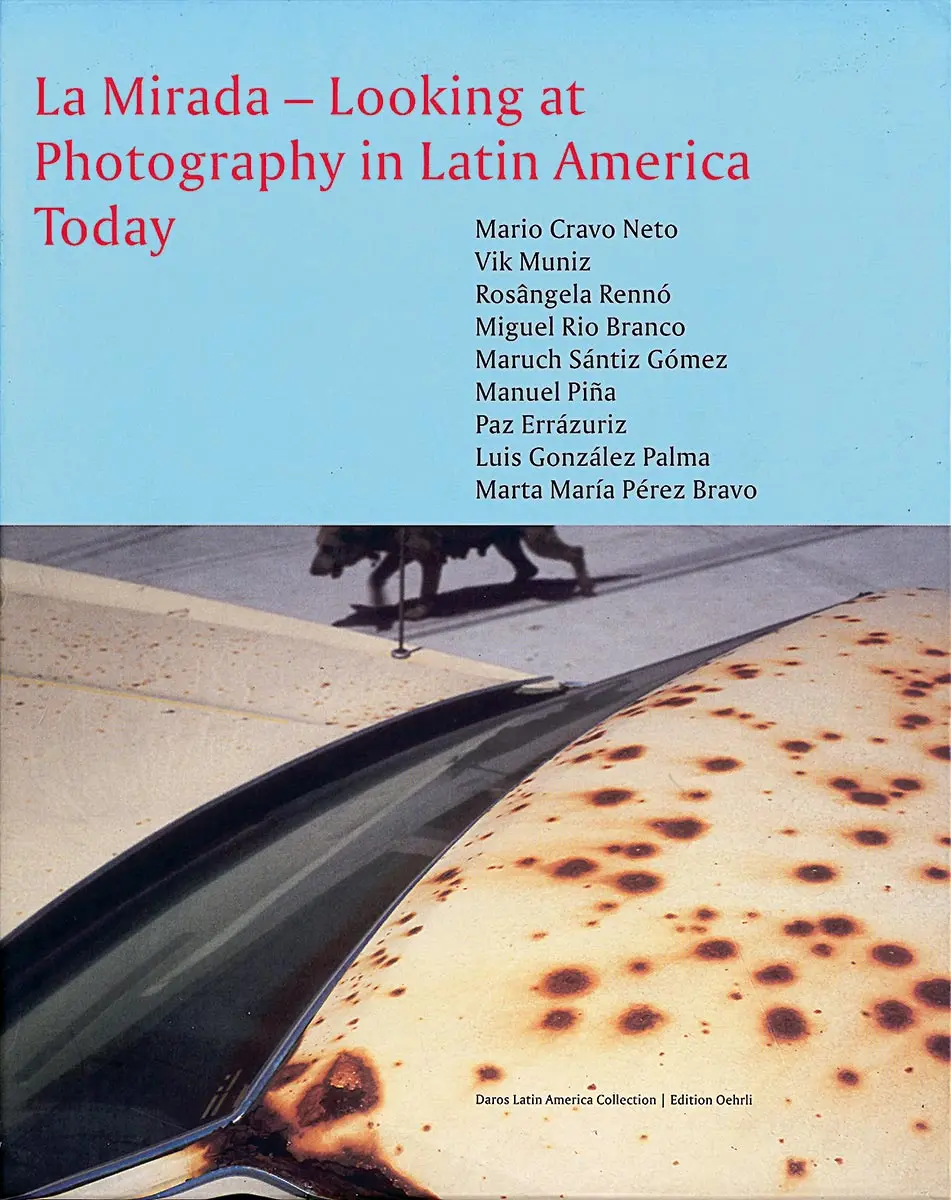
As a matter of fact, I am now revisiting all this, because I want to write about these years with Daros. The people in the Latin American art world I met in 2000 were impressive. I traveled like crazy but always with a clear purpose, and several ideas about the future of the collection took shape then. Also, setting up a location in a Latin American city to exhibit Latin American art was always an essential, basic need for me, and I talked about it with Ruth from the start: we were going to rent or buy a building. You surely remember this, the situation sixteen years ago was entirely different, nobody knew almost anything about their immediate neighbors, much less about others a little farther away, and it was worse in Europe. That is why there was an urgency to create a platform in Latin America. And at the same time we established the Daros Exhibitions galleries in Zurich, which we occupied since 2002; the first exhibition there was titled La Mirada (The Gaze), and it was about photography in Latin America.
The entire process of acquisitions for the collection went faster than we had planned, but always at a healthy, prudent, and thoughtful pace, without haste.
CELIA: You presented many exhibitions over the years. When you made an acquisition, were you already thinking about the exhibition, or did the exhibitions result from what you had acquired?
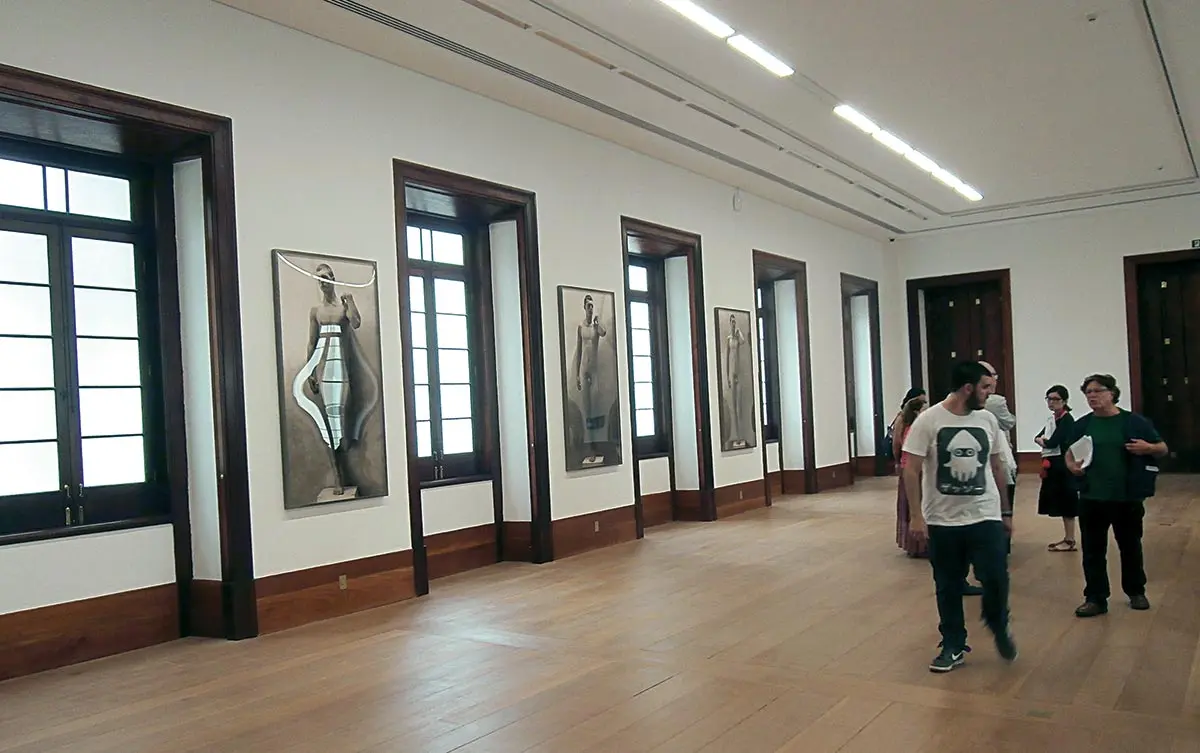
HANS MICHAEL: Both. Of course, the exhibitions resulted from our acquisitions: we only exhibited works from the collection. But when I acquired a work of art, I always imagined it in an exhibition context, that was crucial and basic, and it always worked that way. I thought of the collection as the basis for many future exhibitions, and I always imagined the art in that function, how it would be displayed in different places and contexts. That was a key idea.
CELIA: An interesting concept in the way you collected was that you didn’t collect everything. How many artists are we talking about? How many works? Do you know more or less the size of the collection?
HANS MICHAEL: The collection stopped making acquisitions two years ago. We have incorporated 120 artists with 1,250 works, give or take.
We were able to collect the work of several artists in depth; in other cases, the number of works is smaller, but they are representative works. Each case is different. And, of course, in some instances, we were too late, and that is why a number of artists are not in the collection.
CELIA: What can you tell us about the process of choosing Rio and purchasing that house, which took many years to renovate?
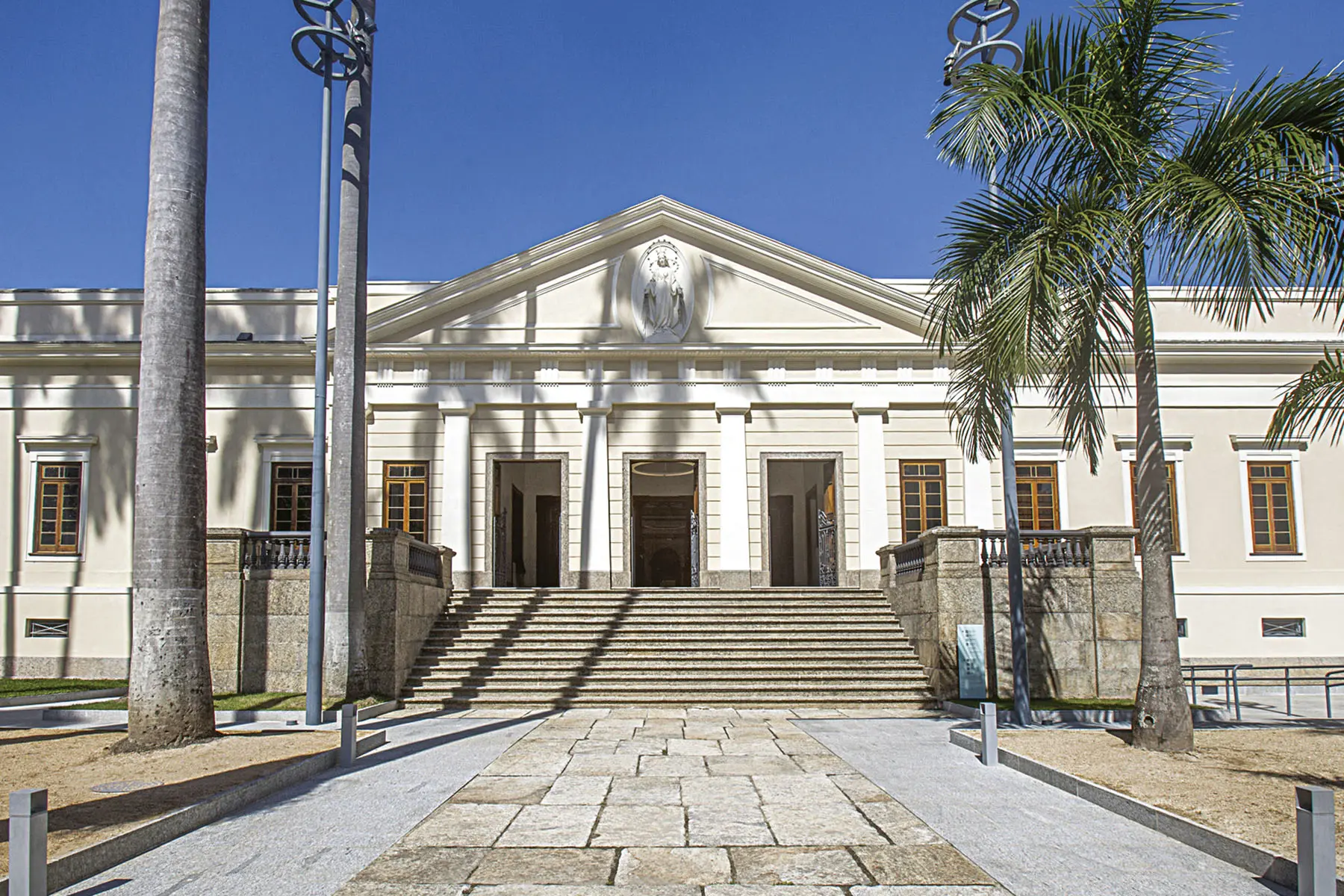
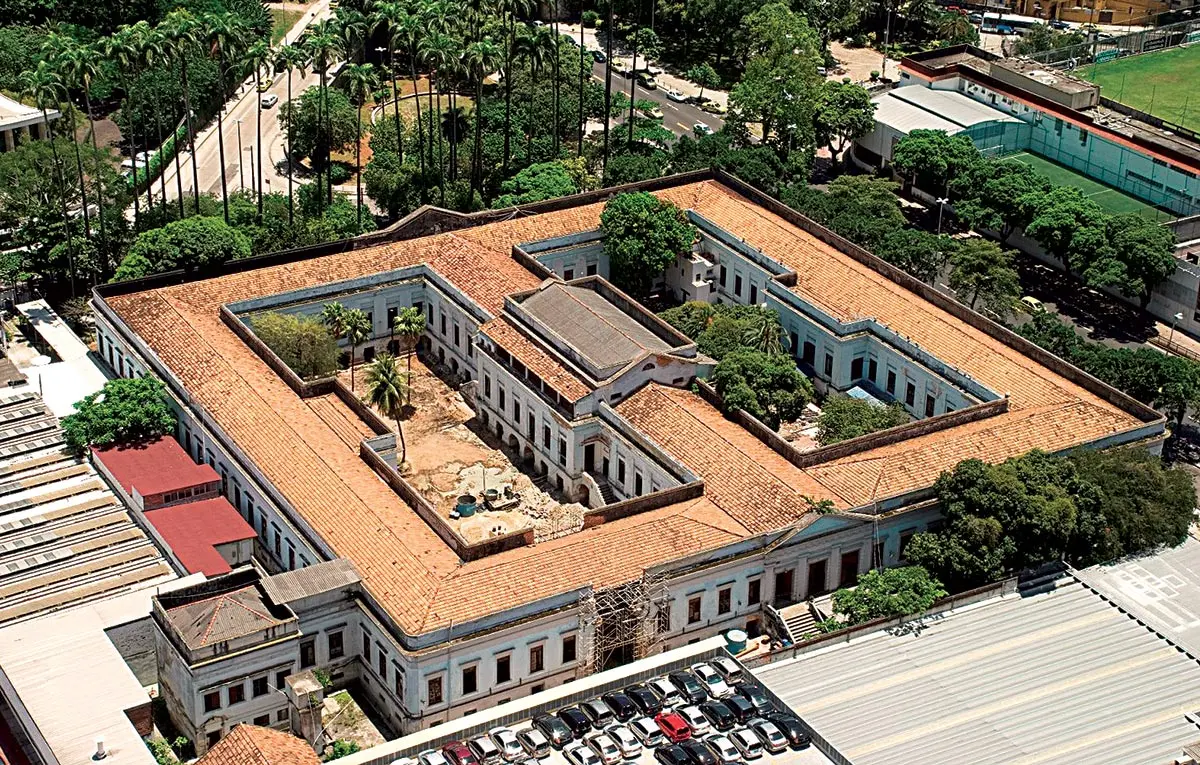
HANS MICHAEL: At first I was thinking about an exhibition space in Havana, and we began to work towards that in 2001. We even reached Fidel Castro’s antechamber, with everything approved by the Ministry of Culture. But in 2003 it all fell apart for political reasons, and immediately we went looking for a different place. I thought it a good idea to look in Brazil, in Rio de Janeiro. It was a long process involving many trips, many stays, with Ruth visiting different neighborhoods in the city.
We considered every option and after a two-year search we found this magnificent, splendid, large house: the future Casa Daros, well located in the Botafogo neighborhood, and they bought it. The purchase process lasted for a year, which is quick for Brazil. We began renovations, working from the start with the local authorities to preserve the building, which has landmark status, and this took several years. Things are not always easy, and, as we know, even old houses have their own dynamic. But in the end, everything worked out pretty well.
CELIA: How long was Casa Daros open?
HANS MICHAEL: Two years and three quarters.
Thankfully, we had already worked with the Casa Daros team, with Eugenio Valdés, before the inauguration in March of 2013. We brought many people together, had meetings between Brazilian and Latin American artists, and organized several lectures and events in Rio de Janeiro. They organized a mega-spectacle, the first International Congress on Art and Functional Illiteracy, involving people from all over the world. So, when Casa Daros opened its doors, there was great interest in the Brazilian side, even though they already knew how we worked, who we were. Casa Daros had been working in the city for almost three years as an institution with constant activities.
CELIA: What do you think caused the closing, after such a large collection had been amassed and the building was finally in working order?
HANS MICHAEL: I don’t have an easy answer, because nobody understands it to this day. It seems absurd, and it is, to ground the Jumbo Jet just as it is taking off, after so much effort and so much investment, and after so short a time. Especially considering what Ruth Schmidheiny had told the Brazilian public in 2013, that the continuity of Casa Daros was guaranteed because it was financed for at least ten to twelve years. That wasn’t the case, as we have seen. All I can gather is that Ruth, and I am speaking very personally here, lost the passion and interest she had. Perhaps also because we were no longer traveling together as we had done before, exploring new territories, meeting new people, new artists. The only way this project could have worked is if we were both in agreement, and that agreement melted into the air, like smoke.
With my colleague Eugenio Valdés, we developed already in 2004 an initial content plan for a future Casa Daros, on the basis of programmatic educational ideas, how we wanted to manage the institution, etc. We presented it several times to the Daros Latinoamérica committee. Today I think nobody there read the project in-depth Do you know? In the thick of the process, you keep moving forward, they say “okay” and you keep it rolling, but my feeling is that they were never truly interested. Our idea was to promote Latin American art, and much more. We wanted to present it, critique it, and debate it, not always seeking consensus, and to have interesting real-life impacts. They did listen to us, but I believe they never understood our ideas. Perhaps one day they had a meeting and said, okay, we have invested this much (which could not have been a surprise, because budgets were always tightly controlled), and became afraid of a shifting future or didn’t want to take responsibility for it. This closing was an abdication of cultural and social responsibilities that, I think, they never understood or saw. They were unable or unwilling to appreciate the cultural and political import the project had acquired. Perhaps they were only looking at the numbers and noticed that those numbers were never going to be in the black. It was evident, and we had talked about it, that nobody would reap financial profits from this. What a few years before had seemed clear and natural didn’t work for them anymore, and something scared them deeply. It seems they had almost forgotten the cultural implications. Ruth often talked about philanthropy and such… but the philanthropy went with the wind.
CELIA: What do you think will happen with the collection?
HANS MICHAEL: Personally, I think that one day, I don’t know when it will be sold. International interest in the collection will diminish due to its lack of visibility. Why keep such a large collection, the maintenance of which costs a fortune, and for what?
CELIA: Have you spoken with Ruth about the collection?
HANS MICHAEL: I talked to her and proposed a plan for the future diffusion and distribution of the collection. It seems they aren’t ready for that yet.
CELIA: It is strange for it to be stopped so suddenly, isn’t it? But, at any rate, I think they did important work and brought back many names that were falling into oblivion. You did not come from the Latin American art world, you came from other areas?
HANS MICHAEL: I came from Art History. I studied Classical and Egyptian Archaeology and Art history. My Ph.D. was on a medieval subject, Thirteenth-Century Byzantium, which is closely connected to Latin American art [laughs]. But over time I came closer and closer to the present, to the Twentieth Century, and to contemporary art, because that interested me more than anything else in the history of art; so, I educated myself and did my museum exhibitions in Germany for a decade. In the early 1990s, I discovered Latin America and worked with the CAAM in Las Palmas (Canary islands) and with people like Orlando Britto and the Zaya brothers, already deeply interested in Africa and also Latin America. They were the first to tell me about contemporary Latin American art, and I was very much interested. I was bored with shuttling between New York, Germany, and Europe and finding always the same things. When I discovered this Latin American world, I educated myself, traveled as much as possible, and then, when Ruth, the committee, and I came together (the committee they had in that period, which was somewhat different), we all fitted well into this project. It was still somewhat opaque, somewhat undefined, just a vague concept, but I already had a clear idea, because I already understood enough to know that it would be a miracle harvest. The time when I started to travel and to listen to people was glorious, deeply satisfying. It was beautiful, everybody talked to me and educated me with a generosity I had never encountered before in my life, and I understood that here we had all this art nobody was dealing with serious, or very few people were, and it was like a dream. Ten years later the situation was entirely different, but at the beginning, it was an even more beautiful and rich quest that took us everywhere. Everybody I was able to meet and the information I gathered, I had all kinds of little pieces of paper with notes from my trips. I visited many important artists once, twice, three or four times, establishing a relationship, because I always wanted to gain a better understanding of the artists and their work, or of what remained of their oeuvre, and this can take years because each artist is organized in a different way. You must also adapt your approach each time and make it specific, with great concentration.
CELIA: Did you travel to every country in the region?
HANS MICHAEL: Yes, except for the Guyanas and Bolivia. I don’t know why, they were always on the agenda, it’s a pity. I knew Bolivia in the 1980s, but not as I was doing this work. Three or four times I had it programmed but every time something happened and I wasn’t able to go.
CELIA: Looking back, I am sure that for you it was very rewarding to discover this world. As you say, they opened their doors and their hearts to you, but you also opened your heart to Latin America.
HANS MICHAEL: Yes, I did open my heart. That’s what I was missing in these dry relationships we sustain, as I mentioned, between the United States and Europe. There one doesn’t have many true friendships, nor are there that many good discussions about what is happening in an exhibition or in the art world in general. My travels in Latin America were deeply rewarding. I flew around like a bee, always carrying information like a bee carries pollen, especially at the beginning; today people travel much more than back then. For instance, bringing information about the Cuban art scene to Brazil or Argentina, because they didn’t know and still don’t know a lot about what happens in Cuba. And it is the same in Mexico; it is almost a separate world, and Mexicans are not all that interested in what happens in Chile or Peru. It was beautiful because I was able to tell stories of what I had seen in different places, and people listened, it was a very lively exchange of events and ideas, of everything, and that was awesome.
CELIA SREDNI DE BIRBRAGHER