
To enter Saúl Sánchez’s exhibition is to feel oneself motivated by the author’s reflexive aesthetic look at some movements that formed in the Twentieth Century in the realm of abstract art. Sánchez is in no way merely repeating such movements, nor are the works on exhibit cold or demanding. As the exhibition’s title, Un otras otro (One After the Other), indicates, Sánchez’s works bring forth their author’s reflections and investigations around both the pictorial process and the facets that certain movements’ theories make explicit. What Saúl Sánchez does is not the kind of revival that has acquired preeminence as the contemporary calendar marches forward, for example in this very moment in the course of our Twenty-First Century, when kinetic art and op art, among others, are gaining new attention. Sánchez is driven by a personal-conceptual investigation structured by constructivism and its derivates and focused on two factors: form and surface. Readers may wonder if there is no risk of confusion in the intertwining of two or more movements; the answer is that there is none. Sánchez’s works are limpid individualized outlines against the gallery walls.
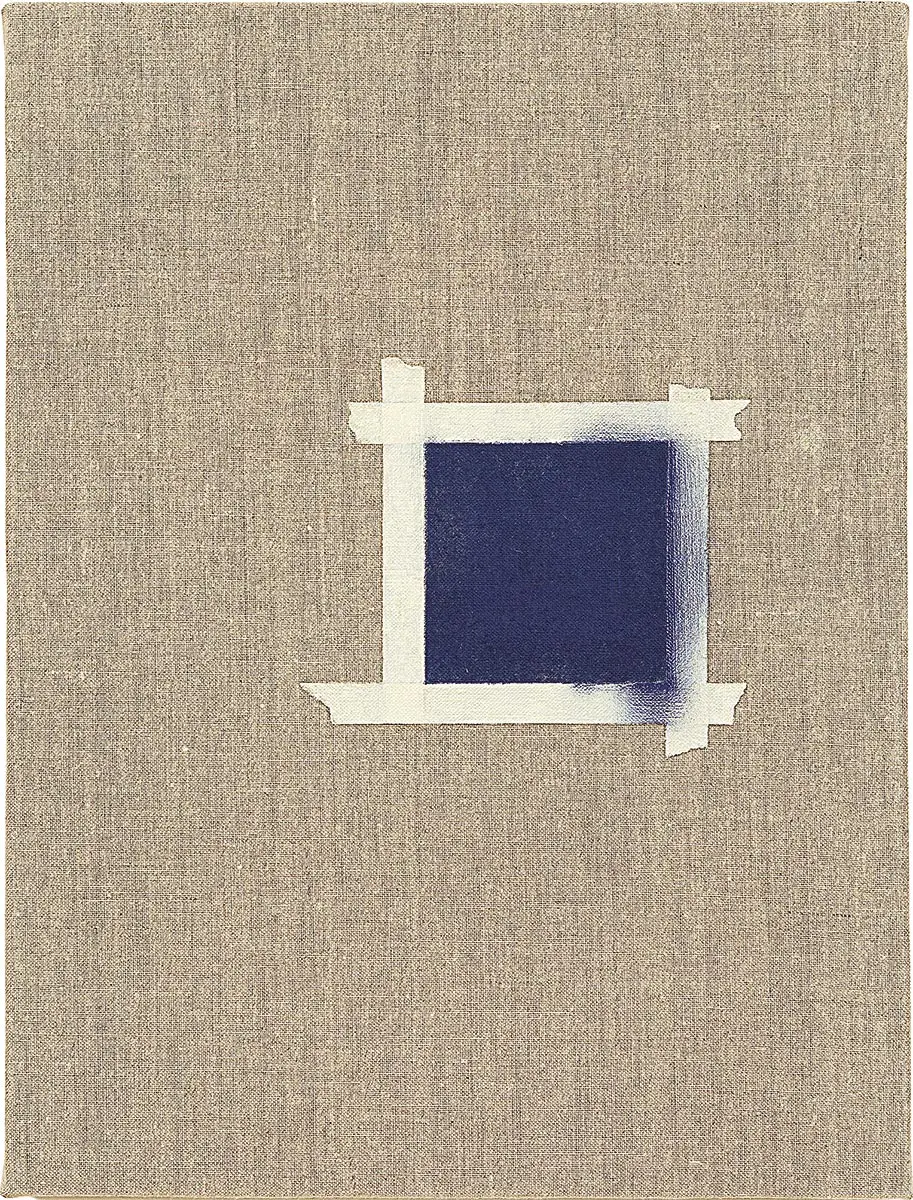
In this exhibition, the artist—who was born in Colombia and lives in New York, where he is finishing his Master’s degree—focuses on the theories and visual creations of Suprematism. Sánchez concentrates on square and rectangular shapes, on horizontal and vertical tracings, and develops diagonal inclinations, symmetries, and asymmetries. A general glance at these working elements and works of art will produce an impression of repetitiveness. A more detailed look will gradually reveal delicate variations between them. One example that condenses all of Sánchez’s excellent speculations is the series Cuadrado con pintura azul ultramarino (Square with Ultramarine Blue Paint), measuring eighty by fifty-seven centimeters and one meter by one meter. The natural richness of the linen (as processed as all materials are today) provides a somewhat neutral ground for Sánchez’s proposed intellectual emphasis. The presence or absence of a frame confirms the author’s reflections. Case by case —“one after the other”—the analysis is explained by comparisons between factorial positions, as well as by a dynamic of varying dimensions in each painting as if one had visited the artist’s workshop over a period of time as he was creating these works and were able to see what each proposes, how they are finished, and what results move him towards the next one with subtle variants that nevertheless retain the discourse of dismantlement in which he is engaged. Thus, the process of executing these works, the event of painting, and the way in which Sánchez carries it out, are externalized here.
What develops within the parameters set by the paintings’ edges, which intersect one another at right angles, are analytical scenes. There is no perception of a brush or a spatula; on the contrary, what has left a trace is the application of a spray. Viewers are held in an enveloping embrace of linens on which the artist applied oils and acrylics, all in the same range of colors: blue, white. One factor of variability plays out in a light shade of blue, uneven and emerging from the gesticulating application and fading of the material on the metal container. The color white plays a function and occupies a region: it works as a ribbon demarcating the essential square already mentioned and alludes to the tape that is part of the materials and resources deployed in conceptual art and in other artistic movements invoked here. This demarcation-white paint-tape is positioned as a square, be it centered, decentered, in equal dimensions, or with irregular sides. Its four corners are different in each painting. The ribbon—made with paint—presents as if chopped by hand. In the language of art criticism, these are “dirty colors”. Here, however, the intention is to put on display an intentional, provoked carelessness that achieves an ethereal, non-perfectionist, post-impeccability appearance, albeit utilizing in good measure the resources of those aesthetics. There are those who insist on telling us that only time will tell us which works of art are landmarks in history. In this exhibition, Saúl Sánchez is intent on revealing which movements are landmarks in history for him.
GRACIELA KARTOFEL