
This exhibition features works by Zaida González, Alejandro Hoppe, Álvaro Hoppe, Luis Navarro, Claudio Pérez, and Leonora Vicuña. Patrice Loubon, curator and director of NegPos gallery, in Nîmes, was in charge of the selection.
In 130 images, the real-figured is equated with the expectation of beauty that was involved in political combat in the streets and is made to express the artists’ personal gestures.
Despite the shadows still cloaking events immediately before and after the overthrow of Salvador Allende, these works of art tell us about their era and are part of historical memory. It must be noted that many archives and documents of the period resurfaced only thanks to the action of journalists.
It is impossible, for that reason, for our approach to be restricted to an aesthetic experience. Aspects of Chilean and Latin American society can be read in the different attitudes present.
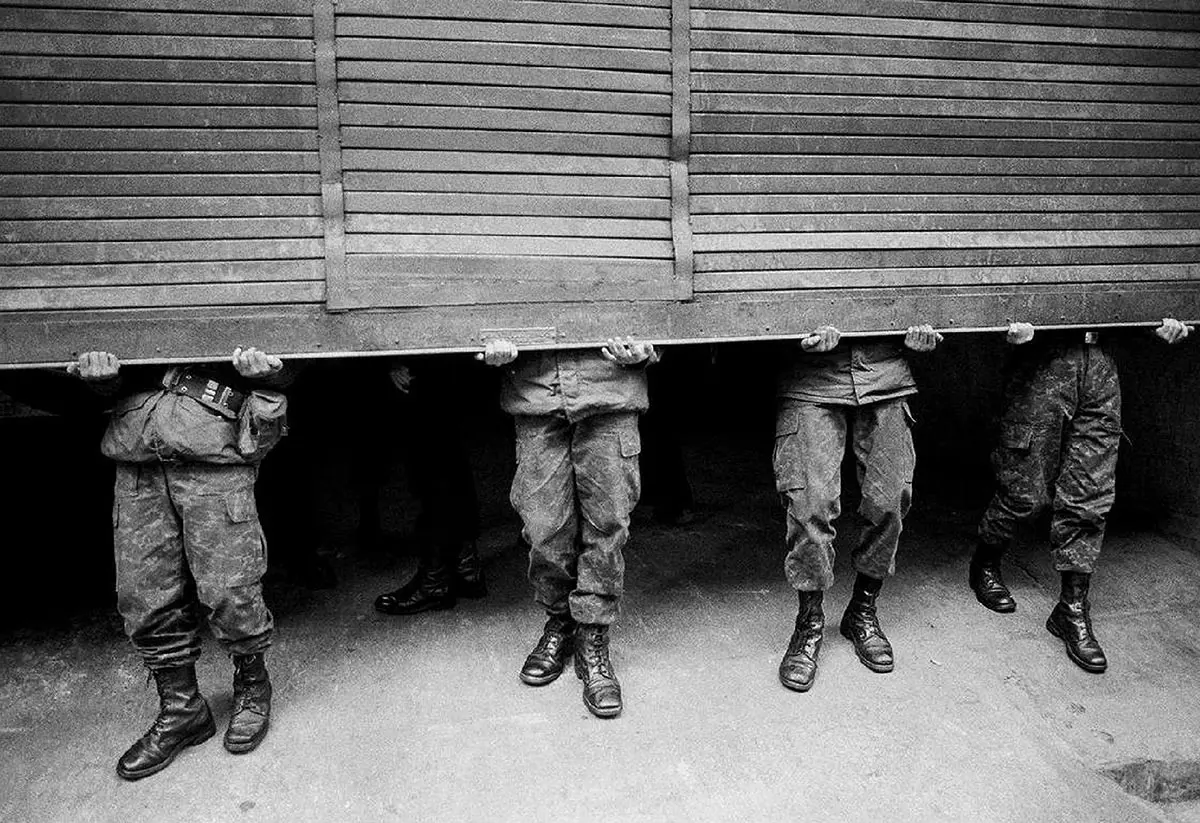
Observers will not be able to avoid imagining the artists’ dangerous adventure as they carried their cameras around with an eye on the viewfinder, the click of the shutter release always threatening to give away their presence, at a time of terror (1973-1976) when photography of this kind was prohibited.
Luis Navarro (Antofagasta, 1938) defines himself as “the photographer of the defeated and the dead.” He was forced to flee his region in the mid-1970s after speaking up and helping the families of the disappeared. He traveled to Santiago with borrowed photo equipment in his bags, and there he continued to photograph events, with a camera hidden under his clothes. In 1981, after suffering through months of persecution and a stint in jail, Navarro met a nomadic family who welcomed and sheltered him. That same year he helped launch the Independent Photographers Agency as a response to State terror, working with thirty colleagues intent on defending the profession, information rights, and freedom of expression, as well as to oppose the imprisonment of journalists for political reasons.
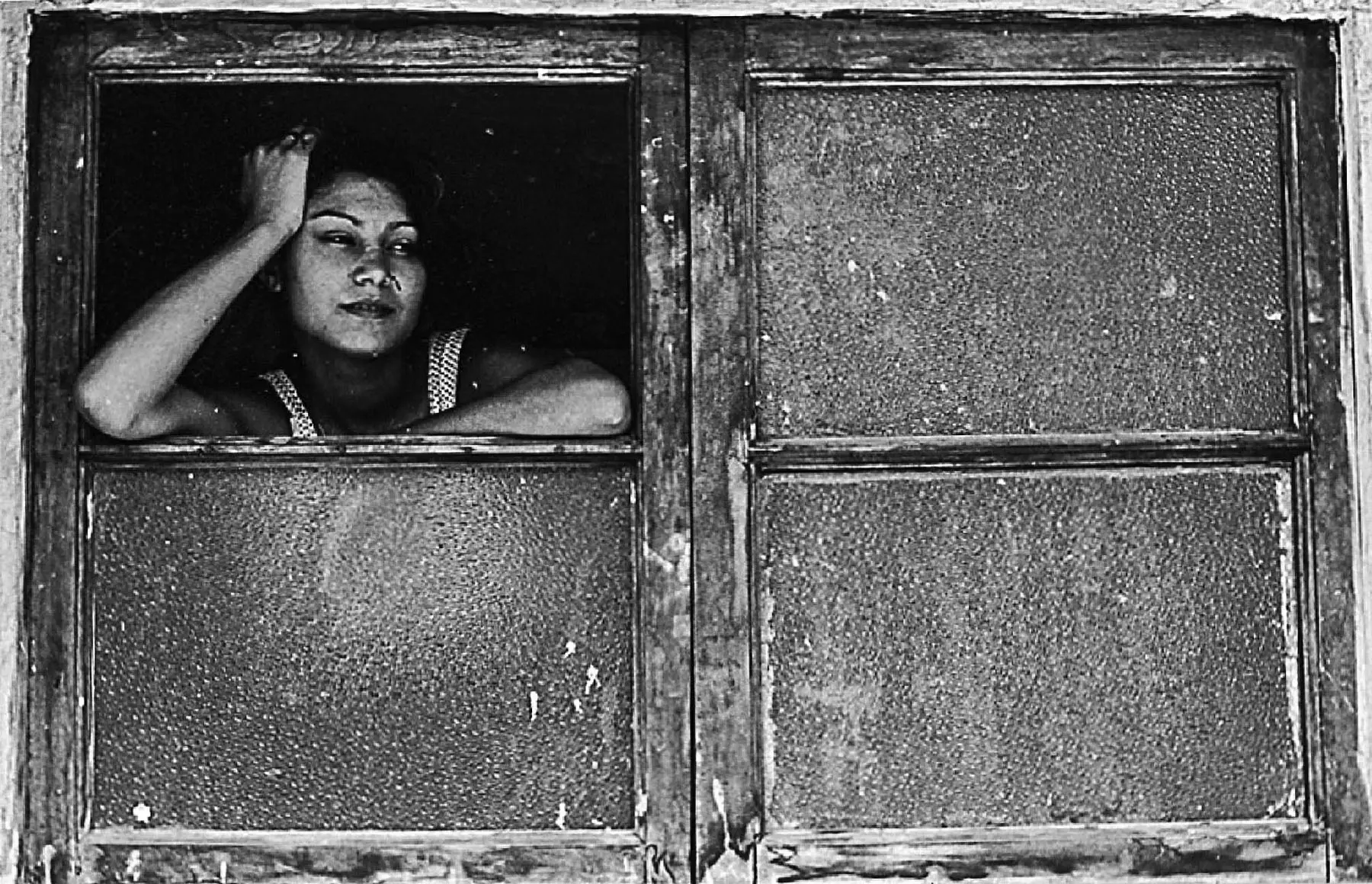
Navarro made the life of gypsies in Chile part of his personal destiny.
He focused primarily on the women, the expressions, the color of the garments, and the habitats of this segment of Chilean society, people who “invite us to celebration, freedom, music, and happiness.” Navarro names “the truth of the instant” as his school.
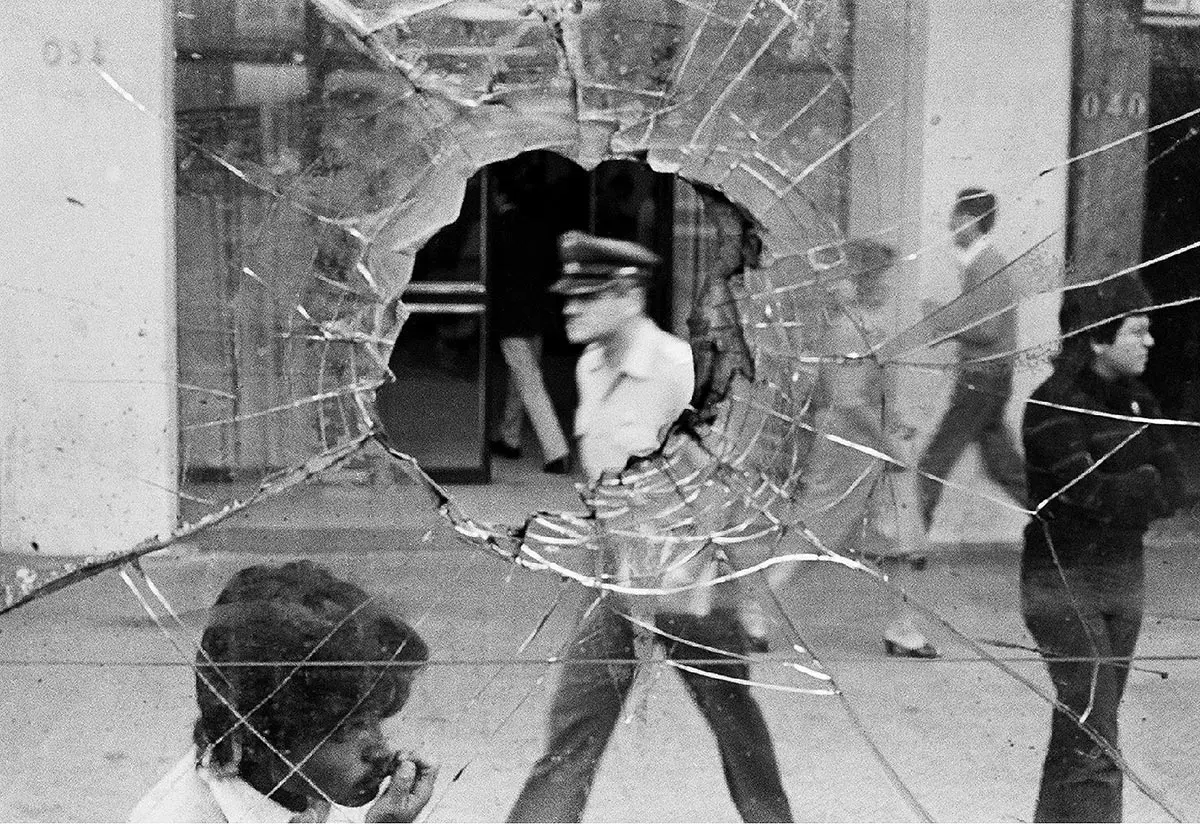
Álvaro Hoppe (Santiago, 1956) is a skilled photo-reporter who focuses primarily on urban settings. He demonstrated his command of a militant gaze whenever the historical situation required it. He can describe many scenes of social injustice during the military dictatorship and registered the vast range of spontaneous situations that emerged during the transition to democracy. His skill is evident in works like Santiago, from 1983. The face of a soldier in action is traversed by a bullet hole on a windowpane. Everything can occur in an instant. The image is perfect, the vision almost surgical.
The career of Alejandro Hoppe (Santiago, 1961) began when he was 21. Combined, his skills with color, light, and movement reveal an instinctive sensibility for the capturing of images. Alejandro Hoppe projects himself as an attentive observer into everyday scenes.
Álvaro Hoppe and Alejandro Hoppe mastered their craft in the midst of street combat. With a clinical gaze and great technical skill, the Hoppe brothers tell the story of how repression unfolded. Along with Navarro, they were pioneers of militant photojournalism during that tense, tragic era.
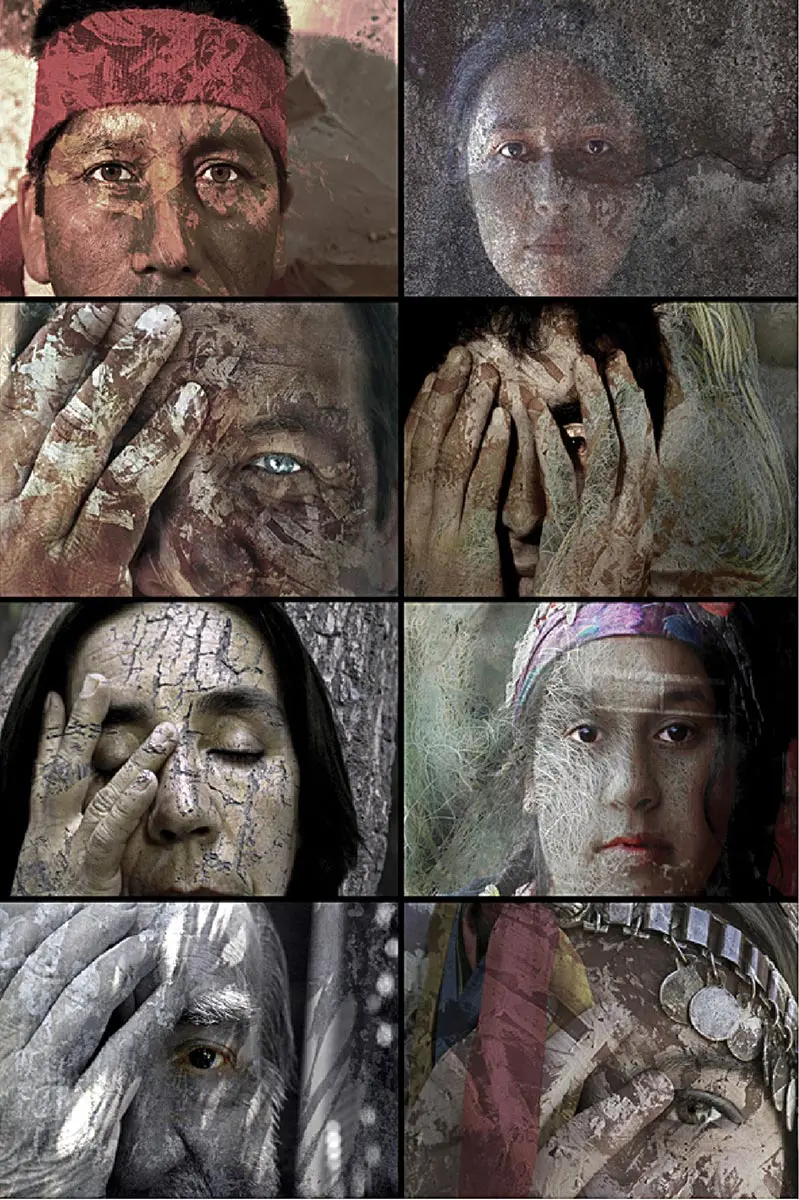
Leonora Vicuña (Santiago, 1952) practices video and performance as well as the photographic techniques necessary for her registers. Her commitment to the defense of ancestral cultures drove her to document fantasy and myth. A good portion of her investigation, between ethnology and contemporary anthropology, is devoted to the preservation and the memory of the Mapuche people. The complex, inspired vision revealed in her enigmatic images is much more than surface-deep. In Rewue, personal, a group of indigenous faces are altered by contrasts of light and shadow. Signs, tattoos, or gestures induce discrimination and suffering, configurations of a struggling identity, and a scrutiny of the magic that resides in poplar rituals.
Claudio Pérez (Santiago, 1957) lived in Brazil, but in 1983 he decided to return to Chile, intent on confronting the events in his country. He approaches local myths and rituals with a committed attitude.
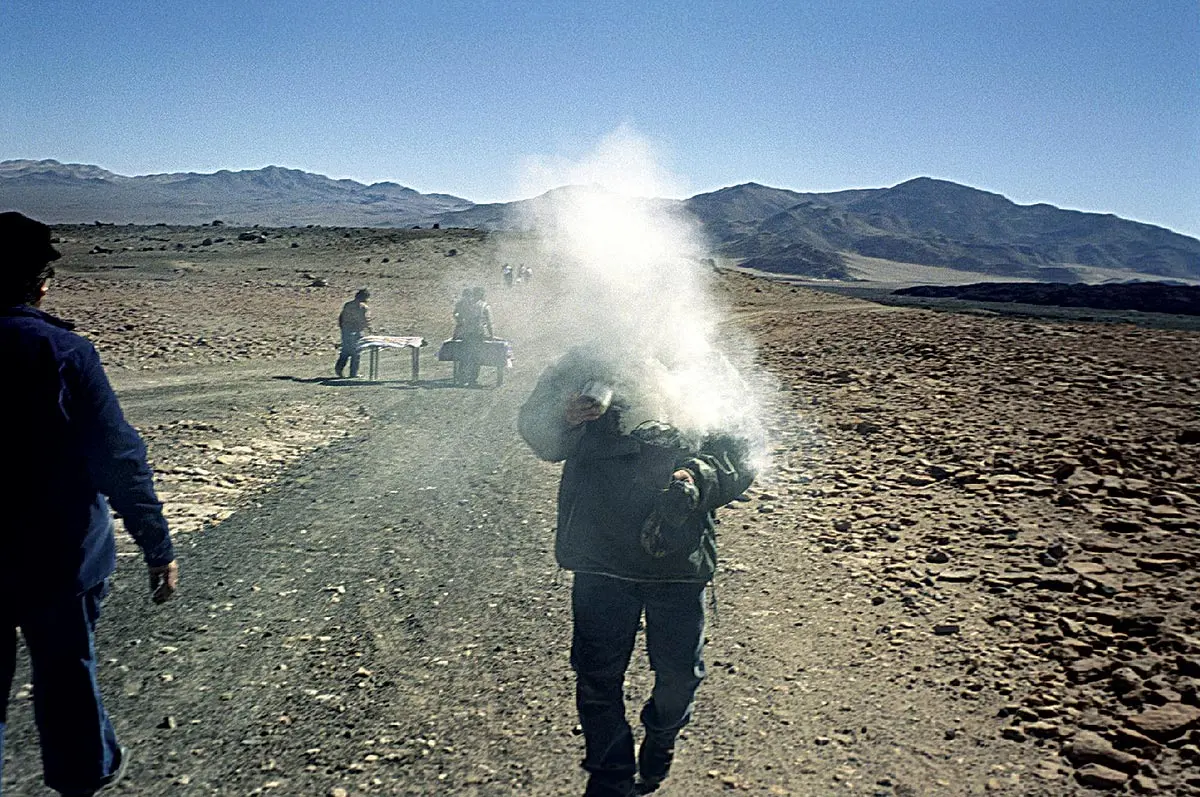
Pérez uses the “photographic portraiture” form as a document of social and political memory. One highlight in his oeuvre is Procesión, Estación San Pedro, included in his book Ritos y memoria (Chile, 2005). The image is marked by an abrupt horizon, and the scene involves elements that can only be confronted through experience. The magic of faces enveloped in an occasional haze is emphasized or dissolved by the deployment of forms harking back to the documentary genre.
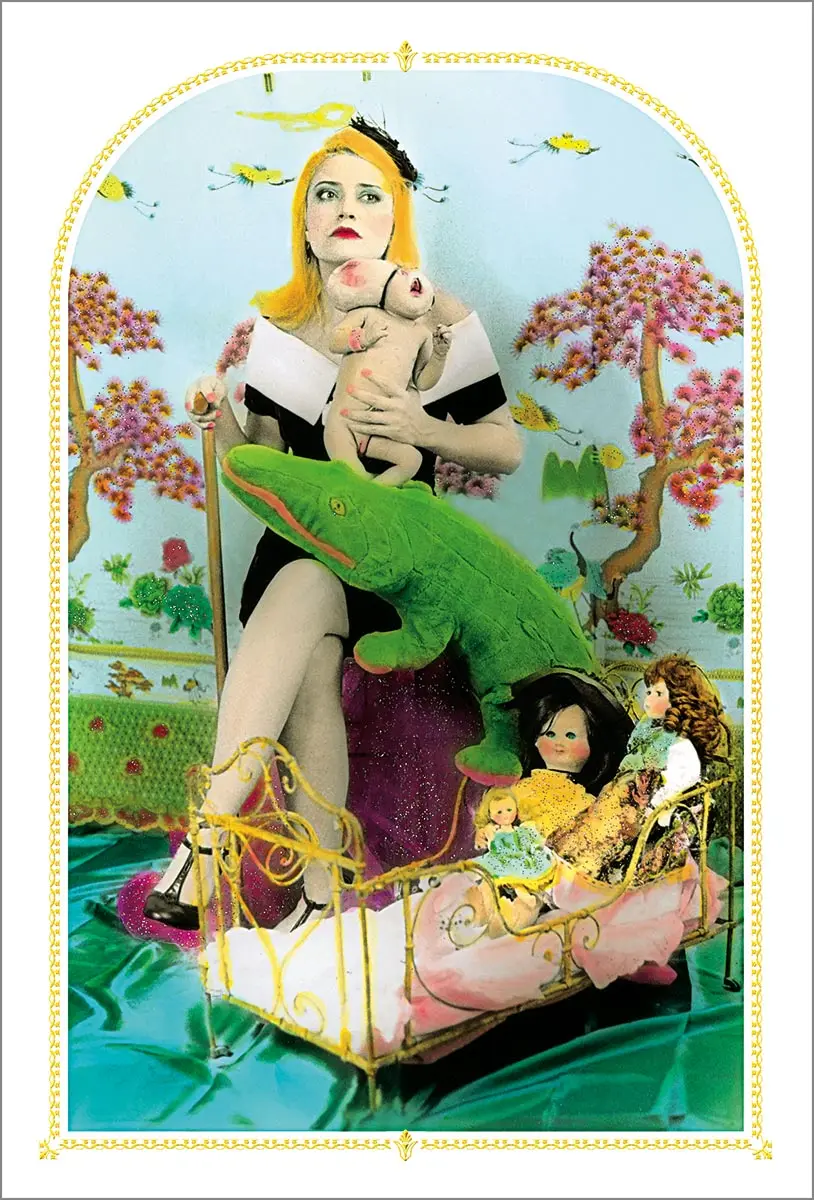
As a representative of her generation, Zaida González (Santiago, 1977) explores the underground, the transgressive, and the popular. She is the youngest artist in this selection and her background is in advertising. Her black and white copies are intervened with watercolor inks.
Social problems affecting women and their lives in the private sphere dominate an alternative psychosocial context. In her current work, González focuses on the relationship between the animal and the human, sex, and group belonging in specific situations and times. She values humor, materialized with a touch of malice as befits her personality. Such is the case of the scene in her Sin título (Untitled), from the series Recuérdame al morir con mi último latido (Remember Me as I Die with my Last Heartbeat), from 2009-2010.
This exhibition does not overwhelm viewers with brunt political demands and moves from quasi-documentary testimony to the pictorial through intimate, closely-held frames. Different aspects of social reality are represented in a selection dominated by photo stories. At the time, this was a militant social attitude; today, it is a tradition.
As they explore the massacre of opposition activists and the persecution of witnesses, these works confront the brutal unfolding of repression with technical skill and clinical rationalism. There is in this practice an ideal to be projected and an evaluation of the result to be made.
The release of the photographic shutter reveals the unfolding of consciousness. The relationship between the individual and society, the posing of critical questions, and the bearing of witness are the communicating threads and translate the dialectic between what history seeks and what it finds. Reading the exhibition vertically, we are referred back, in the first place, to the 1970s and 80s, with political conflict at its most intense. But a transversal cut opens a parenthesis that is yet to be closed. With their gaze clearly trained on popular intentions and expectations, these images remain undeniably current. They reflect the nomadic life and the exile suffered by many segments of society; because of this, the contents of the show are dissolved in an antinomy between the particular and the universal.
* Courtesy Gallery NegPos.
SUSANA SULIC