
I do not know which children and adolescent books Mario García-Torres read when he was growing up in the city of Monclova, in Coahuila; whether he read adventure novels or superhero comics, if he favored the stories of great travelers like Marco Polo or went straight to the source and had a volume of The Million in the home of his parents or grandfather. I could have just directly asked him about such references (which I am sure also include films and TV series) and list them here, but I chose to imagine them, turn him into a Marco Polo—although he could very well be a Vasco da Gama or a Bernal Díaz del Castillo. I do this so I can place García-Torres in a map of correspondences between the world that he has filled with inquiries and explorations and his point of departure, the place in which everything started: Monclova, a town in the north of Mexico, a city neighbored by the state of Nuevo León and not far from Monterrey, where he studied art before moving west to continue his education at the California Institute of the Arts (CalArts) with a full Fulbright scholarship. From there, the world, to follow a path in search of conquering caprices and circumstances experienced by a handful of emblematic creators from the 20th century—conceptual artists many of them—in places as remote (if we consider New York, London or Paris, de point of reference) as the city of Kabul, in Afghanistan, or Cuernavaca, in Mexico.
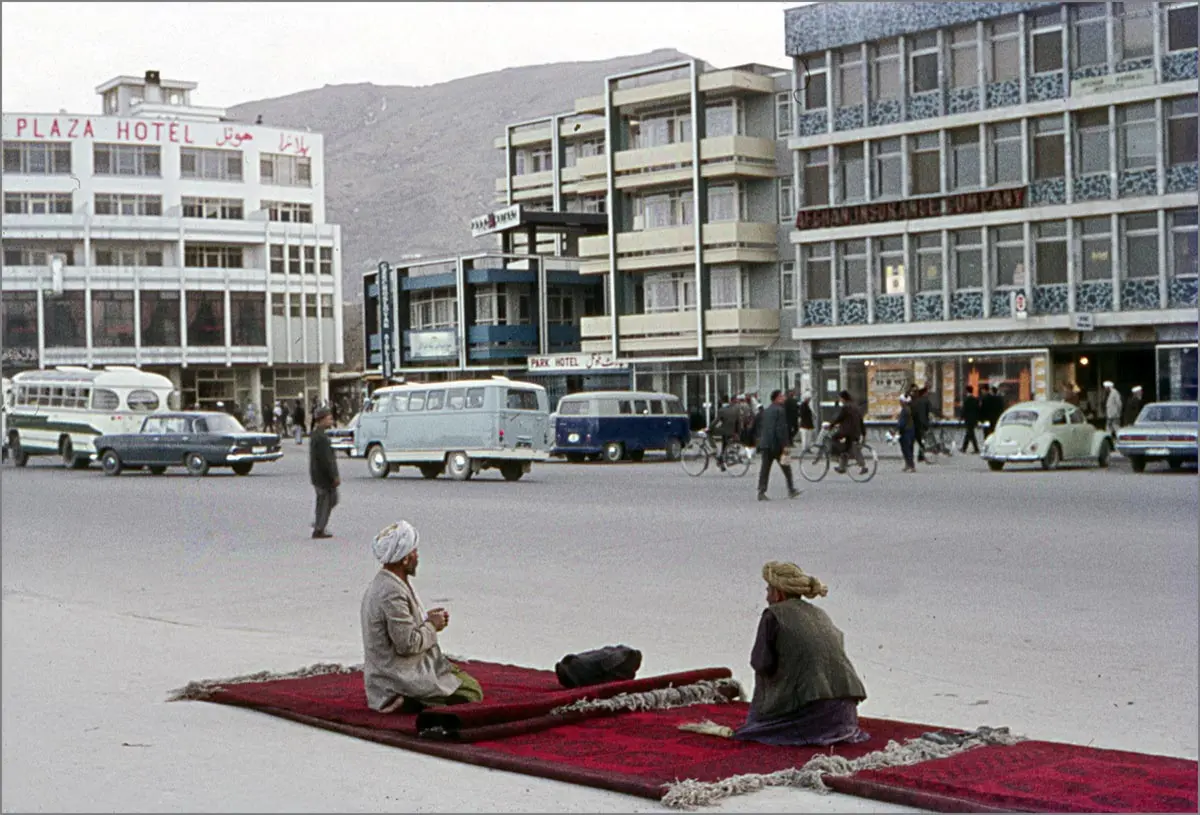
Although García-Torres has spent long periods in Mexico, his artistic trajectory can be traced all over the world, with solo exhibitions at the Stedelijk Museum in Amsterdam, the Kunsthalle in Zurich, the Museo Reina Sofía in Madrid, and the Hammer Museum in Los Angeles, among others. He has also participated in the Biennials of Venice, Taipei, São Paulo, and Berlin, and, at Documenta 13, presented works in connection with the residency of Italian artist Alighiero Boetti in the city of Kabul who ran a guest house (the One Hotel) in that Afghan city and created the piece Mappa (Map, 1971-72) that was supposed to be exhibited at Documenta 4.
The works by García-Torres that refer to Boetti and Kabul were presented around the piece by the Italian artist which, now recovered, was finally able to participate in Kassel 40 years later. Some of the works presented by García-Torres include the 2010 ¿Alguna Vez Has Visto la Nieve Caer? (Have You Ever Seen the Snow Fall?), a projection of fifty slides of images captured during de the 1970s by anonymous authors that illustrate a description recorded by García-Torres of events that followed the 9/11 terrorist attacks.
Beyond reclaiming the 19th-century spirit of discovery, Mario García-Torres has described this conceptual inquiry as contemporary archeology. He endeavors to turn the experiences of events and explorations into the main material of his work, which may be achieved through watching screens or participating in guided walks—for viewers are expected to continue the experience outside the exhibition space by following an itinerary that includes visiting guest rooms in the Hotel Montecarlo in the Historic Center (where there an exhibition awaits them, and only them), the Museo de Geología of the UNAM, in the Santa María La Ribera neighborhood, where one can see paintings by José María Velasco displayed on the second floor; and the presentation of performance in one of the theatres of the Centro Cultural del Bosque de Chapultepec. Then viewers get to break with those intervals of time by going back and forth between places in time, bringing them together through gestures and intentions that render them contemporary.
This superimposition of time and space reveals its own adventure as an invocation to turn the adventure of others into the reality of his (or the viewer’s) own adventure. I guess that this is the reason García-Torres demands from viewers an extraordinary amount of time to follow his work. Between the time it takes to watch the videos and films exhibited at the Museo Tamayo (which represents his first grand exhibition in his country of origin), and the walks that he proposes, viewers can easily spend more than an entire workday. It would appear that his intention is to appropriate viewers, turning them into an extension of his work by forcing them to repeat the gestures that have defined his work.
We follow his track as an artist in the same manner that he has followed the track of other artists, not solely in an effort to unravel some particular gestures of those artists, but also to establish a bond, a way to recognize (which, paradoxically, is a form of discovery) himself in others through the narratives in (or as result of) the films, videos, and installations that conform the exhibition of 30 works created during the last 15 years. One of the essential elements of García-Torres’ work is its weight—the materialization of concepts, if you will, and also of actions. Like in the piece that showcases the virtual correspondence that he maintained with the artist referenced, which appeals (and does not) to the conceptual art from the west coast and to land art (which unfolds in the horizon of his films. García-Torres not only creates archeology towards a past that is both close and remote, but he also leads us to new inquiries. The curatorship was performed by Sofía Hernández Chong Cuy.
RICARDO POHLENZ