
Art, like human knowledge in general, feels the urgency of an effective ecological debate. Curated by Felipe Chaimovich, the exhibition Natureza franciscana (Franciscan Nature), at the Museu de Arte Moderna de São Paulo, presented a contemporary idea of the collaborative relationship between nature and human beings. The show was based on stanzas from The Canticle of the Creatures written by Francis of Assisi between 1220 ad 1226, which is widely acknowledged as a precursor text in matters of ecology.
In his approach to the paradigm art/ecology, the curator selected from the museum’s collection 18 works directly related to the subject of nature; another 19 came on loan for the exhibition, adding to a total of 37 works in a variety of supports: photography, drawing, prints, video, artist’s books, installation, sound art, objects, sculpture, and embroidery.
“The works originate from relationships with the elements described in the Canticle: the Sun, the stars, air, water, fire, Earth, sickness and tribulations, and, finally, death,” explains Chaimovich, who became a student of Francis of Assisi’s work fifteen years ago. The curator has presented exhibitions about art and ecology before, even in the same museum, such as Ecology and the Garden Festival at the MAM in Ibirapuera, in collaboration with Chantal Colleu-Dumond, curator of the Chaumont-sur-Loire International Garden Festival, in 2010. The MAM also exhibited the shows Ecological Dwelling and Reason and Environment, curated, respectively, by Dominique Gauzin-Muller and Lauro Cavalcanti, both in 2011.
The goal of the curatorship was not simply to propose an apology for “ecological art” or a romantic return to nature. It did seek to recognize and understand critical and creative productions that dialog with the ethical principles and values of Deep Ecology, such as the work of Frans Krajcberg, who exhibited here a relief on handmade paper (1981) with the image of a leaf printed on it. Renowned for his intensive research and the use of natural elements in his work, as well as for his staunch environmental advocacy, Krajcberg focused his artistic journey on the complex weave of interconnections between personal and artistic life, denouncing deforestation in the Amazon basin and the Atlantic forest in the far south region of Bahía (where he went to live in isolation).
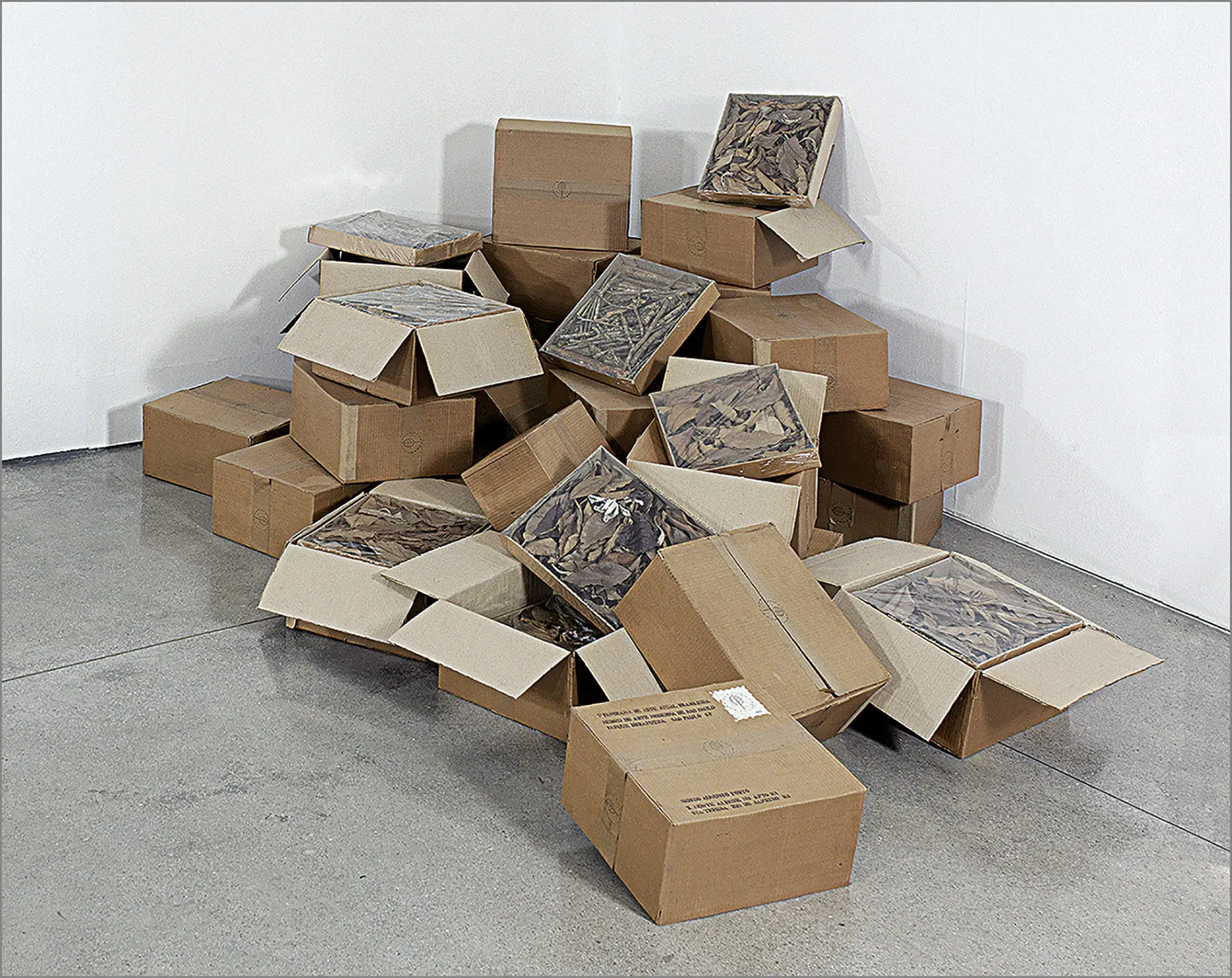
Krajcberg’s is among the works arranged in the exhibition to represent one of the elements mentioned n the Canticle of the Creatures (in this case, the “Earth”). Representing the same element was a 1975 installation by Sergio Porto, composed of thirty cardboard boxes filled with tree leaves and branches packed in plastic, cardboard, and color photographs.
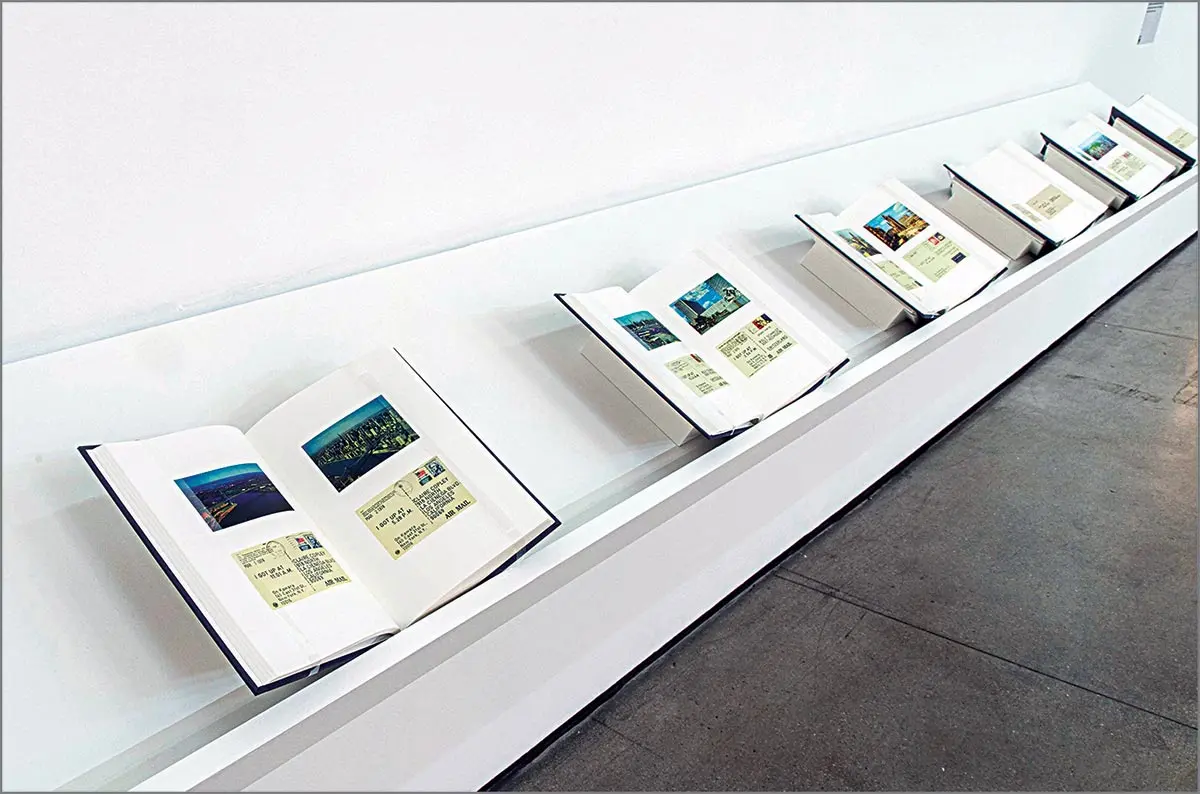
The exhibition begins with the subject of the “Sun”, represented by Lámpara (Lamp, 2012), a color photograph by Lucia Koch, next to The Celebration of Light (1991), a black-and-white photographic series by Marcelo Zocchio, and the twelve books in Japanese artist On Kawara’s series I Got Up (1968-1979). For twelve years, Kawara wrote “I got up” on the postcards gathered in this work.
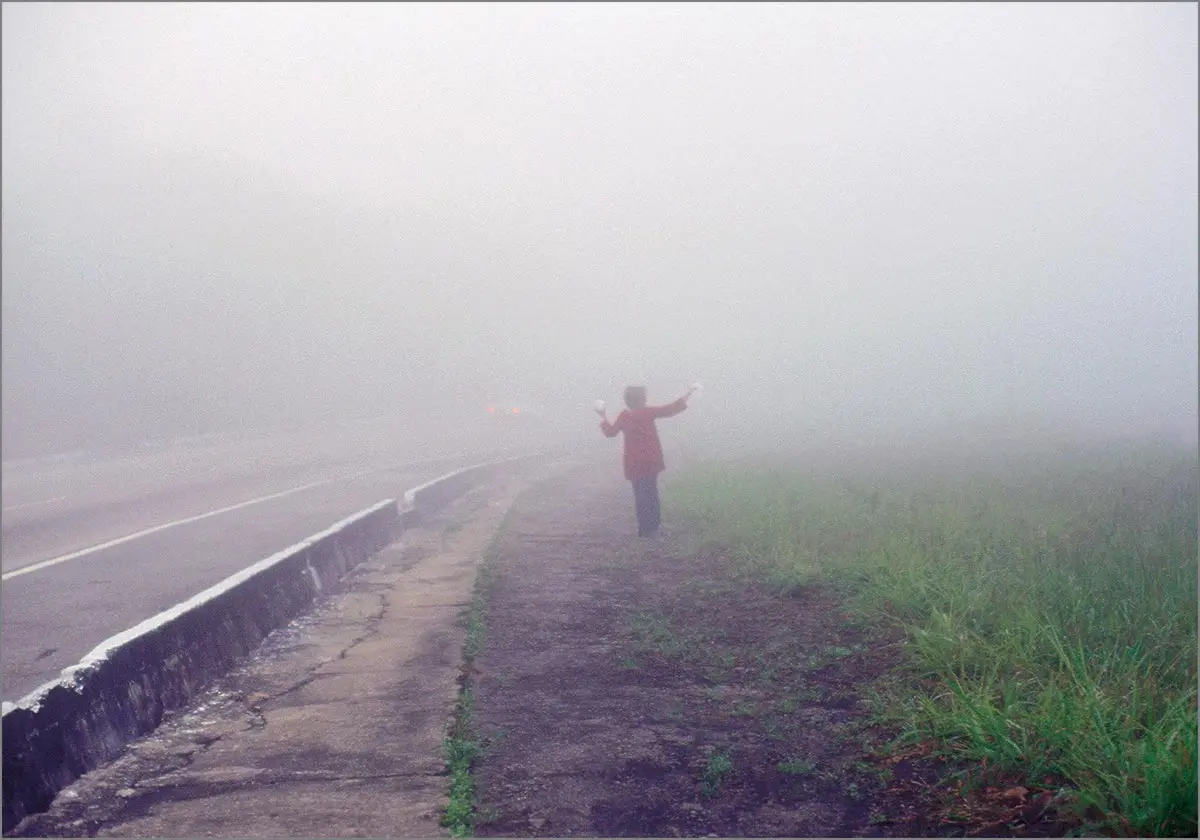
In the section devoted to the element of water, an in-depth look to environmental issues infuses the work of Brígida Baltar, who presented images from the series Recolección de la neblina (The Collection of Mist, 1998-2005), with fantastic images and a dream-like, unreal, almost colorless atmosphere. Also included in the exhibition were five China ink drawings (2004); the glass sculpture La recolección del rocío (The Collection of Dew, 2001); and the video Recolecciones (Collections, 1998-2005), in which the artist reveals an apprehension of the world by the act of collecting that which is inapprehensible, such as mist, dew, and the smell of the ocean. In these works, humanity is not present, and the observer is referred to as existential and phenomenological matters.
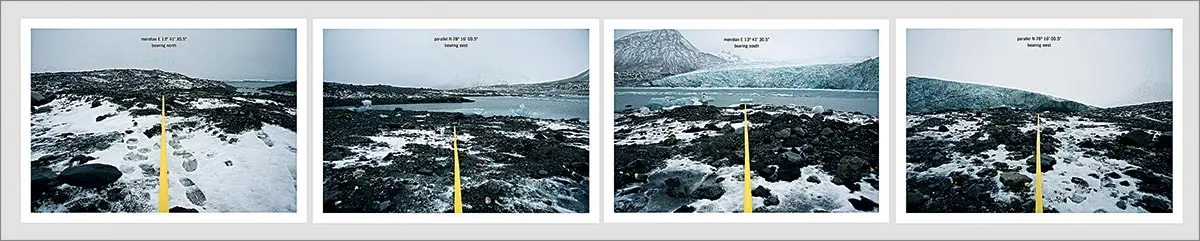
The element of water is also represented by A Line in the Arctic #1 and A Line in the Arctic #8 (2012), two photographs by São Paulo artist Marcelo Moscheta, whose work has as its connecting thread a confrontation with elements in faraway landscapes. The experience of traveling and living in inhospitable environments prodded him to photograph the memory of given places and to elaborate a classificatory system resembling that of archaeology that explores, by means of art, the domains of geography and physics.
Using uncommon materials and techniques, Moscheta’s works focus on the notion of the ephemeral and in humanity’s efforts to understand and recreate aspects of the geography and the physics of natural environments. “I am interested in the landscape as a system of representation where humanity can measure its own world,” he says.
Moscheta created the works in the A Line in the Arctic series during one of his sojourns in Spitsbergen Island, in the Arctic region. In this work, a line of adhesive tape is stretched on the ground in an attempt to follow the location’s exact parallel and meridian lines to the north, south, east, and west. However, the GPS signal the artist was using was somewhat treacherous at that latitude, which generates doubts about the accuracy of the action even though the device's readings were understood as very precise. “These works speak of the faults and incoherences in our attempts to measure the world and place it on a mathematical grid according to parameters that, in most cases, seem dislocated from the real situation and the characteristics of a natural landscape.”
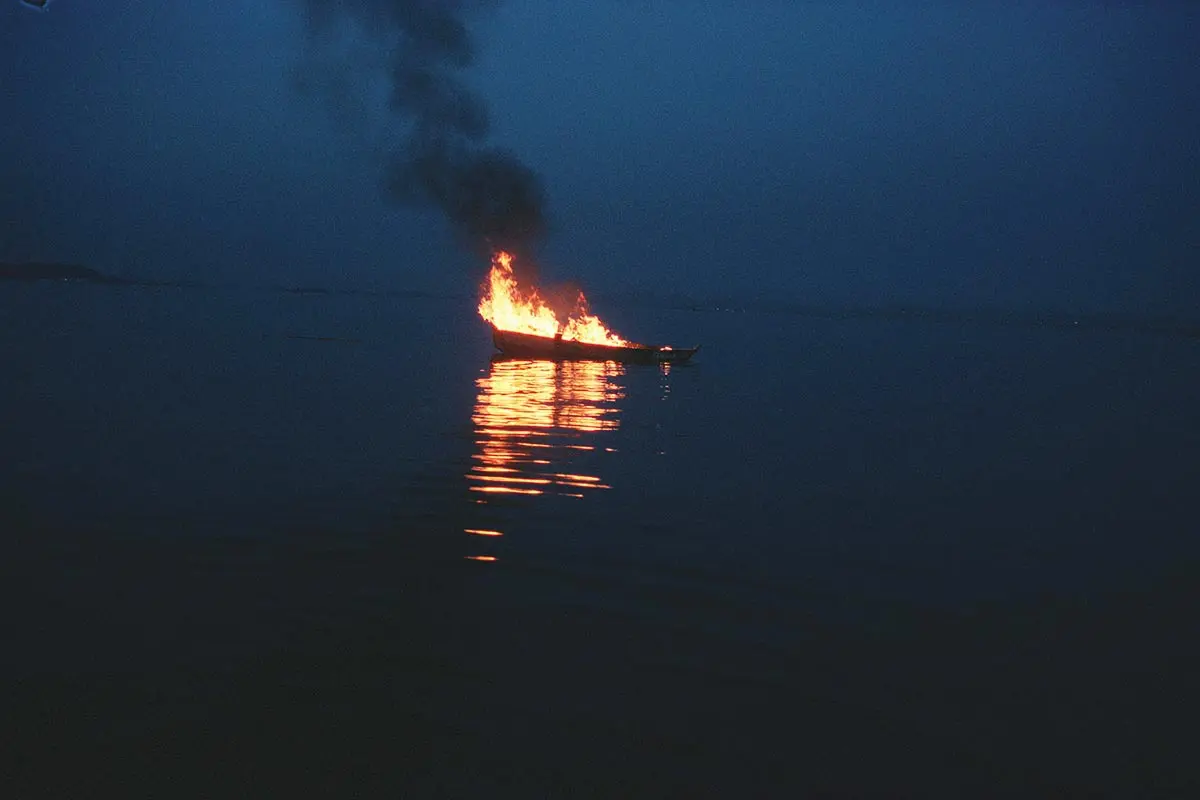
In counterpoint to the sinuous character of water, fire is symbolized by Homenaje a W. Turner (Homage to W. Turner, 2002), a video by Thiago Rocha Pitta. This video depicts the image of a small ship on fire, in reference to William Turner’s painting and its light-filled atmospheres and marine scenes. Captured in 26 mm on a beach in the island of Fundão, in Rio de Janeiro, Homenaje a W. Turner finds its inspiration in Turner’s painting titled Burial at Sea. Along with its direct reference to this painting, Rocha Pitta’s work explores the experience of directly contrasting fire and water.
Also concerned with the subject of fire, the work of Shirley Paes Leme features the traces left by smoke on acrylic and on paper. The abstract images resulting from exposing these surfaces to smoke reveal natural, unbridled, free-in-the-world traces that, on the basis of the work itself, become an aesthetic proposal. The simplicity of the images does not diminish their visual impact; despite their abstract character, they refer to fire in poetic ways. While residues are ephemeral and can vanish, fire in the work of Shirley Paes Leme is captured in order to make it possible to verify its existence.
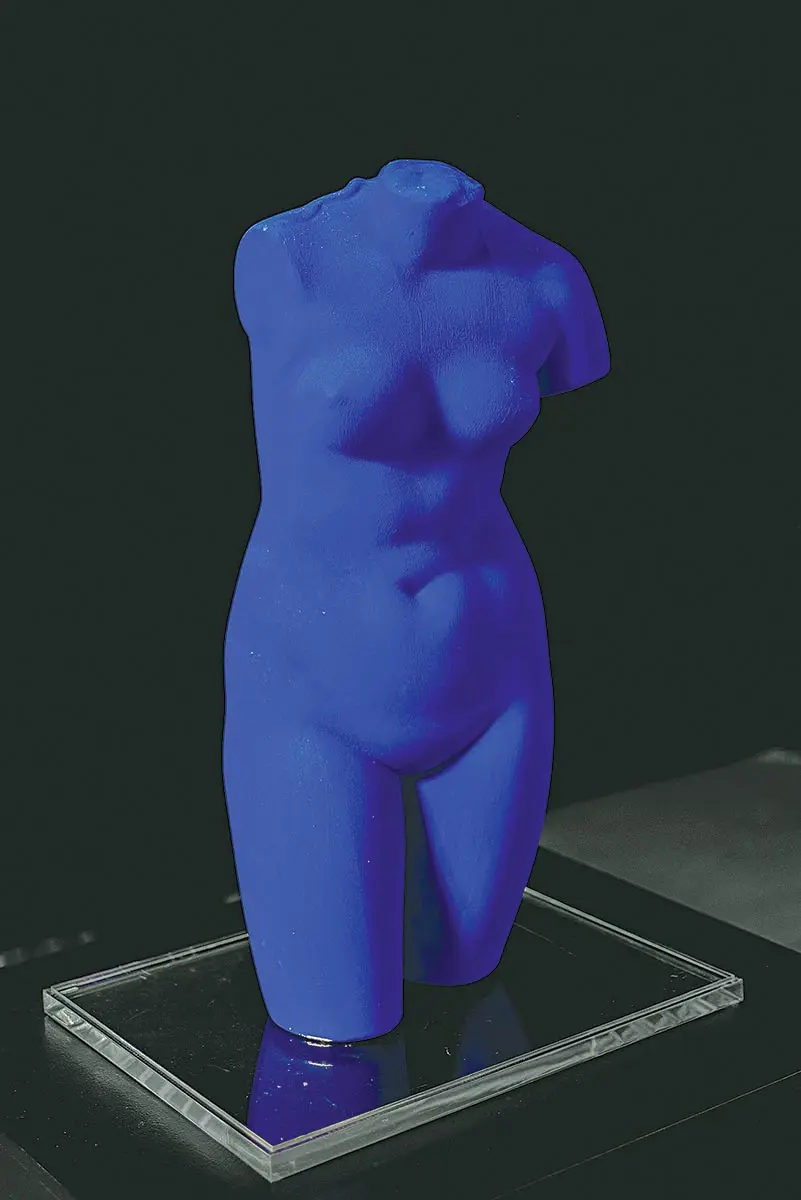
A sculpture by French artist Yves Klein, Venus Bleue (Blue Venus), represents the element of air. According to Chaimovich, the curator, when Soviet cosmonaut Yuri Gagarin declared that the Earth seen from space is blue, Klein saw his work vindicated, and even that the idea of creating a unique shade of blue, officially registered (IKB, Klein Blue) was not a merely aesthetic proposal, but a deep communion with the infinite blueness of the sky, a “song in praise of the sky and the air,” in the manner of the Franciscan canticle.
The stars are represented by seven photographs by German artist Wolfgang Tillmans. In his images, light appears in a variety of forms, from clearly contrasted images to monochrome fields. On the walls, these images appear as constellations against a light-colored background, suggesting the act of mapping a universe filled with randomness and uncertainty. The artist was always interested in satellites, planets, and comets. Tillmans can easily identify constellations in his photographs of the night sky, the acquired skill of people who have watched the stars since childhood. His familiarity with astronomy gave him a geometric understanding of light; the composition of his images seeks to follow the laws of light as such.
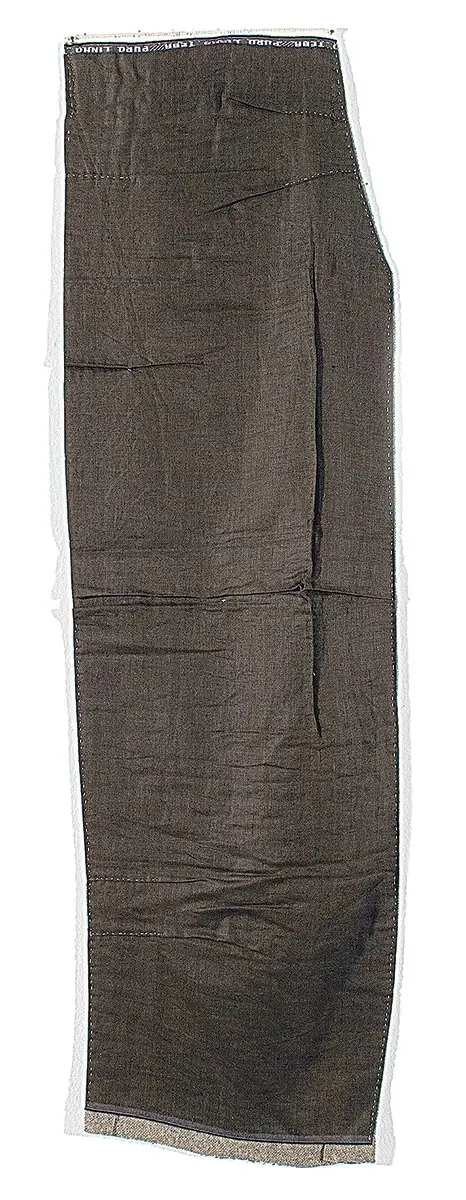
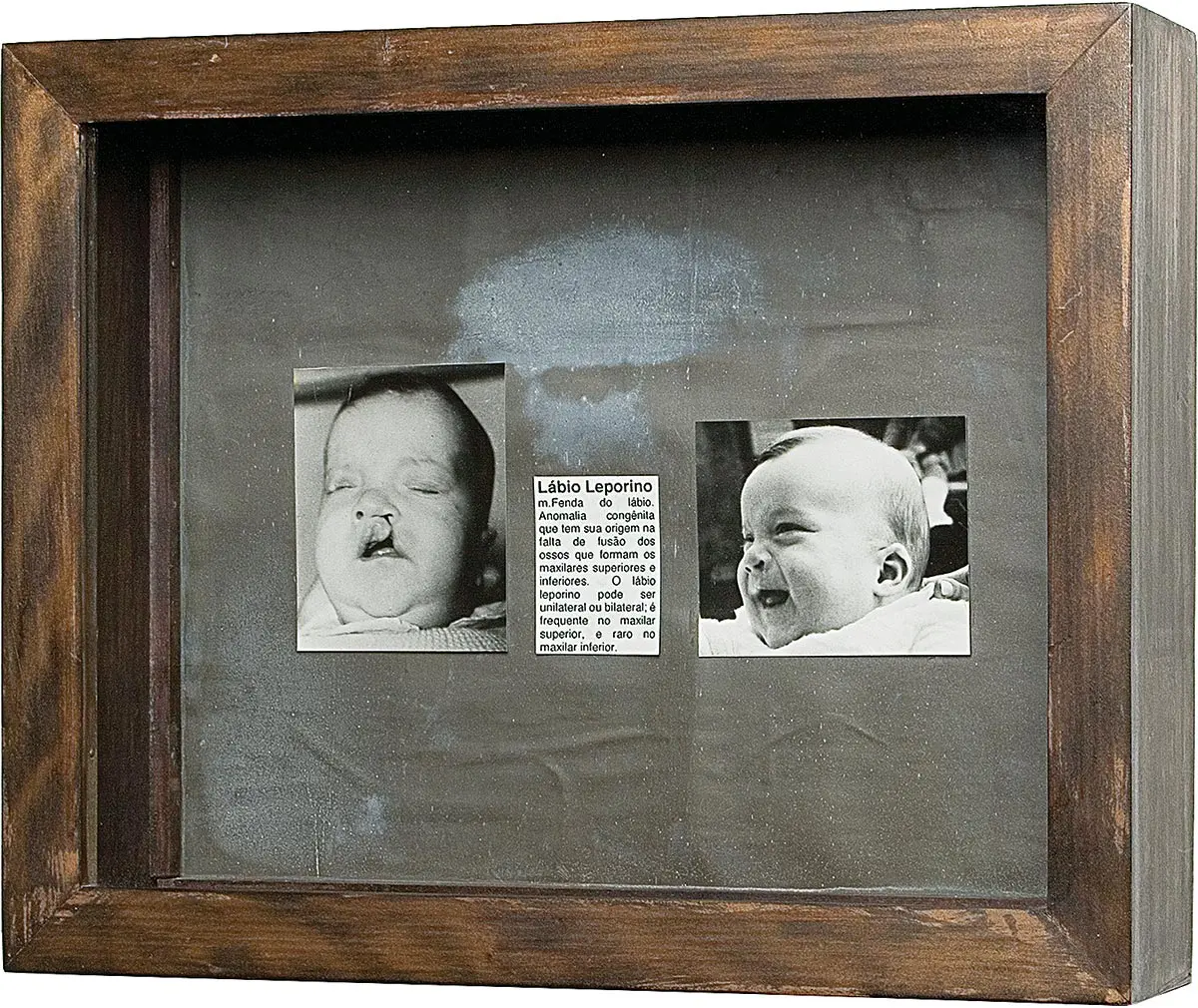
Illness and tribulations are the subject of Dis-placement (1996-1997), an installation by Paulo Lima Buenoz: in a furnished room filled with medicine jars, roses, tarpaulin, chalk, and ink, the artist presents us with the paths he followed in order to gain access to AIDS medicine before the development of anti-HIV cocktails. Nazareth Pacheco exhibits a series of black and white photographs showing cleft lip patients, teeth, x-rays, and plaster objects. Finally, death is represented by the last piece of fabric embroidered by José Leonilson before his passing in 1993. Chiara Banfi’s sound installation Todo aquí (Everything Here, 2015), floods the exhibition space and encompasses all the elements featured in the exhibition.
The thinking involved in the process of producing art concerned with environmental issues, as well as the systematic creative act involved, evolved amidst the urban transformations of the 1960s and 70s. In that period, art became interested in a new logic of human and environmental relations, and it developed this interest in a critical, sensible, and authentic manner in the face of the parameters imposed by the massive growth of large cities. Some artists working in Land Art, Earth Art, and other new, diverse languages launched a process of sensitization towards the environment and evolved new ways of relating to its elements, in some cases reconnecting or attempting to preserve ancestral cultures.
In Natureza franciscana, the relationship between art and ecology is brought to the fore on the basis of Francis of Assisi’s foundational ecological position in Western culture. In Franciscan thought, humanity must collaborate with natural elements: nature is not to be subordinate to human interests. Francis wrote the Canticle in the last years of his life. There, the various elements of nature and the many aspects of life are construed as brethren. After Francis’ death, in 1226, the Franciscan order promoted a new way of looking at the universe, focusing on the traces of a unique geometry destined to conjoin human thinking to the natural world.
In Brazil, the number of artists using this repertoire in their poetics is still small. However, the urgency of confronting the accelerating destruction of the country’s natural wealth through the implantation of monocultures and rural land speculation around the extensive cattle-raising industry may push the number upwards in significant ways.
ALESSANDRA SIMÕES