
Understanding the work of Juan Mejía (1966, Charlottesville; from Cali, lives and works in Bogotá) involves engaging three lines of interest that, albeit not the only lines he explores, traverse his production and have a significant presence in his entire oeuvre. First, the reference to education, the diverse forms of culture, and the specific ways we have to consume it. Second, Mejía’s drive to collect. And these two interests are traversed by a third one: the autobiographical references that permeate his work. Humor and irony are very present in a body of work that, with a critical attitude, invites us to think about the heterogeneity of cultural referents. Mejía’s works revolve around the creation of allegorical images, with allusions to the educational process, childhood, adolescence, and the artist’s autobiography. While drawing plays a significant role among the resources deployed, Mejía has also experimented with painting, installation, video, and performance.
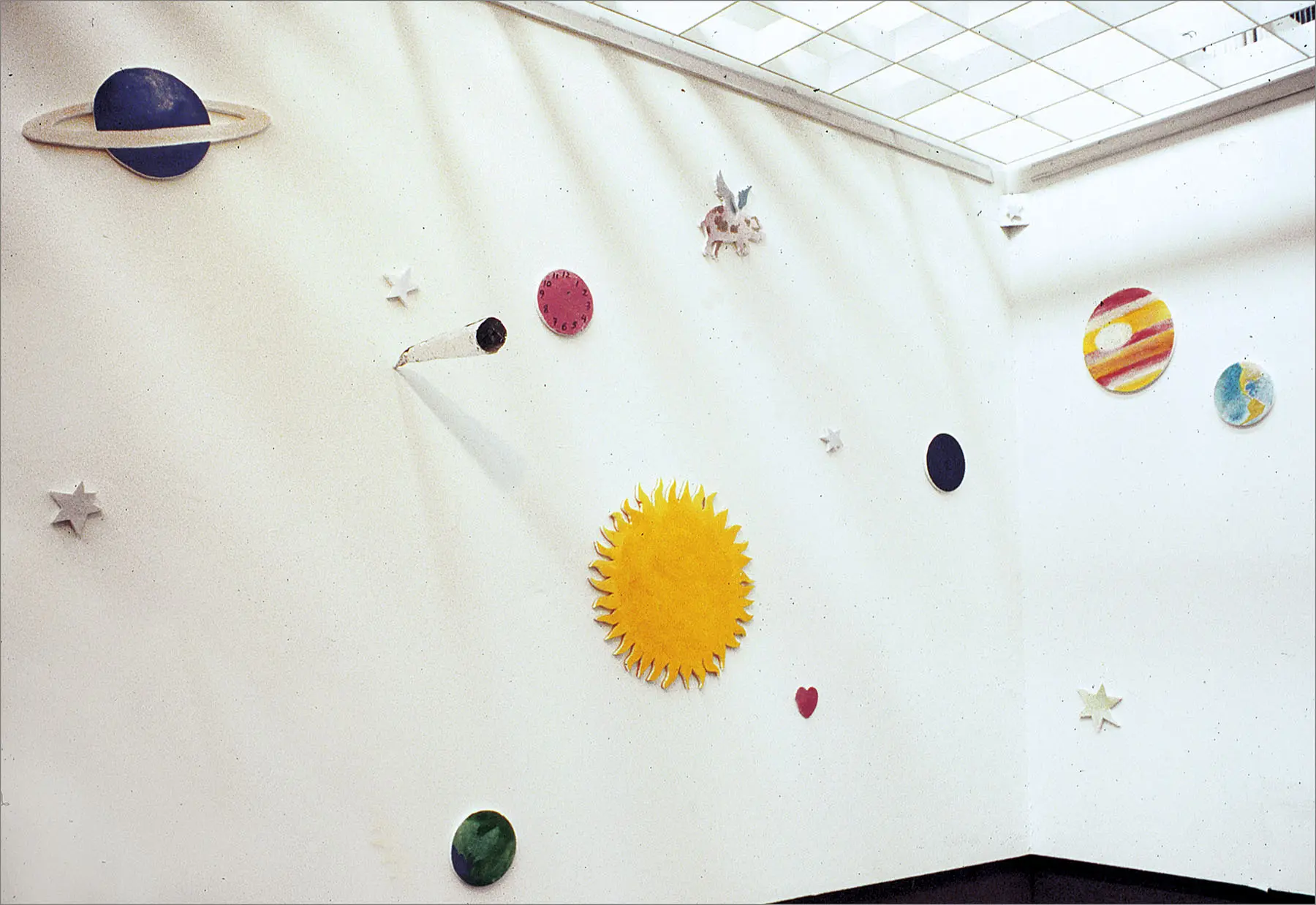
Those images referred to the educational process prompt Mejía to make observations about the space in which these processes operate. The use of ramshackle materials, the showing of unfinished things, is related to the school world so that what he does, in his own words, is a metaphor for that which isn’t but aspires to be.1
No hay quinto malo (There is no Bad Fifth, 1995), which features a direct allusion to the school world, signals the beginning of this thematic line,2 and Mejía’s interest in educational processes is clearly outlined in La educación sentimental (The Sentimental Education, 2000). This work is built around three central elements: a reproduction of the image of Pinocchio and Jiminy Cricket, modeled after Walt Disney’s presentation of them in his film Pinocchio; a long list of book titles written on the wall; and, closing the installation, a bonsai tree. Mejía built the list of titles by recording, in chronological order, the books he read from the moment the work was first conceived until the moment it was exhibited. It is an appealing record, ongoing into the present; it expands as time passes and Mejía notes new titles, authors, and years of reading.
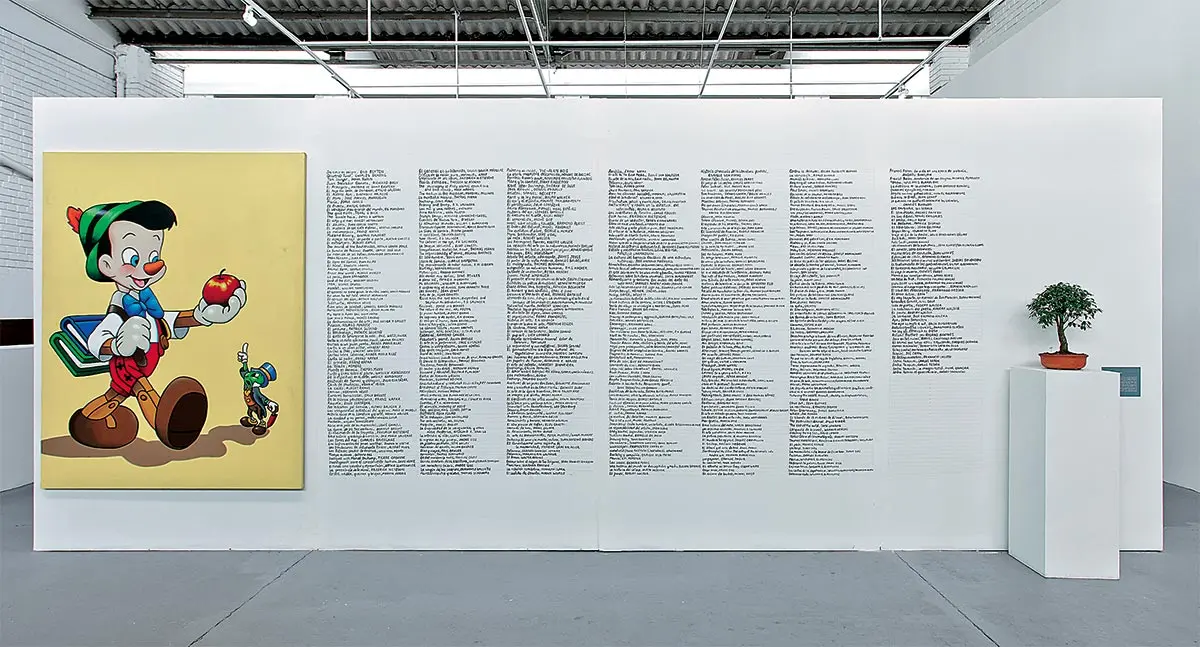
The title comes from Gustave Flaubert’s 1869 novel L’Éducation sentimentale, which narrates the trajectory followed by a provincial youth who experiences a frustrated romantic adventure as he dreams of achieving fame and fortune. The selection of this title and those characters is not fortuitous. Both Carlo Collodi’s The Adventures of Pinocchio and Flaubert’s novel focus on the life of a character in his formative years and connect with the Bildungsroman or “novel of education”, a Nineteenth-Century literary genre whose plot focuses on the character’s physical, moral, social, and psychological evolution from childhood to maturity. A concern with personal fulfillment and the way in which the individual must adapt to his or her reality play a key role in this process.
Mejía’s autobiographical gaze filters into La educación sentimental, since the list of books recorded on the wall, is part of his own formative experience. He has said that he finds the frequency with which the words biography and bibliography are confused particularly striking, and this list, a lifelong project that grows as each new title is incorporated, becomes a bio-bibliography, a personal life record.3
In this installation, Mejía moves us to reflect on those elements present in the educational process that go beyond the transmission of information and intervene in the construction of social conventions, customs, and taste. In his judgment, there is a tension between what one wants to do and what one is permitted to do. His choosing of the figure of Pinocchio reflects the difficulties caused by following one’s instincts rather than the norms established by society: not following convention results in punishment.
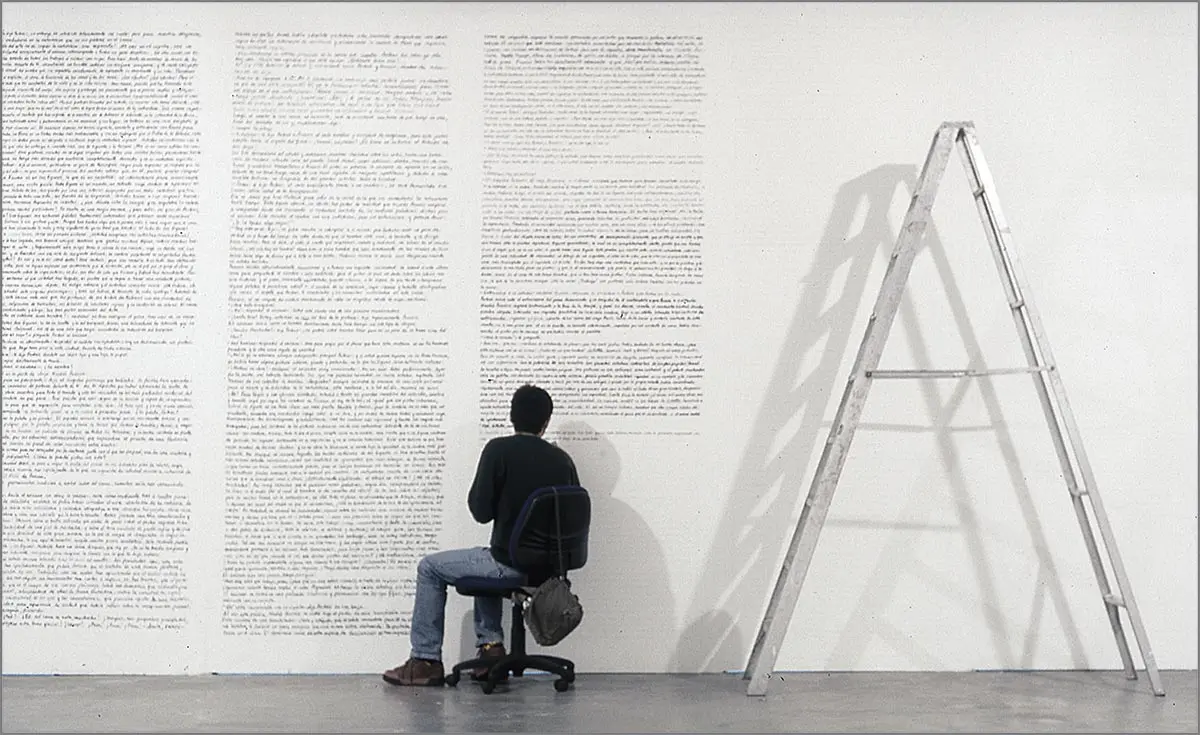
The presence of punishment in school learning is evident in Mejía’s project La obra maestra desconocida (The Unknown Masterpiece, 2003). Here, Mejía again turns to a literary text, in this case by Balzac, reproducing its fifty pages on the exhibition space’s wall. Two elements combine in this action: on the one hand, the reference to the mechanical task of filling calligraphy sheets to which students are often subjected in order to “learn” to write a given word correctly; on the other hand, the text refers to the supposed masterpiece to which a painter named Frenhofer devotes many years without achieving his objective, since the painting is incomprehensible for all observers. Balzac poses the question of whether creating a “masterpiece” is really possible or just an ideal that the creative process confronts us with.4 For Mejía, this intervention in the exhibition space also meant reflecting on the relationship between art and writing, since writing was transformed into an image. The mural of sorts he drew with the text on the wall produced a situation that viewers, as in Balzac’s short story, would not be able to understand. One imagines the audience asking: Which is the work of art? Who is the author?5
Mejía’s interest in the educational process also prompted him to think from the perspective of the teacher, a role he has also played at the university level. A work like Lectura de textos literarios y teóricos (Reading of Literary and Theoretical Texts, 2001) moves precisely in that direction. The action—first presented at the Cali Performance Festival—consisted of reading aloud a variety of texts in long and exhausting sessions, signaling towards the readings that parents do for their children or teachers for their pupils. Mejía situates himself at a desk, facing visitor traffic, and reads mechanically, without stopping or paying attention to what happens around him. He revisited this reading experience in Érase una vez un pedazo de madera (Once Upon A Time, a Piece of Wood, 2002). Over the course of three weeks, he read several texts that shared one common characteristic: the transformation undergone by their protagonists. Among them were The Adventures of Pinocchio, Kafka’s The Metamorphosis, Nietzsche’s Ecce Homo, and Elias Canetti’s Auto-da-Fé.
Mejía placed himself in the gallery space accompanied by a plant and a humidity meter, which automatically produced a drawing (the drawings and a photograph of the plant were later framed and exhibited.) Automatic reading is once again emphasized: a kind of reading that involved an absence, being absorbed in the act, and entirely inattentive to whoever is listening. This prompts a reflection about the teacher’s symbolic authority over the student since the very attitude that seeks to provide information creates an authoritarian voice that allows for no interaction: there is no chance for students to become interlocutors, and dialog is not favored.
As a teacher, Mejía questions such positioning, and in his publication Dibujo (Drawing, 2003, 2008) he compiles handwritten sentences that briefly describe his students’ responses to exercises he assigns in the drawing workshop he has conducted since 1996. The sentences thus compiled become the memory of the diverse proposals put forth by students in response to problems in drawing, such as point, line, and trajectory. For Mejía, education is a two-way path, where the teacher also capitalizes on his experiences.
As is the case with Mejía’s continuous updating of the list of books read, memory plays a significant role in these drawing notebooks. The goal is to remember works that impressed him since the act of describing them opens the possibility of their evocation. Present in both instances is an interest in bringing into the present elements of what has nourished Mejía in his formative process or of what he has liked in the past, without evincing an overtly nostalgic posture in this appeal to remembrance.
We noted above the existence of the second line of inquiry: the idea of collecting. In it we find a special interest in gathering archives of things that build memory, things that make a dialog possible between high culture and popular culture, using elements from film, literature, music, and, obviously, art history itself, without value judgments that would limit the selection. Mejía defines himself as a “compulsive collector”, and this is reflected in the construction of some of his works.
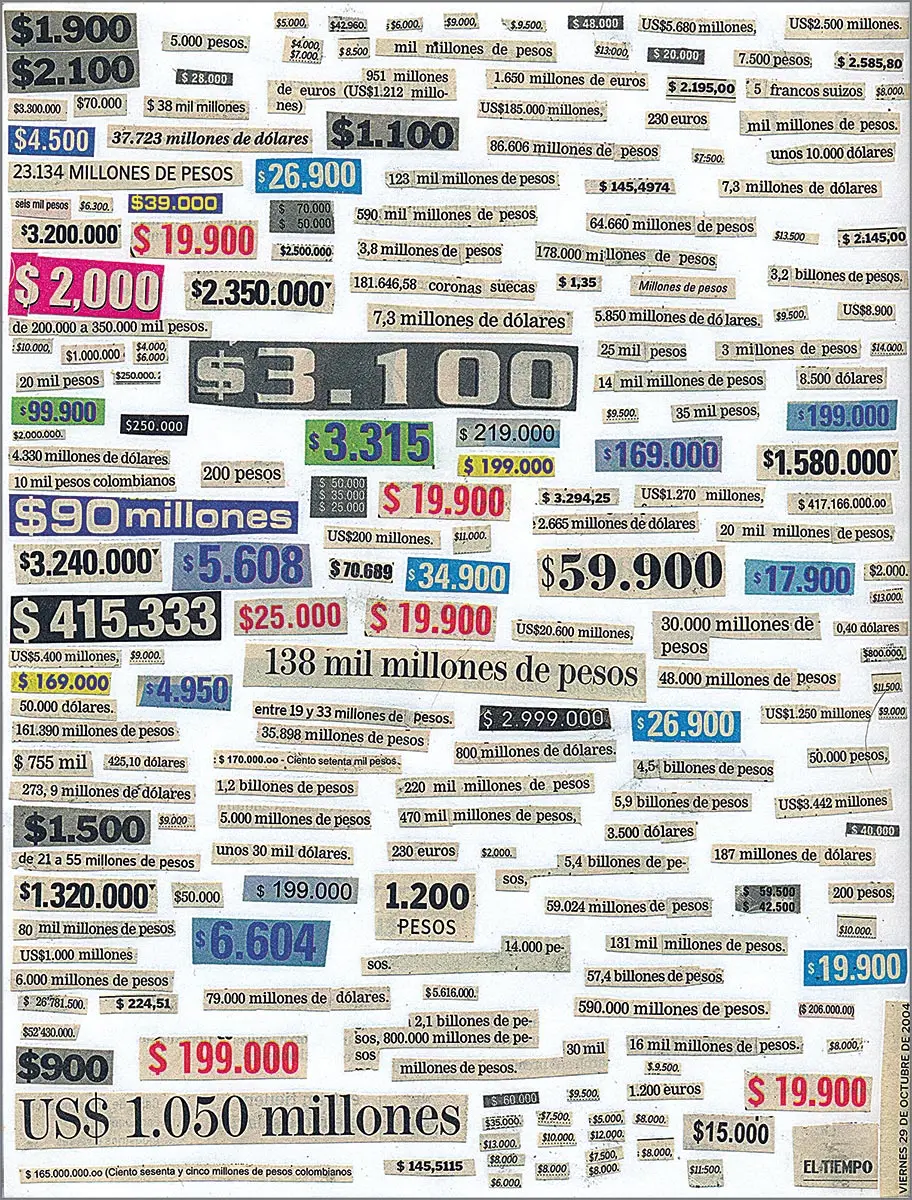
30 días (30 Days, 2007) is the record of a gesture repeated by the artist over the course of a month as he reads the newspaper. “The starting point was the universe represented daily by the El Tiempo newspaper, a universe with the potential to generate a variety of collecting impulses that every day connote different positions or personalities. A daily collection was proposed that required reviewing the paper’s edition in minute detail in search of its pieces. A mechanical search in the service of an idea.”6 Mejía chose a governing idea each day: places, diminutives, questions, proper names, animals, etc., and each piece was placed on a letter-size sheet. Transformed into an editorial project, it connects with the possibility of alternative readings of the newspaper, and again words become images.
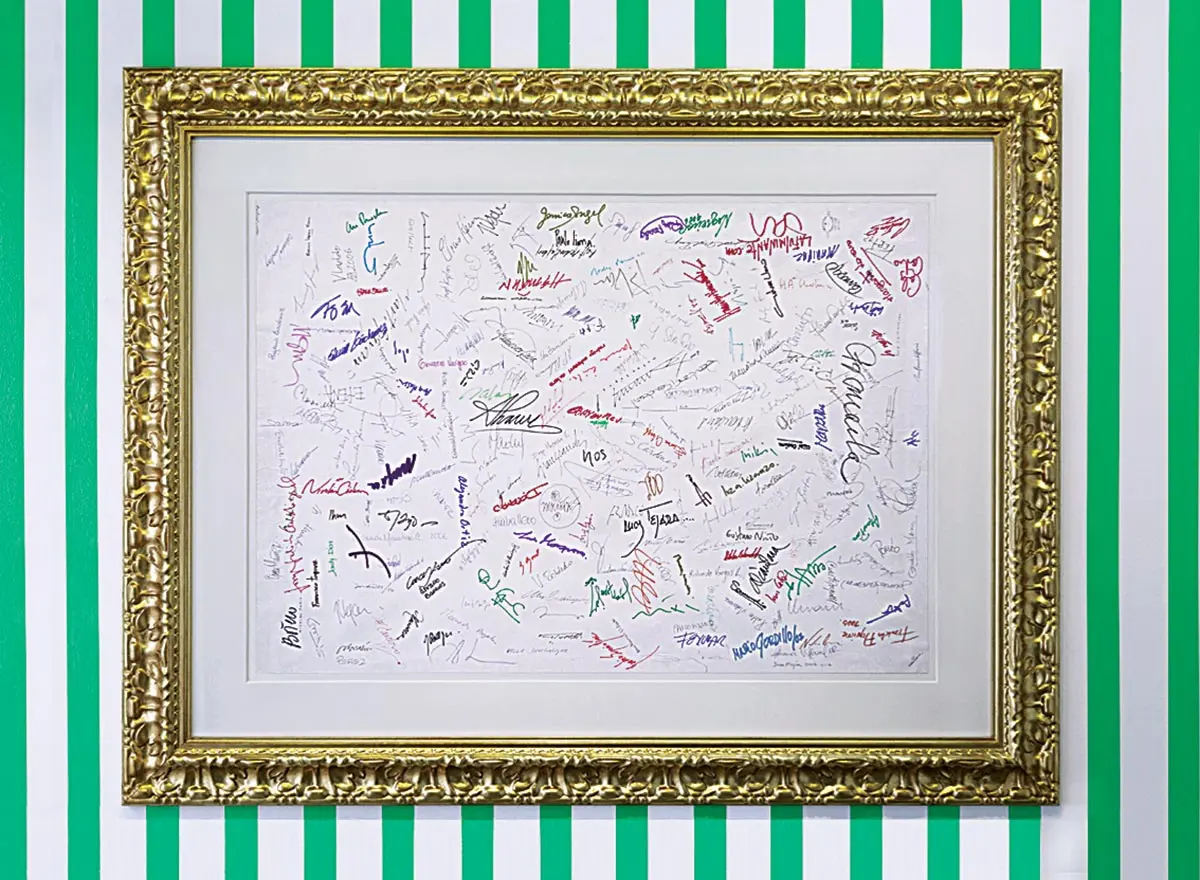
Mayorazgo is another one of Mejía’s collection-artworks. Started in 2006, it remains ongoing. On a paper sheet, Mejía collects the signatures of renowned Colombian visual artists, highlighting the value of the signature in modern art. The signatures appear as drawings that can be collected, and by presenting them with a gilded frame of baroque undertones Mejía makes an ironic comment on the “great family of artists”. Exhibited in 2014, this work was accompanied by a videoconference with the artist, who gave a “lecture” on the value of signatures. Thus, a verbal explanation accompanied the image.7

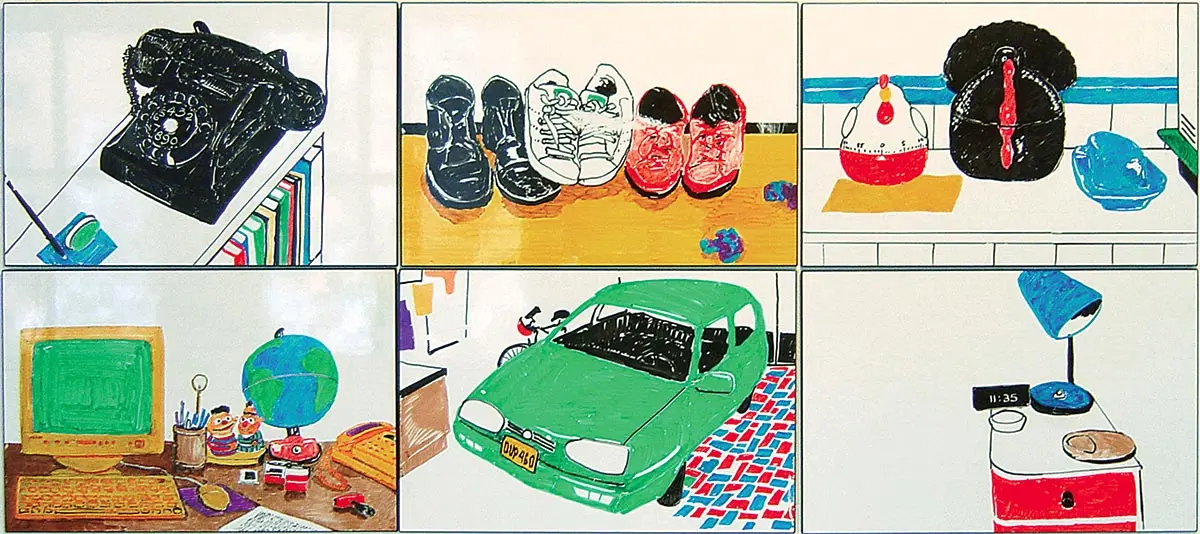
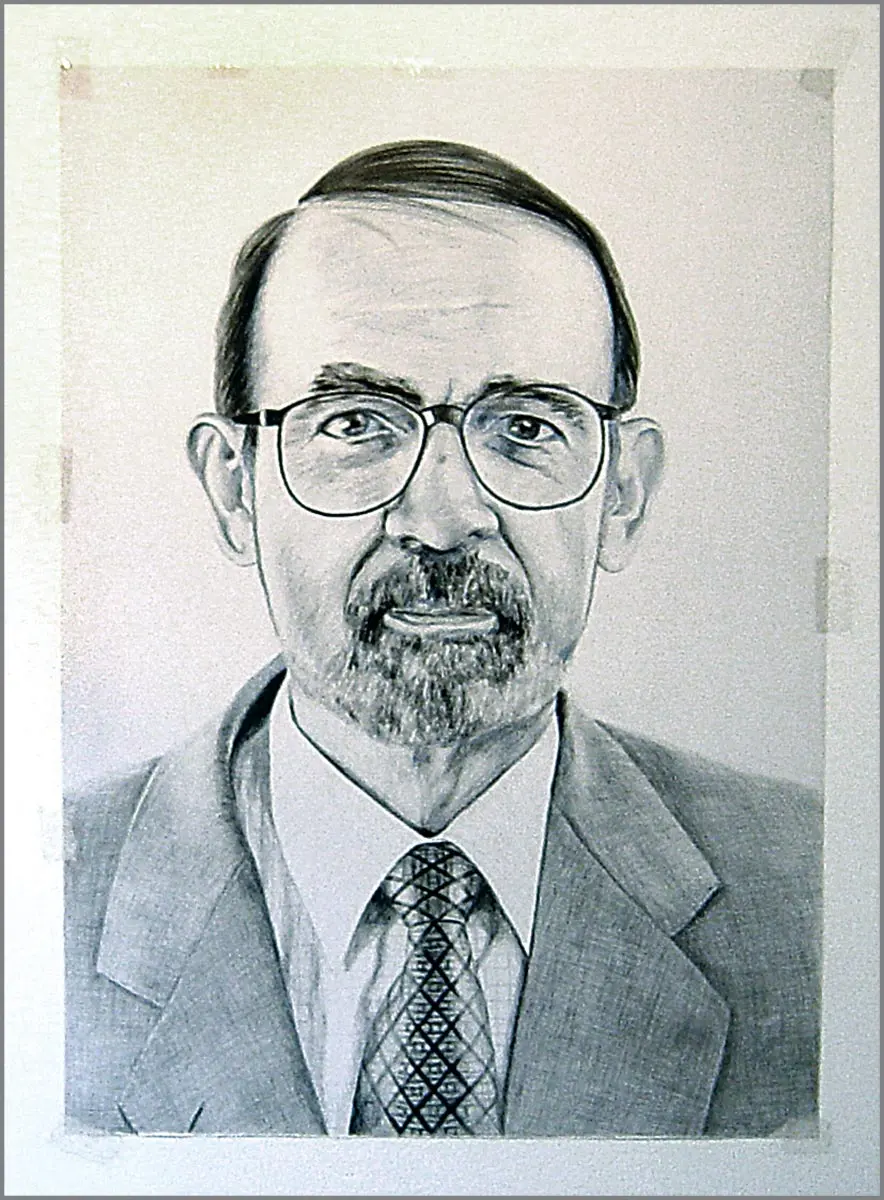
Autobiographical references, so present in Mejía’s work, are emphasized in the installation Documentos y bodegones (Documents and Still-Lifes, 2004). The title indicates the two concepts at play: documents refer to the pieces that allude to the artist’s personal experiences from different moments of his daily life, while the still-lifes, which are drawings, situate Mejía’s domestic space. The autobiographical mediation in the images on exhibit is not hermetic; on the contrary, it is made explicit.
Along those lines, some drawings are especially significant: a portrait of the artist’s father, an outline of the city of Cali, and a bulletin board with precise information about Charlottesville, the city where Mejía was born by happenstance, but where he has never lived. While Documentos y archivos is his most autobiographical work, Mejía seeks to reach further with his images in order to “highlight the potential of the document as an artistic object… as though the artistic object came before the information it contains.”8
In Des artistes français que j’aime bien (The French Artists I Love, 2008), we once again encounter autobiographical references and school bulletin boards. In each of them, Mejía explains why he likes the artist represented, in texts written in basic French (learned during the year and a half Mejía lived in Paris.) The writings have evident similarities to the idea of “doing homework”, and even the materials used, such as markers and pens, reinforce this impression.
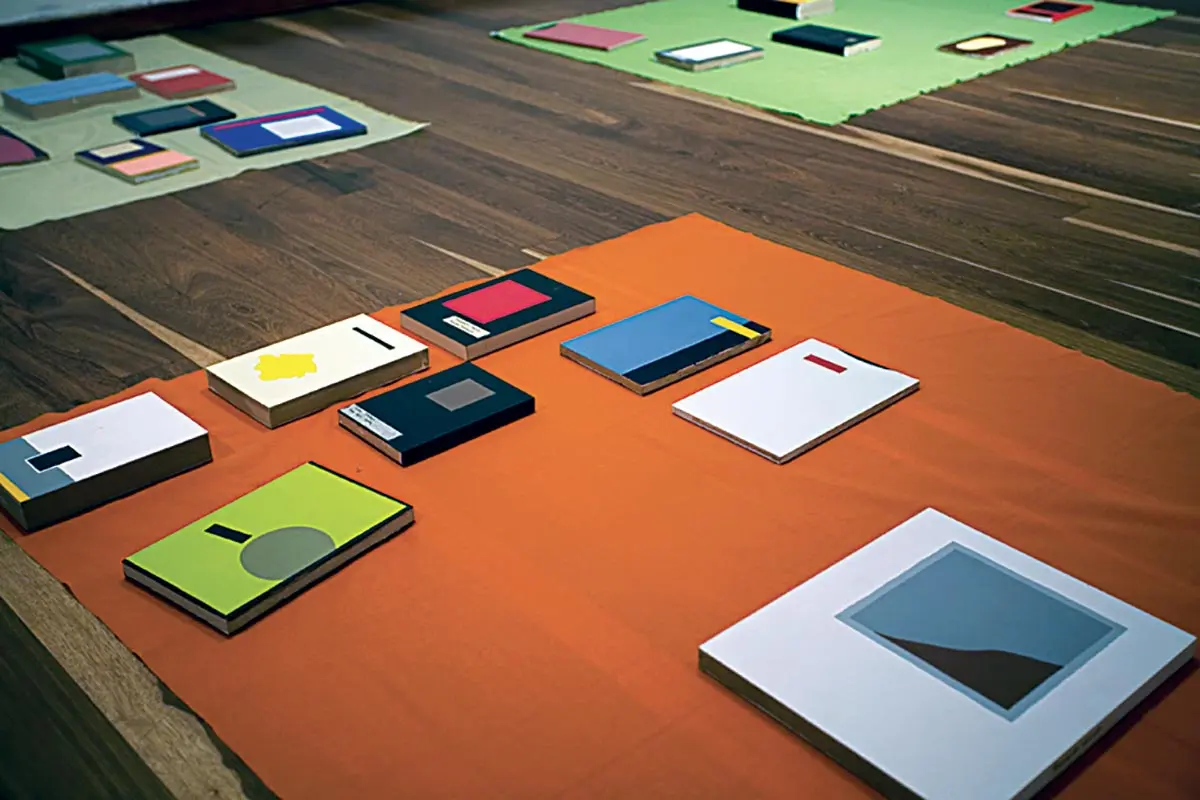
The selection is not devoid of irony. Should we understand it as synonymous with “good taste”, all the more so for its being about French art, traditionally seen in connection to the idea of “good art”? As Mejía points out in the show’s catalog, “Taste is subjective and solipsistic, an expression and exercise of the first person singular, I like it, I don’t like it… but this doesn’t make it less real than other criteria. On the contrary, it is the truest, the most readily verified criterion. The other language is the Other.”
One aspect of Mejía’s work that cannot be ignored is his interest for creating collaborative art. It began when he was a university student and continued on the basis of his prolific collaboration with Wilson Díaz and, later, with Giovanni Vargas. The significant number of collaborative projects with Díaz made it possible for them to present, in 2012, Master copy. Juan and Wilson 1995-98, a retrospective focused on the period in which the project that distinguished them among the generation of young artists in Colombia in the late 1990s consolidated. As Guillermo Venegas writes, “[…] working as a duo and a couple, they introduced points of moral and cultural inflection that became harder to question in the immediate artistic context from that moment on. With their method of work, they pioneered the reeducation of many social ills.”9 Works like Saltando matones (Jumping Over Bullies, 1996), Primera impresión (First Impression, 1997), and Mostrario (Sampler, 1998) articulate reflections about the notion of the author, the social and political sites from where the work is produced and set to circulate.
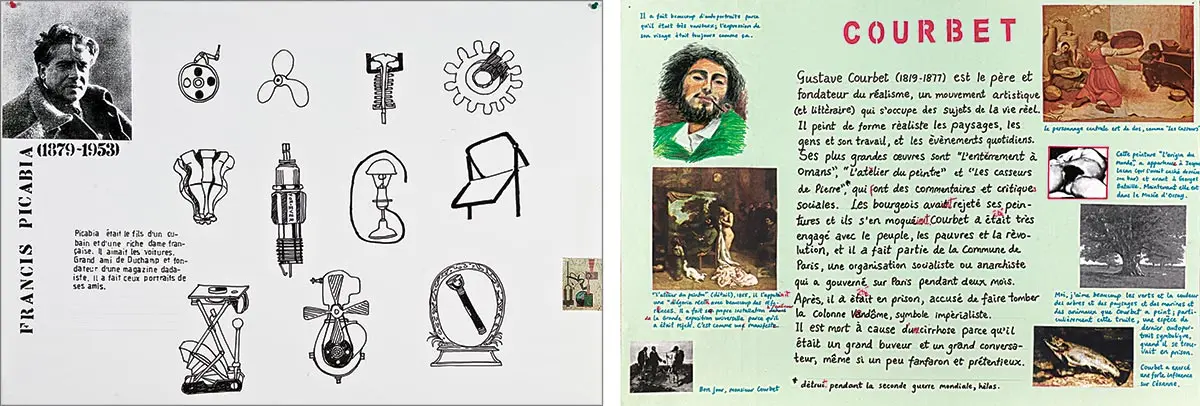
Yo y Tú (Me and You, 2004), made with Giovanni Vargas, appropriates the idea of the heterosexual couple in order to propose an alternative family portrait: the two artists appear in a studio photograph in the company of their pets, questioning the traditional discourse on the family. Monte de Piedad (Pawn Shop, 2007-2008), also made in collaboration, consists in the creation of paintings on wood supports reproducing the covers of books on art, history, and literature, with the particularity of removing the texts that identify such things as the title and the author, abstracting the cover’s graphic design and obtaining, as a result, a set of images that take us back to the modern era’s geometric abstraction. On exhibit, their technical card features the book’s author and title, written by hand. Memory, image, and text are once again the protagonists.
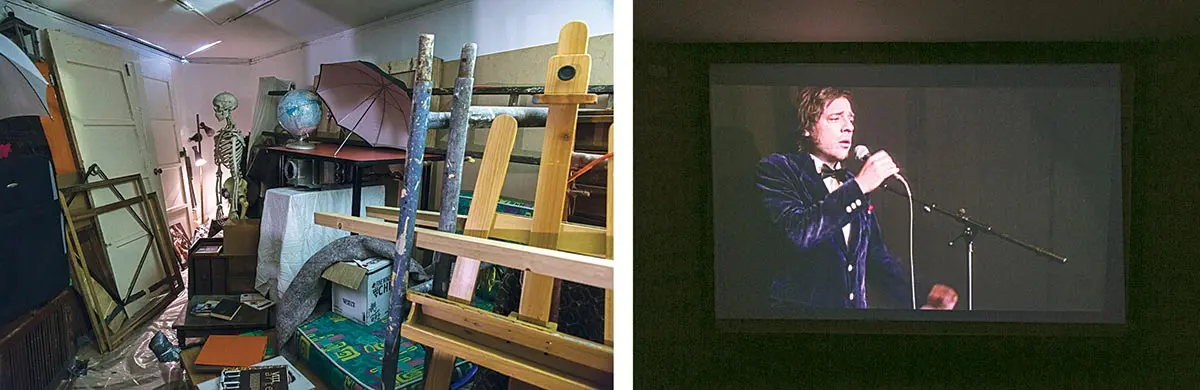
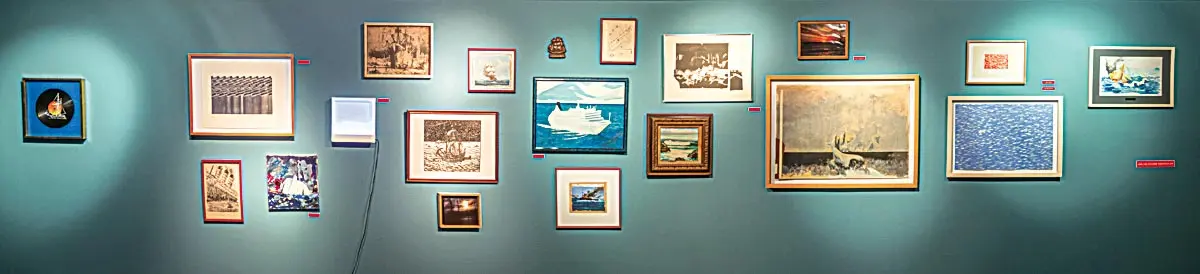
In 2015, Juan Mejía won the 8th edition of the Luis Caballero National Visual Arts Award10 with Hacia un lugar común (Towards a Common Place), a work that refers to the theme of shipwrecking. Situated in the Museo de Arte Moderno de Bogotá’s underground space, it featured a series of paintings of shipwrecks, a motif frequently found in the history of art: some paintings from the artist’s own art collection, mixed with others made by him; an installation that, like a warehouse, contains significant objects treasured by Mejía just like the museum treasures the objects it houses; and, finally, a video where Mejía uses karaoke as a resource to “mount his voice and his attitude” on those of another who would then speak for him.11
In the presentation text for this project, Mejía explains: “The image of the shipwreck has recurred in the history of art due to its allegorical efficacy: assimilating it does not require any prior knowledge, and it documents a concrete reality with strong tragic connotations and a feeling of failure that is almost naturally fascinating. In turn, the idea of failure is also commonplace in contemporary art and culture; it underlies the entire general cultural 'program' of postmodernism and even the contemporary human condition, and as such its involvement in this project is marked by a certain element of irony. The project is a metaphor of times (present, past, and future), to be assimilated at a personal, cultural, institutional, and historical level.” The space chosen to exhibit the metaphor of the shipwreck is not random; it prompts considerations of the troubles of a museum institution long mired in a financial and visibility crisis.
Hacia un lugar común synthesizes several aspects that have been present in Mejía’s work. On the one hand, the elements brought together into the spaces in which the installation unfolds confirm Mejía’s understanding of cultural referents from his formative process, handling them in such a way that they transcend individuality and allow viewers to identify with many of those cultural models. On the other hand, the repertoire of songs is selected from popular culture, appealing to individual and collective memory. These ballads describing situations of spite, loss, or rejection were in their time hits that seemed to “celebrate” tragedy. Mejía’s work moves into the domain of emotion, and with the elements, he brings together he vindicates and recognizes the value of the commonplace.
NOTES
1. Interview with the artist, Bogotá, January 27th, 2016.
2. It was presented as part of the Nuevos nombres program promoted by Banco de la República, and the installation was built using a variety of elements habitually found in a classroom.
3. Interview with the artist, cited above.
4. Let’s remember that Picasso, fascinated by the text, made a series of thirteen etchings (1931) that represent him with his model, revealing his own preoccupation with the issue of the artist as creator.
5. Interview with the artist, cited above.
6. Juan Mejía, 30 días, Laguna Libros, Bogotá, 2007.
7. This interest in collecting made it possible to organize an exhibition titled No hay nadie en casa. Dibujos, gráfica y obra sobre papel. Una colección de Juan Mejía (“No one is home. Drawings, graphic works, and works on paper. A collection by Juan Mejía”, 2011), comprising some five hundred drawings: “Drawings exchanged, bought, gifted, found, inherited, requested, and put away for safeguarding, made by people of many different ages, eras, and places”. Exhibition catalog, p 23.
8. Lina Martínez and Julián Serna. Interview with Juan Mejía, August 29th, 2012, in No me hagas preguntas y no te diré mentiras. Juan Mejía, 1995-2010. Ministerio de Cultura de Colombia. Book 4, p. 24.
9. Guillermo Vanegas, “Visión sobre Wilson Díaz y Juan Mejía." Errata Magazine, No. 12, Bogotá, 2014.
10. This is Colombia’s most important visual arts award.
11. Natalia Gutiérrez, “VIII Premio Luis Caballero”. Art Nexus No. 100, March-May 2016, p. 63.
* Courtesy: Valenzuela Klenner Galería.
IVONNE PINI
ArtNexus executive editor. Professor University’s: of Los Andes and Nacional de Colombia.