
For those familiar with the work of Nacho López, this exhibition is a highly anticipated event. For those unfamiliar with it, it is an opportunity to discover one of the key figures in Mexican photography, as well as images of the city as it evolved in the mid-Twentieth Century. His moments—we could call them themes—are diverse, but all of them important. The exhibition features a generous selection of 235 vintage photographs printed by the photographer himself, taking the viewer through several galleries in the Museo de Palacio de Bellas Artes. Covering the entire exhibition requires more than one visit. That Nacho López deserves to be presented in such an august institution can’t be disputed, but these are not the ideal spaces for exhibiting photography, requiring structures that, while lightweight, is perceptible and distract the viewer, as do the floors. Museographically, the use of some walls painted yellow and the partitions with texts and titles are necessary to separate such a vast production. The chapters are I, Citizen; Visual Pages; Land and Time; Dislocation; Multidimensionality; and The Cinematographic. A highly recommendable 464-page catalog accompanies the exhibition.
Born in Tampico (Tamaulipas) in 1923, Ignacio López moved to Mexico City, which he loved deeply, at a very young age. A photo reporter, filmmaker, pioneering photo-essayist (he often also wrote the texts, a photo-legend at times sufficing for the purpose,) outstanding dance photographer (emotion as well as register) and experimenter (his vasedactigrafías are photographs created without a camera or a negative, each unrepeatable and unique, which he made by contact with his own body,) he produced textural and image experiences with sculptor Pedro Cervantes and explored the photography of indigenous peoples and the history of poverty and social injustice in the urban world. Starting in the 1950s, López felt the drive to express something through his camera, and, living through an era of great transformations, he changed the way the photographic camera was used in reportage and developed an interactivity between his lens and the population. These two aspects are on clear display in several of his photographs, such as those in the series La Venus se fue de juerga por los barrios bajos (Venus Went Out Partying in the Slums), from 1953, which to this day haunts those who encounter it. In 1951, anticipating the actions of conceptualism, he performed Los mirones (The Peeping Toms), an action involving the intervention of passers-by. From then on, he used the term directed actions for such exercises, in which people going about their business in the street became his actors in a real-life stage. López operated shifts to photographic orthodoxy: he found different angles and frames, zoomed in to capture vivid scenes in extreme close-up, sought to provide something more than direct photography, and explored the use of two juxtaposed lenses, the best known instance being the series El globero (The Balloon Seller). Other variations López explored include the use of low shutter speeds, which produced out-of-focus images, and changes to the traditional composition idea that places the image at the center of the frame.
López worked many different themes, always seeking to capture them in non-traditional ways. Already as a young man he planned photographs that weren’t rigid or cold; he was more attracted to stories, which he was able to expand in the field of photo-reportage. In his series Pasos en el cielo (Steps in The Sky,) Nacho López provides significant documentation of the construction of Torre Latinoamericana and the Seguros La Latinoamericana building, the first two skyscrapers in downtown Mexico City. He registered nightlife locales, boulevards, and some artists in performance (for example, Marcos Kurtycz.) Out of respect, he reserved a special time for his work in the countryside. On the other hand, after a felicitous first experience working with indigenous communities, López reflected: “I wasn’t able to stay long enough in the indigenous communities. Because of that, my photographic vision falls short.” Others have been able to penetrate the culture and idiosyncrasy of those populations “[in search of] an enduring document that captures people, religion, customs, and traditions beyond the apparent.” Among them, López mentions photographer and anthropologist Alfonso Muñoz, and the authors Héctor García, Graciela Iturbide, and Jesús Sánchez Uribe. Time, understood as planning, is a factor at play in his work. Seeing something that promises an interesting result, one must devote time to it in order to arrive at the denouement. It is not just a matter of going after the surprises that appear around a corner.
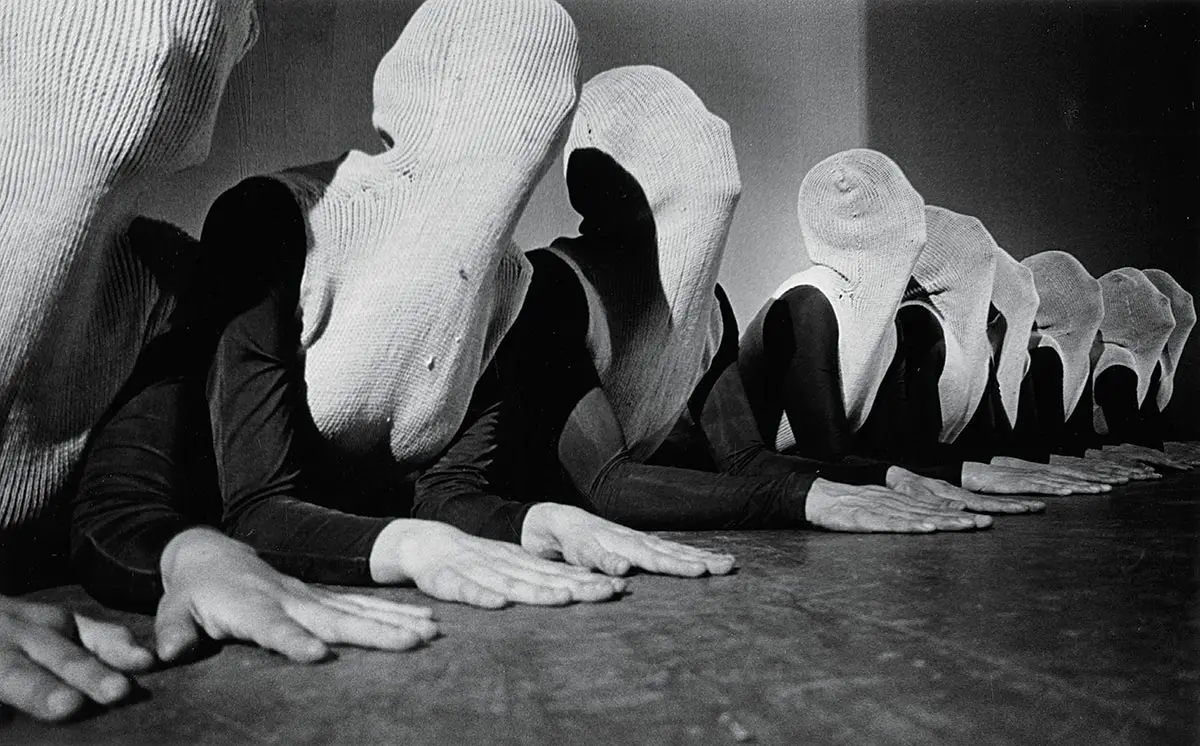
The exhibition also features relevant examples of his work on the subjects of the movies (about which López, trained as a filmmaker, was passionate) and of dance (of which he was a defender and a promoter, as well as a major photographer.) The recently deceased dancer Rocío Sagaón was his older sister. Ignacio López understood the other arts very well, and in his view dance was the most neglected. His mantra should reach us all: picturesqueness must be avoided at all costs. Folkloric approaches are easy, and they must also be avoided. Choreographer and dancer Pilar Urreta, his daughter, says that for Nacho López, art is essentially social action.
GRACIELA KARTOFEL