
What is the meaning of the Paiz Art Biennial in a country with weak socio-political and cultural structures? How does it inscribe itself in today’s art scene in Guatemala? How does it dialog with a population mostly unfamiliar with the visual arts? In one way or another, all of these questions have resonated loudly and repeatedly for people connected to the event, especially after its 16th edition, when the biennial’s activities began to take a significant turn.
Setting aside the ups and downs it may have had throughout its existence, two of the biennial’s greatest achievements have been its continuity in a country where fragmentation and historical fractures seem to be the norm, and its ability to rethink itself. No one would have thought that an art event like this would be launched in Guatemala in 1978, with the country about to enter one of the most violent periods in an internal war that had raged since the 1960s. At the time, despite the country’s rich artistic and cultural production—marked, it must be said, by ostracism, silence, and unawareness—Guatemala was home to just a handful of museums, galleries, and cultural projects. Such was the stage into which the Paiz Biennial was born. In a country that had lived through decades of cultural isolation, it also fostered encounters with art from other latitudes.
Initially conceived as a competition, the Paiz Art Biennial has been able to reinvent itself over the years. After a rather conventional initial period, it decided to invite foreign curators who, accompanied by local teams, have proposed significant changes every two years. A first change was the elimination of traditional categories and the inclusion of renowned international artists. Later, starting with the 18th Biennial—Convivir/Compartir (Coexisting/Sharing), curated by Santiago Olmo with an interdisciplinary local team—three new practices were implemented that they have remained in place, in one way or another, ever since: first, the use of Guatemala City’s historic downtown in order to bring the biennial closer to more diverse audiences in more accessible parts of the city; second, the incorporation of educational activities and mediation as an instrument for a better understanding of contemporary art; finally, the promotion of greater integration and dialog between artistic languages. All of this was reactivated with even greater force at the 19th Biennial, curated by Cecilia Fajardo-Hill, which opened a path towards more active audience participation—one of the central elements of the 20th edition.
The participation of foreign curators since the 16th biennial has been essential for strengthening the dialog between Guatemalan and international artists that began to accelerate already in the late 1990s and early 2000s, first at the regional level, with the efforts of Colloquia, in Guatemala, and TEOR/ética, in Costa Rica, and later in an even firmer way with the participation of artists like Regina José Galindo and Aníbal López in international events such as the Venice Biennale and Documenta. The work of Nelson Herrera Isla, José Roca, Santiago Olmo, and Cecilia Fajardo-Hill and their teams has been significant not only in promoting the greater visibility of Guatemalan art at the international level, but also in continuing to launch conversations between artists, curators, and cultural promoters both local and international.
Convoked by the Paiz Foundation for Education and Culture, the Paiz Biennial reached its 20th edition this year, the fourth in a second period that has featured more contemporary curatorial processes. On this occasion the effort was led by Alma Ruiz, Senior Curator at the Los Angeles Museum of Contemporay Art (MOCA) until early 2015, who is Guatemalan but has lived in the United States since the age of 18. With ample experience in biennials and international events, and with a vast network of contacts, Ruiz was intent on “internationalizing” the biennial and “connecting Guatemala with the rest of the world.” In an interview1, she said: “I think that art is based on communication, and would like for artists to have opportunities to meet other artists, make contacts and friendships, and forge an international career.” Thus, she invited artists from 15 countries in Asia, Europe, North America, South America, and the Caribbean.
In turn, once the roster of artists and projects was defined, independent Chilean curator Alexia Tala was tapped as co-curator and editorial curator. Besides leading the work on the catalog, Tala helped “define five thematic axes that would prompt reflections about art and life, thinking from the standpoint of participation and the everyday.”2 Unlike previous editions, the curatorial committee did not include local members, due to “the short time available for organizing the exhibition” and “the goal of having the catalog ready for opening day,” according to Alma Ruiz.3
As in the two previous editions, the biennial opted for a series of sites in Guatemala City’s Historic Downtown (Artecentro Graciela Andrade de Paiz and annexes; Municipal Center; Spanish Cultural Center; Casa Ibargüen; Casa Municipal; and La Casa de la Esquina), organizing a circuit that invited both specialist and non-specialist audiences to walk around the streets in the city center.
Titled Ordinario / Extraordinario: La democratización del arte o la voluntad de cambiar las cosas (Ordinary / Extraordinary: The Democratization of Art or The Will to Change Things), the 20th Paiz Art Biennial continued with the Paiz Foundation’s exploration of lines of work adjusted to the needs and expectations of artists, cultural promoters, and publics. “In terms of the democratization of art, I believe it is very important to consider that many people see art as elitist, and certainly you could say that it is in the sense that not everyone likes it. But art should not be elitist; it should be for everyone, and each person can later make the decision whether they like it or not. About the will to change things, I certainly talk about the fact that the possibility of making changes resides within us. This comes from the protests against the President and the Vice President that I witnessed in Guatemala last year. This only means that when there is the will and the desire to change things, it can be done, and I believe that art plays an important role in that decision.”4
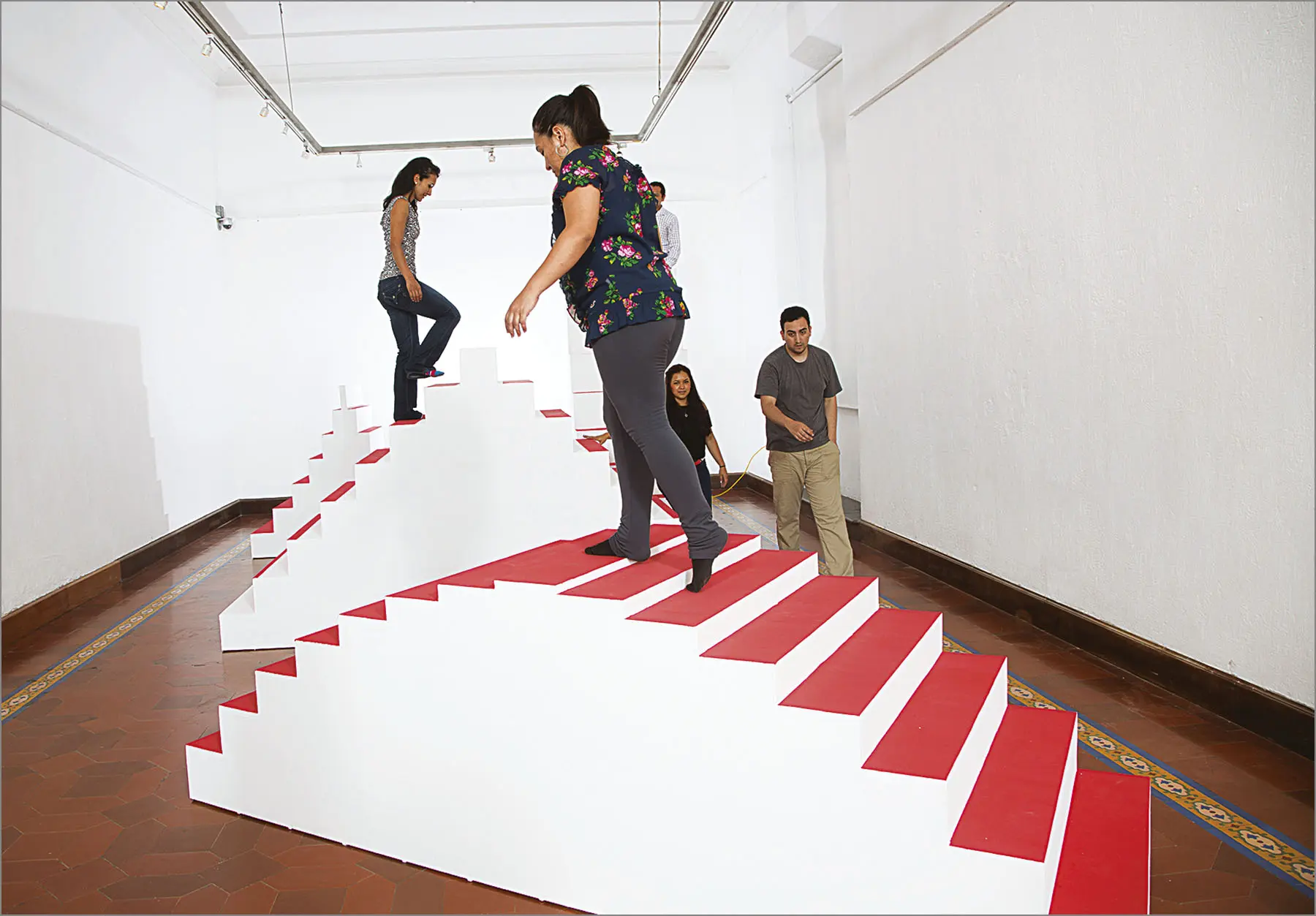
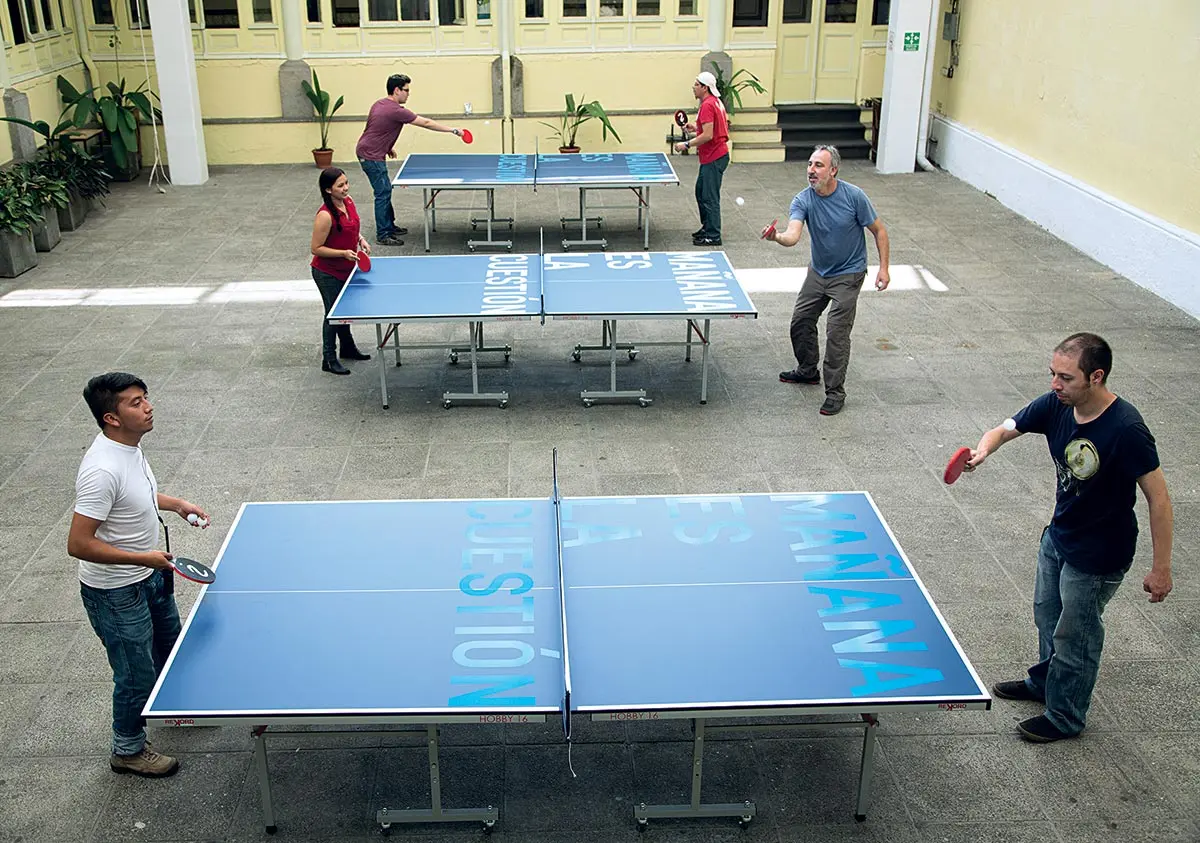
This year, the biennial proposed audience participation as one of its central axes, as an essential actor in the activation of the art, following the postulates of the group of the Visual Art Research Group (G.R.A.V., in its Spanish initials) founded by Julio Le Parc, one of the international artists invited to participate and one whose ideas about contemporary art guided some of the selections. So, relational works of art like those by Rirkrit Travanija invited their audience to participate in the creation process, like a kind of manifesto about the relationship between art and viewer. The same occurred with Ghost Town, by Alexandra Grant (USA) and Narrativa instantánea (Snap Narrative), by Dora García (Spain). The former was able to prompt participation by very diverse audiences rather effectively, first on the basis of the inclusion of two poems by Guatemalan writer Vania Vargas, and then via the intervention of audience members who completed its visual and narrative meaning. García’s work, in turn, was constantly being built by the participation of a group of people in the spontaneous writing of ephemeral texts that connected with visitors in specific moments.
Another line of work was the notion of the everyday, with the following thematic axes: Deconstructions, Obsessions, and the Exercise of Collecting; Environments (Observation, Space, and Location); Individual and Social Identity; Politics and Activism; and The Everyday Unconscious. These axes “functioned as nexus and also as a means to move from the 1960s and the GRAV to what could be conceived as participation today,” in Alexia Tala’s words.5 In this way, the presence of artists like Rochelle Costi (Brazil), Cao Guimarães (Brazil), Carlos Cruz-Diez (Venezuela), or Cristián Salineros (Chile) served as a bridge to the artistic practices of younger generations.
Perhaps the greatest difference between this and previous biennials was the fact that the 20th edition only selected six Guatemalan artists, compared to the twenty-five international artists (twelve of them from Latin America, although none from Central America) and one international collective invited to participate. As the curators have explained in different occasions, this was due to the desire to position the biennial “as a cultural event that looks simultaneously inwardly and outwardly, one that understands the importance of putting Guatemala in contact with the rest of the world in order for the country to join the dialog of the arts of the moment and feel itself part of a larger universe, without obviating its regional context and its historical and geographic realities.”6

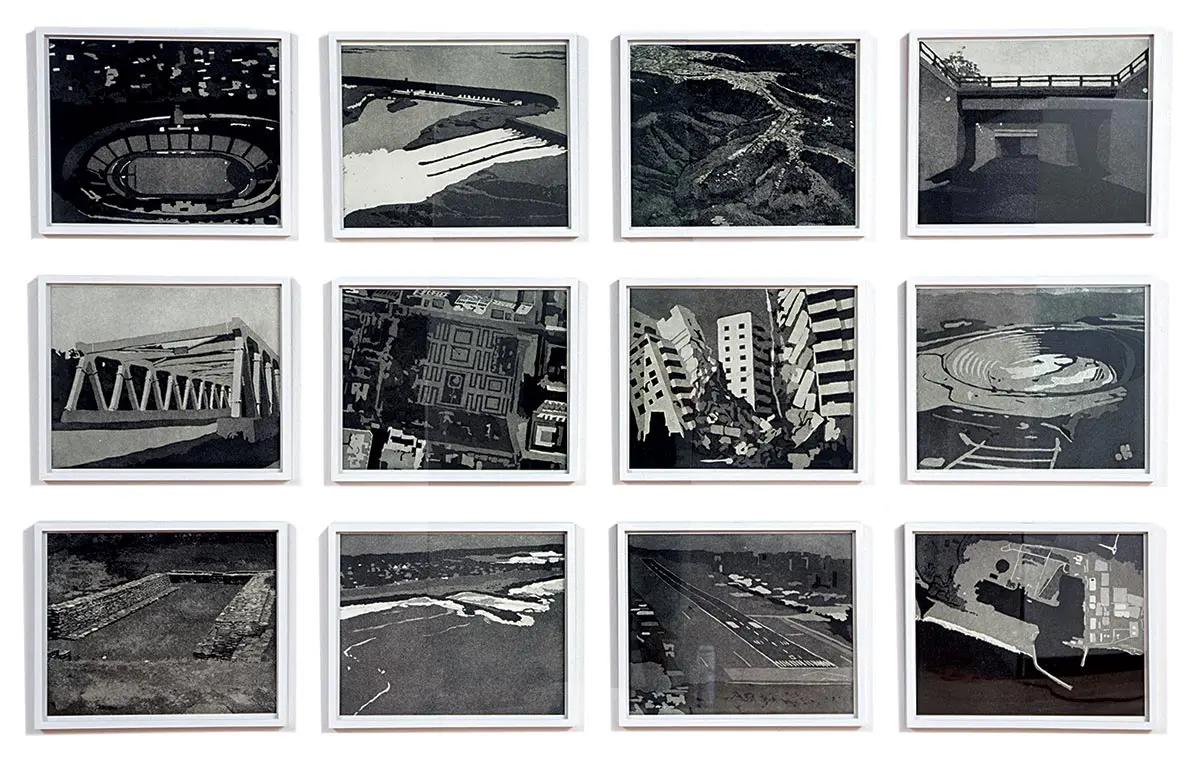
Of 92 portfolios submitted by Guatemalan artists, five individuals and one collective were selected: Marilyn Boror, Esvin Alarcón, Juan Maurilio Mendoza, Alejandra González Escamilla, Sergio Valencia, and the Sitio/Seña collective (Andrea Monroy, Iris Castillo, and Quique Lee); three of these artists were also present at the 19th biennial. Despite the limited number of local names, it is important to note the inclusion of early- and mid-career artists like Sergio Valencia, whose prints propose a particular relationship with the landscape and whose work makes visible the rebirth of printmaking in Guatemala over the last two decades. “Geografía [Geography] is based on the relationship between landscape and human beings, the landscape as a symbol of identity and history. Urban landscapes transform depending on the needs of society and their own natural conditions and limitations. This work refers to social issues and natural phenomena present in our everyday life, which demystify the folkloric, superficial version of the landscape that is most common today. All these relations between landscape and people are a way of seeing and understand each other.”7
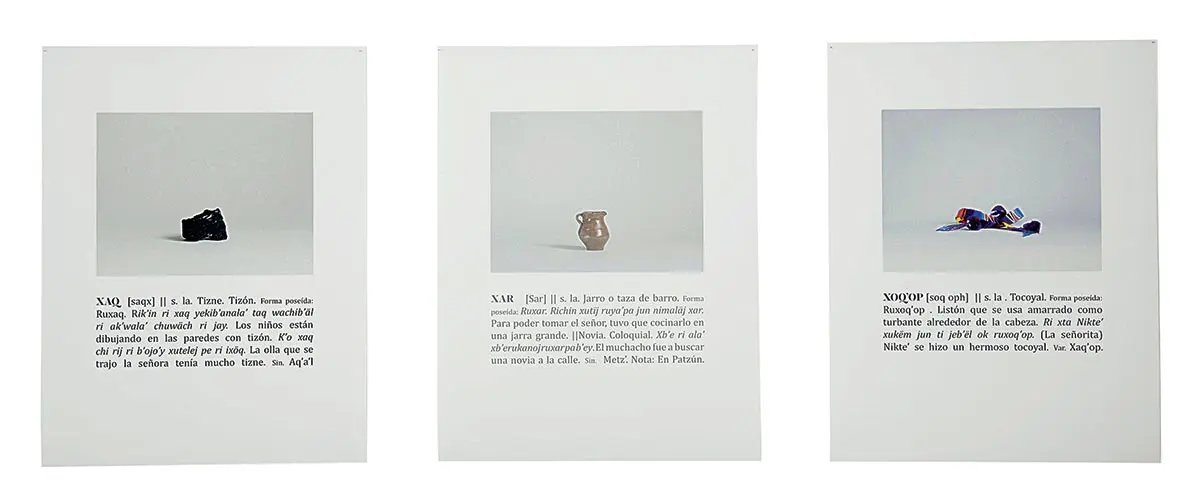
As in the case of Valencia, several of the Guatemalan artists selected for the biennial seek to dialog with social issues in their context. The Sitio/Seña collective, established in 2015 as part of the Guatemala Después (Guatemala After) project, for example, does this by shedding light on the issue of migration via an exploration of media and a sustained investigation (see image) founded on their interest on weaving and textiles; Marilyn Boror, by analyzing Central America’s indigenous languages and “the power of words as a historical trigger of cultural meanings and questions of identity,”8 in this case based on her kakchikel background, in Para no olvidar sus nombres (To Not Forget Their Names).
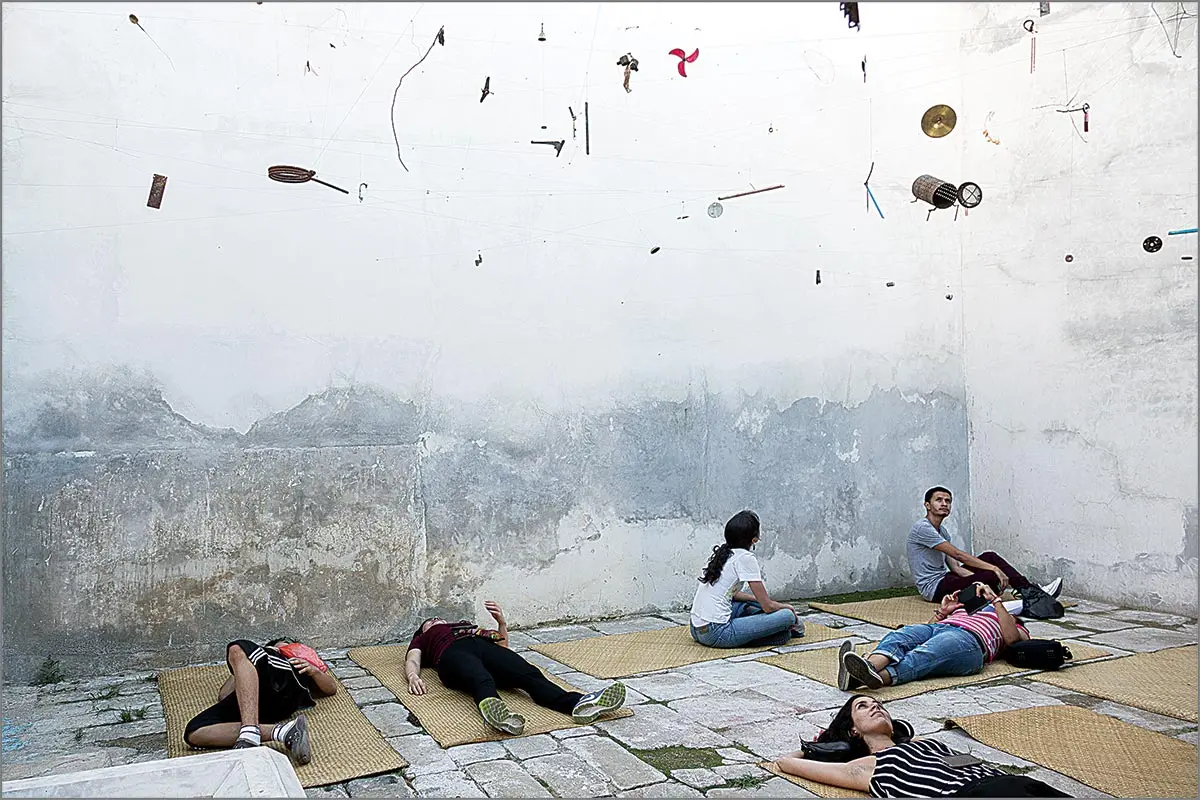
But some of the participating artists’ relationship with reality also plays out at other levels. The objects wrapped in masking tape featured in Esteganografía / Paisaje enmascarado (Esteganography / Masked Landscape), by Cristián Salineros (Chile); the MDF pieces that comprise Spielraum (German for “field of action”), by Nicolás Consuegra (Colombia); the cement balls exhibited by Juan Murilio Mendoza (Guatemala); the objects in the constellation built by María Ignacia Edwards (Chile) in Perpetuum movile/Móvil perpetuo (Perpetual Mobile; see image); the hand-crafted rubber balls in Rochelle Costi’s Contabilidades de materiales (Accounting of Materials); and Esvin Alarcón Lam’s iron structures, among other works, account for a desire to dialog with the viewer through a reconfiguration of everyday objects on which it is easy to recognize oneself.
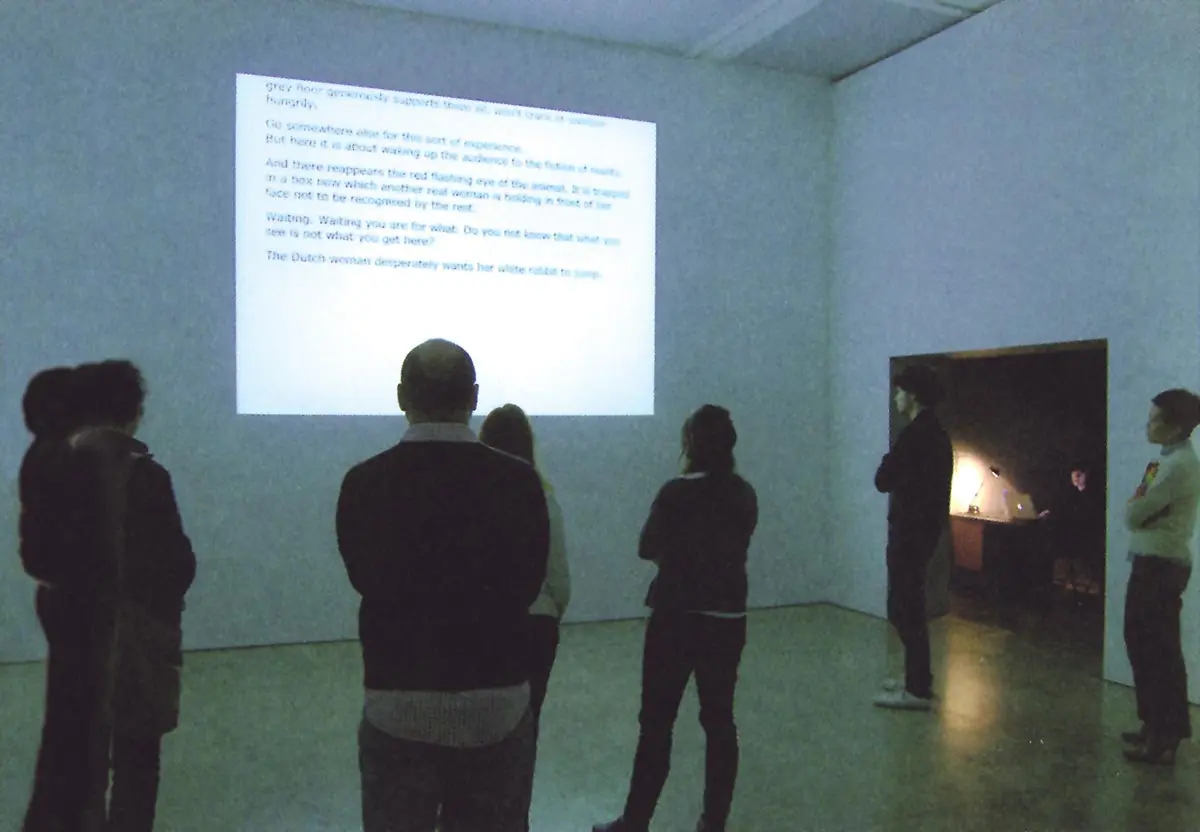
At the same time, the use of words and narrativity in some of the works on exhibit was particularly suggestive, especially when connected to new technologies, as in Young-Hae Chang Heavy Industries Presents Carlos and Carmen, the Echoes of Mortality: A Soap Opera, by the Young-Hae Chang Heavy Industries (Korea); in the video Stealing Beauty, by Guy Ben-Ner (Israel), which presents us with subtle human reflections based on apparently cinematographic stories; and in Please Do Not Touch the Work of Art, by the Raqs Media Collective (India), even if the language barrier resulted in a greater degree of difficulty for grasping the nuances of the work. This is also the case of Crónicas (Chronicles), by David Pérez Karmadavis (Dominican Republic/Guatemala), where this narrativity reaches us through the artist’s documentation of social issues in his environment, on the basis of a de-mystifying pictorial practice of great discursive power.
This 20th Paiz Art Biennial can also be read as a space for dialoguing with contemporary artistic practices from other countries. After a 19th biennial that provoked thoughts and debates that are still ongoing, one certainly missed greater experimentation and risk-taking in the proposals, yet without a doubt the 20th biennial contributed to a better understanding of the registers and languages of contemporary art. This biennial must continue to rethink and renew itself in the way it has been able to do so far, reflecting about its function in a context like Guatemala and at a time when artistic practices seem open to new possibilities.
NOTES
1. “Sin público no hay arte”, an interview with Alma Ruiz by Josseline Pinto. Siglo XXI, May 29, 2016.
2. Electronic communication with Alexia Tala, August 1, 2016.
3. Alma Ruiz, “Ir de la mano: Una relación idónea entre el arte y el espectador”. In 20 Bienal de Arte Paiz Ordinario / Extraordinario: La democratización del arte o la voluntad de cambiar las cosas. Guatemala, Paiz Foundation, 2016, p. 44.
4. “Sin público no hay arte”, an interview with Alma Ruiz by Josseline Pinto. Siglo XXI, May 29, 2016.
5. Electronic communication with Alexia Tala, Augst 1, 2016.
6. Alma Ruiz, “Introducción”. In 20 Bienal de Arte Paiz Ordinario / Extraordinario: La democratización del arte o la voluntad de cambiar las cosas. Guatemala, Paiz Foundation, 2016, p. 23.
7. An interview with Sergio Valencia, in 20 Bienal de Arte Paiz Ordinario / Extraordinario: La democratización del arte o la voluntad de cambiar las cosas. Guatemala, Paiz Foundation, 2016, p. 193.
8. An interview with Marilyn Boror, in 20 Bienal de Arte Paiz Ordinario / Extraordinario: La democratización del arte o la voluntad de cambiar las cosas. Guatemala, Paiz Foundation, 2016, p. 118.
ANABELLA ACEVEDO
Independent academic. Ph.D. in Latin American Literature at the University of Georgia.