

For those who were wondering about the fate of the Daros Latinamerica Collection after it closed its exhibition space in Rio de Janeiro at the end of 2015, the good news is that the Collection is alive and well1. Works from the Collection have been recently the subject of various exhibitions: Dark Mirror opened in September of 2015 at the Kunstmuseum Wolfsburg in Germany while Julio Le Parc. Lumière was presented at the Bildmuseet in Umeå, Sweden from November 2015 through April 2016. Currently on view at the Kunstmuseum Bern in Switzerland is Without Restraint. Works by Mexican Women Artists from the Daros Latinamerica Collection, an exhibition organized by Valentina Locatelli.
Closing Casa Daros, the Collection’s platform in Rio de Janeiro, at the end of 2015 was a great loss for everyone interested in contemporary art, and in particular Latin American contemporary art. Its last exhibition, the excellent Ficción y Fantasía – Arte de Cuba (Fiction and Fantasy – Art of Cuba) included 119 works that not only offered a comprehensive overview of artistic movements in Cuba between 1975 and 2008 but also revealed the Collection’s depth and significance in contemporary art2.
According to Daros Latinoamerica Collection’s website, acquisitions have been halted with no plans to restart them in the near future or at all. The Collection’s intention is to make “loans to renowned museums and institutions [to] highlight the significance and innovative spirit of contemporary art from Latin America to international audiences.”3 On June 16, 2015, article The Art Newspaper reported that the closure was “part of a change in strategy for the Swiss collection” and quoted Christian Verling, former board chairman, as saying “We want as many people as possible to engage with the exceptional art from our collection. Therefore, we will focus on co-operation with museums and institutions around the world.”4 All along it seemed redundant to bring Latin American art mostly to Latin American audiences. Closing Casa Daros was unfortunate but, in the long run, the Collection and the artists are better served if exhibited in museums around the world. Wider exposure can generate original scholarship and new audiences.
The Daros Latinamerican Collection’s 1200 works allow for an in-depth presentation of Latin American art from the 1960s to the present. Wolfsburg’s Dark Mirror provided a wide-ranging view of art from Central and South America since 1968 offering the German public a window to a part of the world they may know little about. Julio Le Parc’s excellent exhibition of 12 kinetic and light works at Umeå’s Bildmuseet highlighted the Argentinean artist’s 1960s light experiments positioning him as a forerunner to light artists Robert Irwin and Olafur Eliasson. Le Parc’s legacy has been well served by the Collection’s efforts. A resurgent interest in his work is in full throttle with an upcoming retrospective at the Perez Art Museum Miami later this year.
Without Restraint can be seen as a homecoming of sorts since works from the Collection have not been seen in Switzerland since February 2014 when a selection from the Collection was presented at the Beyeler Foundation. Furthermore, it has been six-and-half years since the Daros Museum actively organized exhibitions at its Zurich space.

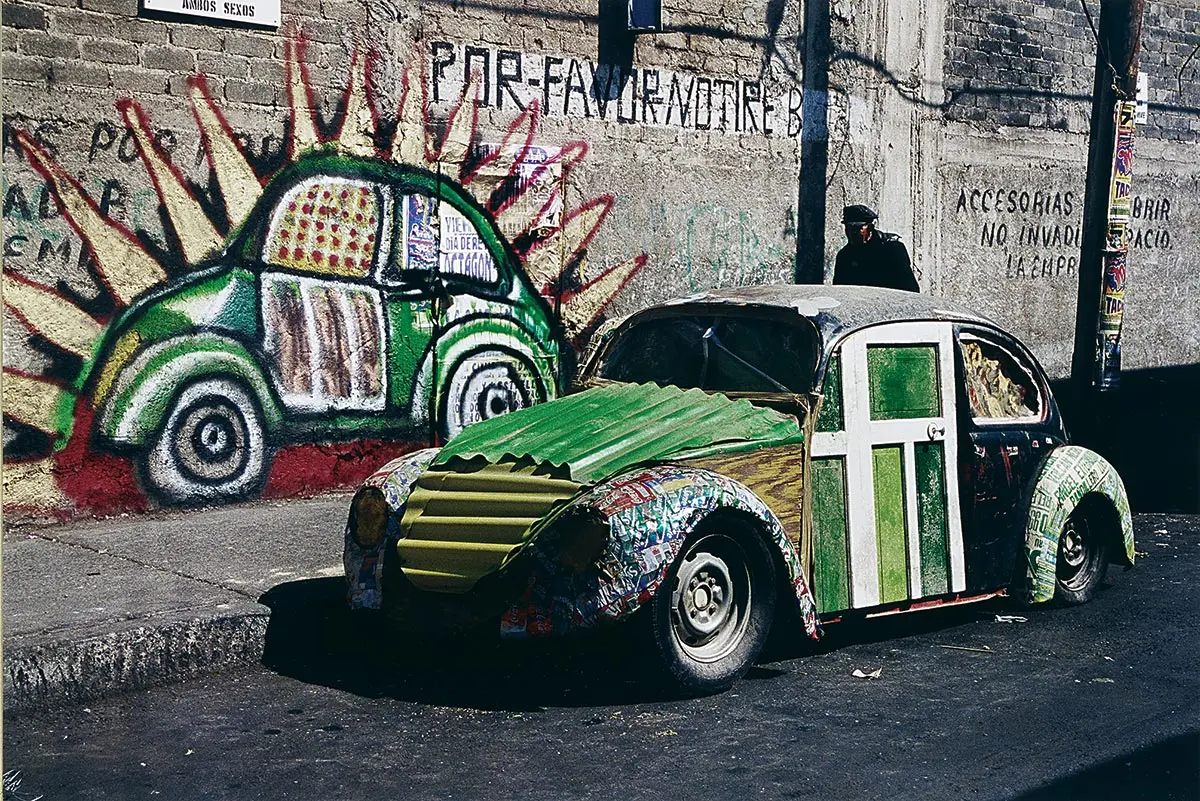
Without Restraint showcases the work of seven women artists working and living in Mexico, a country that remains unknown to many, as does its extensive history of art-making, despite its geographic and cultural proximity to the United States. Videos, installations, objects, and photographs by Ximena Cuevas (1963), Claudia Fernández (1965), Teresa Margolles (1963), Betsabeé Romero (1963), Maruch Sántiz Gómez (1975), Teresa Serrano (1936) and Melanie Smith (1965) focus on the social and political situation of one of the biggest countries in the Americas. The difficulties of being a woman, and an artist, in a conservative and deeply religious society are also addressed in a number of works included.
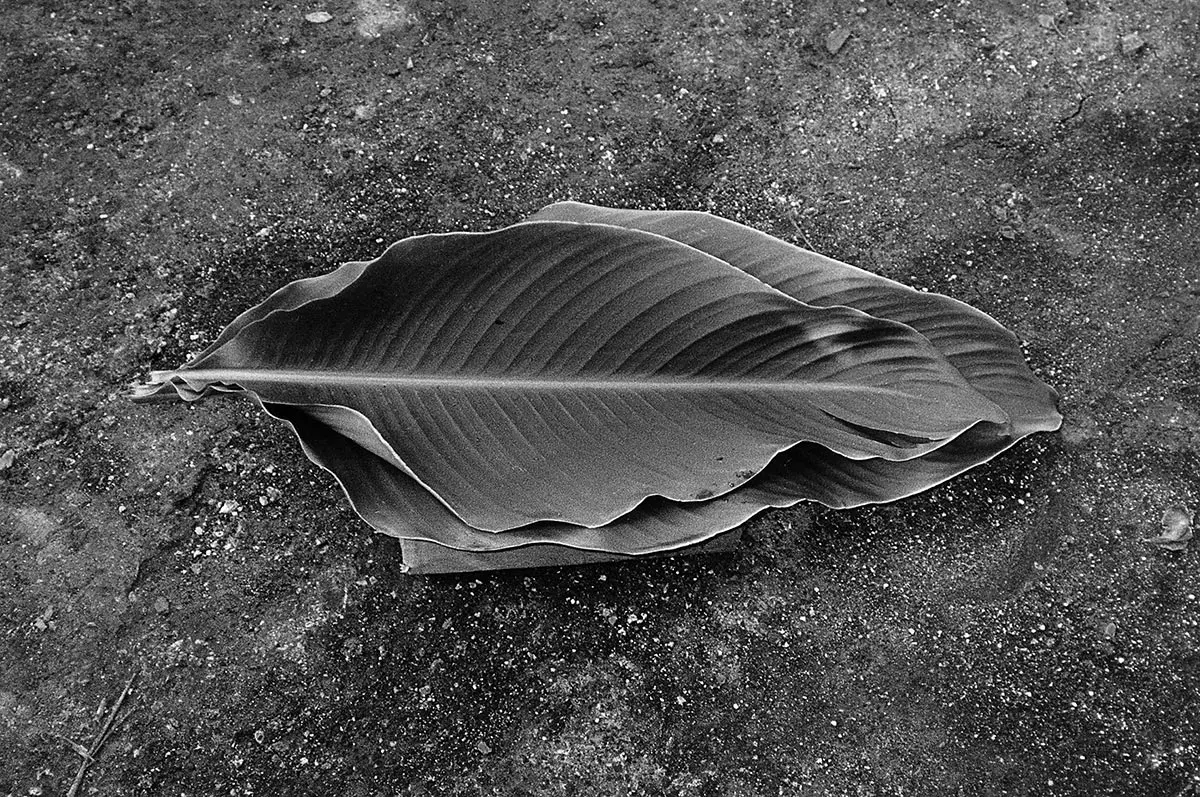
The works were selected, according to the museum’s press release, with the intention to highlight “the concept of mexicanidad—Mexican national identity—and challenge traditional roles and social spaces assigned to women and minorities by dominant power hierarchies.”5 Mexicanidad has always been front and center in the work of many Mexican artists whose strong identification with Mexican symbols and traditions runs deeply in their work. However what comes through loud and clear in this exhibition is the struggle of women in a male-dominated society, particularly in a series of black-and white-photographs that is still Santíz Goméz’s best-known work. She had to sacrifice her marriage and leave her community of Chamula de los Altos de Chiapas to pursue a career. As a result she has been a single mother for 15 years.6 Even though the paradigms are presented within the context of Mexican culture, as seen in Claudia Fernandez’s 2003 Limpia, they address a widespread concern: the complex role of women in today’s world regardless of nationality, class, or education.
The recent nomination of Hillary Clinton as a candidate to the president of the United States has made something very clear: for all its claims as to the most advanced country in the world, The United States is still a misogynous place. The degree to which Clinton has been vilified, her actions scrutinized, and her sartorial style criticized is unprecedented for a presidential candidate. And as we heard Republican delegates chant at the Republican National Convention in Cleveland this summer, they would love to see her go to jail.
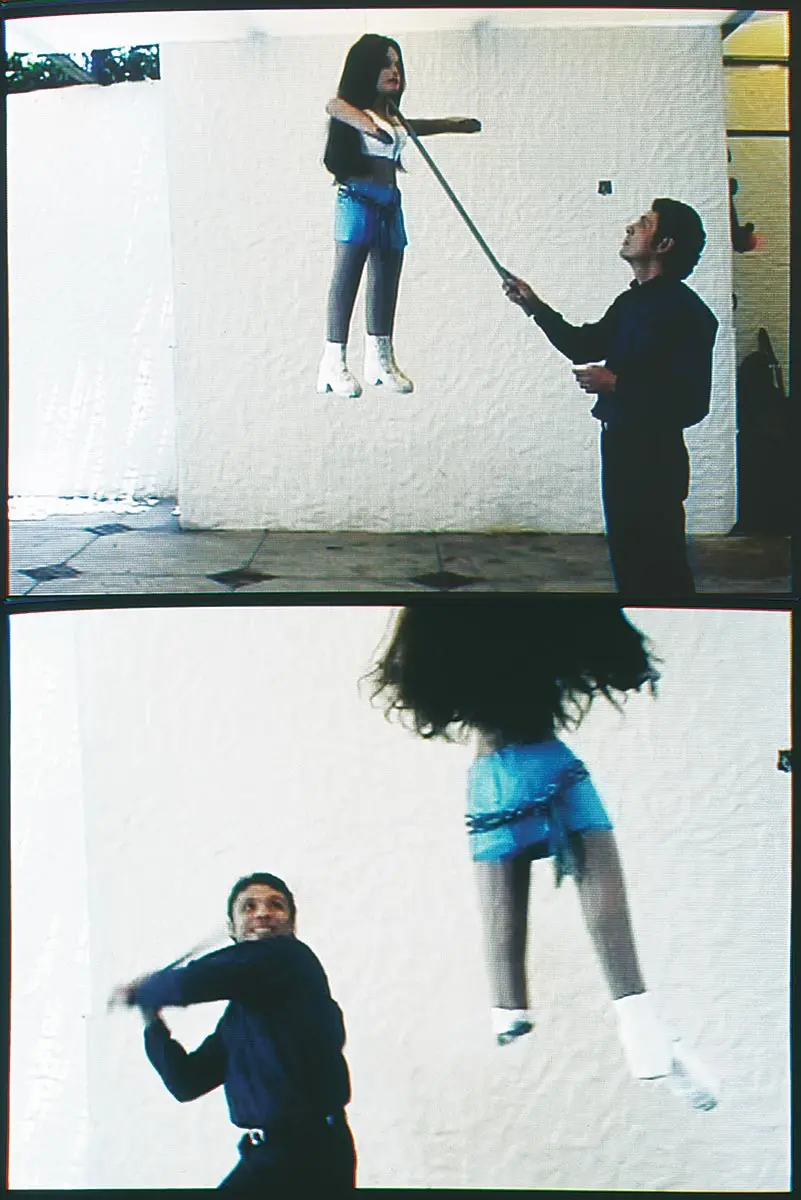
“Life and death, the violated body, identity and migration, nature and the metropolis”7 are explored in Without Restraint from a Mexican point of view, mainly because the artists live and work in Mexico City (the country’s capital, and the site where Mexican dominant culture resides). Yet, these issues are universal, and this is a strong argument the exhibition makes without intending to. Local audiences—particularly girls and women—can identify with the plight of women as portrayed in the exhibition. When Teresa Margolles makes works about Femicides in Ciudad Juarez she could be talking about honor killings in India and the Middle East. Teresa Serrano’s La Piñata (2003), perhaps the best work in the exhibition if not the strongest, is an example of the internalized hatred towards women that is deeply ingrained in the male psyche. This kind of hatred exists everywhere. Industrialized nations, Switzerland included, are not exempt. Without Restraint is a mirror on which we can see our ugly selves.
Three years ago, the Kunstmuseum Bern presented Mexico Mirrored in its Art Prints, Independence, and Revolution8. The 51 prints and one sculpture that constituted the exhibition were a gift from the Mexican Government in celebration of the friendship and collaboration that has existed between the two countries for over 50 years. Without Restraint is also organized as a bridge-building project “under the patronage of Claudia Ruíz Massieu Salinas, Mexican Secretary of Foreign Affairs, and Swiss Federal Councilor Didier Burkhalter, Head of the Federal Department of Foreign Affairs (FDFA)” as stated in the exhibition catalog. If governmental sponsorship was necessary for this exhibition to take place, it is fortunate that the current Mexican Secretary of Foreign Affairs happens to be a woman. She is certain to be more sympathetic to women's rights not just in her own country but also all over the world by supporting an exhibition that brings together a group of strong talented artists who have fought for a voice and space within mainstream artistic practices in Mexico.
* All the images are from the Daros Latinamerica Collection, Zürich
NOTES
1. Daros Latinamerica Collection is the brainchild of Swiss collector Ruth Schmidheiny who started it with her ex-husband Stephan Schmidheiny in 2000.
2. During his 15-year tenure, Hans-Michael Herzog had the freedom to select the artists and the works through extensive travel and research; taking his time to befriend artists and art professionals greatly facilitated his mission. From the start, he did not intend it to be an encyclopedic collection but “one distinguished by the quality of the works.” “Mexican Art in the Daros Latin American Collection: Hans Michael Herzog in Dialogue with Valentina Locatelli.” In Without Restraint: Works by Mexican Women Artists from the Daros Latinamerica Collection, 38. Bern: Kunstmuseum Bern, 2016. Exhibition catalog.
3. www.daros-latinamerica.net
4. http://theartnewspaper.com/reports/Art_Basel_2015/rio-s-mayor-in-bid-to-keep-casa-daros-open/
5. Kunstmuseum Bern Press release. My translation.
6. Valentina Locatelli. “A Conversation with Maruch Sántiz Gómez.” In Without Restraint: Works by Mexican Women Artists from the Daros Latinamerica Collection, 62. Bern: Kunstmuseum Bern, 2016. Exhibition catalog.
7. Kunstmuseum Bern, exhibition’s visitors guide.
8. The only other exhibition focusing on Latin American Art ever presented at the Kunstmuseum Bern was the 2011 Dislocación”Cultural Location and Identity in Times of Globalization. Organized by Chilean-Swiss artist Ingrid Wildi Merino to celebrate the bicentennial of Chile’s independence, Dislocation brought together the work of 14 artists from Chile and Switzerland.
ALMA RUIZ