
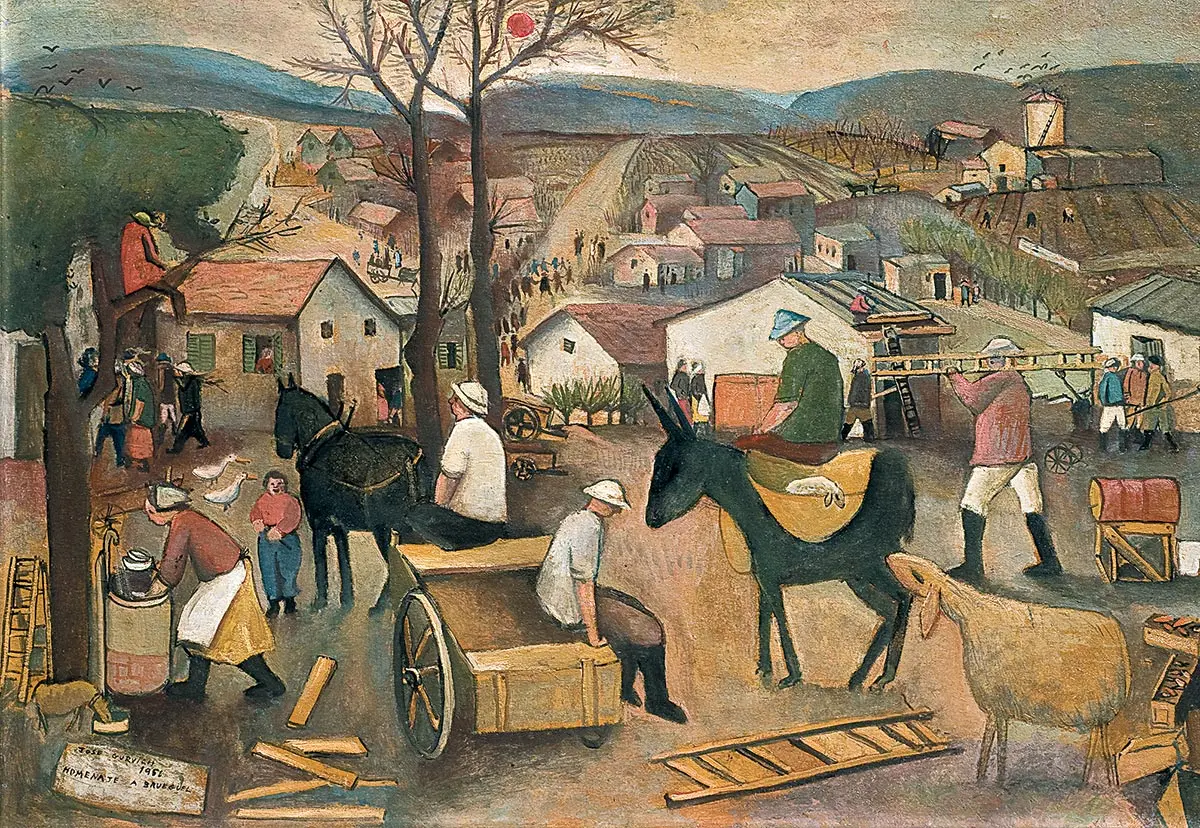
Starting in 1944, Uruguayan artist José Gurvich (Lithuania, 1927 – New York, 1974) was a dedicated participant in the Torres García Workshop in Montevideo, contributing to exhibitions, publications, and group activities, as well as to the workshop’s teaching until its dissolution in 1964. Gurvich traveled in Israel and Europe between 1954 and 1956 and later established his own studio in Montevideo Hill, a source of experiences and fantasies that marked an era both in his painting and in his work in ceramics. Starting in 1969 he again traveled to Israel and then to New York, where he died. The quality and diversity of his abundant oeuvre over a 30-year career make Gurvich one of Uruguay’s most important artists of the Twentieth Century, and one of the most significant representatives of the School of the South.
The Gurvich Museum opened in Montevideo in October of 2015, based on the collection held by the artist’s family; previously, the José Gurvich Foundation has established thanks to the special efforts of the artist’s wife, Julia Añorga (“Totó” Gurvich), and his son, Martín. Besides the Gurvich, there are only three monographic museums devoted to relevant Twentieth Century artists in Uruguay: the Luis A. Solari Museum, established in 1989; the Torres García Museum, reestablished in 1990 after being closed for twenty-five years; and the Pedro Figari Museum, which opened in 2010. Of the three, the first and the last are state-run. The private management of a monographic museum, as is the case of the Gurvich Museum, is difficult in a country with scarce presence of private industry in cultural initiatives. This is why owning its own headquarters is an exceptional situation that added to the image of the Gurvich Museum a renewed and promising national and international projection.
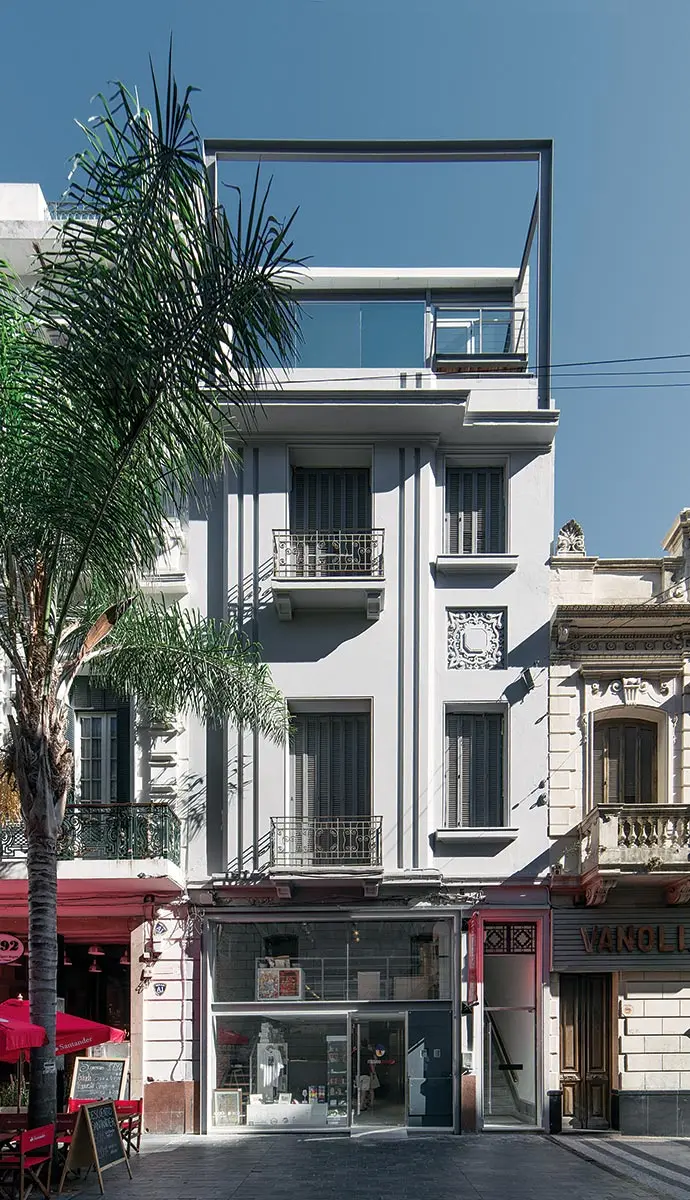
The museum headquarters is located on Peatonal Sarandí, a street that in the 1900s functioned as a hub for the protagonists of the Montevideo Belle Époque. Today it is a heavily used pedestrian thoroughfare along which one finds bars and restaurants, cultural institutions, shops, and financial centers, yet it retains a significant presence of old, landmark buildings, prominent among which is Montevideo’s Metropolitan Cathedral (built around 1800 and reformed in the Nineteenth Century) with its lateral façade extends across from the front of the Gurvich Museum.
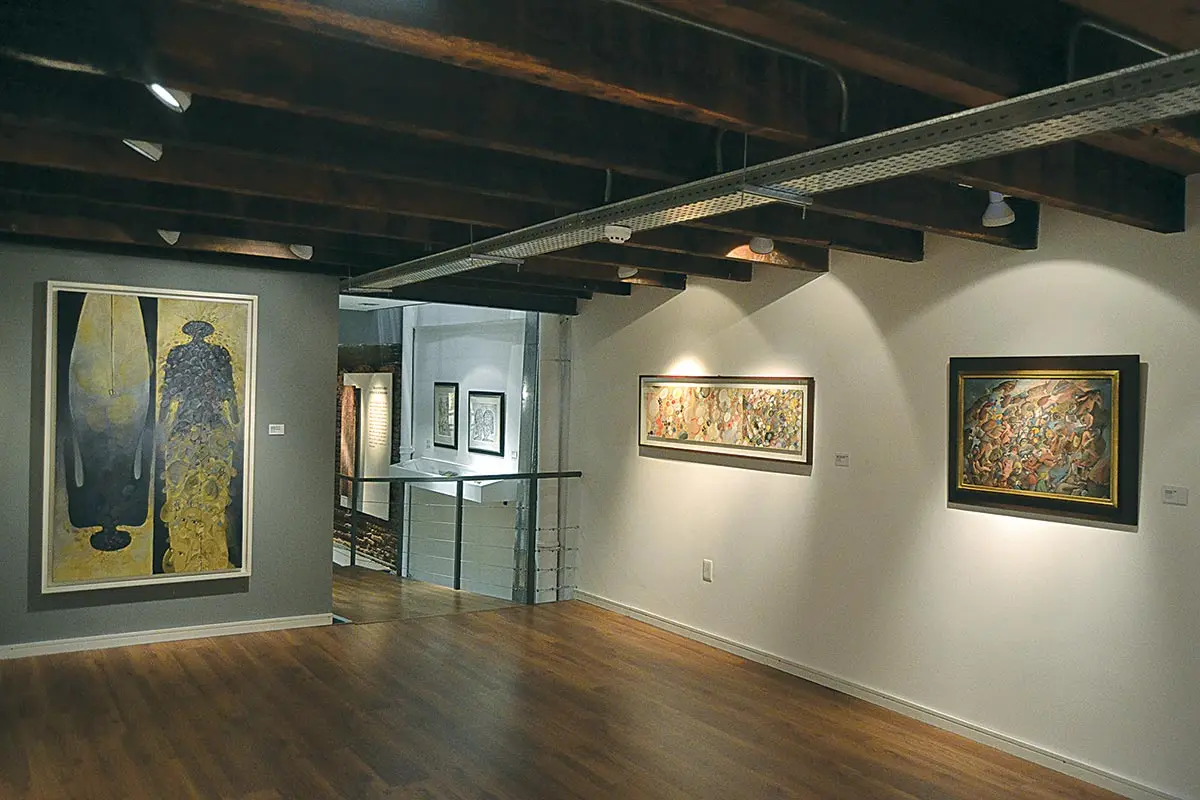
The preexisting construction at the museum’s location dates from 1850 and it has a wooden structure that was partially reformed in 1940. Martín Gurvich acquired the property in 2012 and the project for the museum began under architects Rafael Lorente and Fernando Giordano. Lorente has a long and outstanding trajectory as an architect and visual artist, and is the author of important, relatively recent works, such as the French Lyceum, the Spanish Cultural Center, and the Mexican Cultural Center. The Gurvich Museum project retains the site’s building history, with sections where the original wood can still be seen, others where the concrete used in 1940 remains visible, and still others where the original brick walls is exposed—all fragments of a history set to dialog with the new glass and metal context that dominates stairs, railings, elevators, and other devices that provide a breadth of up-to-date feeling to that respectful atmosphere of time safeguarded in the entrails of old materials.
The architecture of the museum is doubly indebted to the Torres-García Workshop. First, for the truth principle governing the articulation of the spaces and the way in which the materials used in structural elements become intentionally visible, an ethical matter at the core of the Torres-García doctrine. Secondly, for the fact that architect Lorente was a direct disciple of José Gurvich and projected the artist’s home-studio in Montevideo Hill in 1960. Such coincidences can only result in the compatibility of sensibilities between the works on exhibit at the museum and the architectural container in which they are inscribed, attentive to the works and their dialogs with the interior space and the different supporting surfaces while at the same time offering the possibility of surprising openings towards the outside space, towards urban referents such as the cathedral’s cupola, whose monumentality enters gently through the large windows that crown the building.
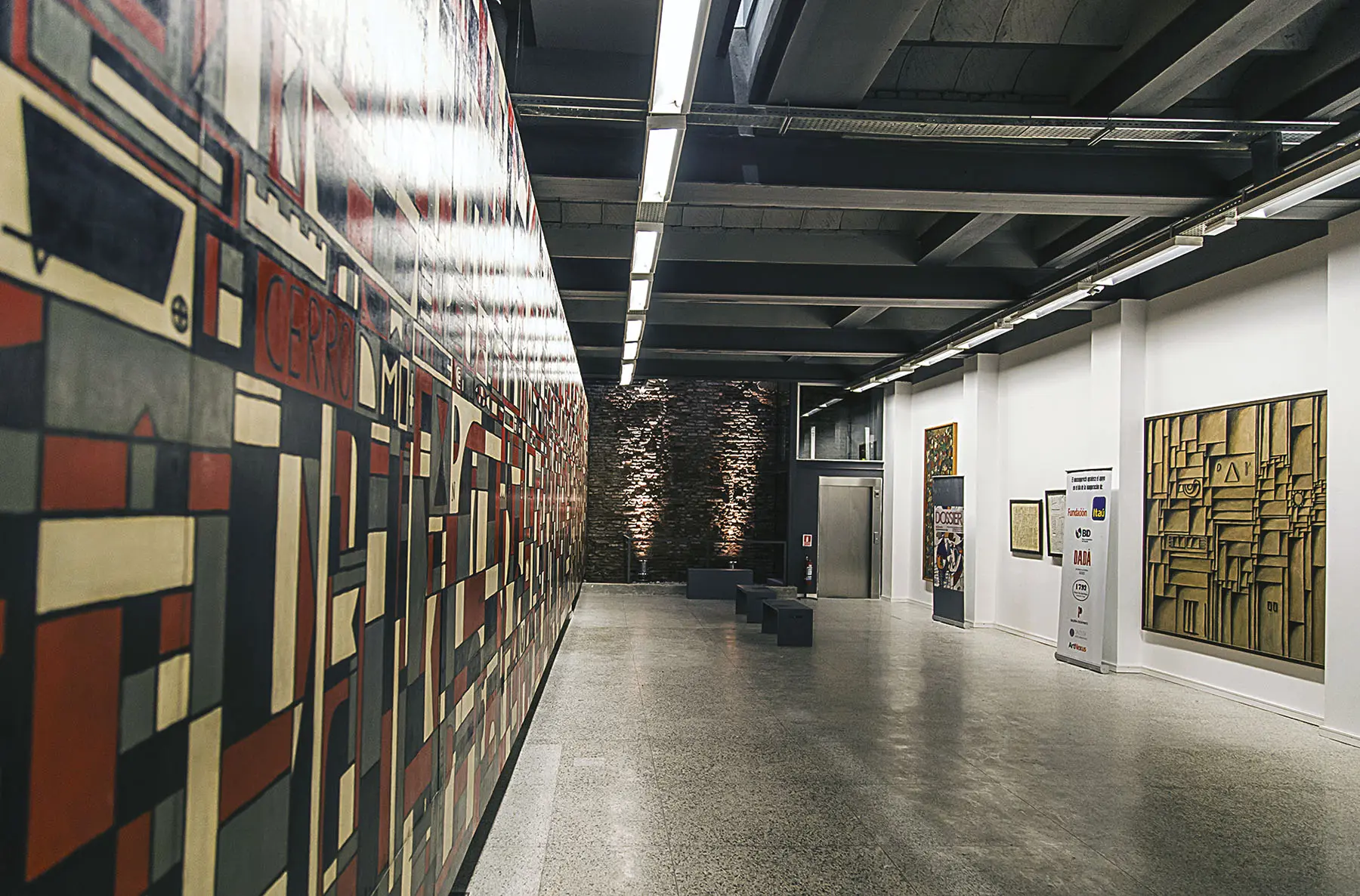
Originally, the building consisted of a street-level floor and three higher levels, and this structure is now the nucleus of the museum, holding its main script in a total surface of 490 square meters. A new floor with its own mezzanine was added on the old terraced roof (210 square meters) and there is also a new mezzanine above the street-level floor. The new two-level upper floor is devoted to temporary exhibitions; the mezzanine above street level contains part of the museum store, and the lower level hosts the store and the museum lobby, which open into a wide space dominated by the large mural Gurvich made for the Refrigeration Industry Compensation Fund (2.90 x 19 meters.) The museum script adheres to a relatively linear chronological order, and thematic series are in turn arranged within it.1
The first gallery in the third level features oils alluding to the family of origin (1952) and paintings from Gurvich’s earliest period, mainly portraits, still lifes, and city landscapes dated between 1940 and 1950, approximately. Gurvich started at the Torres-García Workshop around 1944, so that the majority of these works display the thematic, constructive, and chromatic characteristics of the kind of painting practiced there, although the artist’s personality is also in evidence in the unique use he makes of the instruments acquired at the workshop. The next gallery presents works created by Gurvich at the Workshop between 1950 and 1960, approximately (although later ceramics and wood works are also included); this is to say, works created after Torres-García’s death but in keeping with his teachings, at a time when Gurvich was already teaching (from 1957 on.) It is worth mentioning a small room in this level with exquisite drawings and sketches that complement Gurvich’s major works from an interior perspective, full of spontaneity yet at times imbued with the cosmological-religious meaning so dear to his teacher, as can be explicitly appreciated in the drawing titled La Creación (Creation).
We need to remember that Gurvich had been living in Montevideo Hill, an industrial, working class area with immigrant roots and unique landscape and cultural characteristics, since the late 1950s. This, added to his experience in the Ramot Menashe kibbutz in Israel shortly before, in a trip that included parts of Europe and an encounter with the painting of Bosch and Brueghel, provided the conditions for the development of a body of work that combines the fantastic, the biblical, the cosmic, and the quotidian in a highly personal aesthetic that nevertheless converged, in terms of its universalist and humanistic vision, with Torres-García’s work and ideas. This complex period in Gurvich’s pictorial production (mostly post-1960) is on exhibit in the museum’s second level, organized in three sections. One is devoted to paintings indebted to life in Montevideo Hill, where Gurvich painted everything from everyday scenes of poor immigrants like Almuerzo en el cerro (Lunch in the Hill, 1959) to fantasies derived from his admiration for Bosch like Pecados capitales (Deadly Sins, 1967). A second section is devoted to the subject of the Jewish tradition, rooted in scripture and connected to a certain European legacy (especially Brueghel and Chagall) to which the omnipresent legacy of cosmology is added. The third section features works under the common denominator of “the fantastical,” where Gurvich explores the figure of the abstract and universal Man cultivated at the Torres-García Workshop, while his humanistic vision of artistic practice encompasses works ranging from abstract play to eschatological allegories, like Carta al Hombre (Letter to Man, 1967). A group of small-format works dedicated to the artist’s wife, “Totó” Gurvich, is exhibited separately, and a number of Gurvich’s possessions, large-format photographs, paintings, and self-portraits occupy a “corner” of their own, in an emotional approximation to his personality and the intimacy of his studio.
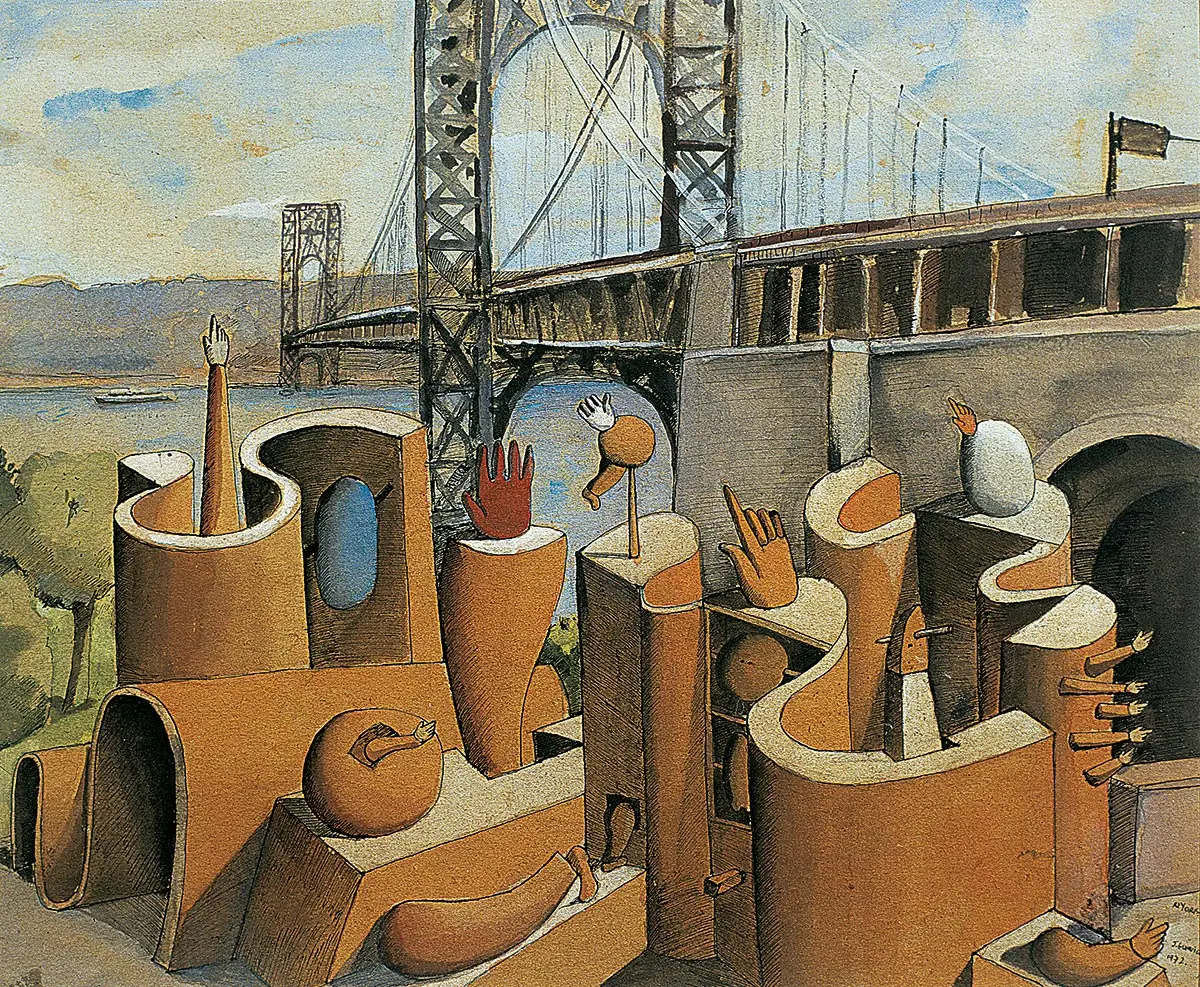
The first level contains mostly works from Gurvich’s last period, after his move to New York in 1970. Those years give us an opportunity to see side by side important works in ceramic and paintings in a dialog allusive to monumental projects for the city, an aspiration professed by Constructive Universalism and explicit in the work of Gonzalo Fonseca, a colleague and comrade also living in New York. Gurvich’s small drawings and watercolors of this period bring to mind those made by Torres-García also in New York City between 1920 and 1921, although Gurvich stands out for the lyrical and playful bent of his gaze, which drives him to incorporate well known comic-book characters into those seemingly chaotic landscapes, as well as characters that seem to have been transported there from his Montevideo Hill paintings.
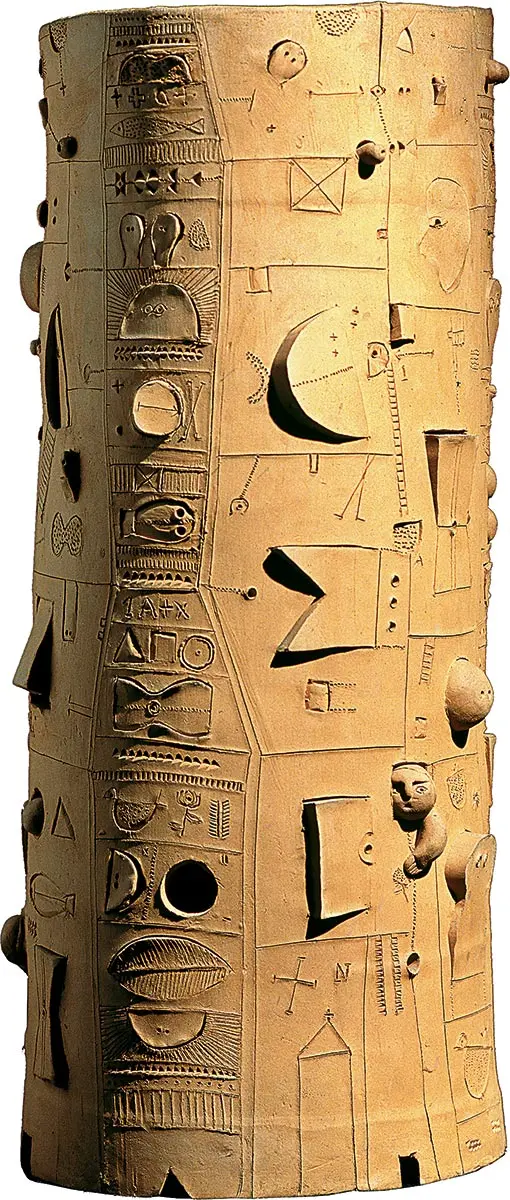
The intimate, contained atmosphere that the architecture imposes on the galleries throughout the building is perhaps enhanced in this first level by the discreet presence of ceramic objects and the profusion of drawings and paintings in small formats. One section is devoted to Gurvich’s delicate ceramic sculptures, which take an enigmatic, undefined place between art, archaeology, and ethnography. Also located in this level is an education room with library and worktables for children, as well as the museum offices and Gurvich’s personal archive. This archive, formed on the basis of materials ceded by the artist’s family, consists of letters, manuscripts, catalogs, invitations to openings, press clippings, photographs on paper, and graphic material in digital format, constituting a highly valuable testimonial and primary source for historians and researchers.
Meanwhile, the museum’s temporary exhibition projects are intended not only to propitiate a dialog between Gurvich’s work and the work of artists of the same era (especially his colleagues at the Torres-García Workshop, of whom several exhibitions have already been organized), but also to present the work of living artists working in a contemporary visual language. This decision is part of a policy of openness directed at tightening connections with the local artistic community, generating appealing proposals for a variety of audiences. Besides promoting the work of its namesake artist, the museum intends to contribute to policies of social inclusion via its workshops for schools in critical condition, as well as through its sustained effort to integrate students from various localities around the country into its cultural center activities, thus creating a meeting point not only for creativity and entertainment but also for analysis and the exchange of ideas. It also seeks to maintain a committed Human Rights agenda, including activities compatible with the institution’s character as a museum yet connected to a broad spectrum of social and cultural issues.
NOTES
1. The criteria used for the museum script between 2005 and 2011 was to divide the work according to technique and support, and to organize it chronologically within each section. In 2011, these criteria were reconsidered and the exhibition began to be presented on the basis of thematic series, in the manner of a didactic show: still lifes, constructivism, the Hill, the world of fantasy, the Jewish universe, New York, and others. In this reformulation, Gurvich’s oeuvre was contextualized through two levels of reading: one with texts referred to each series and a second, more specific one with texts by personalities from different disciplines who chose a given work and wrote about it. Several traveling exhibitions to the country’s interior have been organized since then, and this modality, which continues, is now part of the institution’s policy.
2. The Gurvich Museum intends to be a significant instrument in the transference of timely and relevant information to the different actors and referents in the educational field, thus fulfilling two important roles: democratizing access to information and collaborating with the process of artistic education. The Painting with Gurvich school program, for example, was launched in 2012, bringing the didactic portfolio, guided tours, and the art workshop together into a single proposal.
3. The Visual Communication workshop was implemented in 2010, using photography as its instrument thanks to the OLPC XO computer, camera included, that Uruguayan children receive from the government. The workshop themes were organized around two concepts: citizenship and identity. There were three thematic units: neighborhood, school, and family. The concept of identity was explored on the basis of material records; the concept of citizenship, through the exercise of freedom of expression. This program sought to encourage the participation of children in the cultural life of the city. At the same time, the museum’s varied programming seeks to generate spaces for debate and analysis—via roundtables, seminars, and lectures—that are open to the general public but with a special emphasis on colleagues and cultural agents who can contribute to and enrich collective work.
GABRIEL PELUFFO LINARI
Researcher in Art History and Contemporary Art.