
Evoking through art; illuminating the path between what exists and that which we cannot perceive; at last, being able to touch the world without defining it. This is the essence of the works included in the recent solo exhibition by the artist from Minas Gerais, Pablo Lobato, at the Museo de Arte do Rio (MAR). With nearly 50 works and titled On the Nature of Things – Pablo Lobato, the exhibition proposed a reflection on the constitution of things and images, pointing out the singularity of his “natures.” Videos, photographs, installations, objects, and a publication translated Lobato’s desire to address the immanence and experience of those things in states of lesser intervention and manipulation.
Under the curatorship of Clarissa Diniz, the exhibition is part of the program of exhibitions and curatorships at MAR centered on artists whose works are not well known in the Rio de Janeiro and São Paulo art circuits. The program focuses mostly on artists from contexts underrepresented by institutions and the art market and whose aesthetic production occurs on the fringes of social logic.
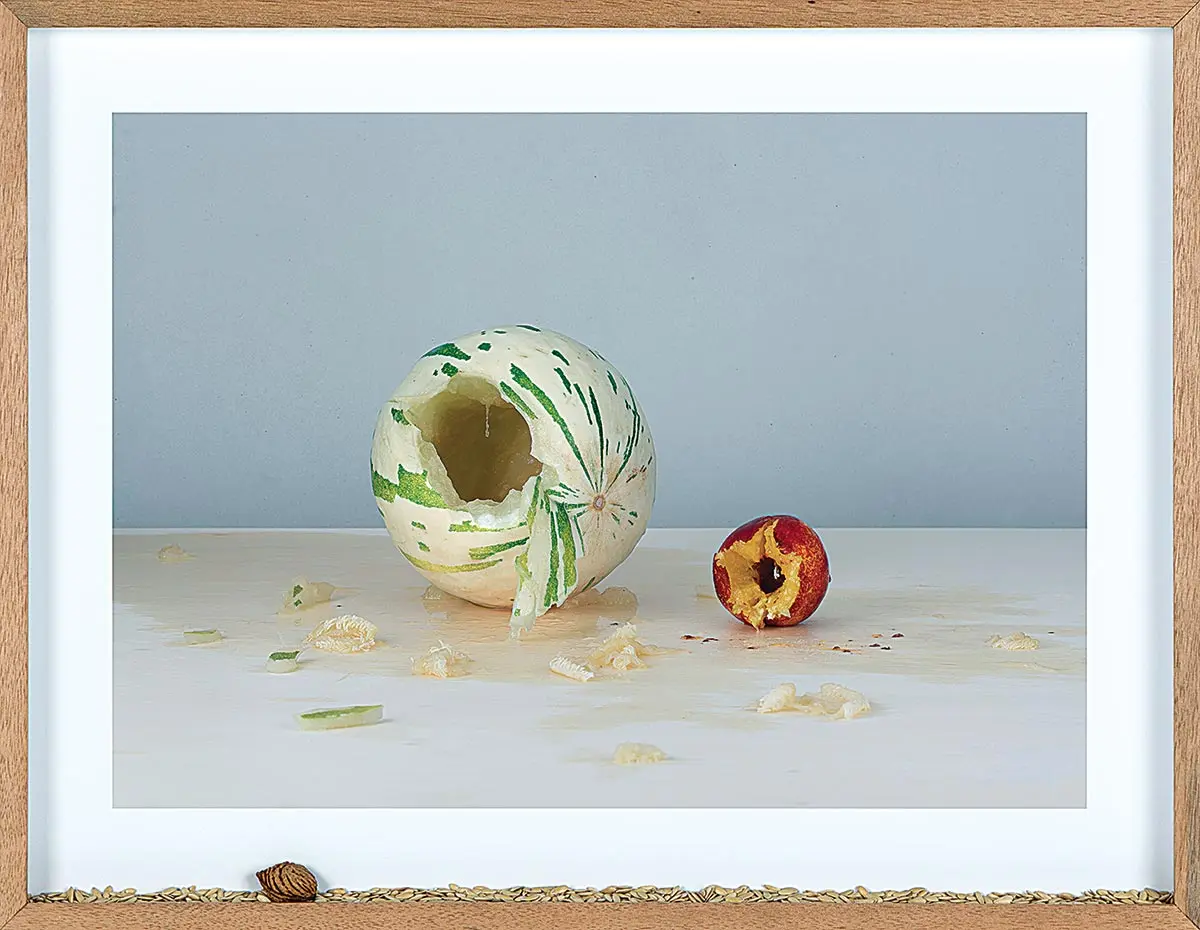
In this exhibition, Lobato focused on ways to deconstruct everyday flows, dynamics, and situations. Thematically, the works addressed physical, symbolic, and political fractures and temporal-spaces to free the viewers’ senses. To do so, he problematized traditional, narrative, or vocational conventions about the notion of totality. He explored, for instance, the language of cinema, but without trying to tell stories. His objective was to expose viewers to experiences that lead to other ways of perceiving.
In one of the works, the installation titled Expiração (Expiration), Lobato created a sort of machine for “expiring” (unarchiving, excluding) images. Knowing that the scenes would cease to exist at the end of the exhibition, viewers experience a sharpening of their ability to perceive and, in this manner, became more radical when experiencing immanence, until being left with just a single white box and the reflection on the place of the image in the world.
Expanding the field of research, Pablo Lobato presented RUA (Street), a project that explores photographs of small moments organically created in the interstices of days in the city. They are shown without any type of intervention, like the piles of branches that form after the rain to create “natural installations” or “ruins;” works created through time by the natural environment.
Lobato offered an essay through a publication and objects that resulted from his exploration. By appropriating preexisting situations, and by discarding proposals prone to resulting in definitions, he created a group of images that question the role of the artist and his gaze, which sometimes can be extremely imposing and automatic when approaching the specificities of matter.
Lobato also appropriated Marcel Duchamp’s inframince concept to force visitors not only to deal with the horizontally presented faces but also with the laterality of things, no matter how minor, such as, for example, the side view of a piece of paper. In the series Frontlight, he achieves this by photographing the outdoors from a lateral angle, as he transforms large structures into simple beams of light.
Lobato earned a degree from the Department of Communications and Arts of the Pontifícia Universidade Católica de Minas Gerais (PUC-MG) and majored in film. This is the reason why before he began developing projects in the visual arts field, his artistic practice concentrated on films. Today, his research focuses more on the sensations obtained from certain materials and experiences, than on specific languages. He was one of the creators of Teia- Centro de Investigação Audiovisual, located in Belo Horizonte since 2002. He is currently finishing the film Vientos de Valls (Winds of Valls), which stems from an action performed in Spain, in 2009, sponsored by the John Simon Guggenheim Memorial Foundation in New York.
The work by Lobato belongs to the scene formed mostly by a new generation of young Brazilian artists that often produce a nearly unbreakable dialog between the audiovisual and visual arts. The strategy of isolating prosaic aspects of the world and making them significant is something recurrent in his work. It is a symbolic approach: the conscious separation of things included from those excluded by viewers within a varied universe, in a process that confers meaning to that which has been isolated and underscores the qualities of isolation in relation to everything else.
In his works, Pablo Lobato provokes critical reflections on images and sound as aesthetic mediums, sensitizing viewers on the relationship between their eyes (and the rest of their bodies) and their presence as it relates to the perception in general. But, most importantly, Lobato evokes through his art the depths of human beings and the universe, composing in this manner an authentic aesthetic phenomenology.
ALESSANDRA SIMÕES