
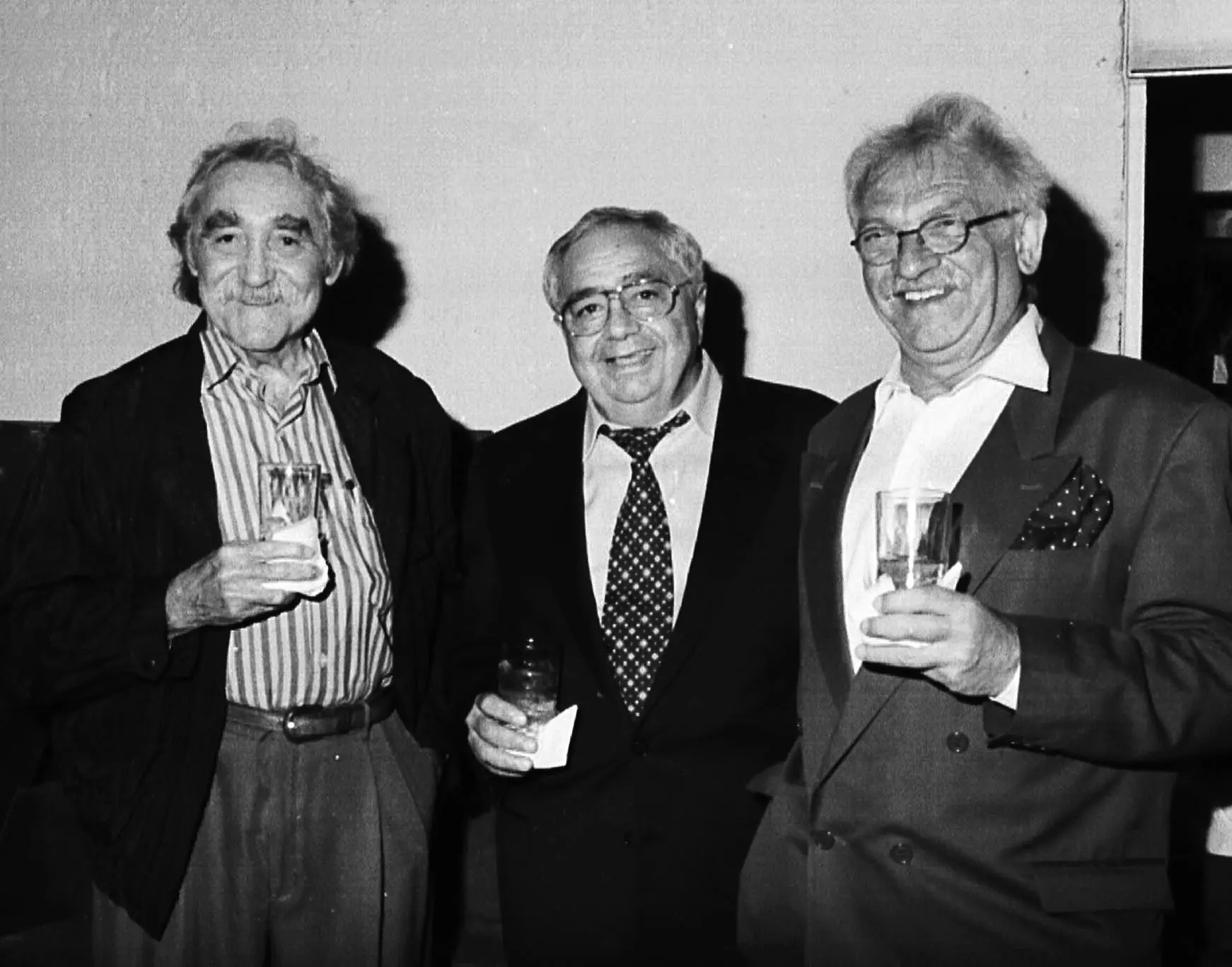
When the Durban Segnini Gallery was established in Caracas in 1970, a process of consolidation of the democratic state was starting in Venezuela with the first Rafael Caldera administration (1969-1974), hand in hand with the rapid economic growth made possible by high oil prices. Caldera’s first period in office saw the unfolding of his “democratic nationalism,” which deeply shaped the economic, cultural, and sociopolitical order in the country. In the economic area, it resulted, among other things, in the nationalization of gas resources, a large affordable-housing construction program, and the beginning of the so-called “conquest of the south,” intended to function as the leading edge for economic development in the country’s interior. There were also educational reforms that strengthened cultural development. Before that, the government had sealed a series of pacts with other political forces. These pacts strengthened democracy in Venezuela and pacified the country by incorporating the opposition into a system of respect for liberties and basic constitutional rights.
In this context began an expansion of the arts and of cultural activity driven by the country’s intellectual elites, who perceived in these new conditions an opportunity to entrench a cultural project for Venezuela, made possible by the economic boom that the oil-industry riches sustained. Thus, from the moment of its birth Durban Segnini Gallery’ profile and vocation were wide-ranging and connected the exhibition of artworks with an intensive program of socio-cultural activity. The gallery’s spaces held art shows and also poetry readings, literary salons, concerts, book-launch events, and publications. These activities helped generate a program that Durban Segnini coordinated and developed with cultural associations in the Venezuelan interior, for example those in Valencia and in Trujillo. Later, the program also coordinated with Durban Segnini’s galleries in Maracaibo and Barquisimeto, established between 1972 and 1973. Both locations opened with exhibitions by Julio Le Parc and Hugo Bastista, in an effort to publicize the newest developments in Latin American art beyond the country’s capital.
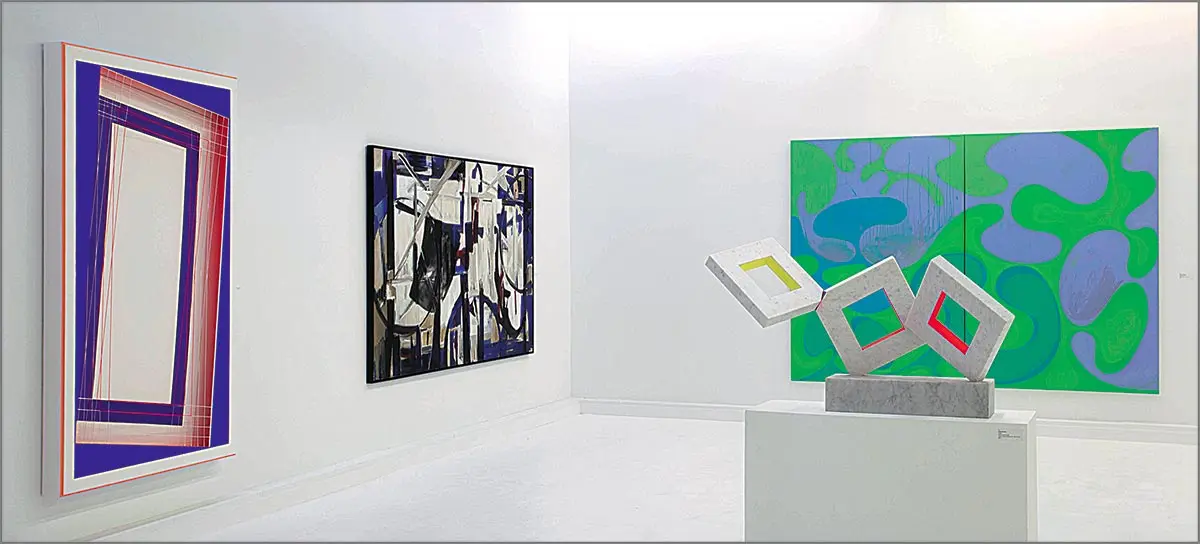
The Durban Segnini, says César Segnini, its founder and proprietor, “was initially open to all the artistic movements of the era.” It is now known for its specialization in the Latin American abstract art tradition, but that came later. Indeed, the gallery’s inaugural exhibition was by Manuel Cabré, a paradigmatic figure in Venezuelan landscape painting. Later it worked with primitive painters like Bárbaro Rivas. The gallery’s tilt towards abstract art was forged in the connection it established with the Taller Libre de Arte, an important institution established in the 1940s that brought together art critics and artists of the most diverse schools, where abstraction played an important role in the early 1970s. Among the abstract artists were, for instance, Omar Carreño, Carlos Cruz-Diez, and Oswaldo Vigas. This group of artists was included in the Durban Segnini gallery program, while members of the Los Disidentes group, including Jesús Rafael Soto, joined later. In this way began a process wherein the gallery’s project and profile, while retaining some figurative artists (it still does), moved steadily towards a specialization on the various modes of abstract art.
In 1975, the year of dictator Francisco Franco’s death, Durban Segnini opened its doors in Madrid, with Venezuelan writer and journalist Ángel Rodríguez Valdez at the helm, where he remained through the branch’s closing in 1983. This was a period when many artists and intellectuals were returning to Spain from exile, and the gallery worked with important figures of Spanish informalist art, like Antoni Tàpies and Modest Cuixart, as well as members of the El Paso group, including Antonio Saura. All were protagonists in a veritable renewal of the visual arts in postwar Spain, and they found in Durban Segnini’s Madrid gallery space to exhibit their work as well as to debate not only the arts and culture of the period, but also the social and political issues of a country in the midst of the Transición, its passage to democracy.
In 1992—the year of Hugo Chávez’s attempted putsch against the democratically elected president Carlos Andrés Pérez—Durban Segnini Gallery opened in Miami and began a new period in the United States. During this period, the gallery’s profile was even more markedly inclined towards Latin American abstraction. In a series of large-scale solo and group exhibitions, Durban Segnini promoted, publicized, and commercialized Latin American abstract art in its many variants into the vast, rich US scene. Geometric abstraction, kinetic art, Op Art, lyrical abstraction, and concrete art began to present recognizable (and understandable) faces for art professionals and also for the general public, thanks to a high-quality exhibition program. This includes exhibitions of the work of key figures in Latin American abstract art like Carmelo Arden Quin, César Paternosto, Fernando de Szyszlo, Gyula Kosice, Julio Le Parc, Mateo Manaure, and Juvenal Ravelo, among others, which brought the tradition of Latin American abstraction to a large audience, communicating its specificity and its importance in any understanding of the project of artistic and cultural modernity in the region.
In its effort for publicizing the phenomenon of Latin American abstraction, Durban Segnini began to systematically exhibit in the United States lesser-known areas of this tradition, most significantly, for its art historical import, the Colombian group of abstract-geometric artists that includes Eduardo Ramírez Villamizar, Edgar Negret, Germán Botero, Manuel Hernández, Omar Rayo, Carlos Rojas, Carlos Salas, and Manolo Vellojín. Durban Segnini organized several group shows, and later solo exhibitions of almost all of them. Sometimes these exhibitions are the artist’s first and largest solo forays in the United States. The most recent instance was The Spiritual Side of Geometry (2014), Manolo Vellojín’s first-ever solo exhibition in North America.
Over the course of its twenty-four years in the United States, Durban Segnini has organized over one hundred exhibitions of Latin American art, counting group and solo shows, all of them documented in bilingual Spanish-English publications, often book-length or ample catalogs featuring essays and studies by renowned critics and curators. History repeats itself, and in recent years Durban Segnini, whose original intention it was to be more than an exhibition space, has launched a program of lectures and meetings with artists, as well as book and catalog presentations, where prominent art critics and curators, renowned academics, and prestigious figures from the Latin American and US museum field have provided new ways of looking at the Latin American abstract-art tradition. In this way, Durban Segnini’s activities, be it in the form of exhibitions, roundtable discussions, or lectures, have become a revitalizing agent in the city’s cultural and artistic circuit.
* Courtesy: Durban Segnini Gallery
DENNYS MATOS
Independent art critic and curator.