
The sculpture has ceased to be an object and has become something even worse: an adjective. Thus our frequent reference to sculptural groups, sculptural squares, and sculptural bodies. This is in part explained by the installation boom, which often used sculpture as a means to different ends. And, in a broader sense, it is also explained by the growing erasure of genre boundaries, by the borderless amalgam that has exploded the traditional genres whose names still designate, rather ineffectually, some Art School departments.
Seen in perspective, the sculpture is suffering from the same ailment that afflicts art as a whole, increasingly more defined by adjective uses of the word “artistic” to cover practices that range from the most deeply committed social activism to the most frivolous advertisement, with all manner of stations in between. Such has been the explosion in art and architecture, that today they seem to function only as satellites in a galaxy whose center they can no longer command. It is true that they have seen an unprecedented rush, yet it is equally true that what returns after this journey is a diminished kind of art capable only of enriching other worlds at the expense of its own impoverishment.
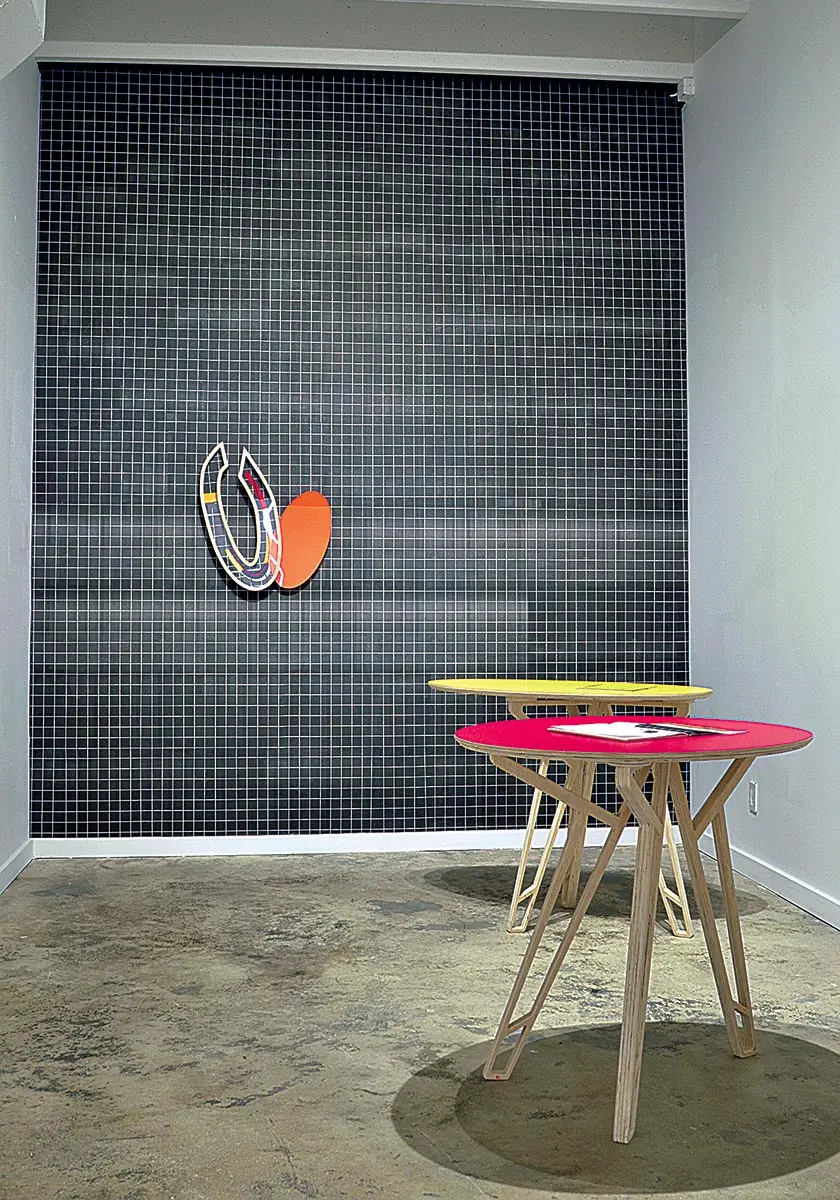
In this context, rare is the artist today who declares his or her condition as that of being a sculptor. Rafael Domenech is one of them. His is an unabashed, obstinate chiseling away that nevertheless acknowledges the fluctuations sculpture has undergone since Rosalind Krauss advocated for its placement “in the expanded field.”
Born in Havana in 1989, ten years after Krauss’ publication, Domenech defines his work as a manifold expanse that integrates photography, video, installation, and draftsmanship, as well as poetry and essays. The result is a kind of sculpture that makes everything around gravitate towards it, and which comes together from the shards and splinters of an environment it is nevertheless able to filter and contain.
The same can be said of the political, social, and cultural elements these works touch upon: they traverse but do not overwhelm Domenech’s creations; they leave their traces without stamping all over them; they illustrate without taking the art hostage. And although Domenech’s sculptures are the daughters of opportunity, they are never opportunistic.
Domenech’s works construct the fragments of a space that is both physical and mental and remains forever unfinished. On that very incompleteness rests a good portion of the mystery of these artworks, which one day evoke Dan Flavin with their luminosity and the next, Erwin Wurm with their irony. Rigorously manufactured, they are nevertheless able to remain beyond reach; contrary to what Rosalind Krauss proposed, they do not seek their identity outside, but, in the midst of an implosion, articulate themselves as sculptures inwardly.
What remains, as a result, is the unfolding of a set of anachronistic objects in which a visual poetics shines to illuminate viewers and invite their interaction, although not in the manner of digital culture. Rather, this is a tactile exchange, a physical negotiation leaving none of the parts untouched.
Despite their conscious skepticism, Rafael Domenech’s works are not indifferent to history or politics. For that very reason, and despite the elegance of their gesture, they are not entirely comfortable to experience. As though preferring inhibition to the exhibition, Domenech opposes the overabundance of ready-mades that season many contemporary art proposals, which have moved so blissfully from recycling objects to recycling subjects, and from reusing things to reusing causes.
Where Freud defined the discontents of culture, Rafael Domenech’s works speak to us of the discontents of sculpture. And as Andrei Tarkovsky defined film as “sculpting in time,” what is reclaimed here, in this era of ephemeral ideas, is sculpture as the act of sculpting against time.
This is the ambition and the tragedy of philosophy that, rather than attracting more things, seeks to expel what is superfluous in art. An anti-ready-made involving the reactionary (never conservative) conviction that art must judge itself a little before judging everything else, perhaps because what defines its virtue is an ability not to keep up with the times but to situate itself, precisely, against them.
IVÁN DE LA NUEZ