
A retrospective exhibition of the work of Antonio Caro was held at Espacio ArtNexus in Las Nieves, Bogotá, covering the artist’s 45 years of continuous production. Titled Todo Caro en Las Nieves and curated by Francine Birbragher, the exhibition brought together a broad selection of works dating from Caro’s early career all the way to his most recent projects. From the beginning, Caro’s characteristic has been to set in motion principles of cultural and political resistance in the face of colonialism’s persistence in the modern era. He began by revising the social constructions at the base of the period’s notions of reality, which (as it continues to be the case) were unquestioningly anchored on the logic of capital and, in consequence, secured the idea of consumption as a principle for our relationship with the world.
Already in his earliest works, the responses Caro provoked in his viewers' involved feedback from their own cultural experience. The meaning of his work is given shape by that which viewers know or are able to learn about the world, based on the cues and suggestions he provides. The selection on display at Las Nieves reveals Caro’s art as unsettlingly current, to the point that his early production continues to be valid not only for what it says but also for the formal and communicational strategies it deployed to say it.
While Caro has resisted the cultural logic of capitalism, he has also confronted the institutional system of art in the modern era, starting with the conventions or codes that shaped modern art, and continuing with art’s institutional role, indeed its very institutions, not only in terms of their managerial strata but also in terms of the ideas of art, artist, and artwork as such. Caro questions the idea of art in many ways, one of them being the recurrence of verbal language as a channel for the enunciation of his work and the references present in it, like in his celebrated Aquí no cabe el arte (No Room for Art Here), which unsettles the hegemonic idea of art in a social and political context like Colombia’s. This work also replaces the symbolic place of art by highlighting the deaths of students and indigenous citizens as an effect of State terror.
Caro has also challenged the idea of the artwork at several levels, with two of his most effective strategies being serialization and multiplication. His works are continuously reinvented and reemerge in connection with specific contexts, as is the case of his project Todo está muy Caro (Everything is Too Expensive, a play with the literal meaning of his last name in Spanish). This work has reappeared repeatedly at different times and in different places over the last four decades, allowing us to glimpse the continued relevance of its statements in the present. Through multiplication, Caro operates the inevitable dispersion of the idea of the original, which in many instances makes way for mass-printed works that viewers can use as they please, as has happened in many of his projects since the 1980s.
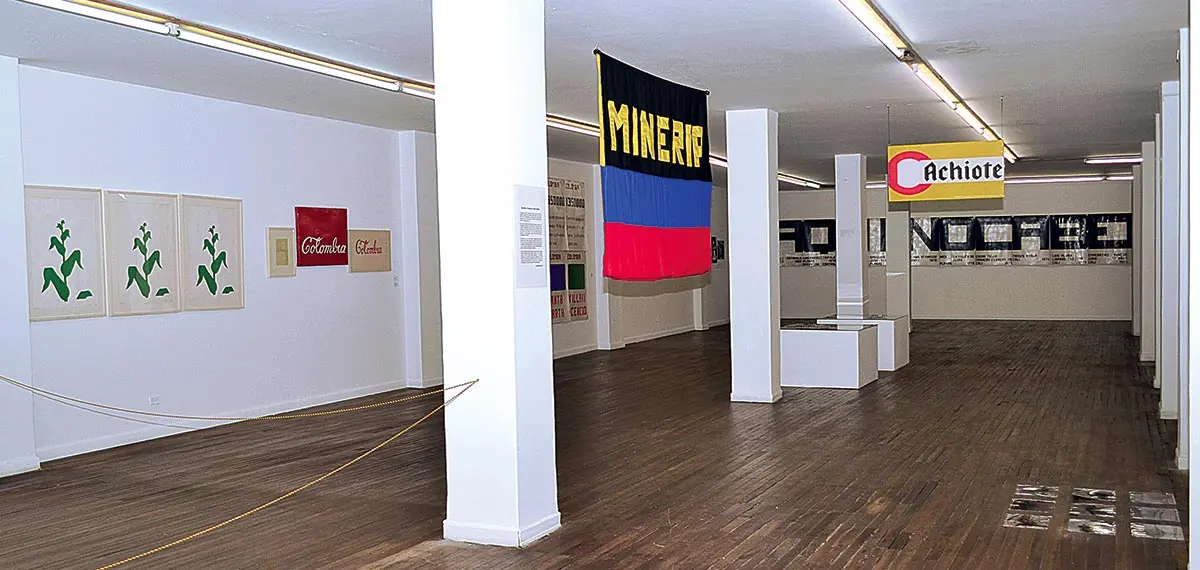
In Caro’s oeuvre, a single work is produced anew, or at times reproduced, for each one of its public inscriptions, using similar yet not identical procedures. Over the last decade, Caro has put in practice a principle he calls “reinstatement” (in Spanish, reposición,) which consists in producing and circulating again works associated with a fixed objectual dimension. This is the case of the current versions of Colombia-Coca-Cola, Achiote (Annatto), and Colombia Marlboro, which combine the typographical font used to identify a multinational commercial brand with an emblem of Colombian cultural identity, in order to raise questions about issues of sovereignty and power.
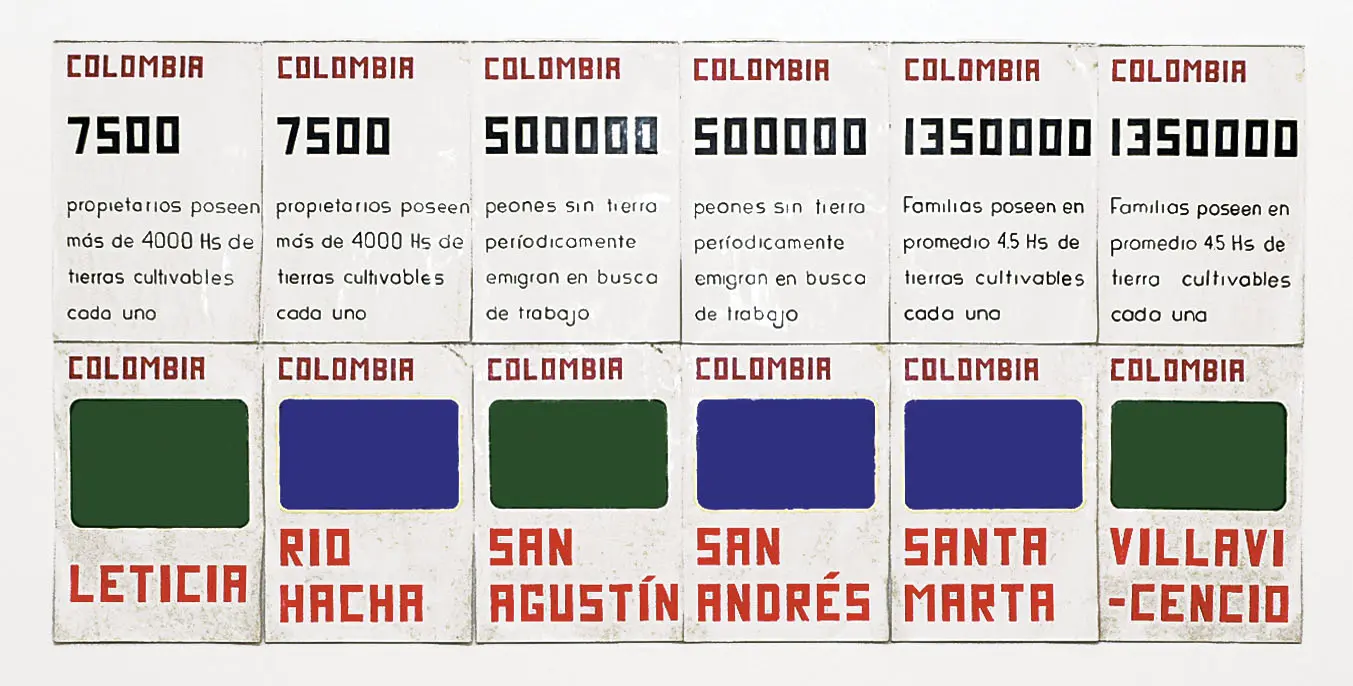
Gathered in the two Espacio ArtNexus exhibition areas were some of Antonio Caro’s most iconic works, like those just mentioned, along with others not as readily remembered by the audience (such as Colombia 1972, about the conditions faced by farmers in the country). There was also a vast collection of documents about Caro’s work, including several of the printed flyers he has used for decades to communicate his positions and ideas, which in fact constitute a whole body of work in themselves.
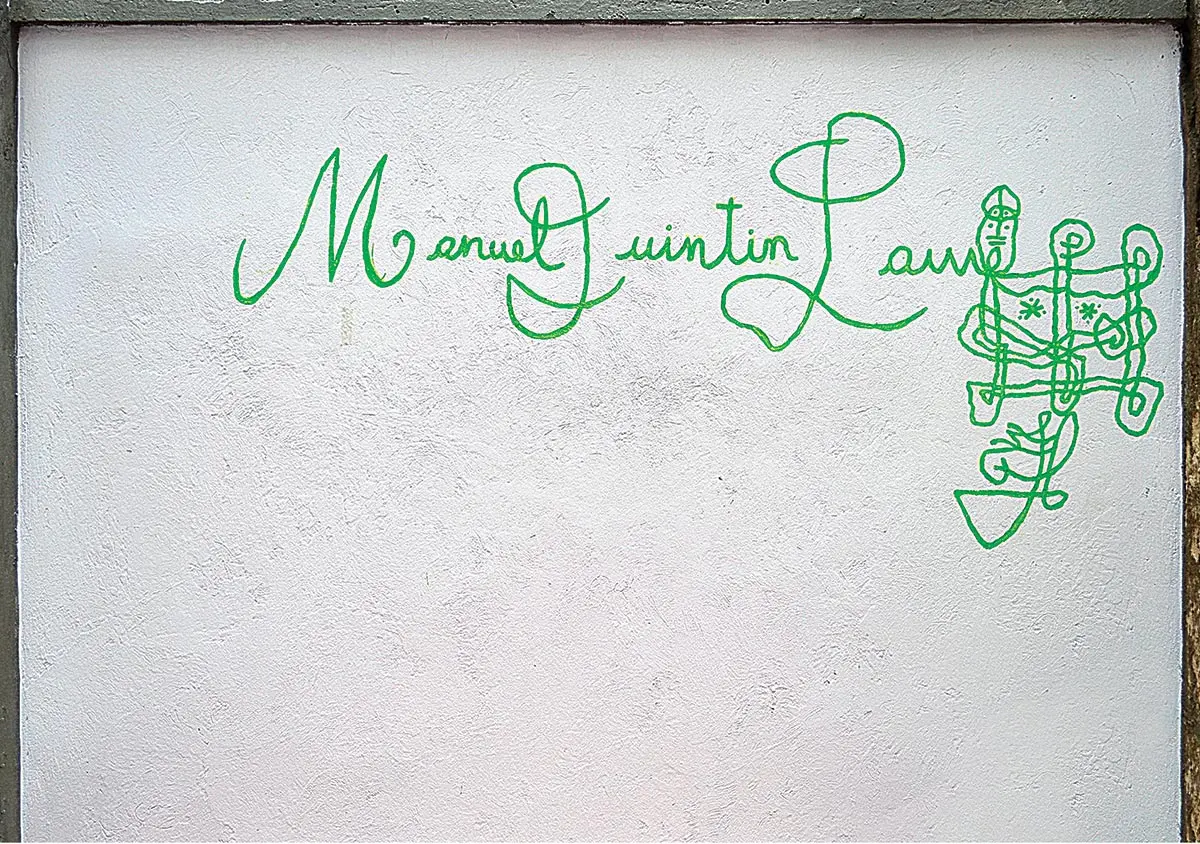
Additionally, on the terrace adjacent to the galleries, Caro presented a very meaningful intervention titled Homenaje a Manuel Quintín Lame (Homage to Manuel Quintín Lame), centered on an important yet little-known indigenous leader in early-Twentieth Century Colombia. The intervention consisted of reproducing Lame’s signature on a wall or window, using annatto. Lame’s signature belongs to two systems of cultural representation at the same time: Western writing and indigenous graphism. Both activate the story of an indigenous leader who devoted his entire life to struggle for recognition of his community’s cultural and political rights. Although he acted peacefully and entirely within the law, Lame spent most of his life in prison. Each time Caro inscribes his signature in a specific location, like a site-specific painting, he is symbolically actualizing Quintín Lame’s existential presence and reminding us of what is hidden by his erasure from official historical narratives.
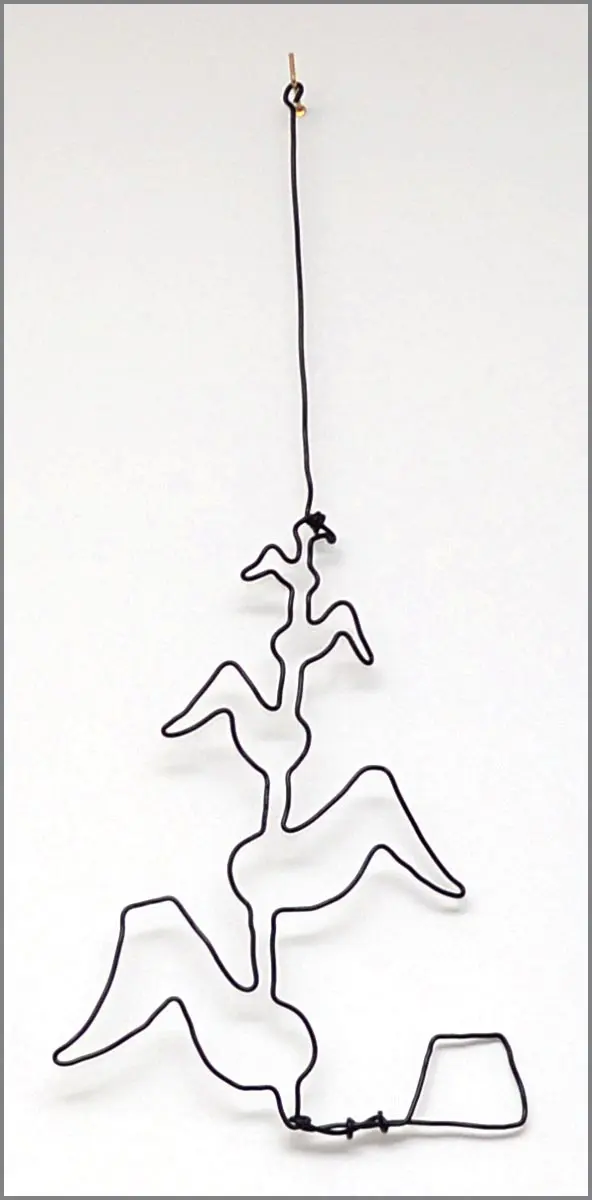
Caro’s Matas de maíz (Clumps of Corn) can be understood as a complement, or even a consequence of that project since it has become an emblem of cultural difference for its meditation on the various social uses of corn in the Americas’ throughout history. Along similar lines, Caro’s Proyecto 500 (Project 500) functioned as a counter-representation of the celebrations around the 500 years of the “discovery” of the Americas. It began in Medellin five years before the official date for that troubling commemoration and consisted of a series of lectures where Caro recounted a number of events and proposed symbolic everyday actions intended to resist the cultural effects of European colonization. Since then, the number 500 has become a symbol for the project.
Along with the cultural and political effects of the works mentioned so far, it is important to consider Caro’s thinking about economic matters, always in connection with cultural representations, as in Todo está muy Caro, which, as we said, plays with the literal meaning of the artist’s last name and connects it with the rising cost of living. Su salud está por el suelo (Your Health is on the Floor) summarizes many of Caro’s concerns throughout his career. The same could be said of those works that make reference to mining, from his famous Homenaje tardío de sus amigos de Zipaquirá, Manaure y Galerazamba (Late Tribute From his Friends In Zipaquirá, Manaure, and Galerazamba)—where Caro placed the head of former President Carlos Lleras Restrepo inside a glass urn, with the purpose of melting it into the water—to Minería (Mining), where he replaces the yellow color of Colombia’s flag with a black ground with the word minería in it. These works insist on their local relevance and signify practices of cultural resistance that are associated with ancestral knowledge.
JAIME CERÓN