
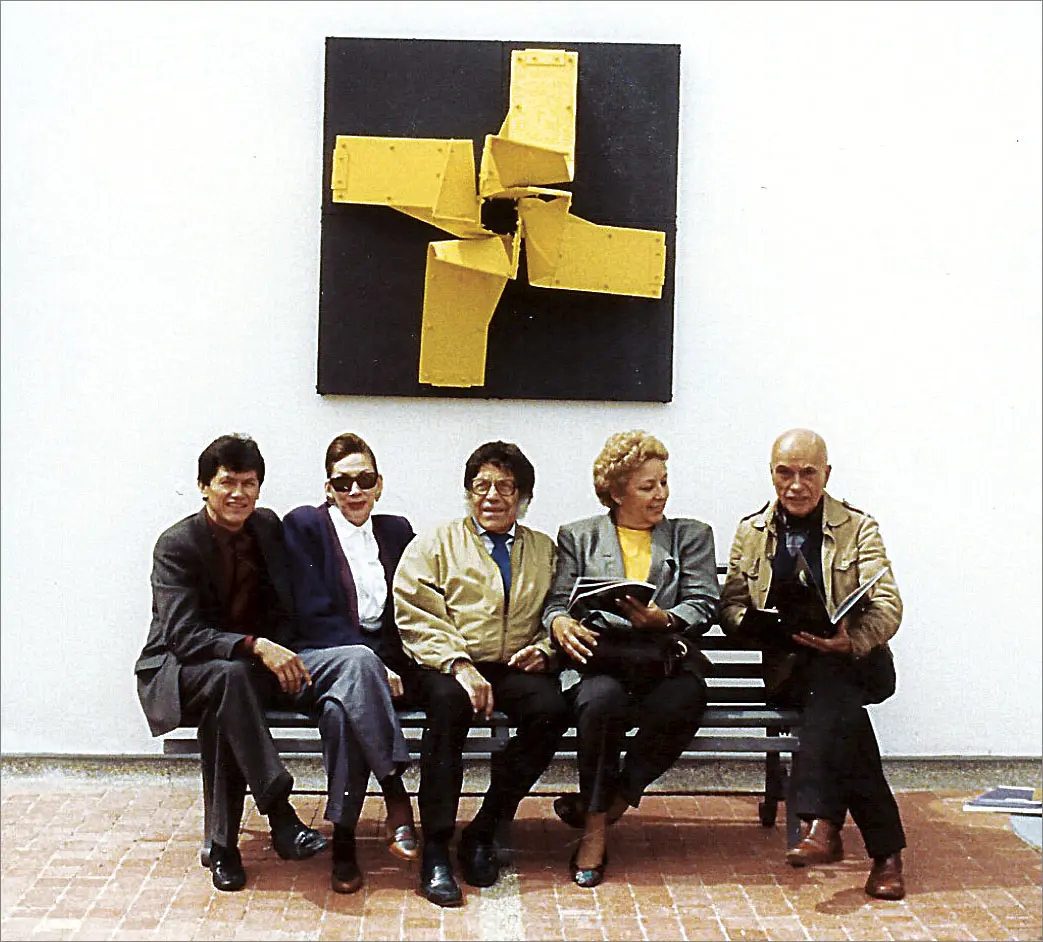
To speak of GraphicArt is to speak of Magdalena Arria. It is impossible to separate the gallery and its management from its founding director. Magdalena opened her art gallery on December 12, 1976. The name at the time was Graphic CB2, and it was located in an important architectural complex in Caracas, known as Parque Central. From the start, the gallery’s focus was, as it remains, on geometric, kinetic, and constructive art. Magdalena’s closest collaborators were Teresa Zapata, Luis Moncada Mujica (†), and Luis Suárez, to this day.
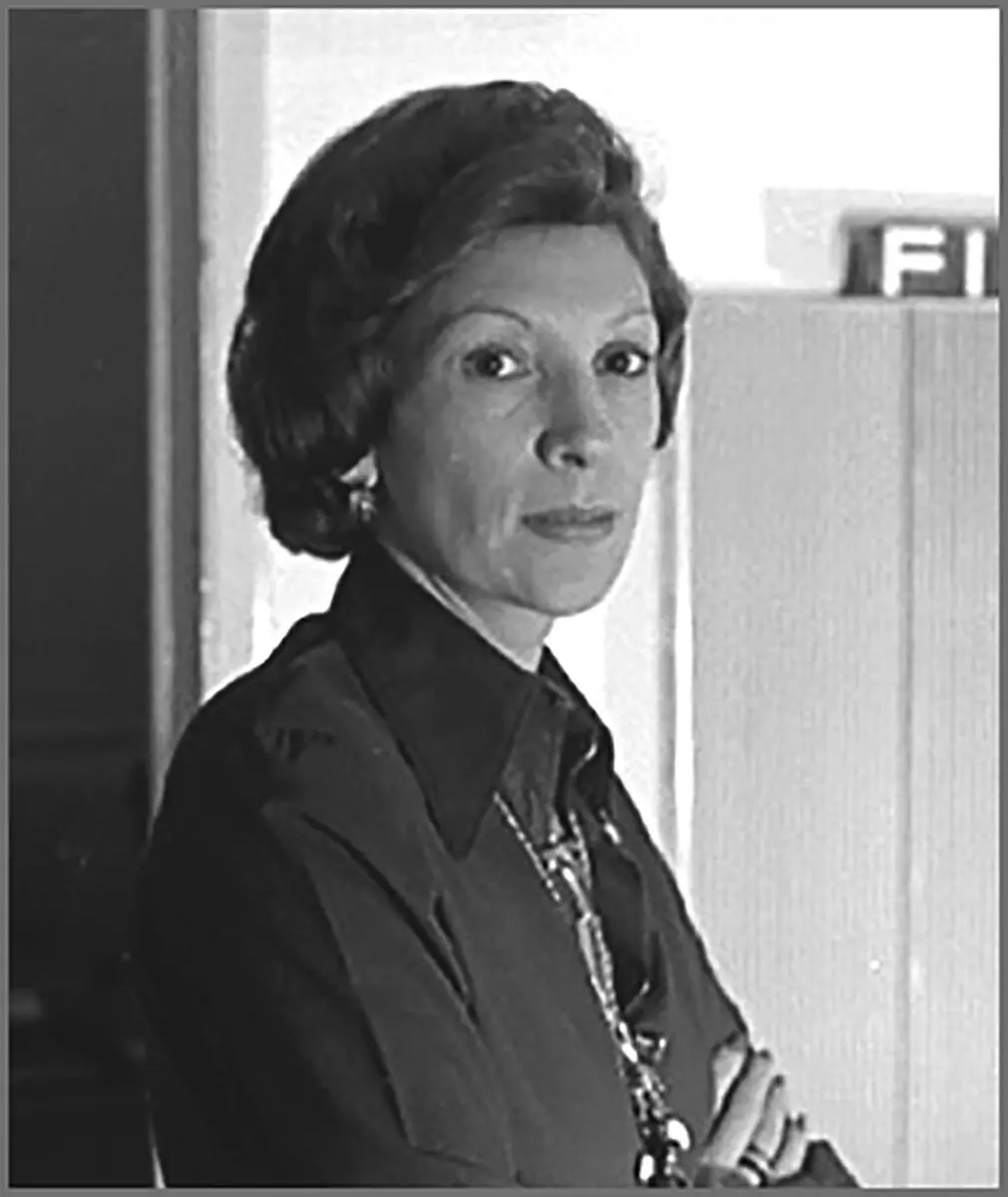
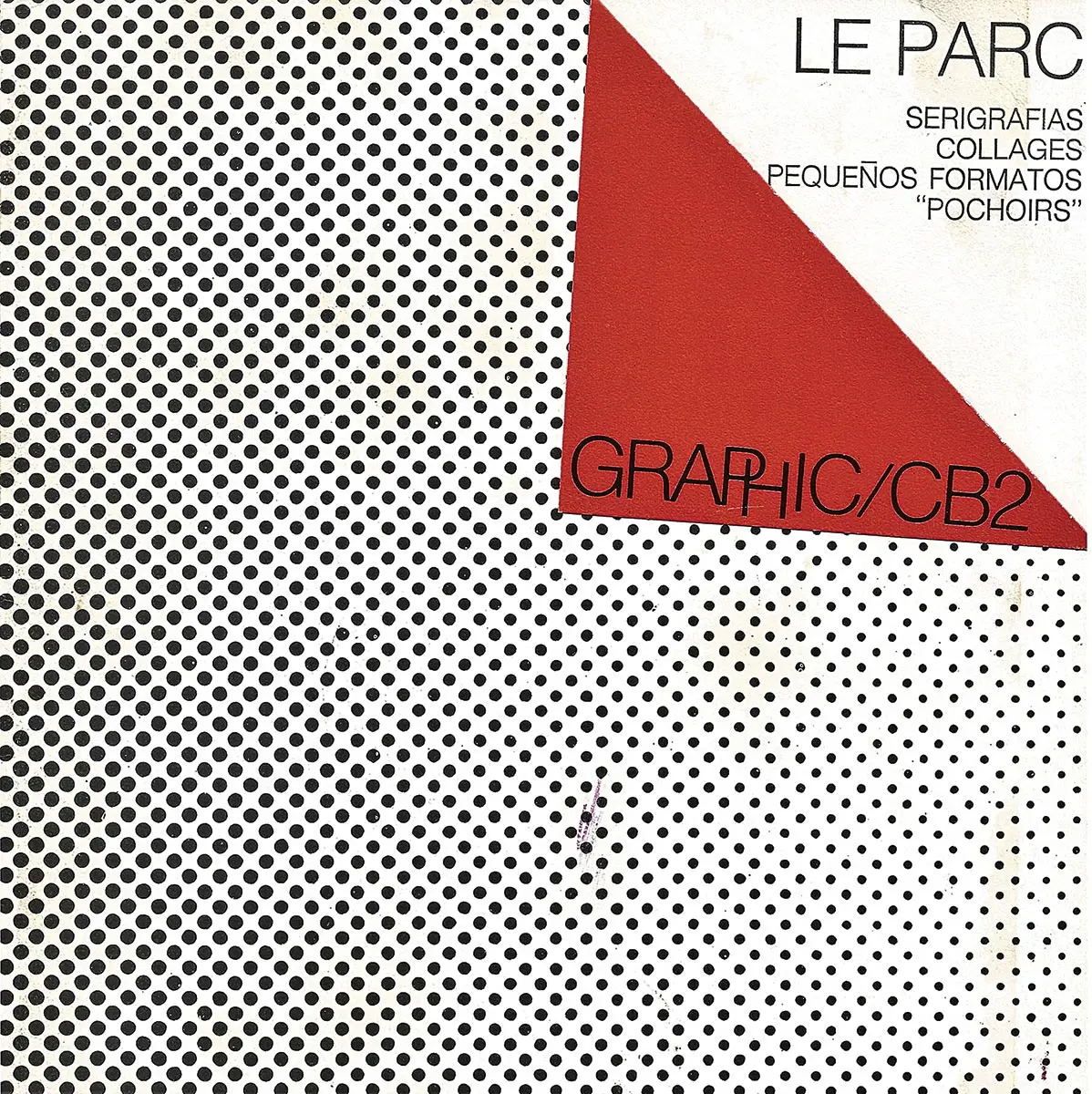
Magdalena Arria wanted her space to showcase local and international artistic excellence. Its first exhibition was of works by French artist Collette Dupriez. The catalog, designed by Carlos Cruz-Diez, was used for over three decades, becoming the gallery’s graphic image. Later, the cover design changed according to the spirit of each exhibition, but the catalog retained its square format suggested by its masterful designer. Today, the gallery’s catalogs are designed by María Elena Ayala.
For forty years, Magdalena Arria has focused her interest on local and international geometric and kinetic art, exhibiting both the initiators of these movements as well as younger artists who went on to develop successful careers. Among the most prominent Venezuelan artists who worked with Graphic CB2 are Francisco Salazar, Manuel Mérida, Edgard Guinand, Enrique Krohn, Enrique Sardá, César Andrade, Octavio Herrera, Pedro Fermín, Joaquín Latorraca, Esteban Castillo, Nanín García, William Barbosa, Carlos Cruz-Diez, Darío Pérez Flores, Juvenal Ravelo, Rafael Barrios, Jesús Soto, Marcel Floris, J. J. Moros, Omar Carreño, Oswaldo Subero, Joel Casique, Carlos Medina, Milton Becerra, and Gianmarino Grassi. Some of the international artists invited to exhibit were Julio Le Parc, Édgar Negret, Walter Strack, Satoru Sato, Carlos Evangelista, Germán Botero, Francisco Sobrino, Horacio García Rossi, Nicolás Schoeffer, and, years later, Abel Ventoso, Cristina Colichón, and Saverio Cecere, among others. The gallery’s final exhibition as Graphic CB2 was a solo show by Luis Mille, in 1999.
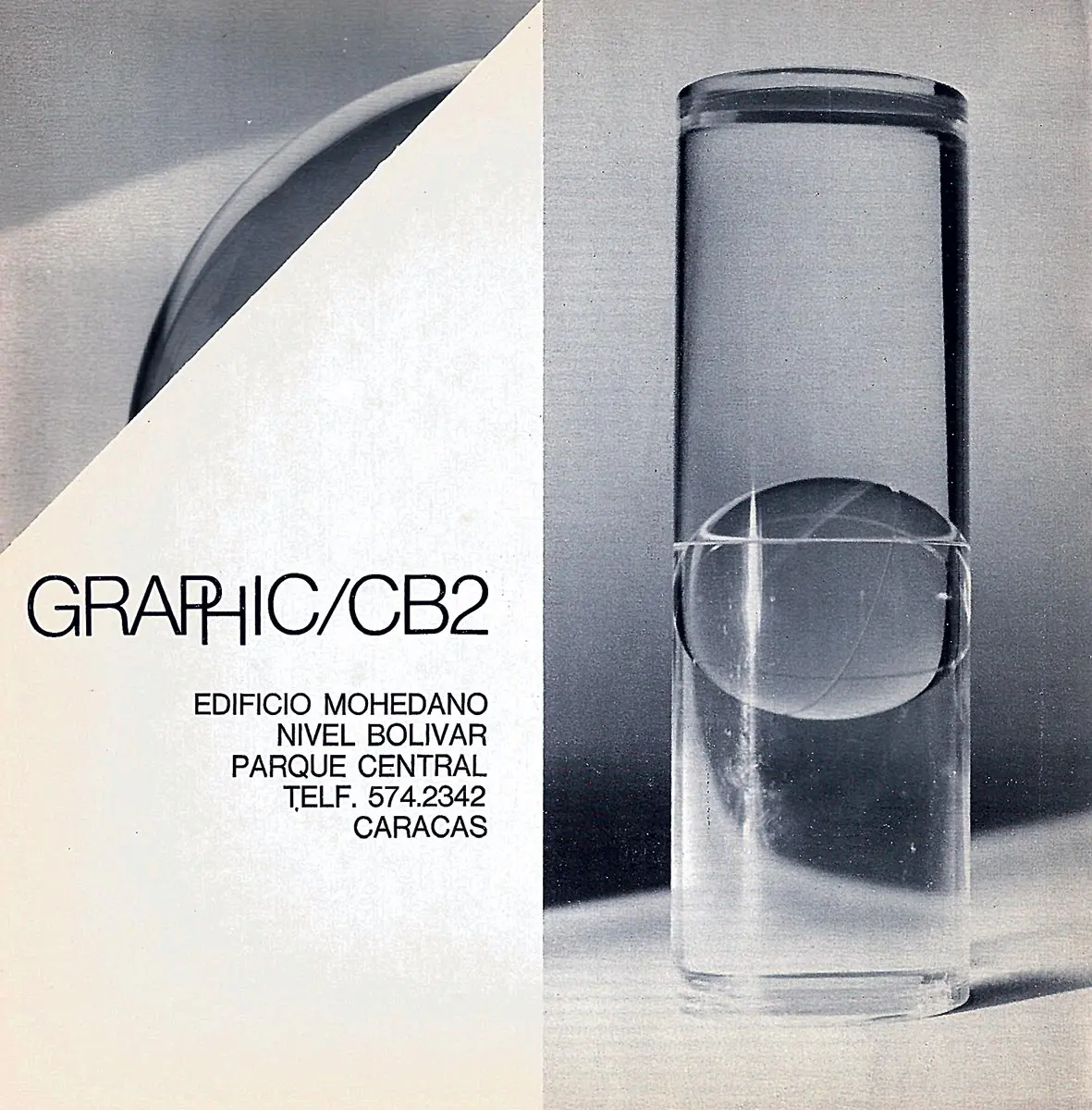
After Mille’s show, the gallery changed its name to Graphic Gallery and remained at Parque Central until 2004. That year it moved temporarily to El Sucucho, a space located in Las Mercedes, in eastern Caracas. The current location, in the La Hacienda building, also in eastern Caracas, opened in 2005, and the gallery was renamed GraphicArt.
In 1990, Magdalena Arria, along with D’Museo gallery and other partners, planned FIA, the Caracas International Art Fair. For twenty-three years, FIA was the occasion for Venezuelan audiences to see international artists brought by foreign galleries. Due to the political crisis in the country, the event hasn’t been held in the past two years. The situation has nevertheless not prevented Magdalena and María Gabriela Arria, who joined the gallery’s management in 1997, from insisting on internationalizing Venezuelan artists. So, in 1993 and 1994 GraphicArt took part in international fairs like MirarArte Colombia and later went to ArtParis, in 1999. In the 2000s it traveled to ArtBo (Bogotá, 2006-2013); Art Lima, since 2011—Magdalena Arria opened a new gallery, GraphicArt Lima, in the Peruvian capital; Art Cartagena (January 2015); and Barcú (Bogotá, 2015 and 2016). Meanwhile, Magdalena’s grandson Gabriel Benítez Arria joined the team in 2010.
The artists represented by GraphicArt have stood out for their inquisitive and thoughtful approach to their media. This has helped the constant renewal of geometric abstraction and kinetic art. Magdalena and María Gabriela Arria, along with Gabriel Benítez Arria, understand that not only do new artists appear over time but also that artistic procedures change along the way. As well as using traditional media such as painting, sculpture, and graphic art, many today work with digital programs, new industrial materials, etc. Ideas about color, plot, optical vibration, and other visual elements, including time and space, persist. Important critics have vouched in their texts for the formal conceptual value of the work of these artists, among them Roberto Guevara, Bruno Munari, Gastón Diehl, Carlos Cruz-Diez, Alfredo Boulton, Alberto Asprino, María Luz Cárdenas, Katherine Chacón, Gerardo Zavarce, and Freddy Carreño, among others.
Today, GraphicArt supports and promotes the work of new artists, such as Gisseline Amiuny, Ani Villanueva, Carlos Zerpabzueta, Flix, Héctor Ramírez, Alberto José Sánchez, India Serena, Ángel Hernández, Yuye de Lima, Inés Silva, Miguel Prypchan, Ania Borzobohaty, and Pedro Morales, among others. The gallery remains faithful to its founding idea as it continues to project its future between Lima and Caracas.
* Courtesy GraphicArt.
SUSANA BENKO
Art researcher and independent curator.