
The Museo de Arte Moderno in Bogotá pays tribute to one of Colombia’s most important artists, Ángel Loochkarrt. This comes after a certain amount of pressure was put on the institution by the local art world, spearheaded by a letter where Nadín Ospina asked for signatures to demand that the museum’s new administration honor a prior agreement with the artist. They intended to cancel the programmed exhibition, arguing they are not bound by the commitments of their predecessors. This unfortunate decision was ultimately amended. The show took place, giving Loochartt what any serious institution should owe all living artists who have sustained a career over the years: visibility for the new generations of what it means to be an artist and to remain on the scene with an important oeuvre in a country that tends to deny those who, in one way or another, have contributed to the history of its arts.
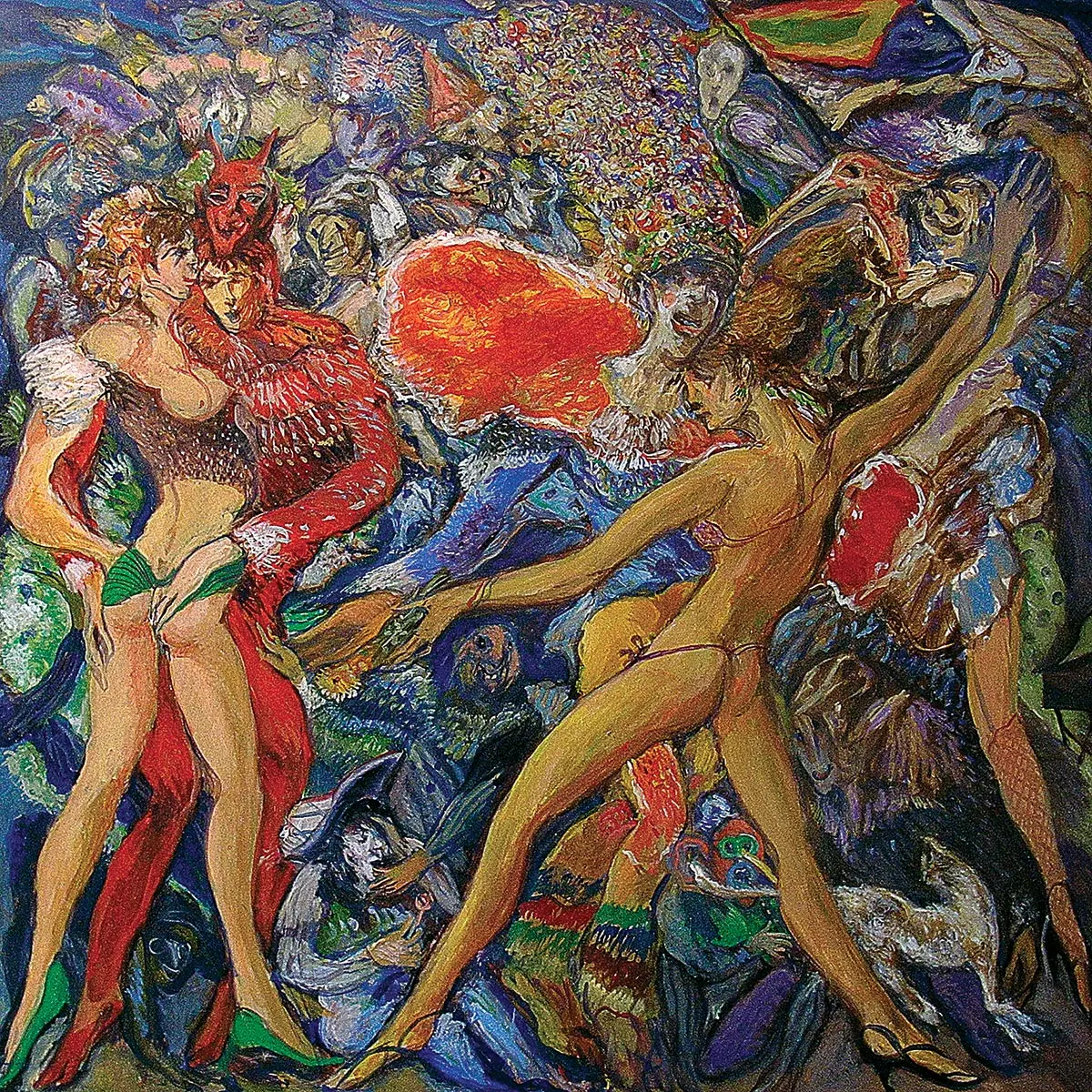
To bring the artist’s production to the public, exhibition curator María Teresa Guerrero focused on the subject of carnival celebration, which has become central to Loochkarrt’s work. Guerrero titled the exhibition Vale la carne (Farewell to Meat, from the Latin Carne Vale), insisting that this popular celebration in the artist’s native Barranquilla “has been the subject of study and a source of inspiration for several different fields. Artists like Ángel Loochkartt, anthropologists like Nina de Friedemann and Gloria Triana, documentary makers like Luis Ernesto Arocha and Tita Cepeda, have all been influenced by the carnival spirit and generated testimonies, exploiting the feast’s most signal aspects and decisively identifying the characters.”1
Indeed, in this feast bodies are altered and dance under the moon, sexual boundaries are blurred, identities are disguised behind masks and makeup to the point of intoxication. But intoxication here needs to be understood also from a representational standpoint, where painting—anchored on a kind of expressionism that reminds us, and how could it not, of James Ensor and Emil Nolde—is able to give material shape on the canvas to that state of the body and the soul where our senses seem to lose their moorings insanity. Charles Baudelaire already announced what inebriation meant, not in any old way but with “wine, poetry, and virtue.” Loochkartt appears to interpret the poet’s dictate in his own way while sensing the inebriation of the Colombian Caribbean region that is expressed through color.
Loochkartt’s canvases show characters in dance, and gradually dance becomes a large-scale orgy of color and bodies, where sensuality and eroticism make his works be seen, at times, as rather not demure. But who really cares about sexual modesty, the vestige of a society still plagued by colonial-era prudishness, when in a popular celebration like the Barranquilla Carnival the devils, marimondas, and many such crazy characters are able for a few days to bring out the furor of the bodies and let it flow freely.
When I headed the Universidad Nacional de Colombia’s Art Museum, I organized a joint tribute to Loochkartt and another great artist, Jim Amaral2. Speaking for an interview that remains unpublished, Loochkartt declared his affection for a kind of permanent feast of the body, which Antonin Artaud called a flesh and bone enigma, where every passion is incarnate and reason plays no role as mediator. And what better place and context than the carnival—al sensuality, dance, and desire—to reassert such corporeity. The body is and will remain a feast, Loochkartt seems to insist in his medium- and large-format canvases.
The main virtue of this exhibition is the way it insists that painting has a tradition, and that, beyond fashions and trends, it is important to exalt a means of expression that is exercised with professionalism, moreover at a time when art schools chose not to teach painting so much—for good reason since painters like Ángel Loochkartt seem to be on a path to extinction. In those terms, this tribute is not only to an artist who has been painting for over fifty years but to painting itself, and it is able to show its current vitality.
NOTES
1. María Teresa Guerrero: Ángel Loochkartt: “Vale La carne. Antología de un pincel carnestoléndico”. http://www.mambogota.com/web/interna-actividad.php?cod=bGVvbmlkPTg0bGVvbg==
2. Corpus Eroticus. Homenaje a Ángel Loochkartt y Jim Amaral y la colección del Museo de Arte Erótico Americano. Museo de Arte, Universidad Nacional de Colombia. 2010.
RICARDO ARCOS-PALMA