
The exhibition Antonio Reynoso. Archivo de un cinefotógrafo (Antonio Reynoso. Archives of a Cinematographer) gave the artist (1916-1996) new visibility in the history of Mexican film and photography, in a reconsideration of the images he provided for the narrative proposals of writers, stage designers, and filmmakers of the second half of the Twentieth Century, and of the still not fully studied quests and explorations engaged in his own photographic oeuvre.
This exhibition is the first in a process of activation of audiovisual archives in museographic spaces, via a permanent seminar that discusses technologies, audiovisual media, and artistic experimentation, sponsored by Mexico City’s Centro de la Imagen, the site of this exhibition, which remained open from May 25 through October 2, 2016.
Researched and curated by Elva Peniche and Israel Rodríguez, Antonio Reynoso. Archivo de un cinefotógrafo socialized a deep revision of the Antonio Reynoso Archive and the UNAM Film Library, combining photographic and film formats, testimonial audiovisual products, and documents.
The setup of the first section—which functioned as a panoramic view of Antonio Reynoso’s creative universe—placed the viewer in the situation of reviewing the archive, not only by presenting documentary materials in display cases but also by allowing visitors to manipulate textual and graphic documents presented in reproduction.
Thus, we were granted access to the paperwork for the acquisition of Reynoso’s works by the San Francisco Art Museum and the New York Modern Art Museum (when Beaumont Newhall, a pioneer in programmatic world-photography texts, was photography curator); a critical text about Reynoso written by Manuel Rodríguez Lozano, who was his mentor at the San Carlos Academy; accreditations and honors as chief photographer for the 19th Olympiad, in Mexico; the catalog for the exhibition 10 Fotógrafos en la plástica (10 Photographers in the Visual Arts), presented in 1976 at the Mexican Arts Salon, with an essay by critic Antonio Rodríguez, where Reynoso exhibited alongside Manuel Álvarez Bravo, Enrique Bostelmann, Héctor García, Graciela Iturbide, Nacho López, and Walter Reuter, among others; a sample from the screenplay for the film Tajimara (1964) with notes for the handling of the photographic equipment (winding dolly tracks, cranes, telephoto lenses, and other resources) during the shooting of scenes. Antonio Reynoso was the film’s cinematographer, and Tajimara, directed by Juan José Gurrola based on a short story by Juan García Ponce, has been recently reassessed in other exhibitions reviewing artistic processes of the second half of the Twentieth Century.
Also included in this section are clips from Tajimara and other emblematic films in Antonio Reynoso’s career: Fando y Lis (1967), directed by Alejandro Jodorowsky, where Reynoso collaborated with his student and camera operator Rafael Corkidi; Olimpiada en México (1969), directed by Alberto Isaac, which includes the sequence in which Reynoso decided to continue filming the Kenyan runner in the last position in the Marathon through the night hours, forcing his portable camera’s ASA range (Stanley Kubrick later wrote him that he had copied the procedure in the filming of his own night scenes).
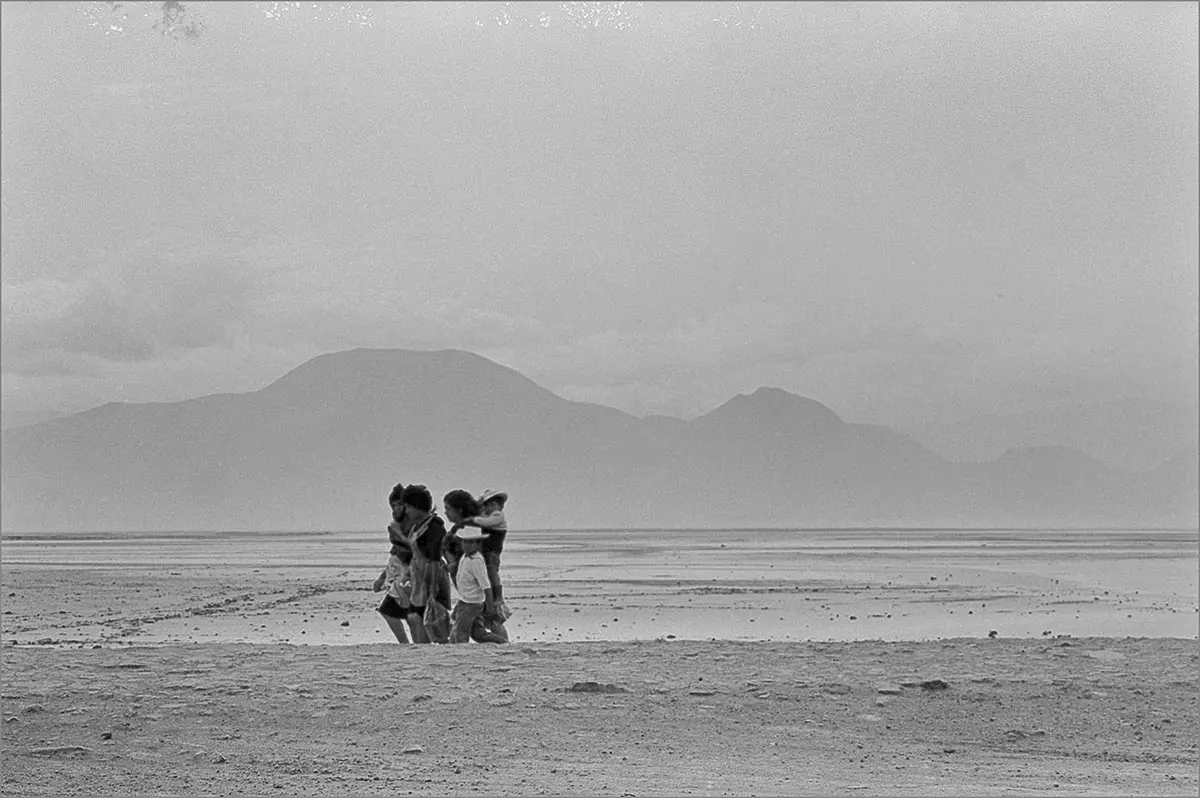
Recovering testimonials and writings such as those by photographer Tony Kuhn, who considers Reynoso as the precursor of the use of indirect light in Mexican cinema, or Salvador Elizondo’s, which emphasizes Reynoso’s sensibility to capture in images shapes that imply feelings, the exhibition featured a second section about Reynoso’s photographic work, with curatorial and museographic ideas that continue to place visitors in the position or reviewing and revising the archive using devices that are characteristic of research in photography, with works placed on light-box tables and filing cabinets, the latter to be opened by the viewer, curated around an insightful thematic-visual axis: thresholds, vacant lots, the city. All in support of our sensitization to Reynoso’s playful and empathetic approach to working-class neighborhoods and rural areas in his portraits and vistas.
The next section in this exhibition (appropriately located only on the upper floor of Centro de la Imagen’s exhibition space, which gave it greater brightness) covered Reynoso’s work as a cinematographer in experimental films and as a film director, with samples of his photography and documents: El despojo (1960), directed by Reynoso, written by Juan Rulfo and photographed by Rafael Corkidi, was presented by the curators alongside a diptych with sequences of the screenplay, cotemporary critical assessments by José de la Colina and Jorge Ayala Blanco, and photographs of the Cardonal, Hidalgo location); another Reynoso-directed film about the Mexican psychiatric institution La Castañeda (1965); La creación artística (1965), directed by Juan José Gurrola; A Hole in the Fog (1967), by Archibald Burns.
The exhibition ends with considerations about his participation in René Rebetez’s for La magia (1975), a film documenting local ceremonies and rituals along with Latin America. The exhibition’s curators recovered photographs, and they edited and presented samples that document Antonio Reynoso's creative constants: the visual tension between realism and a connotative sensible treatment of the image.
EUGENIA MACÍAS