
The way in which a given society perceives reality is determined by a history that has been constructed and studied on the basis of limited criteria and exclusionary concepts. As we reflect on the historical sources of our information about the past, it is important to remember not only that we can never know the past exactly as it happened—we can know some fragmentary events, not reality as such—but also that the narratives we do have of the past have been constructed by individuals whose vision is molded by specific interests, motivations, intentions, beliefs, and political ideals. The result is a history purified of all that does not fit within pre-established parameters. Those who are left out will struggle for acceptance in different ways. Some promote an inclusive, egalitarian society, while others seek recognition and respect for their individual character.
On the basis of a critique of the official version of history, the construction of memory, and normative discourses, Carlos Motta develops a multidisciplinary proposal that prods us not only to reflect but also to act. His documentary projects explore and denounce the conflicts that arise between institutions and citizens in a democratic context. Among the subjects of his early works are US interventionism in Latin America and the economic and military interests it implies; abuses of power by governments and state institutions; human rights; and migration processes.
In his video Memory of a Protest (2007)1, for example, Motta documents a protest action promoted by Kamarikun, a human rights organization, in Santiago de Chile in 2006. The protest denounced the teaching of torture techniques at the Western Hemisphere Institute for Security Cooperation, also known as the School of the Americas (SOA), and demanded that the Chilean government stop sending its military officers there. In Resistance and Repression (2010)2, Motta documents the testimony of Josué Euceda, a Honduran student who took part in a rally against the coup in Tegucigalpa in 2009 and personally witnessed the repression and the abuses perpetrated by the army.
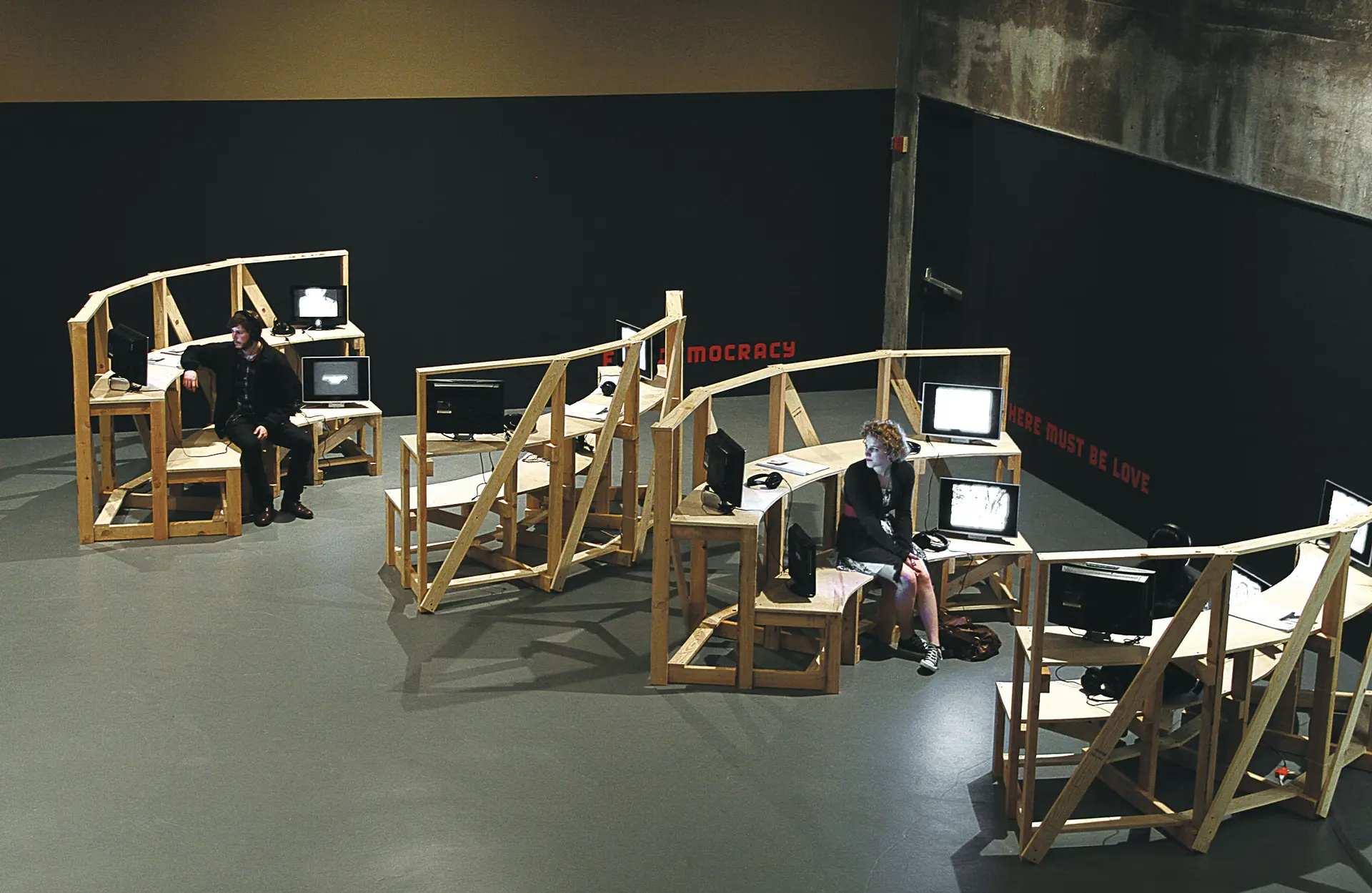
Motta’s most complex works include video, installation, written texts, and web pages. One example is The Good Life/La buena vida (2005-2008)3, a project comprising more than 360 interviews with passers-by in the streets of twelve Latin American cities. The interviews discuss a variety of topics, including world events, democracy, leadership, and governability. The answers and statements documented vary in accordance with the interviewees’ point of view and the context they are in, as well as with the modes of government and the social, economic, and political realities in each country. The installation created as part of the project features twelve monitors set into four wooden structures that make reference to the Agora, the public space in ancient Athens where citizens debated and took part in legislative and judicial decisions. Around those structures, Motta exhibited a series of photographs documenting political graffiti, religious processions, and public monuments that display interesting connections to ideological, religious, and cultural iconographies.
Motta’s research fueled his interest in issues of sexuality and gender, which, he says, are essential to understand the functioning of democratic societies but have not been sufficiently explored in the visual arts. As I said above, official history is purified of all that does not fit within pre-established parameters, and this is particularly true with regards to what is sometimes called “the third sex.” Those who are left out by the binary male/female criterion deploy a variety of perspectives and platforms in their struggle for inclusion. Some promote an inclusive, egalitarian social space, while others seek to have their differences recognized and respected.
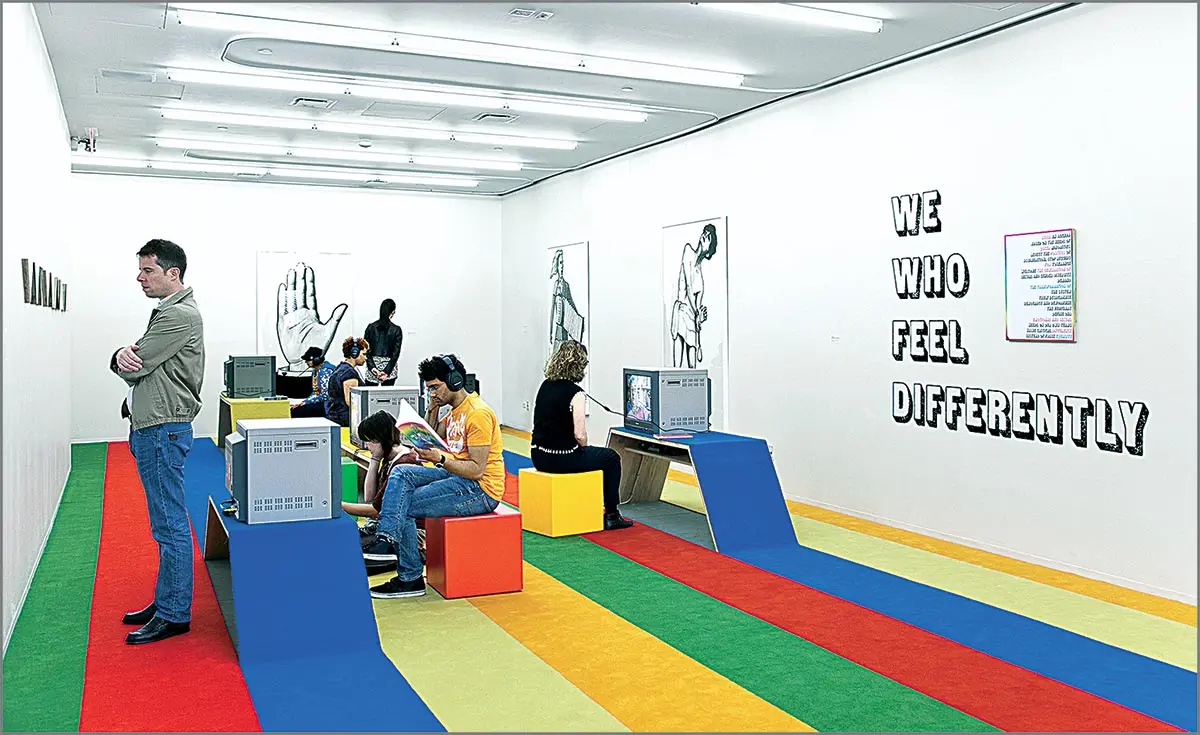
The latter is the position Motta identifies with, and also the premise behind Nosotros que sentimos diferente (We Who Feel Differently, 2012), a multidisciplinary project that includes videos, a web page, a bilingual English-Spanish publication, and lectures on issues of sexuality and gender. The content is based on some fifty interviews with academics, researchers, activists, and lawyers from Colombia, Norway, South Korea, and the United States, all of whom work on LGBTIQQ history and politics. The interview videos are an essential part of the proposal, as is its staging in the variety of spaces where it has been presented, including the 10th Gwangju Biennial (Korea), the Espai d’art contemporani (Castelló, Spain), the Utah Museum of Contemporary Art (Salt Lake City, USA), Lugar a Dudas (Cali, Colombia), the University of Illinois (Chicago, USA), and the New Museum (New York, USA). The project has an important aesthetic component. At the third Poly-Graphic Biennial in Puerto Rico (2012), for example, students from the Visual Arts School protested through graphic proposals that were based on discussions of the state of LGBTQI policies in Puerto Rico and the role played by sex and gender difference in the Island’s culture. In other contexts, Motta’s exhibitions have included color bands or a pink triangle, a symbol associated with the gay community that memorializes the systematic murder of homosexuals in Nazi Germany.
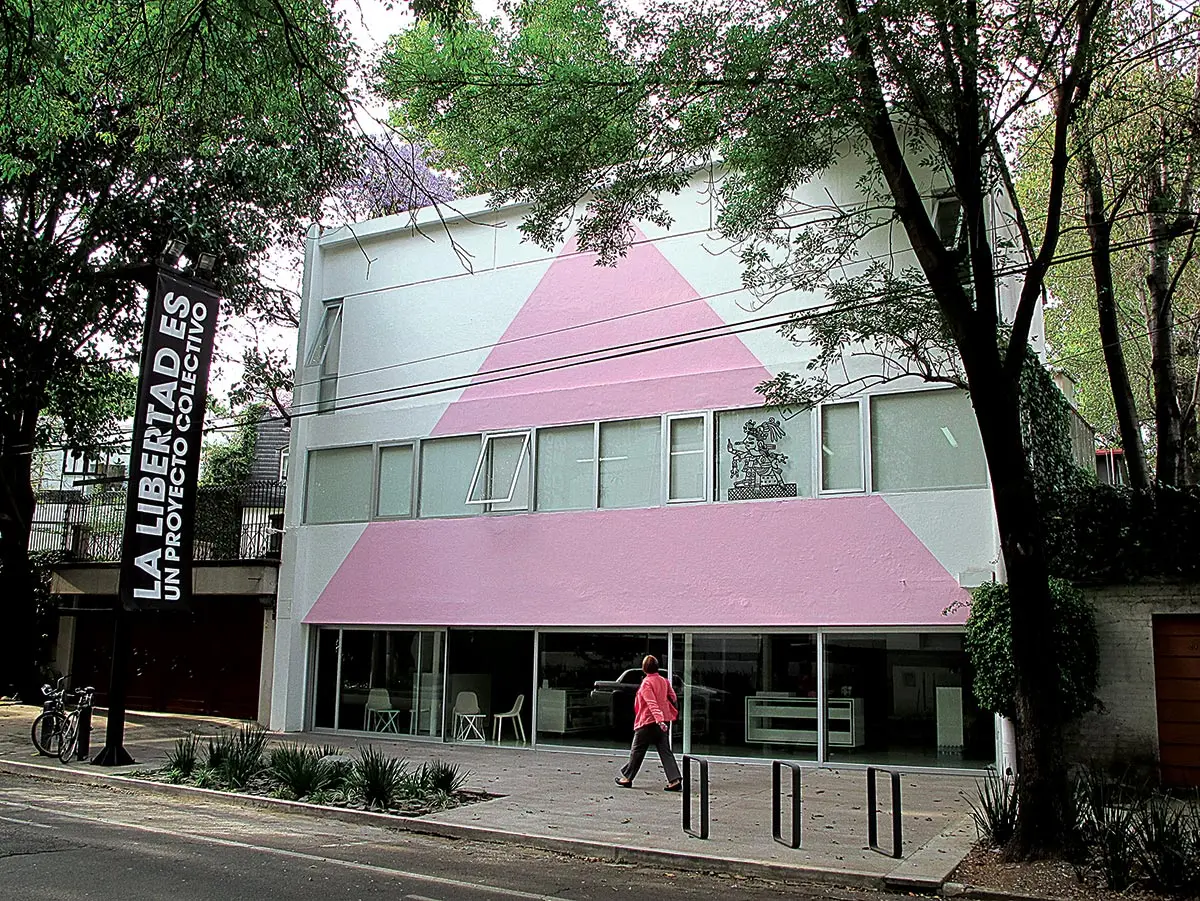
The pink triangle is also used in Shape of Freedom (2013), which deals with the political development of gay activism in Mexico and other Western countries. Motta’s proposal here uses three elements in his exploration of a variety of important historical markers connected to the complexities of the Mexican context: a mural (a pink triangle painted on the façade of the Sala de Arte Público Siqueiros); a timeline of dates, symbols, and significant moments in the history of sexual activism, anchored around the use of the pink triangle as an emblem for homosexuality in the West; and a discussion with local activists. The project reclaims the historiography of the pink triangle and other representative symbols of sexual difference as an alternative proposal for the promotion of autonomy and self-determination while highlighting the importance of collective processes for the advancement of the idea of social freedom.
One of Motta’s most complex and interesting projects, in historical terms, is the cycle titled Nefandus (2013-2014), a multidisciplinary proposal exploring the imposition of European epistemological categories during the Spanish and Portuguese conquest of the Americas. Here Motta uses photographs, sculptures, and videos, to investigate homoeroticism in pre-Hispanic America. The Latin word nefandus described those deemed impious, loathsome, or unspeakable, and it was used in colonial Latin America to refer to that which was considered a sign from the Catholic perspective. A nefandus sin was an unspeakable sin, a transgressive sexual crime such as sodomy, which was severely judged and punished.
The project’s central axis is La trilogía nefanda (The Loathsome Trilogy, 2013-2014), three videos that prompt reflection on the ways in which the construction of sexuality and the body in ancient societies of the Americas, whose traditions and histories remain largely unknown, has been mediated by European classifications. Motta proposes a reclamation of historical categories and an inscription of new meanings through speculation, research, or imagination, all with the purpose of achieving greater freedom in the present.
In Nefandus (2013)4, two men on canoe travel along the Don Diego River, in the Sierra Nevada de Santa Marta mountain range, in Colombia. In Spanish and an indigenous language, they talk about the loathsome sins committed in the Americas during the Conquest. In the video, Motta scours the landscape, the motion, and the sounds of the Sierra Nevada in search of clues, details, and stories that have not yet been told or which have been ignored and/or stigmatized.
Naufragios (2013)5 is a fictional adaptation of Desventuras de um degredado sodomita na Bahia seiscentista (The Misadventures of A Degenerate Sodomite in Seventeenth-Century Bahia), by Brazilian anthropologist, historian, and gay-rights activist Luiz Mott, which tells the story of Luiz Delgado, a Portuguese colonist who was the victim of the Inquisition because of his sexual inclinations and for challenging the era’s socia+l and religious values with his engagement in homoerotic relationships. Shot in a historical location in Lisbon, Motta’s video illuminates the narrow and complex relationship between religion and the law as foundations for the oppressive discourses of sin and crime.6
In La vision los vencidos (The Vision of the Vanquished, 2013), an indigenous slave serving as a guide to a group of Conquistadors describes the moment when a Spanish captain witnessed a homoerotic group ritual, furiously condemned the act as “abominable and unnatural,” and ordered the immediate execution of the natives. Recorded in the Sierra Nevada de Santa Marta, this video is based on an undocumented chronicle that has been transmitted orally through the generations.
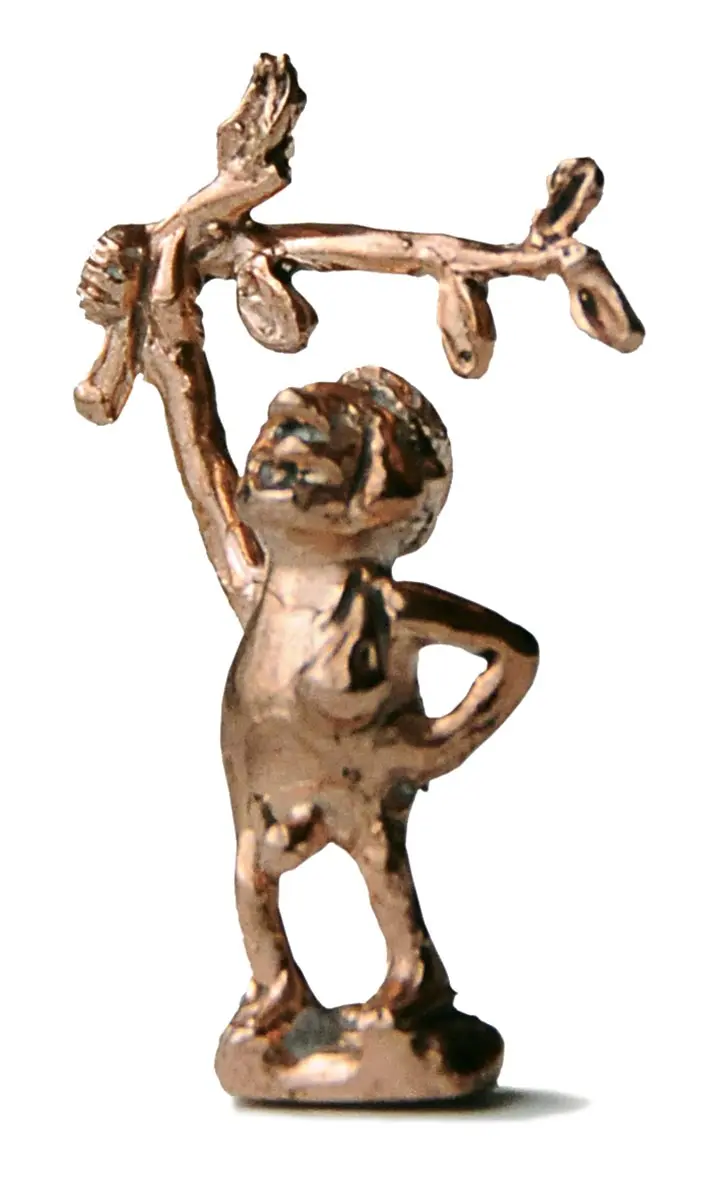
La visión los vencidos (The Defeated, 2014) is also the title of a series of drawings in pencil and watercolor, and a gold sculpture, inspired by artifacts (pottery, jewelry) depicting homoerotic acts that have been found in Mexico, Colombia, and Peru. The installation speculates that indigenous groups may have experienced homoeroticism as part of their sociability and suggests a reading of these objects that transcends their traditional interpretation as ritualistic or spiritual.
Motta developed further proposals based on his research in museums and archives, among which his installation Hacia una historiografía homoerótica (Towards a Homoerotic Historiography, 2014) and the film Deseos (Desires, 2015) are particularly noteworthy. The former is composed of twenty miniatures depicting pre-Columbian characters engaged in mostly homoerotic sexual acts. The figures, copies of real objects, are reproduced in a very small format as a symbol of their concealment and disavowal. Presented through a magnifying glass or inside small display cases, they demand an individual gaze that is, to a degree, voyeuristic.
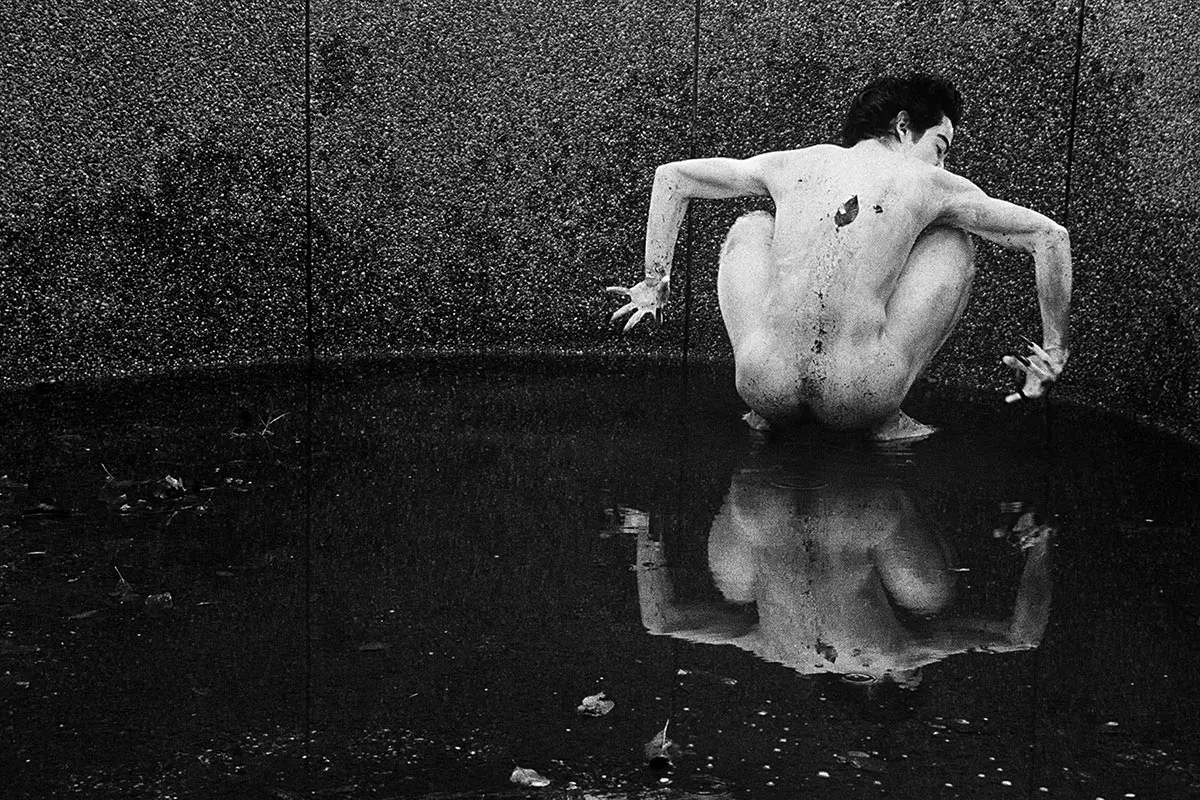
Motta also becomes the protagonist of some of his works, as is the case of a selection of nude black and white self-portraits, Sin título (Untitled, 1998-2016), where he represents fictional characters posing for the camera in staged scenes. The images, where the body, sex, and gender are made ambiguous and transformable, invite us to question the way in which sexuality and identity have historically been manipulated and controlled and to realize that the pre-established boundaries do not represent a reality that is, in fact, much more diffuse and difficult to categorize.
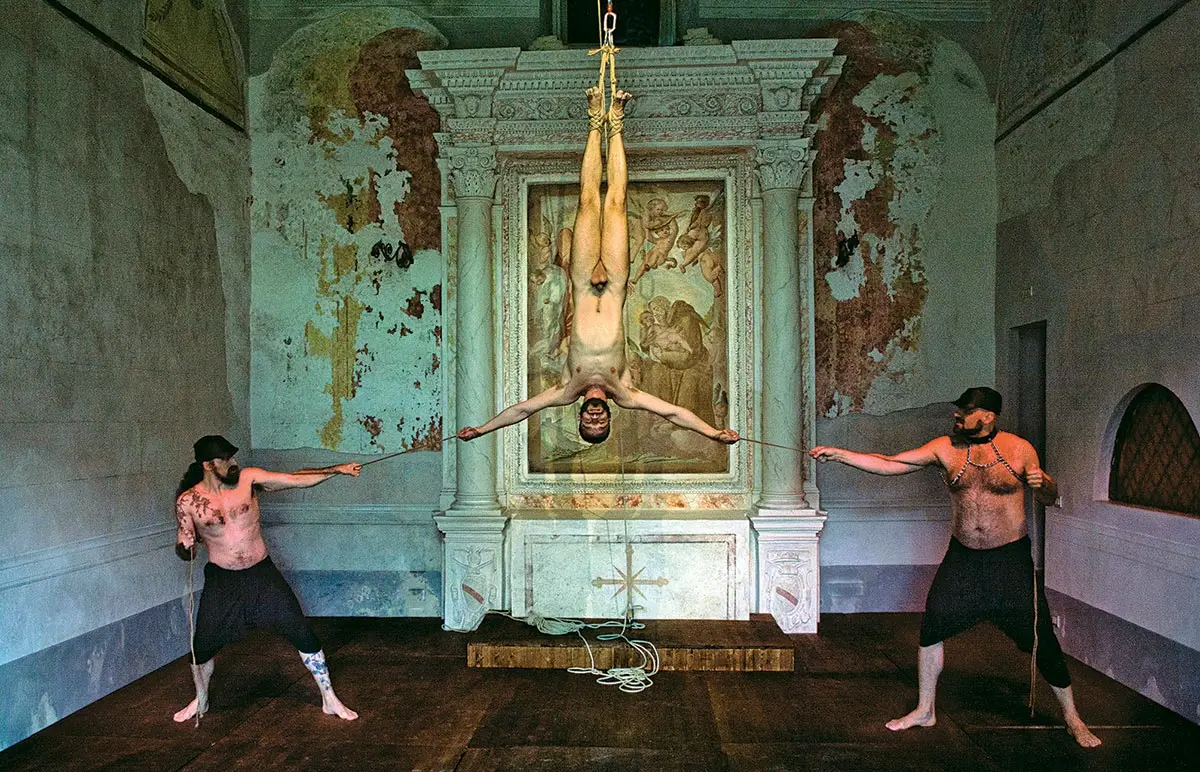
Motta’s use of his own body is even more striking in Réquiem (Requiem, 2016), a project specifically commissioned for his current exhibition at the Museo de Arte Latinoamericano de Buenos Aires (MALBA)7 and comprised of a sculpture titled La culpa (Guilt) and three videos: Libera me (Free Me), El fin de la crucifixión (The End of Crucifixion), and Mundo invertido (Inverted World). Based on his performance at Tenuta Dello Scompiglio in Luca, Italy (where Motta collaborated with bondage artists Andrea Ropes and Stefano Laforgia as part of the Sui Generis: Rassegna di Performance festival, curated by Eugenio Viola and Ángel Moya García), Réquiem makes reference to the death and resurrection of Christ, but based on a sexual re-reading that incorporates ideas from Marcella Althaus-Reid’s “Indecent theology.” This work, currently on exhibit at the Museo de Arte Latinoamericano de Buenos Aires (MALBA), inquires into the historical relationship between religion and dissident sexuality and proposes an alternative look at the moral values promoted by Christian doctrine.
One key aspect of Motta’s work is the organization of events in parallel to his exhibitions, which create spaces of confluence for the discussion of the issues engaged in his work. The MALBA, for instance, hosted a symposium titled La internacional Cuir: La indecencia y el futuro de la teología (The Queer International: Indecency and the Future of Theology), featuring queer feminist theologian Linn Tonstad; artist Ron Athey; theologian Hugo Córdova-Quero; artists Cecilia Bengolea and François Chaignaud; and theologian Javier Sáez. Presenters were invited to imagine, from the standpoint of sexual and gender difference, a possible reformation of the Catholic Church and its exclusionary doctrines, in search of new social and economic justice paradigms and the transformation of structures of sexual oppression. Events of this kind have previously been held, typically in connection with exhibitions, at the New Museum (New York, 2012), the Tate Modern (London, 2013), and Witte the With (Rotterdam, 2013), among others.
By means of aesthetics and communication, Carlos Motta urges us to rethink the history of sexuality, reformulate gender categories, and dialog with the conflicts that arise from the refusal of realities in terms of acceptance and identity. His work promotes the idea of difference as a political space for the articulation of identities even beyond the contemporary landmarks of the LGBTQI movement. Historically, aesthetics have been essential in the language of protest and activism, and have produced images that shifted the existing imagery. Motta’s multidisciplinary work presents us with a controversial but well-grounded alternative that openly proposes changes in traditional views, which are, by nature, exclusionary and oppressive.
NOTES
1. https://vimeo.com/11478046
2. https://vimeo.com/13170693
3. la-buena-vida.info
4. https://vimeo.com/66318757
5. https://vimeo.com/77791138
6. https://vimeo.com/77764466
7. Carlos Motta: Réquiem (October 2016-February, 2017).
* Courtesy: Mor Charpentier Galerie, Paris; Galeria Filomena Soares, Lisboa; Instituto de Visión, Bogotá; and P.P.O.W Gallery, New York.
FRANCINE BIRBRAGHER-ROZENCWAIG