
In front of Poema visual Opus 1/96 (Visual Poem Opus 1/96), three thousand seeds for a peace sowing, dedicated to the Mothers of the Plaza de Mayo. A simple work of art comprised of basic elements, a stamp reading “Sowing memory. So that oblivion does not grow.” It summarizes, in a brief and direct way, some of the qualities that distinguish the work of Edgardo Antonio Vigo, his skill in having political commitment and poetry dialog with each other. This retrospective was patently needed to reclaim one of Latin America’s most important conceptual artists so that oblivion does not grow around his legacy, which—perhaps because of his distance from the academic and media circuits—has been rather ignored in the past two decades and deserves much greater recognition.
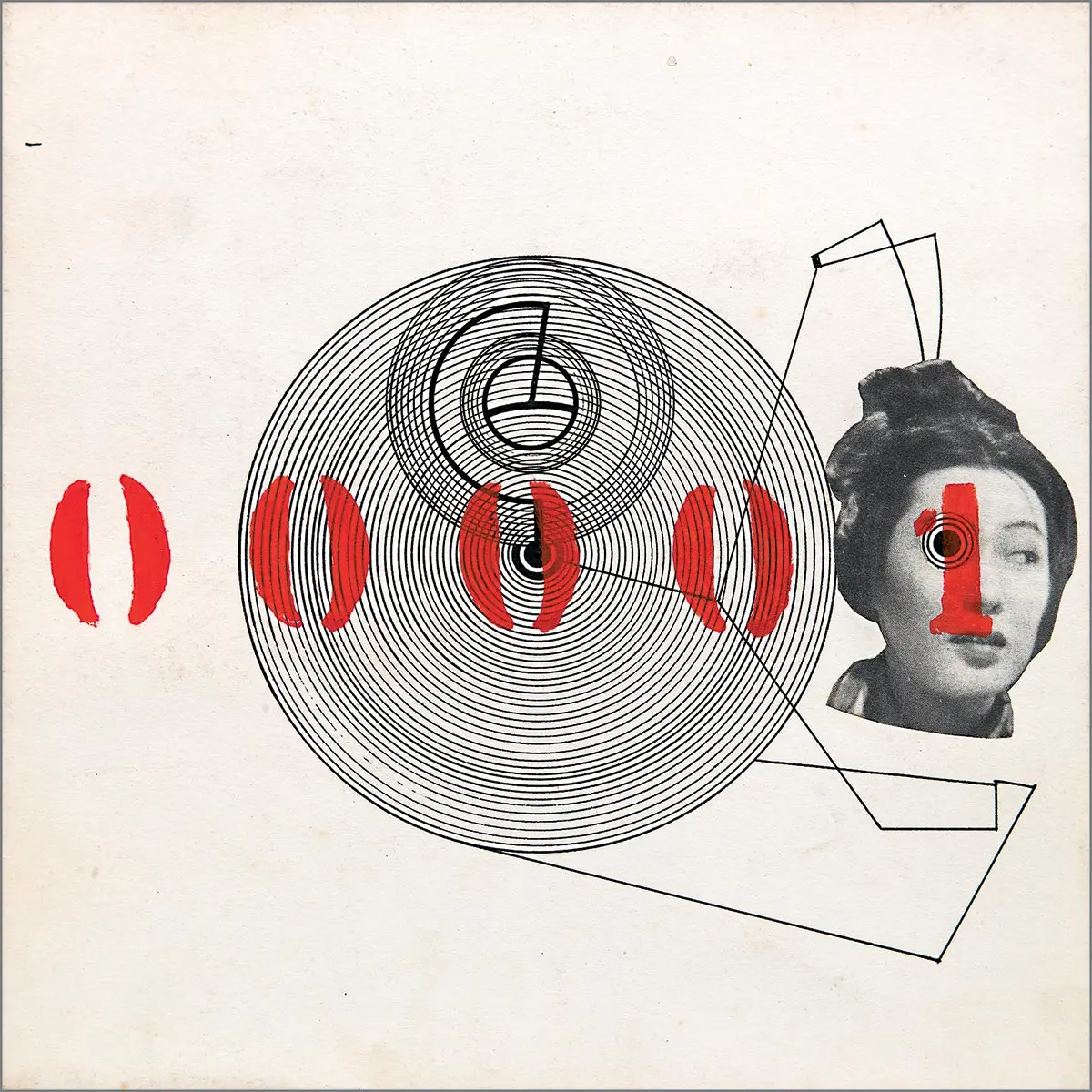
Edgardo Antonio Vigo (La Plata, 1928-1997) was, as the curatorial text notes, boundlessly restless—an experimental poet, a self-taught engraver, the creator of “useless” objects, a critic and essayist, and a pioneer in mail art. Covering in all its facets and in full justice, a career that spanned more than four decades (in this case, the landmarks are 1953, when Vigo traveled to France, and 1997, the year of his death) demands a major effort. All these aspects and nuances are represented in this retrospective, which includes works on paper, installations, paintings, and objects, yet the space is insufficient. The artworks are crowded together and this curtails our experience of the show, which falls short in the attempt to present a full measure of Vigo’s legacy.
Nevertheless, curators Sofía Dourron and Jimena Ferreiro do make it possible for us to appreciate Vigo’s genius, his mastery of irony and his critical stance, his detours into surrealism, the influence of the Situationists, his rereading of Marcel Duchamp—as in the sharp reference in Palanganómetro mecedor para críticos de arte (Swaying Washbowlmeter for Art Critics), from 1963—and his entertaining visual plays which even today can prompt reflection and the reframing of everyday events. Vigo’s series of actions under the title of Señalamientos (Signalings, 1968-1975) is a good example. This can be seen already in the first of these actions, Manojo de semáforos (A Handful of Street Lights), defined by Vigo as an analysis “from the aesthetic and creative standpoint of the street light at the intersection of Avenue 1 and Avenue 60, in La Plata.” Vigo invited viewers/pedestrians to gather at that intersection and contemplate it. On the one hand, he launched a struggle against routine; on the other, he transformed common objects into works of art without building or conceiving a physical object. His Señalamientos go from that initial, simpler attempt to political metaphors that protested against the military dictatorship in Argentina (1966-1973), such as Señalamiento XI, Souvenir del dolor (Señalamiento XI, Souvenir of Suffering), a tribute to the victims of the Trelew Massacre.
The exhibition also pays attention to Vigo’s collective drive and his publications, above all in connection to mail art, so important in the establishment of links between artists in Latin America, the US, and Europe, the creation of a poetic communication between exiles, and the struggle against isolation and the absence of lines of contact. The title of the retrospective underscores Vigo’s “creative chaos,” a description that can be applied to every one of his proposals, including his xylographs (mostly at the Museo de Xilografía in La Plata) and in his evolution as a curator for group shows of historical significance, like Expo/Internacional de Novísima Poesía/69 at the Torcuato Di Tella Institute, an aspect of his work that remains under-analyzed and deserves, like his oeuvre as a whole, an attentive review.
And while at the crowded gallery of the Museo de Arte Moderno an attempt is made to reclaim Vigo’s art and make it shine, the MALBA devotes an entire floor to Yoko Ono, with works of much lesser conceptual density. Argentina, an engine for unending creative chaos.
JUAN JOSÉ SANTOS