

Jamaican Pulse: art and politics from Jamaica and the diaspora was presented at the Royal West of England Academy, in Bristol (England). According to the texts shared with the audience, this was the largest-ever exhibition of Jamaican art on English soil, and it was held in the UK city with the third-largest Jamaican population. Thus, Jamaican Pulse was from the start an important event in terms of its novelty and its intention of presenting local audiences with what could be seen as a panoramic picture of “Jamaican art,” or, rather, “art in Jamaica.”
It is worth noting that the relationship between England and Jamaica was forged on the invasion and exploration of the Caribbean island, and its incorporation into the British slave economy, starting in 1655, after more than a century of Spanish dominion. Realizing that Jamaica’s independence was completed only in 1962, one is struck by the youth of the country’s democratic history, barely over 50 years. Jamaica’s “colonial past” is not circumscribed to the memory of a bygone era, but something that can be sensed daily in the country’s many social problems. In consequence, we were constantly reminded of the relationship between image and postcoloniality throughout the exhibition.
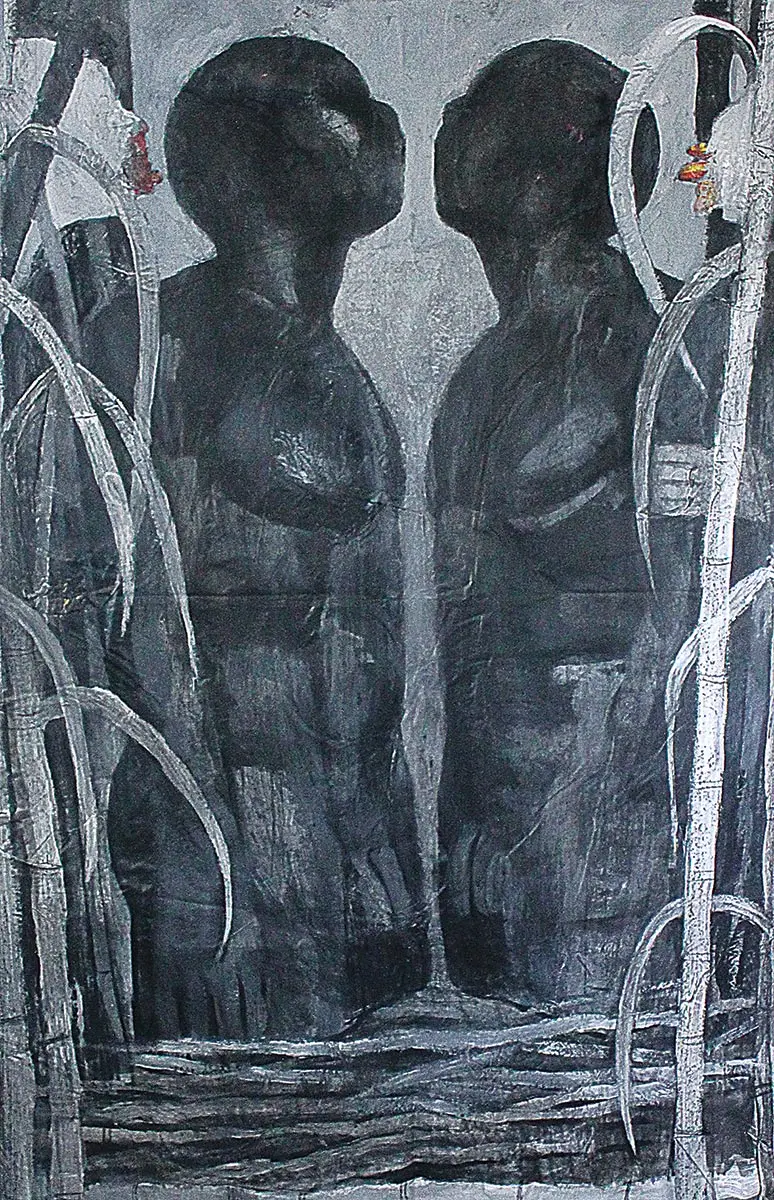
Curators Kat Anderson and Graeme Mortimer Evelyn decided to organize the exhibition space into two separate segments. The first segment, which visitors encountered as they entered the space, featured contemporary artists living in Jamaica or abroad. The second, titled 20th Century Artworks, was based on important collections such as the National Gallery of Jamaica (Kingston) and the Cavin-Morris Collection (New York). Along with the selection of artworks, the institutional space also hosted a series of performances and collaborations.
Entering the first exhibition gallery—devoted to contemporary art—viewers were struck by a large number of works on display there; the project was clearly intent on justifying its title as the largest exhibition by the sheer amount of items included. On the flipside, that sort of curatorial horror vacui made it impossible for some works to be observed without the direct interference of others. Also, very few works—the exception was Andrea Chung’s large-scale installation—invited our bodies to non-frontal experiences of the images. While the effort to include a large number of works was laudable, it was certainly difficult not to wonder whether a smaller selection would have resulted in a more breathable setup.
Organized into topics about different aspects of Jamaican culture, like No man is an island, Mr. Politician Man, and Out of many, one people, the contemporary art node allowed us to establish formal and thematic connections between the works on exhibit. We can say that the presence of the human body and, even beyond that, a meditation on black bodies and on negritude, characterized a good portion of the works there. Statistically, Jamaica’s population is more than 90 percent black. Even so, the country’s unequal economic structure contributes to racism and the conflict between an economic elite that is mostly white and the less advantaged social classes. So, it is only natural for a number of artists to raise questions about the everyday experiences of the island’s black population.
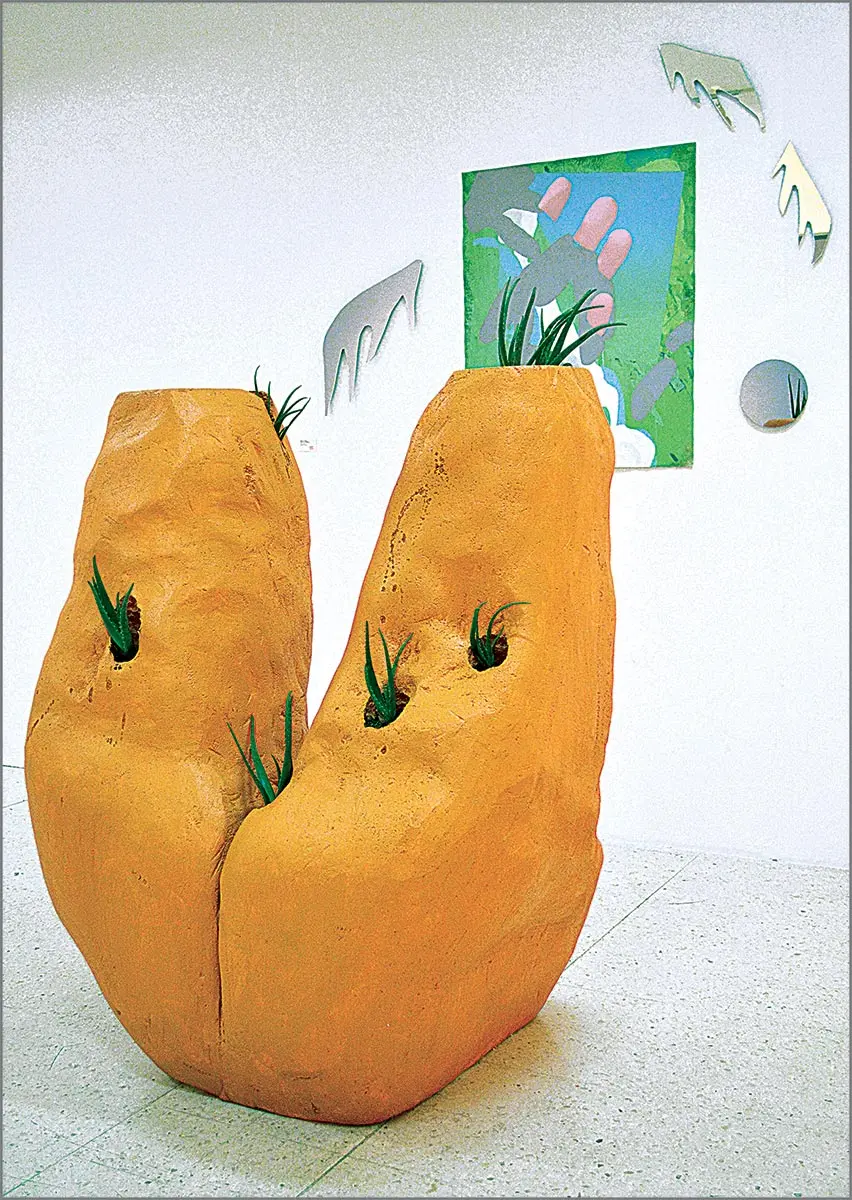
At the entrance to the exhibition, visitors encountered the work of Ebony G. Patterson, a Kingston artist who gained renown with his participation in this year’s São Paulo Biennial and his solo exhibitions in New York. Patterson’s work, at the intersection of painting, tapestry making, and the appropriation of objects—II Treez in a forest—is about the ostensible pose of the male black body in Jamaica, adorned with expensive clothes and jewelry, in contrast with the decorative visual potency of its images. Those faces, however, are not black like the rest of the body; their skin is whitened with bleach. Further, into the exhibition, Kimani Beckford also investigates the centrality of the black body, but in a more melancholy tone. At the center of his compositions, there are dress suits that refer to different positions in Jamaican society, but a careful look reveals that they have no bodies in them: what remains are the icons of power, devoid of identity and of the possible presence of negritude. To the back of this large gallery, Leasho Johnson’s colors stood out and confronted images of black women enslaved in colonial banana plantations with a voluptuous, sexualized contemporary body, through which women are seen between empowerment and objectification.
This reflection about embodiment, gender, and sexuality was present also in other works that touched on the problematic presence of homophobia (with a basis in Law) in Jamaica. Camille Chedda presented a painting in which a famous Kingston landmark—Laura Facey’s Redemption song—was recorded. Instead of a black man and a black woman facing each other, why not two black men? That image quickly activates the history of sexuality in the country and fosters a dialog with, for instance, Lawrence Graham-Brown’s extensive research into black male performance and homosexuality. The artist presented a performance in Bristol and showed strange objects that reflected human relations in the private sphere. A series of photographs, bound into a kind of diary, was on display next to what appeared to be a jockstrap of Jamaican cultural icons that yearned for the political and poetic liberation of the body.
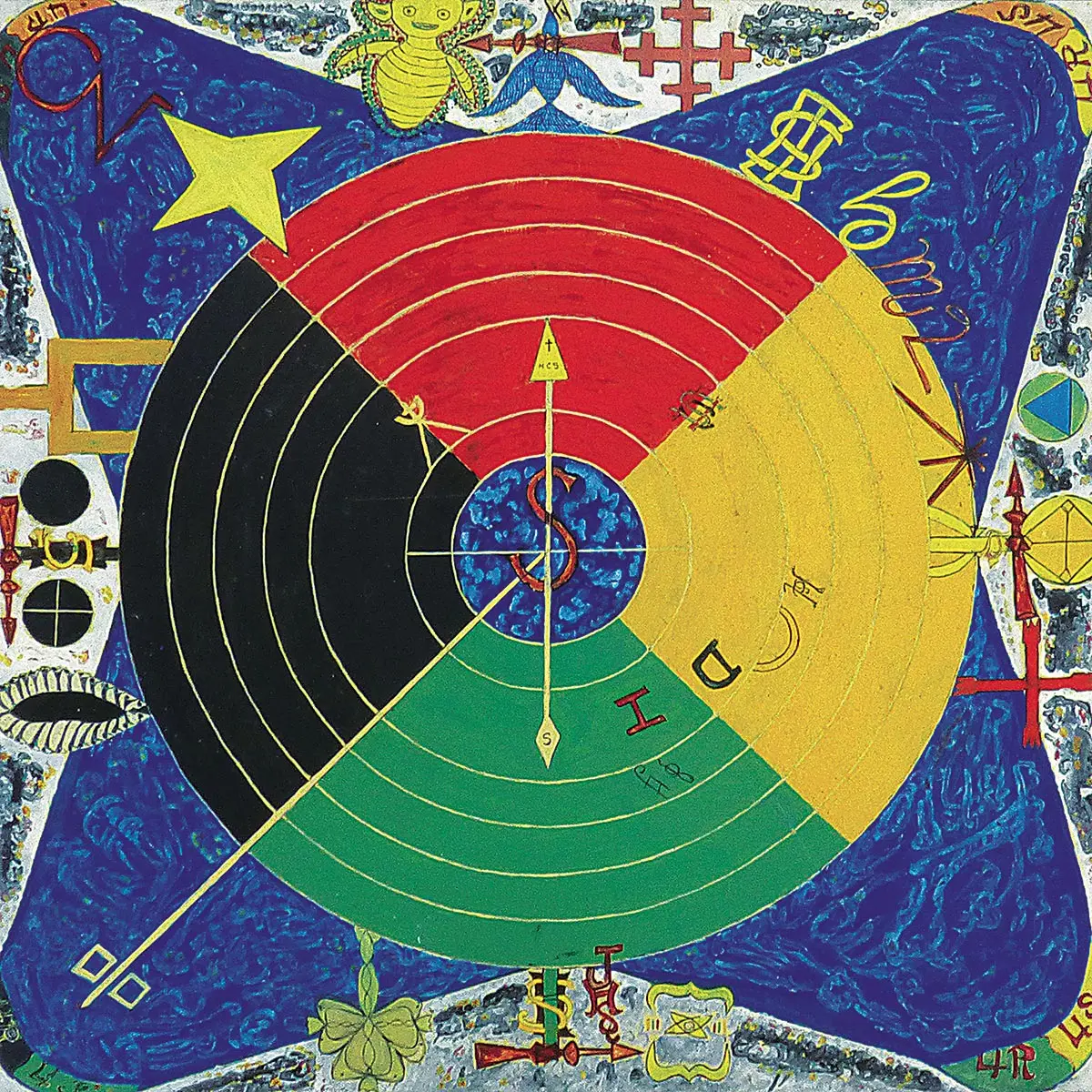
Like in any exhibition intended to present a panoramic view of a national identity (something that is common in curatorial efforts that tend towards new cultural colonization in European and US museums,) it was difficult not to conclude that most of the works featured in the exhibition ultimately brought forth “Jamaican topics” for foreigners. Sometimes, as in the works mentioned above, those topics were powerful; sometimes, however, they seemed eclipsed by the insistence of the curatorial selection. Meanwhile, the few works that seemed to escape an explicit identity affiliation positively grabbed our interest with their formal and material explorations. It was good to note that not all Jamaican artists included in this exhibition were invested in exploring the “jamaicanness” of images. One highlight along these lines are Deborah Anzinger’s investigations and her interest in the relationship between painting, sculpture, reflection, and installation; another one, an interesting object by Camille Chedda, made in concrete, that rather than just “showing” Jamaican clichés, hid and buried them away from the viewer’s gaze.
To my mind, the most significant problem with this exhibition, in terms of its curatorial strategies, has to do with the divide between the “contemporary” and what we could call (even though the term is always uncomfortable) “modern.” Instead of creating trans-historical dialogs and showing how some contemporary topics do have roots in the past, the audience encountered two exhibitions that seemed like distant sisters. Perhaps it would have been more interesting to have the works of artists of such importance for the history of art in Jamaica like Albert Hule, Everald Brow, and Evadney Cruickshank confront each other, and to educate audiences better about them. Their images and their inquiries in fields as different as abstraction, landscape painting, and the portrayal and representation of Jamaican types—not to speak of their widely differing pictorial approaches—deserved greater care so that one’s passage to the exhibition’s historical segment was not a vexing experience, in comparison to the first unit.
Even with the weaknesses, we have pointed out, Jamaican Pulse was an important event. It activated our curiosity about Jamaica’s art and it invited its audience to continue exploring it to discover new facets, artists, and themes. As presented in this show, Jamaica’s “pulse” is fast-paced, perhaps excessively so; its very speed, nevertheless, spurred our desire to learn more and, if possible, to present critically other ways of displaying and interpreting images on the basis of the thorny relationship between art, Jamaica, and the contemporary.
RAPHAEL FONSECA