
Through an outstanding, enigmatic, and entertaining exhibition, the Museo de Arte Moderno in Medellin shows in a comprehensive fashion the various personalities of María Isabel Rueda. Born in Cartagena, Colombia, in 1972, Rueda is undoubtedly one of the most daring artists from the Caribbean region of Colombia, where being an artist and a woman is not an easy thing. But let us talk about her multiple personalities. Throughout two decades of work, Rueda has adopted several contemporary art strategies to denounce, finger-point, and make observations using photography and video. She has resorted to the use of these mediums only as tools and not as means to manipulate her work in search of grandiose effects. When it comes to her prolific production of drawings, her use of the medium refers to effects and formats but is also charged by eroticism and esotericism in a somehow perverse combination that—to remember Andrés Caicedo—could be regarded as the “little red riding hood’s teeth” effect.
Rueda is a videographer with a photographer’s sensibility. She uses time and the frame as windows to capture violent encounters between water and earth, as we will soon be able to observe. She is a portraitist that uses photography with apparent simplicity in order to capture series—men covered in dirt exiting mud volcanoes, women whose freckles become constellations, gothic teenagers from Bogotá turned into Vampiros de la Sabana (Vampires of the Savannah)—as well as a drawer of oneiric scenes that include the presence of Araucanians, werewolves, little swamp angels, vamps, exuberant plants, and a diverse fauna that appears to only live at night, like in the series titled Mi destino no está en tus manos (My Destiny Is Not In Your Hands, 2010) that are part of the exhibition.
The references in her work, clearly exposed in Oscuro diario (Dark every day), are both international and local. Above all, Rueda has extensively explored the so-called “tropical gothic,” a very useful term to define a cultural tool—more than a style—like cultural anthropophagy. In her personal cosmos is also possible to hear echoes from the rock scene in Bogota of the 1990s, horror films, the spiritual—if not spiritualist—the influence of Álvaro Barrios and Norman Mejía, and the graphic universe closely connected with Sin City’s masters of the comic universe Alex Raymond, Guido Crepax, and Frank Miller.
Rueda’s drawings are sophisticated scenes that appear to be extracted from the Hollywood of the 1940s. She describes risky erotic adventures charged with irony that are reminiscent of the photo-illustrated romantic or crime novels in which pin-ups and sexy B-movie stars experience edenic and clandestine love affairs. Several animations are based on such drawings, like La mano en el fuego (Hand on Fire, 2008), and the audio of each of these become a fantastic soundtrack that reverberates across the exhibition room of the museum.
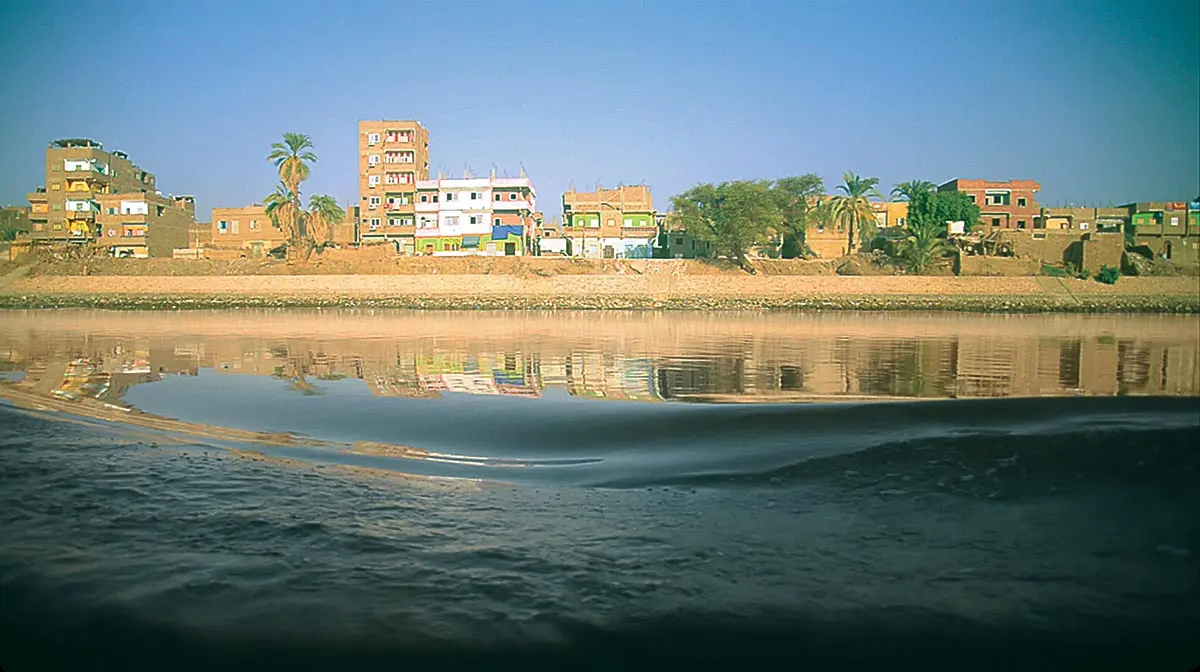
In other videos and graphic series, Rueda patiently, and almost devotedly, capture natural phenomena. The drawing series titled As Above, So Below, of fallen leaves of a strong tree in the garden of her home—created every day as a meditation exercise—and the drawings of starry skies from the same series—which capture with the same dedication the shining life of the stars—are remarkable and simple. They interact with the videos that she has sporadically created throughout the years, in which the fixed plane serves to show the mutability of natural phenomena: In Visión remota (Remote Vision, 2011) seawater hits the lower structure of the dock in Puerto Colombia; in Experiments, in Long Distance Influence (2012) the violent flow of a waterfall is seen from the inside of a tunnel; and, in Lágrimas de Isis (Tears of Isis, 2016), the bank of the Nile is seen from a boat.
Upon seeing all these works together for the first time in a retrospective that is not advertised as such—and that does not pretend to establish a chronological order in the displaying of Rueda’s oeuvre—it would appear that viewers are visiting a greenhouse, an astronomical observatory of this artist’s interior life. The exhibition benefits from the absence of a desire to show “masterpieces,” a concept that is far from her interests and which she rejects. On the contrary, she continuously celebrates the joy of creating handmade and unpretentious work.
In Oscuro diario, Rueda demonstrates that to be an artist it is possible to choose, that the creative act does not depend on mediums but of images, imagination, and work; and that “dreaming costs ideas,” as Miguel González once said.
Unlike other artists of her generation who unfortunately put their work at the service of the market, but cannot however be regarded as opportunistic—maybe just as artists struggling financially—Rueda has never made concessions and has protected her work in an exemplary manner. In this respect, when it comes to her work ethic and deep respect for what being an artist means, she reminds me of Beatriz González. In sum, the exhibition attests to Rueda’s talent, wise choices, and life.
Lastly, it is important to mention the recent curatorial work that she has been developing alongside Mario Llanos centered on proposals by artistic figures whose impact had not been properly recognized in the word of Colombian art from the Caribbean—also promoted in the traveling exhibition by Gustavo Turizo titled Touched for the Very First Time, and in A Dialogue Between Alfonso Suárez an Álvaro Herazo, part of the 44th Nacional Salon of Artists.
SANTIAGO RUEDA