
For its tenth edition, the Central American Biennial broke the mold, leaving behind the event’s usual program of one institutional exhibition with works by 36 selected artists, turning instead into a daring endeavor with over one hundred participants (including individuals and artists’ groups). This time, there were so many exhibitions, performances, and public activities that a visitor could hardly manage to see the biennial in its entirety. Most importantly, the Central American Biennial grew not just in size but, above all, developed greater conceptual complexity under the unifying and long-awaited leadership of a regional curator, with the collaboration of co-curators in each of the Central American countries.
Unlike its earlier versions, the tenth Central American Biennial reflected a decentralizing mission, both by moving art out of museums and into public spaces, and by taking place not just in the host country’s capital, but also beyond it. In addition, it spread out over time and into other cultural fields through a broad multidimensional program that included pre-opening activities, a sound art web project, academic lectures, urban interventions, artists’ workshops, and parallel exhibitions. Furthermore, it has been the best documented of all the regional biennials, with QR codes on the exhibition labels, and an efficient website with pertinent information about artists, works, organizers, spaces, and published articles.
The general curator for this tenth Central American Biennial, Tamara Díaz Bringas, was already a well-known figure in Central America due to her valuable work as an adjunct curator and editorial coordinator at Teor/éTica in San José from 1999 to 2009. During the year prior to the biennial’s opening, Díaz Bringas traveled throughout the region to study the current artistic scenes and establish contact with the co-curators in each country. In Guatemala, Honduras, El Salvador, and Costa Rica, they were the artist-curators Marlov Barrios, Adán Vallecillo, Simón Vega, and Edgar León; while in Nicaragua and Panama, the ones in charge were Gladioska García who is the coordinator of the Nicaraguan Biennial, and the independent curator Gladys Turner, respectively.
Through this collaborative endeavor, Díaz Bringas created a biennial that reflected specific contextual artistic and political concerns, within an all-encompassing view of Central America. From this point of view, the biennial was reminiscent of the goal to understand the particularities of this geographical area apparent in other important exhibitions where Díaz was part of the curatorial teams, such as Estrecho Dudoso (Doubtful Strait) and the 31st Pontevedra Biennial. This time, under the broad and poetic title of All the Lives, the Central American Biennial echoed the region’s diverse critical issues, such as its complicated past and its social realities, the after-effects of its oppressive governments and revolutions, ecological destruction, discrimination, poverty, emigration, and violence. In addition, beyond its focus on these themes, it was noteworthy that this biennial did not show only recent art, but rather included works that ranged chronologically from the 1970s to the present, thereby presenting a view of the region that was both rich in history and yet current.
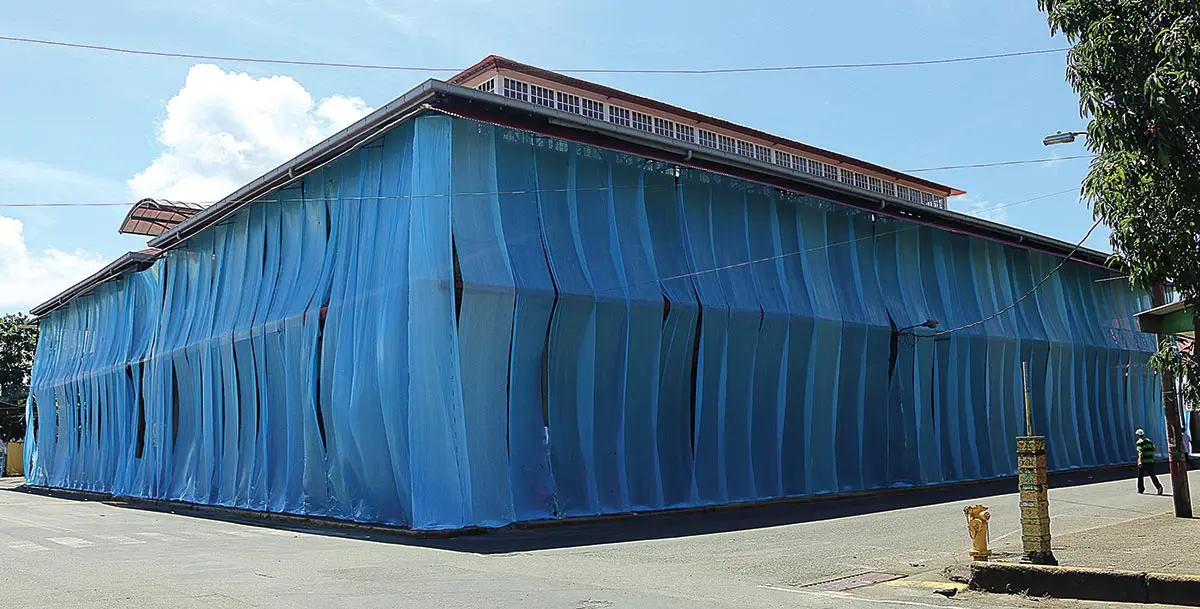
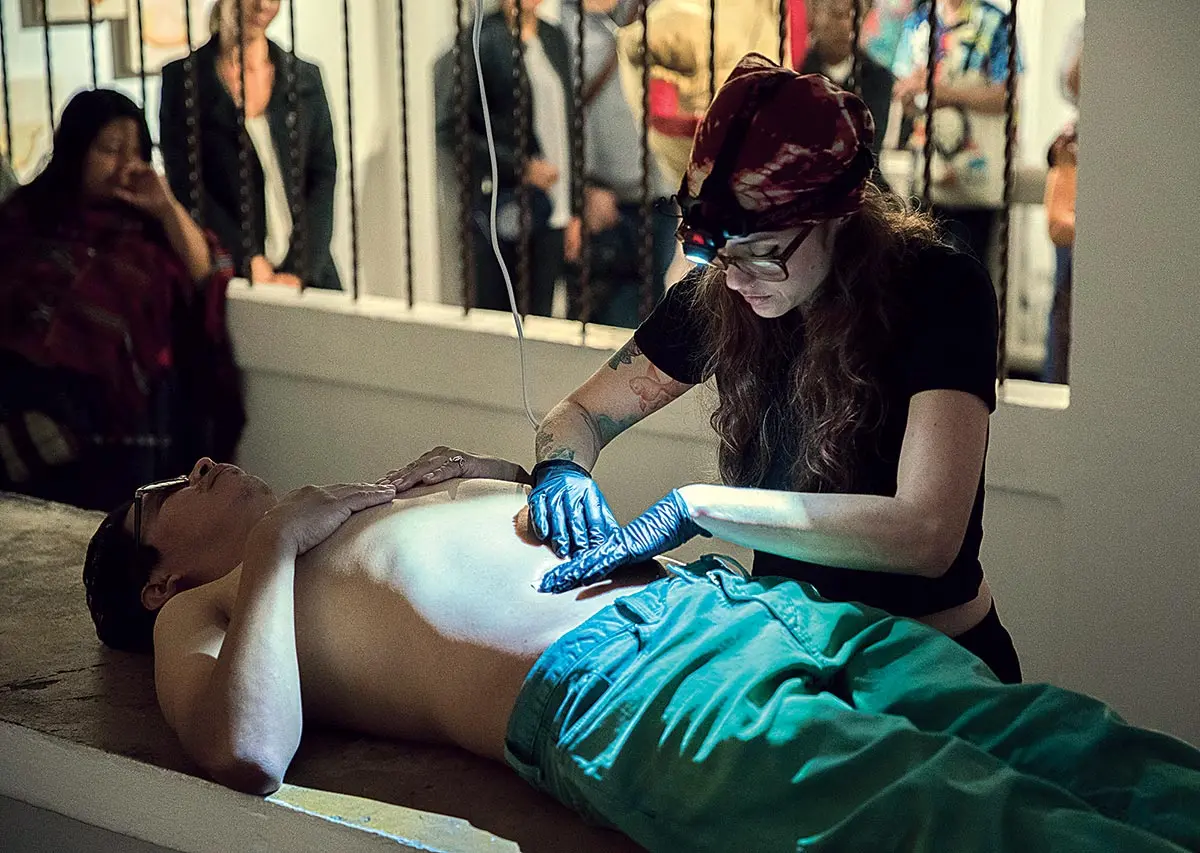
The Tenth Biennial opened on August 30th, 2016, a stiflingly hot day, in the port city of Limón. With its history as the headquarters of the United Fruit Company (UFCO), Limón offered the right scenario for artworks that dealt with issues regarding imperialism, racism, and the banana industry. The artist Javier Esteban Calvo had his shaven head tattooed with tally marks (counting conquests? or bunches of fruit?) in a performance with a “German tattoo artist, whose father had been the owner of banana plantations in Limón.”1 There were also photographs from Moisés Barrios’ notable Bananera Blues series, of an abandoned UFCO railway station in Guatemala. In a dramatic site-specific piece, Costa Rican artist Oscar Figueroa wrapped the outside walls of the former UFCO headquarters in Limón with the light-blue, insecticide-covered plastic bags that are used to protect bananas on the plantations. The result was a visually appealing and deeply historical statement, which was soon dismantled due to its toxicity.
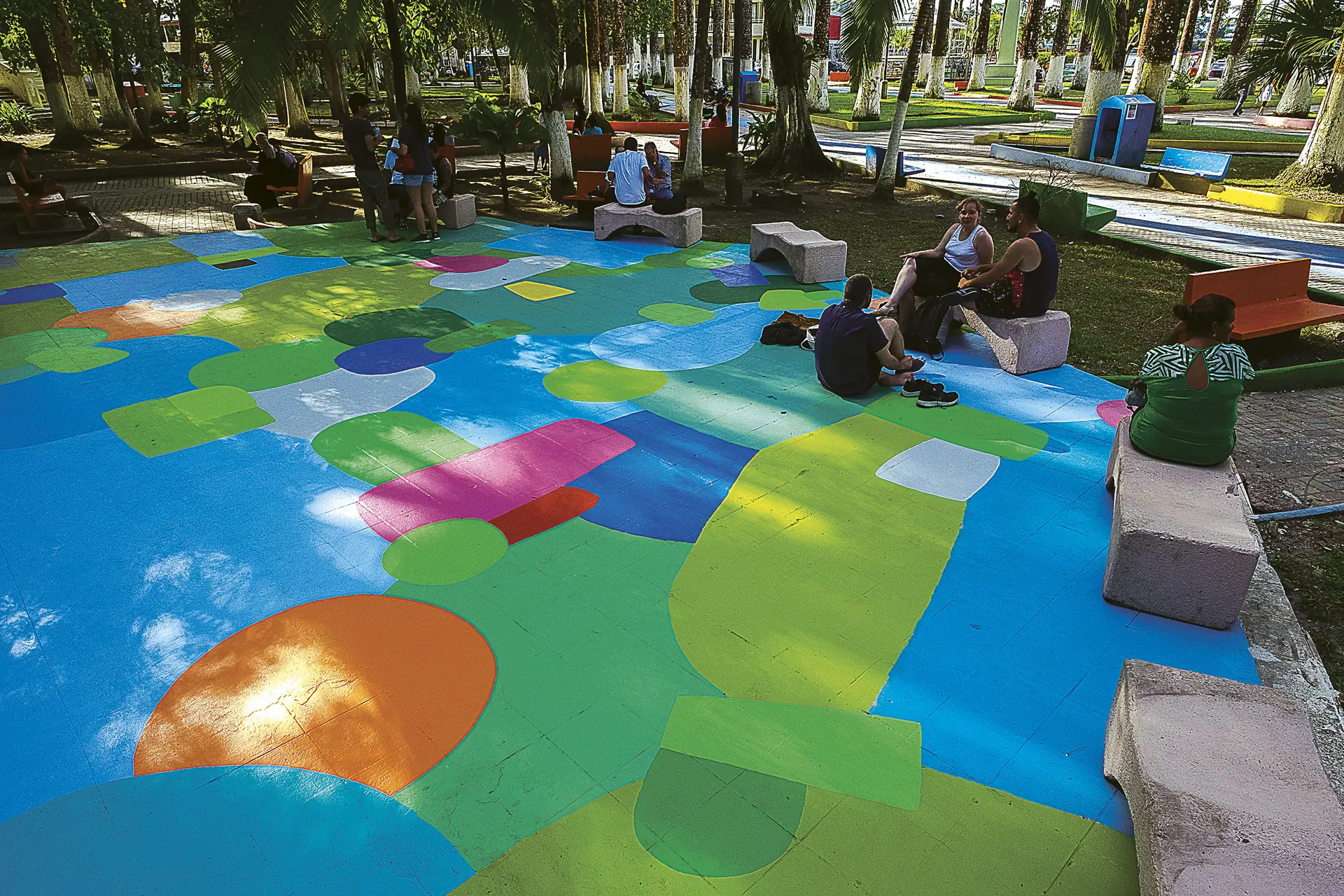
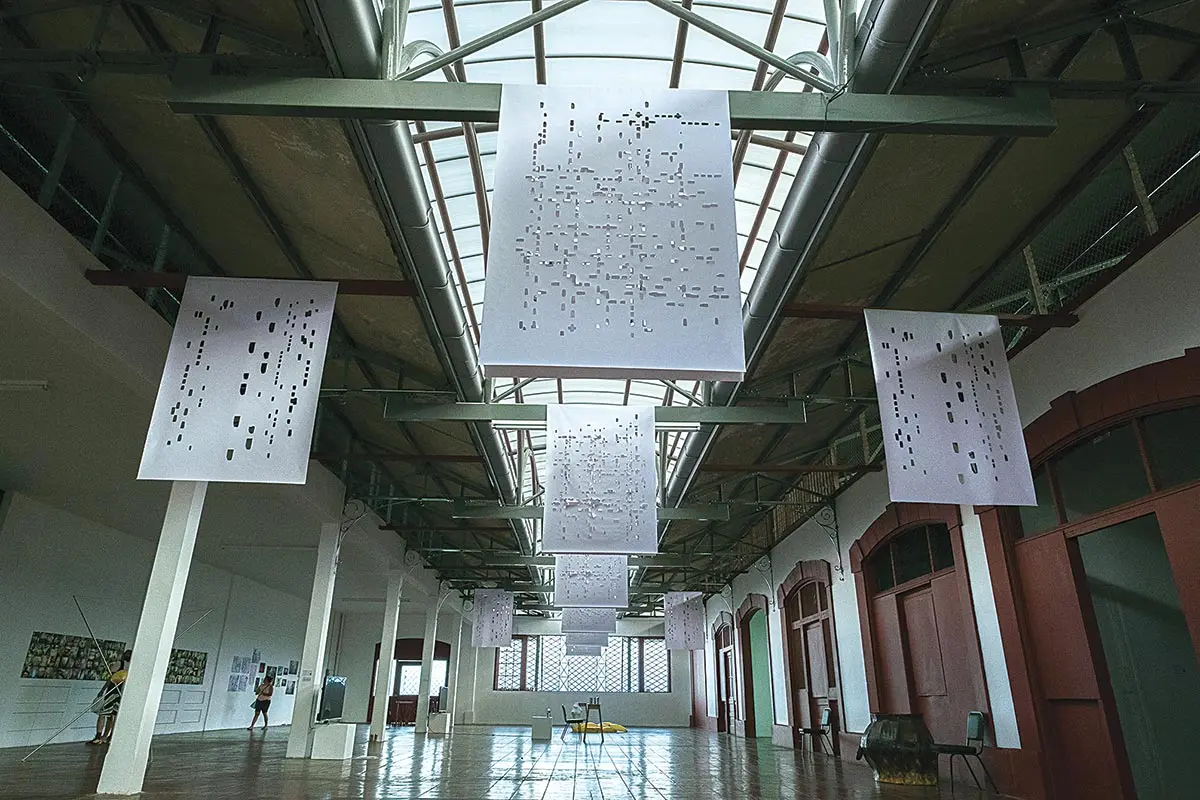
Antonio José Guzmán presented a “hymn against xenophobia” with large printouts of his DNA’s indigenous markers hung like clothes on a line, while performers played the marimba according to musical scores based on his genetic sequencing. Ela Spalding also worked with music to create a “sonorous bridge of solidarity” between the cities of Limón and Colón with a jukebox that played calypso songs popular among Afro-Caribbean people from Costa Rica and Panama. Near the UFCO building, in Vargas Park, Federico Herrero painted a cement floor with magic and bright colors, celebrating public space in a city that has seldom received the attention of contemporary artists or cultural authorities.
Unlike Limón, the city of San José has several museums and cultural spaces that took part in the biennial. The exhibition at the Museum of Contemporary Art and Design dwelled on the idea of All the lives through works related to the natural world and ecology, ancestral rituals, human sexuality, and gender issues. The pieces by Xenia Mejía and Irene Kopelman interpreted basic botanical forms linked to the origin of life. The sound installation of a large upturned head by Patricia Belli revealed the stories of people who have lost their sense of equilibrium, and the sculptures made of metal and magnets by Noel Saavedra incorporated telluric forces. There were references to the animal kingdom in the installation of a plague of metallic creatures by Verónica Vides, and an impressive video by Naufus Ramírez Figueroa of a performance in which the artist inserted black feathers along his arm, in a disconcerting ritual with implications regarding vital transformations.
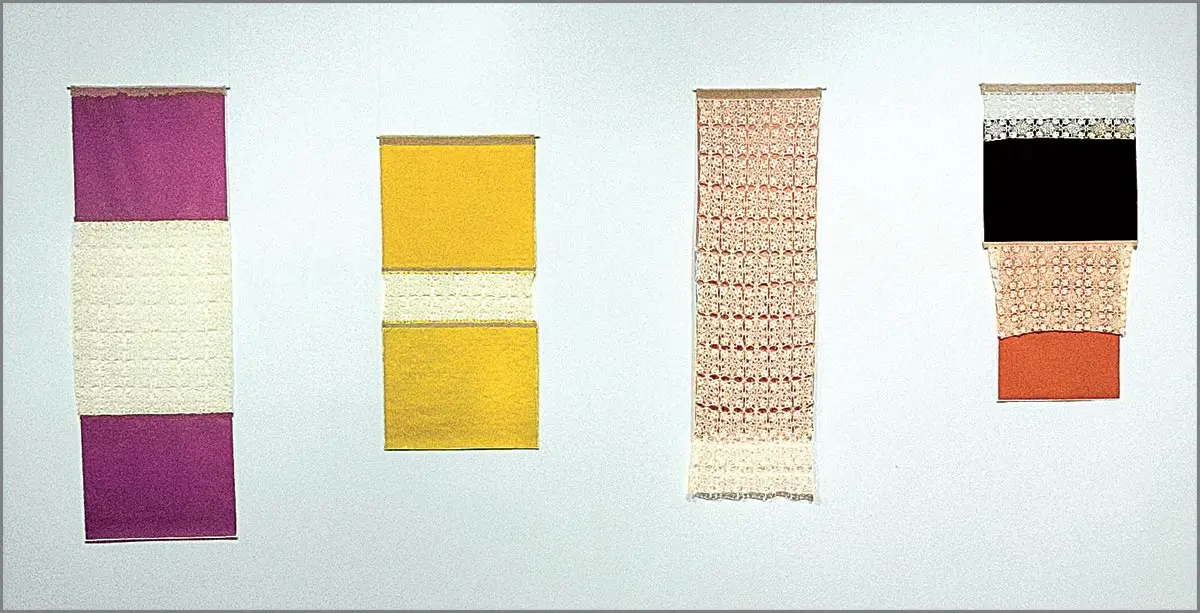
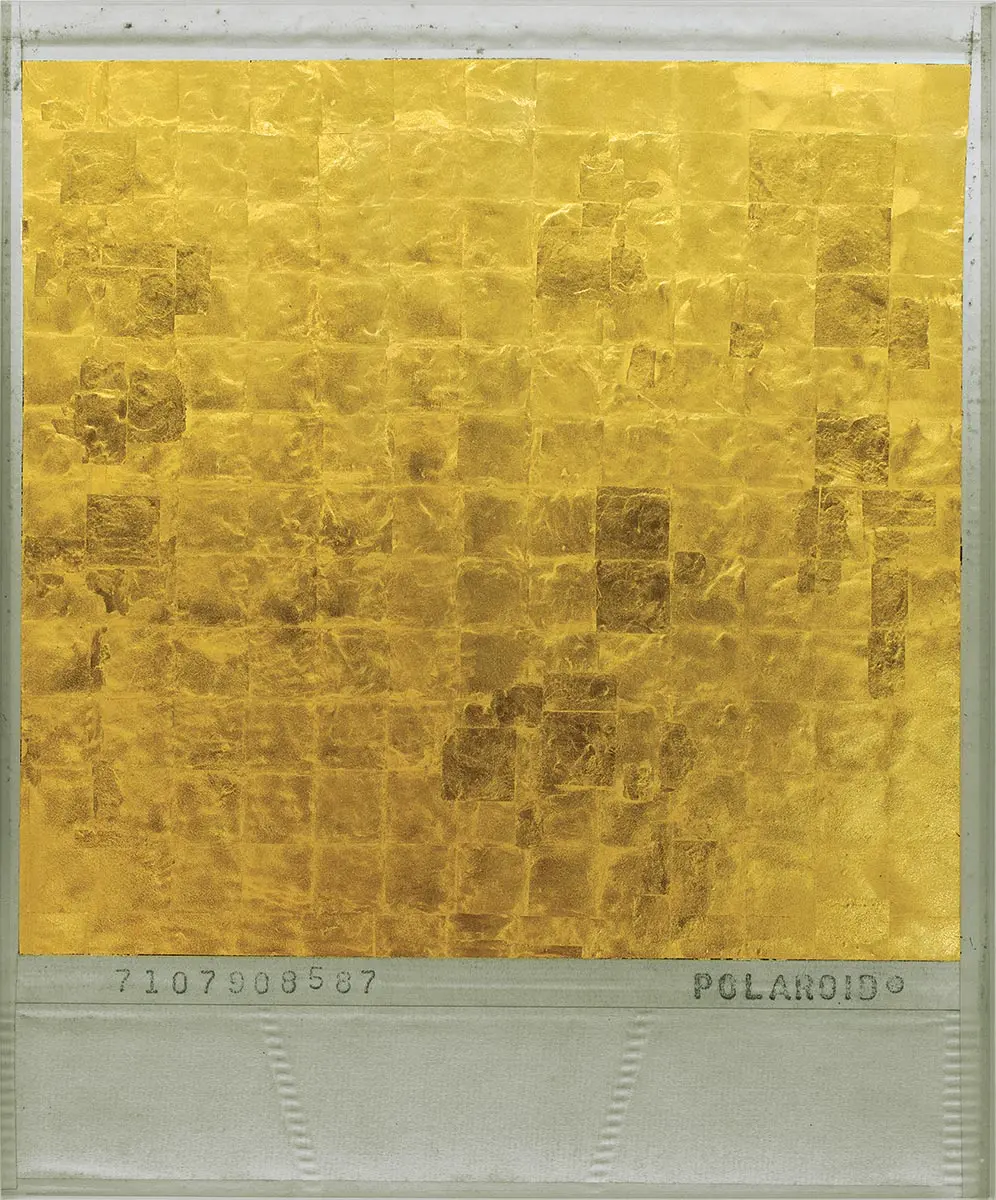
A sense of existentialism also imbues Jhafis Quintero’s video Spiders in which the hands of two people reach out of holes in a wall, seeking an encounter to confirm their sense of humanity. Nearby, in another memorable section of the exhibition, we perceived an interesting dialogue between Sunrise by Priscilla Monge, an oversized polaroid photograph covered with gold leaf, and Generated Family, a series by Celsa Flores that combined acrylics, textiles, and crochet work, both examples of memory-laden, work-intensive art. The idea of “women’s work” linked them to Sandra Monterroso’s performance in which she recreates the ancestral process of dying thread, combining decolonial aesthetics with an ecological statement.
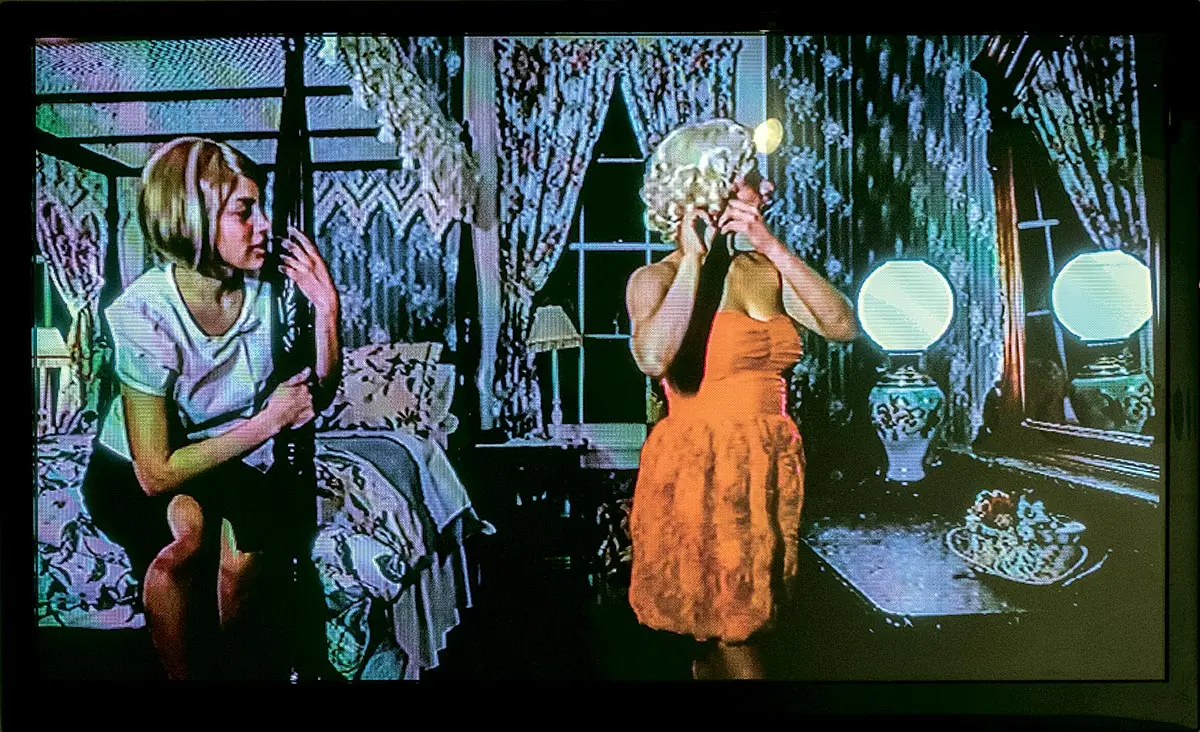
The art in the museum’s third exhibition space centered on eroticism, gender, and discrimination. The works varied from monumental pop (in the case of Roberto Guerrero) to documentation (by the Grupo Operación Queer), from installations to small poetic sketches. There were some noteworthy drawings titled Economy of Pleasure by Lía Vallejo, which were reminiscent of Brueghel and Bosch in their overflowing appetite for life. On the secretary’s desk in the installation by Abigail Reyes, a small TV set projected clips from soap operas that showed different women saying “Yes, sir” again and again. It provided the perfect transition to the museum’s upper floor where most of the works echoed feminist concerns. There were statements about diversity in María Raquel Cochez’s Wind Videos; social discrimination based on racial types in the melodramatic video Imitation Really is Life by Rachelle Mozman, and sexual and criminal abuse in Alma Leiva’s installation that documents the murders of women in San Pedro Sula.
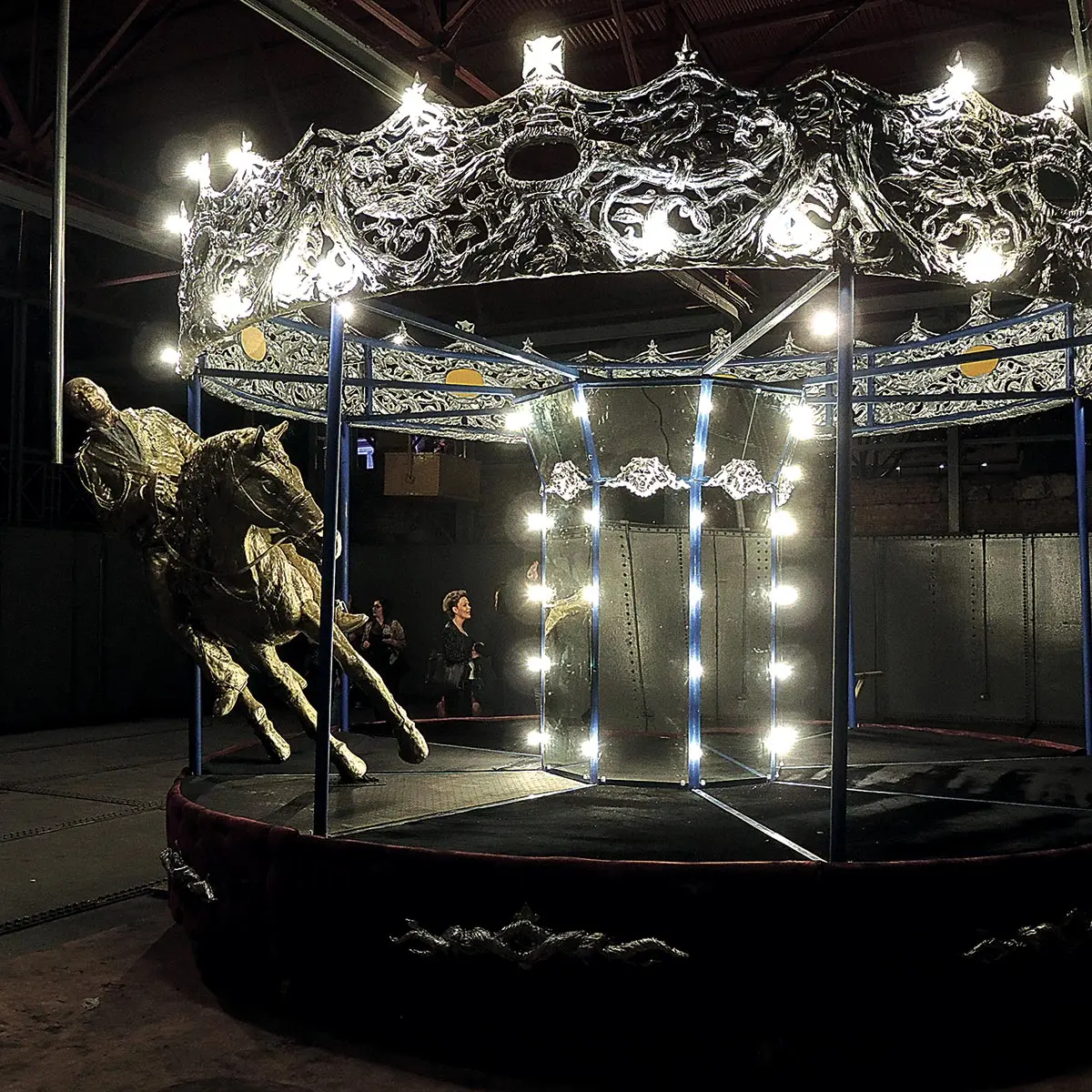
It was to be expected that an art exhibition that considered Central American issues would have a strong political component. Outside the MADC, Alejandro de la Guerra built a grand carrousel in which a solitary horse carried a hero-dictator (as in an equestrian monument) who banged his head against a pole every time the garish contraption turned, a feat which could only be achieved through human force.
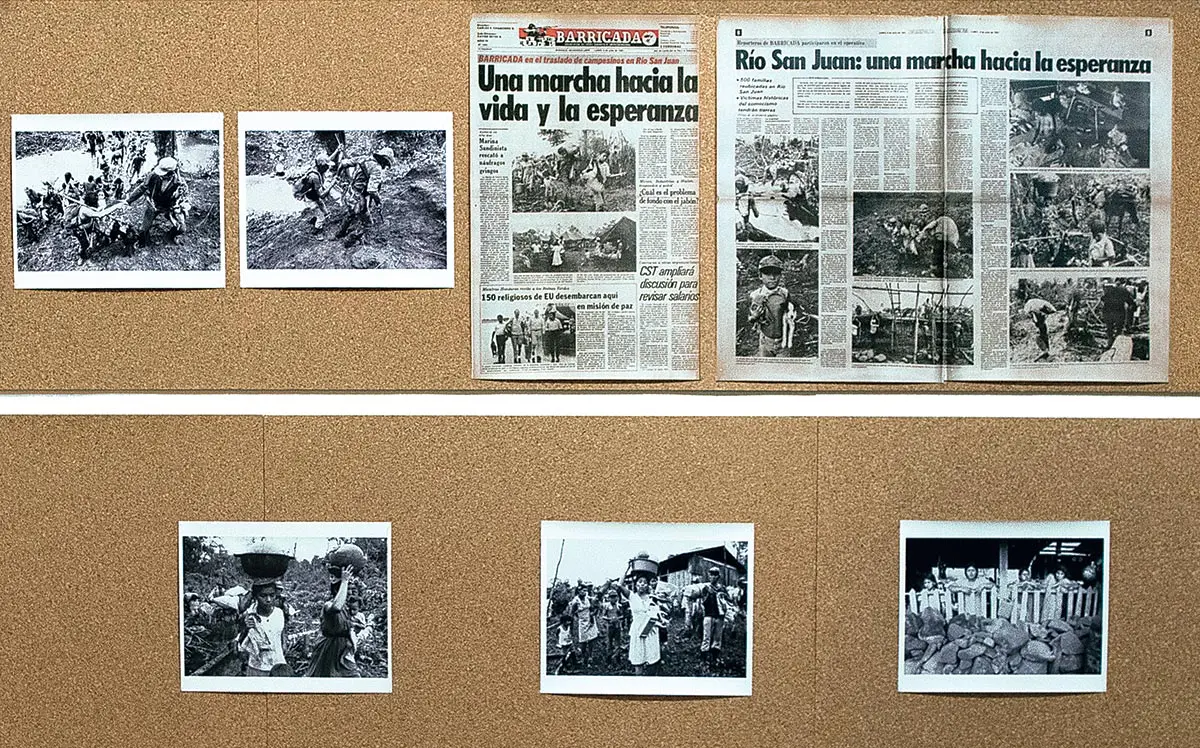
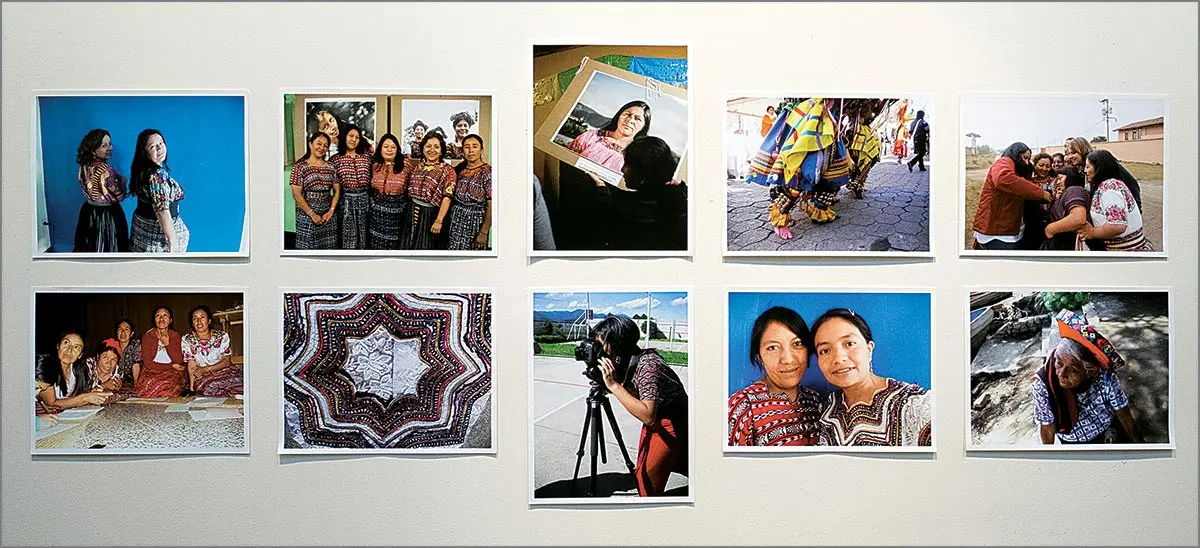
Political topics, the vindication of indigenous peoples, and art about the region’s conflictive past were in force at the exhibition at the Museo Calderón Guardia. The group known as The Fire Theory showed the video of a friendly game of soccer between ex-guerrilla fighters and former Salvadorian soldiers. The photographs by the artists’ group known as Con voz propia, which is made up of K’iché women, reclaim the place of Mayans in Guatemala, and a photo essay by Delmer Membreño documents injustices committed against the Lenca people in Honduras. The Model Village by Yasmin Hage evokes deplorable effects of the armed conflict in Guatemala; and the war in Nicaragua was eloquently represented by the impressive photographs from that time by Claudia Gordillo and Margarita Montealegre, in an installation that contrasted original images with those that were printed in newspaper reports. A photographic essay and a video by two Panamanian artistic duos also referred to disturbing local issues. José Castrellón and Raphael Salazar’s photographs record the precarious situations that characterize life in the border province of Darien. And the video by Donna Conlon and Jonathan Harker represents the way our countries sweep inconvenient matters and dirty affairs “under the carpet.” In the artists’ own words, “Maybe this explains why we are good at erasing the past and evading the present.”2
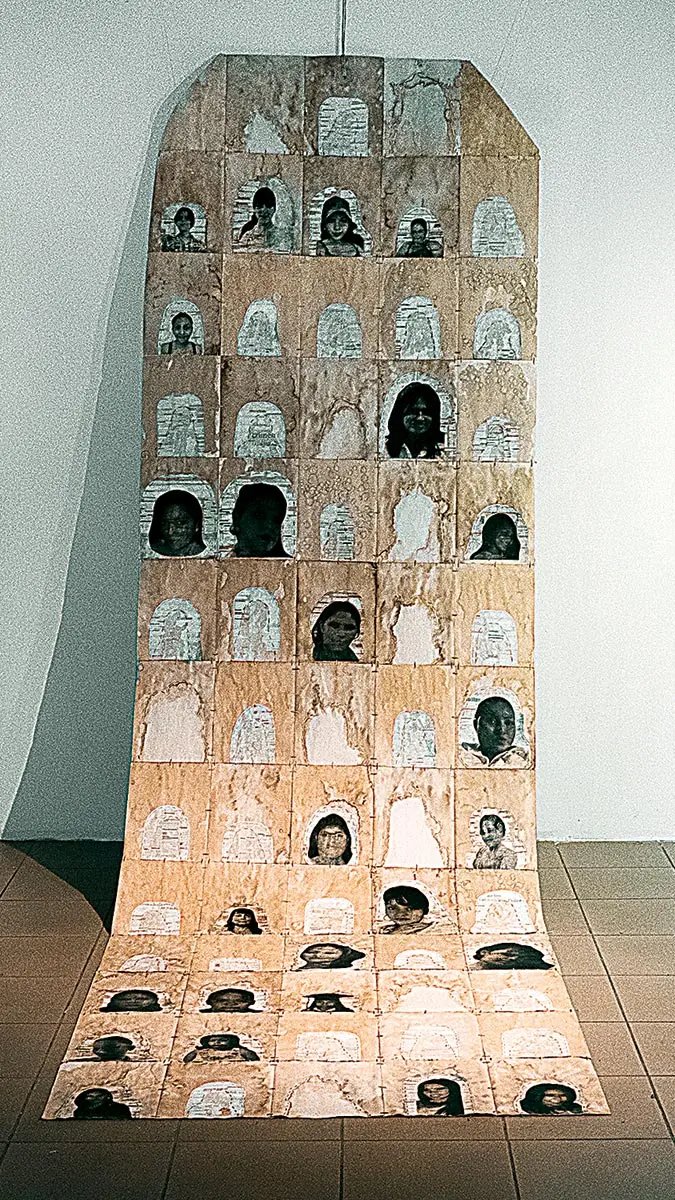
Following this thought, it is interesting to consider the artworks that were exhibited at the Museo Nacional (an impressive building that was once a military headquarters). There was a remarkable performance by Benvenuto Chavajay, which reflected on how the racist nature of the colonial system forced the indigenous Tz’utujil people to drop their real names. The art of Lourdes de la Riva studies human histories that have been eaten away by the worms that ruin books, creating shapes that the artist reinterprets in striking photographs, videos, and collages. There were references to the destruction of nature in the pieces by Osvaldo de León Kantule, as well as in the delicate pencil drawings by Alfredo Ceibal who created an idealized world on the walls of former dungeons. Christian Salablanca’s compositions, on the other hand, interpret mankind’s violent actions through zoological classifications that are both poetic and absurd, while Pilar Moreno showed two of her meticulous dioramas where people with animal faces stage ironic metaphors about gender roles and society’s strange activities.
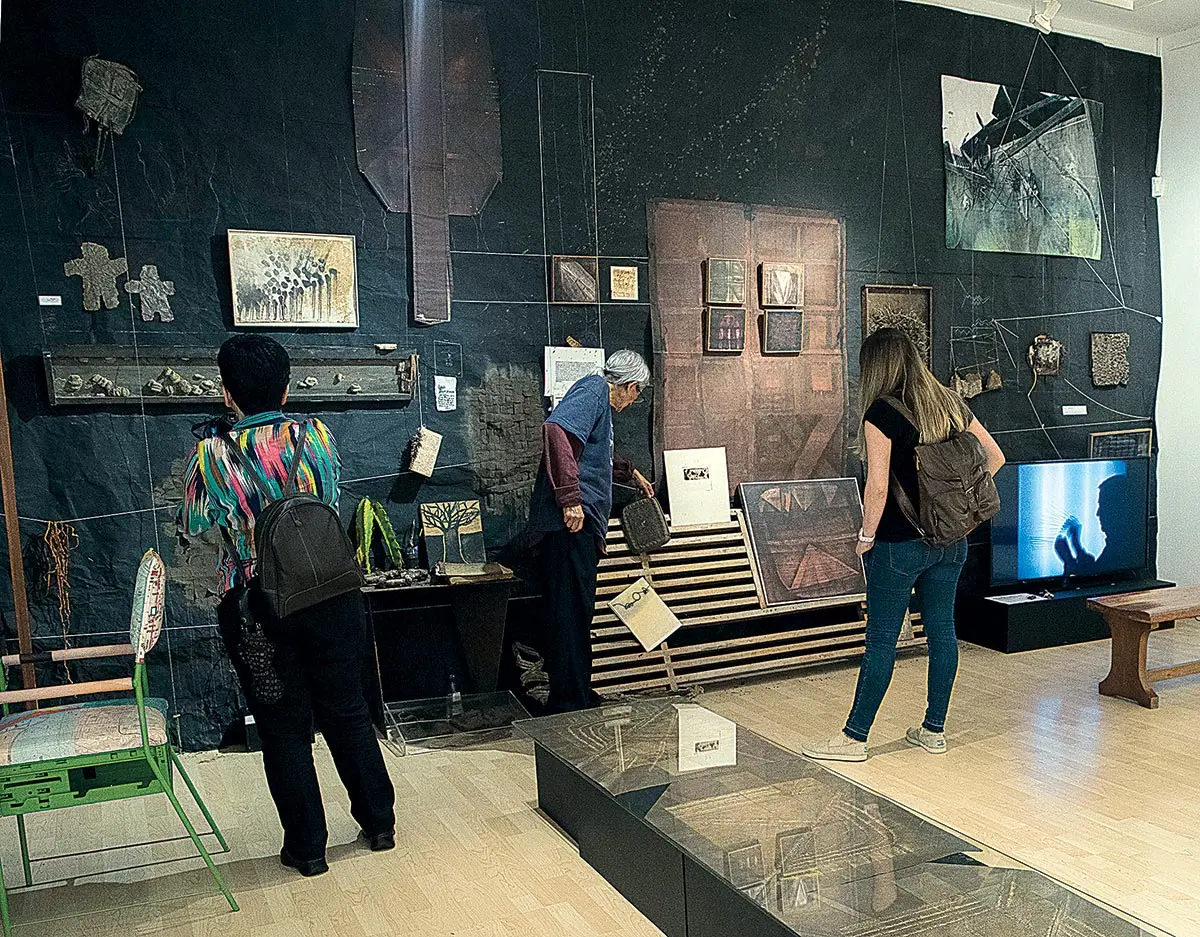
Among the numerous activities organized by the Tenth Biennial were a variety of special shows and projects. Most impressive were the exceptional retrospective exhibition of Rolando Castellón at the National Museum, and the show dedicated to Anibal López at Despacio, where it was possible to see documents from the artist’s personal archive. TEOR/éTica was the venue for The Little Struggle Continues, a display in which Díaz Bringas documented the important Central American editorial projects titled Artefacto/Malagana, Bizzarras, and Kasandra. TEOR/éTica also had on exhibit an excellent show of works from 1986 to 2015 by Patricia Belli. In addition, the Spanish Cultural Center contributed significantly to the Biennial with successful artists’ workshops and residencies led by curators Diego del Pozo, Aimar Arriola, and Ernesto Calvo.
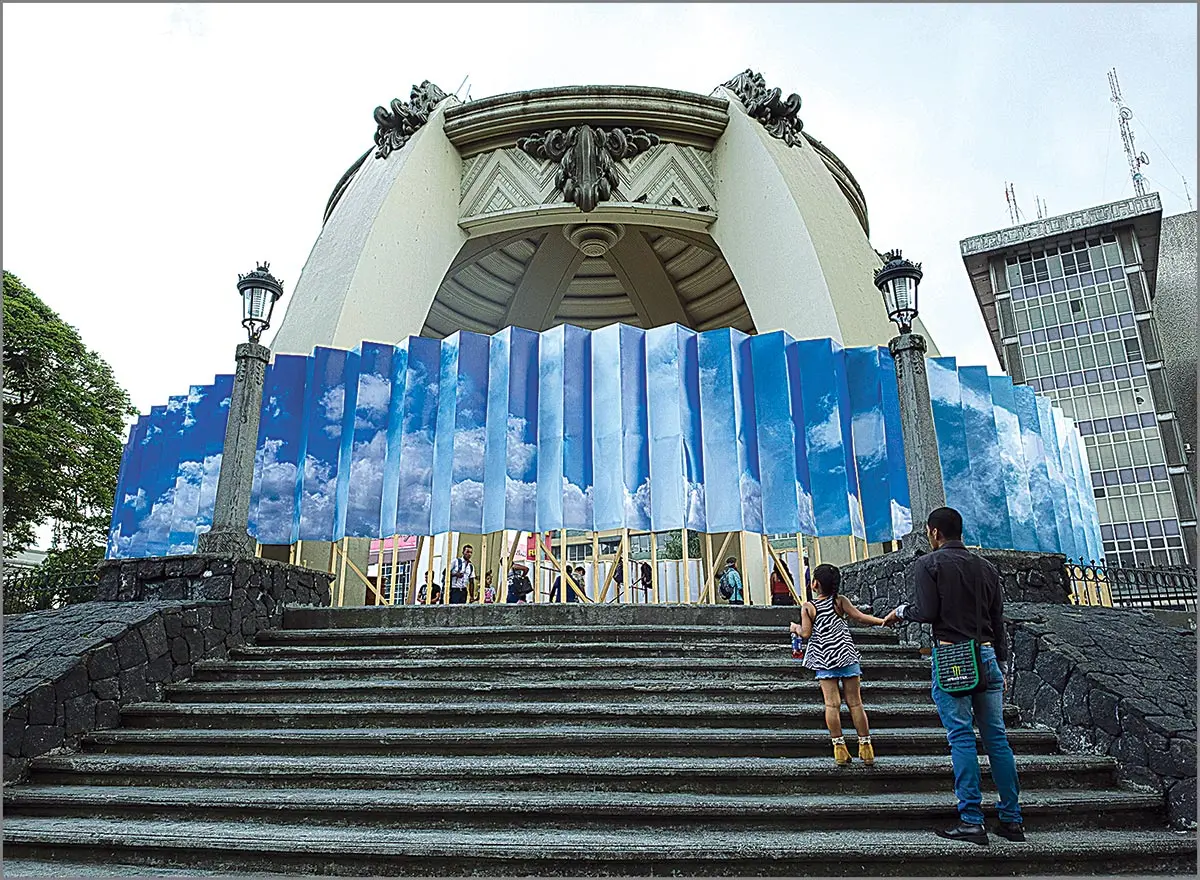
The city of San José itself provided the stage for some provocative works, such as Cyanometer by Marcos Agudelo, an installation around the kiosk in the Parque Central that combined and contrasted photographs of the skies of Costa Rica and Nicaragua; and a public performance by Irvin Morazán in which the artist proposed kissing “as a political-social tool for liberation.” He presented it by the National Monument, which according to the artist, “represents the triumph of the Central American nations against foreign invaders.”3
In its tenth edition, the Central American Biennial achieved a new degree of professionalism and expression, both aesthetic and political, proving that the art in this region has a past that is worthy of analysis, as well as a future full of possibilities. The biennial was wide-ranging, with goals that were almost too ambitious for an event with a limited budget and an exhibition period of only one month. Nevertheless, it revealed a significant capacity for self-reflection among the artists and the curators from the six countries, triggered valuable questions among its viewers, and marked a new path for future regional biennials.
NOTES
1. Priscilla Gómez, “Entre calor y cervezas, la Bienal Centroamericana abrió en Limón”, La Nación (Costa Rica), 1 de septiembre de 2016.
2. Donna Conlon y Jonathan Harker, “Sobre la obra ‘Bajo la alfombra’” en http://www.bienalcentroamericana.com/2016/08/04/donna-conlon-jonathan-harker/
3. Irvin Morazán, “Beso de liberación” en http://www.bienalcentroamericana.com/2016/08/08/morazan-irvin/
* Courtesy Central American Biennial.
MÓNICA E. KUPFER