
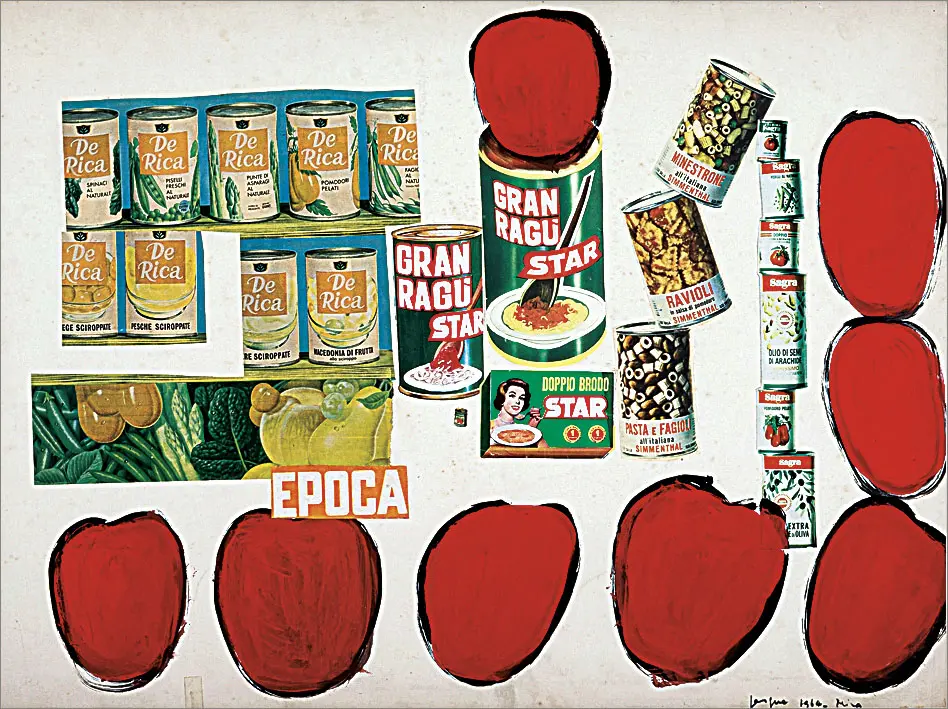
The belief in art as a possible site of resistance and social change was the main currency of the Brazilian neo-Avant Garde, as can be clearly seen in Vanguarda brasileira dos anos 1960 – Coleção Roger Wright (The Brazilian Avant-Garde of the 1960s – The Roger Wright Collection), a recent exhibition at the Pinacoteca de São Paulo, a museum of the State of São Paulo’s Secretary of Culture.
The exhibition celebrated the commondatum agreement for the use of 178 works of art between the state of São Paulo’s Secretary of Culture, the Pinacoteca, and the Goivos Cultural Association, responsible for the Roger Wright Collection. It also gave continuity to the narrative that began with Arte no Brasil: Uma história na Pinacoteca de São Paulo (At in Brazil: A History of the Pinacoteca de São Paulo), which presented the different eras of the history of art in Brazil from the colonial period to the early years of modernism, in 1920.
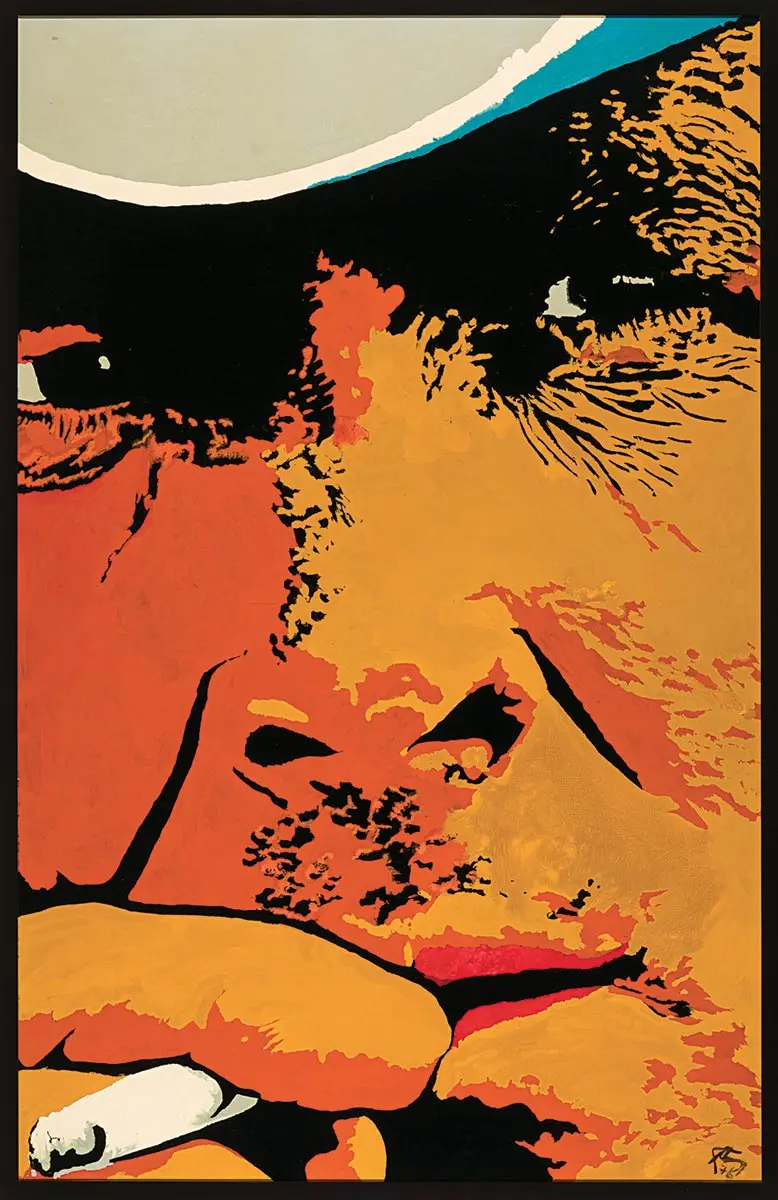
The selection of fifty works created in Brazil between the decades of 1960 and 1970 focused on the most representative practitioners of New Figuration, with a political bent and the color explosion characteristic of Pop Art, such as Wesley Duke Lee, Claudio Tozzi, Antonio Dias, Cildo Meireles, Nelson Leirner, Raymundo Colares, Rubens Gerchman, and Carlos Zilio. The ethics/aesthetics, artist/artwork, and art/life pairs revealed themselves clearly in works where artistic resistance is directly identified with political resistance.
The collection also includes important installations produced after 2000. Roger Wright and his two children launched it in 1996. After an accident that killed the family in 2009, Christopher and Ellen Mouravieff-Apostol, Roger Wright’s brother and mother, decided to keep the artworks in Brazil. To that end, they consulted several national museums, searching for one that provided secure and extensive conditions for research, communication, conservation, and public projection.
“With this group of works, the museum was able to offer visitors an opportunity to see and understand recent processes that contribute to the shaping of Brazilian visuality,” explains exhibition curator José Augusto Ribeiro. “At the same time, the Pinacoteca strengthens its position as a national art history museum, built around nodes that articulate an extended, representative narrative.”
The works featured in this exhibition reveal how the country’s cultural activity became more intense starting in 1960, especially among artists who dissented from the political regime’s repressive inclinations, which meant censorship of the theater, film, music, visual arts, and literature. The notion of the avant-garde was in dispute, especially in the visual field. The critical positions adopted by Concretism and Neo-Concretism with regards to painting and sculpture seemed to open up a path towards the greater variety of means, materials, and procedures that would characterize later productions.
From then on, the expression “anti-art” and questions about the institution, the circuit, and the legitimization of the arts became commonplace. In general, the artworks debated the distinction between popular and erudite culture, between “good” and “bad” taste. Everyday scenes from the streets or from private spaces began to appear in art, as well as images culled from newspapers, magazines, TV, advertising, and comics. The defense of the popular became a cry against the impenetrability of modern art, a rejection of the divide between art and life.
These productions were named “Brazilian Pop Art,” although many artists and critics rejected the label, just as they rejected the notion of a supposed filiation with the French “new realism.” They believed more in their own context, the result of processes of urban expansion and industrialization and of the innovations in mass culture produced by them; these were digested in a rebellious, irreverent manner different from that of the US’s Pop Art system, which is marked by the accumulation, repetition, and hollowing of the symbols of consumer society.
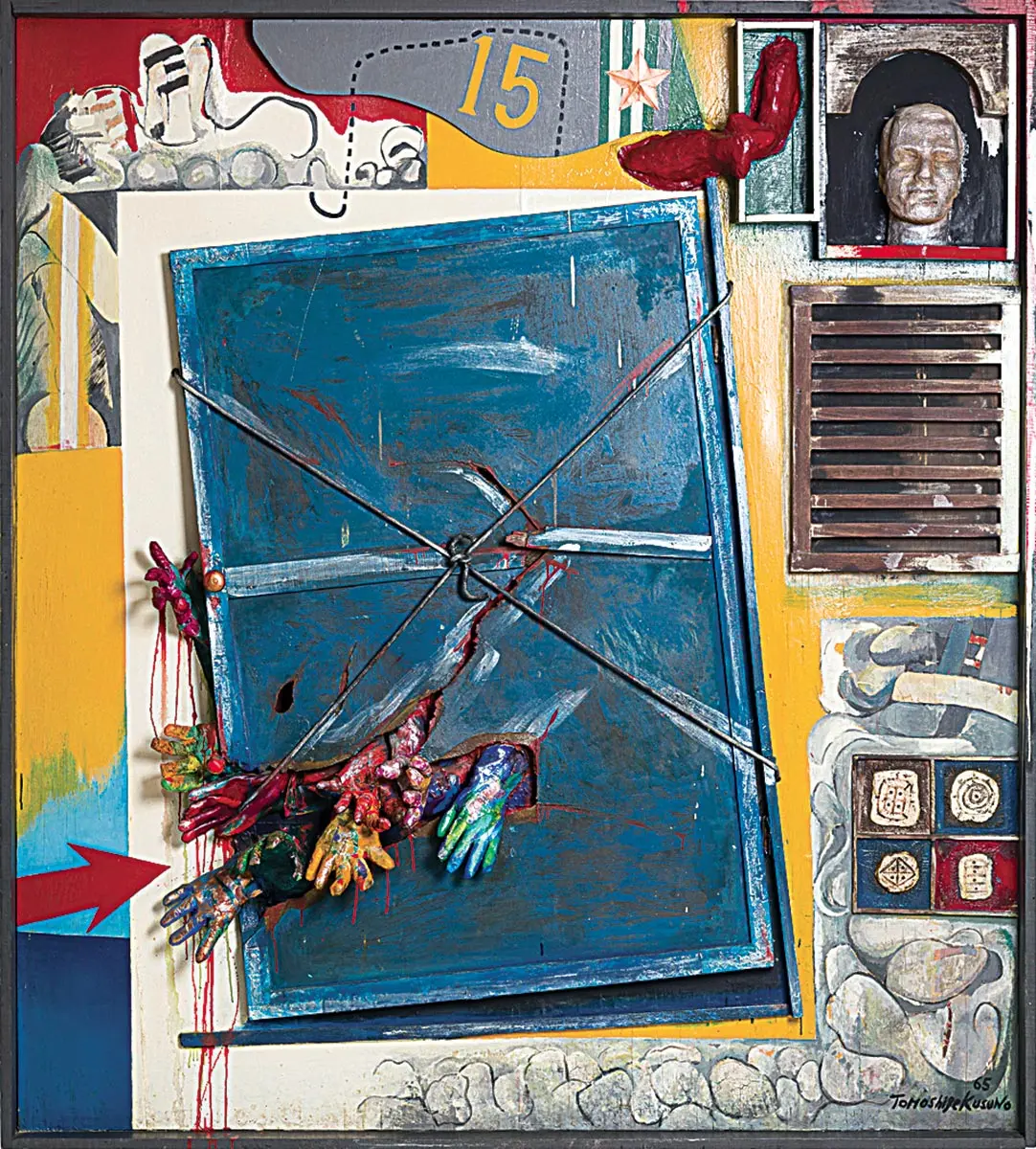
Many of the artists and works featured in this exhibition were included in shows organized outside Brazil with the purpose of assessing the resonance of Pop Art beyond the Europe-North America axis, between the 1960s and 1970s. Indeed, speaking about the Brazilian Pop Art school requires that readers be aware of the circumstances and debates in the country’s art world of fifty years ago: viewer participation in the work of art; the social status of cultural activity in Brazil; the possibility of public interventions under a state of the emergency regime; Brazil’s position in the international art scene; and the viability of establishing an artistic avant-garde in Latin America, an underdeveloped region that included many societies as devastated by dictatorial political regimes as Brazil was at the time.
The formal characteristics of a good part of this production, like its saturated colors, its neat outlines, and its suppression of spatial depth, are only the surface aspect of art that was deeply committed to political and social critique—the truly indelible feature of Latin American Pop Art.
At that time, the phenomenon was new in the international landscape. It was connected to North American and European aesthetic movements, yet it maintained its local particularities. In the sinister environment generated after the 1964 coup, the neo-figurative generation turned over the abstract geometry page that had come before it, closely connected to the “national development” project. A title like Contra os Urubus da Arte Concreta Histórica (Against the Vultures of Historical Concrete Art, a 1964 work by Waldemar Cordeiro included in the exhibition) does not appear by unintended chance.
While the poetics of Neo-Concretism was associated with the optimistic and participatory vision of the progressive era before the military coup, for example in works by Hélio Oiticica and Lygia Clark that simulated the jump of geometric shapes into three-dimensionality, artists like Antonio Dias, Cildo Meireles, and Nelson Leirner trusted the force of the image in its ability to reveal and signify the woes of life under the new reality of repression. With his autobiographical repertoire, Dias acts as a pivot between three key generations in Brazilian art: Modernism, Neo-Concretism, and the artists of the 1970s. Meireles uses symbols from the mass media, for example in Inserção em Circuitos Ideológicos (Insertion in Ideological Circuits), his famous series of the 1970s, which is represented in this exhibition by his soda bottles with political messages on their labels. For his part, Leirner became an icon of this generation by submitting an embalmed pig inside a cage for an art competition.
For the artists featured in this exhibition, labels are always slippery. Lygia Clark, for example, began her career under the influence of Concretism and Neo-Concretism, but later experimented innovatively with the dissolution of the boundaries between art and life and with the viewer’s participatory expression. The same applies to Mira Schendel, whose initial geometric repertoire unfolded into a highly subjective, lyrical, and conceptual poetics. Or Carlos Vergara, who in the mid-1960s was still working under the evident influence of Expressionism with the instruments provided by his teacher, the painter Iberê Camargo, and kept a considerable distance from those who called themselves the New Figurativists.
The distance between some of these artists and the tenets of the New Figuration can also be appreciated in Hélio Oiticica’s work. One of the most fertile examples in the Brazilian scene, Oiticica’s Parangolés, marks the definitive consolidation of the social inscription of art and the idea of an artwork’s openness to the audience’s direct commitment with the proposals put forth by the artists, as well as with the collective aspects of the production of art. Those points have the tensions between political commitment and artistic experimentation as their focus, particularly with regards to the era’s perceptible shift in the use of images connected to categories like “the people” and “the working class”, apparently transposed by the configuration of the category “the masses” in an urban context. The transformation of the frameworks for environmental and objectual structures, and of the latter for the bodies of artists and observers, did not result in the ultimate imposition of ideas on the audience, but in a proposal to decentralize the status of the artistic on the basis of the notion that everyone can experience creativity.
The Brazilian art system, so buttoned-down up until that point, developed new dimensions during this period. New galleries heated up the market while innovative shows opened in established museums, as the new languages gained a foothold in institutional spaces. For example, the exhibitions Opinião 65 and Opinião 66 (Opinion 65 and Opinion 66), which situated the Museu de Arte Moderna de Río de Janeiro as the center of attention. The emergence of Rex Gallery & Sons, in São Paulo, is symptomatic in connection with the authoritarian period in the country’s history and the ironic relationship many artists, like Wesley Duke Lee, Nelson Leirner, and Geraldo de Barros, had with it.
The structure of this incipient but restless art scene was undergirded by the differences between the situation of artists in an underdeveloped country and that of their counterparts in countries much more established in the international art market, like the United States or England. Under the equator, artists relate to reality not necessarily through an institution, but on their own. As, for example, Nelson Leirner did with his outdoors throughout the city of São Paulo.
The significant use of comics, which can be seen in this exhibition in the work of such artists as Mauricio Nogueira Lima and Claudio Tozzi, also acquired unique characteristics in the Brazilian context, becoming much more than a simplistic copy of what Roy Lichtenstein had accomplished, for instance. The juxtaposition of unconnected images, the symbolic violence of the figures, and an emphasis on the erotic are some of the elements that differentiate Brazilian poetics from those that evolved in what was then called the First World. Rubens Gerchman’s Lindonéia, a Gioconda do Subúrbio (Lindonéia, the Gioconda of the Slums, 1966-1968) clearly conveys the message that in Brazilian soil a kind of “slum aesthetic” was to prevail, sarcastically portraying feminicide cases like the murder of a poor black woman.
Works like these threaten to disorient viewers attempting to read Brazilian art of the era through the lenses of Pop Art or New Figuration. These are the products of amazing minds in a complex, turbulent period; they are not serene, stable, or easy to read. The Roger Wright collection does an incomparable service by bringing together key figures in any understanding of such a unique reality. Although political engagement is indeed at the base of that entire change in the arts, the era’s aesthetic response to a somber reality involved a profound revision of the modern paradigm. Brazilian art was never the same after that.
* Courtesy: Pinacoteca de São Paulo.
ALESSANDRA SIMÕES