
Aruba. One happy Island read the license plates in this small country of the Leeward Antilles, once one of the “useless islands,” a term coined by Spanish conquistadors to designate territories lacking in natural resources. A Dutch possession, Aruba was part of the Netherlands Antilles until 1986. In the Nineteenth and Twentieth centuries, after a short period of bonanza thanks to cattle raising and gold mining, many of Aruba’s male natives were forced to travel to neighboring countries, like Cuba, in search of work in the sugar industry and other fields.1 Today, Aruba flourishes as a global tourist destination in the tropical waters of the Caribbean sea.
Little known beyond its borders, Aruba, like every country, has a history and a tradition of its own. Adi Martins and Jennifer Smit review the process of the arts in the country until the 1990s in their well researched study Arte. Dutch Caribbean Art/Beeldende kunst van de Nederlandse Antillen en Aruba, 2002.2
The 1990s saw the emergence of a group of artists—all of them with studies in Dutch academies—with a unique way of understanding art, who could very well be seen as a movement even though they didn’t coalesce around a uniting manifesto. Questioning the procedures, contents, forms, and genres put in play by their predecessors, these voices signaled a shift.
Their artistic responses converge in two broad directions. The first encompasses ways of viewing the landscape, the human environment, and their possible derivations. With a vast oeuvre as a painter, Ludwig de L’Isle assumes an almost purely abstract language, displaying only the lightest traces of connection with the natural world. A more profound dimension is brought forth by other imaginations of connectedness with the environment and an anchoring in the drifts of time. In Los privilegios de la vista (The Privileges of Gaze), Octavio Paz acknowledged that the conquest of modernity is resolved in the exploration of what lies underneath the soil, of myth and reality. In an ancestral reservoir like Aruba, revelations of this kind acquire exceptional meanings, since some artists investigated the local “undersoil” at the beginning of it all, and moved on to share the archeology-based mechanisms present in the 1980s and 1990s Latin American visuality, the exhumation of the archives of that origin as instruments for expression and research.
For over thirty years, the local context has been the leitmotiv in the work of Stan Kuiperi. Around his participation in the Second Caribbean and Central American Painting Biennial in Santo Domingo, in 1994, I remember him speaking of his work as an abstract-expressionist painting of the environment. While Brancusi found the inspiration for his sculptural shapes in shells, pebbles, and other natural elements, Kuiperi actively introduces into his paintings material referents such as sand, snails, feathers, bones, wood, and rocks, chosen both for their expressive richness and for their symbolic connotations.
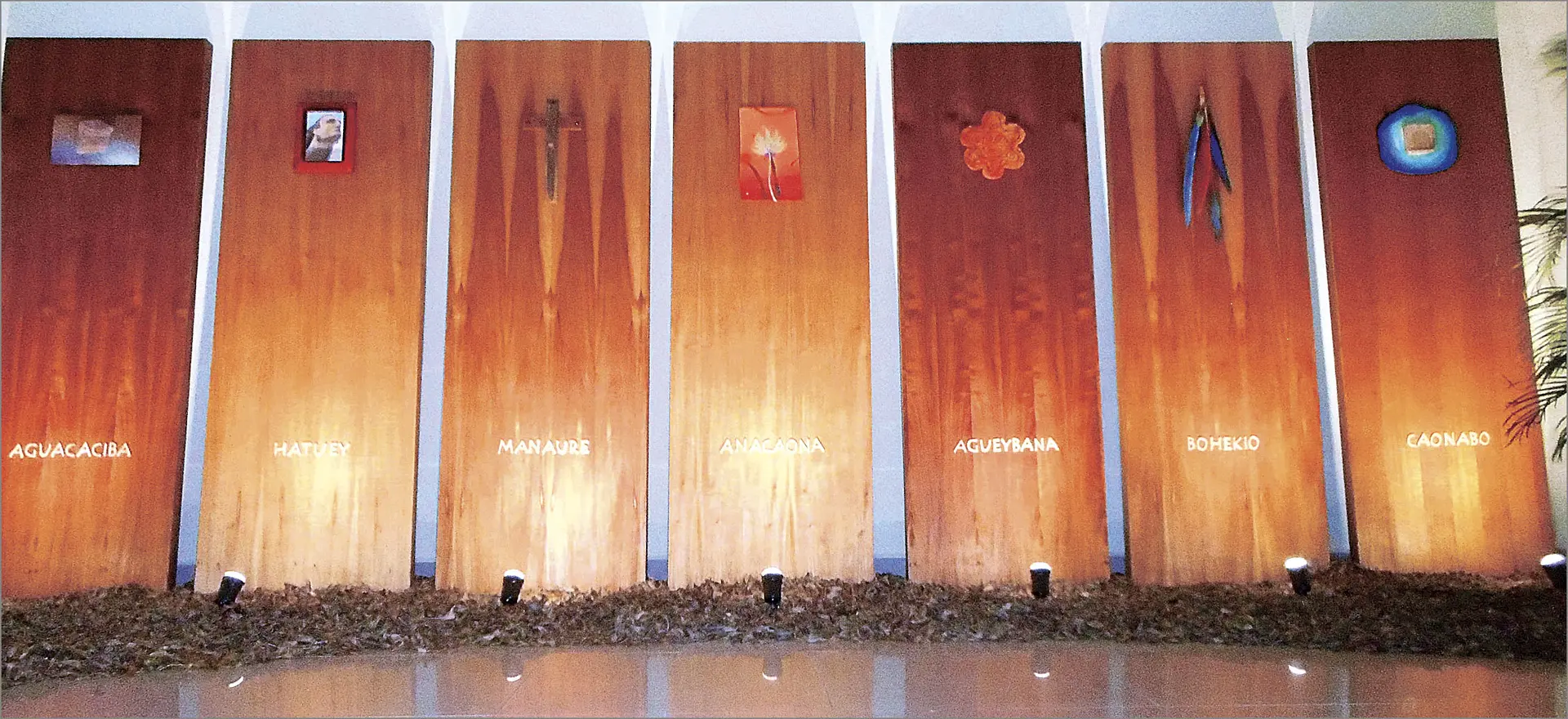
In recent times, in installations like Kasike: Monument to a Paradise Lost (2011) and On the Road (2012), Kuiperi has confirmed his ability to expand the radius of action of his work by dealing with diverse objects and mastering the secrets of their spatial arrangement. Moving from painting to installation doesn’t seem to have much altered his philosophy, as he remains coherently attached to his foundational subject matter in correspondence with the interior/exterior landscape, history, and culture.
A similar intent characterizes Ciro Abath, a passionate follower of archaeology whose creative process is nourished by that science’s discoveries. Abath moves with astounding malleability between different materials, from clay and ceramics to metal and glass.
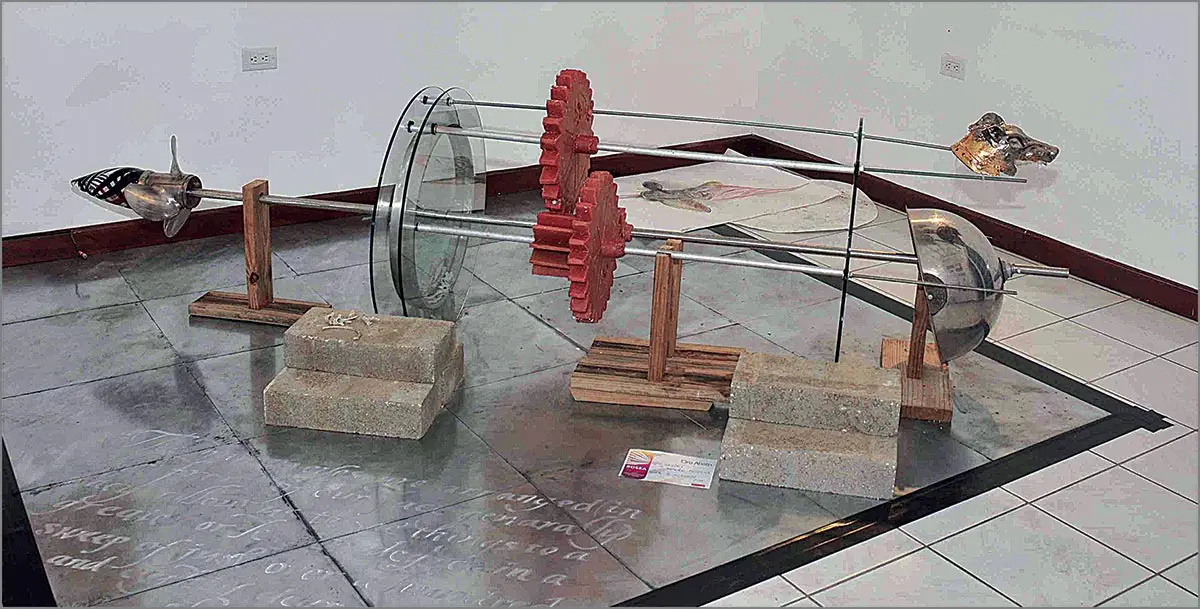
While on a first approach Abath’s forms and structures appear concerned with past or ancestral cultures, his production admits other interpretations. A Moment 1, from 2012—Abath’s most ambitious project so far—reproduced a gearwheel device perfectly arranged inside a container. Was it clockwork machinery? Sugar-refinery equipment? A symbol of international connectivity and the increased flow of commodities, the container could be interpreted as a device for the mashup of contexts and their specificities—a postmodern wink sent from the Caribbean in the direction of Charles Chaplin’s Modern Times.
Close to Kuiperi and Abath, Ryan Oduber established connections between nature and technological advances in his early work, with a minimalist objectual packaging. In Oduber’s hybrid objects and assemblages, logs and tree branches converge with electronic and industrial components to form strange lamps and artifacts driven by a need to respect the environment.
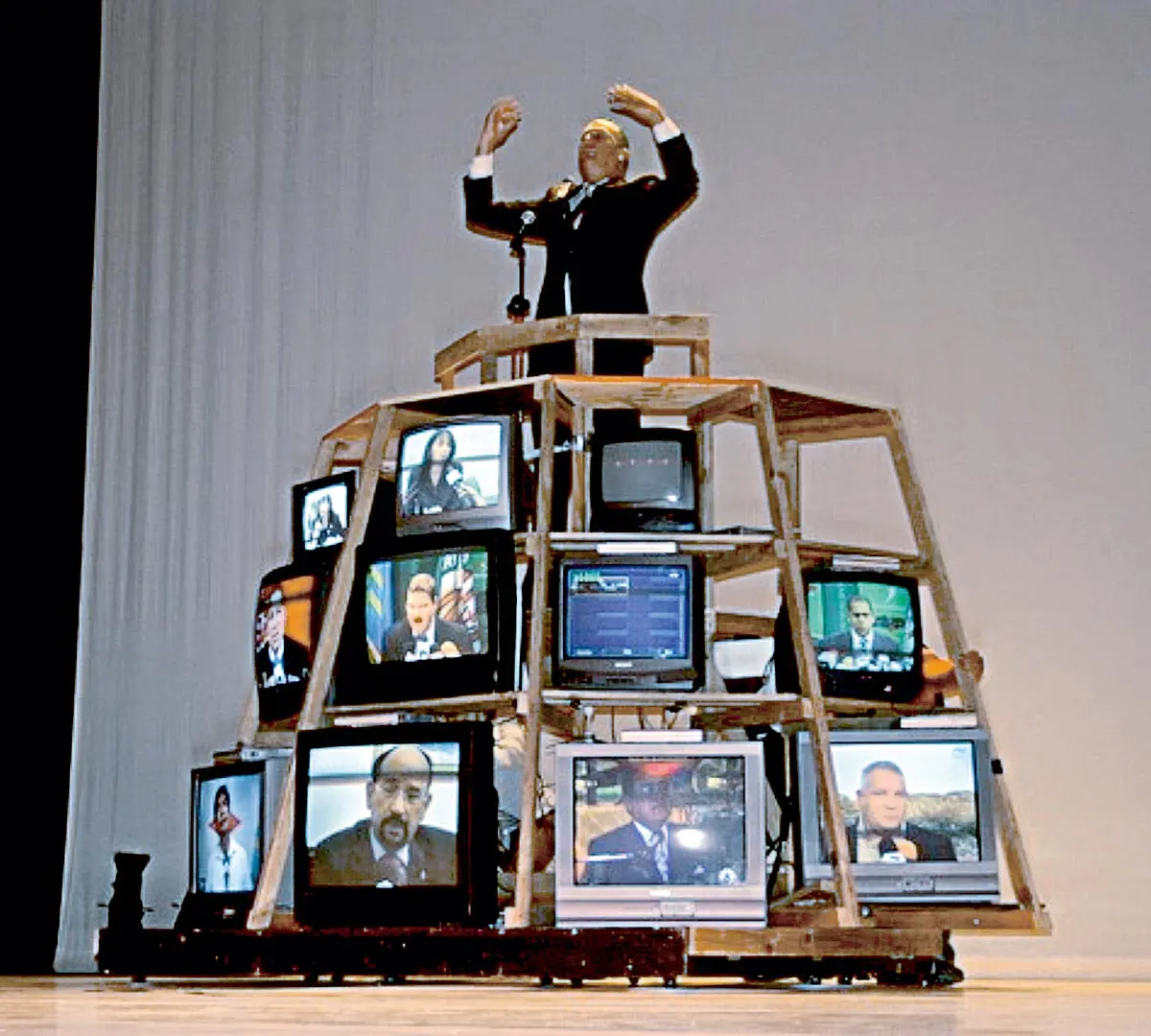
Later, Oduber began to stand out for his installations. At the 2003 Havana Biennial he presented Incógnito, a video installation using the marketing materials for the facial cosmetic of the same name. Supposedly, the cosmetic rendered the face of its users unrecognizable, touching on the issue of surveillance of the Subject in contemporary society. These days, Oduber is exploring these media in even greater depth.
In the opposite direction, the artists of the second group coincide in an exploration of the personal. Elvis López is one of the paradigms here. His most significant contributions date, indeed, from the 1990s, since his later responsibilities as the director of the Atelier’89 academy occupy so much of his time.3 At the 5th Havana Biennial in 1994 López presented his drawing polyptych Social Critical, Serie no 5/Cuba, from 1993, a series on subjects like the island, AIDS, oil, and others. These works were, to a degree, hermetic, like his early paintings had been. In a sudden transition, some months later López went to the São Paulo Biennial with a photography-based, self-referential three-dimensional approach, which would become the constant that identifies him. In that line of discourse, he produced his trilogy Playing with the Gods (1994), with its origins in photographs of the artist’s first communion; Amnesia (1997); and the light-based video installation E mariposa (1997), based on a fragment of a Papiamento-language song from the artist’s childhood.
Despite the presence of childhood memories and the use of photographic archives, López’s work does not merely reflect on its author. López revisits his own history, information about religion, gender, and sexual orientation, without forgetfulness—the “obligatory amnesia” Eduardo Galeano writes about in his essays and poems—because above it all is the subject’s conflicted and idiosyncratic relationship with the island, a discourse with parallels between the states of Being and the meanings of reality.
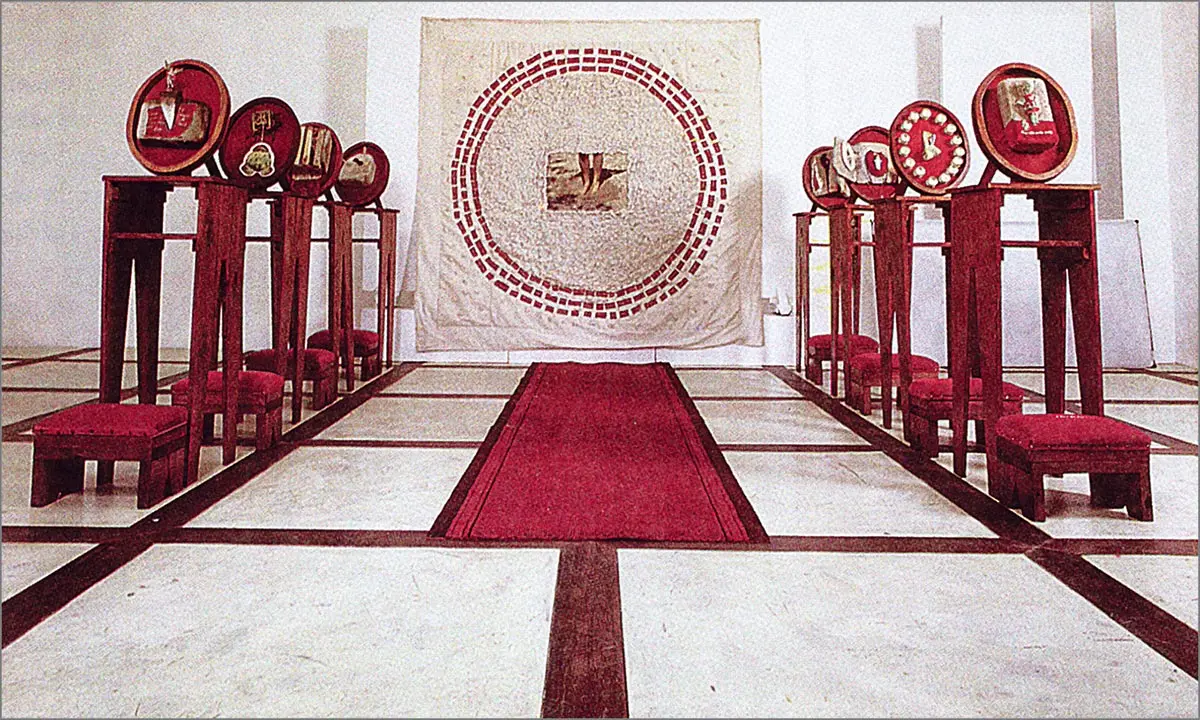
Glenda Heyliger engages the past in two memorable works: The Black Book of My Life, from 1995, exhibited at the Sixth Havana Biennial in 1997, and Autobiographical Selfportrait, from 1996. Since her 1995 solo shows The Mystery of My Soul, Osaira Muyale established a deep affiliation with introspection and the deconstruction of memory. Her iconography, indebted to Louise Bourgeois’s great influence on more than a few artists, takes shape in a methodical retreat into an inner universe. Her interests go from dysfunctional communication to the crisis of the modernist model of progress, the collapse of utopias, and the widely proclaimed death of the subject. The key point of her work is the complex construction of identity, the retrenchment, and safeguarding of the personal, that which Okwui Enwezor understands as dislocation, uprootedness, displacement and dispersion, exile, and alienation gaining terrain even in the rooms of one’s own house.
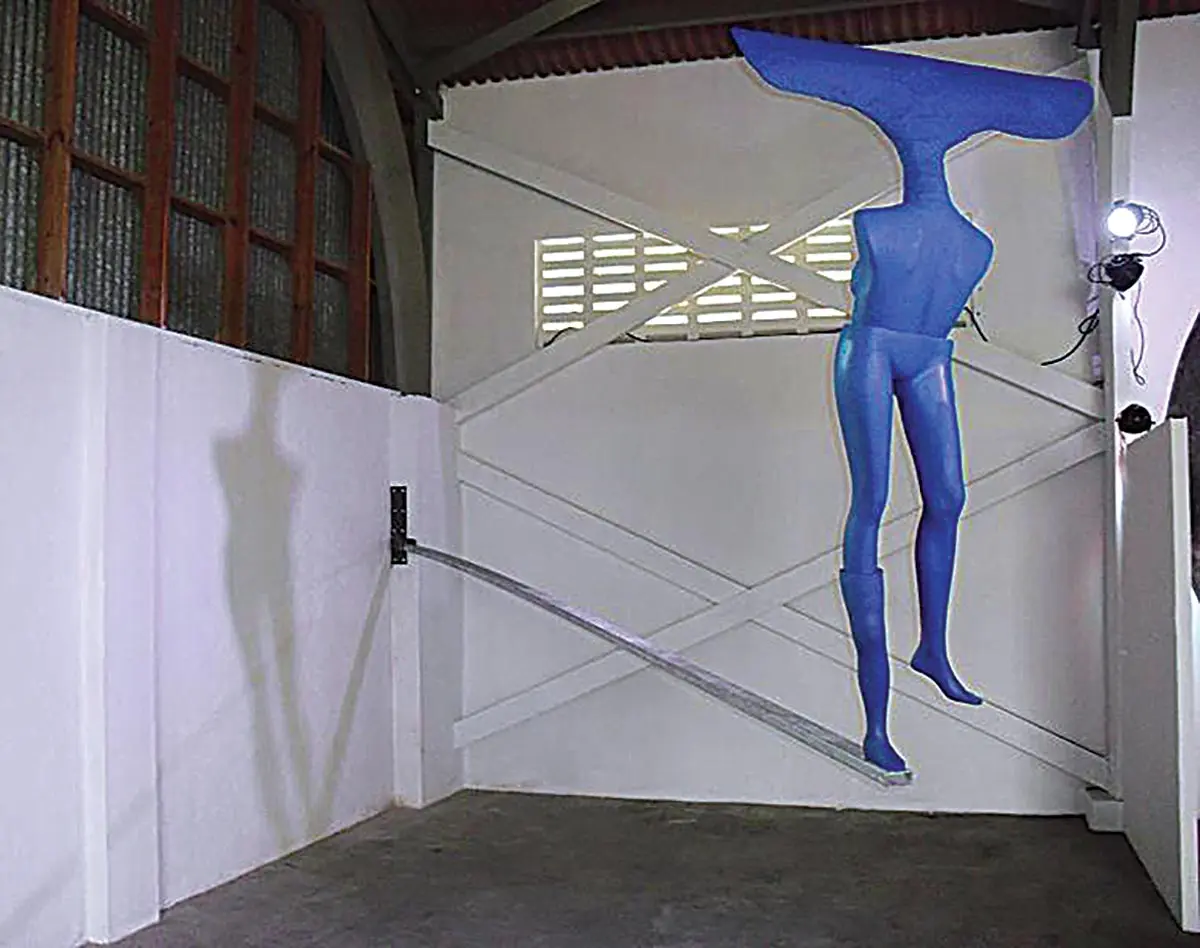
Over time, Muyale outlines the resources to be deployed much more clearly. Halfway between Wifredo Lam’s human-animal-mythological syncretism and the “Blue Klein” Victoire de Samothrace, I’m Not White, Not Black, But Blue, From 2012, a hybrid image in blue levitating over a trampoline, is a good example of the extension of all these concerns with an extraordinary power of synthesis.
Self-taught save for a few classes at Ateliers´89 and enormous efforts to keep herself current, Alida Martínez shares these ideo-aesthetic and representational invariants but repositions them in a different context of relationships. An artist of the two-dimensional in her beginnings, over time she intuitively experimented with installations, collages, and object art.
Martínez tends towards excess and bricolage. No More Tears in Paradise, from 2007, or For Sale in Aruba Only, from 2009, are symbolic constructs of hybrid syntax, half sacred and half profane, between sensorial capacity and rationality. Her repertoire includes personal registers, religious elements, global and Caribbean politics, women’s crafts, paper money, and consumer objects. In her more recent installations, such as Mega Bite Candy, from 2010, Isla Aruba, from 2011, or Territorios en Fuga (Territories in Flight), from 2012, cartography plays a connotative role, along with icons like Chinese-made golden Mickey Mouses and typical Aruban homes.
Renwich Heronimo, Evelino Fingal (designer of the Island’s paper currency), Giolina Molina, Gustave Nouel, King Lie Kwie, Marlene van Blarcum, Irene Petersen, and Belinda de Veers, accompany this avant-garde, the most widely promoted regionally and internationally.
There is another element that must not be obviated. There are processes of aggiornamento currently underway in Aruba. The expansive push of younger voices is noticeable in the constructions of new maps and new narratives dominated by performance, the foundations of video, digital devices, web-based practices, and emergent media. Ryan Oduber could perhaps be a connecting bridge with this new guard: Kevin Schut, Natusha Croes, the Wolf siblings (Ken and Jess), and Velvet Ramos, among others, or with artists from other nationalities living in Aruba like Rob Ter Haar, from The Netherlands, or Nelson González and Hugo Palmar, from Venezuela.
The view of art in Aruba sketched in this article must be framed in the postmodern context, where artistic expressions respond to mutations in the production, valuation, and circulation of the work of art.
All these artists demonstrate that the process of renewal started in the 1990s remains underway, adapted to the passage of time, and fully open to contemporary vanguard experiences. A spirit of strong contributions to the existing artistic vitality via the introduction of new orientations, generalized among artists of different cohorts, stands out beyond the generational diversity seen today on the island. They may transcend the narrow borders of their local context, but cannot ignore the storylines it offers, against the grain of the paradisiacal slogan in the island’s license plates.
Meanwhile, in the 1990s further steps were taken towards greater interaction with the international scene. As interim director of the Culture Institute, Evelino Fingal, supported by Elvis López, implemented a well-conceived promotional project that contributed to positioning the country in the contemporary visual map. The Santo Domingo Caribbean and Central American Painting Biennial, in 1992, was the starting point. A year later came Carib Art, Curaçao. In 1994, Aruba began to participate regularly in the Havana Biennial, a participation sustained into the present. The full roster of events includes the 22nd São Paulo Biennial, in 1994; Karibische Kunst Heute, in Germany, in 1994; Caribe insular. Exclusión, fragmentación, paraíso, in Badajoz and Madrid, Spain, in 1998; the 7th and 9th Cuenca Biennials (Ecuador), in 2004 and 2009, and Caribbean: Crossroads of the World, in Nueva York, 2012, among others.4
This article is an abridged version of a much broader study of contemporary art in Aruba.
NOTES
1. A shared narrative in the Aruban imagination attests to this. After the men’s departure, women were left as heads of families and households, and it was common to see them ascend one of the mountains that adorn the island’s mostly flat topography to scan the horizon, hopeful searching for a ship bringing back their husbands and sons. A detailed investigation tells about the presence in Cuba of Aruban laborers and reveals the presence in central and eastern Cuba of descendants of those laborers who formed families and roots in the greater of the Antilles.
2. See Adi Martis and Jennifer Smit. Arte. Dutch Caribbean Art/Beeldende kunst van de Nederlandse Antillen en Aruba, Koninklijk Instituut voor de Tropen/Royal Tropical Institute, The Netherlands, 2002.
3. Evelino Fingal and Elvis López established the Ateliers’89 academy that year, and the latter has been its permanent director. It is one of the contemporary Caribbean’s pioneering initiatives in non-regular teaching, and an inspirational point of reference for similar spaces launched later.
4. The artists most intensely promoted have been Elvis López, Osaira Muyale, Alida Martínez, Stan Kuiperi, and Ciro Abath.
JOSÉ MANUEL NOCEDA FERNÁNDEZ
Art historian and researcher.