The landscape of Venezuelan art in the Twentieth and Twenty-First centuries presents a distinctive feature: it activates mechanisms of memory that are capable of reflecting their discourses in multiple directions. Looking at those years might raise a concern about discourse dispersion, but that is a false alarm; in fact, what we have is a fortune-coated diversity that proposes aesthetic freedom.
The exhibition Flujo disperso/Blurry Flux covers this terrain. It proposes a discursive effusion of visuality that moves gradually out of focus, while each work reaches its own edges since this group show is not intent, from a museographic point of view, on having visitors orient themselves by chronological order, but a sensorial one. This exhibition—derived from Caracas’ Colección Mercantil’s Collection Dialogs project, coordinated by researcher Tahía Rivero—is underlined by a genealogical sense that prompts us to experience a particular connection between modern and contemporary works by local artists, offering new recourses for visual memory.
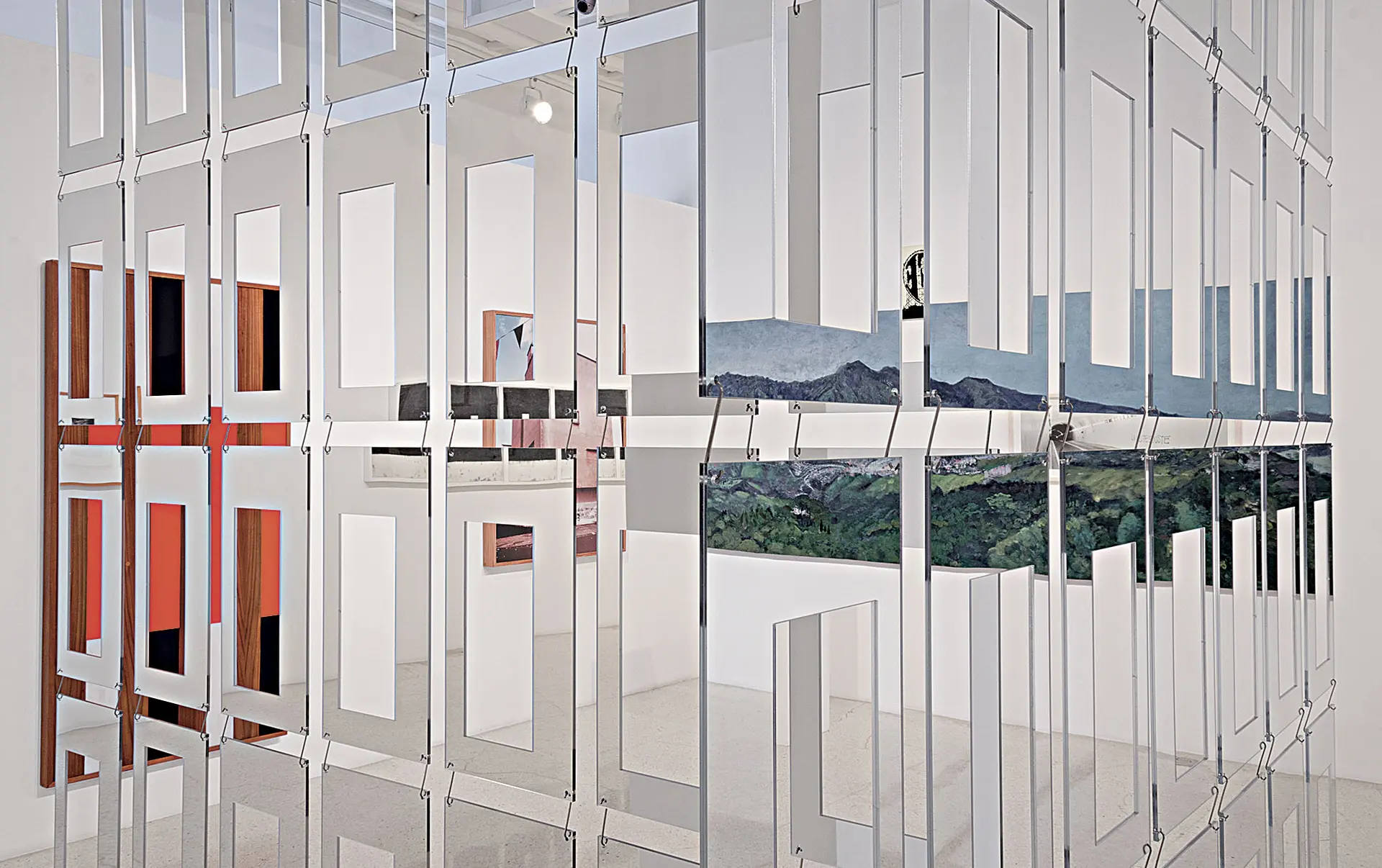
Multiple sensorialities are interwoven. The reader, needless to say, will notice this, realizing, after observing the photographs that accompany this review, that it is an open and simultaneous dialog rather than a linear narrative: we are confronted with a plurisensorial art exhibition that invites us to an encounter with 45 works by 36 artists. Thus, Carla Arocha (a renowned Venezuelan author living in Belgium) and Stéphane Schraenen (a Belgian artist with whom Arocha has worked since 2006) proposed for this exhibition a curatorship that flirts with the artistic eye. They have taken as their discursive thread the sum of Venezuelan art.
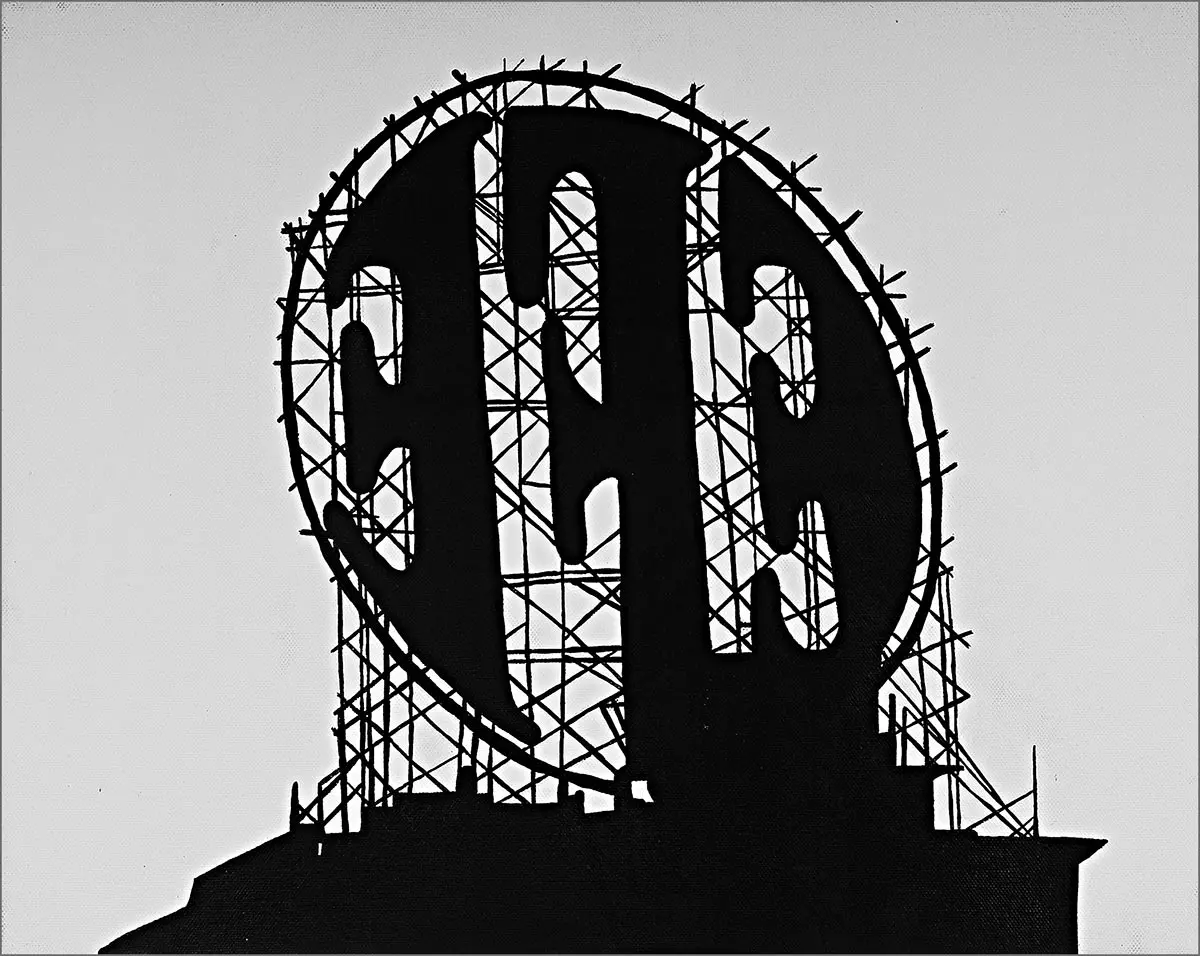
This sum includes modernity and the Avant-Garde, in a selection of visual languages that allude to the Creole city—among other evocative sources—and flow into a gaze that reflects that critical conversation between modern and contemporary Venezuela under the figurative and geometric signatures of each author. For example, the museography’s visual discourse proposes to begin with a 2001 photograph by Alexander Apóstol, Limoges (from the Residente pulido series), a composition that alludes to the modern past via a semi-old building in the foreground, preceded by a Carlos Zerpa sculpture that commemorates Santiago de León de Caracas, both crowned by a painting by Luis Romero that depicts the iconic logo of the Efe brand that for years accompanied Caracas’ architecture. Next to it, La gente existe (People Exist), a photograph by Antolín Sánchez. Interestingly, this group ends with Puerta (Door), by Mateo Manaure, a rectangular wooden object with linear intersections in flat colors (white, black, and orange) alternating with the natural wood, which imbues the object with the air of the memory of that modernist past that left us such an abundant artistic legacy.
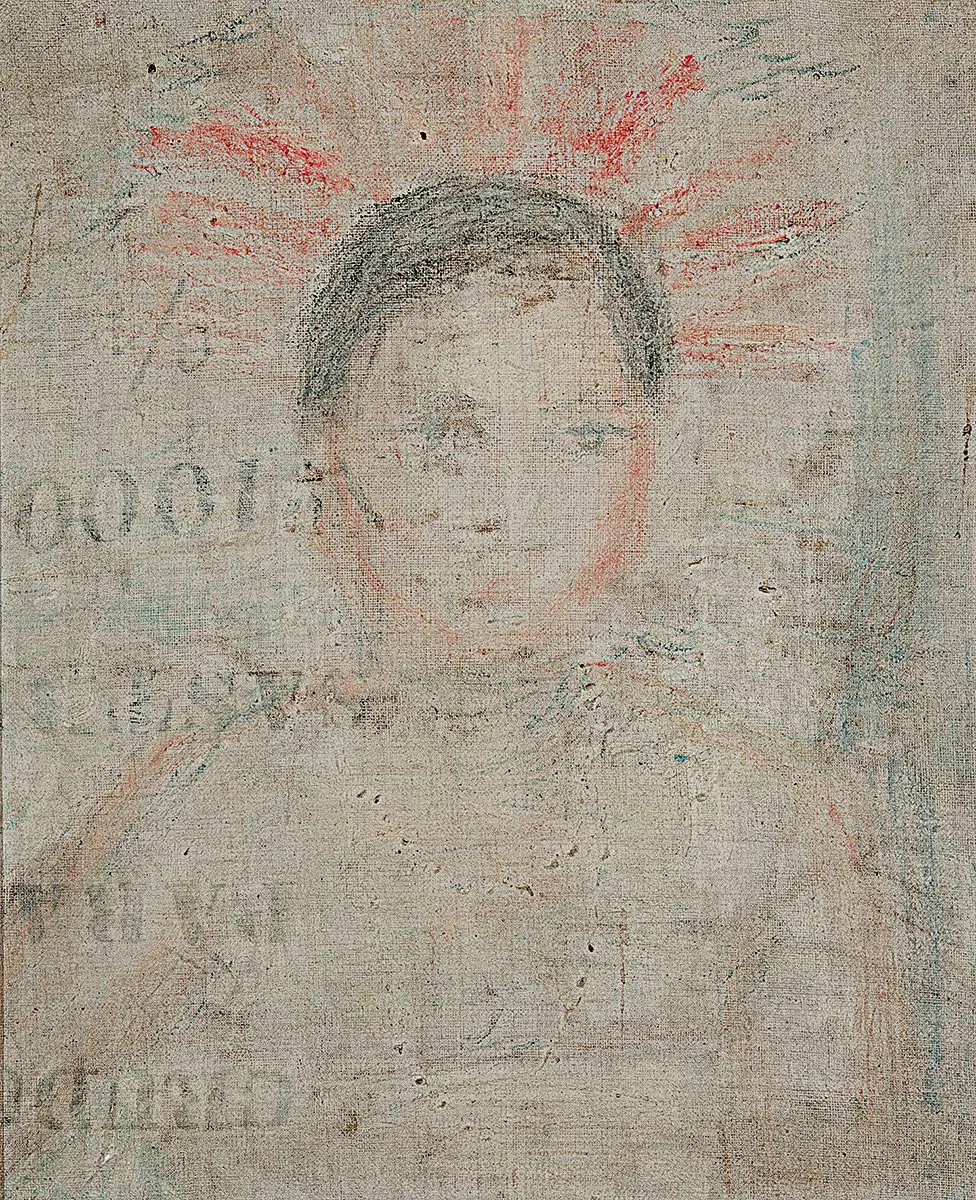
At one entrance to the gallery, visitors are welcomed by several modular mechanisms—rectangular structures created by the Arocha/Schraenen collective—that, under the play of reflections, return new gazes to the viewer. This dynamic of reflectivity produces an open panoramic, alive with images, as it is able to make the works on exhibit treasure and trace new, less classical but equally constitutive visual pathways. In this way, then, another symbolic language of an entry is able to convoke Armando Reverón’s Hija del sol (Daughter of the Sun), in diagonal consonance with a classic work by Antonio Herrera Toro, Sin título (Construcción) [Untitled (Construction)], which gradually makes the composition more and more geometric, something unusual in the Nineteenth Century master’s oeuvre.
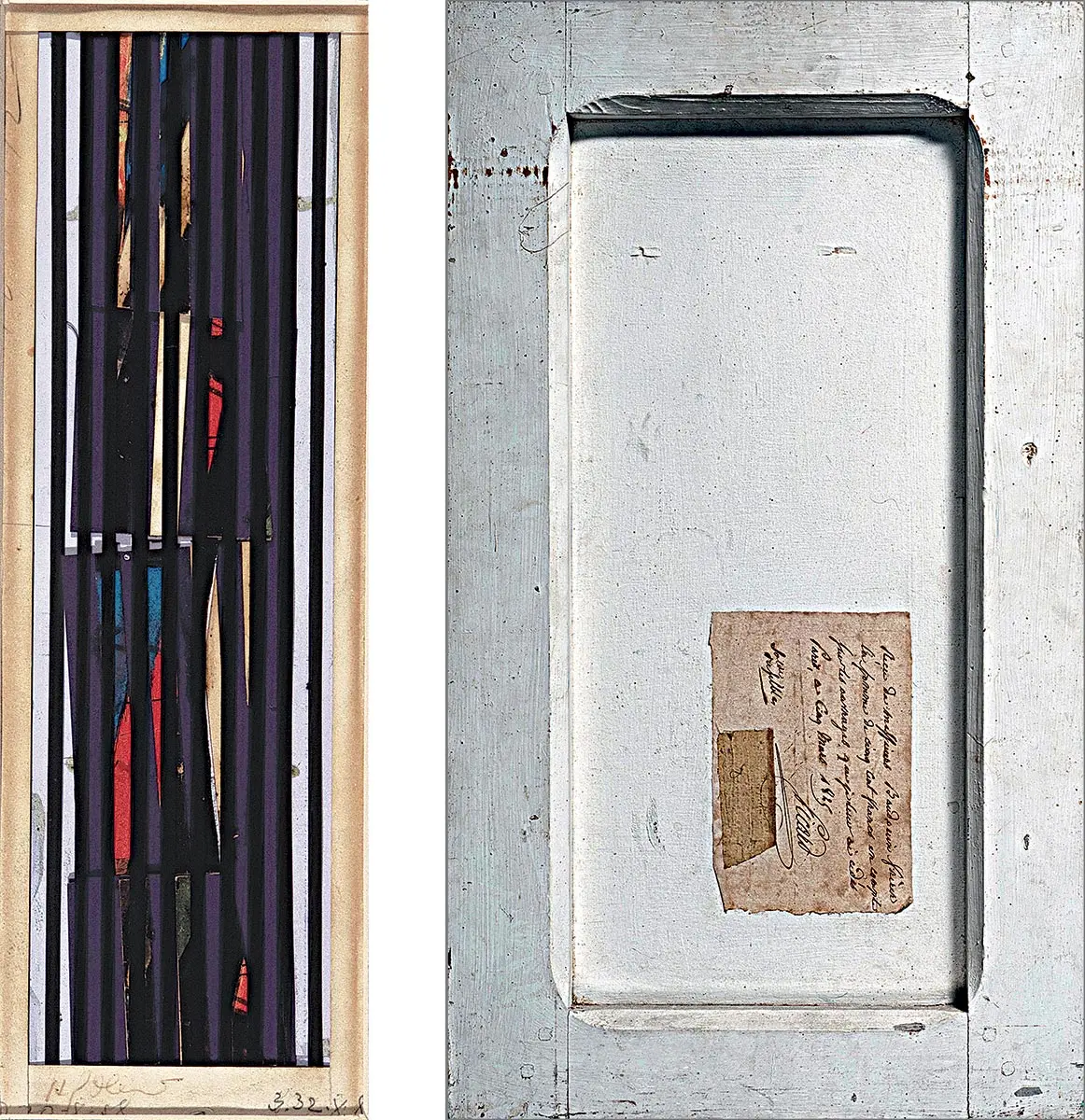
The break with what we can recognize as classical occurs at several points in Flujo disperso/Blurry Flux, which makes it essential for us to highlight a two-dimensional small format work by Alejandro Otero, where the artist sought a degree of kineticism by means of structures carved with small paper rectangles. This work by Otero—Sin título (Untitled), from 1958—grants our gaze the freedom to create by itself, with materiality that is uncommon among the practitioners of kinetic art. Our surprise is even greater when we encounter another unusual object by Otero, Ce Cinq Mars 1825 (1962), not closely connected, in aesthetic terms, with the previous one: it is a kind of window in wood, intervened with adhered, written-on pieces of paper of an old-looking type. Jesús Soto evokes a similar experience with a work from the series Leños (Logs, 1962): a rectangular object in wood, painted in dark hues, on whose frontal face Soto skillfully displays sinuous vertical lines that resemble an optical game. The latter, however, does not dominate the work; as a whole, it concentrates on attentiveness all of its own.
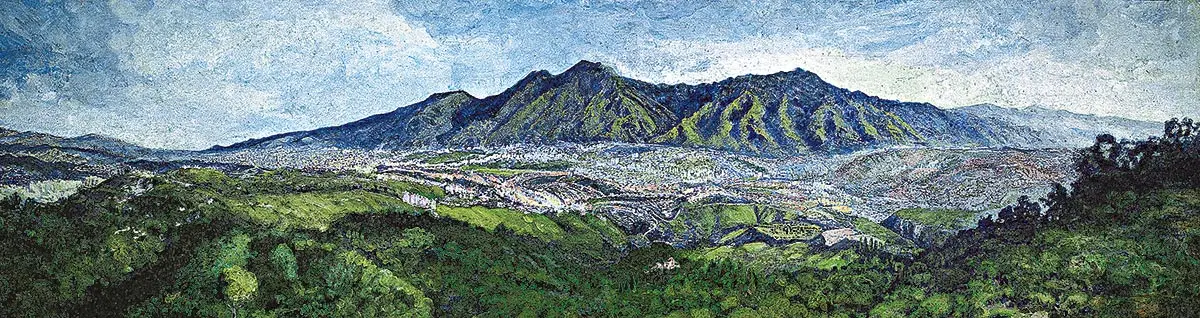
If we wanted to define a nucleus for the show, we could focus on Adrián Pujol’s Caracas desde el Alto Hatillo (Caracas From Alto Hatillo). With its technique that winks in the direction of pointillism, this large-scale painting brings to mind the passage through a dazzling, luminous aesthetic that reigns in Venezuela’s capital city and its nature spaces.
Nature shelters our transit through a large part of this exhibition, as an afterglow of human transit, which can be appreciated in Roberto Obregón’s photograph, or in Manuel Cabré’s Fragmento del Ávila (Fragment of Mt. Ávila), or in Pedro Tagliafico’s Ávila. The latter is rather remarkable: using a simple juxtaposition of papers, including newspaper clipping featuring advertisements, it alludes to the great mountain that adorns the city of Caracas, Mt. Ávila.
Thus, the parade of artists does not damage the curatorial discourse much less the museographic one; rather, it enriches them: the exhibition is not afraid to present works created in 1900 and to move along the entire Twentieth Century, landing in ours after presenting us with the artists mentioned alongside Rafael María Baralt, Omar Carreño, Carlos Contramaestre, Sammy Cucher, Natalya Critchley, Carlos Cruz Diez, Sigfredo Chacón, Eugenio Espinoza, José Gabriel Fernández, Alí González, Carlos González Bogen, José Antonio Hernández-Diez, Carlos Herrera, Antonio Lazo, Suwon Lee, Luis Lizardo, Óscar Machado, Carlos Puche, Bárbaro Rivas, Pedro Terán, and Meyer Vaisman.
* Photography: Walter Otto. Courtesy: Collection Mercantil.
GRISEL ARVELÁEZ P.