
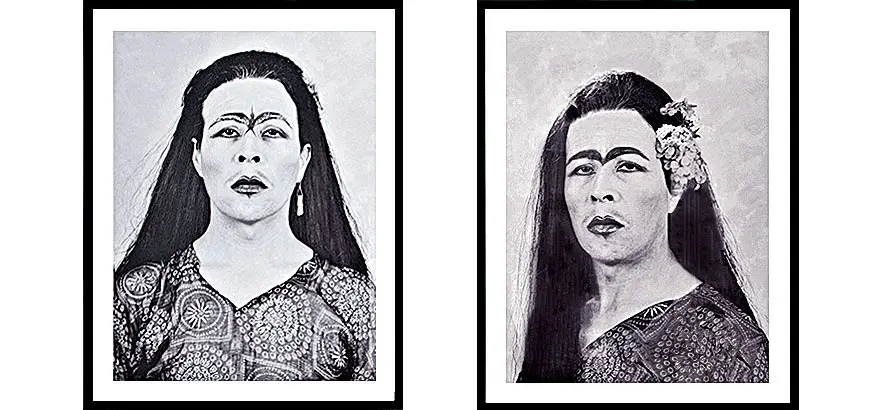
Fluid dialogs—between two institutions, between artists of different nationalities, between two curators, between the works of art. Robert Leckie and Miguel A. López align two spaces, London’s Gasworks and Costa Rica’s TEOR/éTica, for a dual project adapted to each station in its itinerary. A Kingdom of Hours takes as its point of departure theorist Elizabeth Freeman’s writings on chrononormativity and erotohistoriography, two concepts indebted to Michel Foucault’s notion of biopolitics. Fluid dialogs between history, dissidence, time, and identity. A cocktail as complex as it is attractive. The curators posit the exhibition as the possibility of a proposal of “strategies that confront hegemonic models of temporality: from official accounts to biological rhythms and historical chronologies,” of “rewriting history from a queer perspective,” and of translating chrononormativity as the “process of standardization through which the rhythms of society are internalized by its members, like a city’s smog.” We can start from these assumptions in order to confront ideas and works of art.
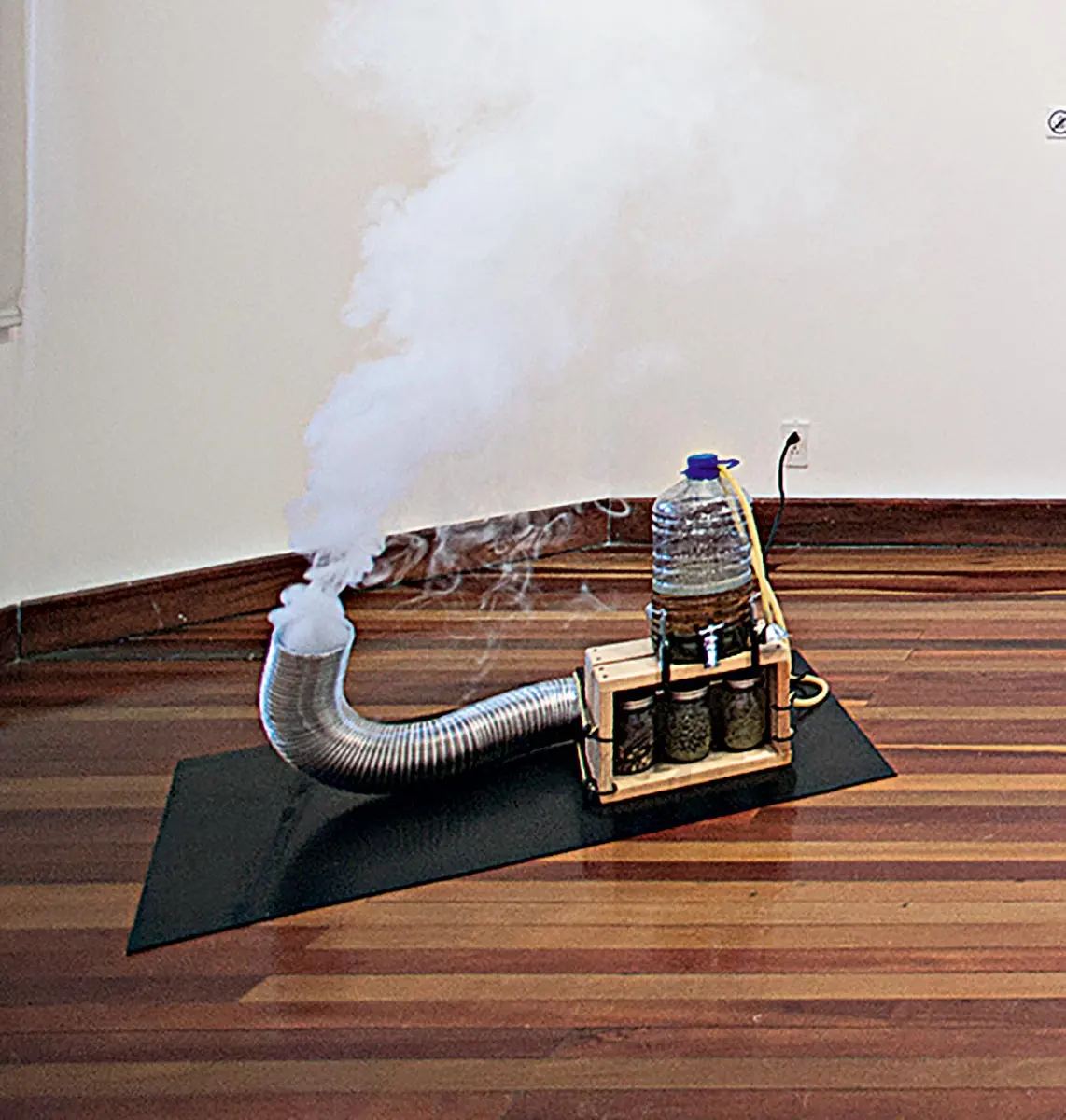
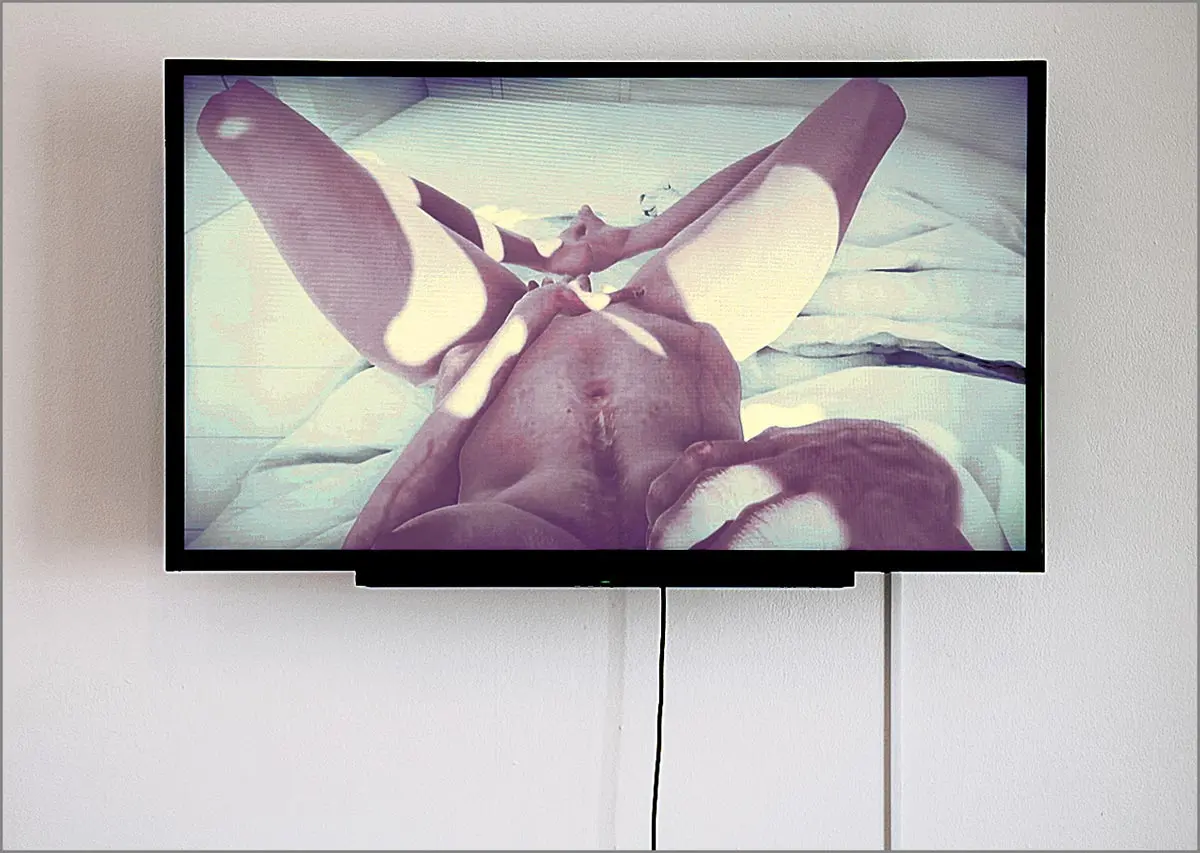
Candice Lin and Patrick Staff participate with Hormonal Fog (Study #1) (2016), a fog machine dispersing a vapor made of licorice root and hop flowers, both testosterone-blocking compounds: a process of standardization through which the rhythms of society are internalized by its members, like a city’s smog? And what happens if we place this installation in front of a photograph of Pedro Lemebel dressed as Frida Kahlo (1990)? The fluid dialog fostered by the curators makes it possible for each one of two dissimilar works to establish, in their confrontation, greater semantic capacity. Now, besides his charge against art history’s sexist hegemony, its timeline, and its male embodiments, is affected by the attack of an anti-testosterone mist. There is in this connection a point of humor, acid and playful, brilliant and lubricated. Fluid dialogs, and dialogs and fluids, as happens in Wilson Díaz’s Sementerio (Sementery, 1995-96/2016), small-format papers arranged as niches in a cemetery, splashed with droplets of semen, the contribution of a series of friends of the artist who ejaculated on the work. Sexuality and death captured in a way that is as poetic as it is direct. In front of it, Sidsel Meineche Hansen’s No right way 2 cum (2015), the digital recreation of an instance of female ejaculation, which denounces the censorship of such images in UK-produced pornography. The dialog continues to flow in a provocative and stimulating way.
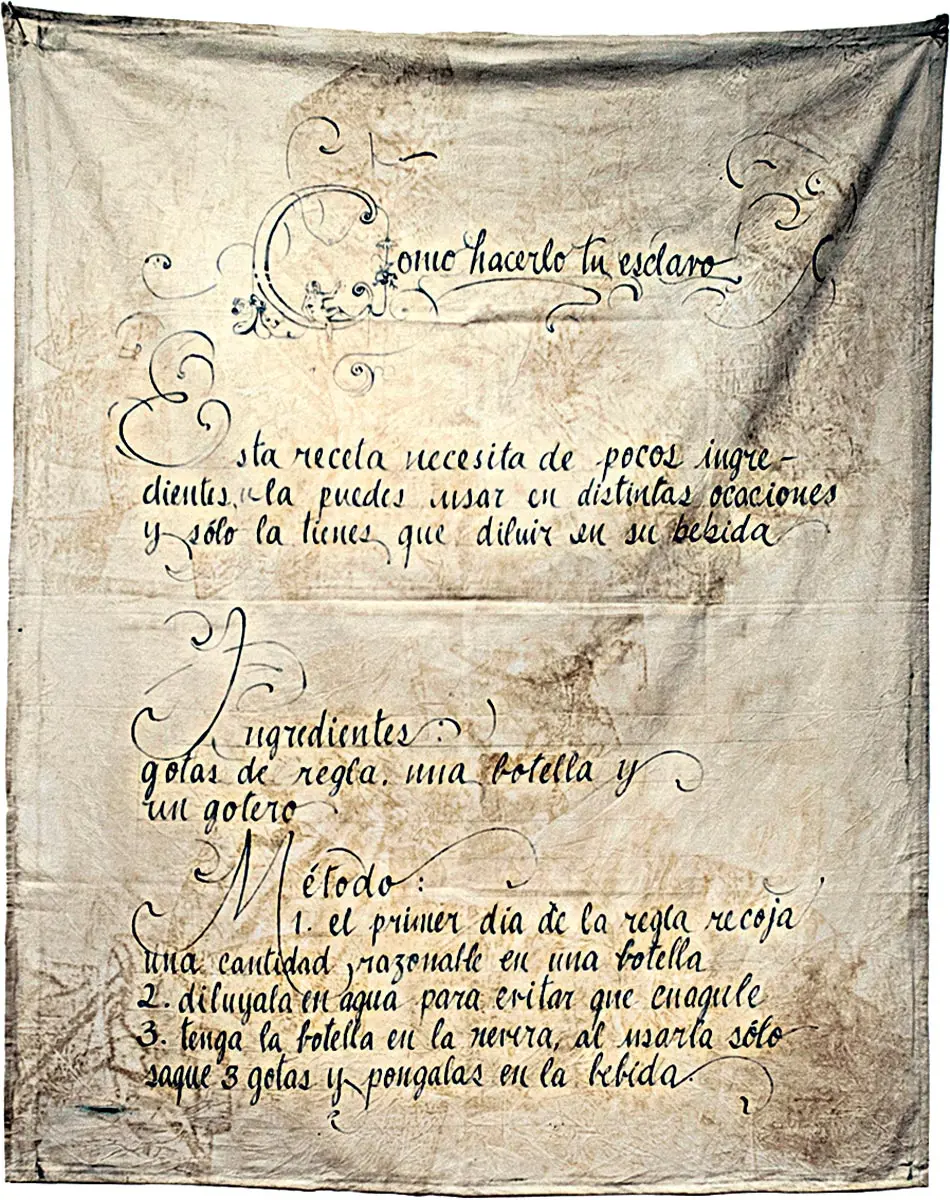
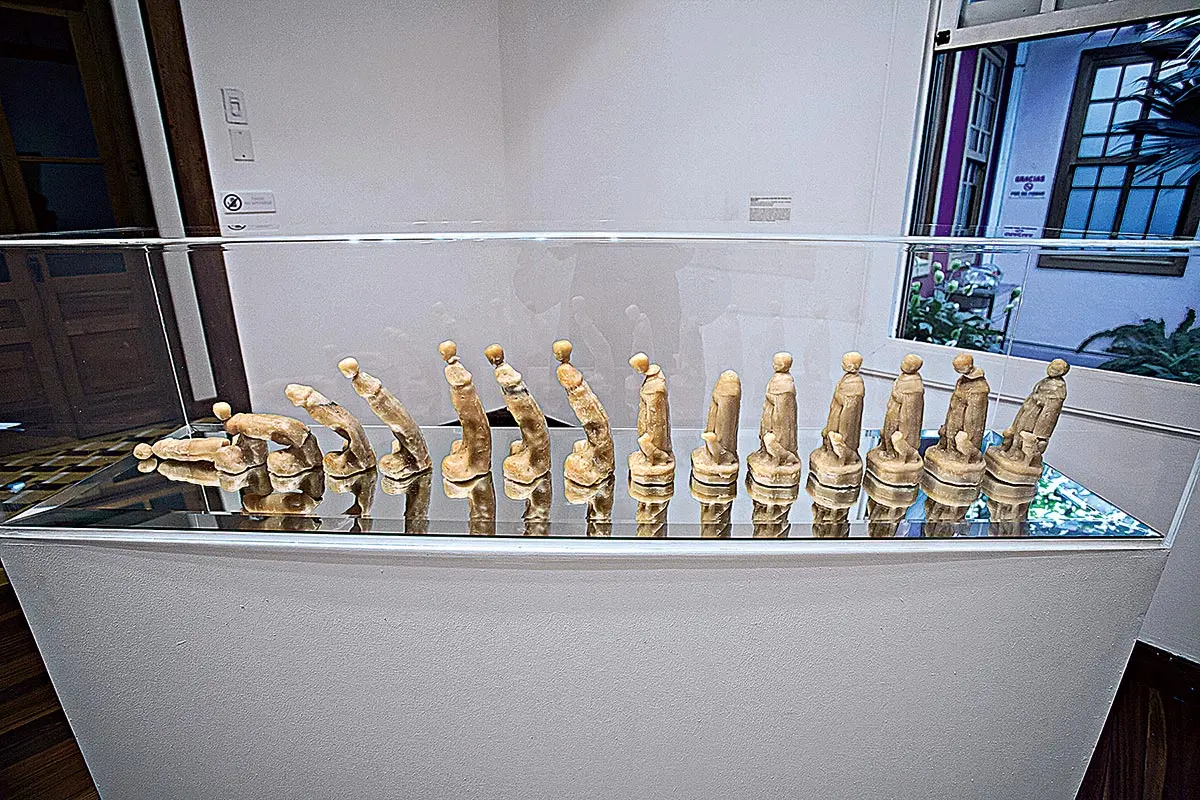
Marton Robinson and Priscilla Monge introduce another unknown into the equation. Robinson builds a biological history of evolution via wax figurines of St. Martín de Porres (the first Afro-American Catholic saint,) transformed into a phallus that starts out erect and ends up flaccid. Interwoven here are reflections about the stereotype of the hypersexualized black male, an exercise in post-colonial critique, and the fusion of Catholic and indigenous elements. And it is the same in Monge’s case: in Cómo hacerlo tu esclavo (How to Make Him Your Slave, 1995-1996), she parodies the tradition of love potions, introducing menstrual blood and setting up as their background, in red against white, violence against women, witchcraft, and colonial relations. The narrative thread remains unbroken thanks to a curatorial tactic that is able to elevate the works individually with the help of analogy and through their confrontation with others. Any difficulties presented by the TEOR/éTica space, with the necessary fragmentation of the exhibition into smaller areas, are resolved thanks to those exercises in duality, and, on occasion, three-way dialogs.
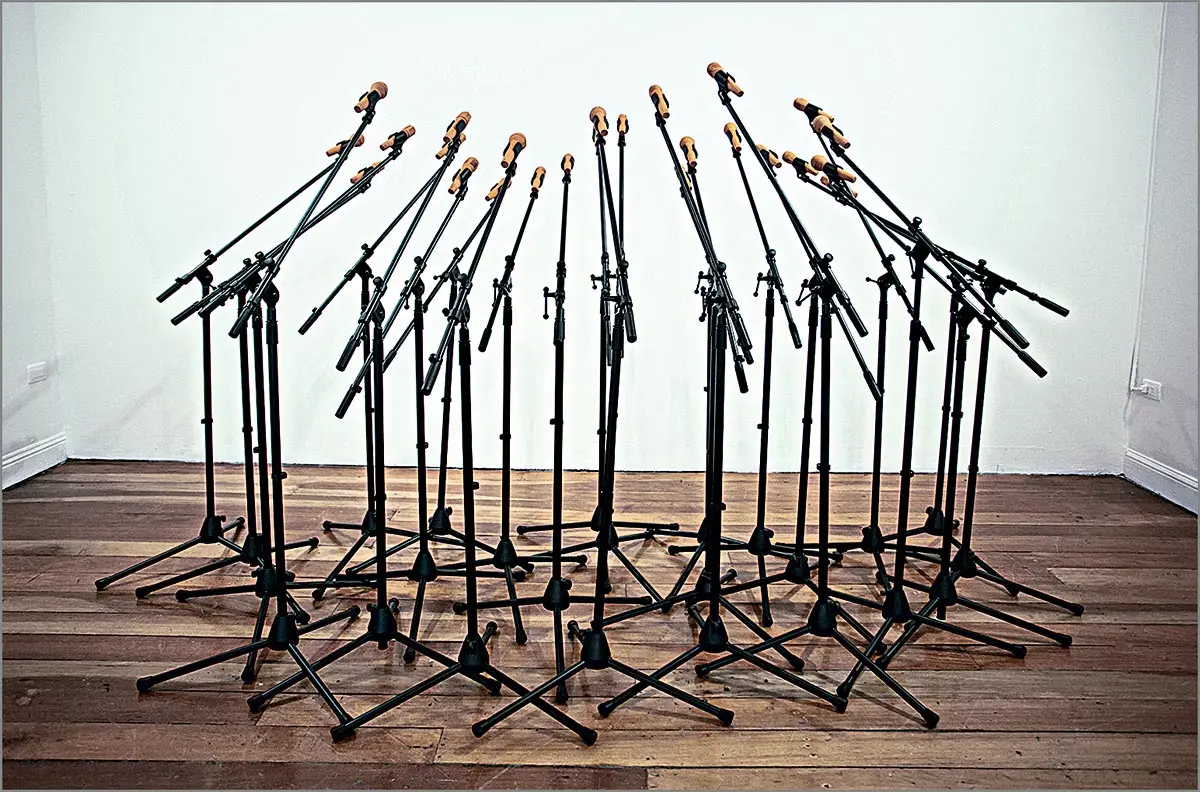
The proposals of two Central American artists, Walterio Iraheta and Benvenuto Chavajay, emerge triumphant from the challenge of comparison. In Mandala (2007), Iraheta composes a circle of white shoes of different sizes, in reference to the absent bodies of the victims of civil war in El Salvador, while in 4’33” Versión 2 (John Cage) (2015), Chavajay situates several terracotta microphones facing empty space, as a metaphor for the silence of the authorities or, inverting the simile, the missing voice of indigenous communities in the face of colonial power. The narrative thread, as we see, is stretched, although with the inclusion of the subject of dictatorship, and deprived of the ironic, dissident, erotic tone we had seen before, it begins to flake out. The curatorial concept is fragmented by the introduction of a rhetorical repertoire that is excessively broad into a housing framework that cannot contain it.
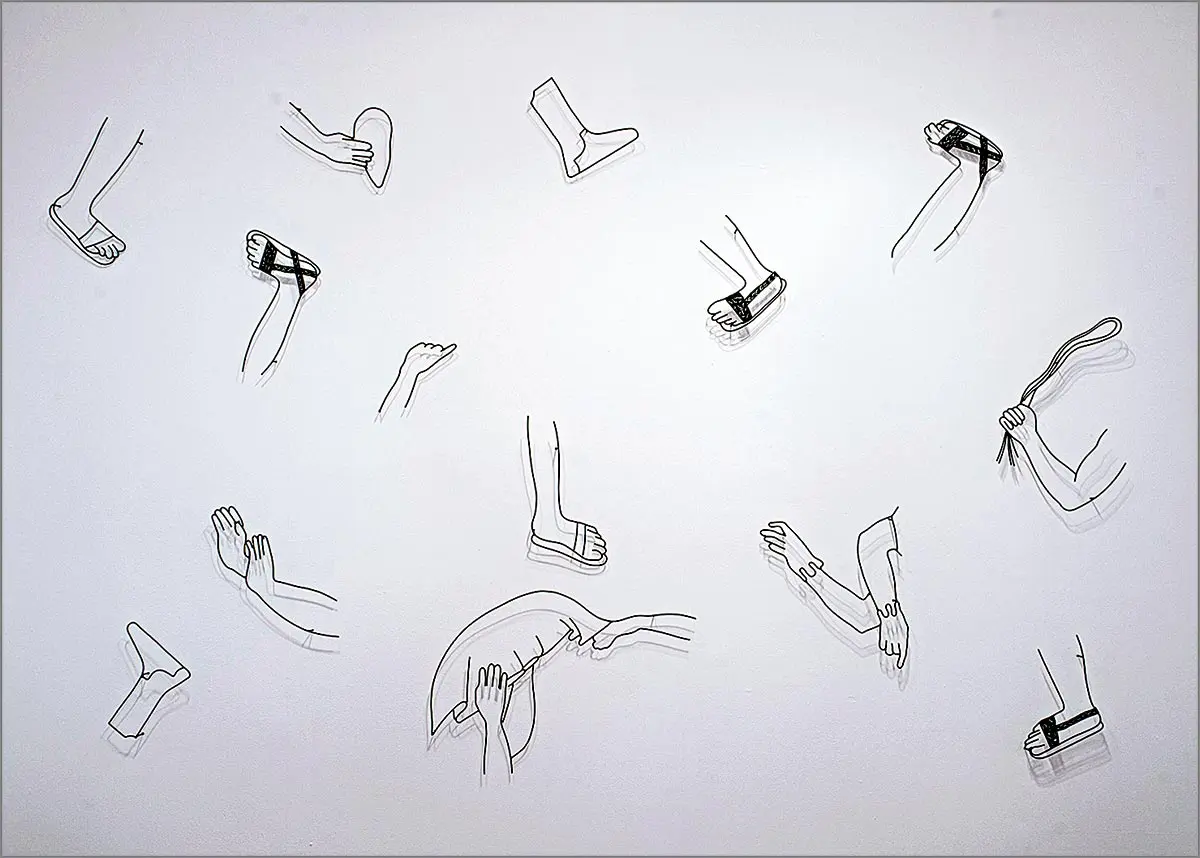
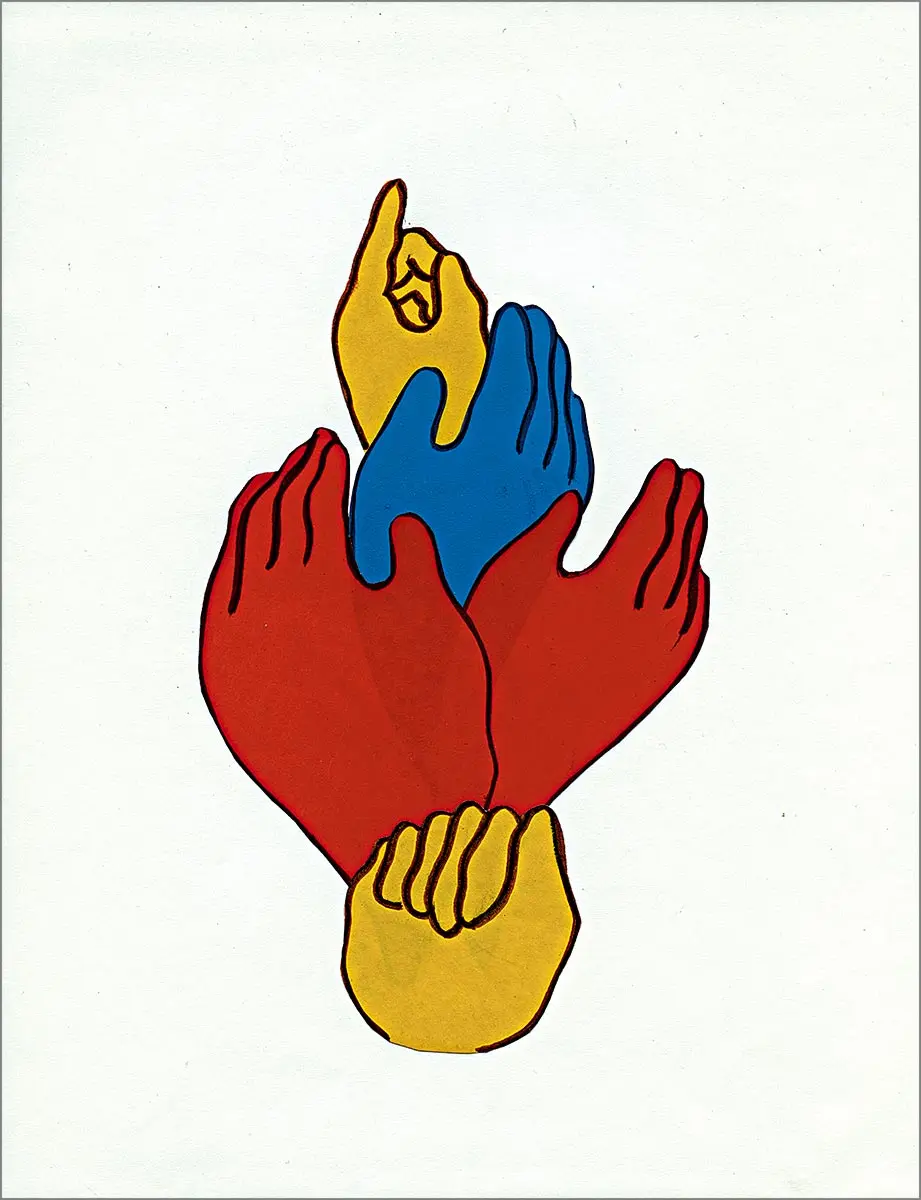
Thematic dispersion abounds and becomes decentered. In the case of Cecilia Vicuña, the show resents the switching of works, from her Ángel de la Menstruación (Angel of Menstruation), shown successfully at Gasworks, to Árbol de las manos (Tree of Hands), presented here in allusion to the Chilean military dictatorship. Given this substitution by Vicuña, Andrés Pereira Paz’s installation falls out of context: his Guamán (2016), fragments of hands and feet of characters from the drawings of the indigenous writer Felipe Guamán Poma de Ayala, would have conversed more effectively with the works of Monge or Robinson. A Kingdom of Hours is hindered by two complications that are difficult to solve. First, it's an uncomfortable space: as the works are housed in different rooms, the disconnect between some of them is highlighted. Second, the fact that some of the works on exhibit deviate from the curatorial concept.
The installations that allude to dictatorships invite us into pathways that take us away from the one we set out in at the beginning: the biting, at times humorous, provocative critique of hegemony in terms of gender, history, and temporality. The theoretical assumptions behind this show are very potent, so much so that they would be sufficient for an entire biennial all on their own. Indeed, it would be interesting to see the idea that the two curators bring forth unfold on a wider space and with a greater number of artists. As long as it doesn’t get polarized into other investigations that entangle the initial prompt, the result could be an exhibition as irreverent as it is relevant, based on queer tenets, through historical revisionism with notes about post-coloniality.
The great form demonstrated by Central American artists born after 1980 merits such an effort. In their confrontation with the work of European and North American artists, we see, as revealed in A Kingdom of Hours, that there is no reason for timidity: they all win. As some of the obsessions of Latin American artists and curators in the 1990s and early 2000s, such as their insistence on the topic of identity and the exhaustion of the Neo-Baroque discourse, are overcome, it is time to reformulate our research into the history of colonialism with other sources, other maneuvers, and other accents. From there and from here. TEOR/éTica and other Central American spaces (in Costa Rica, for instance, Despacio, El Museo de Arte y Diseño, and the Centro Cultural de España have hosted and continue to host proposals along those lines) attest to the fact that young artists in the region are producing work at the highest level, distant, for example, of the subject of bananas that was regretfully again on display at the most recent edition of the Central American Biennial in Limón.

The updating of terms and diplomacies carried forth by Miguel López is one of the drivers for an adjustment of vision and artistic approach, in both theoretical and practical terms. A Kingdom of Hours is the result of a well-tuned process of curatorial research, complicated by the selection of some of the works, as mentioned, and the limitations of the space. Even so, it is worth to let oneself be carried away by the playful, transgressive, unexpected effect of the confrontation between Lemebel-as-Frida and the machine presented by Candice Lin and Patrick Staff, Robinson’s hilarious yet profound version of the passage from ape to homo housed alongside Priscilla Monge’s potion, or the “polysemic coming” proposed by Wilson Díaz and Sidsel Meineche Hansen, which can also produce intense laughter from the most serious and pained reflection.
Also deserving of special praise is the collaborative agreement between two institutions that are geographically distant but close in prestige, TEOR/éTica and Gasworks, and their efforts to provide opportunities for artists beyond such considerations as their age, résumé, or provenance. The commingling under a single title and without the slightest irritation of Cecilia Vicuña and Andrés Pereira Paz, or Pedro Lemebel and Benvenuto Chavajay, is something that should be repeated. Let us hope for new exercises in negotiation between these institutions or others in both continents, bringing together artists from different countries and escaping all stereotypes, fashionable theoretical approaches, and surpassed aesthetic debates as this project has done.
JUAN JOSÉ SANTOS