
For the arts in Colombia, the 1970s are one of the most convulsive moments of the second half of the Twentieth Century. Every time this period—so mesmerizing for critics, historians, researchers, curators, and artists—is revisited, the boundaries of our knowledge about the tension- and slippage-filled process that gave shape to contemporary artistic practices in the country seem to expand. Among the forerunners of this new generation is, as is known, Bernardo Salcedo, an artist whose critical challenge to the system of aesthetic production, circulation, and consumption has been unflagging, and one who rejected the conceptualist label while, paradoxically, devoting his work to the exploration of new formats and to the use of language. The following lines are motivated by this latter aspect of Salcedo’s oeuvre.
American philosopher John Austin’s celebrated book How to Do Things with Words was published in 1962; with poetic license, the Bernardo Salcedo exhibition on view since last December at the Museo de Arte Moderno de Medellín (MAMM) has borrowed its title from Austin’s classic: Como hacer cosas con palabras. This show is part of the MAMM’s Tribute program, which since 2010 has closed the museum’s exhibition calendar with spaces devoted to Colombian artists whose long trajectories are relevant for the history of the arts in the country. Salcedo’s exhibition occupies the central area and the two main galleries of the Talleres Robledo building, and it revisits the role of language in the artist’s work as a condition inherent to creative production (something, it is worth mentioning, not seen in previous curatorial efforts about Salcedo).
The emergence of language as a constitutive element of the work of art is a well-known feature of conceptualism, a movement that appeared in the global scene in the late 1960s. By displacing in most cases the focus of interest from the final product to the process, the experiment, the idea, and, often, life itself, artists opened a new horizon for works that moved away from the Modernist aesthetics that dominated the era. In Colombia, art historians have seldom considered the way in which language and art became intertwined in the turbulent 1960s and 1970s, and this makes a curatorial gambit like Ana María Lozano’s with regards to Salcedo’s work an indispensable step forward.
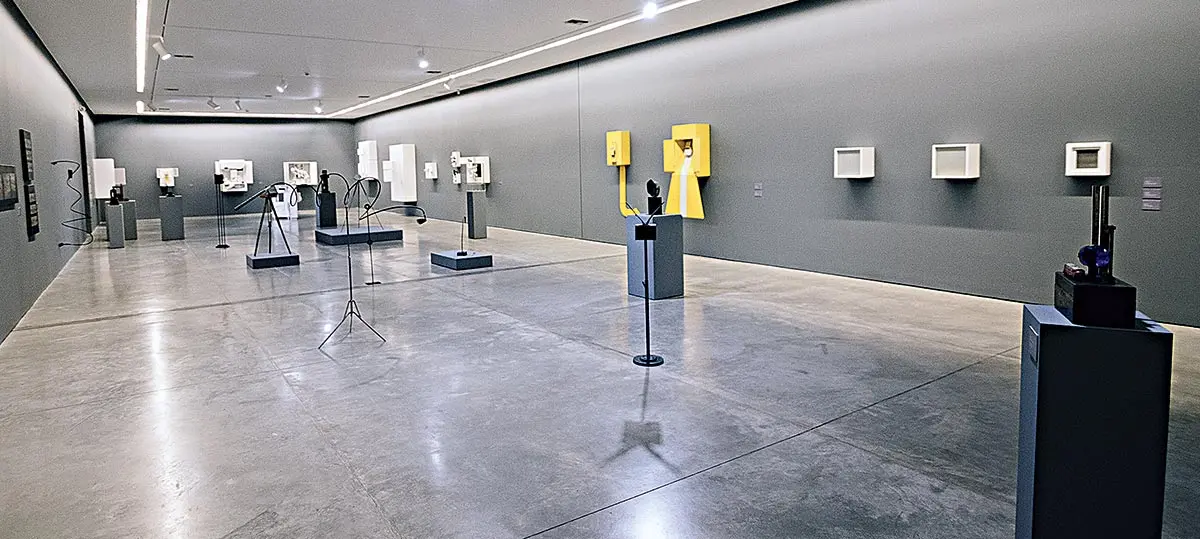
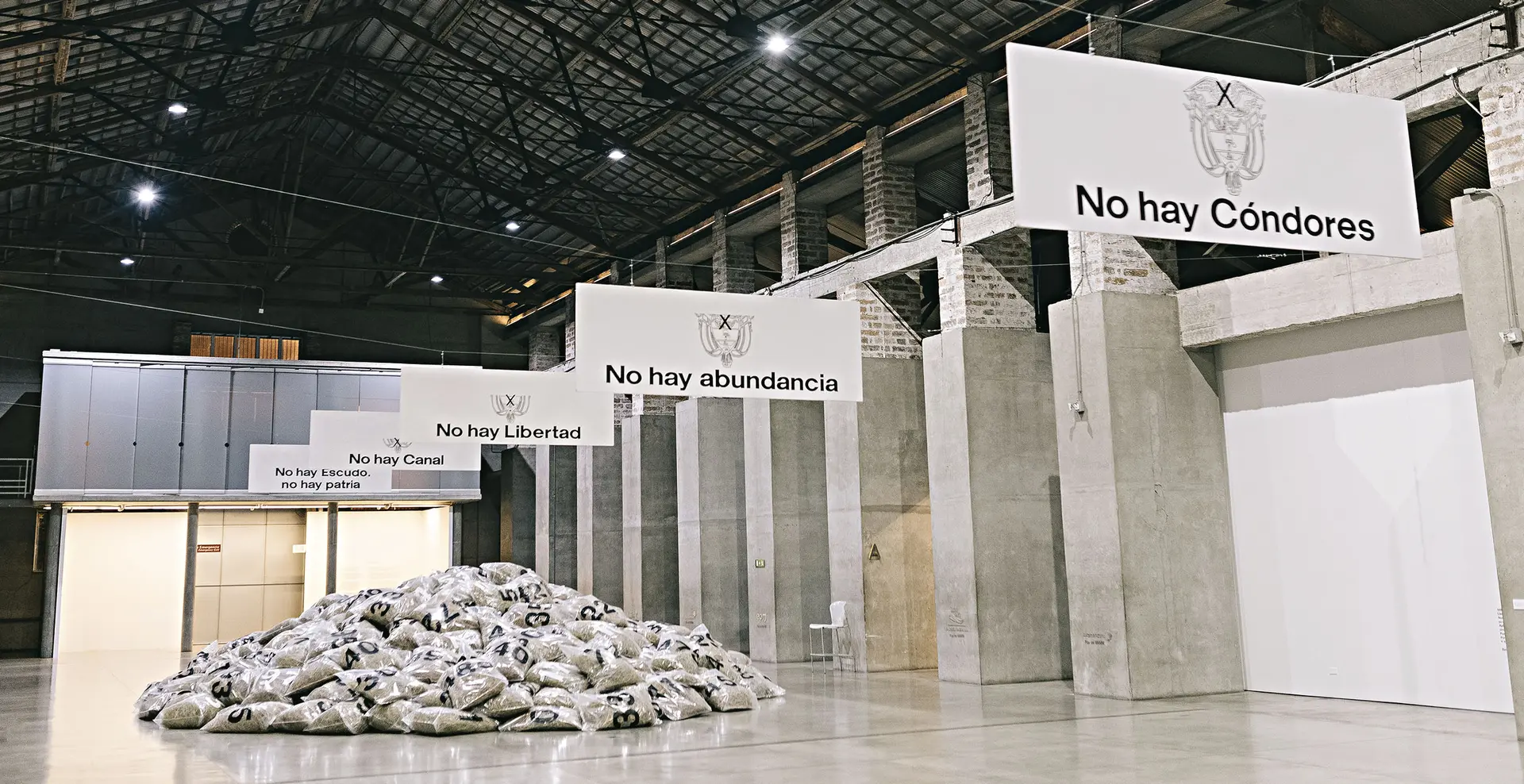
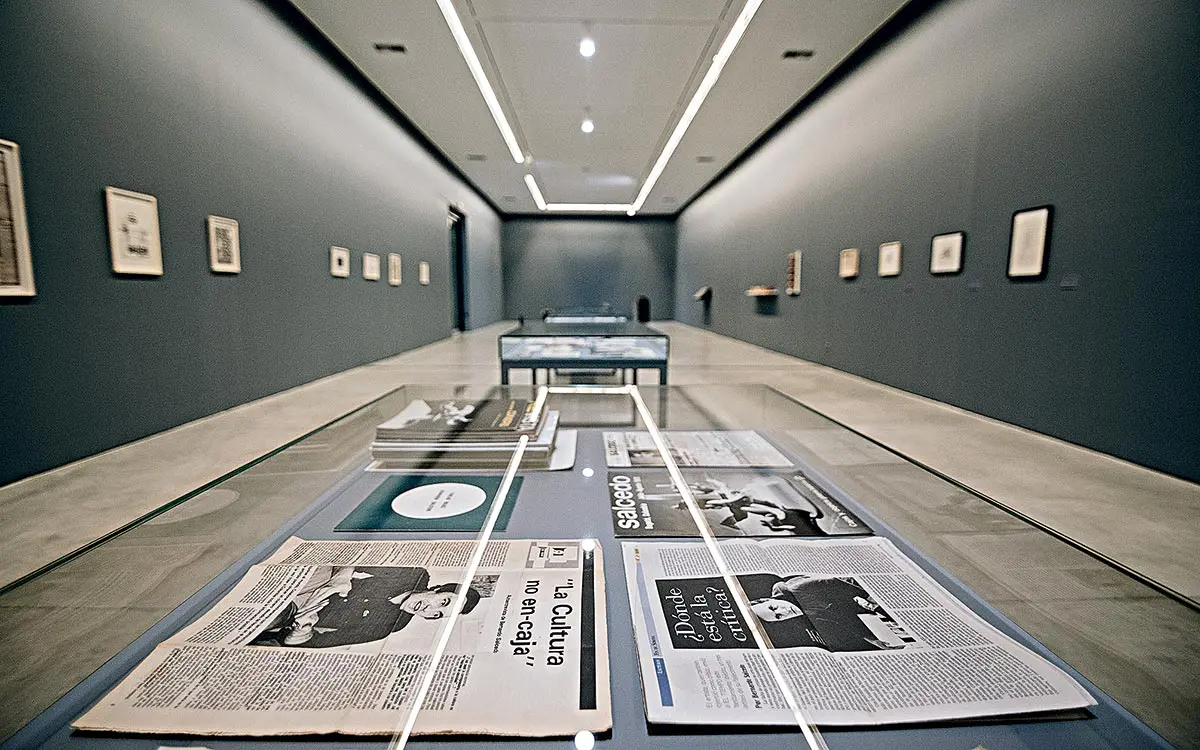
Cómo hacer cosas con palabras is one of Salcedo’s very few solo exhibitions in the last decade, yet it must be said that it does not put the artist’s visual and plastic potential in full display. The exhibition’s focus on the ways in which Salcedo’s art is anchored to language and uses it as its starting point promises to refresh our view of his production, but it must be noted that the show’s underlying museographic decisions do not help carry the initial purpose to fruition particularly well. The works on exhibit are arranged into two groups: the museum’s south wing contains Salcedo’s well-known boxes, some sculptural objects, and the series Señas particulares (Distinguishing Characteristics), Cosas nuevas (New Things), and Acuarelas a la lata (Tin Can Watercolors). In them, names denote actions and decisions made by the artist in order to intervene certain objects. Meanwhile, the building’s north gallery holds works more fully engaged in the use of language as a constitutive element; some of them are Frases de cajón (Canned Phrases), Bodegón (Still Life), Salcedo’s famous pages, his self-interviews, a few press clippings, and assorted archival materials. Finally, on display in the building’s central section are two installations of particular significance for the history of Colombian art: Hectárea de heno (Hay Hectare) and Primera lección (First Lesson). The former was first-prize winner at the 2nd Coltejer Biennial in 1970, and the latter was exhibited in 1973 at the Graphic Arts Biennial in Cali. This area of Talleres Robledo was particularly well suited for displaying Primera lección exactly as the artist first conceived it: a series of billboards to be read in sequence as one traversed the space.
In this spatial gambit, added to the dark-grey color of both galleries (which makes our passage through them monotonous), it would seem that one of the sections presents that side of Salcedo that fully uses language as a support for the work of art, while the other section focuses on the side that gives an outlet to his training in architecture, developing objectual artworks that nevertheless can’t entirely escape from the use of language. Yet, had Austin’s text been taken not only as a poetic license but as a direct point of reference, the museographic display could have embroidered together works belonging to both groups to produce a richer and more complex narrative, playing with those speech acts performed by the artist and resulting in a truly new curatorship of Bernardo Salcedo’s work.
It would have been interesting, for example, to review the ways in which language and architecture interconnect in the boxes and the sculptural objects. Salcedo’s exploration of fragments not only in formal terms but also at the semantic level could have illuminated an inter-artistic problem that is seldom studied in Colombia, because what he called his demonstrations use humor and irony to denote situations where language is a necessary port of arrival, and bring the domains of linguistics, philosophy, architecture, and art closer together.
Despite the show’s segmentation, there is no doubt that the selection of works on display confirms Salcedo’s interest in developing his oeuvre as an intellectual product. In this connection, the artist said in a March 1969 interview with local daily El Tiempo that Marta Traba had failed to understand his boxes, since she had attempted to apprehend them intuitively rather than intellectually, which in his view is how they should be approached (Traba’s comments on the boxes appeared in an article published on August 14, 1966 in the El Espectador newspaper’s Sunday magazine). Given these issues, and given the fact that in recent years curators have taken on a role similar to the role of critics, the exhibition Cómo hacer cosas con palabras seeks to revise the implications of the linguistic turn for Bernardo Salcedo’s art, bringing out for display a number of works that are seldom seen in public but also eschewing the articulation of a more sharply defined position with regards to a still largely unexplored chapter in the history of Colombian art.
* Courtesy: Museo de Arte Moderno de Medellín (MAMM).
JORGE LOPERA
Master in Humanities Studies, EAFIT University.