Carlos Zerpa belongs to the generation of artists who pioneered the entry of conceptualism in Latin America. Since the late 1970s, he has engaged in an open exploration of the collective imaginary, national symbols, idols, and the fables of art and of history. His work exercises an interesting blurring of disciplines and media (installation, drawing, graphic art, video, film, photography, performance, design, radio, mail art) with ease and an experimental bent. His complex iconography supports a payload of meanings that integrate themes ranging from everyday matters to national history, from street violence to political deception, all the while raiding art history and contemporary culture for an arsenal of images (rock music idols, characters, emblems, figures, and deities). Zerpa’s work is cohesive, profound, always surprising, and transgressive through and through, and it was a perfect match for the launch of the Open Archive project at ABRA, presented by Luis Romero alongside the ArtEncontrado team of Marialejandra Maza and Thamara Domínguez. This signals a point of inflection in the organization of a kind of art show that is rather uncommon in the local scene, one that above all showcases the thinking processes in an artist’s body of work, its intellectual contributions, and its historical roots.
The show (which comprises more than one hundred documents, postcards, letters, videos, and records of actions, objects, texts, photographs, posters, Polaroid pictures, magazines, catalogs, films, graphic works, scripts, narratives, project sketches, or assemblages for future urban interventions, between 1969 and 1995) narrates the artist’s life experiences and functions primarily as an epistemological activator of memory. This is to say, it does not merely compile data from the past in order to produce a sterile cult of the nostalgic remembrance of successes and failures, but instead seeks to expand awareness of that past, excavating it to generate an anti-memory or a new critical memory that engages it as a source for reflection. The point is to enhance resistance to the culture of oblivion and to avoid the derailing of meaning, deploying to that end the basis of an artist’s trajectory (their notes, their traces, catalogs, posters, photographic registers, sketches, documents), which encourages a historiographic reassessment of contemporary art in Venezuela.
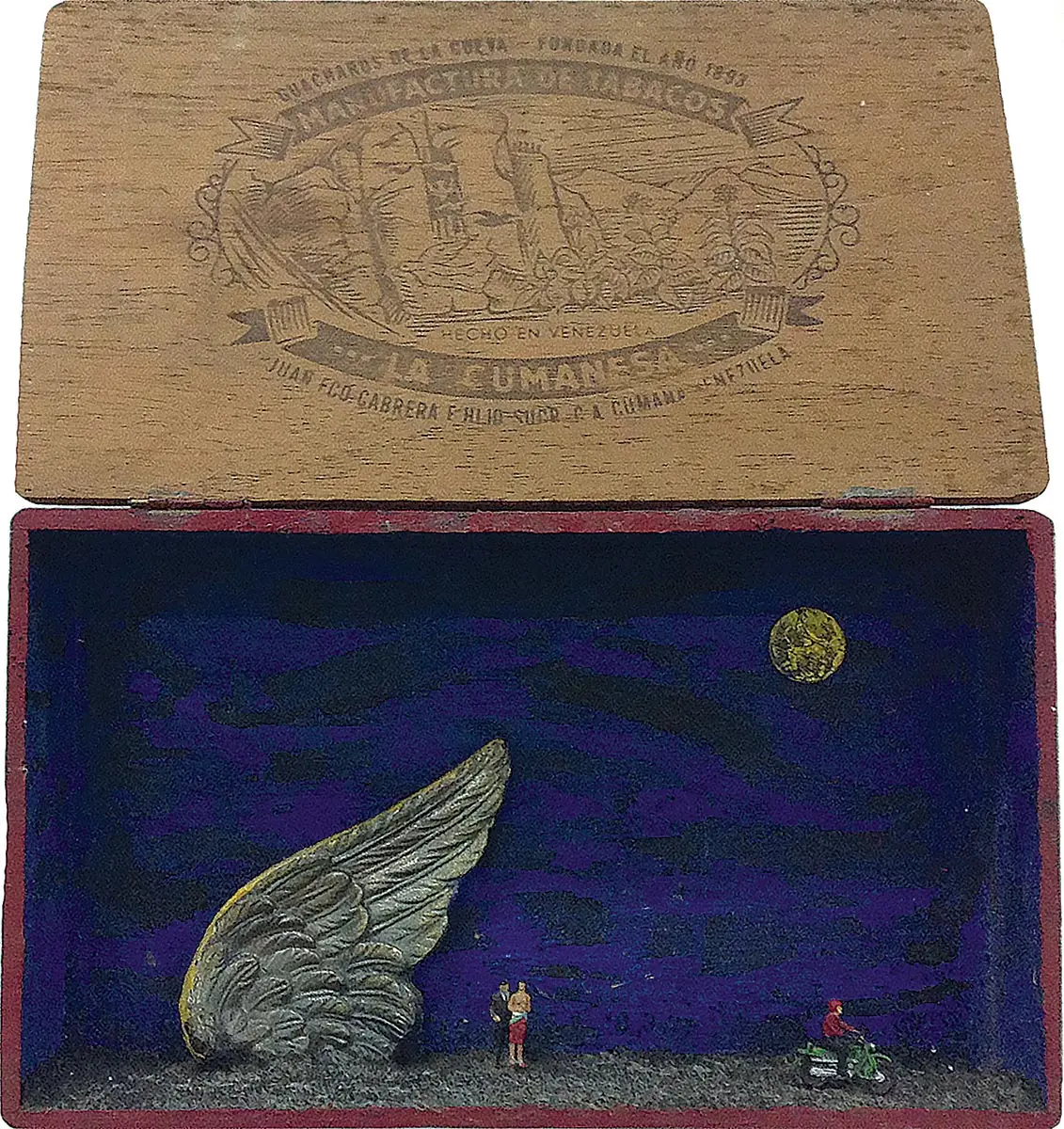
Secondly, it reveals key aspects of Zerpa as a performance artist and an interdisciplinary pioneer in a body of work that is multiple and multiplying. It is at once an intellectual-visual biography and an emotional biography of the objects. Since his period as a student in Italy under Bruno Munari, Zerpa has kept records of his performances and recycling of objects in photographs, slides, super8 movies, and burnt, perforated films. He has used archival-science methods in his quest for a visual and conceptual framework that could support, over time, the correct appreciation of his artistic practices. He was an early practitioner of mail art, which allowed him to establish connections with other artists. A key landmark in his development dates from that period: La Carpeta (The Folder), from 1978, one of the seventy mail-art archive exemplars he distributed among friends and acquaintances around the world. The highlight is the video and photographic register of actions like Ceremonia con armas blancas (Ceremony With White Weapons, 1981), Zerpa’s most important performance of the period, where he engaged the aesthetic contents of violence with unexpected, unsettling force: a poetic, visual, visceral, and political testimony where Zerpa transformed himself from a subject into an object, and where objects became ritual altars. And also the Proyecto para Ala Monumental (Project for Monumental Wing, 1985), a scaled model for a monumental work that became a point of reference in the imaginary of the collapse of myths and ideologies in the 1980s, or the small collage-boxes of the 1970s, which a decade later became large-format display cases.
Thirdly, the exhibition proposes a broad narrative about key aspects in the development of the arts in the 1970s and 1980s, indicating the creative potential or archives in a country largely uninterested in the value of memory. This aspect is essential for an understanding of the experimental and conceptual power of Zerpa’s work and of Venezuelan contemporary art in the last three decades of the Twentieth Century, as well as for revealing testimonies and connections with other artists and processes. The presentation of the 1985 film Über Carlos is in itself sufficient for outlining a map of the passions, obsessions, intuitions, vicissitudes, trepidations, and complexities of the era.
At a time when Venezuela’s museums close the door to research as a matter of policy, this exhibition, in this space, blazes a trail for the investigations of processes and the study of other artists, in order to engage the foundations and the genealogy of contemporary art. It teaches us that memory and history are open processes, built not on the basis of closed compartments but through sustained interrogations and reinterpretations.
MARÍA LUZ CÁRDENAS