Horacio Zabala: Mapping the Monochrome is the Argentinean artist’s first exhibition in a US museum. Recognized internationally as among the most important conceptual artists of his generation in Argentina, Horacio Zabala (Buenos Aires, 1943) began to exhibit in the 1960s; as is the case with many artists of that era, his work deals with the subject of the military dictatorship in his country and its social and political repercussions. Also like a fair number of his contemporaries, Zabala resettled in Europe in 1976 and only returned to his native country after a long sojourn. In his case, twenty-two years: he moved back to Argentina in 1998 and has lived and worked there since.
Horacio Zabala was born in Buenos Aires in 1943 and studied architecture at the city’s eponymous University. His first exhibition dates from 1967, but the show that most firmly defined the path his art was to follow was Anteproyectos (Draft Projects), held at Buenos Aires’ Centro de Arte y Comunicación (CAYC) in 1973. It included works in different media—photographs, printed cartographies, ready-mades, installations, and designs for prison architecture—and responded to Zabala’s view of his country’s most urgent social issues at the time. One highlight of this exhibition is Anteproyectos de cárceles (Draft Projects for Prisons), a series of fictional prison buildings conceived as drawings in perspective, in the manner of an architectural draft. Bringing to bear his experience as a technical draftsman, Zabala uses the resources of his profession in order to illustrate these ideas. The series occupied him for a number of years and came to include a large number of drawings on the same subject in which Zabala illustrated different types of prisons. He produced images of subterranean or floating prisons, allegorical of the lack of freedom and the repression experienced in his country. Zabala also created other, similar anteproyectos, which he titled Anteproyectos de arquitectura represiva (Draft Projects for Repressive Architecture). These were drawings that resembled the architectural plans in the series mentioned before, one of which is brought into three dimensions in an assemblage titled Espacio represivo (Repressive Space), which was also featured in that 1973 exhibition. The exhibition consisted of a kind of cage-like scaffold, with chairs inside. 1
Zabala explains that he prefers the term draft, commonly used in architecture and design, to its usual arts-related equivalent, sketch. His decision to use it is appropriate, as his drafts are closely related to the technical realm, in terms of their visual language.
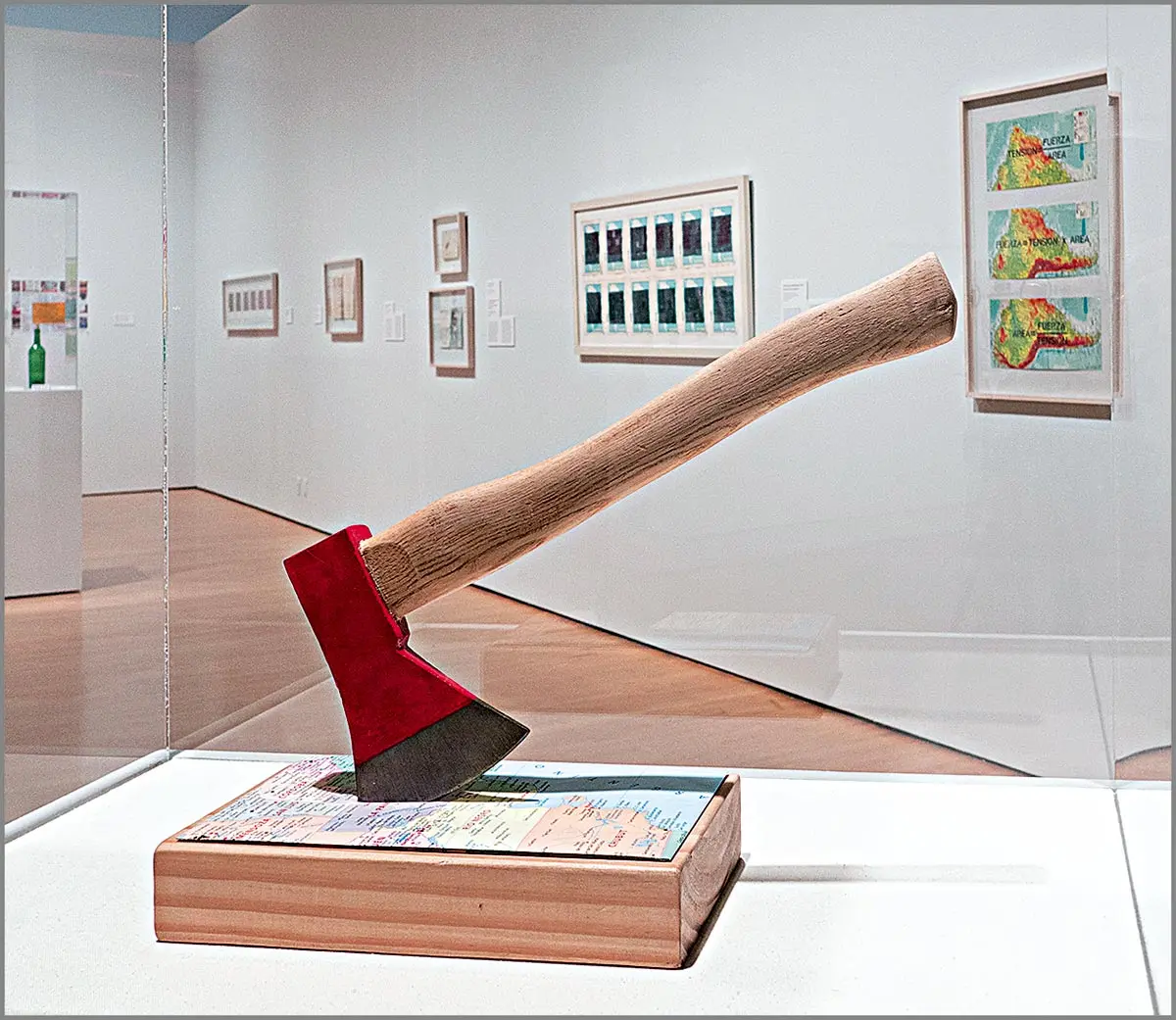
Between 1972 and 1976 Zabala was a member of the Group of Thirteen, whose interdisciplinary approach was to deeply influence his later work. All through that decade, his work had a decidedly political bent, as seen in his series of cartographies. In 1972 he created one of his most iconic works in that line, Hacha (Axe), which presents the titular tool, its blade in red, forcefully stuck to a map of South America, right on the spot corresponding to Argentina.
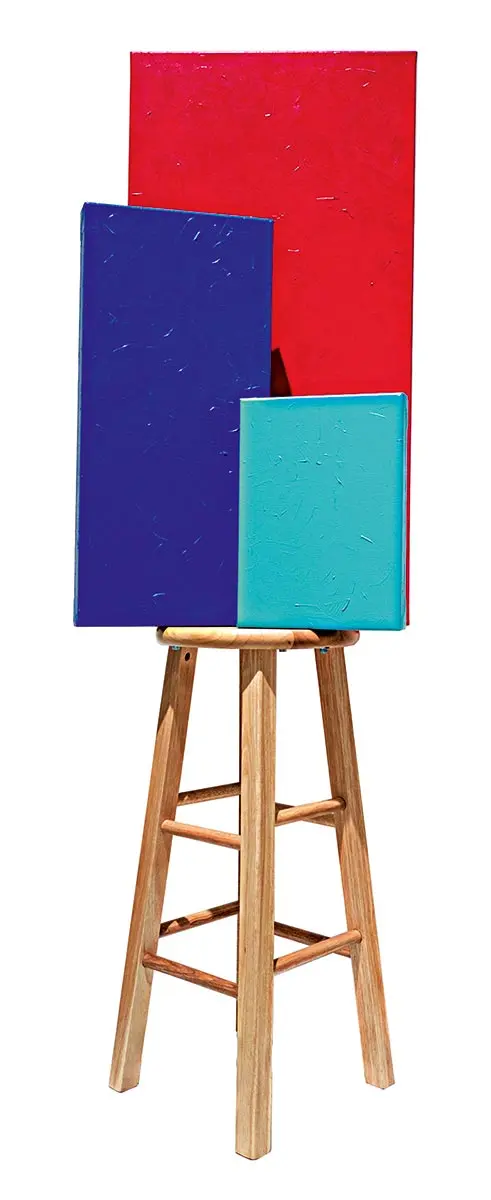
Zabala’s most recent solo exhibition, Mapping the Monochrome at the Phoenix Art Museum, brings together two lines of work that have characterized Zabala’s production over the years: a political line with his cartography series, where maps become supports for social commentary via the manipulation of an apparent geographical position, and a more minimalistic group of works that, in a way, summarize the artist’s theoretical positions. One instance where these two directions of Zabala’s work converge formally is Pedestal para tres monocromos Malévich & Duchamp (Pedestal for Three Monochromes Malevich & Duchamp, 2015). The title refers to two artists who have influenced Zabala greatly, not only formally but conceptually as well. According to Zabala, what he takes from Duchamp are the principles of appropriation and of the readymade, which he applies to maps; from Malevich, minimalism, and art theory.
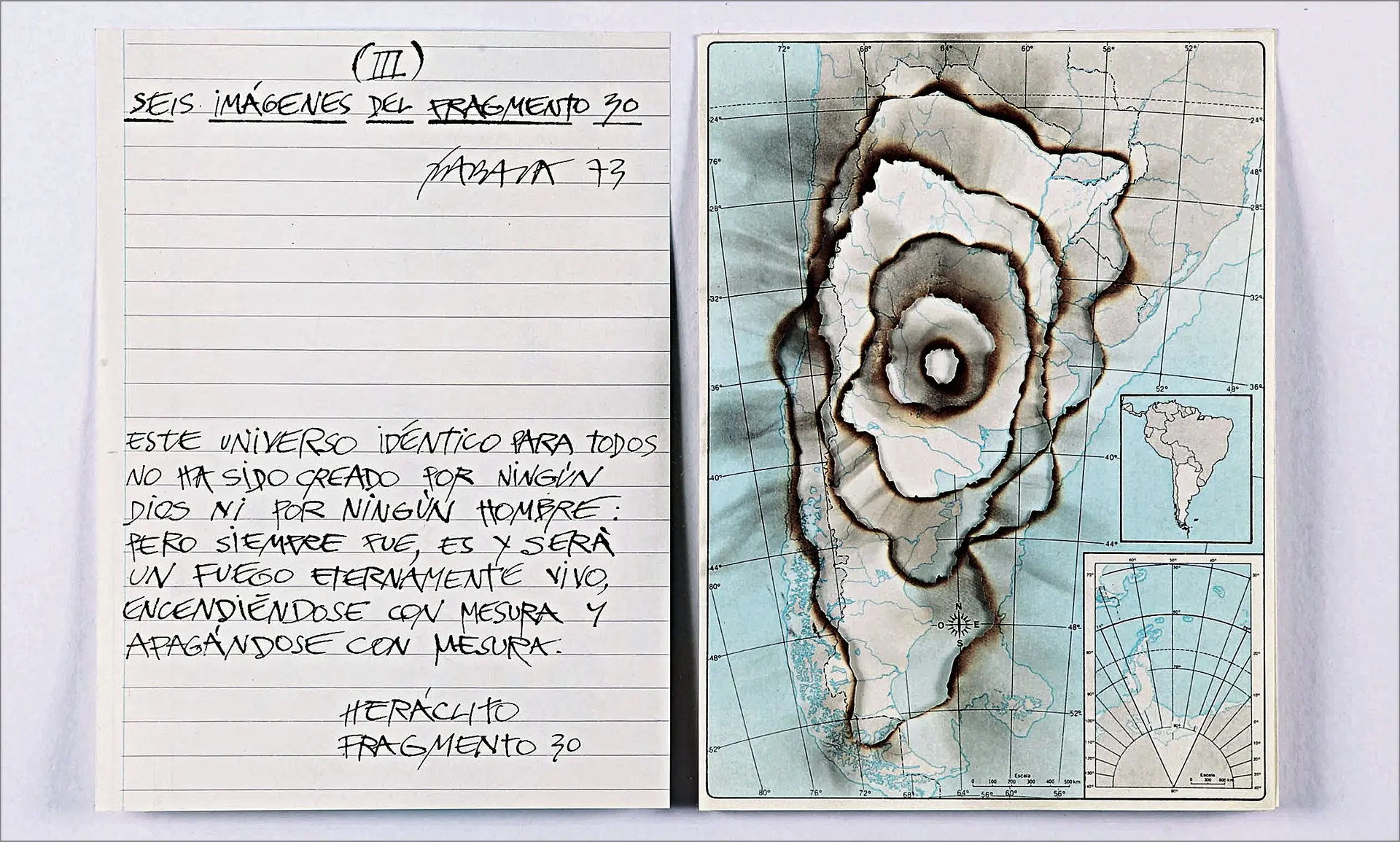
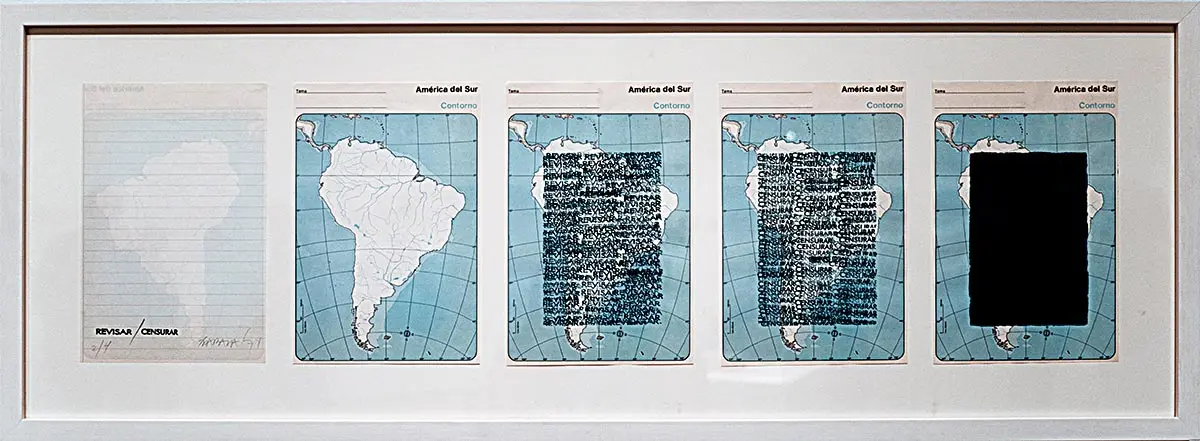
An illustrative example of the first kind of works featured in this exhibition, and of Zabala’s politics, is Revisar/Censurar (Revising/Censoring), from 1974. It is comprised of five panels, four of which are maps of South America. The first panel is a sheet of paper of the same size as the maps, displaying the text Revisar/Censurar. A progressive situation unfolds as the map goes from its regular state to being covered by the word revisar (embossed on its entire surface), then by the word censurar, and finally ending on an entirely black surface. The intention was to illustrate the repressive progression of the Argentinean dictatorship in the 1970s. During that decade, Zabala produced many works around the notion of a modified map. In some, he burned holes, as in the series El incendio y las vísperas (The Fire and the Eve) and Combustión (Combustion), both from 1974. In others, he included overlapping statistics and blocked off large areas under dark colors, as in Integración de lenguajes (Integration of Languages), of the same year. His manipulation of images responded to a position of cultural and social resistance, as the traditional cartographic function of the map was replaced by a political function. As Vanessa K. Davidson points out in her introductory essay to the show’s catalog, the idea of the map as a pretext for sociological commentary derives from the Inverted Map of South America that Joaquín Torres García created in 1935, which came to exert great influence on several Latin American artists over the years.
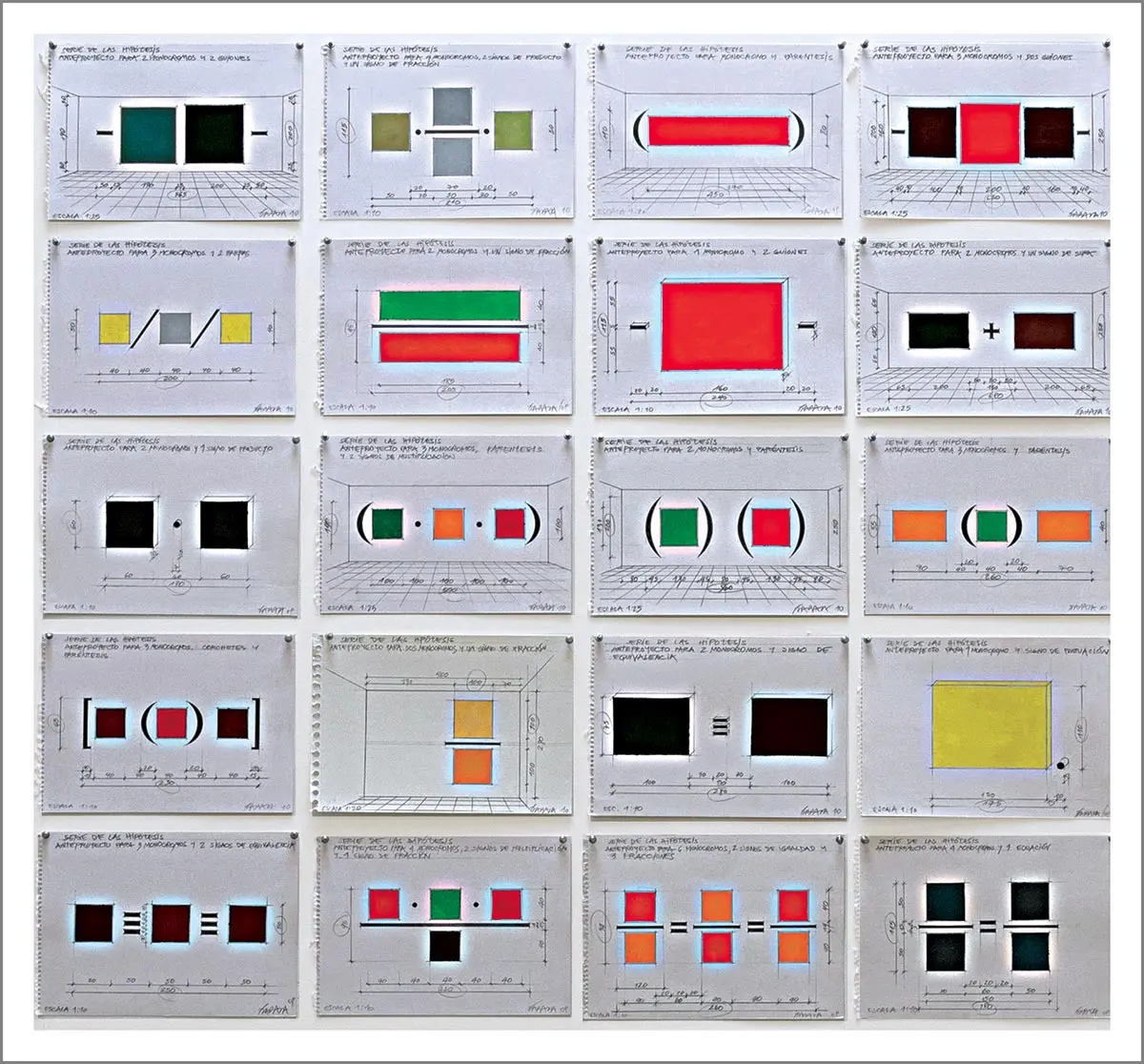
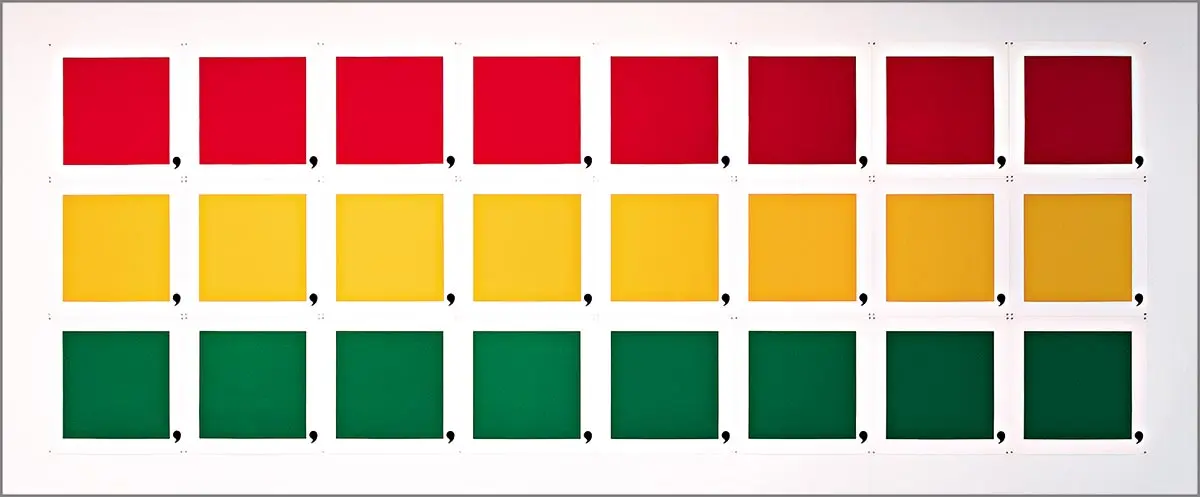
The second group of works, even more, conceptual and minimalistic, reveals Zabala’s training as an architect. Here, compositions are largely based on a language of the most elementary signs and forms, challenging viewers to interact with them, and promoting dialog. Formally, Zabala selects large areas of color, very often limiting his palette to two or three hues. A key piece in this group of works is Hipótesis XXII (Hypothesis XXII, 2010), featuring seven red rectangles separated by black commas. This work is part of Zabala’s extensive Hipótesis series, which, as its title indicates, derives from ideas that may or may not be possible. Visually, Zabala deploys the resources of mathematics and language symbols. One of the best exemplars of this series, featured in this exhibition is Anteproyectos de Hipótesis II (Draft Project for Hypothesis II, 2009/2010). It resembles a drafting blackboard and looks like the work of a mathematician concentrated on solving a problem. It consists of forty sheets of paper, thirty of which were included in this exhibit, organized in a precise sequence of six verticals by five horizontals. As we confront the work, the first thing that jumps at us is the geometry of the elements, rectangles, and squares in vivid flat colors that seem suspended in space. Coming closer, we discover myriad mathematical signs resembling equations. This is one of Zabala’s goals with this series: to interact with his audience by creating a dialog that can be controversial.
Another work on exhibit that is based on a similar principle is Lo esencial está en la mezcla (The Essential Thing Is in the Mixture, 2014). It comprises twenty-four equal-size squares organized into three sets—green, red, and yellow, respectively—and also separated by commas.
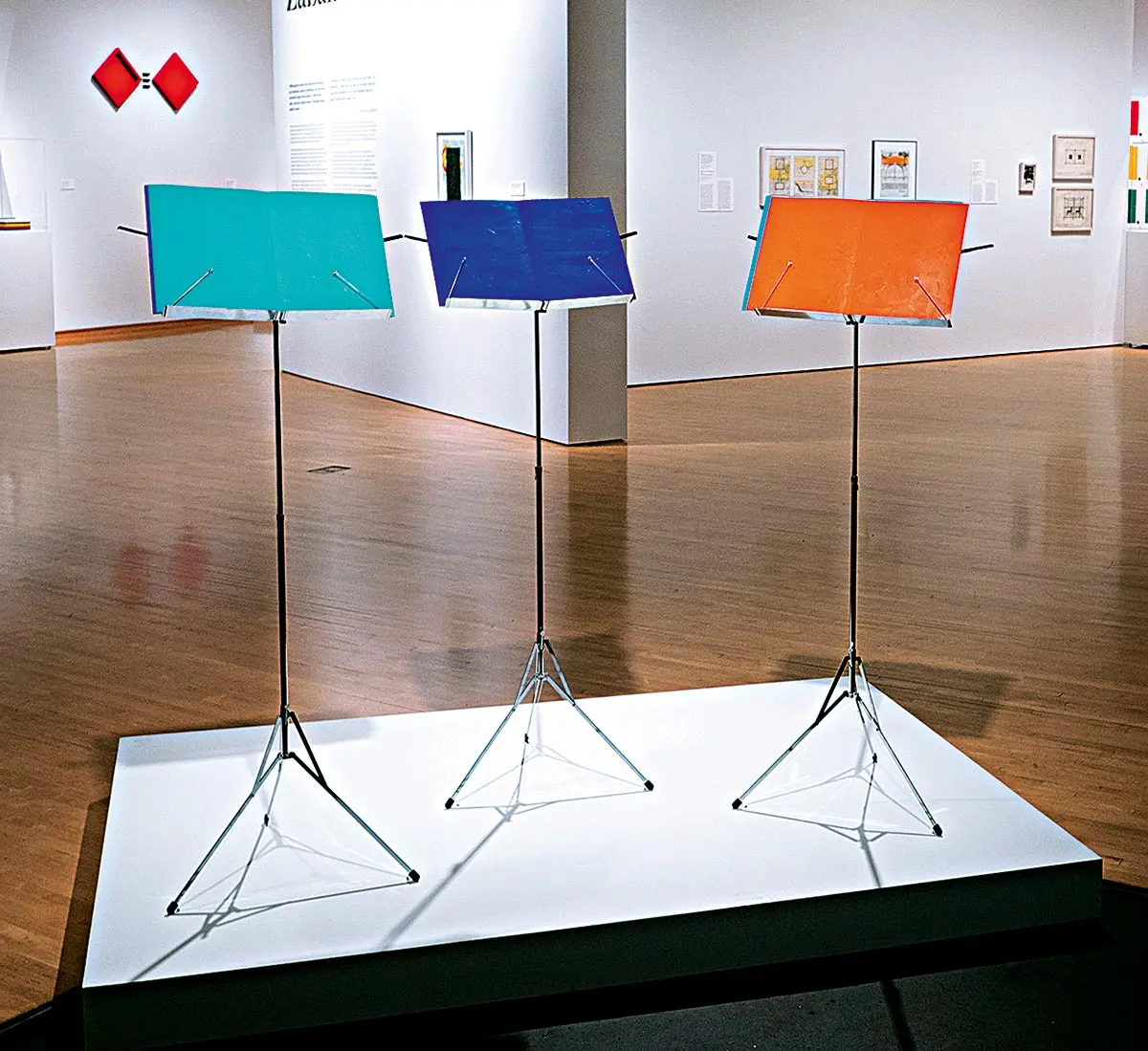
Meanwhile, El silencio no existe (John Cage) [Silence Does Not Exist (John Cage), 2014], is a unique instance in this same group of more minimalistic works. As the title indicates, it pays homage to John Cage and his thesis about silence. Three music stands holding “sheet music” in flat-colored pieces of the paper refer to Cage’s famous proposition. Indeed, alongside his work in the visual arts, Zabala has been intensely active in the theory field, not only through the ideas proposed in his works but also by producing a large number of critical texts, the earliest of which came out in 1972.
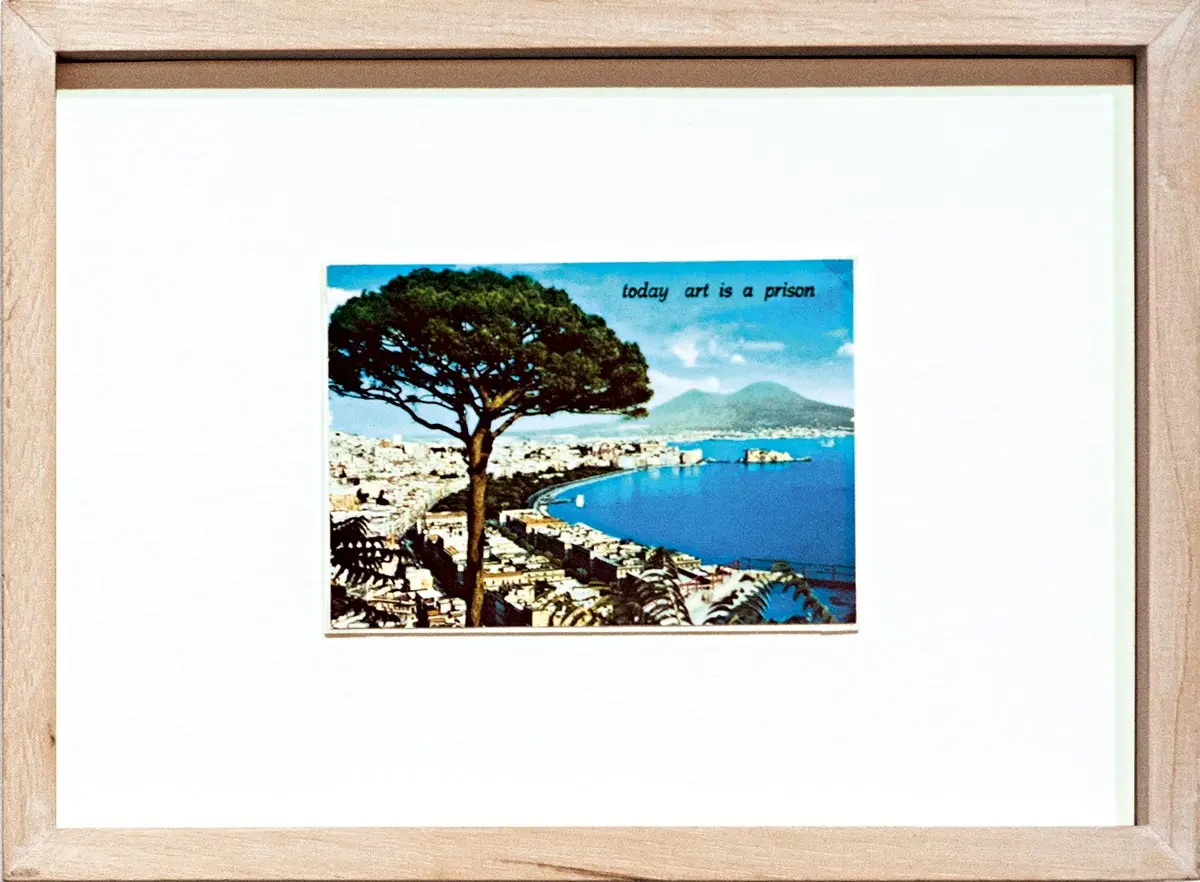
Perhaps Zabala’s best-known works, given its wide-ranging summoning ability, is Today Art Is a Prison, created while still living in Europe. Zabala invited the collaboration of artists, historians, architects, designers, and art critics from around the world. The project consisted of having collaborators send materials (these could be images, documents, or even information) that questioned art as a closed system. Zabala worked on this project for several years, and even organized a number of exhibitions. The project ended in 1981 with a seminar at the Centro Internazionale Studi di Estetica and the Philosophy and Humanities Department of the University of Palermo. The seminar’s talks and papers were published that same year in Bologna, in a volume titled Oggi l’arte è un carcere? (Is Art Today a Prison?) that brought between its covers the results of Zabala’s theoretical critique of the nature of art.
A significant portion of Zabala’s artistic production has been devoted to site-specific interventions. This line of work began also in 1972, when the artist participated in the open-air group exhibition Arte e ideología/CAYC with 300 metros de cinta negra para enlutar una plaza pública (300 Meters of Black Tape to Dress a Public Square in Mourning), inspired by the Trelew massacre and markedly political in character, like all of his production in those years. That exhibition, held in Buenos Aires’ Roberto Arlt Square, was censored and destroyed in its entirety a few days after opening. The anteproyecto Zabala produced for the work he exhibited there, however, has been preserved, and in 2012 the work was reconstructed in the same location and documented in a video and a book. Among his most recent interventions, we can mention Espacio entre paréntesis (Space Between Parenthesis, 2014-2015), located at the intersection of Florida Street and Córdoba Avenue in Buenos Aires. This work belongs to Zabala’s conceptual, minimalistic production. It consists of two giant red and black parentheses placed on the sidewalk. The work’s connotations and possible meanings are an appropriation on the part of every passer-by.
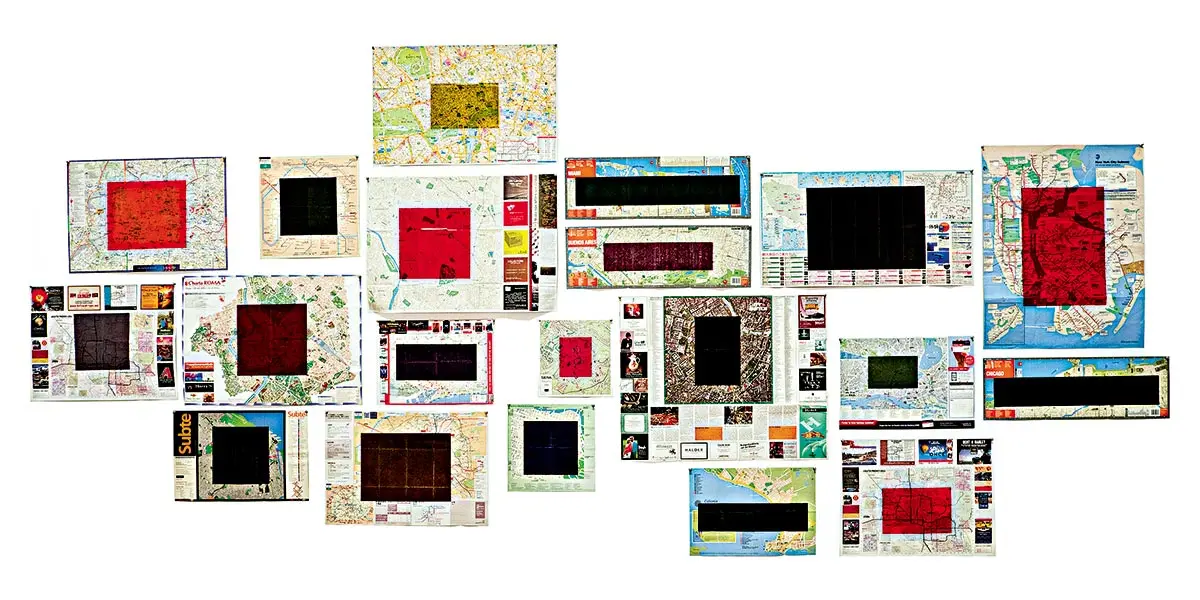
Between 2011 and 2015 Zabala revisited his ideas about the use of cartography as a support and a component of his work. The result of this process is Monocromos sobre ciudades (Monochromes on Cities), which uses maps of cities like Buenos Aires, Paris, New York, and Tokyo, on which the artist superimposes his characteristic flat-color squares, similar to his formal solutions of the past, used here to block segments of each map. Summarized here, in a way, are Zabala’s early interest in using maps to illustrate political situations and his later inclination towards a conceptual, and as such more universal, language.
Over the course of a long career, Horacio Zabala has exhibited all around the world. His works are found in the collections of such prestigious museums like the Museo Nacional de Bellas Artes, in Argentina; The Tate Modern, in London (England); the Museo Nacional Centro de Arte Reina Sofia, in Madrid (Spain); and the Museu de Arte Contemporânea de São Paulo (Brazil), among others. It can also be seen in the collections of several university museums, like The University of Iowa Museum of Art, in Iowa (United States), and the University of Essex Collection of Latin American Art, in Essex (England). Similarly, renowned private collections, like The Ella Fontanals Cisneros Collection (Miami, United States) and the Fundación Alon para las Artes (Buenos Aires, Argentina) have also acquired Zabala’s work.
Revisiting Zabala’s vast production over more than five decades, we see that he is a multi-faceted artist who was never content with a single technique or a specific style. If we were to define his work in a general way, the term experimental would be precise. From the start of his career, he has broken with the parameters and media that are considered traditional in the arts and has worked with mass products and everyday objects. His art becomes a meditation built on the basis of historical, artistic, and mathematical referents that foster a sustained feedback exchange between artist and viewer.
* Photography: Airi Katsuta. Courtesy of the artist, Henrique Faria (New York and Buenos Aires) and Phoenix Art Museum.
IRINA LEYVA
Art critic and curator.